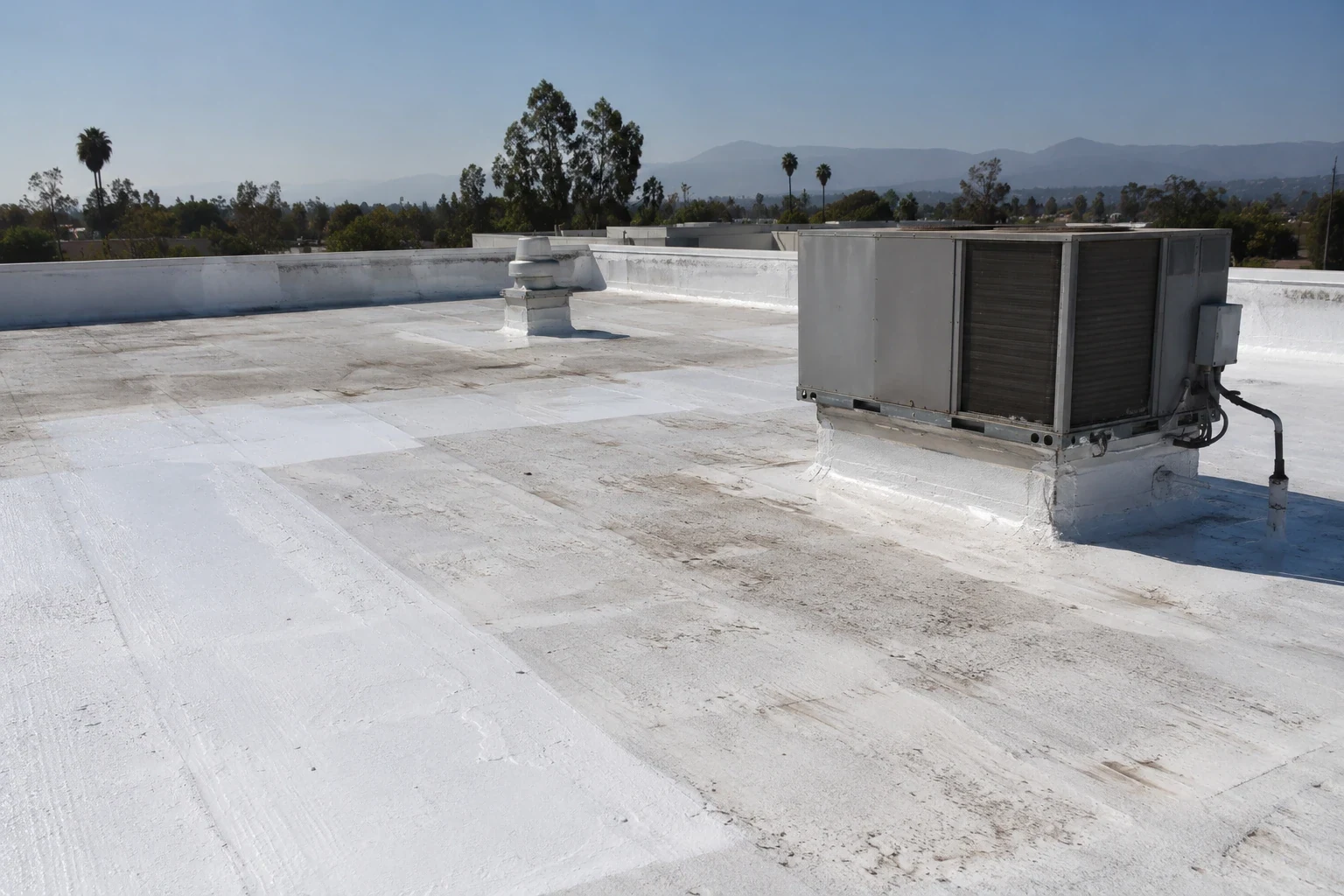
A ceiling mark beside a rooftop unit can signal a failed curb flashing, but the unit may sit upslope from the visible stain. At a fitness center in Merced, we inspect the equipment base, membrane transition and drainage route before proposing a repair. The building’s hours and classes can limit access below. We identify the affected room, roof bay and opening sequence so the work addresses the roof condition without leaving the operator to guess where activity must pause.
Merced’s July normal high reaches 96.3°F, and the station averages 99.7 days a year at 90°F or above. Heat makes movement at curbs, metal edges and membrane seams worth attention. Fitness buildings may also rely on ventilation and cooling equipment during occupied hours. We coordinate roof access around the operator’s needs while the inspection focuses on attachment, moisture paths and the actual roof system.
Curbs, units and service routes
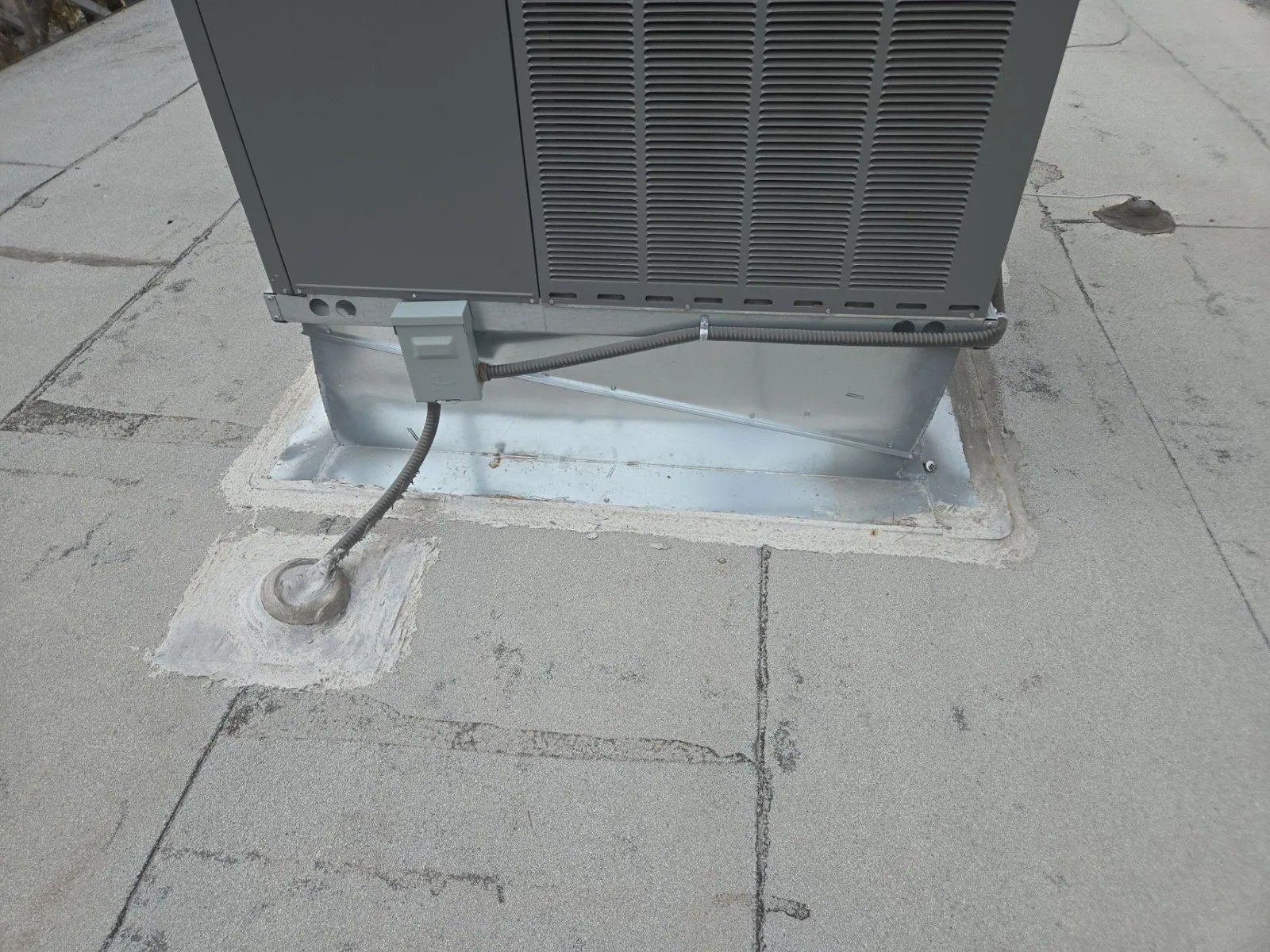
Roof-mounted ventilation equipment creates multiple interfaces: the curb-to-roof flashing, equipment support, condensate route and paths used by service technicians. We inspect each connection for loose attachment, split sealant, open corners and damage from repeated access. A leak near a unit can come from its flashing, a nearby seam or a drain. We trace the likely moisture route before assigning the repair to one component.
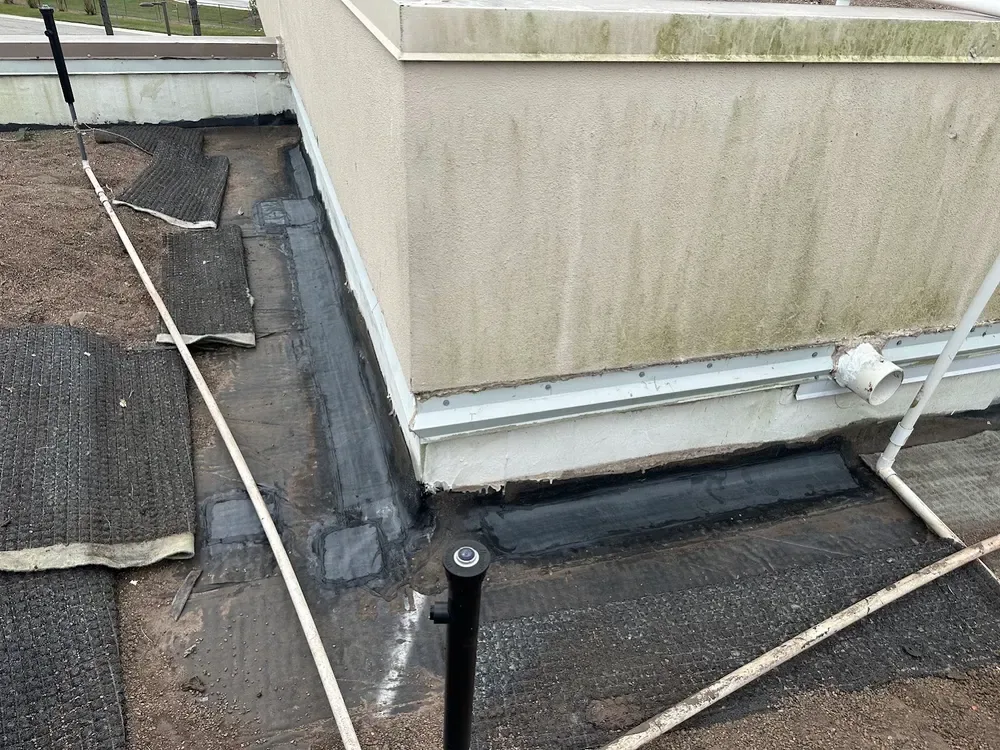
Where the curb remains stable and the membrane is sound, a compatible flashing rebuild may be enough. If the support moves or the sheet has pulled away, the repair needs to address that condition first. Curb and support work can be scoped with roof repair when both items affect the connection. Mechanical work remains with the responsible equipment trade. We coordinate any needed clearance before membrane or metal is removed.
Service paths can wear a surface or leave tools near drains. We look for repeated abrasion, displaced walkway material and punctures, then determine whether a protected route would help. It must not block drainage or trap moisture. Puncture repair addresses a localized hole; any access protection should be a separate line in the maintenance plan.
Water movement and interior symptoms
Fitness rooms, locker areas and offices may occupy different portions of the same roof plane. We locate the reported stain and compare it with the slope, drains, scuppers and roof transitions. Water can travel along a deck or insulation joint before it appears indoors. We inspect nearby seams and note whether water was active during the visit. If a concealed wet area could change the repair, a test opening may be more useful than a wider surface patch.
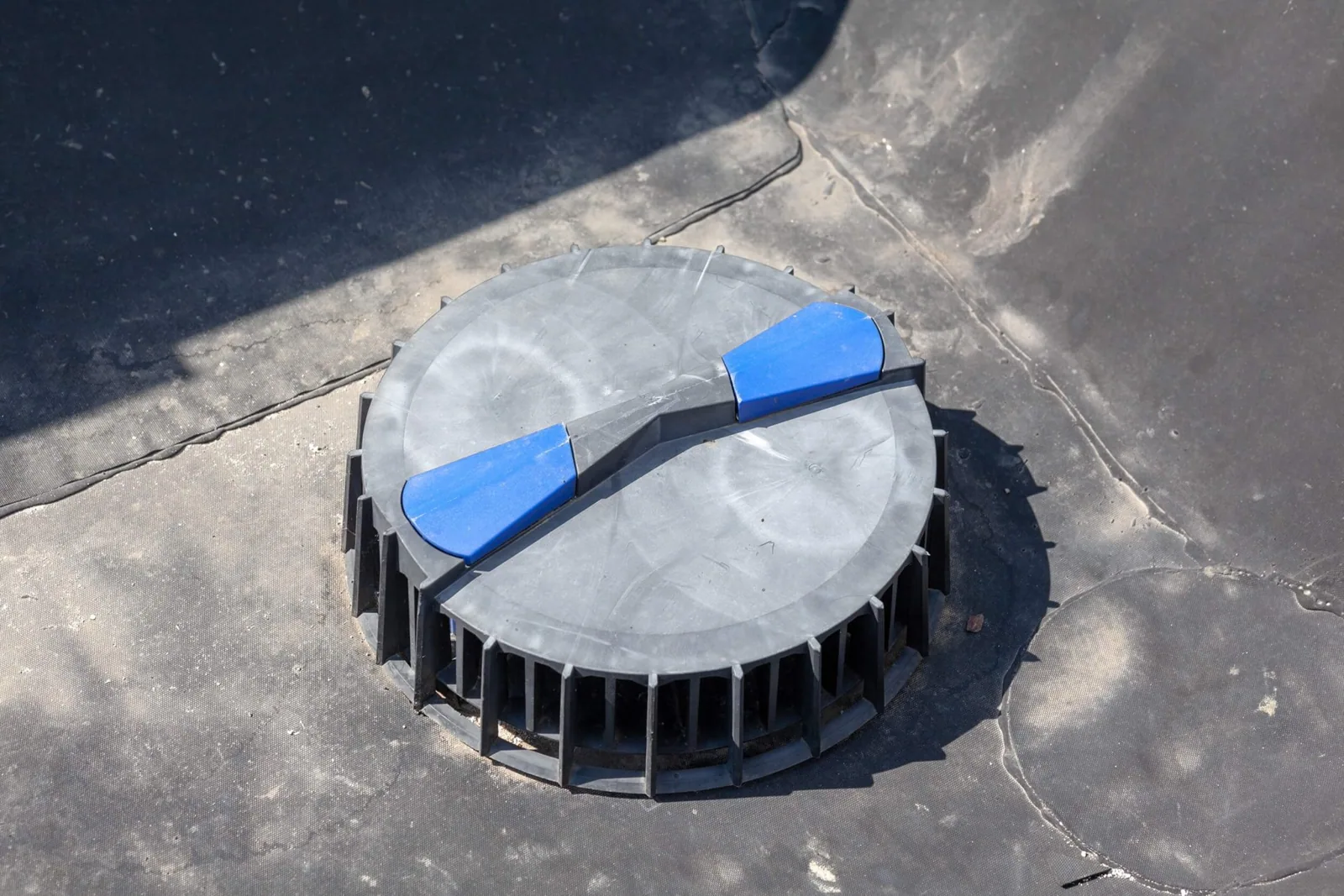
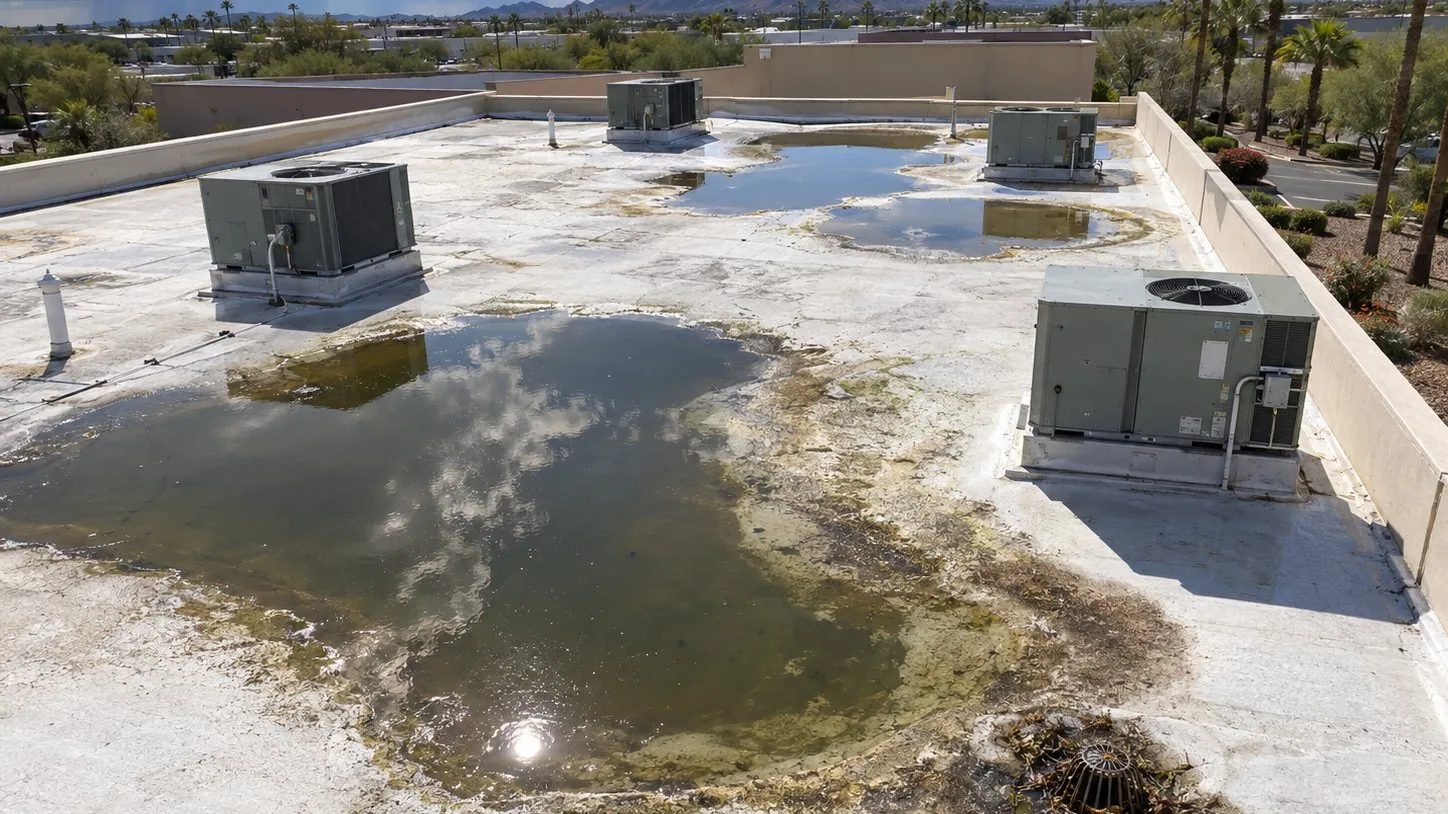
Standing water can keep a seam or curb detail wet after the rest of the roof has dried. Drain and scupper service may address an obstructed outlet, while ponding-water correction considers a low area or changed roof plane. Those scopes are different from flashing repair. We map each condition so the owner can see whether a drainage issue and a leak detail need separate work.
The building’s ventilation system can affect interior conditions, but a roof inspection does not substitute for indoor air or mechanical testing. We document roof-side evidence and coordinate with facility staff if the work zone sits above an occupied studio. Clear separation of roofing, equipment and interior tasks helps avoid an incomplete repair handoff.
Heat exposure and roof material
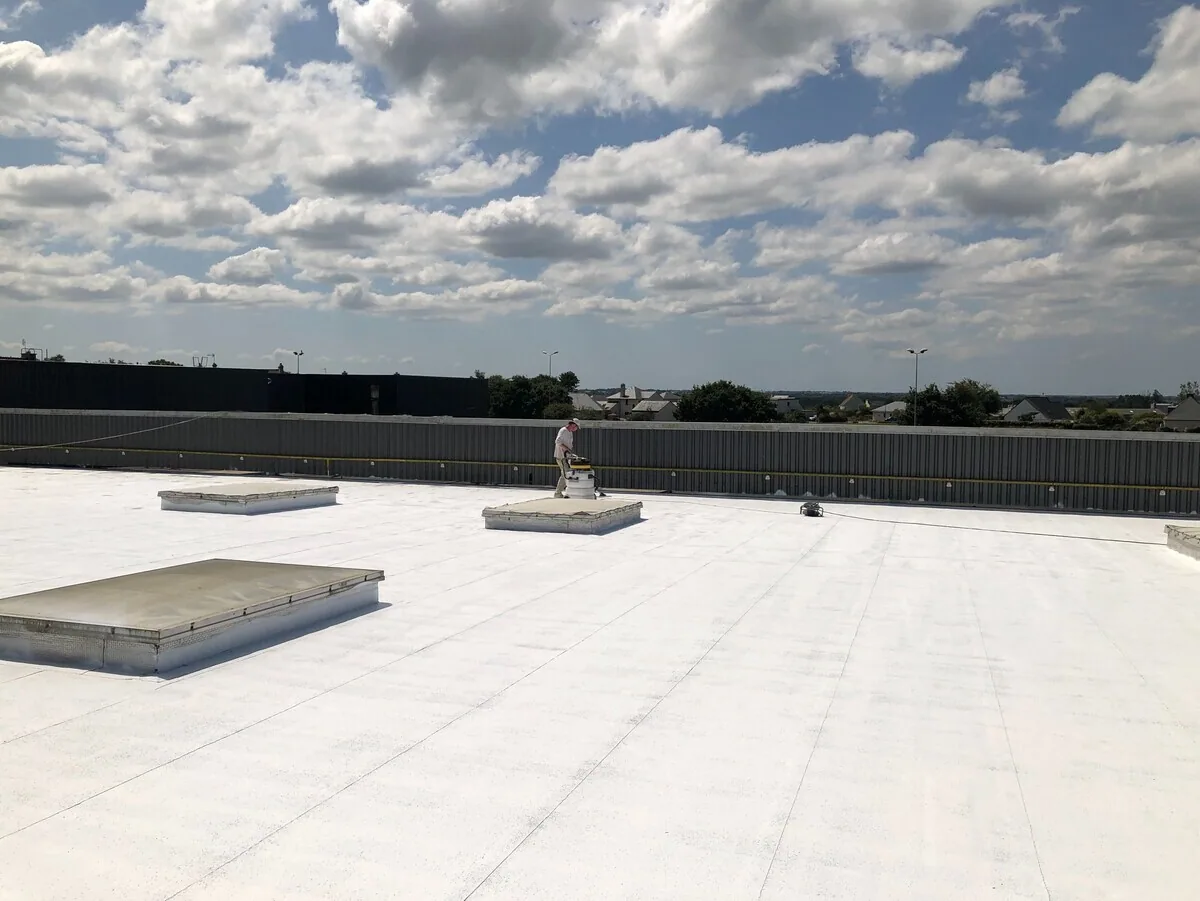
Merced’s summer heat can affect exposed membrane, coatings and metal connections. We examine seams, edge metal, fasteners and prior repair patches for splits or loss of bond. A reflected roof surface may reduce solar absorption in a suitable assembly, but coating selection depends on the existing roof and preparation condition. It should not be presented as a fix for wet insulation or poor drainage.
If the field membrane remains serviceable, a localized repair or roof coating restoration may be considered after checking seams, penetrations and substrate. A cool-roof installation is a broader surface decision that requires an appropriate system. We explain preparation, detail work and drainage implications before the owner compares either option with replacement.
Cost and timing reflect access to the roof, equipment clearance, the number of details and how long the room below needs protection. If a test opening shows saturated insulation, the work expands from surface preparation to removal and replacement of those layers. We state that change before closing the roof so the manager can approve the actual repair.
Schedule around classes and access
Roof work above a fitness area may affect classes, staff paths or equipment access. We identify the room under the proposed opening, the hours with limited occupancy and the route for materials. A small repair may need a planned pause if debris or noise could affect activity below. We agree on interior protection and a watertight condition for breaks in work before removal begins.
Downtown Merced contains professional offices, restaurants and arts-related commercial uses. A fitness tenant in that setting may share access with other occupants, while a standalone commercial building may have a direct service entrance. We coordinate the actual property layout rather than infer it from the business type. In nearby Atwater, food processing and building-products manufacturing are part of the commercial mix, illustrating why roof access planning should use site-specific operations.
The closeout record identifies the repaired detail, materials installed, any lower layers replaced and any area not opened. Office roof planning may help with shared occupancy, while shopping-center roof work adds coordination across multiple tenants. Merced commercial roofing service can be requested with the roof bay, equipment unit or interior symptom.
Ventilation interruptions can affect the rooms directly below a roof opening. We ask the facility contact which units serve the work area and whether an approved shutdown window is available. Roofing does not change controls or balance air systems. The equipment vendor handles those tasks, while our crew protects the curb and restores the membrane interface. A written sequence identifies when roof access is expected and who confirms restart after the roofing detail is closed.
Choose a defined scope
The best repair follows the observed failure. A curb leak, open membrane seam, puncture and drainage low point call for different work. We describe the evidence, whether concealed layers were examined and how far the repair extends. If several conditions are present, the proposal separates them so the facility manager can prioritize active water entry and schedule broader maintenance without confusing distinct roof problems.
Request an inspection with the room or activity affected, equipment location and any roof plan available. Tell us when the leak appears and whether service work or a recent repair occurred nearby. We can inspect the transition, trace the moisture path and outline a sequence that respects the facility’s schedule and the limits of the roofing scope.
Commercial Roofing Questions
Can roof repairs happen while classes are running?
We plan the work zone with the operator. Noise, interior protection and access beneath an opening determine whether activity can continue nearby.
Does a rooftop unit cause a leak by itself?
The curb, flashing, nearby seam or drain may be involved. We inspect the connection and trace the water path before assigning the repair.
Can a cool roof coating lower the building temperature?
Surface reflectance can affect heat absorption, but a coating is appropriate only for a sound, prepared assembly. We review substrate and drainage first.
Will replacing a flashing repair the interior ceiling?
Roofing work stops water entry at the roof detail. Interior finish repair is separate and depends on the condition below.
Inspect a fitness center roof detail
Request an inspection of a curb, seam, drain or leak area. We will map the roof condition and coordinate access around the facility schedule.
Related Roofing Work