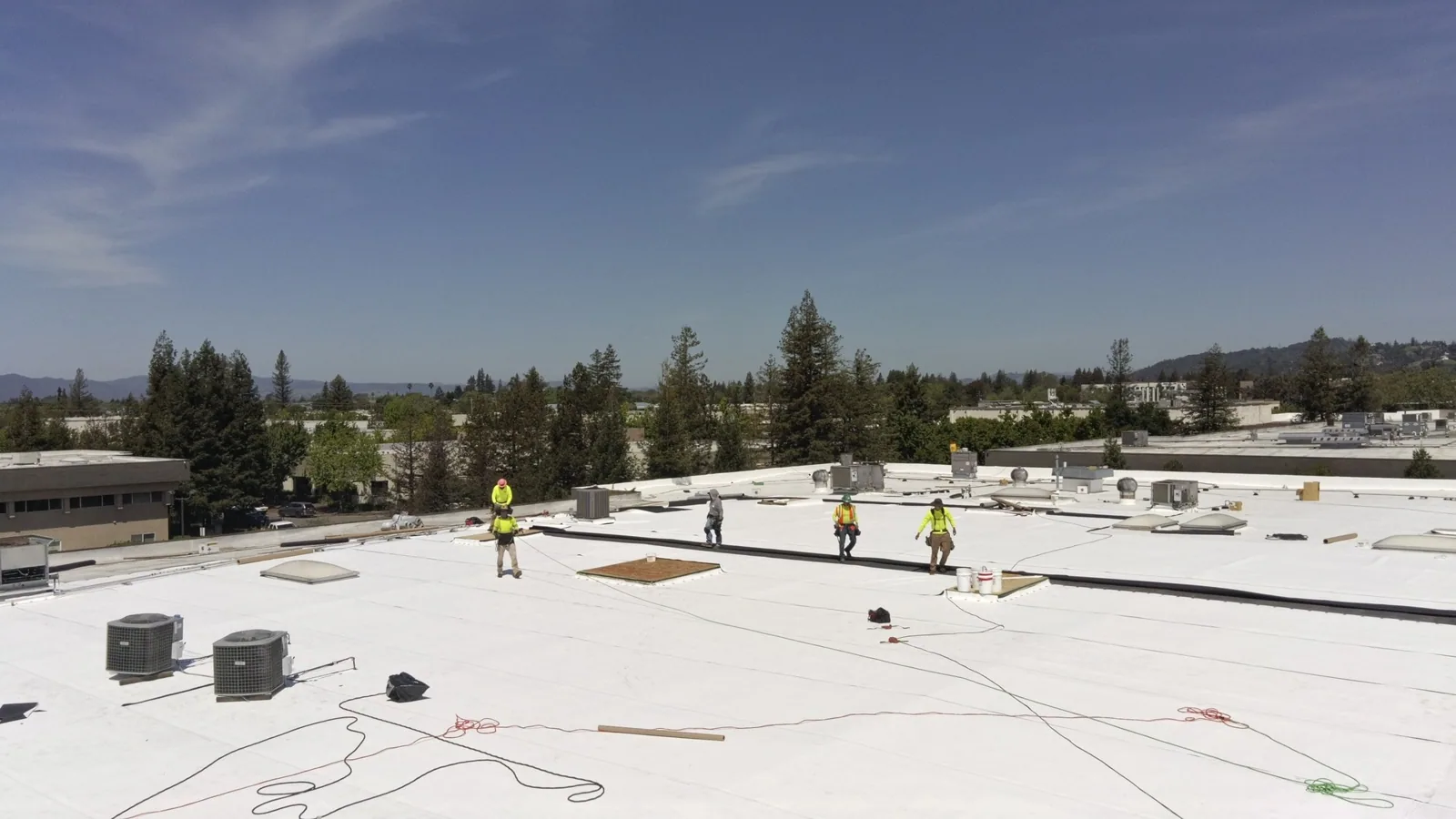
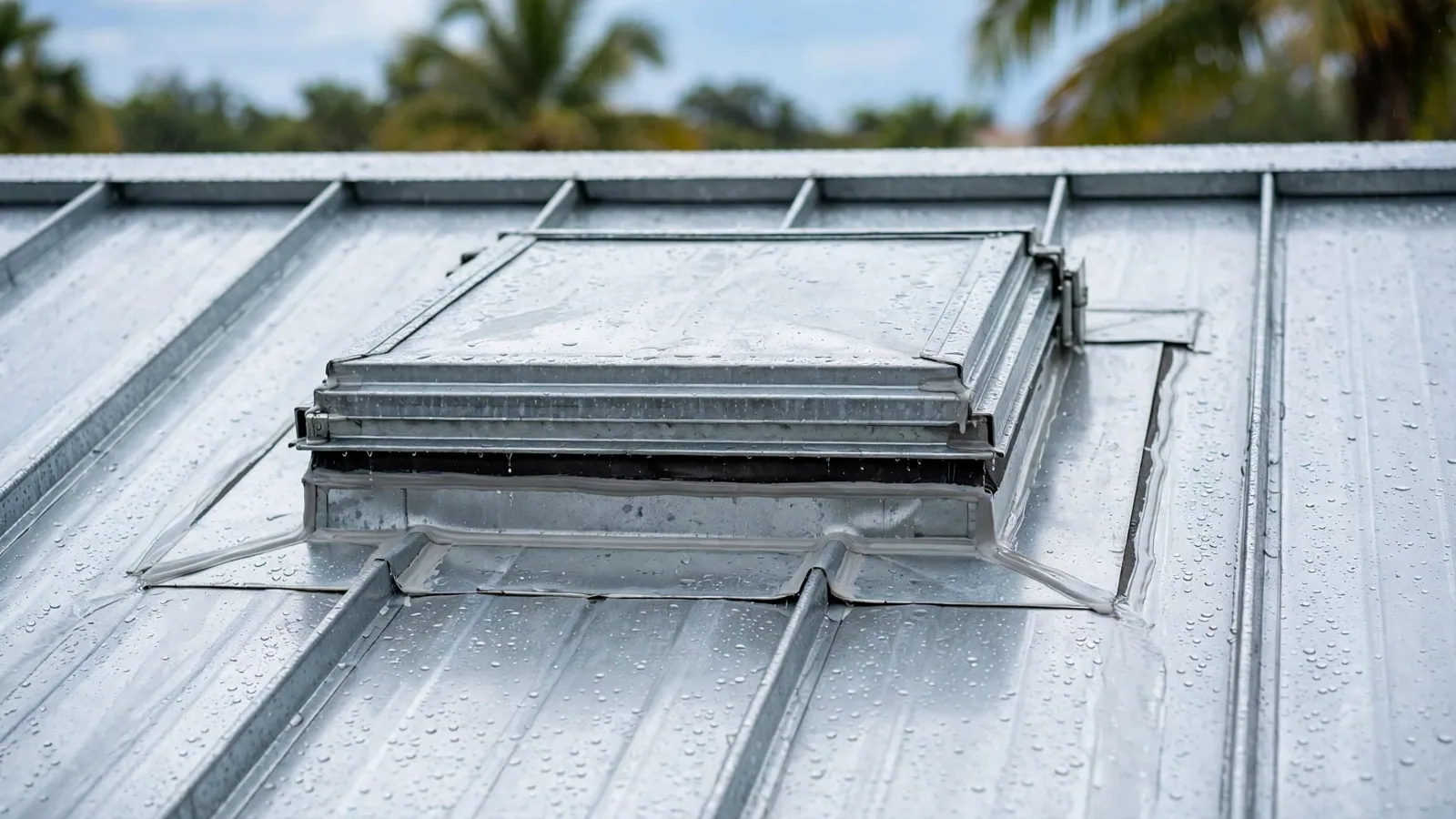
A displaced flashing corner can expose the roof assembly while rain is still falling. In Merced, CA, our emergency response addresses the immediate opening and the occupied space at risk beneath it. We examine what can be reached safely, what can be protected now and what needs permanent reconstruction after conditions improve. The first decision concerns active exposure, not the appearance of the finished patch.
Calls can reach our emergency service during the night, on weekends and on holidays. Roof access and current conditions still govern the work that can proceed. Downtown Merced has offices, restaurants and public uses with differing operating hours. Along the Highway 99 industrial areas, distribution activity can create a different interior priority. We ask where the water or exposed roofing threatens building use.
Immediate interior and roof conditions
Water beside electrical equipment needs action from the building team before the roof visit becomes the only response. Keep people out of affected areas and involve the appropriate emergency or electrical personnel where a hazard is present. A saturated ceiling can also require separation from occupants. We coordinate our roof work with those site conditions. Roofing intervention cannot make an unsafe interior suitable for use by itself.
On the roof, standing water, loose metal, unstable decking and adverse weather can limit access. We establish a safe approach before handling the defect. Some areas may need to remain inaccessible until conditions change or supporting construction is assessed. We explain the reachable work and the remaining exposure so the manager can make an informed decision about temporary interior protection.
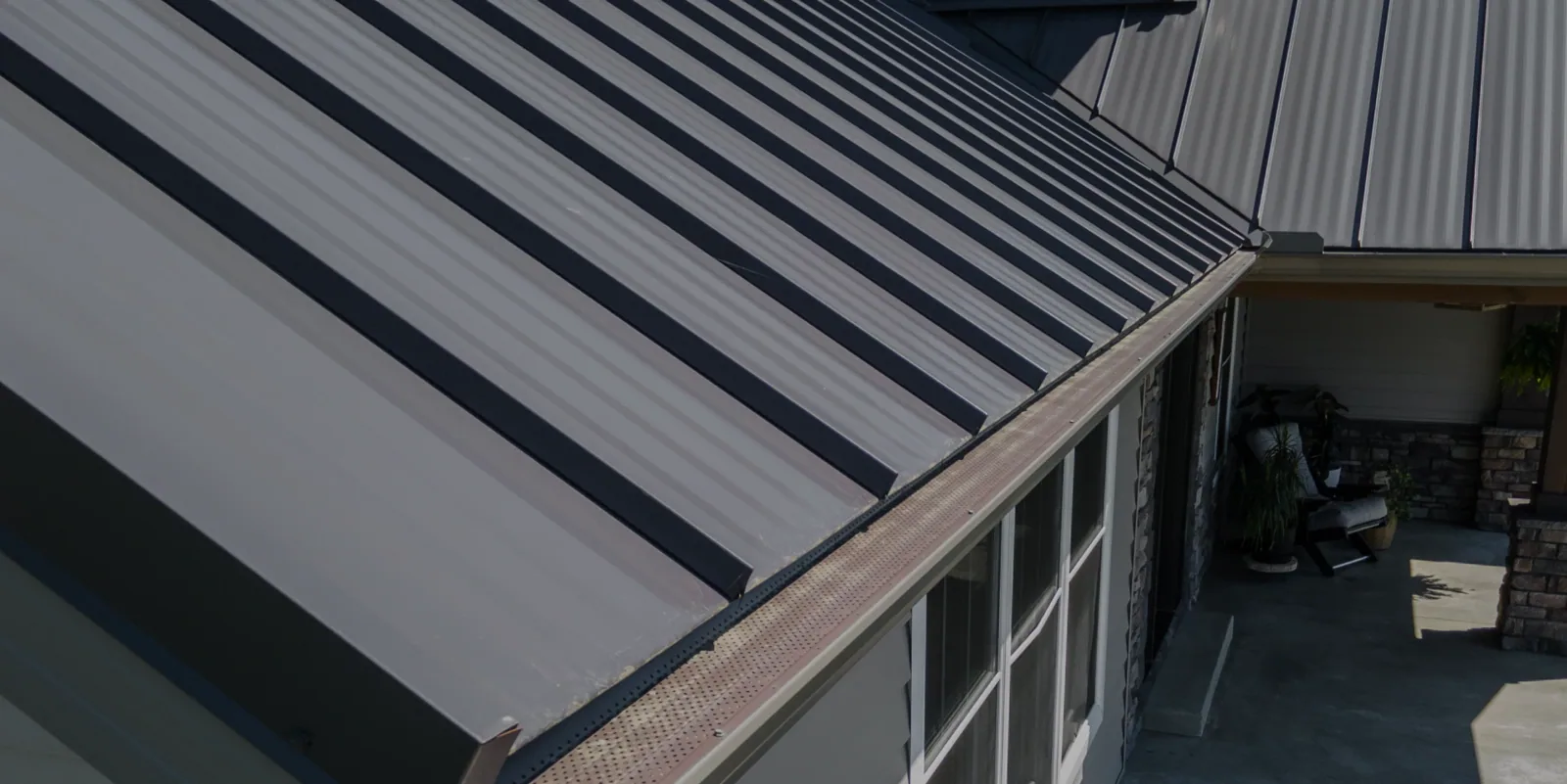
A detached edge component can present both a water opening and a falling-material concern. We examine its condition and connection before attempting a temporary closure. Edge-metal reconstruction may be necessary for the final repair. Securing or removing an unstable component needs to suit the actual attachment and site conditions rather than simply covering it with more material.
A temporary closure suited to the surface
A wet or contaminated surface may not accept the connection intended for a permanent repair. We assess the material, current exposure and available preparation before selecting temporary work. The interim closure may differ from the finished assembly. Its purpose and limits need to be clear. We identify the opening it addresses and the work still needed when the surface can receive proper preparation.
A sheet membrane opening and a displaced metal-panel detail require different stabilization. On a membrane, the usable surrounding material and the possibility of a compatible bond matter. On metal, loose components and the water path through the joint matter. We avoid applying the same temporary method to every defect. The manager receives a description of the selected intervention and its relation to the eventual reconstruction.
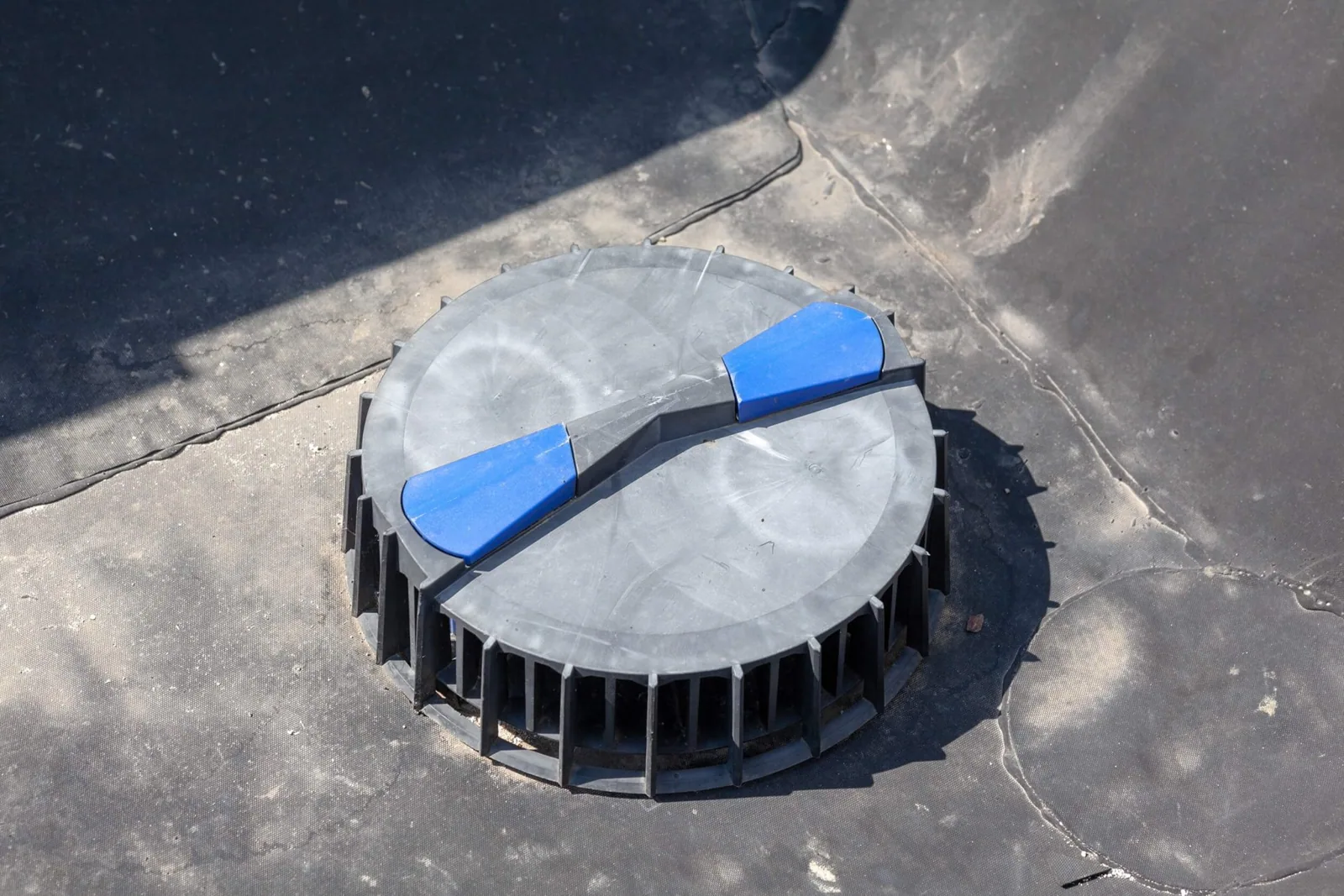
Water collected on the roof also requires attention. A blocked outlet may contribute to exposure, but clearing it safely depends on the water depth and access conditions. We evaluate roof drain and scupper conditions alongside the opening. An improvised attempt to release water should not create another hazard or damage a connection that was intact.
The building use below the opening
An active leak above stored product has a different operational consequence from water in an unused room. We ask the manager to identify affected uses, sensitive equipment and any area already closed. That information helps prioritize reachable roof work. It also helps the building team decide where temporary interior protection or relocation is needed while the permanent repair is prepared.
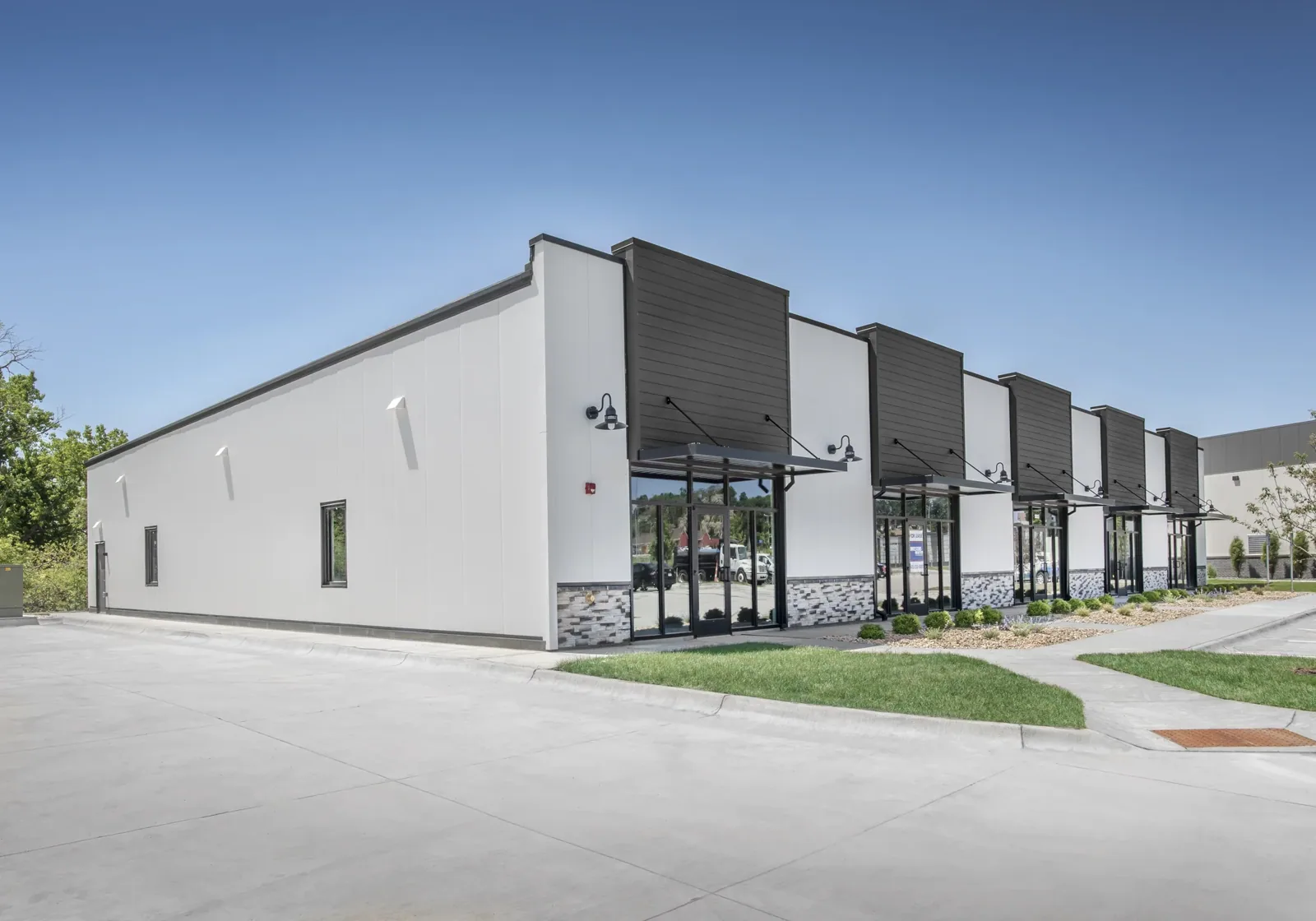
Merced has food and grocery distribution businesses in its industrial parks. A warehouse roof opening needs examination in relation to the goods and handling areas below. We do not infer those interior arrangements from the building type. We ask for the affected zone and compare it with the accessible roof detail. That gives the response a specific location and purpose.
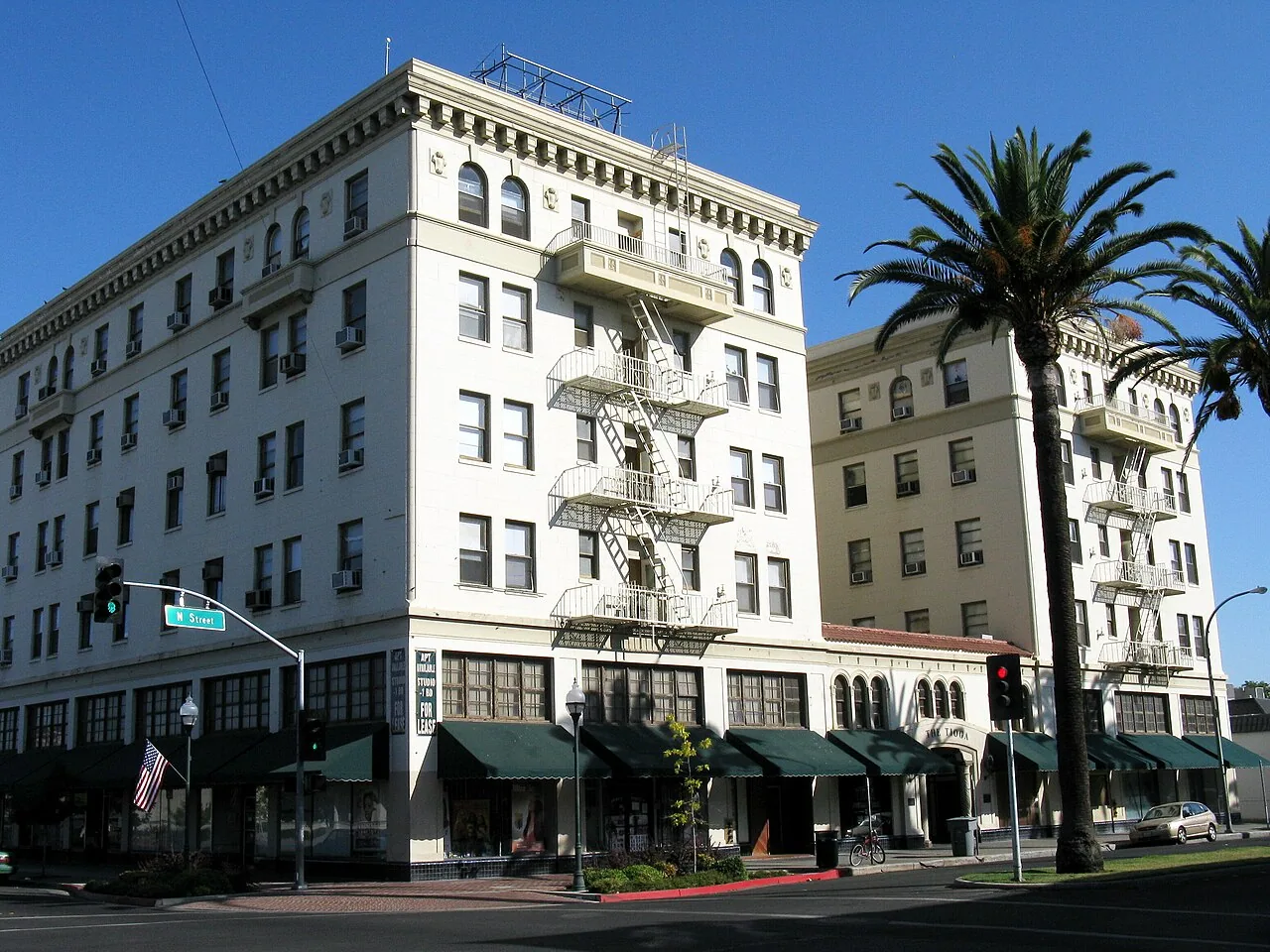
At a property in Downtown Merced, access through an occupied commercial building may require coordination with tenant entries and business activity. We identify a workable approach with the property team. Ground space for loose material removal also matters. Emergency work needs enough separation to protect people using the building while the roof defect is being handled.
Reconstruction after stabilization
A temporary patch can obscure the defect it covered. Before permanent repair, we examine the original opening, remove unsuitable temporary material where needed and assess the affected layers. Wet insulation, broken attachment and deteriorated deck construction each need a defined response. The final scope should address those conditions rather than assume that a dry interior after stabilization means all damage has been corrected.
A targeted leak repair can close a distinct entry path when surrounding material remains suitable. A larger opening may require reconstruction of the full detail or a roof section. We explain the difference after examination. Emergency urgency establishes the need to protect the building; it does not establish which long-term assembly will be appropriate.
Where a failed flashing connection caused the opening, we examine its attachment and movement before rebuilding it. Merced summer heat can stress transitions between exposed materials. The permanent connection needs to suit those materials and their movement. A rigid temporary closure may have served an immediate purpose without being an appropriate lasting detail.
The remaining exposure and next work window
We identify what was stabilized and what remains open or uncertain. Photographs and roof-zone descriptions help the manager connect that information with the affected interior. Any continuing restriction on roof access needs to be understood. A permanent work window then follows the required surface preparation, material availability, safe conditions and operating arrangements for the building.
Merced winter precipitation is greater than its midsummer normal rainfall. A temporary closure carried into another wet interval needs a clear follow-up decision. We discuss the remaining construction rather than treating the interim measure as indefinite maintenance. If water reappears, the building team should identify its location and timing. That information can indicate a separate entry path or a limitation in the temporary work.
The final emergency handover separates immediate protection from permanent repair. The manager can see which material was handled, which layers still require examination and what access is needed next. Cost drivers include safe access, removal of unstable construction and the extent of concealed damage. We describe those drivers directly so the next decision concerns the roof condition, not an assumed standard emergency patch.
Commercial Roofing Questions
Can roof work begin while rain is falling?
Safe access and the selected method govern that decision. Some temporary measures may be practical; others require a dry surface or improved conditions. We identify the reachable work and explain what needs to wait while the building team protects affected interior areas.
Should a manager send staff onto the roof to find the opening?
Avoid sending unprepared staff into a hazardous roof area. Interior location details and photographs can help us start the assessment. Loose components, standing water or uncertain deck condition need appropriate evaluation before roof access proceeds.
Does a temporary closure include the final flashing repair?
The interim and permanent work may be separate. We state which connection was protected and whether further removal or rebuilding is needed. A temporary surface treatment can leave attachment damage or wet layers requiring later construction.
What information helps with an overnight leak call?
Describe the affected interior zone, any electrical concern and the available building access. Explain whether water is ongoing and whether loose roof material is visible from a safe location. That gives the response a practical starting point without asking staff to investigate unsafe roofing.
Assessment of the active roof opening
Call with the location of the exposed flashing or active leak and the building area affected beneath it.
Related Roofing Work