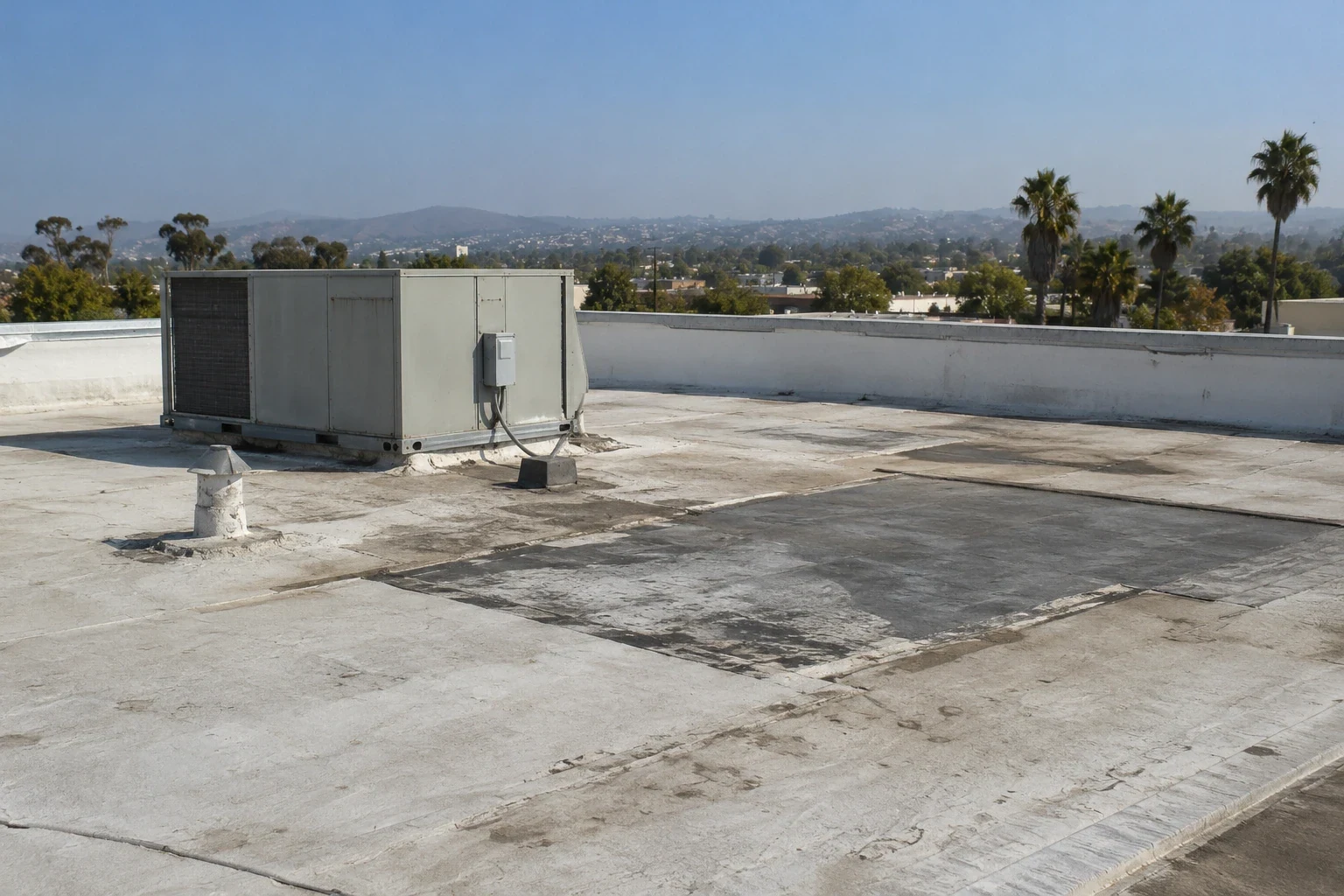
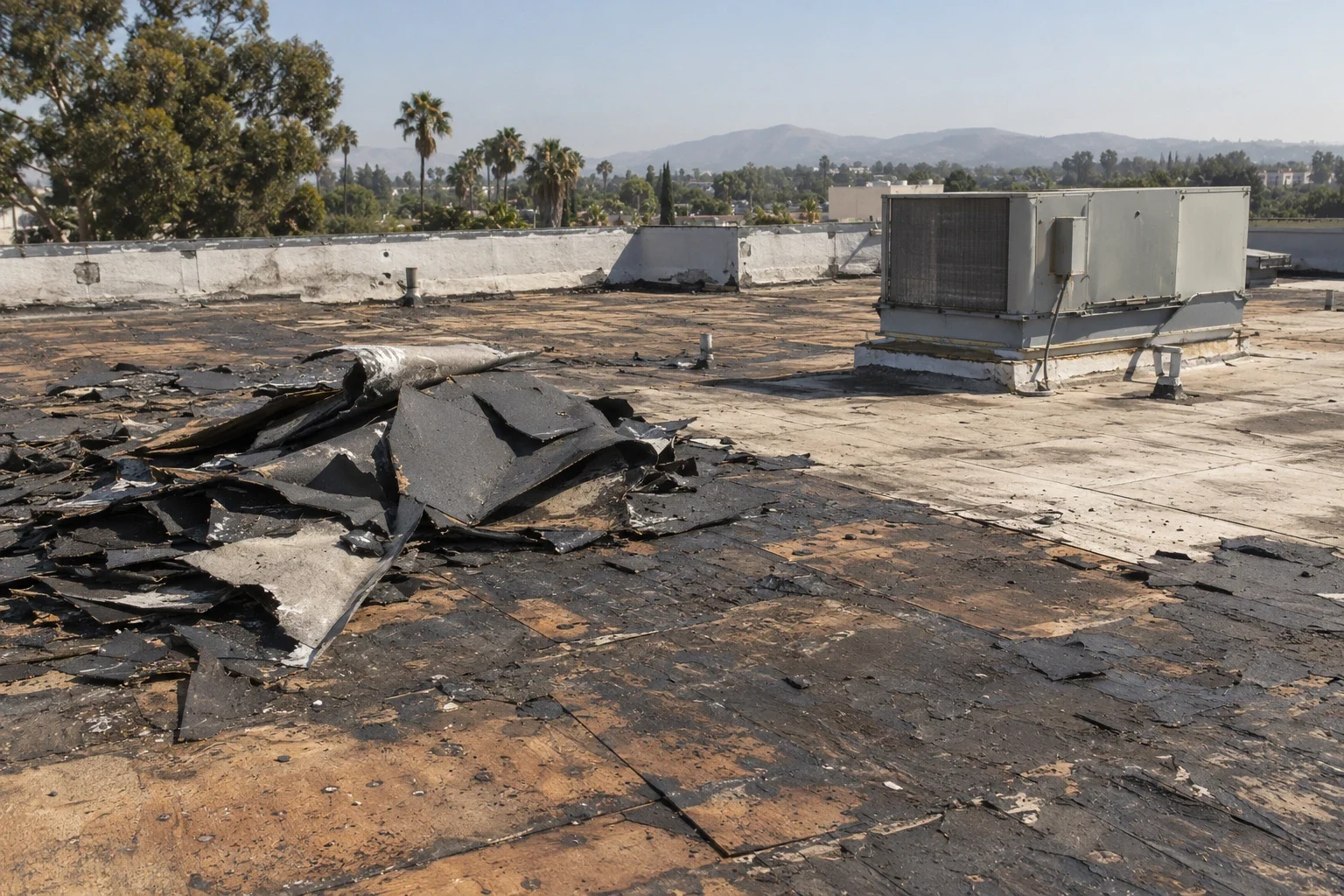
A loose counterflashing edge beside a rooftop unit can admit water before a ceiling stain appears. On the Merced segment of Highway 59, we inspect that transition with the surrounding seams, curb and drainage path, then record what is open and what remains sound. Merced sits at the connection of Highways 59, 99 and 140. That puts this road in a connected local setting, but it does not tell us what membrane or deck a particular property has. We inspect the named building and build the scope from its roof. Request an inspection when a recurring leak, lifted edge or drain concern needs a documented next step.
A local corridor, one roof at a time
This service area follows the portion of State Route 59 within Merced and the commercial properties connected to it by local streets. The route serves commercial properties along this in-city segment. From Merced, State Route 59 connects south toward State Route 152 and north toward the Sierra Nevada range. Our work here is limited to the Merced segment and nearby in-city access. A roof condition still depends on the assembly, drainage, exposure and maintenance history at the address being inspected.
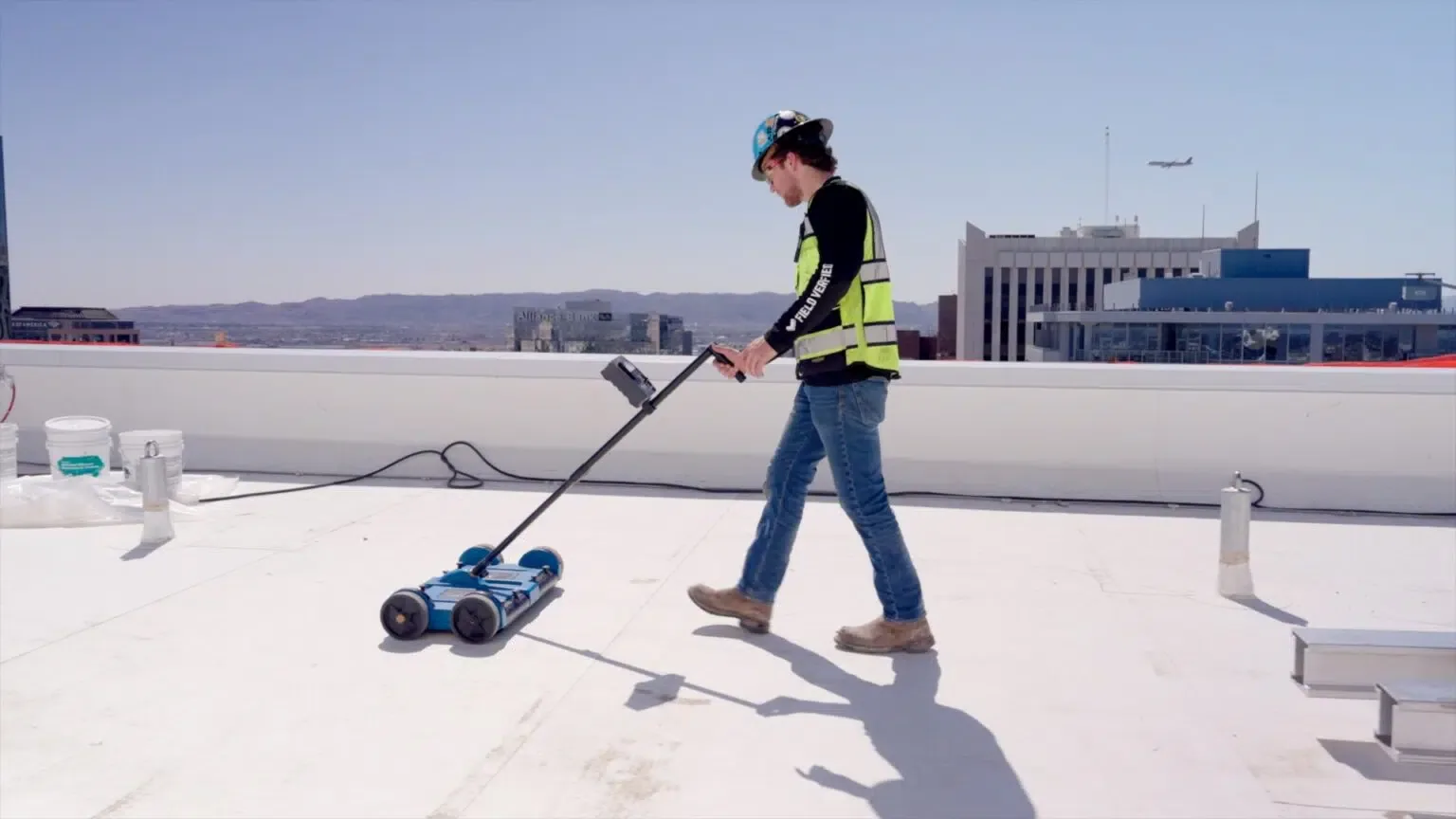
For a manager, the useful starting point is specific: where water appears, when it appears, and which roof area sits above it. We compare that report with the membrane, curb details, penetrations and interior conditions. A commercial roof inspection creates a record of visible defects and tests. When moisture may extend below the surface, an infrared moisture survey can guide selective openings. The scan suggests where to look; an opening confirms the layers at that point.
Trace the path before choosing a repair
Water rarely follows a straight line from roof entry to ceiling mark. It can travel along a deck flute, insulation joint or framing member and appear well away from an open seam. We map the interior mark, inspect the roof above it, and check nearby drains, laps and penetrations for a plausible route. Photographs show the observations before work starts. If a test cut is needed, the report identifies its location and what the exposed insulation and deck show.
Heat is one local condition to consider, not a diagnosis. Merced's July normal high is 96.3 degrees Fahrenheit. Along Highway 59, the roof surface, substrate, and drainage condition determine the repair sequence. We look directly for membrane shrinkage, open laps, brittle sealant, loose flashing or movement at an edge. A heat and UV damage assessment should connect visible change to the roof material and its attachment rather than assume temperature caused a leak.
Set limits around confirmed conditions
A localized repair makes sense when the surrounding assembly is dry and secure. We prepare the affected surface, use materials compatible with the existing membrane, and tie the repair into a sound boundary. At a pipe or equipment curb, attachment and flashing height can matter as much as the sealant line. If wet insulation extends past the first opening, covering it would leave the damaged layer in place. We document the revised condition and ask the owner to approve an expanded scope before removal continues.
Drainage receives the same attention. A clear strainer does not prove that a sump, drain connection or roof slope is working. We note the ponding footprint, check for sediment and deformation, and identify whether a drainage correction belongs in the project. A bounded roof repair can retain sound material when defects are isolated. A coating or recovery is considered only if moisture, attachment, surface preparation and drainage support it. If damage is broad or the deck is compromised, a replacement evaluation compares removal and rebuild options instead of hiding uncertainty.
Plan access around operating space
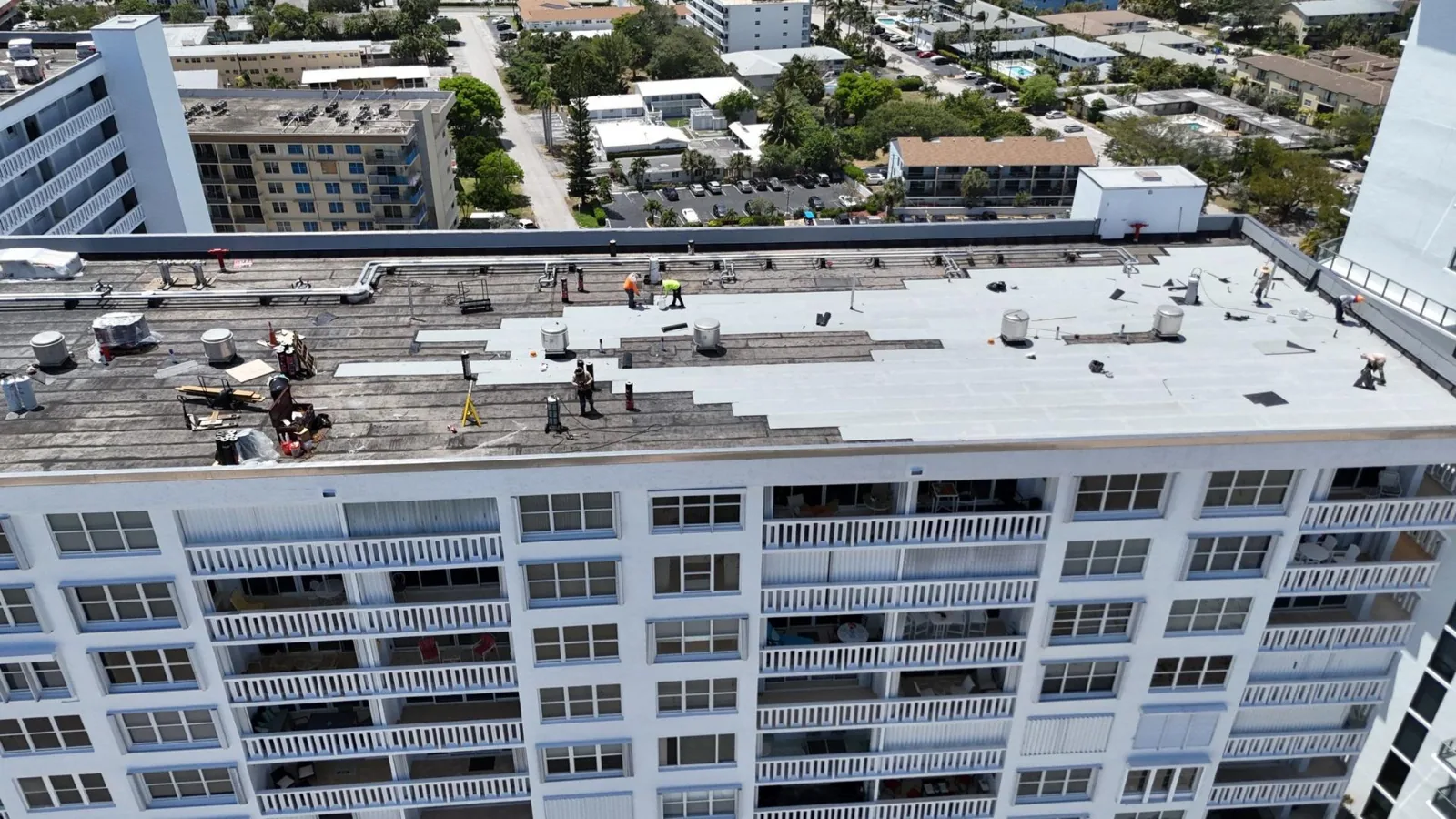
Highway 59 connects to parts of Merced with different commercial uses, so work sequencing starts with the property rather than a generic schedule. Before opening the roof, we confirm hatch access, equipment clearances, staging space and the area below the work. A tenant entrance may need a protected route. A storage or production area may need interior separation before material is removed. The written plan sets the work window, temporary dry-in method and the person who reviews a condition that falls outside the approved boundary.
During removal, the crew keeps drains open, secures loose materials and protects exposed layers at the end of the shift. If a test opening shows a larger wet area or deck damage, work pauses at a safe stopping point while photographs and the added scope are reviewed. For phased work, an occupied-building reroofing plan can divide a project by roof section and access needs. After repairs, a maintenance inspection compares the drain, laps, equipment flashings and patch perimeter with the closeout photographs.
Give the owner a usable roof record
Merced has three industrial parks, and its local business areas connect with Highway 99 and rail service. That context helps explain why commercial roofs in the city may sit over different operating needs; it does not establish the condition of any particular building. We assess the property named in the request, identify the roof assembly we can see, and state which areas were not inspected. If the report cannot confirm a concealed condition, it says so plainly.
A useful closeout records the defect, moisture findings, materials removed, repair limits and unresolved items. It separates a condition that needs prompt action from one that can be monitored. The Highway 140 corridor and Downtown Merced are separate local service areas, while Atwater is another nearby route. A roof walk at your property is still needed to establish its assembly and condition. Send the leak location, timing, known roof material and access limits. We will walk the roof, photograph the details and return a written scope that lets the manager choose the next step.
Commercial Roofing Questions
A ceiling mark is several feet from the roof penetration. Where do you begin?
We map the interior mark, inspect the roof area above it and follow plausible paths along seams, insulation joints and deck flutes. Nearby curbs and drains are checked as well. If surface evidence cannot confirm the wet layer, a selective test opening may be needed. The report identifies what was observed and what remains uncertain.
Does an infrared scan confirm wet insulation?
No. A thermal pattern can help select areas for closer inspection, but an opening confirms the layers at that location. We compare scan findings with roof and interior evidence, then record the tested areas. The scope does not treat an unverified pattern as proof of concealed damage.
How do you prevent a repair from expanding without owner review?
The work order identifies the starting boundary and layers approved for removal. When an opening reveals a condition outside those limits, we secure the roof, photograph the finding and present the added work for approval before extending the repair. The closeout records why the boundary changed.
Can a repair be limited to a small area on a larger roof?
Yes, when inspection shows the adjacent membrane and substrate are serviceable and shared drainage or transitions do not change the scope. We map the included area, check nearby details and note roof sections not covered by the work. The written boundary reflects the observed condition.
What should be checked before a coating is considered?
We inspect membrane condition, attachment, drainage, penetrations and moisture in the proposed area. A coating needs a sound, prepared substrate and cannot correct wet insulation or a failing deck. If those conditions are not present, we compare selective removal, repair or replacement instead.
Request a Merced roof inspection
Share the roof area, visible defect, leak timing and building access limits. We will inspect the membrane, drainage and transitions, photograph findings and return a written repair boundary.
Related Roofing Work