
A blistered coating and an open thermoplastic seam need different checks. We identify the existing assembly before recommending a repair, recover or replacement. Membrane type, attachment, insulation, deck, penetrations and drainage all affect how a new layer can connect. In Merced, summer heat makes movement at seams and metal transitions worth attention, but the visible material and its condition control the decision. We install and service single-ply, metal, built-up, modified-bitumen, foam and coating assemblies.
Single-ply membrane choices
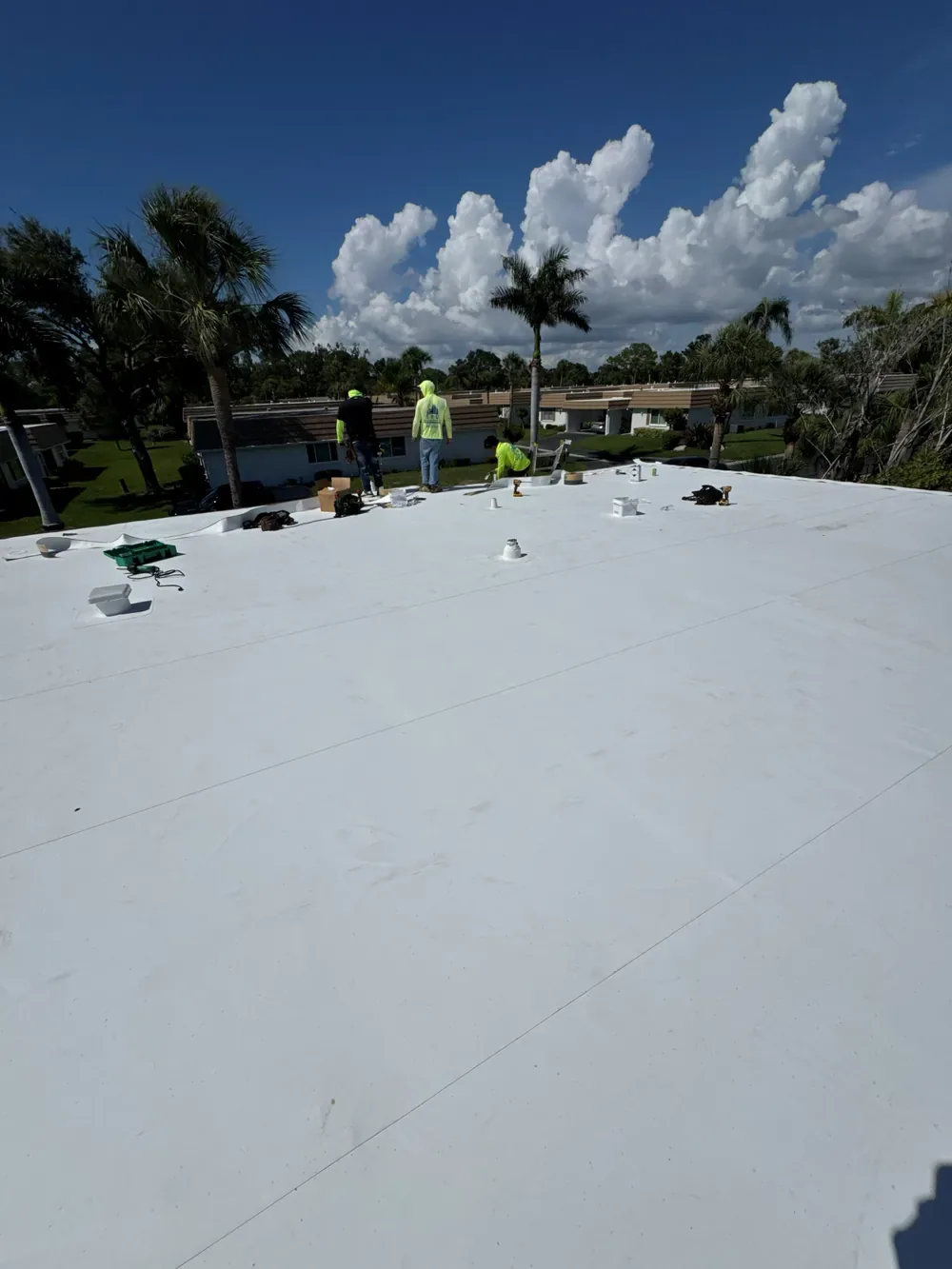
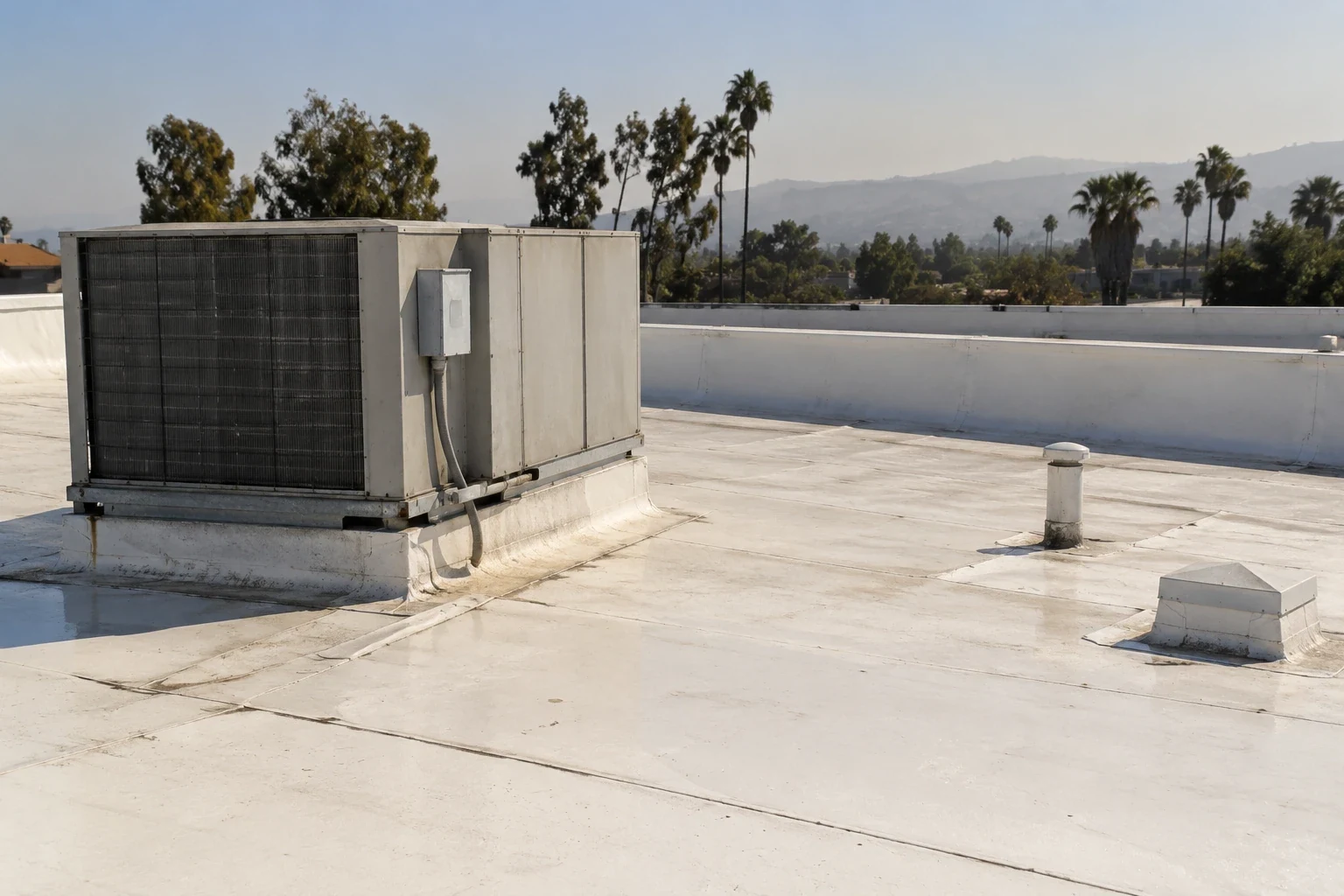
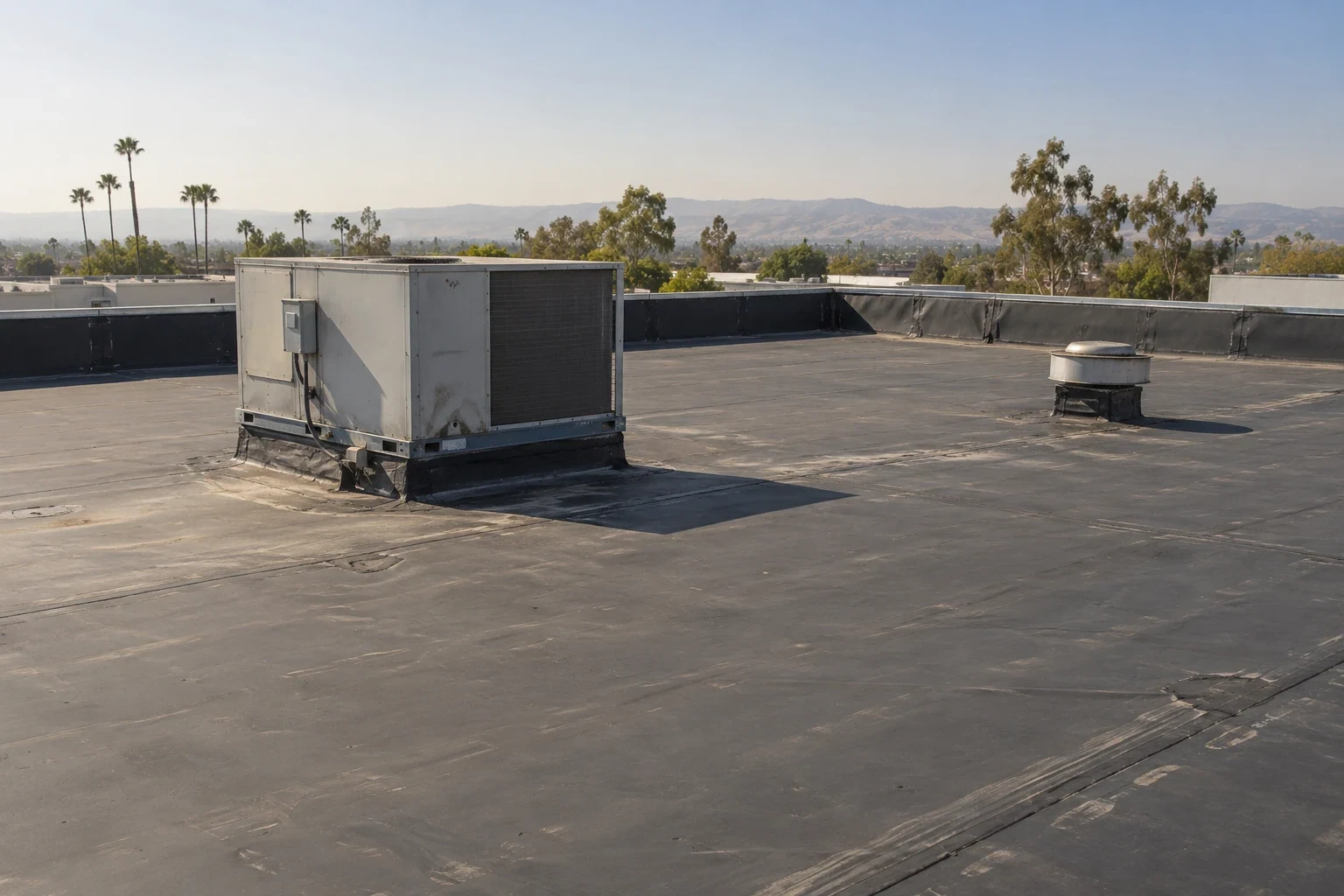
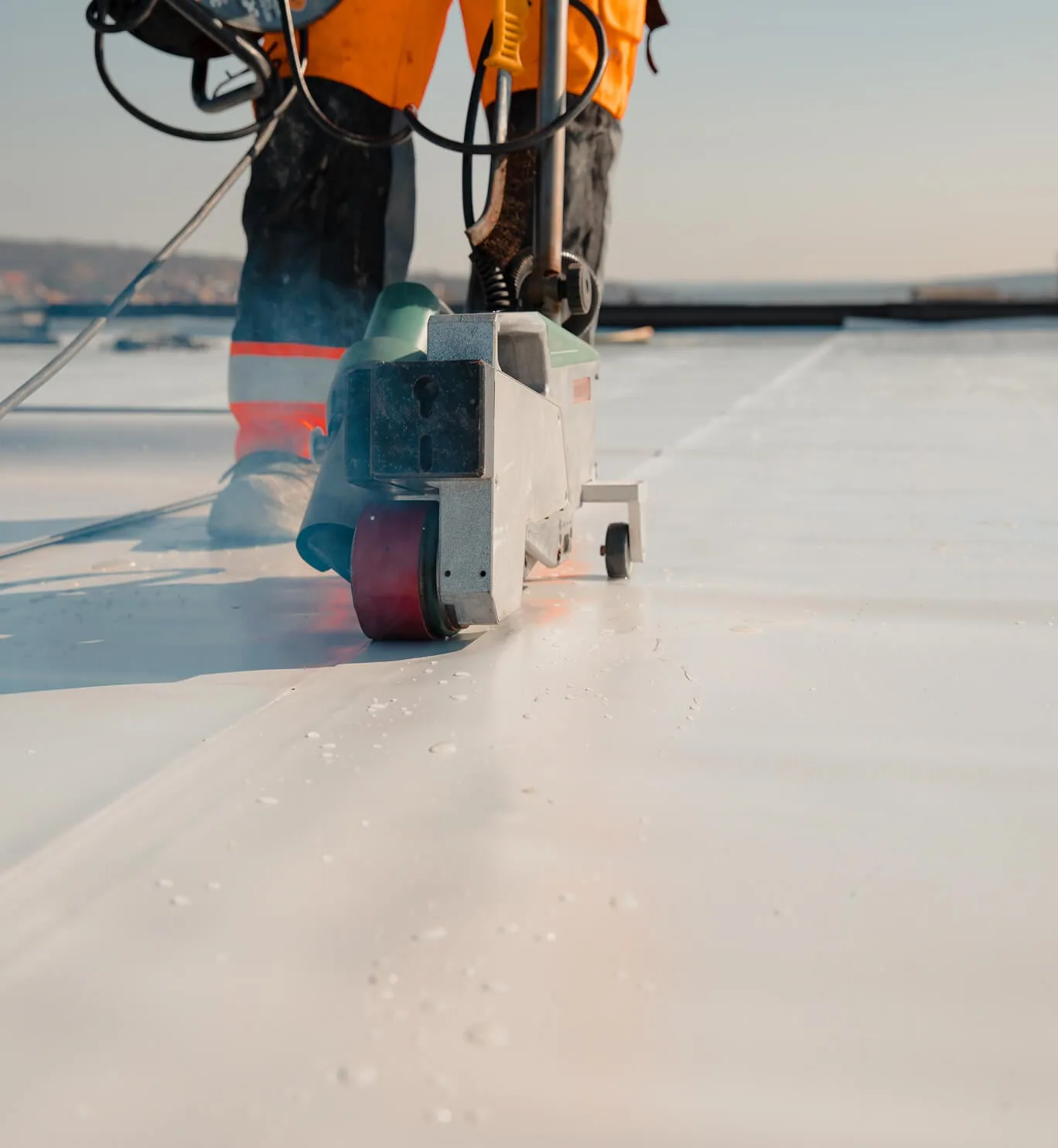
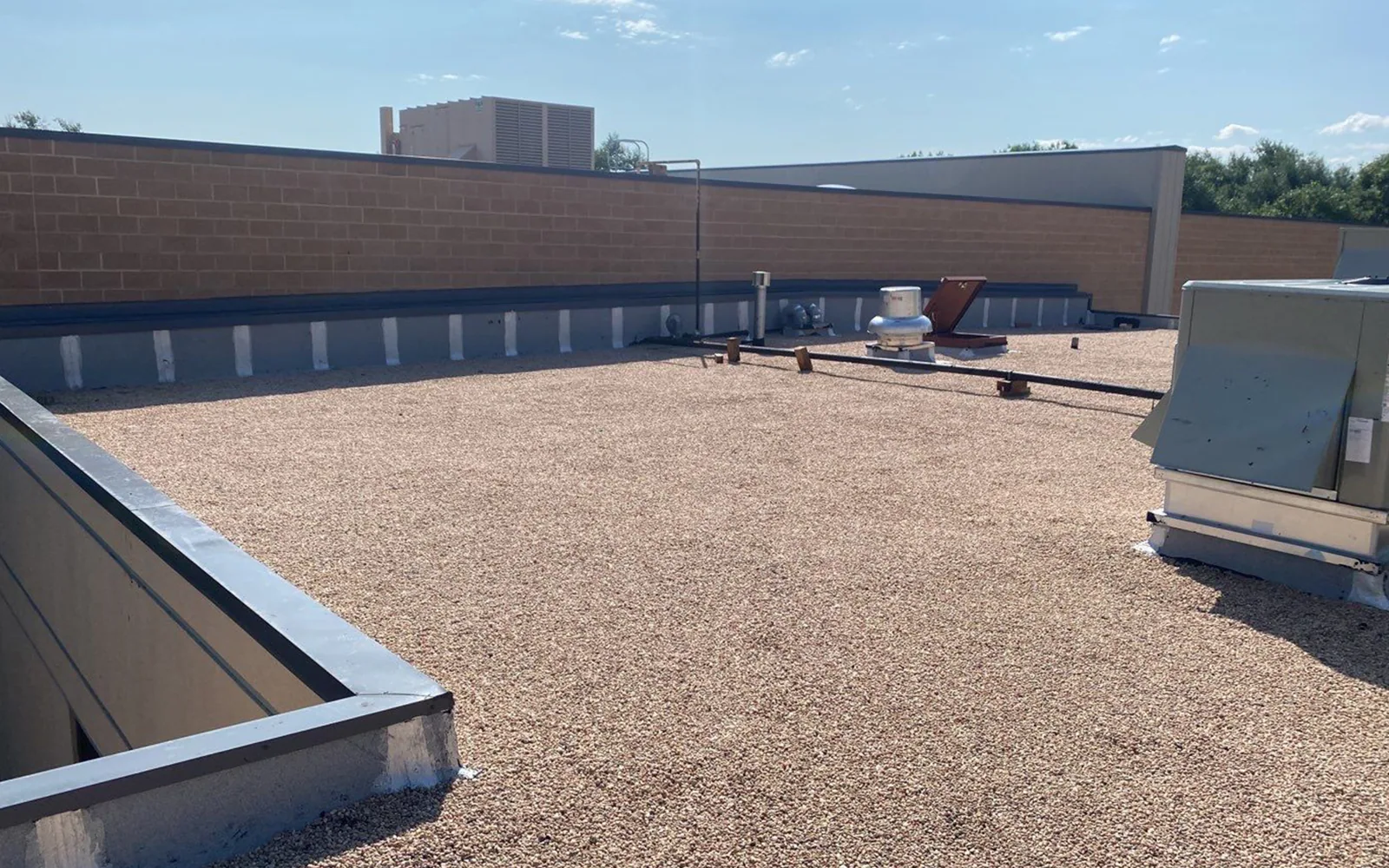
TPO, PVC, KEE and EPDM differ in chemistry and in how their seams and repairs are made. A heat-welded sheet needs a compatible surface and sound weld area. EPDM relies on prepared bonded details. We inspect laps, edge attachment, curb flashings and prior patches before deciding what can remain. A TPO assembly, PVC membrane or EPDM roof should be compared against the building's use, drainage and maintenance access, not color alone.
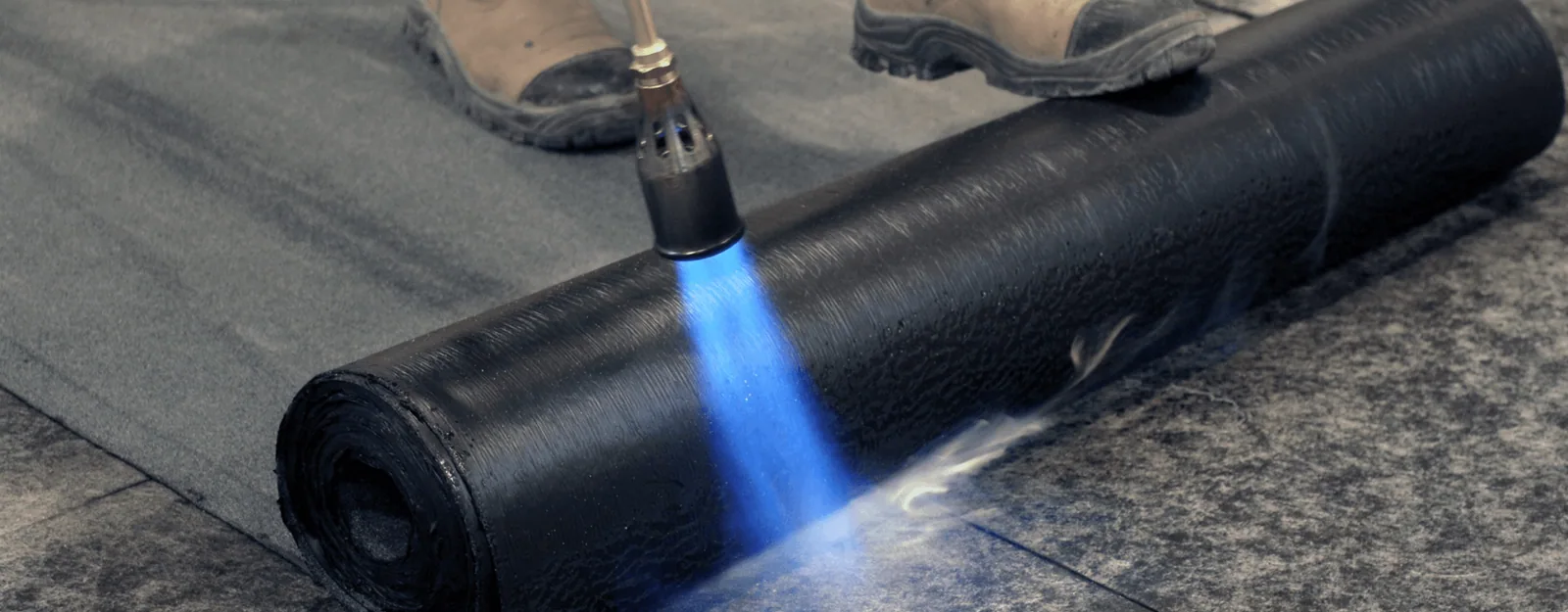
Built-up and modified bitumen
Multiple plies create a different inspection question than a single sheet. We look for splits, displaced surfacing, open laps and evidence that moisture has reached the insulation or deck. A modified-bitumen system and a built-up assembly can both require careful review of existing layers and attachment. If the roof has received repeated repairs, the scope should state which layer is being restored and where removal stops. Drainage and exposed edge details belong in the same comparison.
Metal, foam and coating assemblies
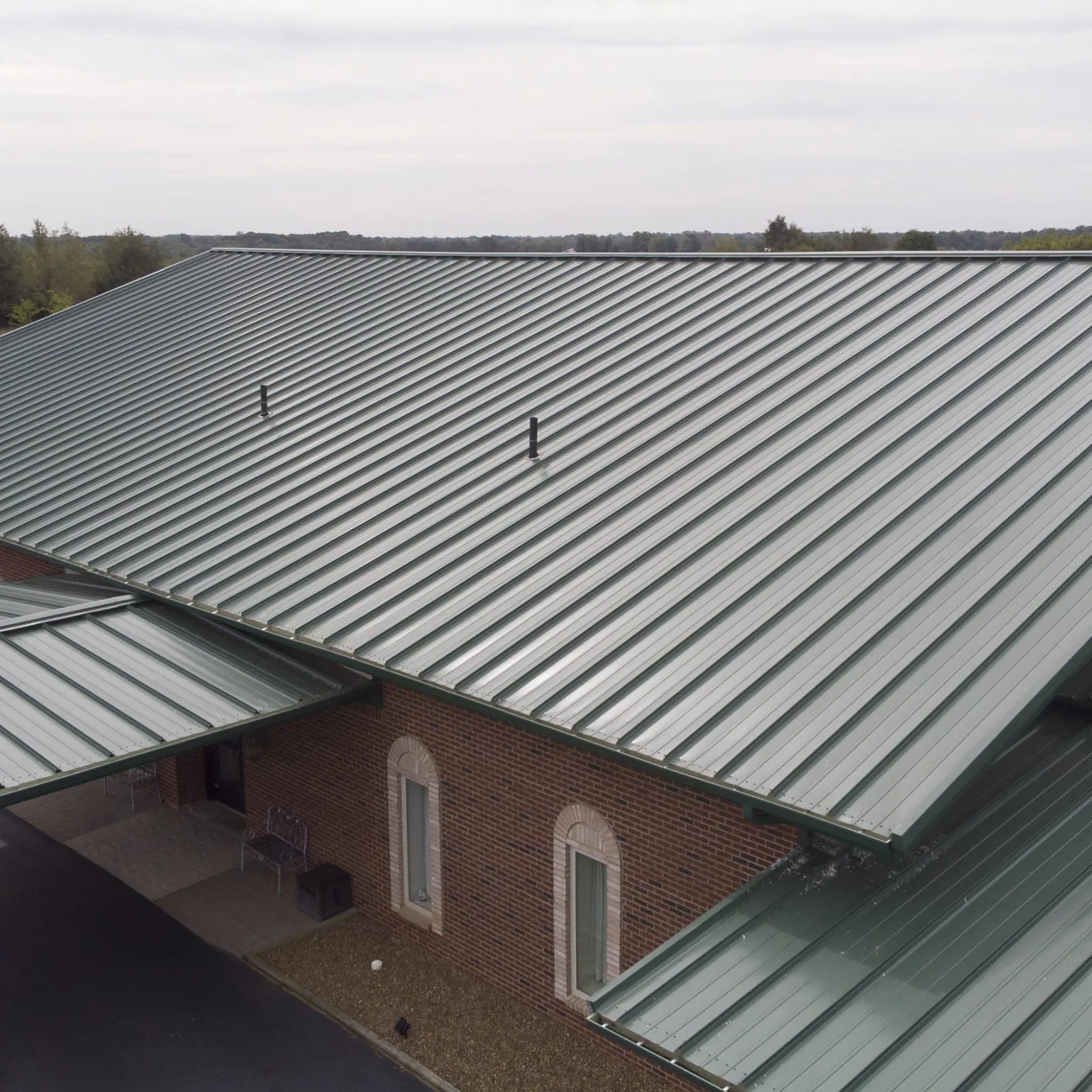
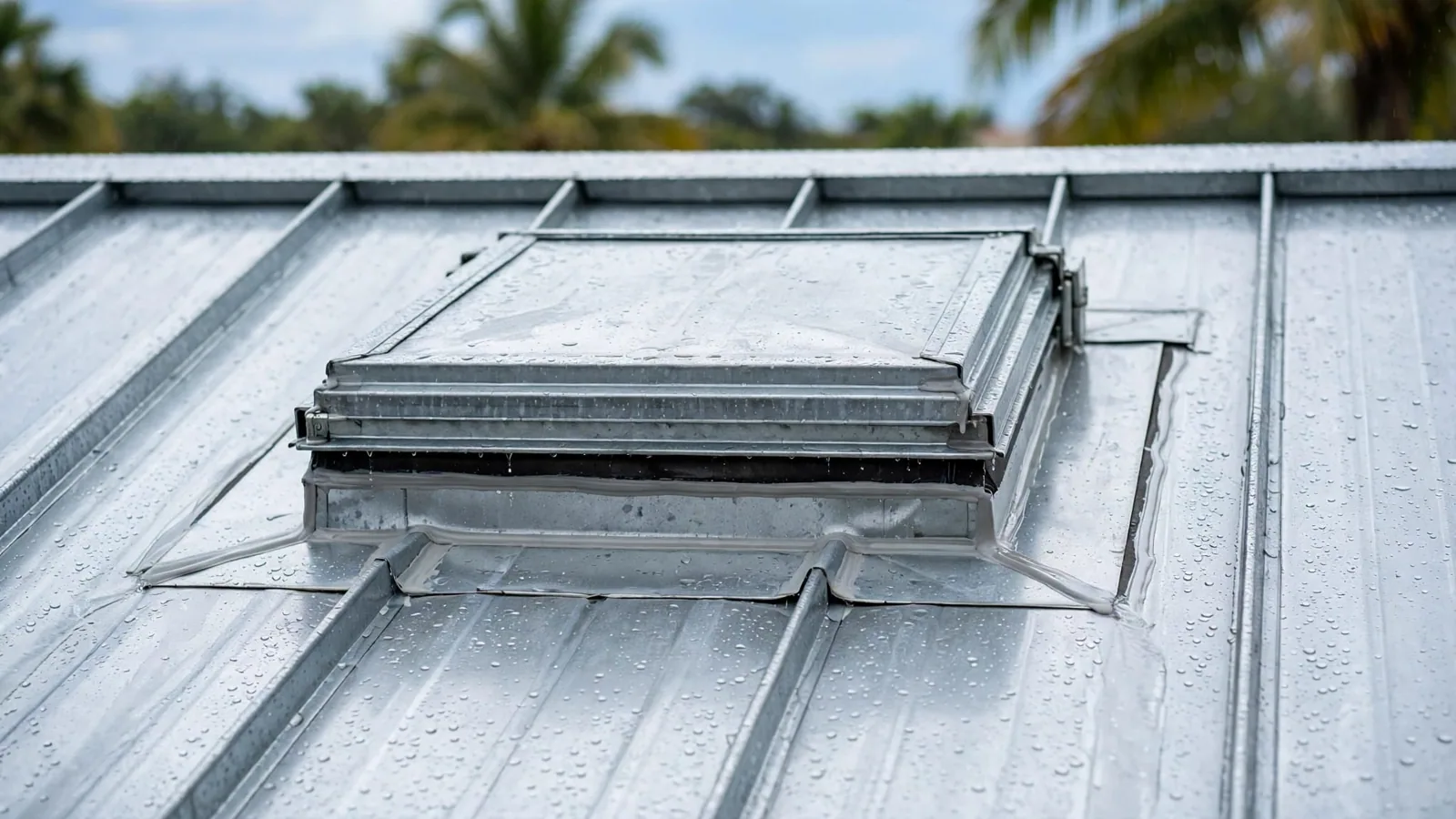
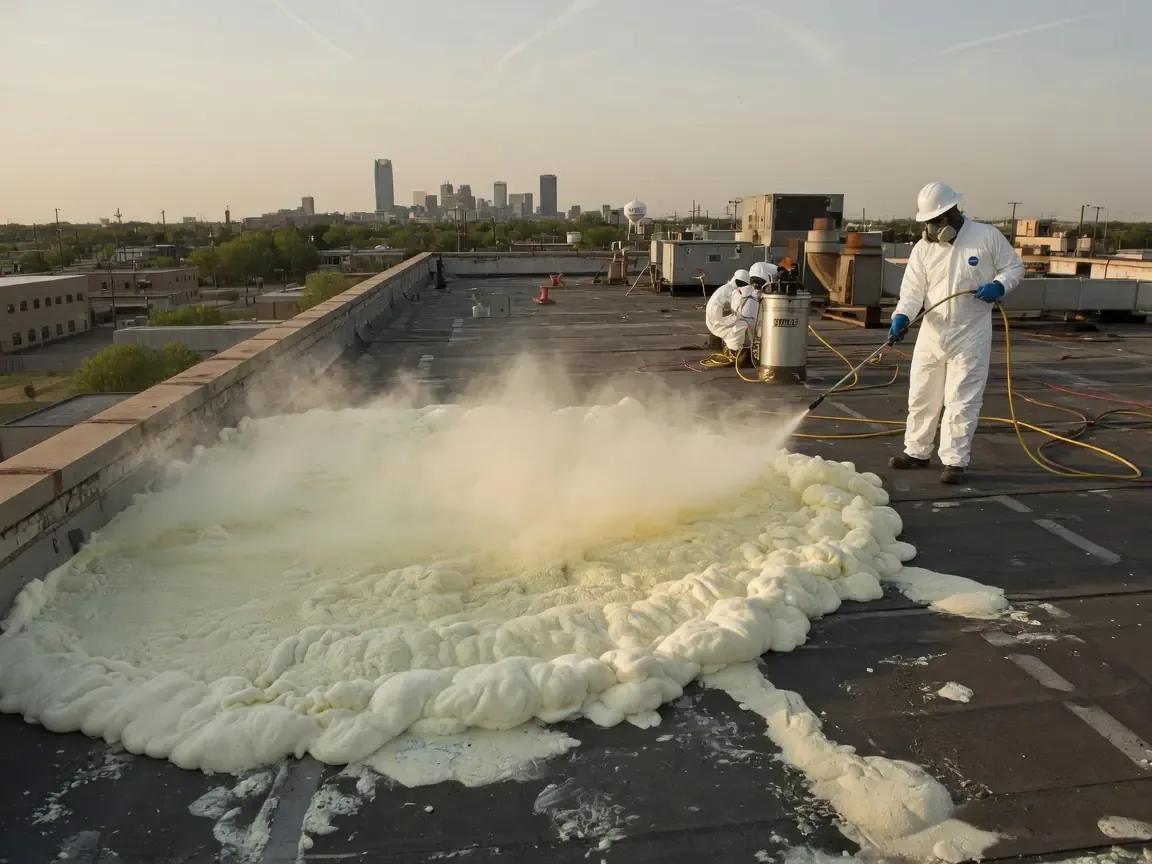
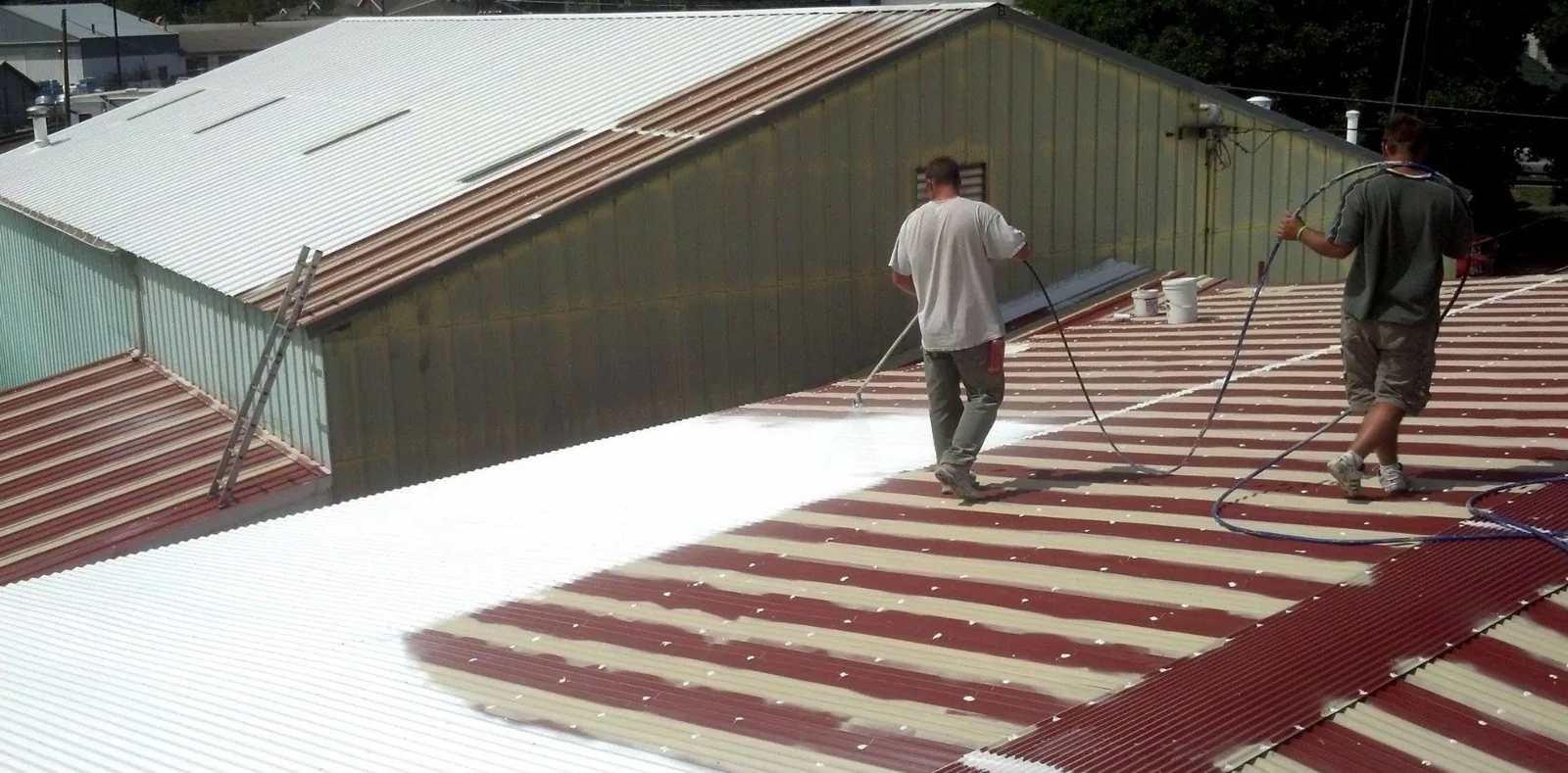
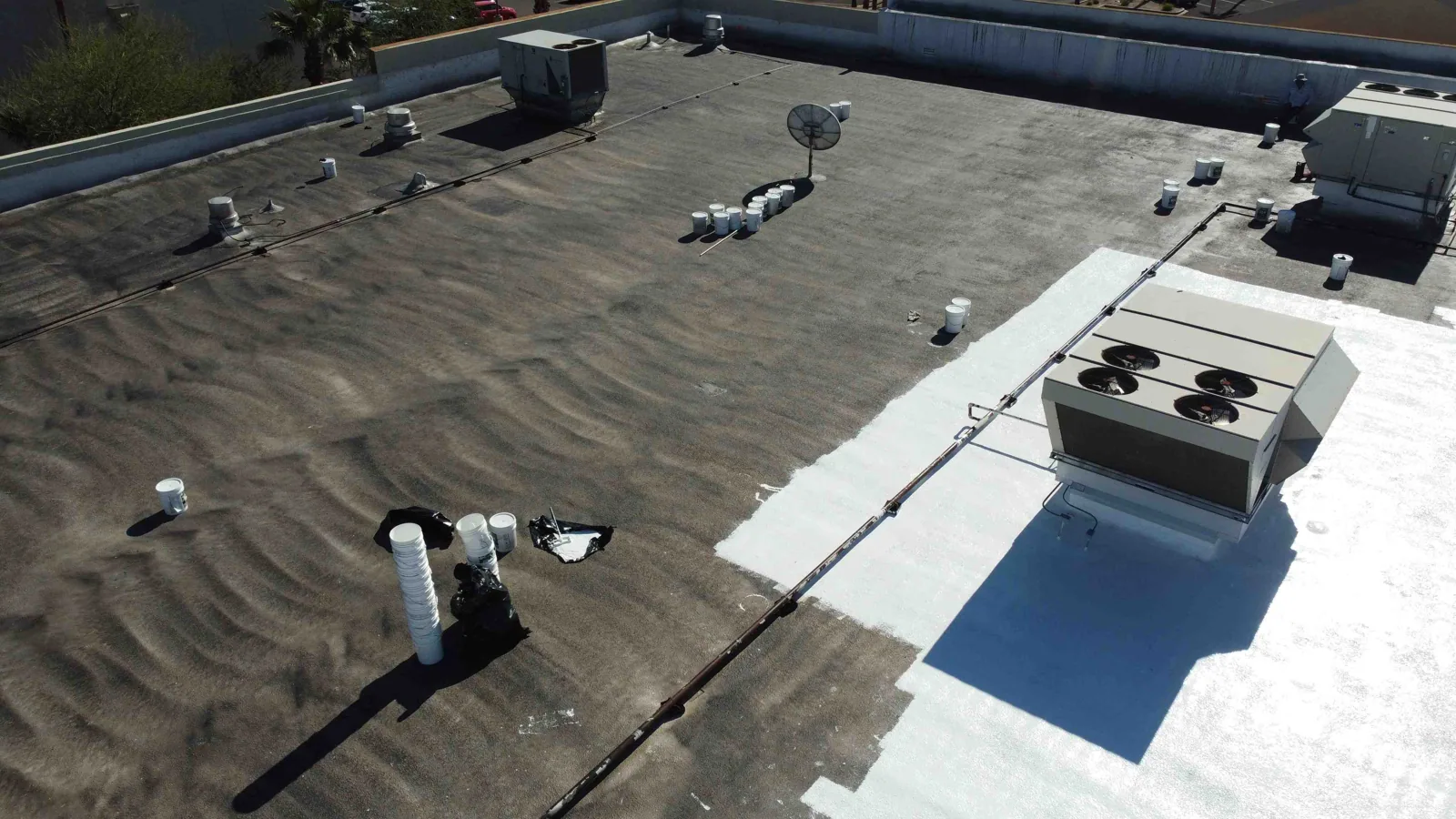
Metal roof work may involve panel seams, fasteners, closures and transitions where additions meet. A standing-seam roof can need a different detail than a metal retrofit. Foam and liquid-applied options also depend on preparation and substrate condition. We evaluate silicone coating only after checking adhesion, existing repairs, drainage and moisture below. A new surface does not resolve wet insulation or loose support.
Compare an assembly by evidence
A material choice starts with the roof that is present. We document test openings, attachment, retained layers and the condition around curbs and drains. A roof inspection records those findings; a replacement scope then compares removal, recover eligibility, insulation and phasing. Merced's food-production, manufacturing and distribution uses bring different operating constraints, so delivery access and interior protection can affect the sequence. The selected system should fit those conditions and the owner's maintenance plan.
Commercial Roofing Questions
Can a new membrane go over the existing roof?
A recover is considered only after attachment, moisture, deck condition and remaining layers are checked. If wet insulation or unstable material would stay below, removal may be the better scope.
Does a metal roof always need replacement when it leaks?
Not automatically. We inspect fasteners, panel laps, closures and transitions. A localized detail may be repairable; broader corrosion or movement can change the boundary.
How do you compare two membrane options?
We match the proposal to the existing assembly, drainage, use, attachment and repair requirements. The scope also states what preparation and closeout the chosen system needs.
Can a coating correct wet insulation?
No. A coating is a surface restoration choice only when the underlying assembly is suitable and dry. Testing and removal decisions come first where moisture is suspected.
Identify the assembly first
Request an inspection of the membrane, metal details or coating condition before comparing roof-system options.