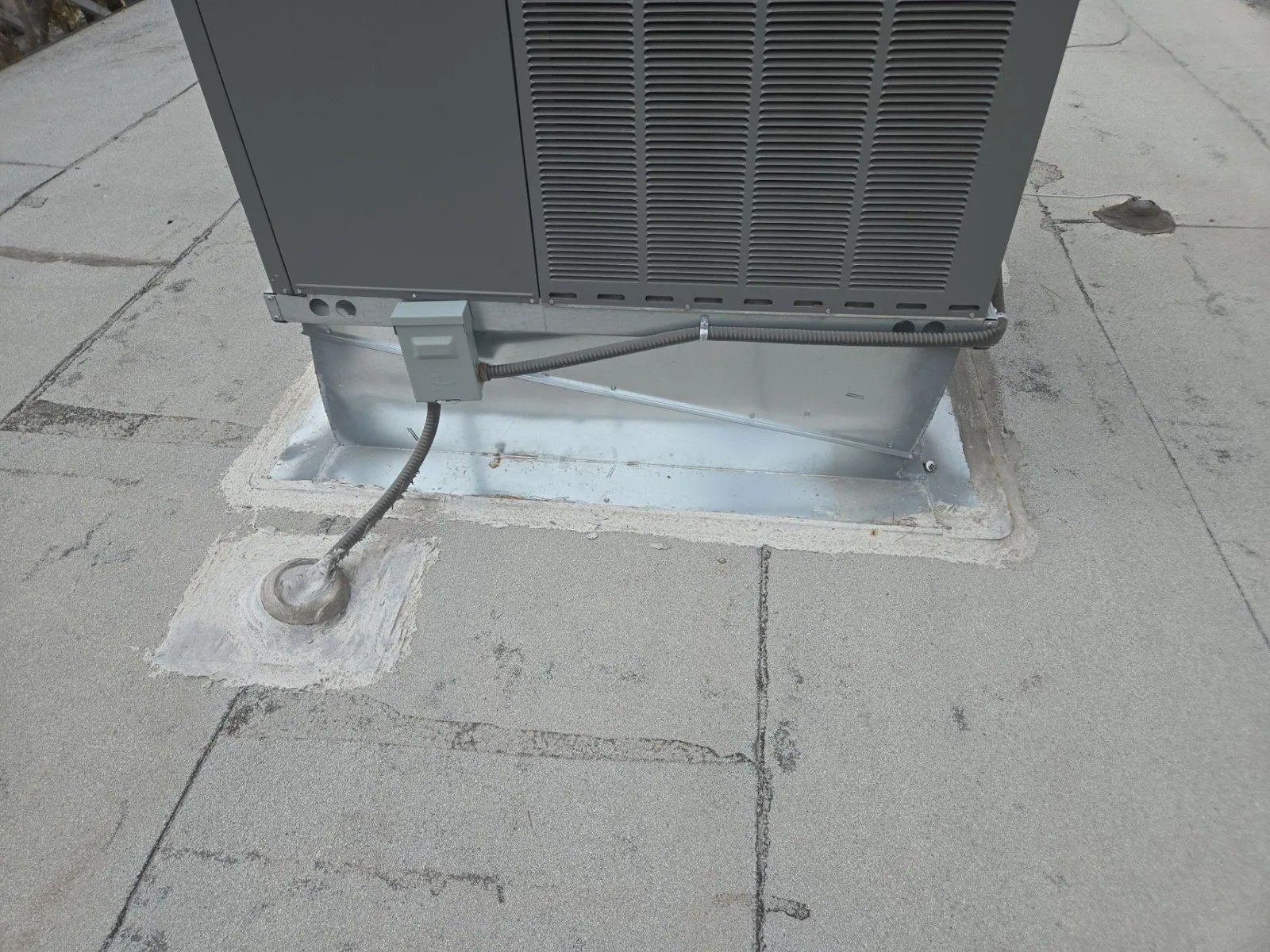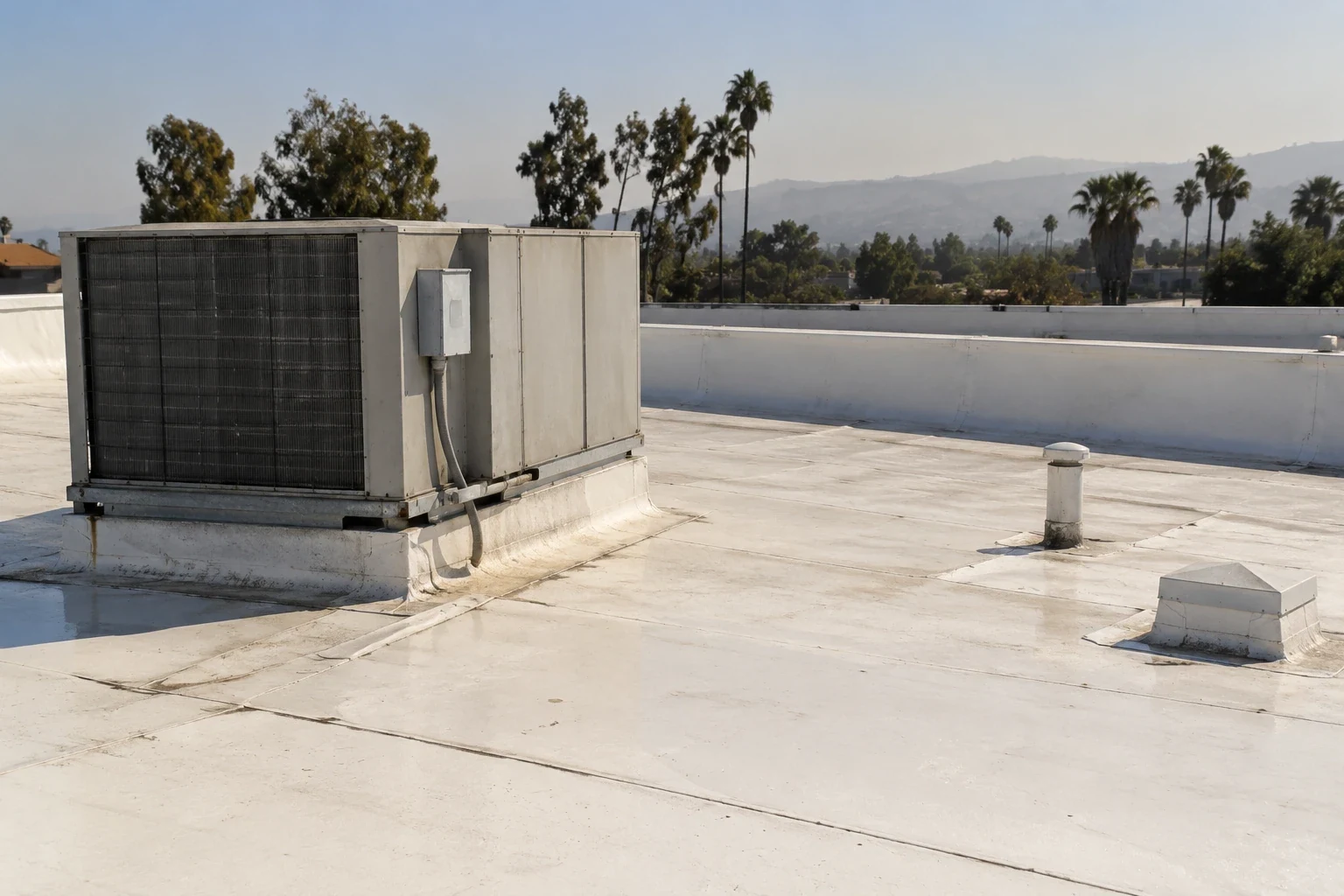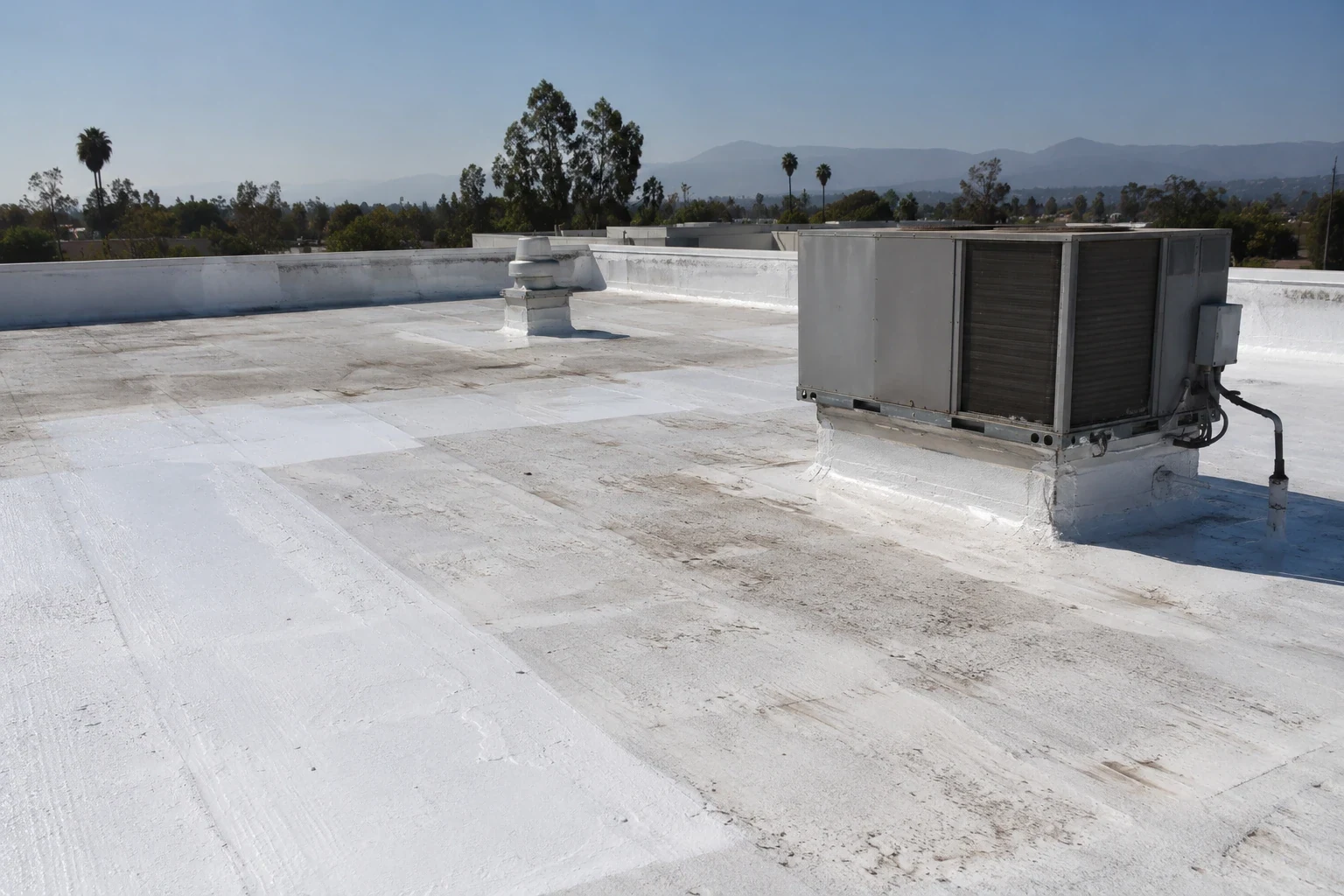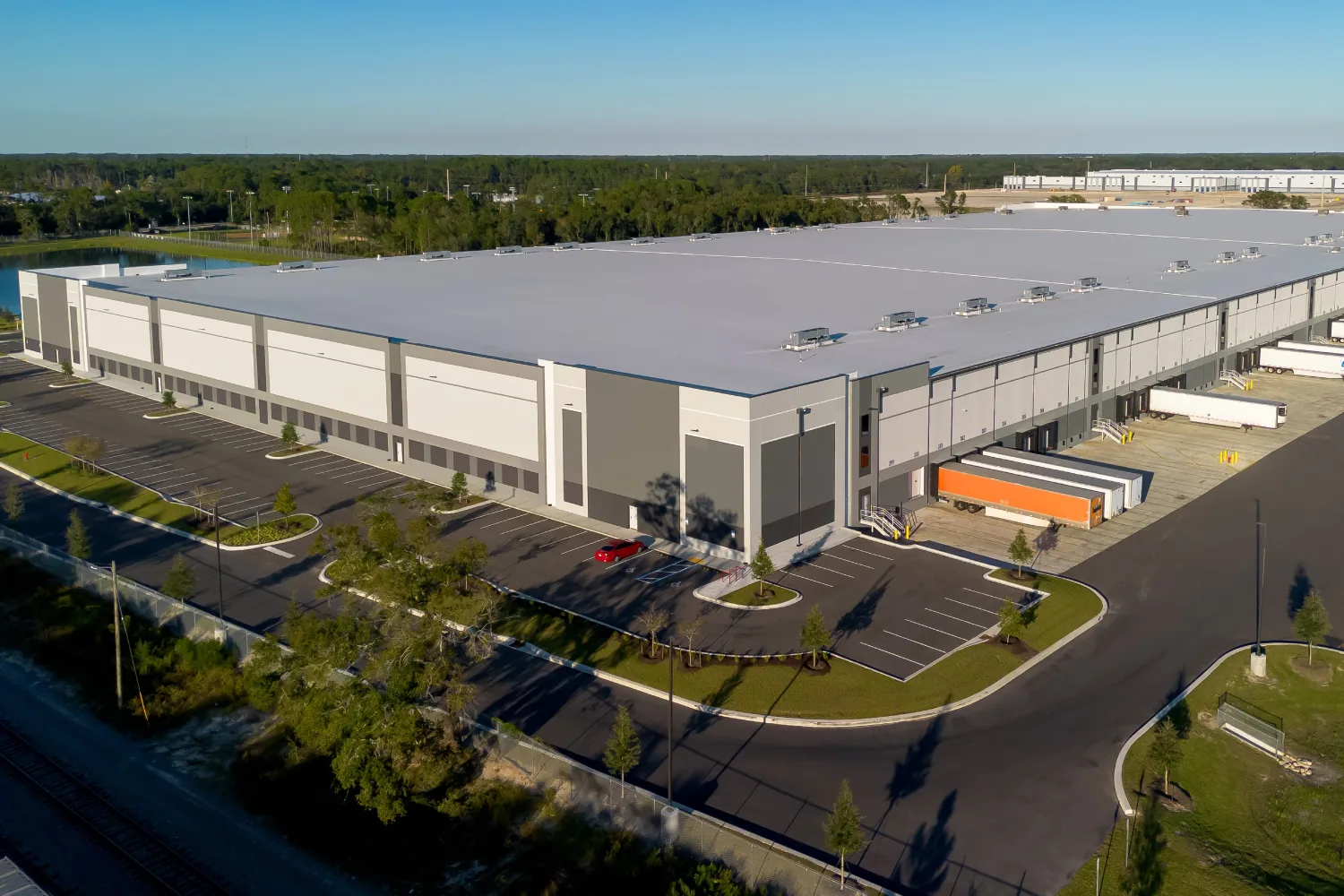
A separating flashing corner beside an operating exhaust curb needs coordinated examination. For manufacturing plant roofing in Merced, CA, we inspect the roof connection and identify the equipment it serves. The repair may require a service window or another trade's work. Its permanent construction must still reach suitable material and accommodate the actual curb arrangement.
Merced's economy includes manufacturing, food production and packaging. Atwater has food processing and building-products manufacturing, while Planada includes agriculture and food processing. Those uses make equipment continuity and protected work areas practical roof-planning questions. We establish the operation below the affected zone and examine its assembly before selecting repair, restoration or replacement.
Process equipment at the roof interface
A curb can have a sound outer cover and an unsuitable connection at its base. We examine flashing corners, vertical material and the upper termination. Movement or loose support can affect the detail. We identify the repair needed before coating or patching the surface. The manager should understand whether the work reconstructs a membrane transition or also requires intervention at the equipment base.
Equipment curb and support work needs clear responsibility for any disconnection, lifting or supporting design. We coordinate those tasks with the appropriate parties. The roofing scope identifies the opening and compatible reinstatement. A new membrane connection should not be installed around a base already scheduled for replacement without aligning the sequences.
Merced summer heat makes exposed material movement relevant at rigid equipment connections. We look for restraint, splitting and separating attachment. The detail should fit the intended movement and system requirements. Another outer application may not resolve a stressed connection. The observed construction provides the basis for repair rather than a general assumption that equipment vibration caused every opening.
Discharge residue and material compatibility
Residue near an exhaust outlet deserves examination of the roof material and the operation producing it. We ask the building team about the actual discharge and inspect the affected surface. Chemical compatibility needs product-specific review where relevant. A general membrane family does not establish resistance to every substance. The material choice should address the exposure identified at the property.
A PVC roof assembly may be among the options considered, but its suitability depends on the particular product and conditions. We compare the complete construction, including substrate and flashing. Unknown residue or repair compounds can complicate preparation. The proposal identifies how those areas will be cleaned or removed before a compatible connection or new surface is installed.
Coating restoration requires an adhesion and substrate assessment if proposed for the plant roof. Loose material, wet layers and damaged details need separate responses. A broad coating application should not conceal unsuitable construction beneath it. We specify preparation and detail treatment so the manager can evaluate the system rather than only the finish.
Concealed moisture and supporting construction
A soft or damp area can change the repair boundary. We investigate relevant layers when their condition affects retention. Suitable confirmation may require selected openings and appropriate closure. The manager should know which material was examined and how its finding connects with the removal proposal. A membrane opening alone does not measure every affected insulation layer below it.
Wet insulation, compressed support and deteriorated deck construction need different work. We identify those conditions and coordinate technical review where necessary. New roofing requires a suitable substrate. It should not conceal damaged support merely because a production window is short. The sequence needs a defined response to discoveries so the affected zone can receive appropriate repair and protection.
For cold-storage production space, interior temperature and moisture conditions can make air and vapor control part of the enclosure review. We coordinate the roof work with the actual design. A small removal can pass through several functional layers. Their reinstatement belongs in the scope, not only the outer membrane patch.
Production windows and the roof opening
An operating line or protected process area can constrain when layers may be removed above it. We identify those zones with the plant team and discuss suitable protection. The removal boundary must also work for the roof assembly. An interior area that is easy to isolate may sit beneath a roof transition needing a different closure sequence. Both plans need to connect.
We define the opening, necessary preparation and time for suitable reinstatement. Temporary protection has a stated role if permanent closure cannot proceed immediately. A production restart should not be scheduled on an assumption that every roof layer repair will be identical. The manager needs the known construction and the response to any concealed condition identified during removal.
At a property in Atwater, established processing and manufacturing use makes that coordination important. We ask which actual services must continue and which can be isolated. The repair method follows the inspected roof and equipment interface. The operating answers shape the workable sequence for removing, repairing and closing the affected zone.
Roof service routes and material handling
Equipment service routes can create repeated traffic near flashing details. We examine walking protection and damage along those routes. A repaired membrane should not remain exposed to the same sharp or concentrated contact that visibly affected it. We discuss a suitable access arrangement with the building team and identify compatible roof protection where required.
Penetration flashing reconstruction may need direct access through a crowded equipment area. We identify obstructions and the work required before removal. Material staging on the roof needs an arrangement appropriate to the structure. Ground routes also need coordination with production access and deliveries. A practical handling plan supports suitable construction rather than obstructing the plant's essential movement.
Mixed industrial and office space can put several operating uses beneath the same roof. We locate the actual area below each proposed opening. Protection and timing should follow that affected use. The assembly may also change between roof zones, so material examination remains necessary before assigning one repair method across the property.
Outlets near operating equipment
An equipment base can interrupt the water path or collect debris nearby. We examine the outlet approach and surrounding roof shape. Clearing may resolve an obstruction. A damaged connection or persistent low area may need construction or another technical assessment. The repair proposal should identify the condition rather than assign every drainage concern to routine maintenance.
Merced has more winter precipitation in its station normals than midsummer rainfall. Drainage and open-detail concerns found during a dry visit can be addressed before renewed wet exposure. Current condition still determines urgency. The work window needs suitable weather and enough time for preparation and closure, aligned with the affected production zone below.
At Planada properties, agriculture and food processing provide a local context for protecting active business areas. We ask about actual goods and equipment before the work. Cost drivers include access, residue preparation, damaged layers and connected equipment details. The completed proposal shows a roof repair or renewal assembly that the manager can coordinate with production rather than a generic plant-roof treatment.
Commercial Roofing Questions
Can a curb flashing repair require equipment shutdown?
The detail and service arrangement need review. Some work may be possible with equipment operating; other construction needs isolation or another trade. We identify those responsibilities and the roof opening before setting a usable production window.
Does plant use establish the chemical exposure on its roof?
The actual equipment discharge and observed surface condition need identification. We review compatibility for the specific material and substance where relevant. Manufacturing use alone does not replace that examination or product-specific assessment.
Why separate insulation repair from the membrane work?
They restore different parts of the assembly. Wet or damaged support may extend beyond the surface opening and require its own removal. We describe those layers so the manager understands the construction included beneath the new membrane connection.
What should be settled before roof removal over production?
The affected interior zone, protection and service restrictions need clarity. The opening also needs a suitable close-in sequence and response to concealed damage. We connect those items before removal so operating decisions follow the actual roofing work.
Assessment at the production roof interface
Request examination of the exhaust curb, affected membrane or roof opening that needs coordination with plant equipment and operating areas.
Related Roofing Work