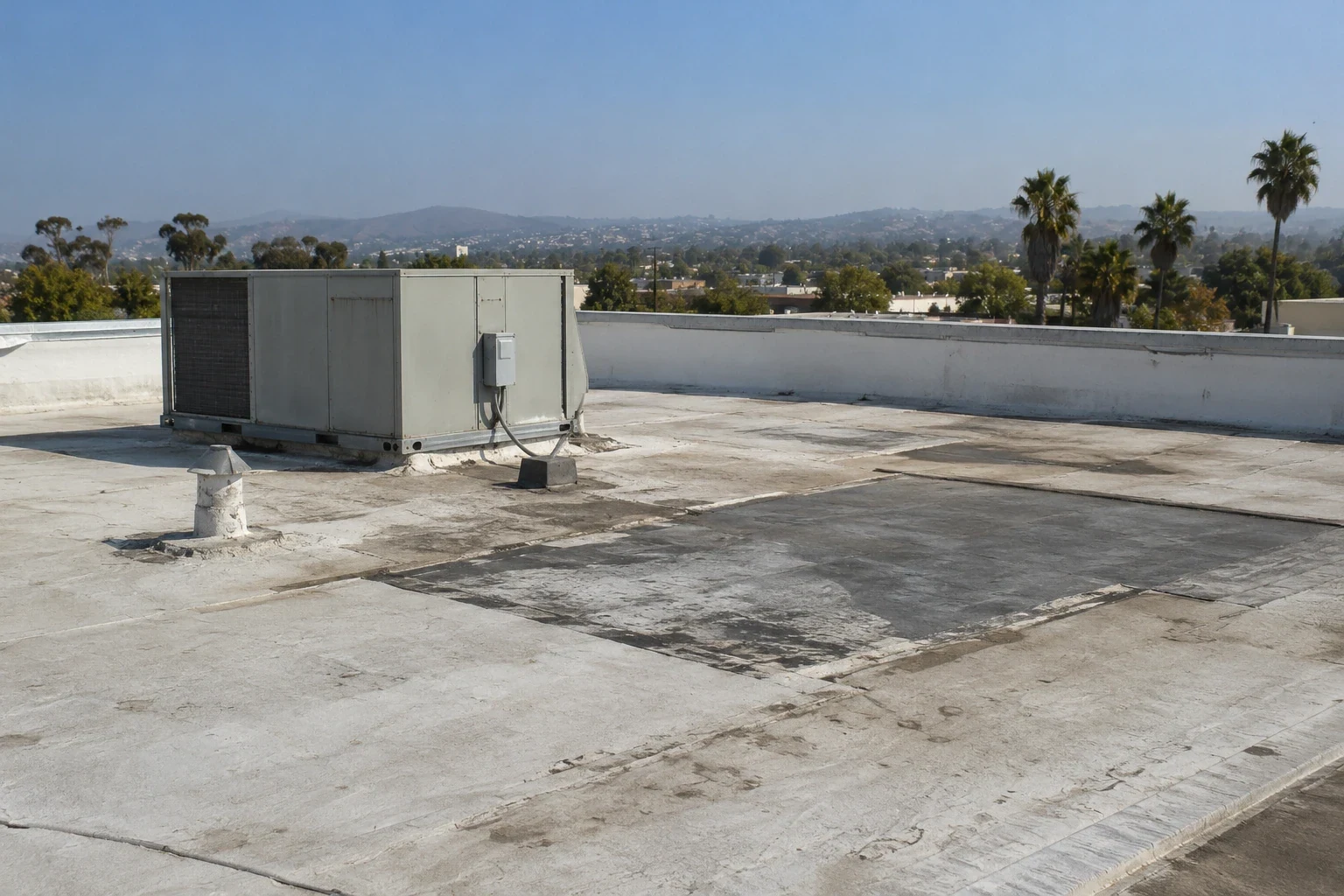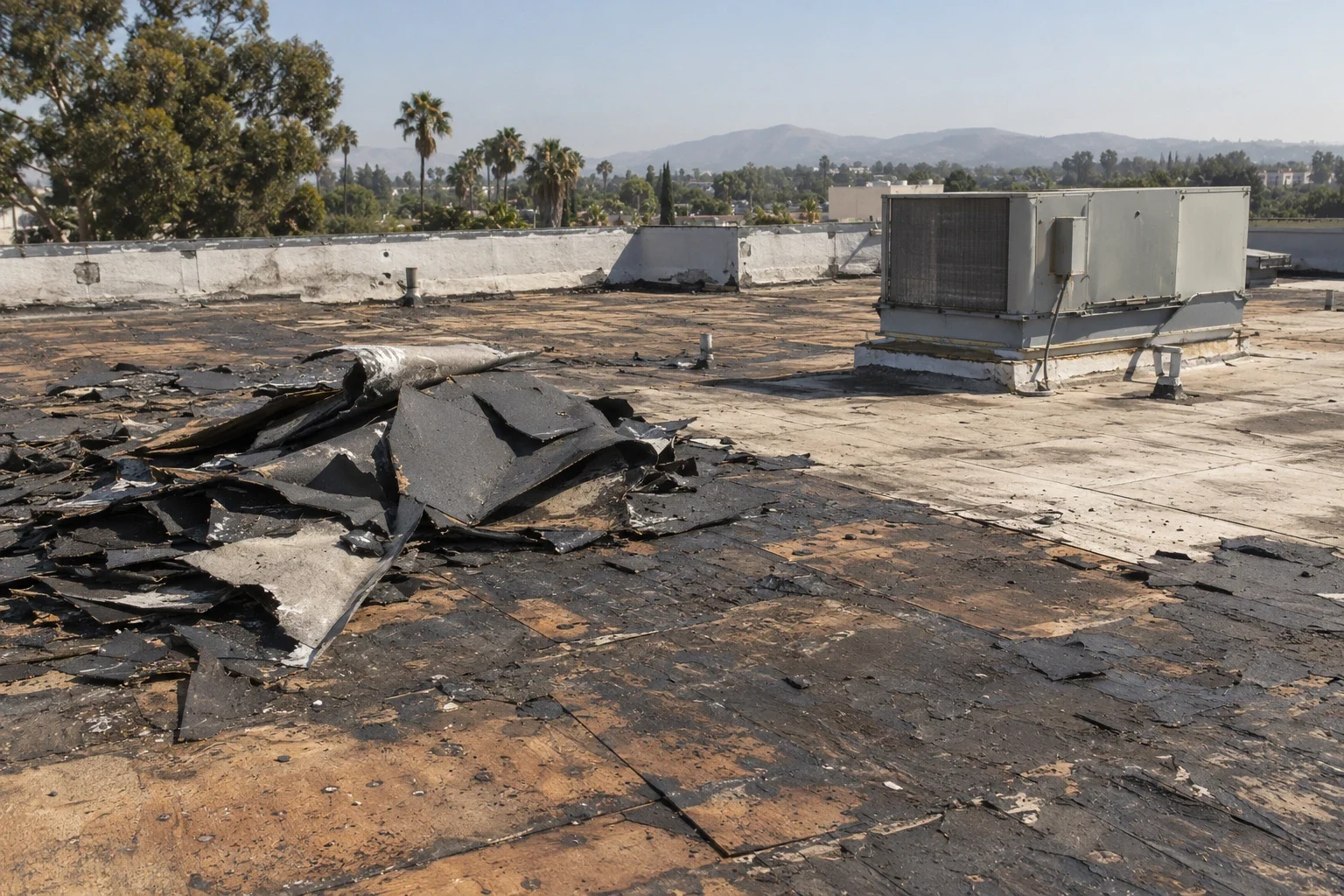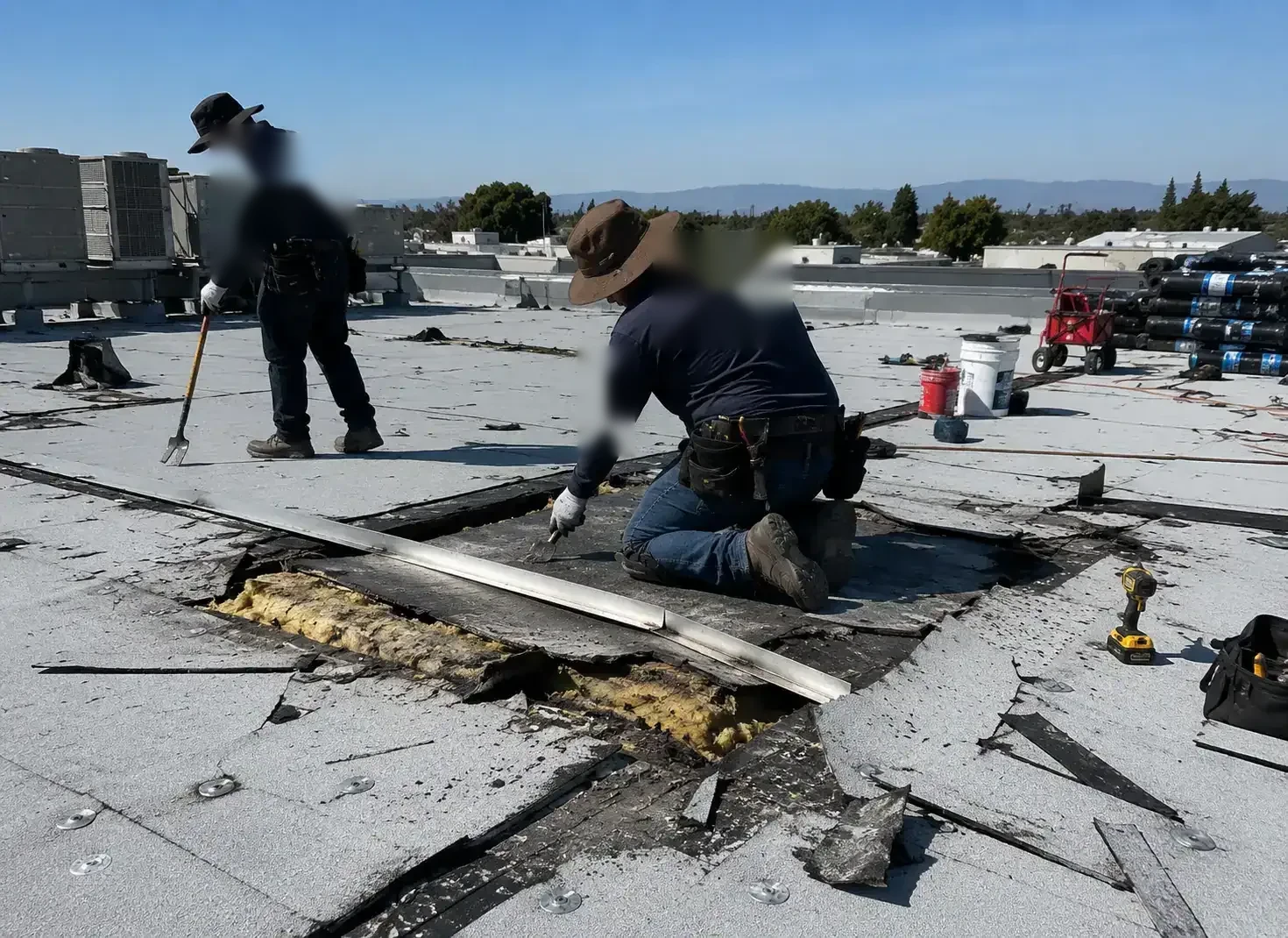
A lifted curb flashing can admit water at the point where a rooftop unit meets the field membrane. In Atwater, we check the curb, fasteners and insulation before deciding whether the opening is isolated or part of a wider seam failure. The city lies on State Route 99 between Merced to the southeast and Livingston to the northwest. Food processing and building-products manufacturing are part of its commercial building mix. Those operations make access and equipment coordination a real planning issue, but the business type does not tell us which roof system is installed. We inspect the roof that is present, mark the repair boundary and record the layers. A commercial roof repair should close the failed connection without trapping moisture or hiding an attachment problem.
Plan around production and deliveries
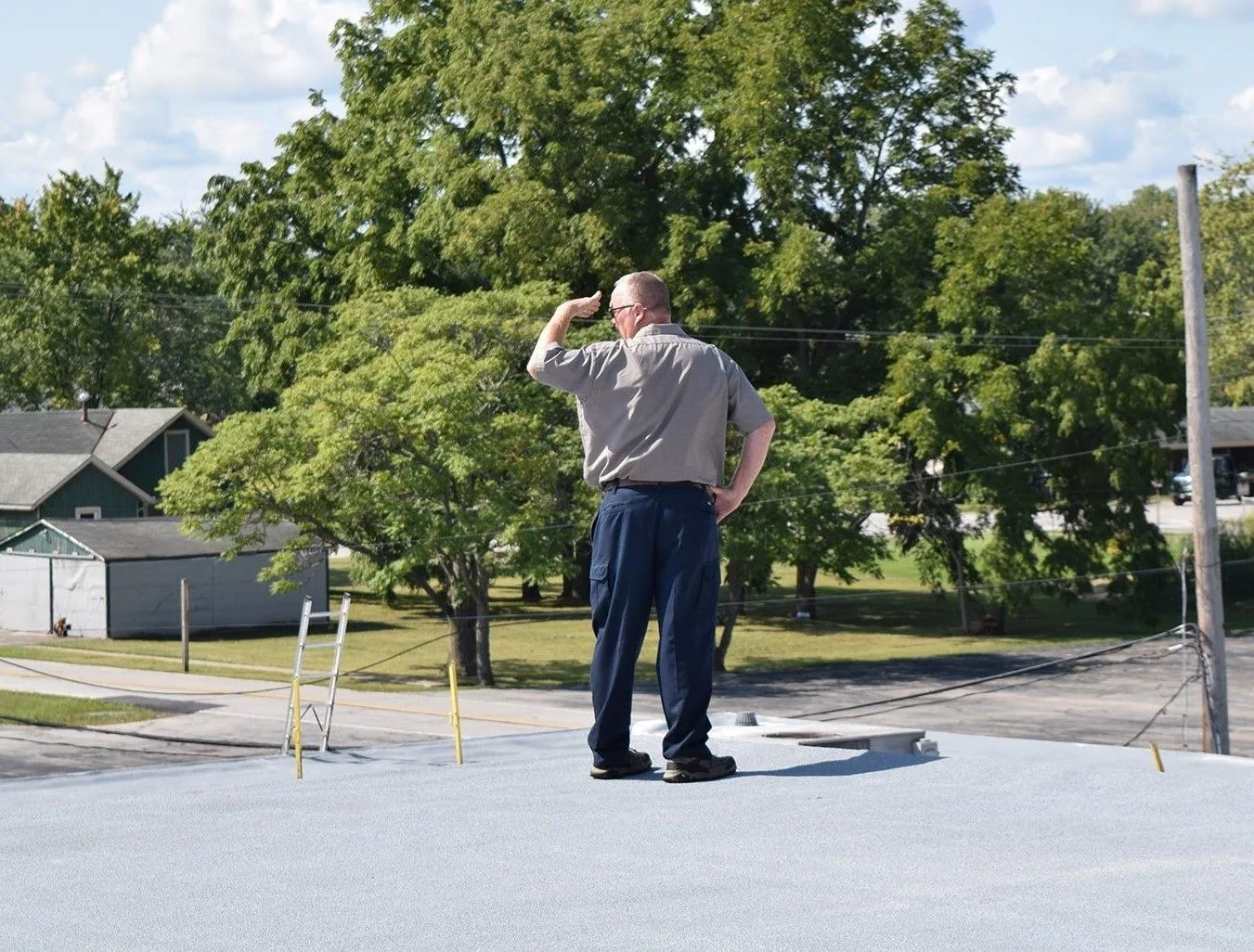
Atwater’s food-processing and building-products activity can involve receiving areas, equipment, ventilation and work schedules that cannot be treated as empty space. We meet the property contact before setting a staging point or moving material. The manager marks loading lanes, operating equipment, interior sensitivities and any roof access controls. We then match those constraints to the roof drawing, if one exists, and verify the actual sections on site. Existing additions may use different membranes or edge details. We label the transitions instead of assuming a single assembly across the property. The inspection record should show where the reported defect sits relative to drains, curbs, seams and roof edges. A photograph of a stain alone is not enough to choose material or repair extent. The owner needs to see what will be opened and what will remain in service.
Heat movement at a curb
The Merced station’s 1991-2020 July normal high is 96.3°F; that station context describes Merced, while we inspect each Atwater roof on its own. Repeated heat can move sheet metal and work a flashing connection. At a curb, movement may loosen a termination bar, split a sealant bead or stress a membrane corner. We inspect the fasteners, weld or bond line, cant and counterflashing, then check whether moisture has reached insulation below. A small, dry separation can support a targeted reconstruction. A wet curb area or related defects at nearby units may need a larger removal boundary. The report identifies which evidence was visible and which layer required an opening. Where a compatible membrane remains intact, a local repair can preserve it. If the assembly shows repeated failure, a full condition inspection can help compare roof sections before renewal is considered.
Follow water beyond the reported spot
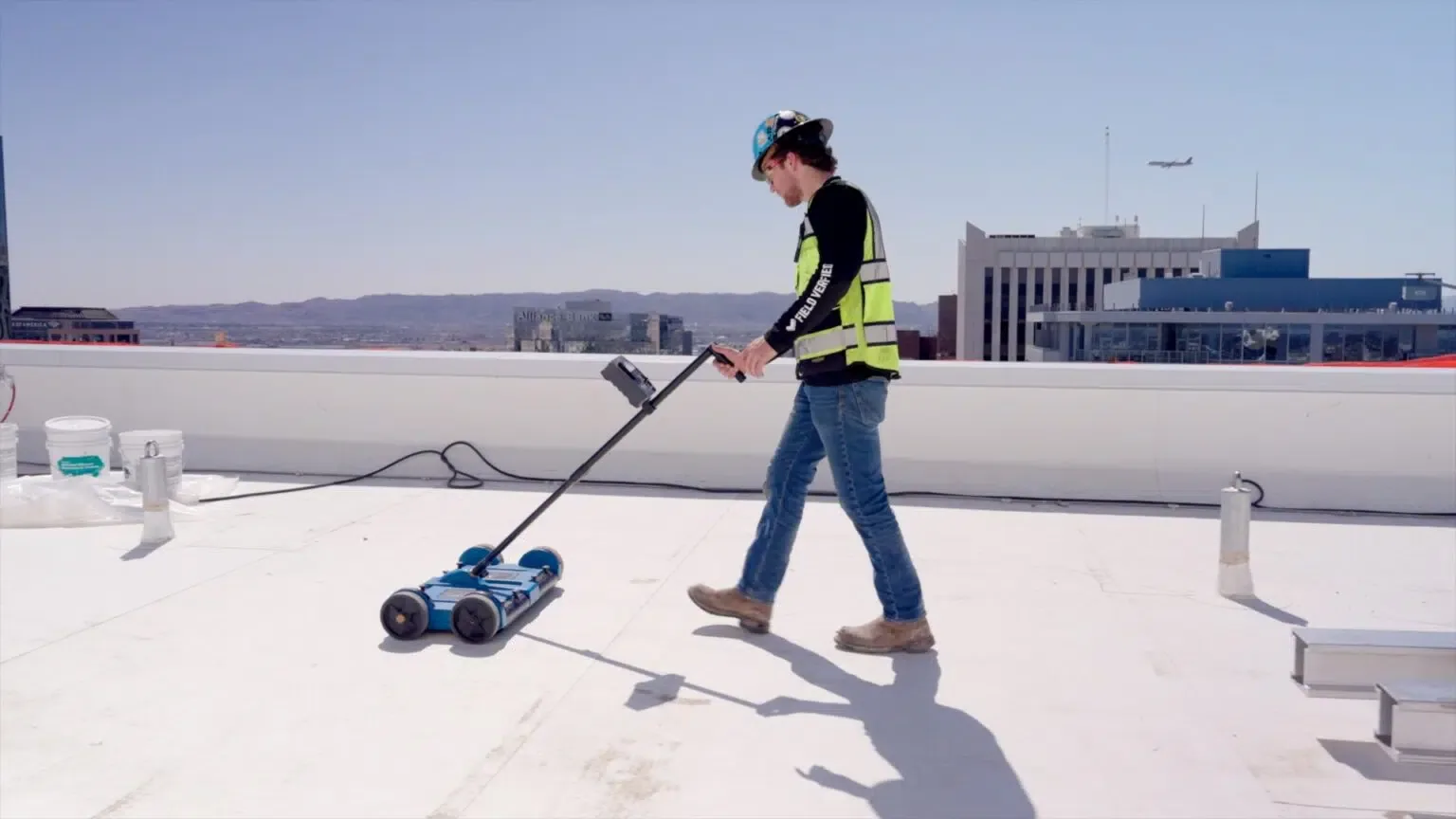
Interior water does not always fall directly under its entry point. It can move along a deck, insulation joint, pipe or support before reaching a ceiling. We begin above the reported area, look for open laps and punctures, and inspect nearby equipment curbs and drains. A moisture survey can help mark suspect areas, but readings need to be interpreted against the installed assembly. If uncertainty remains, we place a controlled test opening where it can answer the repair question. The opening shows whether insulation is dry, compressed or wet and whether the deck is sound at that location. We photograph each layer, protect the interior and close the roof with a compatible detail. A survey of suspect moisture can be paired with selective openings rather than used as a substitute for confirming the assembly.
Check outlets before sealing a leak
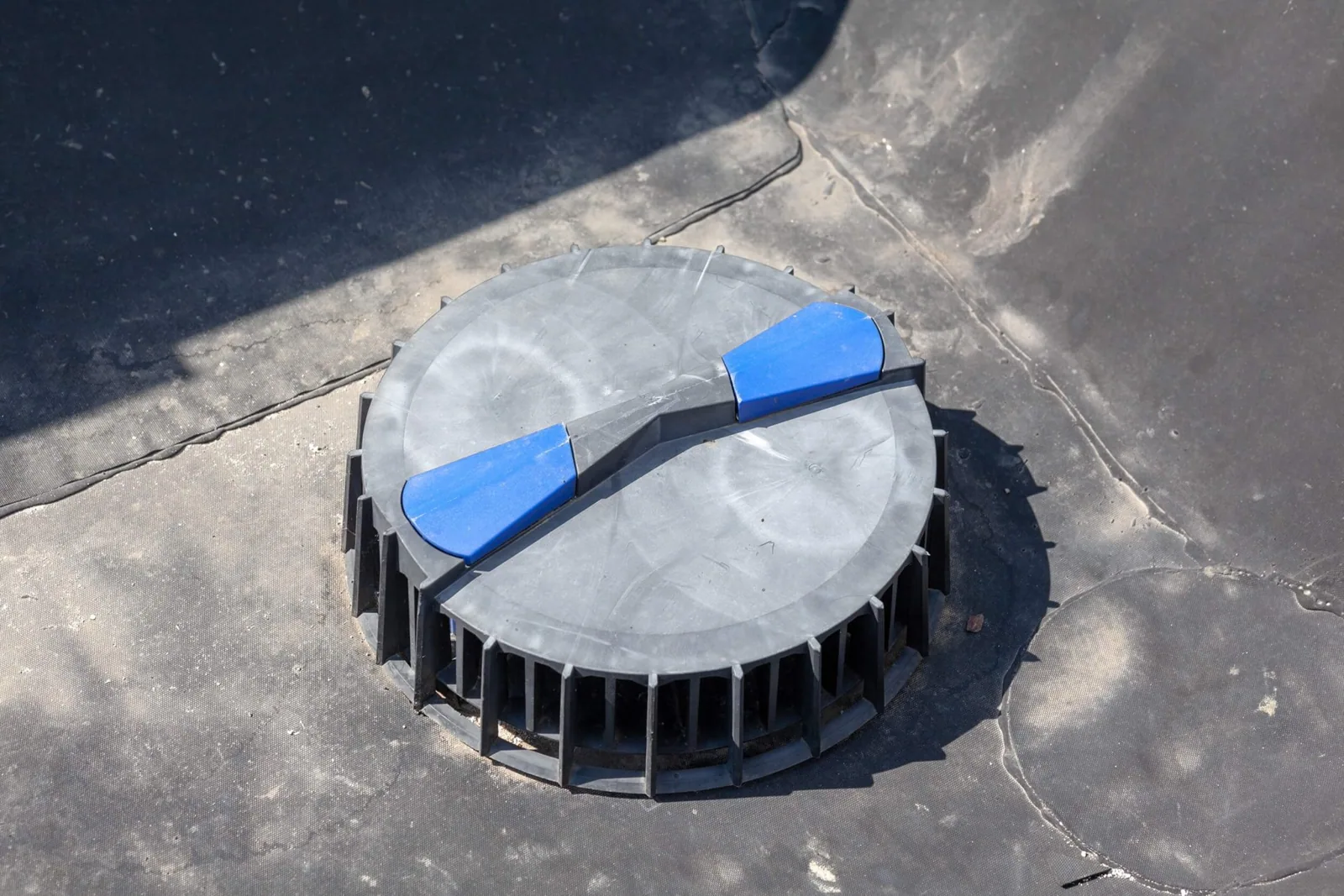
the Merced station shows winter precipitation normals of 2.37 inches in January and 2.20 inches in February, with July and August rounding to no normal precipitation. That seasonal pattern makes outlet readiness a useful inspection point, although it does not show a particular Atwater roof’s condition. We clear and examine drain bowls, strainers, scuppers and discharge connections. We look for membrane pullback, cracked flashing or debris holding water at the opening. If water remains after nearby outlets are clear, the low area and roof slope need a separate check. A drain repair must leave a continuous, compatible membrane around the penetration. We test the path and document the downstream connection where accessible. A drain and scupper repair can be included in a bounded leak scope, or recorded as maintenance when no membrane failure is present.
Choose a repair boundary
If the insulation is dry, the roof field bonds well and damage is confined to one curb or seam, we can define a repair that stops at sound material. The scope lists removal, surface preparation, flashing rebuild and tie-in. If several equipment curbs fail in the same roof section, it may be more useful to compare repeated repair cost and access with a recover or replacement assembly. A replacement evaluation should identify tear-off, retained insulation, deck review and the details that change around equipment. The owner also needs to know what remains unknown until the first opening. Costs and schedule depend on the assembly, wet-area extent, access, unit coordination and weather window. We keep optional improvements separate from necessary repair. A clear boundary gives the facility manager a decision that can be coordinated with production rather than a blanket instruction to re-roof.
Protect the work and the operation
Before opening the roof, we confirm which lines or equipment must remain active and who authorizes a shutdown if one is needed. We set the work zone, protect nearby intakes, plan debris removal and coordinate a route that stays clear of loading activity. The crew exposes only the area needed to verify the layers, then covers it before weather threatens the assembly. For a larger project, we divide the roof into sections and set temporary dry-in limits. Before work begins, we confirm required review and access with the property contact. The scope separates roof repair from any equipment or trade work that needs its own schedule. The closeout includes photographs and remaining observations. Follow-up through a roof maintenance plan can track curb flashing and drains at the next inspection.
Coordinate along the Merced route
Atwater sits between Merced and Livingston, and the Highway 99 corridor runs through the city. A regional service route helps schedule visits; it does not replace site-specific inspection or confirm access at any property. We coordinate arrival, vehicle staging and the property’s delivery schedule with the person responsible for the roof. A manager who has a leak history can share photographs or prior repair notes, but we verify each condition rather than treating an old scope as current. Roof sections are identified by their actual assembly and location. If an opening reveals wet insulation beyond the visible defect, we document the added area before extending work. The owner can approve the next step with the evidence in front of them. For roof work in the nearby city, a Livingston inspection follows the same record-first approach, while Merced facilities have their own access and operating constraints.
Commercial Roofing Questions
Do you assume an Atwater plant has a particular roof system?
No. We identify the membrane, attachment and details on site. Business activity helps us plan access, but it does not establish the installed assembly.
Can you repair around operating equipment?
We coordinate the work area and any required unit access with the manager. The repair sequence depends on the equipment, roof opening and the building’s operating needs.
How do you know whether wet insulation must be removed?
We verify moisture at the repair area, using a controlled opening when readings or surface observations leave uncertainty. The scope records the affected layers and limits.
What happens if the opening is larger than expected?
We photograph the exposed area, define the added boundary and present the owner with the next decision before expanding the work.
Can a maintenance visit help prevent another curb leak?
It can track flashing, fasteners, seams and drains after repair. The inspection record identifies the details to revisit and any change since closeout.
Inspect the curb and its tie-in
Request an inspection of the flashing, attachment and insulation around the equipment connection.
Related Roofing Work