A warm patch after sunset can point toward a concealed-layer question. An infrared roof moisture survey in Merced, CA, examines thermal patterns that may help locate insulation affected by water. We interpret those patterns against the roof construction and confirm suspect areas before proposing removal. The manager needs a moisture decision tied to material condition, not a repair quantity selected from an image color.
Merced summer heat makes thermal timing an important part of survey planning. The useful contrast depends on more than the daytime temperature. Surface condition, weather and the assembly all matter. Downtown Merced has offices and government uses, while the Highway 99 industrial areas include distribution businesses. We plan examination and any confirmation openings around the actual operating space beneath the roof.
Thermal contrast within the roof assembly
Wet and dry materials can store and release heat differently. Under suitable conditions, that difference can appear at the surface as the roof cools. We examine the pattern, its shape and its relationship to roof details. A thermal anomaly is a reason to investigate a location. It becomes useful for repair planning when examination connects it to the affected layer.
The roof assembly influences whether an infrared approach is suitable. Membrane finish, insulation arrangement and underlying construction can affect the signal. Multiple layers or reflective surfaces may complicate interpretation. A modified bitumen assembly has different surface characteristics from a reflective sheet or exposed metal. We identify the construction before treating the thermal image as evidence of moisture in a particular layer.
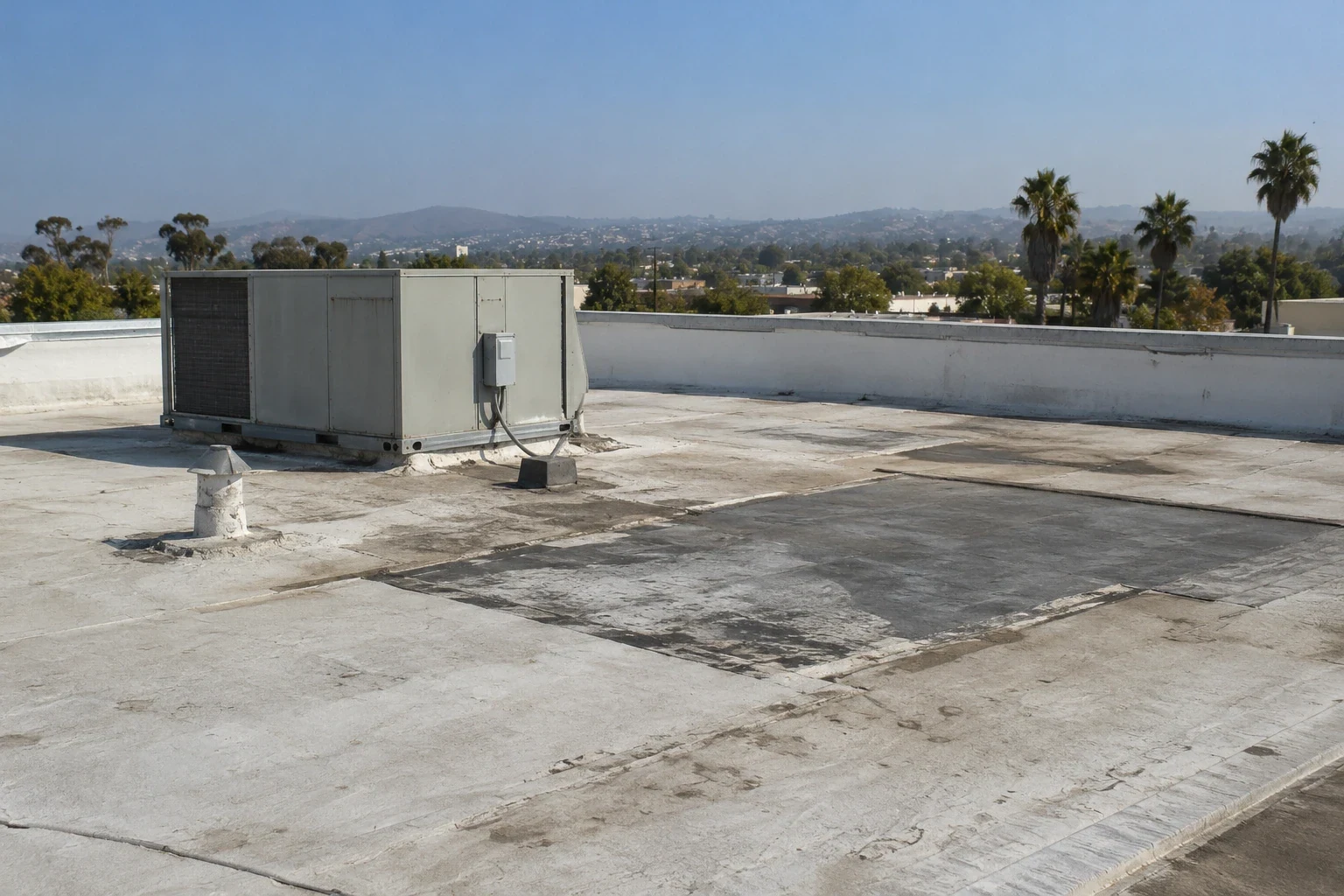
Heat from equipment or interior use can also produce a surface pattern. We compare anomalies with equipment locations and known building activity. A rectangular warm area may correspond to an interior heat condition rather than wet insulation. The survey interpretation needs that comparison. We select confirmation locations that test the moisture question instead of assuming every warm region has the same cause.
The usable survey window
A suitable observation window follows the roof and weather conditions. Solar exposure, wind, recent rain and surface moisture can affect thermal contrast. We review those factors when planning the survey and again during the visit. If conditions do not support useful interpretation, another window or method may be preferable. The goal is an examinable pattern, not completion of imaging regardless of its usefulness.
Merced station normals show markedly less midsummer rainfall than winter rainfall. That local context can help frame scheduling discussions, but the current roof condition still governs the survey. A recently wet surface needs attention even during a normally dry month. We distinguish surface wetness from the concealed-layer question so the manager understands why a particular examination time is chosen.
Access arrangements must also suit the chosen window. We coordinate entry and roof access with the building team, including any after-hours needs. The survey may require a roof walk and later selected openings. A physical inspection adds detail information at seams, curbs and outlets that helps interpret the thermal pattern. The two methods answer different parts of the assembly question.
Confirmation points and test openings
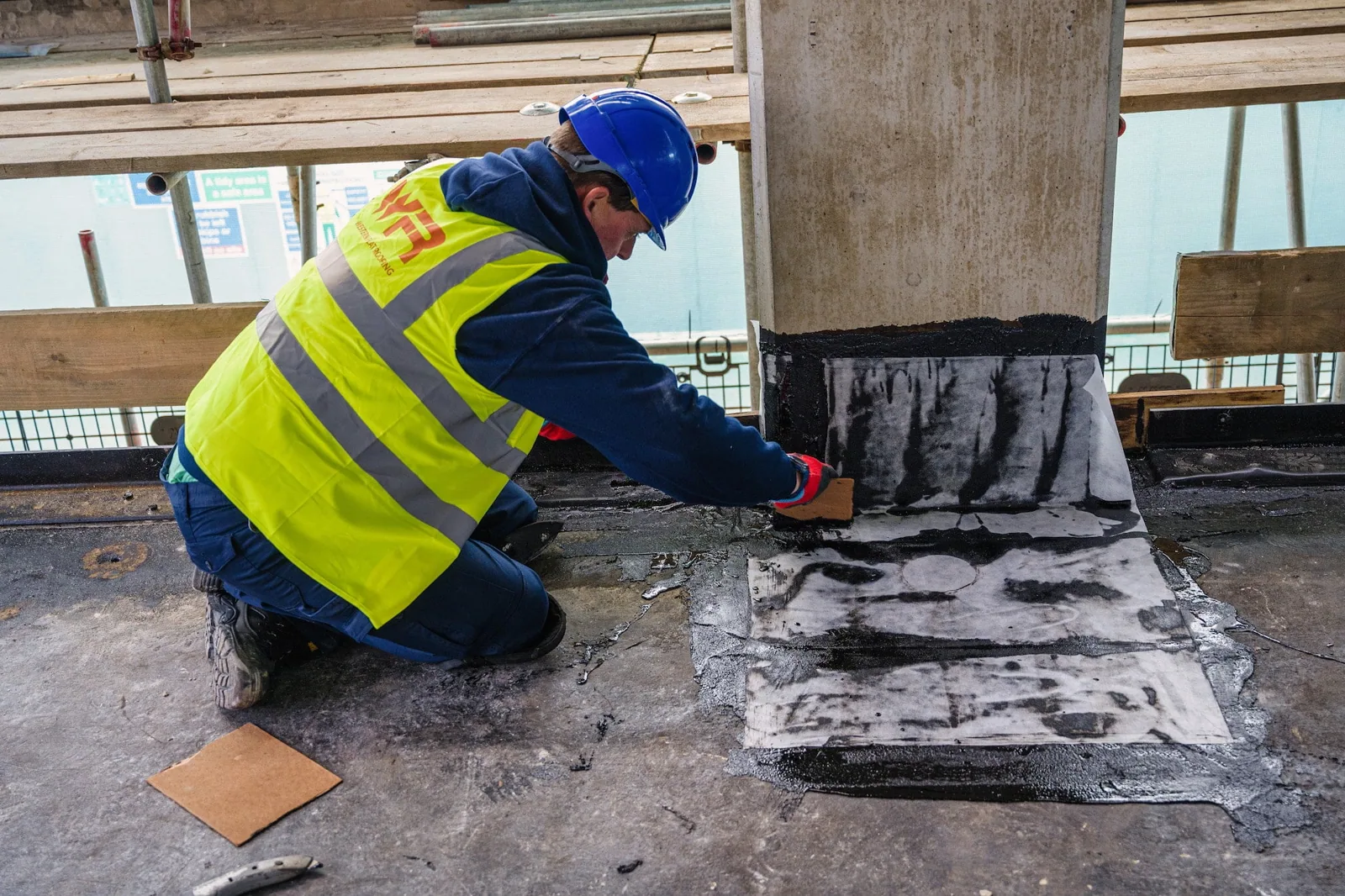
A suspect area needs a comparison with nearby construction that appears different in the thermal image. We select confirmation points for the assembly and the decision being made. Suitable physical checks can examine moisture and identify layers. Where an opening is needed, we plan its location, depth and compatible closure. The manager should know which material will be examined and how the roof will be restored.
A test opening can show insulation condition, layer thickness and visible deck condition at that location. It is a sample rather than an examination of every concealed area. We connect the finding with the broader pattern and identify where more checks would improve the removal boundary. An abrupt change in the image may warrant confirmation on both sides before it becomes a construction limit.
The closure of a confirmation opening deserves a complete repair detail. We identify sound surrounding material and use a suitable connection for the existing membrane. Localized roof repair may be needed at the opening even if the survey leads to no broader work. The survey scope includes that restoration so investigation does not leave a new defect in the assembly.
Moisture extent and retained insulation
Confirmed wet material needs a defined removal area. We use the combined thermal and physical findings to propose that boundary, then explain any uncertainty. Water can follow interfaces beneath the membrane. A visible leak location and the moisture extent may not coincide. The repair proposal should distinguish the entry detail from insulation that has been affected beyond it.
For a roof recover assessment, retained insulation must be suitable for the new assembly. Moisture investigation helps identify material that cannot simply be covered. The survey does not decide the entire overlay question. Attachment, compression and detail height still need examination. We explain how the moisture findings change the retained-layer scope and which separate construction questions remain.
A warehouse roof may require selected openings above areas with stored goods. We coordinate their position and timing with the building team. Merced has food and grocery distribution activity, making that operating question locally relevant. The interior arrangement must still be established at the property. We plan the investigation around the actual space below each proposed opening.
The moisture finding in a construction decision
A useful roof condition report distinguishes thermal observations, confirmation results and proposed work. It identifies the roof zone and the layer examined. Removal quantities need a stated basis. Where the boundary remains uncertain, we identify additional checks or a response during construction. The manager can then compare an investigated scope with one that assumes hidden conditions without examination.
At a property in Downtown Merced, that distinction can support a repair decision above occupied offices. Localized wet insulation may warrant targeted removal while suitable surrounding construction remains. A broader pattern can shift the discussion toward a larger assembly intervention. We connect each option with the findings rather than making the infrared image itself a replacement recommendation.
The construction comparison includes opening, removal, reinstatement and closure. Access restrictions and the amount of affected insulation influence cost and timing. A later survey can sometimes provide another comparison, but surface and weather differences need interpretation. The immediate value is a clearer choice about the layers presently at issue and the repair boundary that those findings support.
Commercial Roofing Questions
Does every warm area in an infrared image contain wet insulation?
Several conditions can produce thermal contrast. Equipment heat, interior use and surface differences need consideration. We select physical confirmation points before assigning moisture removal, so the repair boundary follows examined material rather than image color alone.
Why might a planned survey need a different evening?
Current weather and roof conditions can prevent useful contrast. Wind, recent rain or inadequate solar exposure may affect interpretation. We explain the limiting condition and choose another window or investigation method appropriate to the assembly question.
Can the survey support a selective insulation replacement scope?
Confirmed moisture findings can help establish selective removal. We compare the pattern with physical checks and define the affected layers. The proposal also explains how uncertain boundaries will be examined before unsuitable material is left concealed.
Will confirmation openings be closed during the investigation?
Their restoration belongs in the investigation plan. We choose a suitable repair for the existing membrane and identify sound material for the connection. The manager should receive a restored detail, not an exposed opening awaiting a separate roofing decision.
Examination of suspect roof moisture
Schedule an infrared assessment of the roof zone being considered for repair, recover or insulation removal, with appropriate confirmation checks.
Related Roofing Work