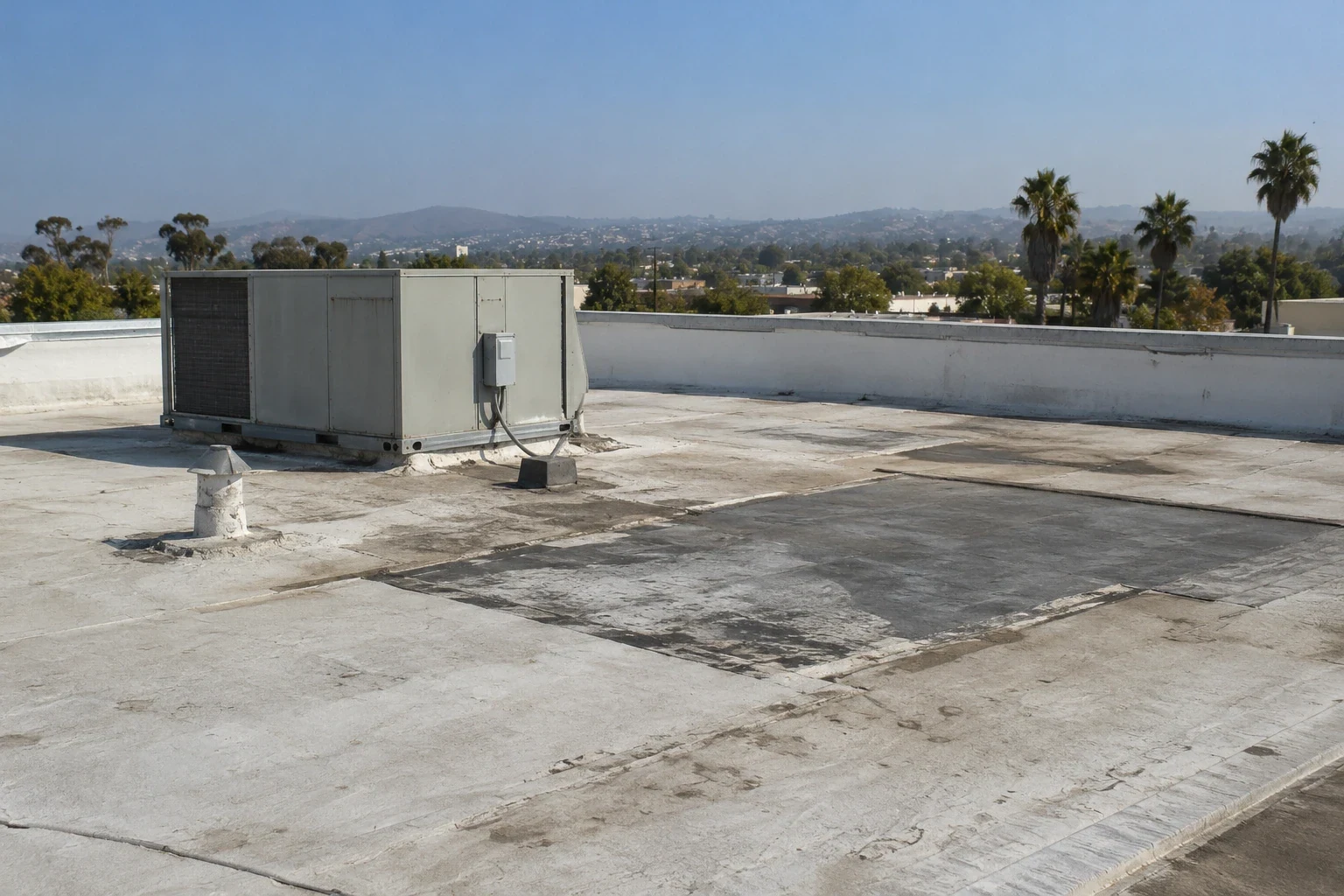
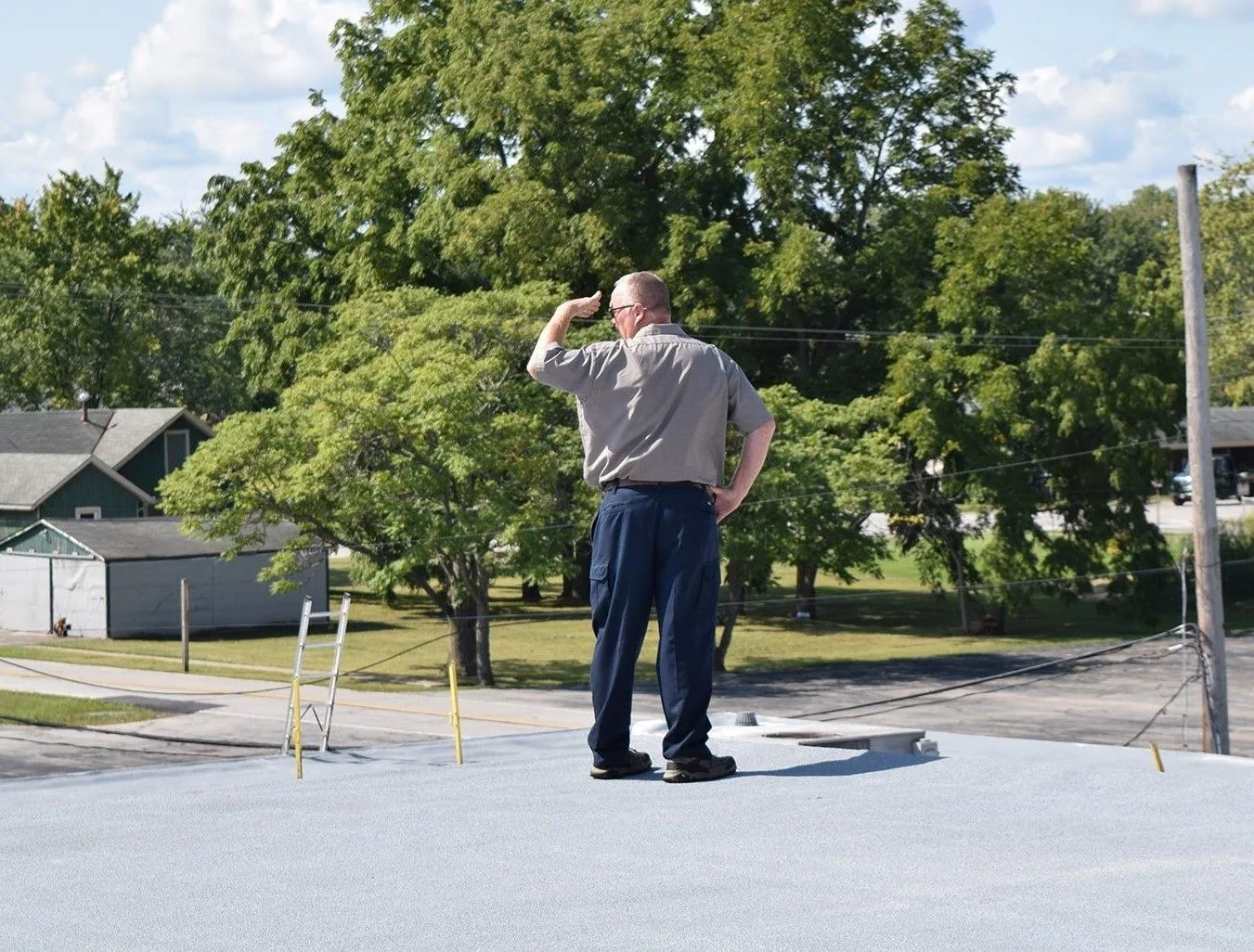
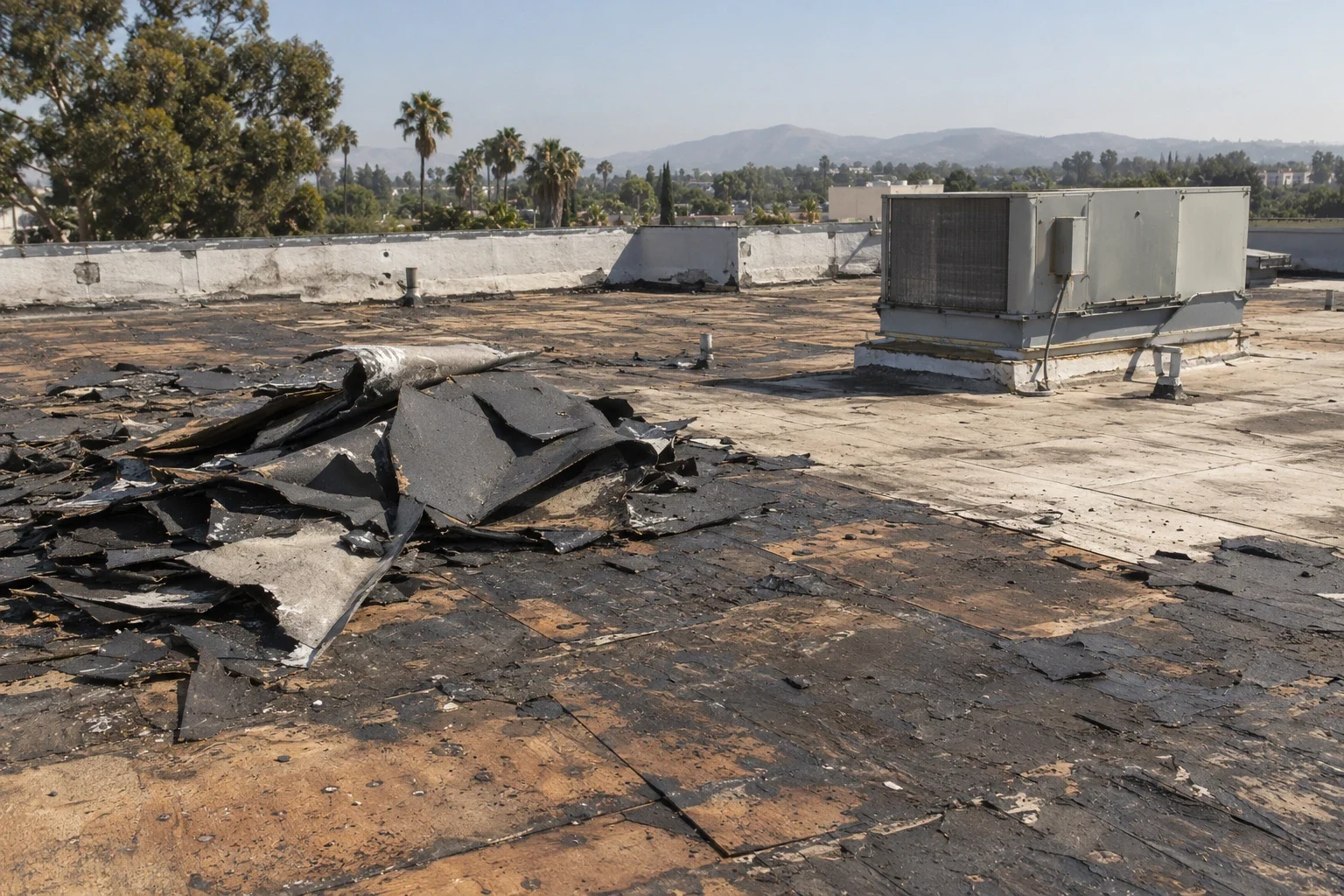
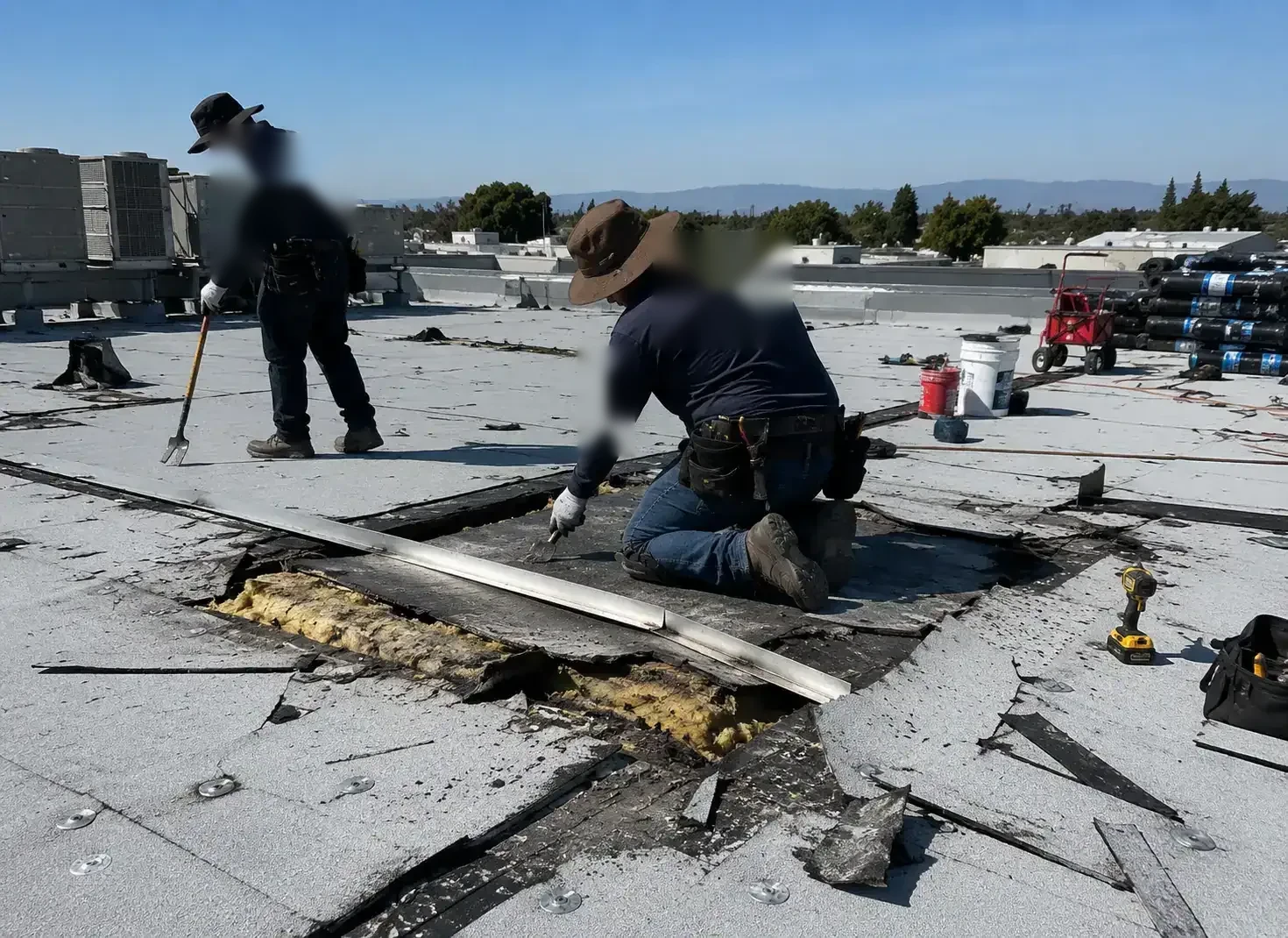
A split field seam can leave a narrow path for water before a ceiling shows a stain. In Merced, we inspect the seam, nearby insulation and the attachment that holds the roof assembly in place. The decision is whether a compatible repair can stop the moisture path or whether a larger area has lost bond. That distinction matters across the city’s industrial parks and downtown offices, where work above an operating building needs a clear boundary. We photograph what is exposed, identify what stays and what comes out, then write the scope around the roof evidence. A commercial roof repair starts with the defect and its surrounding layers, not a coating over an unexplained wet spot.
Industrial and occupied roof areas
Merced has three industrial parks with light- and heavy-industrial uses and Highway 99 and rail access. Merced also lists food production, manufacturing, distribution, healthcare and retail or office activity among its industries. Those uses can place different demands on a roof: equipment traffic, deliveries, clean interior conditions, customer entrances or continuous production. We do not assume a roof type from the business name. On the first walk, we map roof sections, drains, penetrations, edges and access points. We ask which areas cannot be blocked and where a lift or material staging would interfere with an operation. If the building has several additions, we note each roof plane separately. That keeps a repair at one transition from being mistaken for a building-wide failure. The written finding connects each photographed condition to a proposed work area.
Heat at seams and transitions
Merced station’s 1991-2020 normals show a July normal high of 96.3°F and 22.8 days a year at or above 100°F. Repeated heating can move metal, membranes and their connections. At a seam, that movement may stress an adhesive bond or a mechanically attached lap; at a curb, it can work against a flashing termination. At a seam, we inspect the bond line and nearby restraint for movement before prescribing a heat-related repair. We look for the actual separation, surface split, loose fastener or displaced counterflashing, then check whether the surrounding material remains sound. A sound membrane beside a failed detail can support a localized repair. A wider pattern of open seams or wet insulation points toward a different scope. We record the boundary so the owner can compare the repair with a documented roof inspection or a considered renewal option.
Trace the path before opening
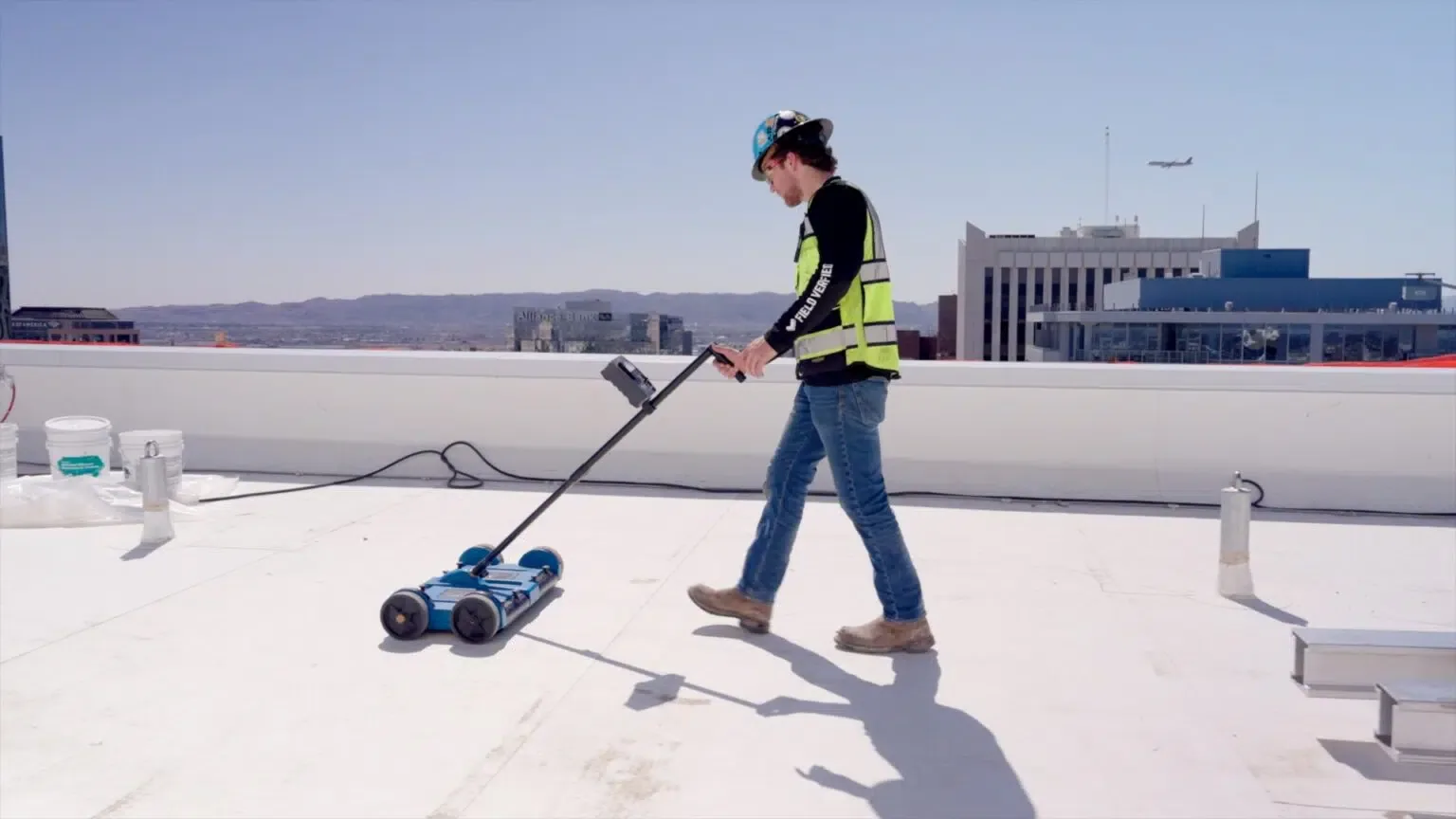
Water can travel along a deck, insulation joint or vapor retarder before appearing inside. A ceiling mark therefore gives us a place to start, not the repair footprint. We inspect the roof above it, follow laps and penetrations upslope, and check nearby drains and edge conditions. Where a surface reading leaves uncertainty, a controlled test opening can show whether insulation is dry, compressed or wet. We protect the opening, photograph the exposed layers and close it with a compatible detail. If moisture is limited, removing the affected material and restoring the membrane may preserve the dry assembly. If it extends through adjoining sections, a patch may trap a larger problem. A moisture survey can help map suspect areas before openings are placed. The report should distinguish measured evidence from areas that still need confirmation.
Drainage and roof edges
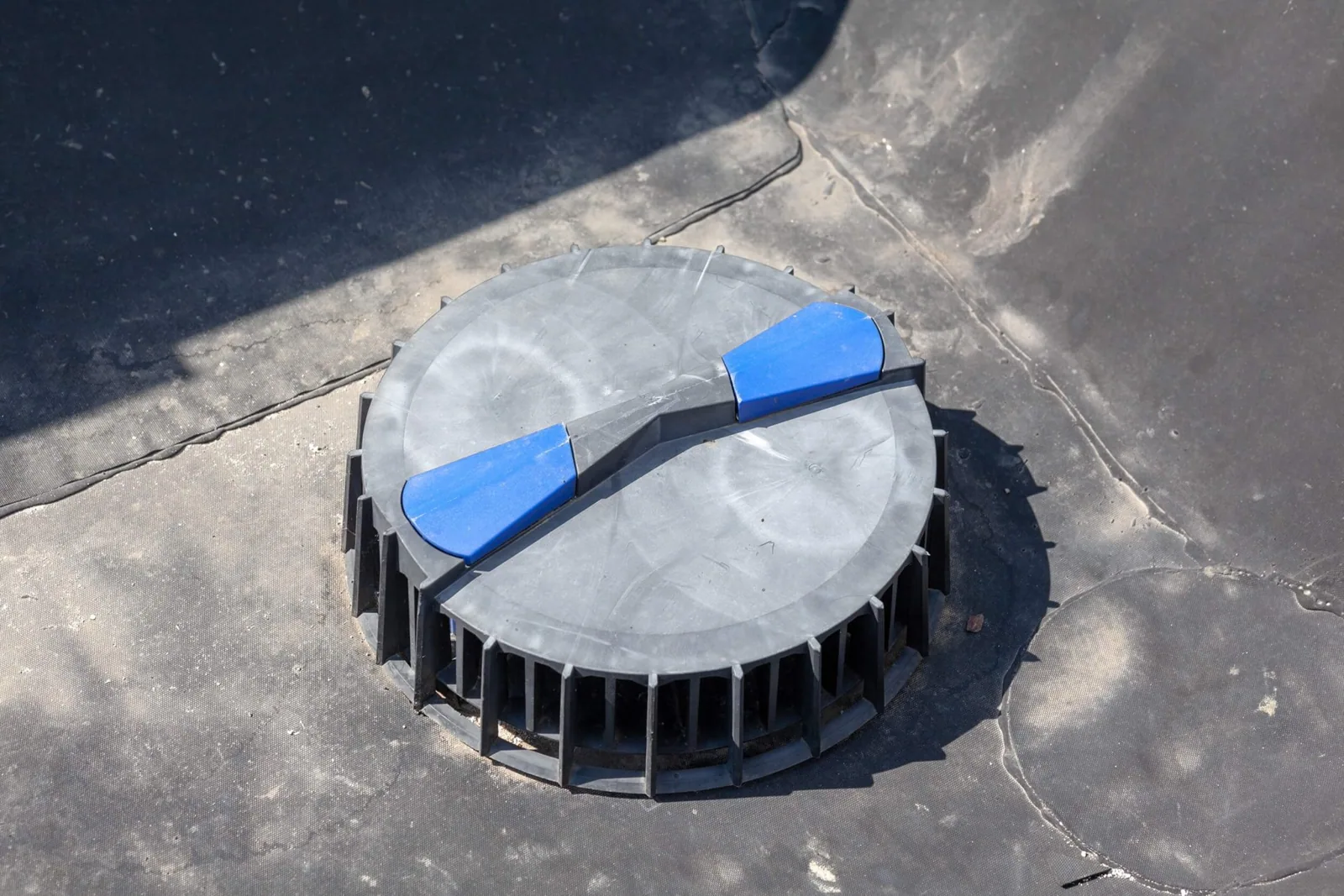
Merced receives most of its normal precipitation in winter. At the Merced station, normal precipitation totals 11.80 inches for the year. The January and February averages account for a substantial share; midsummer normals are nearly zero. We use those station normals as seasonal context, then inspect the actual roof for blocked drains, low areas, failed sealant and debris at outlets. A slow drain can leave water sitting against a seam or curb long after a storm ends. Ponding depth and duration depend on the roof’s slope and structure, so we check the area rather than assume a correction. We also look at scuppers, conductor connections and the discharge below. A drain and scupper repair should restore a clear path without creating a new opening in the membrane. Where renewal is needed, insulation and tapered drainage belong in the assembly discussion.
Repair boundary or replacement scope
A local repair is a sensible option when the defect is isolated, the surrounding membrane is compatible and the insulation beneath it is dry. We remove loose or failed material, prepare the substrate, rebuild the transition and test the tie-in. That scope is narrower than a replacement and should say exactly where it ends. Repeated seam failure, broad moisture or brittle surfacing changes the comparison. We can evaluate a replacement assembly against continued repairs by section, including tear-off, retained insulation, deck exposure, drainage and occupied-building phasing. The price and schedule move with access, layers, wet-area limits, penetrations and weather windows. Merced’s industrial and distribution uses make sequencing important where trucks, loading doors or production lines need to stay clear. A written scope gives the manager a defined choice, not a vague promise to stop leaks everywhere.
Access, permits and handoff
Before work starts, we confirm roof access, fall protection, staging, delivery routes and the parts of the building that must remain open. A repair around a rooftop unit may require coordination with the mechanical trade; a replacement near a customer entrance needs a controlled overhead zone. The manager identifies operating hours and restricted areas. We mark the work boundary, photograph conditions before concealment and keep removed material separate from components scheduled to remain. For permit applications dated January 1, 2026 or later, California’s 2025 Building Standards Code applies under the statewide bulletin, with the local enforcing agency establishing the application date. We verify the permit path for the actual scope instead of assuming a roof repair and a replacement have the same review. Closeout records include the completed detail, remaining observations and maintenance items. A maintenance program can then track drains, seams and repairs on a recurring schedule.
A report the owner can act on
Bring the leak location, access limits and any recent repair notes to the inspection. We compare those records with the roof surface and the layers we can safely examine. The report separates a confirmed failure from a suspected moisture path, lists the repair boundary and identifies conditions that could enlarge the work once opened. We can show a patch option beside a broader replacement scope when both are reasonable. The decision should account for roof condition, planned building use and the effort required to keep the area dry during work. Downtown Merced’s offices and industrial operations across the city do not share one schedule, so we build staging and phasing around the property manager’s constraints. Office access in Downtown Merced and production or distribution activity in Atwater can require different staging windows. We confirm the access needs at the actual building before setting a work sequence. Request an inspection of the seam, transition or wet area that needs a clear repair boundary.
Commercial Roofing Questions
Can one roof leak justify replacing the whole roof?
Not by itself. We trace the moisture path and check the surrounding membrane and insulation. If the defect is isolated, a bounded repair may fit. Widespread wet material or repeated failures changes the comparison.
Will a ceiling stain show where the roof is open?
It gives us a starting point. Water can travel before it reaches the interior, so we inspect seams, penetrations, drains and nearby transitions above the mark.
How do you inspect a roof above an operating facility?
We confirm access, traffic, restricted areas and delivery windows with the manager. Then we map roof sections and stage the inspection or repair to keep critical routes clear.
What does a test opening establish?
It shows the layers at that location, including whether insulation is wet and how the assembly is attached. We document the opening and repair it with a compatible detail.
What should the written scope identify?
The affected area, materials to remove, repair method, tie-in boundary, access plan and any conditions that require a separate decision if they appear after opening.
Inspect the seam or transition
Request a roof inspection focused on the open lap, wet area or connection that needs a defined repair boundary.
Related Roofing Work