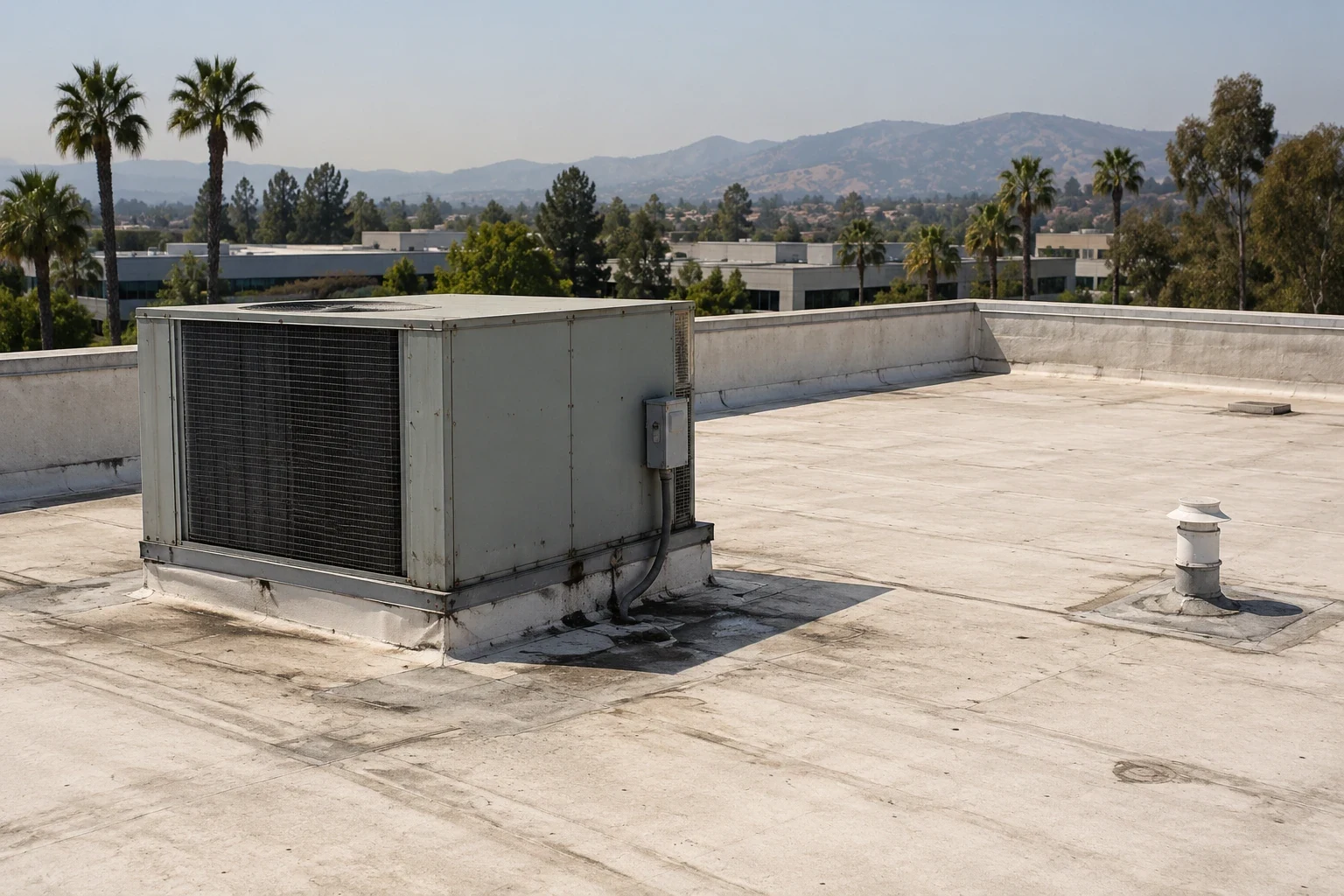
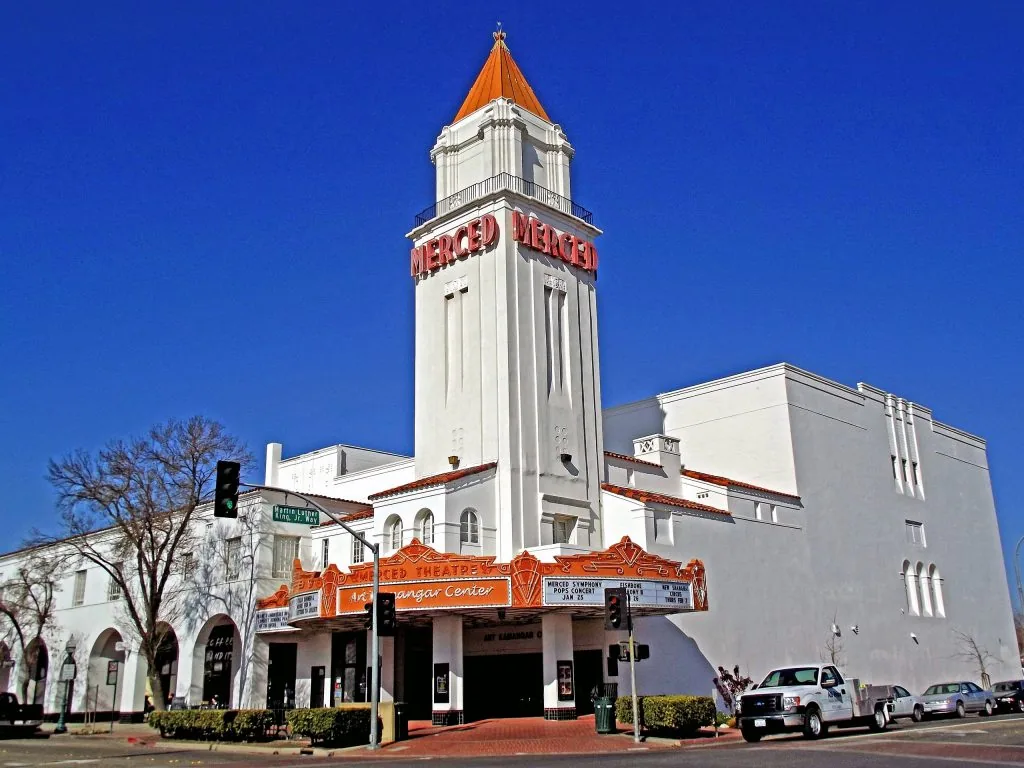
A reflective sheet with an open perimeter still needs a roof-detail repair. For cool roof installation in Merced, CA, we evaluate both the exposed surface and the assembly it will join. Reflectivity can reduce absorbed solar energy at a suitable roof surface. The membrane, insulation, drainage and attachment still need to function together. A light finish alone does not restore damaged construction.
Merced has substantial summer heat. That makes the exposed roof surface a practical consideration for managers choosing a replacement or restoration approach. Downtown Merced includes finance and professional offices, while industrial properties near Highway 99 include manufacturing and distribution uses. We connect the surface choice with the actual enclosure and operating conditions of the building beneath it.
Reflective material within a suitable assembly
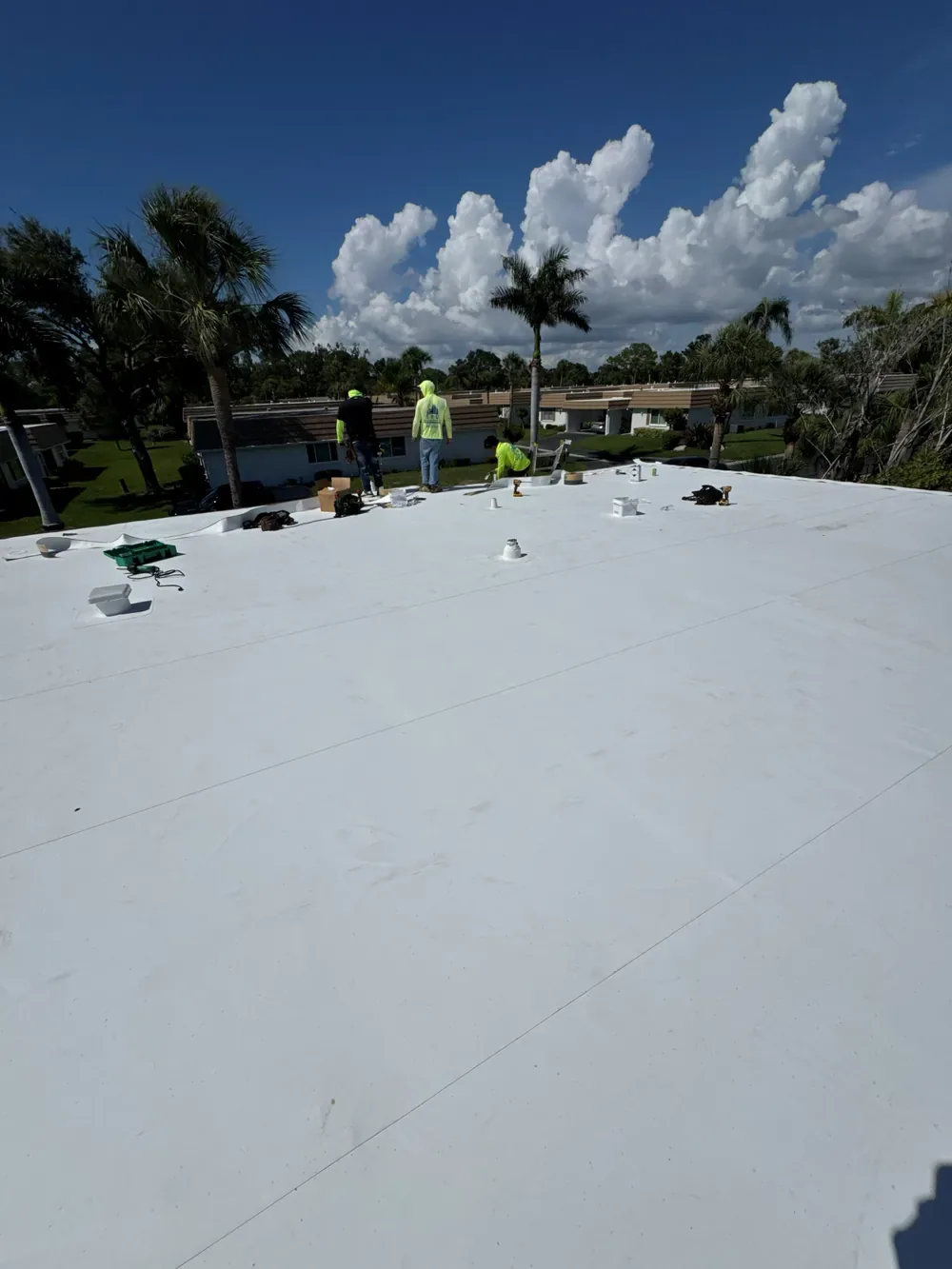
Several roof systems can provide a reflective exposed finish. We identify the intended membrane or coating and evaluate its complete installation requirements. A material's surface properties are one part of the selection. Its connection method, compatibility and detail arrangement also matter. The manager should compare the proposed roof construction, not only the color displayed on a sample.
A reflective TPO membrane needs a suitable substrate and welded connections. A coating restoration uses a different preparation and application sequence. We explain those differences in the scope. The choice depends on the existing layers and the work required to make them suitable. A reflective surface should not become a reason to retain damaged insulation or unstable construction.
Roof appearance can change with dirt and service exposure. We discuss maintenance appropriate to the selected material and identify areas likely to need examination. Cleaning must suit the membrane or coating. The manager should not assume that aggressive surface treatment is harmless to every system. The continuing roof care needs to preserve the installed material and its connections.
Insulation and the building enclosure
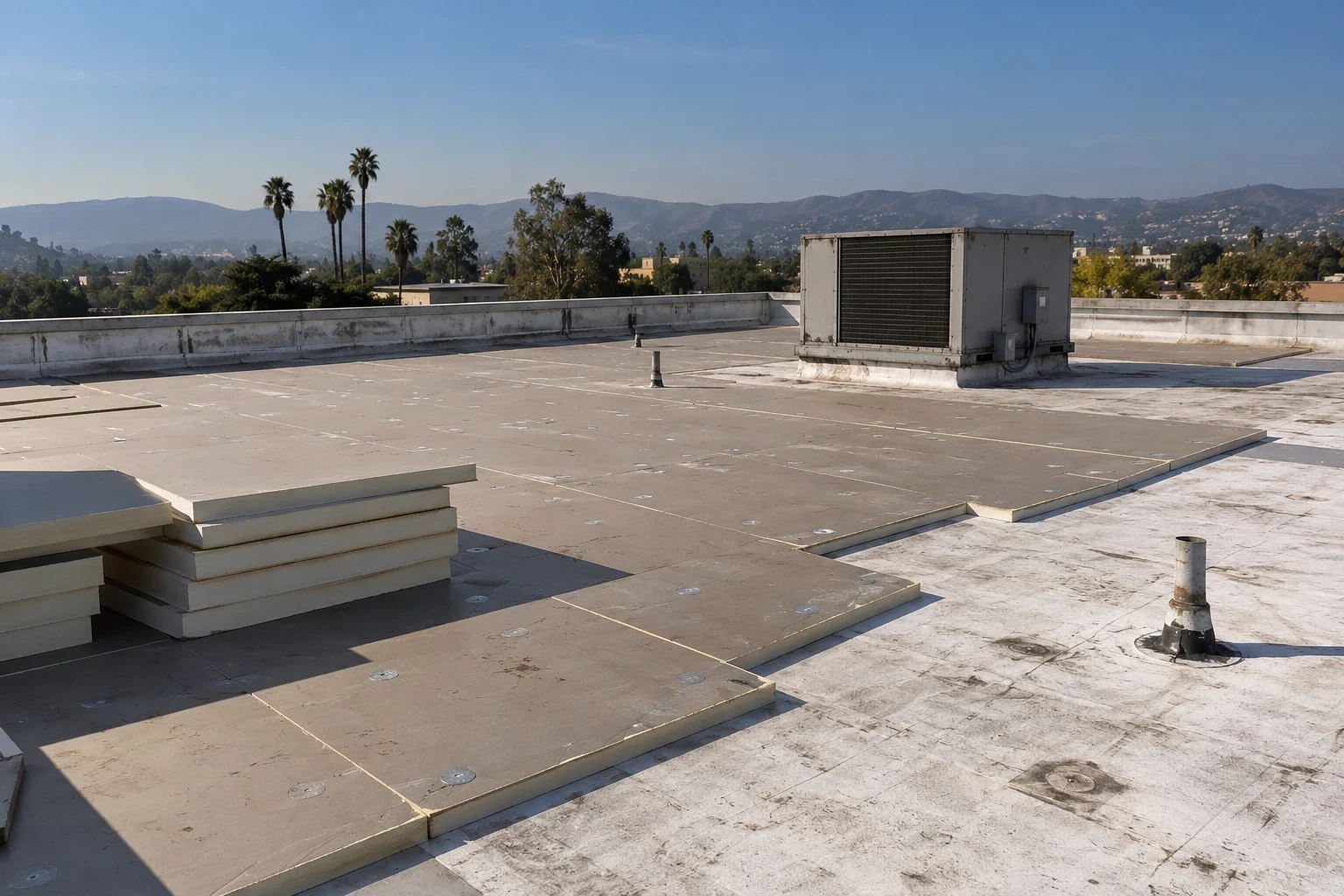
Insulation and a reflective surface have different roles. We identify the thermal layers and their condition before choosing the finished surface. Compressed or wet material may need removal. A revised insulation arrangement can alter roof height and adjacent flashing requirements. The proposal should explain those changes alongside the reflective material rather than treat them as unrelated work.
Interior use influences enclosure decisions. Conditioned offices, storage areas and process buildings may have different requirements. We ask the building team about actual use and identify where design review is needed. No single surface choice establishes the entire building's energy performance. The useful comparison considers the roof layers, details and the enclosure they are intended to serve.
Merced station normals include hot summer days and cooler winter conditions. We use that climate context to frame the selection discussion without promising a particular energy saving. The result depends on the building and assembly. We describe the construction that can be evaluated and identify performance or compliance questions needing the relevant project review.
Replacement or restoration of the existing roof
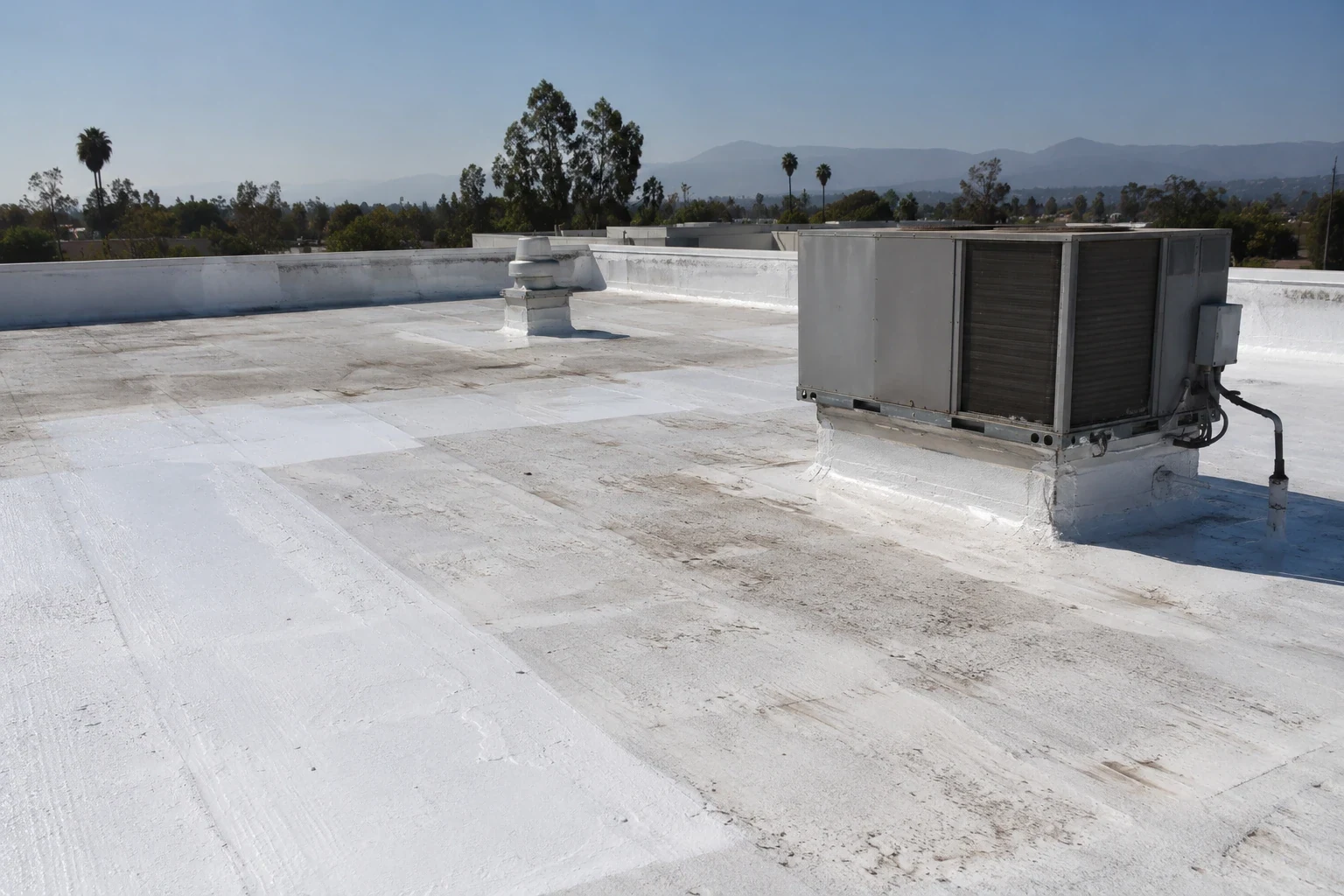
A suitable existing roof may permit reflective coating restoration after necessary preparation and repairs. We assess adhesion, material compatibility and concealed-layer concerns first. A coating should not conceal a failed seam or saturated insulation that needs removal. Its scope includes the detail work required before broad application.
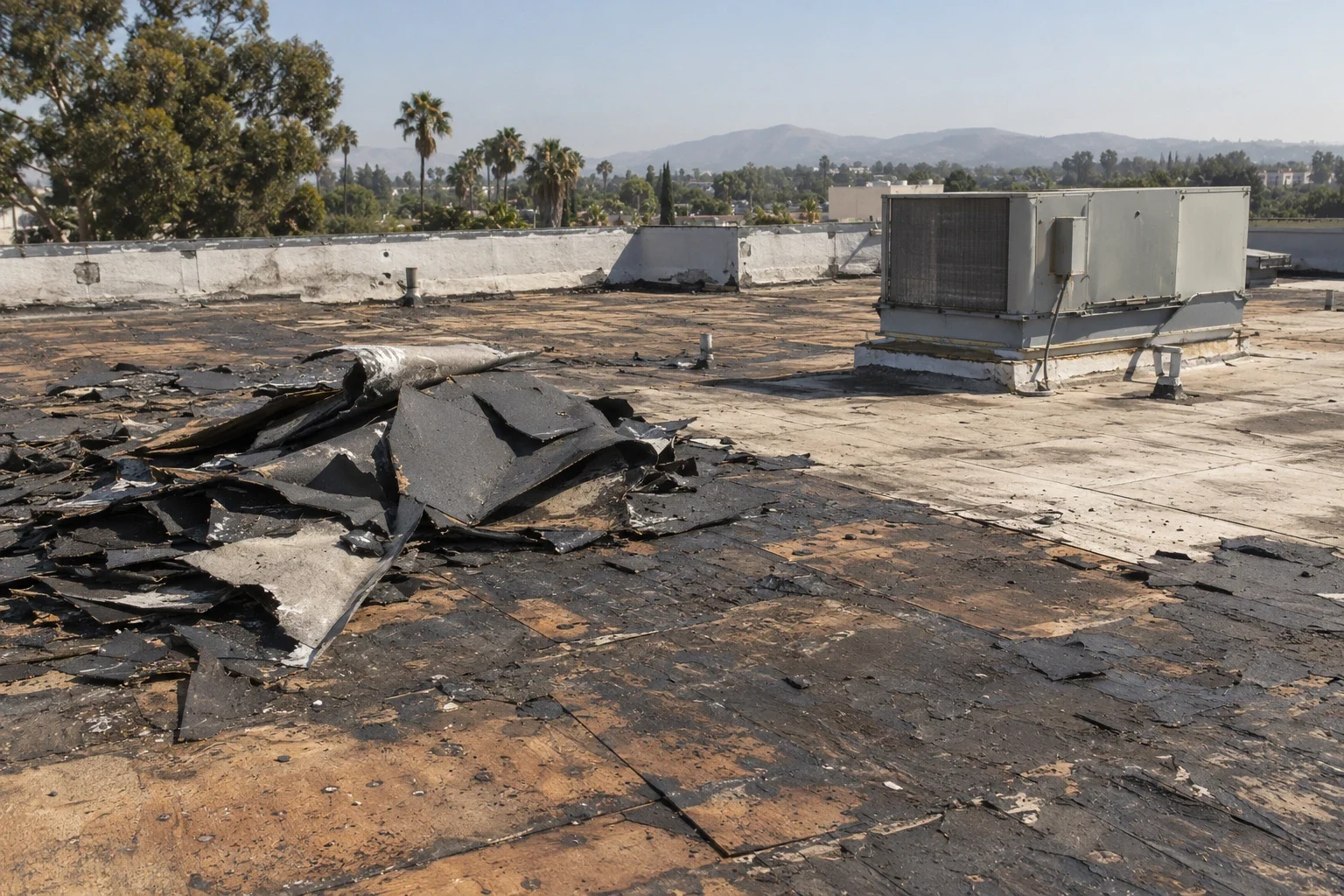
A replacement assembly provides a different opportunity to alter layers and rebuild transitions. We examine the deck and existing construction to define that approach. Material removal, insulation thickness and new flashing height all affect the comparison. A membrane-only price does not show the difference between restoring a suitable surface and replacing an unsuitable assembly.
Where a recover is considered, the retained layers need their own suitability review. A reflective new membrane does not settle that question. Attachment and surface support must suit the proposed assembly. We separate the reasons for selecting the exposed material from the reasons for retaining or removing the construction below it. That gives the manager a clearer option comparison.
Permit scope and project requirements
Applicable energy and building requirements need review for the proposed work. At the California statewide baseline, the 2025 Building Standards Code applies to permit applications dated January 1, 2026 or later, with the local enforcing agency establishing the application date. The code includes the Energy Code. We coordinate the roof scope with the applicable project review rather than infer compliance from a reflective finish.
Different project conditions can change the requirements and the information needed for review. We identify the proposed assembly and the work being performed so the design or permitting parties can evaluate it appropriately. A material description alone may not answer an assembly question. The manager should know whether the comparison concerns replacement, recover or restoration and which requirements apply to that specific work.
For an occupied office property, the work sequence also needs tenant and equipment coordination. Downtown Merced has established professional and financial activity, making that operating discussion locally relevant. We ask about the actual service needs and roof access. Compliance review and construction scheduling should both follow the defined project rather than assumptions about a building type.
The installed surface at its connections
A reflective membrane still needs complete perimeter and penetration connections. We examine attachment, seam construction and terminations appropriate to the selected system. Heat movement at exposed transitions remains relevant in Merced. The detail needs suitable materials and geometry; the field color does not resolve a strained curb corner or loose edge attachment.
Drainage also remains part of the finished roof. We compare the new layer heights with outlets and the water path. Any needed slope or detail modification belongs in the proposal. A new exposed surface following an unresolved depression can leave the same water condition. We distinguish the thermal surface decision from construction needed to restore suitable drainage.
At an industrial property in Merced, highway-linked manufacturing and distribution activity can shape access and staging. We identify those arrangements with the building team before installation. The assembly selection still comes from the examined roof and project requirements. Cost drivers include preparation, damaged layers, insulation changes and the connected details being rebuilt.
A roof capital comparison can place those items beside the manager's repair and replacement choices. We explain the construction included in each option. The final decision should identify a workable reflective roof assembly and its maintenance needs, with expected benefits evaluated for the actual building rather than stated as an unsupported percentage.
Commercial Roofing Questions
Does a light-colored roof automatically meet energy requirements?
Color alone does not establish compliance. The material and project scope need review against the applicable requirements. We identify the proposed assembly and coordinate the information needed for that evaluation rather than equate appearance with approval.
Can reflective coating replace damaged insulation?
The coating acts at the surface. Damaged insulation needs assessment and appropriate removal or reinstatement beneath it. We resolve that layer condition before treating restoration as a suitable cool-roof option.
Will a cool roof produce a stated reduction in my energy bill?
The result depends on the building, operation and complete enclosure. We describe the installed roof and its surface properties. A building-specific performance evaluation is needed for quantified savings rather than a general roofing promise.
What should be compared between a reflective membrane and coating?
Substrate suitability, preparation, damaged-layer repairs and detail construction differ. We specify those items for each option. The comparison should show a complete assembly scope, not only the exposed material's finish. The intended bond or attachment, finished layer height and compatible flashing method should be clear enough to assess how each option connects with the existing construction.
Assessment of the reflective roof assembly
Request an examination of the surface, thermal layers and detail changes needed for a suitable cool-roof installation.
Related Roofing Work