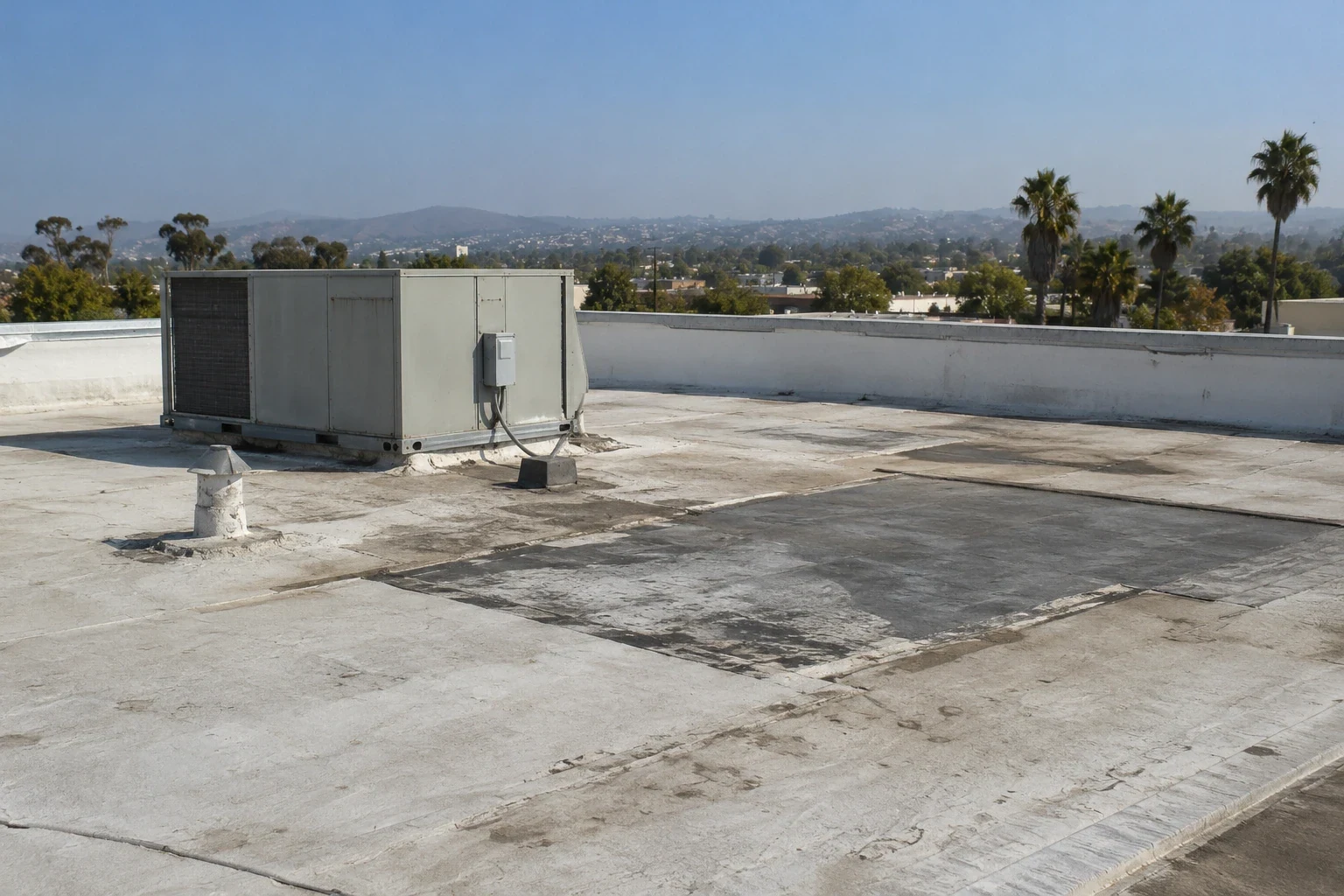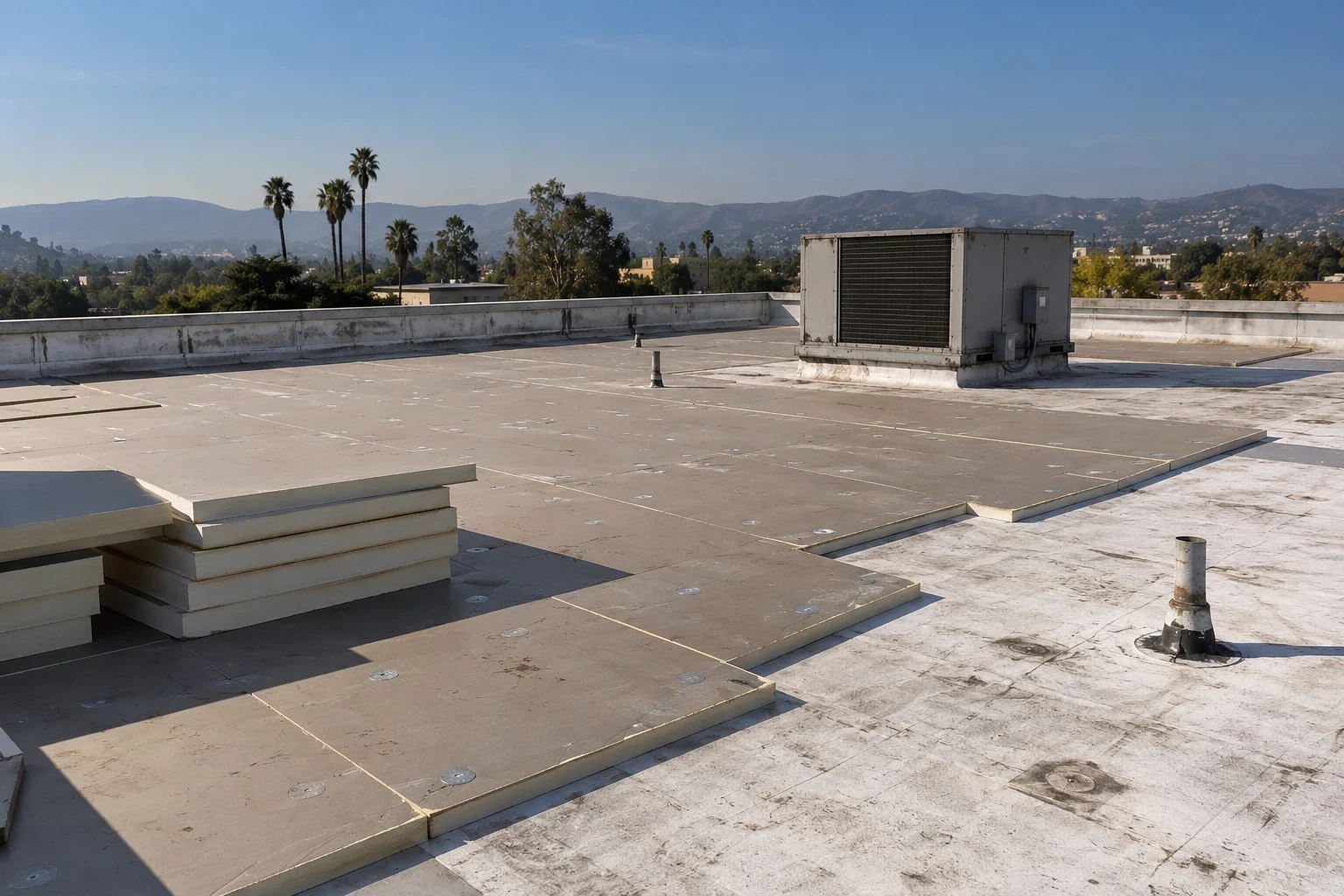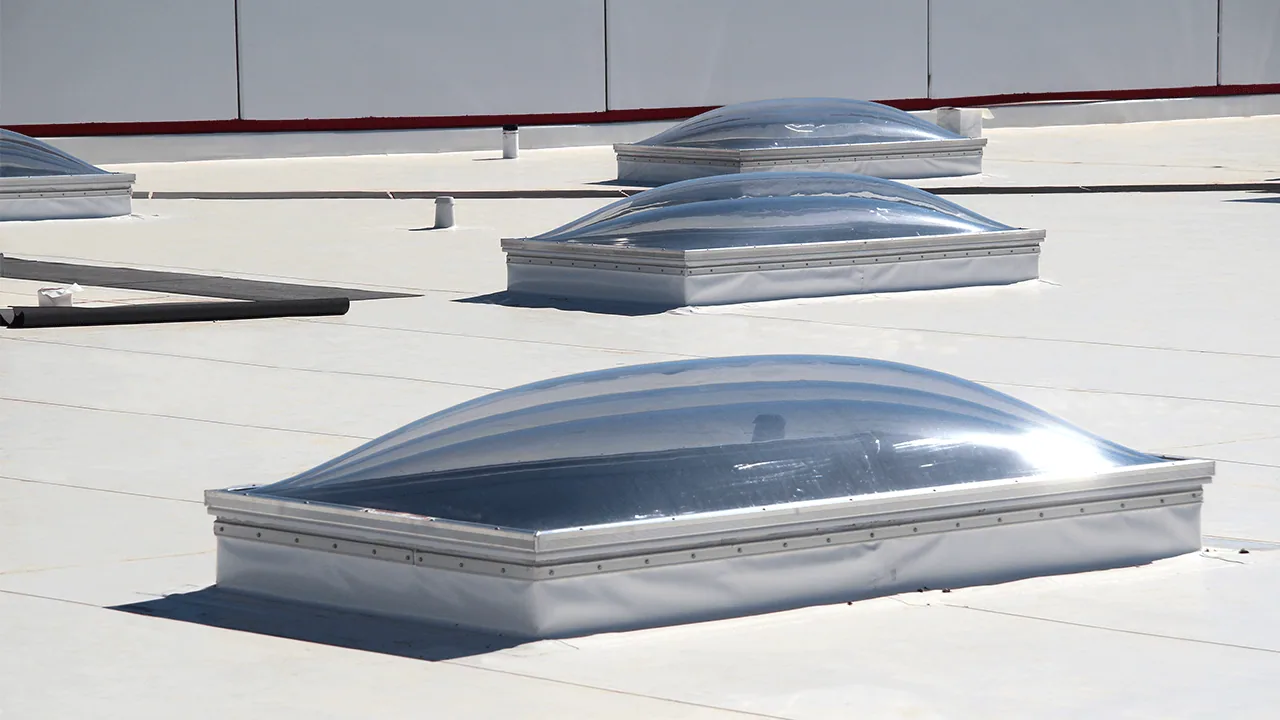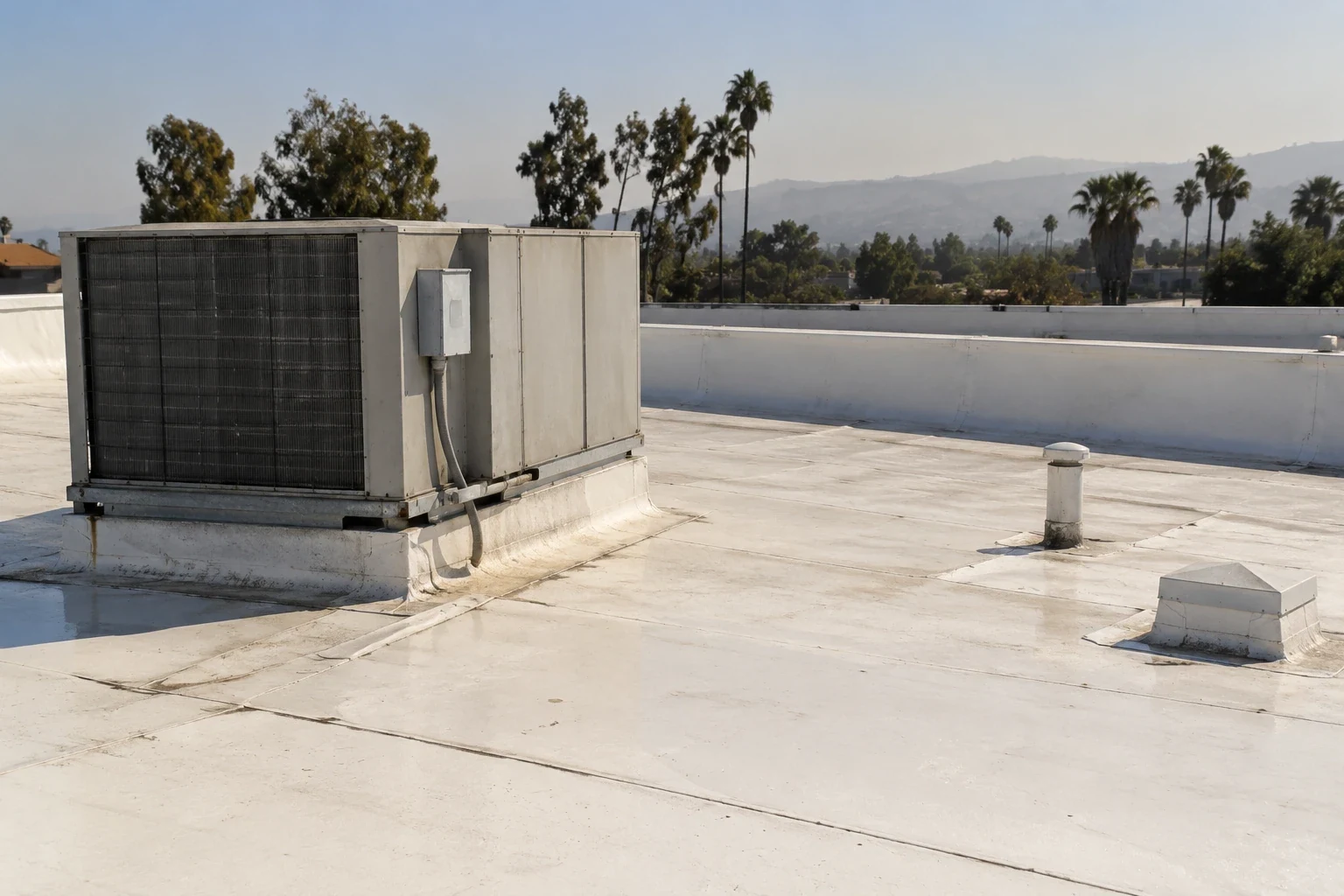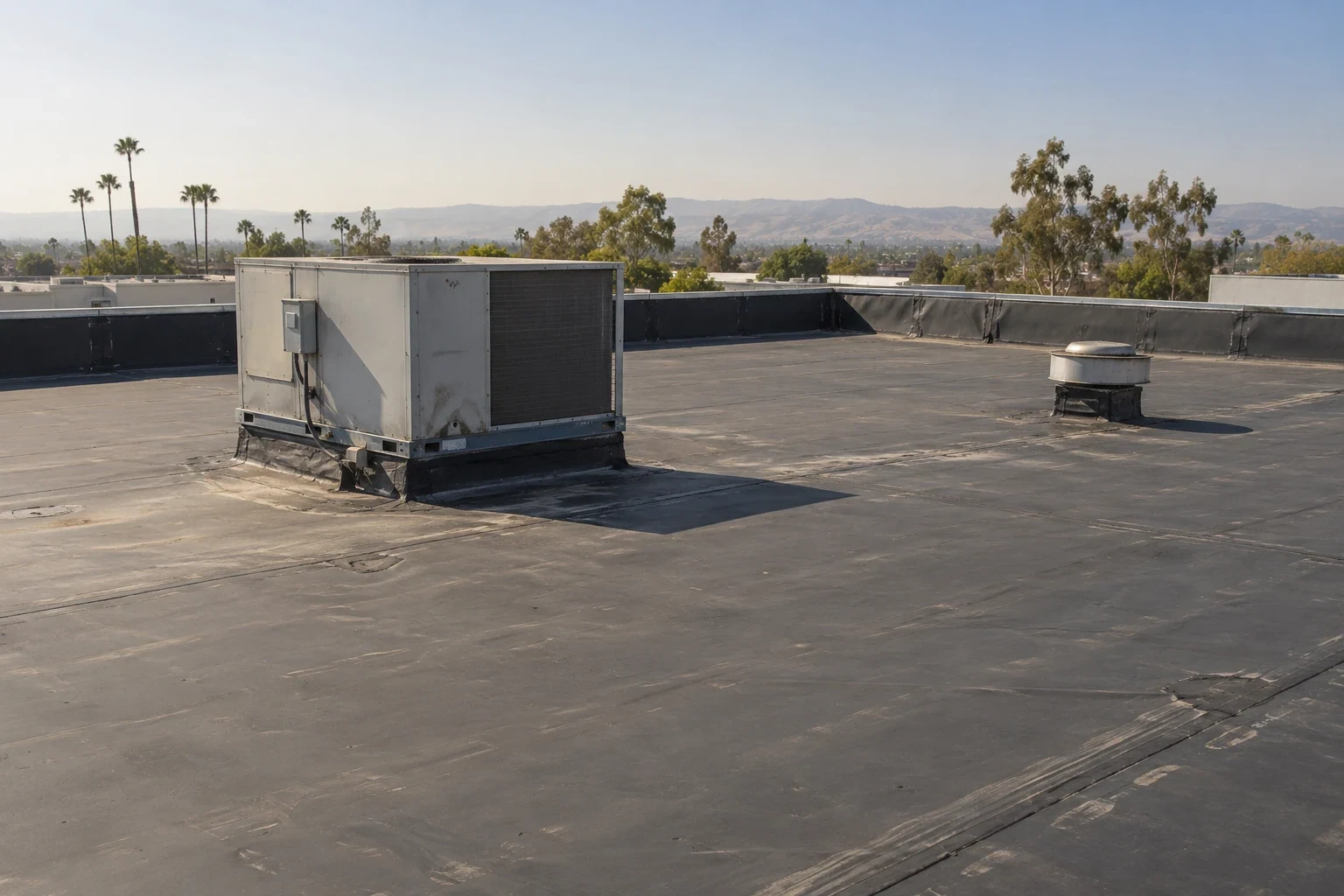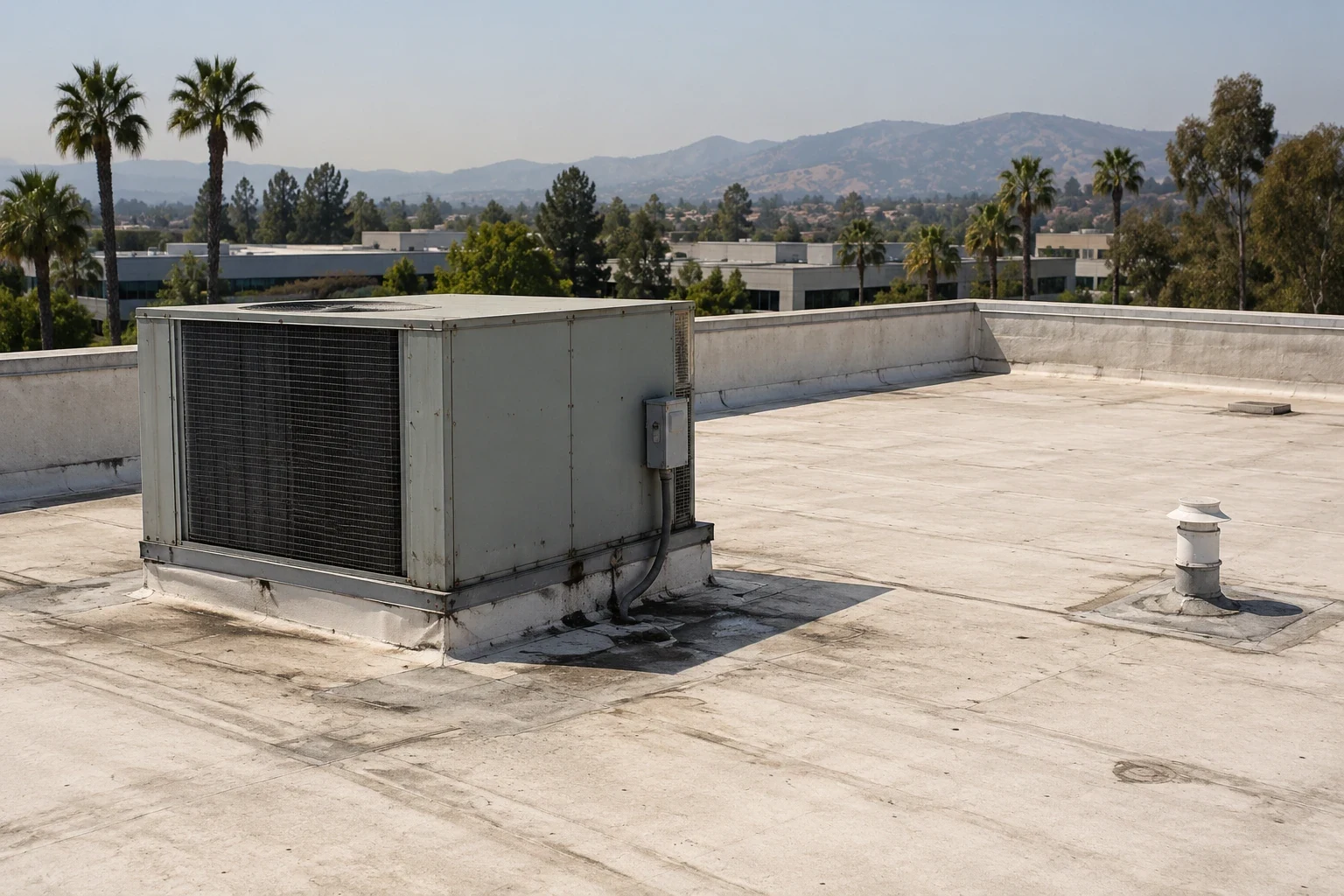
A narrow separation along a TPO weld needs a material check before repair. On a TPO roof in Merced, CA, we examine the sheet edge, adjoining surface and connection quality. The surrounding membrane must be suitable for another welded detail. Dirt, an earlier coating or material distress can change the preparation. The repair decision begins at that connection, not at the sheet's color.
TPO is a thermoplastic single-ply membrane installed as part of a roof assembly. Merced summer heat makes its exposed transitions and attachment worth attention. Downtown Merced has offices and restaurant uses. Manufacturing and distribution properties also occupy industrial areas near Highway 99. We assess the actual layers and occupied use before choosing repair, recover or replacement work.
The welded sheet connection
A TPO field seam joins compatible membrane surfaces through heat welding. Its preparation and completed connection need attention during installation and repair. We examine accessible seam edges with a method appropriate to the assembly. An open edge may be localized, or it may identify a broader connection problem. The proposed response should describe the observed area and the usable surrounding material.
Surface contamination can interfere with welding. Aged material may need the preparation specified for the particular membrane and repair. We assess suitability before applying a patch. A repair should reach a surface capable of receiving the intended connection. Covering accumulated sealant or loose earlier work can leave an unreliable interface beneath an otherwise clean-looking sheet.
TPO membrane repair includes preparation, compatible material and examination of the finished edge. A repair that cannot form the necessary connection may require a different removal boundary. We explain that finding to the manager. The method follows the existing sheet condition rather than assume every thermoplastic surface can receive the same patch without preparation.
Attachment beneath the field sheet
The membrane needs an assembly attachment suited to the building and supporting layers. Mechanically attached, adhered and other specified arrangements have different construction requirements. We identify the intended method and the material receiving that connection. A firm-looking sheet does not reveal every attachment below it. Selected examination may be needed where those concealed details affect retention or replacement.
Insulation and cover board provide the surface beneath the membrane. Their condition, facer and attachment matter to the finished roof. Support-layer work may be required where compression, moisture or separation makes the existing surface unsuitable. We identify those removals before new membrane installation. A fresh sheet should not conceal material that cannot support the specified assembly.
Where the deck is damaged or its condition uncertain, the proposal needs a defined examination or repair response. Roofing material selection does not establish supporting capacity. We identify visible conditions and coordinate appropriate technical review when needed. The manager can then compare the complete installation, including substrate and attachment, rather than a field-sheet price without its supporting construction.
Flashing corners and exposed terminations
A curb corner requires more than a continuation of the flat sheet. We examine its geometry and the compatible flashing detail. Corners, pipe boots and wall transitions need their specified reinforcement and connection methods. Heat movement between a rigid curb and flexible membrane makes a strained detail worth checking in Merced. The observed material and attachment determine the repair.
Termination at a wall or perimeter also needs a complete arrangement. We identify the membrane connection, attachment and protection of the upper edge. New field material should not stop at an inadequate old detail merely because it appears less worn. Rebuilt penetration flashing can form part of the TPO work where the transition cannot remain serviceable.
Drain details need suitable sheet preparation and connection at the bowl or scupper. We compare the finished field height with the outlet approach. A replacement or recover layer can affect nearby curb clearance and sump geometry. The TPO scope should state how those relationships are handled, rather than make field installation complete while leaving connected drainage work undefined.
TPO within the material comparison
A PVC roof assembly also uses thermoplastic connections, but its material and compatibility requirements are distinct. TPO and PVC should not be treated as interchangeable repair surfaces. We identify the existing membrane before selecting welding material or preparation. A visual resemblance can be misleading when an earlier repair introduced another sheet or coating.
An EPDM rubber assembly uses different seam and flashing methods. The choice between systems involves the full roof, not only a preference for welded or bonded connections. We compare substrate requirements, detail work and the building use. The manager receives alternatives that identify the construction each option needs on the inspected roof.
For a commercial office roof, equipment service and occupant protection can affect installation planning. Downtown Merced includes financial and professional activity, so usable roof access and service windows matter. We ask the building team for its actual constraints. Those arrangements determine the work sequence without establishing the roof material by themselves.
Repairable sheet and assembly replacement
A bounded opening in serviceable membrane may allow focused repair. Extensive sheet distress or damaged supporting layers can lead to a larger intervention. We examine both. Retention is appropriate only where the remaining construction suits the proposed work. The manager needs a clear explanation of why one area can be repaired and another may need removal or replacement.
The commercial activity in Atwater includes processing food and manufacturing building products. A TPO project above an operating property needs the specific equipment and interior restrictions identified before work. We coordinate those needs with the removal boundary and closure. The installed assembly remains a building-level choice based on inspected conditions.
We describe material preparation, affected layers and the finished details in the proposal. Access, board replacement and penetration count can influence cost more than an isolated sheet choice suggests. After construction, equipment routes and drainage need continuing attention. A TPO surface should receive maintenance and repair methods compatible with its material, especially where repeated service traffic affects a vulnerable detail.
Merced's winter rainfall normals exceed midsummer rainfall normals. An open weld found during a dry visit needs a stated repair decision before renewed exposure. We identify the location and examine suitable adjoining sheet while it is accessible. Waiting for another interior drip is not necessary to address an observed opening with a compatible repair.
Commercial Roofing Questions
Can a TPO patch be welded over an old surface coating?
The coating and membrane condition need examination. Suitable preparation or removal may be required before a compatible connection can be formed. We assess the actual surface rather than assume that the visible finish accepts the intended weld. Preparation also needs to preserve enough serviceable sheet around the opening for the specified patch dimensions and edge examination.
Why inspect insulation when only a sheet seam looks damaged?
Water or compression may have affected the support beneath it. The proposed repair needs suitable surrounding construction. We identify any necessary layer checks and explain how confirmed damage changes removal and reinstatement around the seam.
Are TPO and PVC repair materials interchangeable?
They are different materials with distinct compatibility requirements. We identify the membrane before selecting repair sheet and preparation. A similar color does not establish that two exposed materials can form the intended welded connection.
What makes a TPO roof repair become a replacement discussion?
Widespread material distress or unsuitable supporting construction can change the scope. We examine the usable sheet and layers, then explain the boundary. A larger choice should follow those conditions rather than a single isolated seam label.
Inspection of the TPO weld and support layers
Request examination of the separating seam, damaged TPO detail or assembly being considered for new membrane installation.
Related Roofing Work