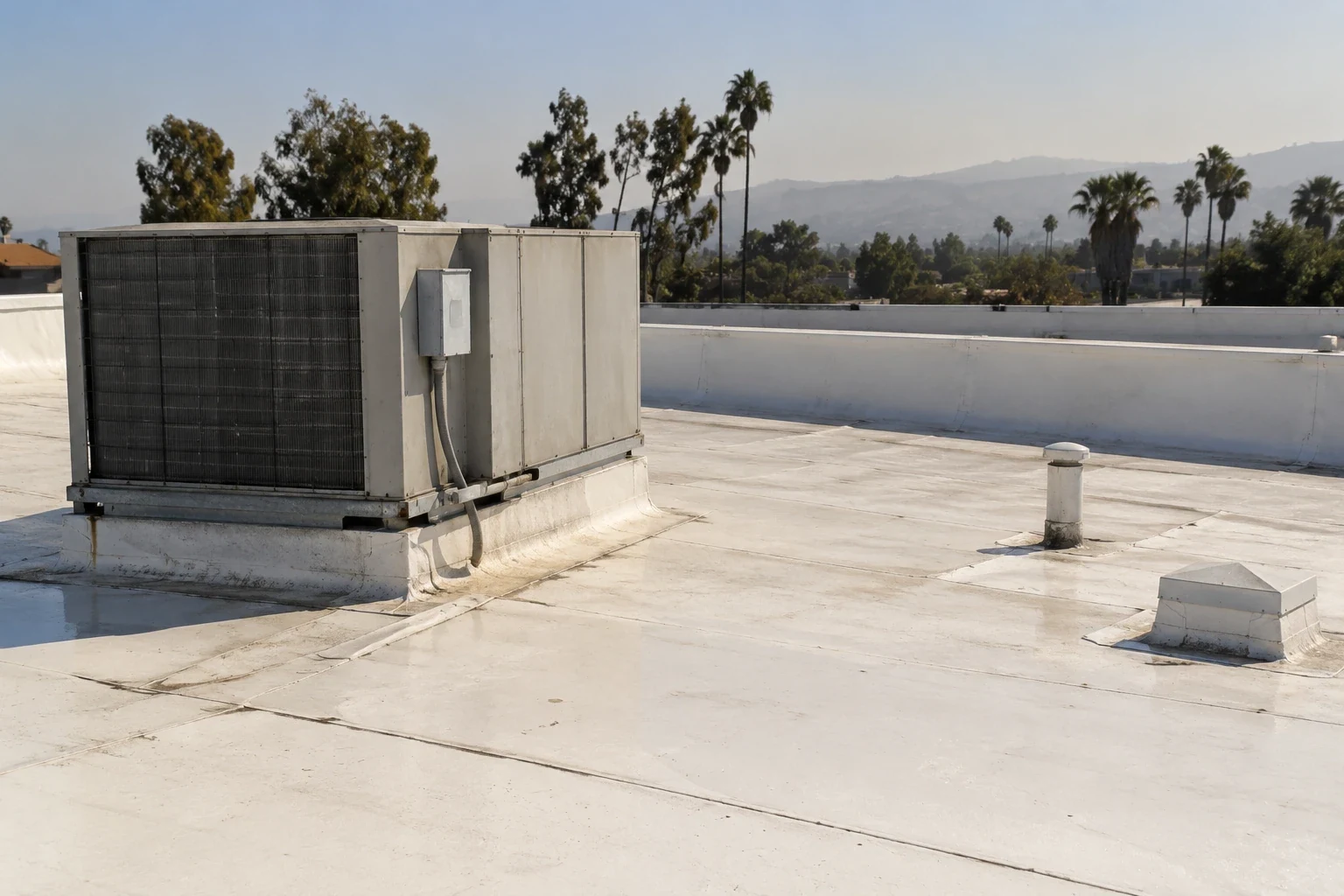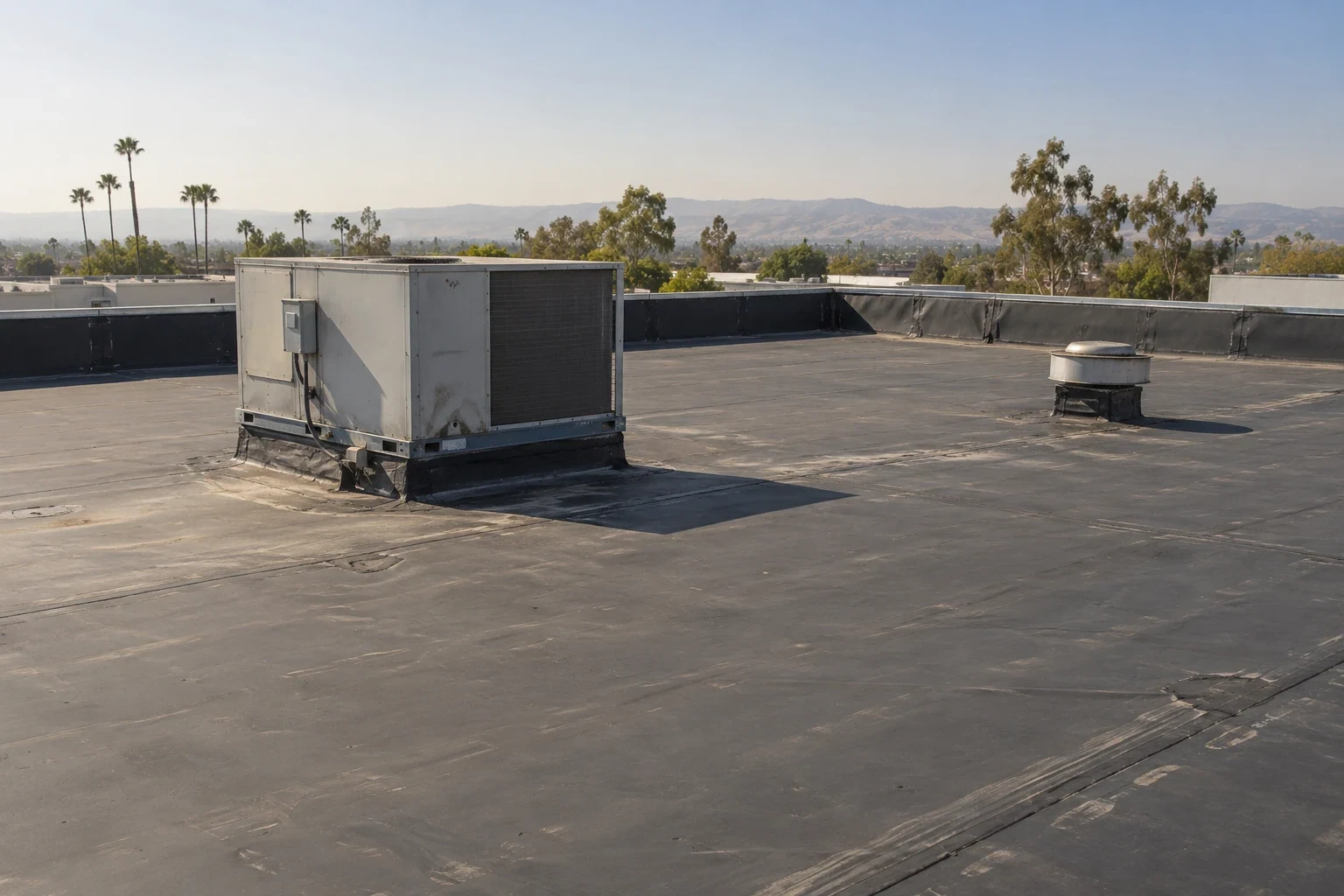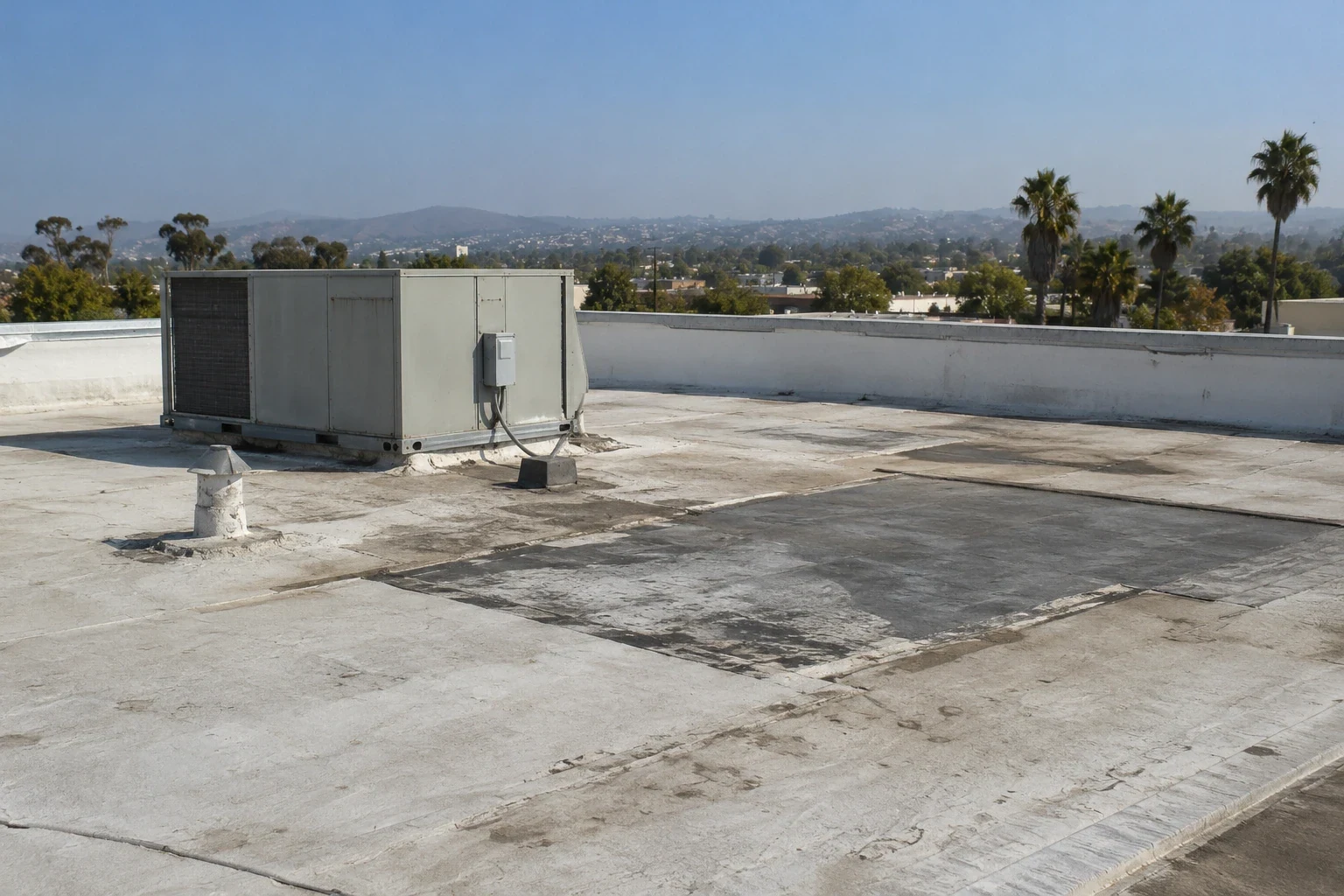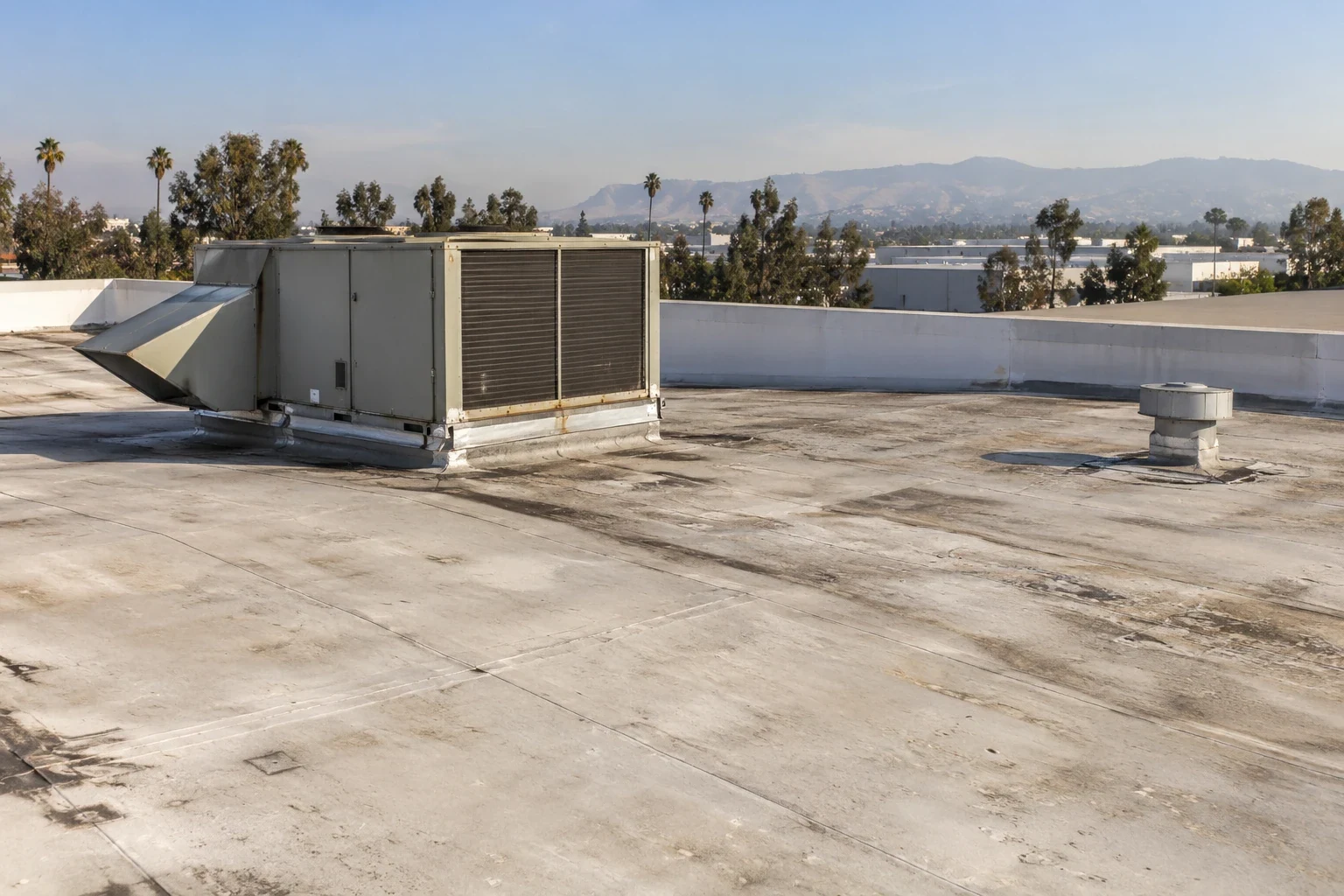
A weathered alloy membrane beside a clean earlier patch needs material identification before another repair. For KEE roofing in Merced, CA, we examine the sheet and its repair history before choosing compatible components. The roof may look like another thermoplastic system. That resemblance does not establish the membrane formulation or the preparation needed to form its next connection.
KEE refers to ketone ethylene ester used in certain roof membrane formulations. We evaluate the particular assembly rather than assume every KEE-containing or PVC-alloy product has identical requirements. Merced manufacturing and food-production activity makes actual rooftop exposure a useful discussion. Highway 99 serves the city's industrial parks, while Downtown Merced has occupied offices and commercial uses. The inspected building determines the work.
The particular alloy membrane
Available roof information can help establish the installed system. We compare it with accessible construction and prior repairs. Unidentified sheets or coatings can affect the next connection. The proposal should state the material being repaired and any remaining identification question. A general thermoplastic label is not sufficient when compatible repair products and preparation depend on the actual membrane.
A PVC membrane choice may share some construction methods with an alloy system while having different material requirements. We evaluate compatibility for the intended work. The manager should not receive an interchangeable list of white sheets in place of a repair specification. The usable surface, repair components and completed connection need to suit the roof examined.
An EPDM rubber roof uses another connection approach altogether. That distinction matters if an earlier repair introduced unlike material or if replacement options are being compared. We identify what remains and what must be removed. A complete assembly comparison explains preparation and detail construction instead of relying on similar surface appearance or broad product-family names.
Material condition at the weld area
A membrane edge can be stained without being unusable. It can also be damaged despite appearing clean. We examine flexibility, visible distress and the condition around the proposed weld. Preparation and suitable test work may be required. The repair boundary should reach material capable of accepting the intended connection, with enough space to construct and examine the completed edge.
Old sealant, coating or incompatible patch buildup can complicate that preparation. We identify the material affecting the weld area and determine what removal is needed. A new sheet placed over a loose earlier patch leaves its weak interface inside the repair. The manager should understand which preparation exposes usable roofing and why an apparently small opening requires work around it.
Compatible thermoplastic repair needs the actual membrane requirements applied to the field and its details. We examine finished connections with suitable methods. A smooth surface alone does not describe the bond beneath an overlap. The scope identifies preparation, material and the construction boundary so the repair is evaluated as a detail rather than just visible coverage.
Process exposure and surface compatibility
Residue near an exhaust or service area raises an exposure question. We ask the building team about the actual equipment and examine the roof material there. Compatibility with a particular substance needs review for the selected product. We avoid treating an alloy description as resistance to every process discharge. Unusual conditions should be resolved before repair or installation material is selected.
For a manufacturing roof assembly, process equipment may also affect work windows and access. Merced includes manufacturing, food-production and packaging activity. The operation at an individual property still needs identification. We connect its service restrictions with the roofing task and distinguish them from the material question. Both can matter without providing the same kind of evidence.
Merced summer heat makes exposed transitions relevant to the examination. An alloy membrane, metal termination and rigid curb can have different movement behavior. We inspect for restraint, splitting or separation at the actual interface. The detail should suit those materials and the intended assembly. A general heat statement does not establish the cause of a particular opening.
Retained insulation and attachment
A suitable top sheet does not establish the condition of its supporting layers. We investigate moisture or instability where it affects the proposed work. Selected checks may identify wet insulation, damaged facers or a deck condition requiring attention. The new connection should not conceal unsuitable support simply because the exposed alloy membrane can accept a patch.
A layer-focused roof inspection helps define those questions before broader installation. For replacement or recover, we identify the intended attachment and the material receiving it. An unknown existing assembly needs examination appropriate to the decision. The manager can then compare retaining layers with removal using the construction actually found.
Drain approaches and curb clearances need review if layer heights change. A cover board or insulation addition can alter the available flashing height at a retained curb. It can also require a new transition into a drain sump. We identify the connected work before field installation. The membrane family does not remove those assembly-level responsibilities.
Flashing transitions and the repair decision
A corner detail needs geometry and reinforcement suited to the specific system. We examine the base connection and vertical material, then define any necessary reconstruction. A compatible field sheet cannot restore a corner that remains loose underneath it. Repair work needs a usable connection through the complete transition, including the upper termination where that forms part of the detail.
At a property in Downtown Merced, access above occupied offices or restaurant space may shape the opening sequence. We identify those restrictions with the manager. The roofing method still follows the examined membrane and support layers. Suitable preparation and closure need enough time within the usable window rather than an improvised detail selected solely to avoid an interruption.
Merced winter rainfall normals exceed summer rainfall normals. A visible separating connection during a dry visit can warrant planned repair before another wet period. We identify the opening and explain the suitable work window. Where repeated distress or damaged layers affect a broader area, another assembly option may deserve comparison instead of adding a succession of patches.
Coating restoration requires its own compatibility and adhesion assessment if it is considered over an alloy membrane. It should not be assumed suitable from the product family alone. We compare preparation, support condition and detail work. Cost depends on those items, access and the repairable boundary, not only the name assigned to the exposed sheet.
Commercial Roofing Questions
Can a PVC repair product be used on every KEE-containing membrane?
Compatibility must be established for the actual system. We identify the installed sheet and suitable repair components before specification. Shared thermoplastic characteristics do not make every formulation and preparation method interchangeable.
Why does an earlier patch need identification before new work?
Unlike materials or unsuitable buildup can affect the next connection. We examine what remains, its attachment and the surrounding sheet. Removal may be needed to expose a usable surface for a compatible repair rather than bond to an unknown old layer.
Does the alloy description settle resistance to process residue?
The substance and particular product need review. We examine observed exposure and obtain the relevant operating information from the building team. Material selection should address that specific condition rather than a broad assumption about chemical resistance.
What distinguishes a material repair from an assembly replacement need?
A bounded defect may be repairable where the sheet and supporting layers remain suitable. Broader distress or concealed damage changes the comparison. We explain those findings and the usable connection boundary before recommending the next construction scope.
Examination of the alloy membrane connection
Request identification and condition assessment of the KEE or PVC-alloy sheet, prior repairs and support layers before compatible work is selected.
Related Roofing Work