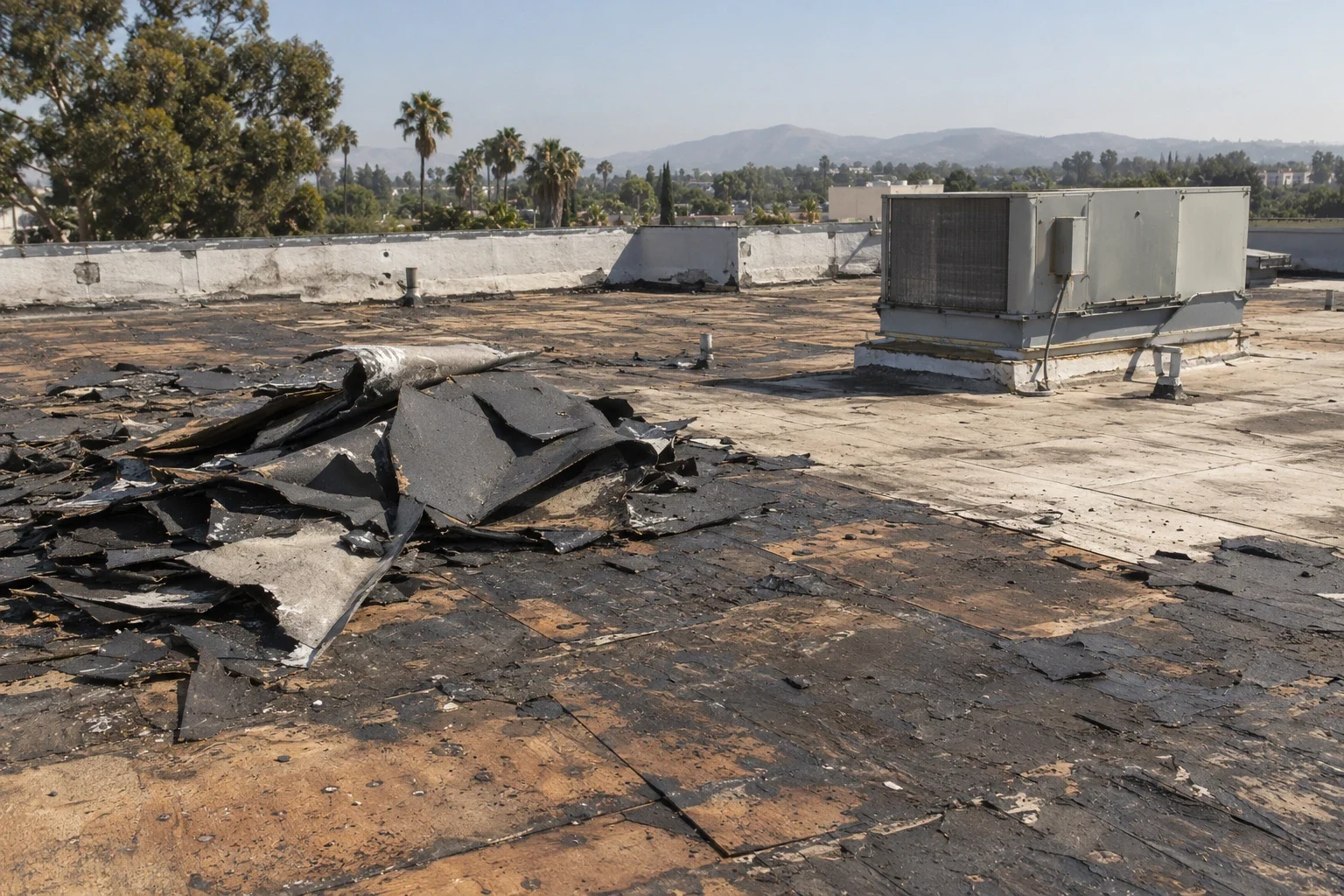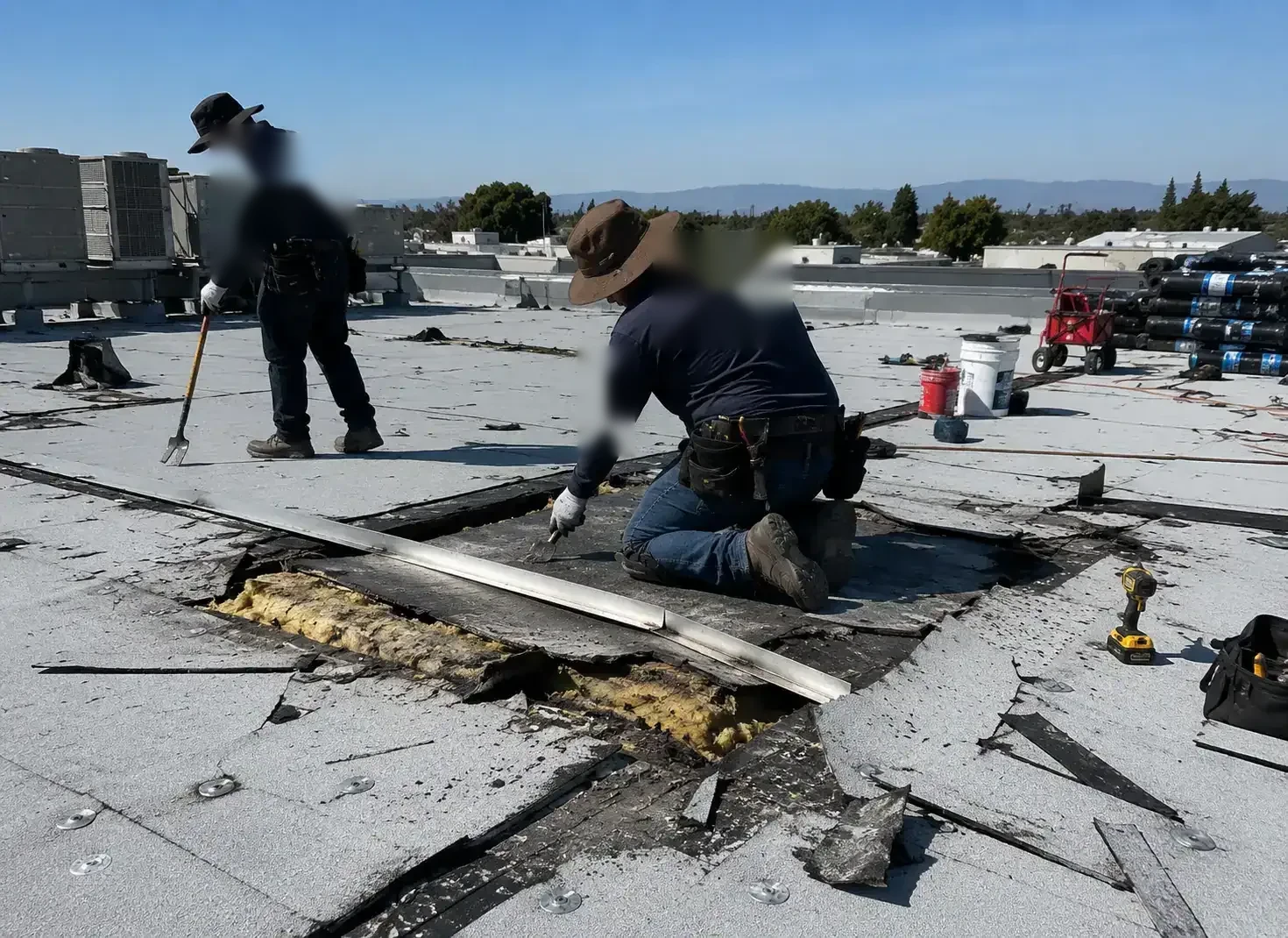
A failed lap near a roof edge can send water toward a wall or into insulation before anyone sees a drip. In Livingston, we trace that moisture path across the membrane, check the nearby drain and inspect the attachment beneath the seam. The city is about 15 miles northwest of Merced, with State Route 99 as its primary north-south corridor. Livingston's commercial activity includes food processing, agriculture, manufacturing and wineries, each with different roof-access and scheduling needs. We mark the reported section, confirm how it is built and plan access around the property’s actual operations. A commercial roof inspection turns the observed lap, edge and insulation conditions into a repair boundary the owner can review.
Sequence around daily operations
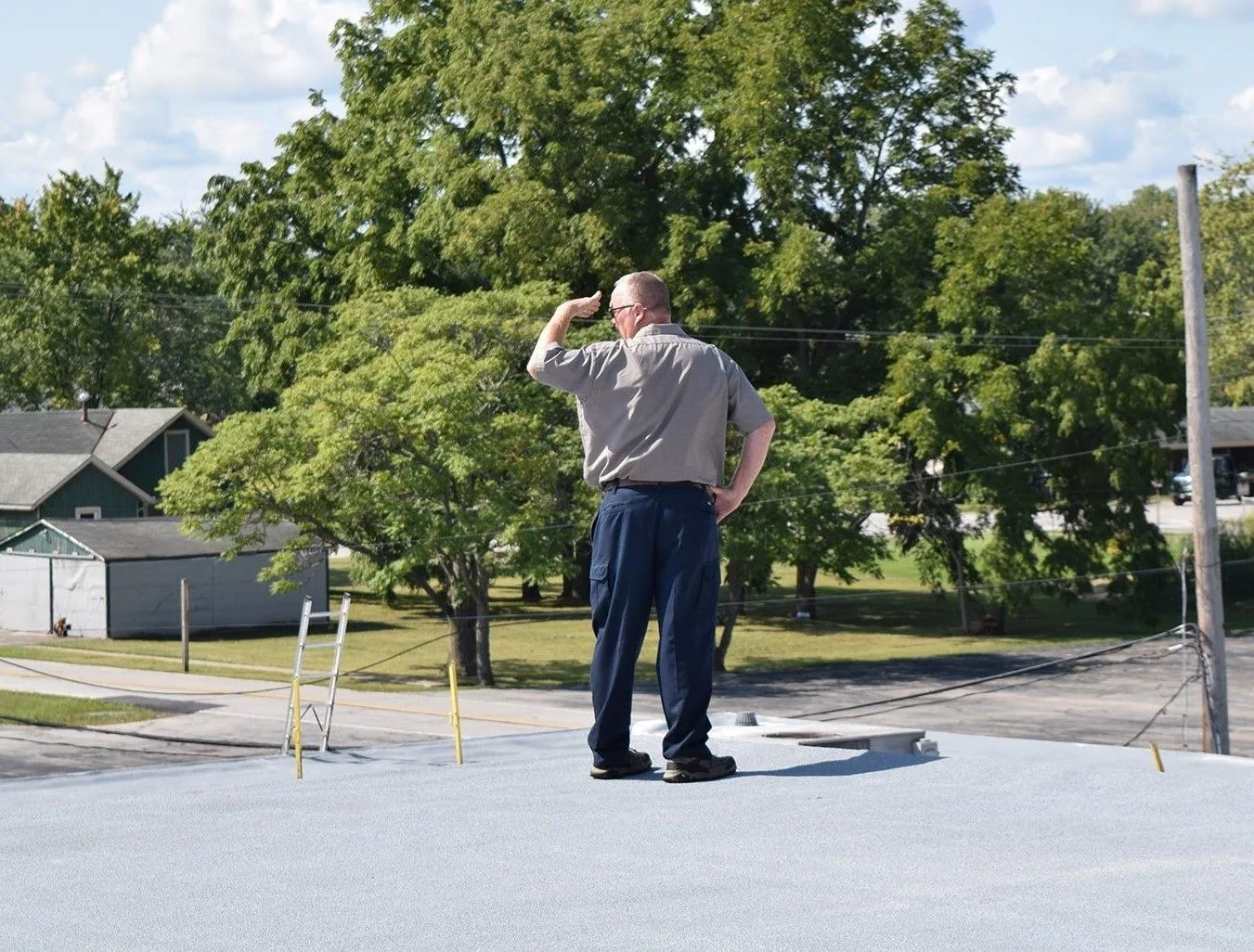
Deliveries, production and occupied offices set practical limits on roof access. Before we stage material, the manager identifies active loading areas, restricted doors, vehicle routes and equipment that cannot be interrupted. We check where ladders can be secured and how debris can be lowered without crossing an operating lane. On the roof, we divide the assembly into sections and identify seams, penetrations, curbs and drains. If additions use different systems, we record the transition rather than treating them as one membrane. An inspection of an accessible area can locate a visible defect, but an opening may be needed to confirm hidden moisture or attachment. We keep that opening small enough to answer the question and close it correctly. The work record notes what was exposed, what remained covered and the areas the owner may want examined next.
Check the seam under movement
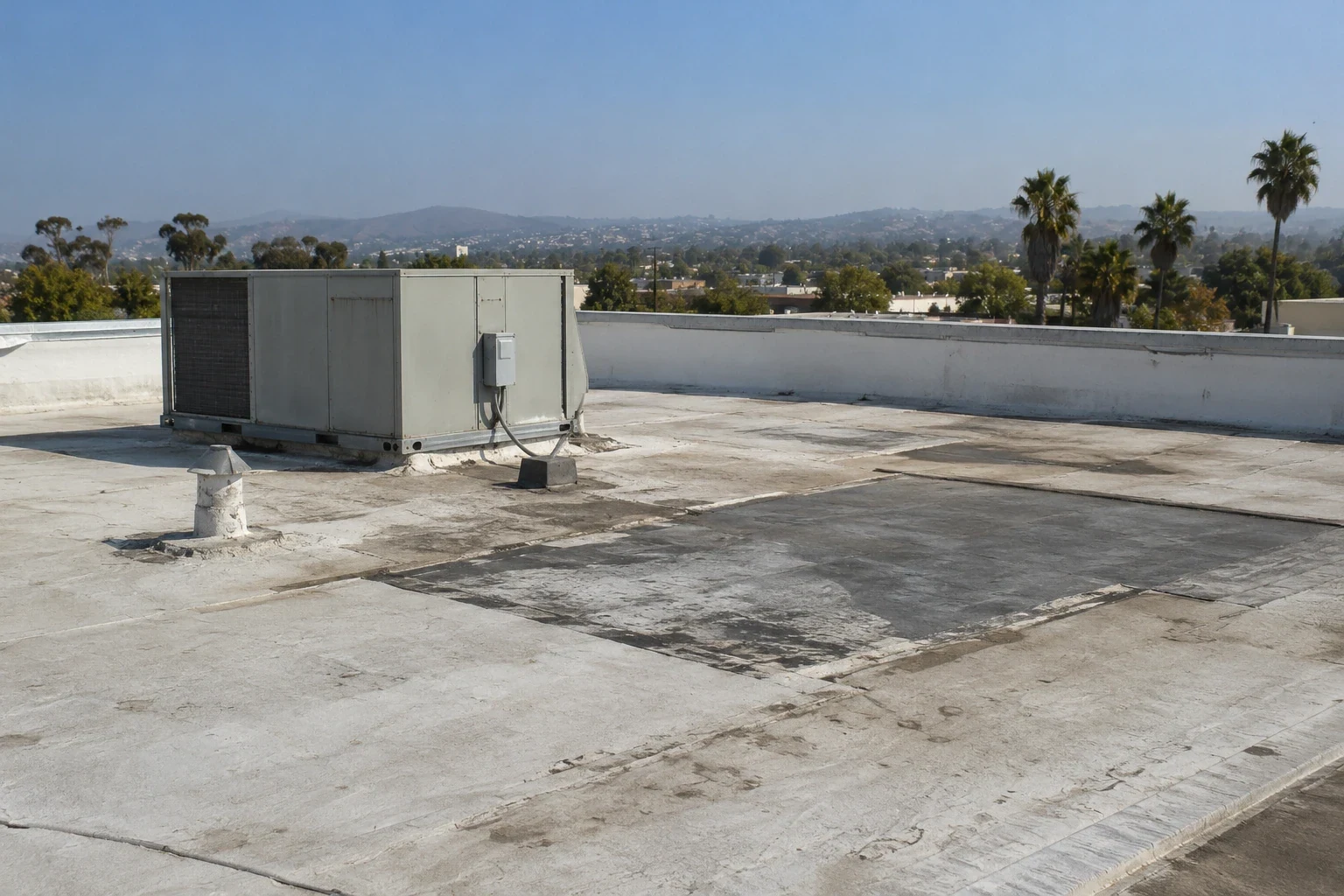
On a hot roof, expansion and contraction can work against a lap or a connection between sheet membrane and metal. We inspect for bond-line separation, dirt, trapped water and prior repair material. A welded sheet needs a sound, prepared surface; a mechanically attached assembly requires its fasteners and seam geometry to be checked. Sealant at the edge cannot restore a failed attachment by itself. We probe and photograph the surrounding area, then decide whether a local patch can tie to sound material. If repeated openings follow the same seam across a section, the report should say so. That pattern can change a single repair into a broader scope.
Drainage is an assembly question
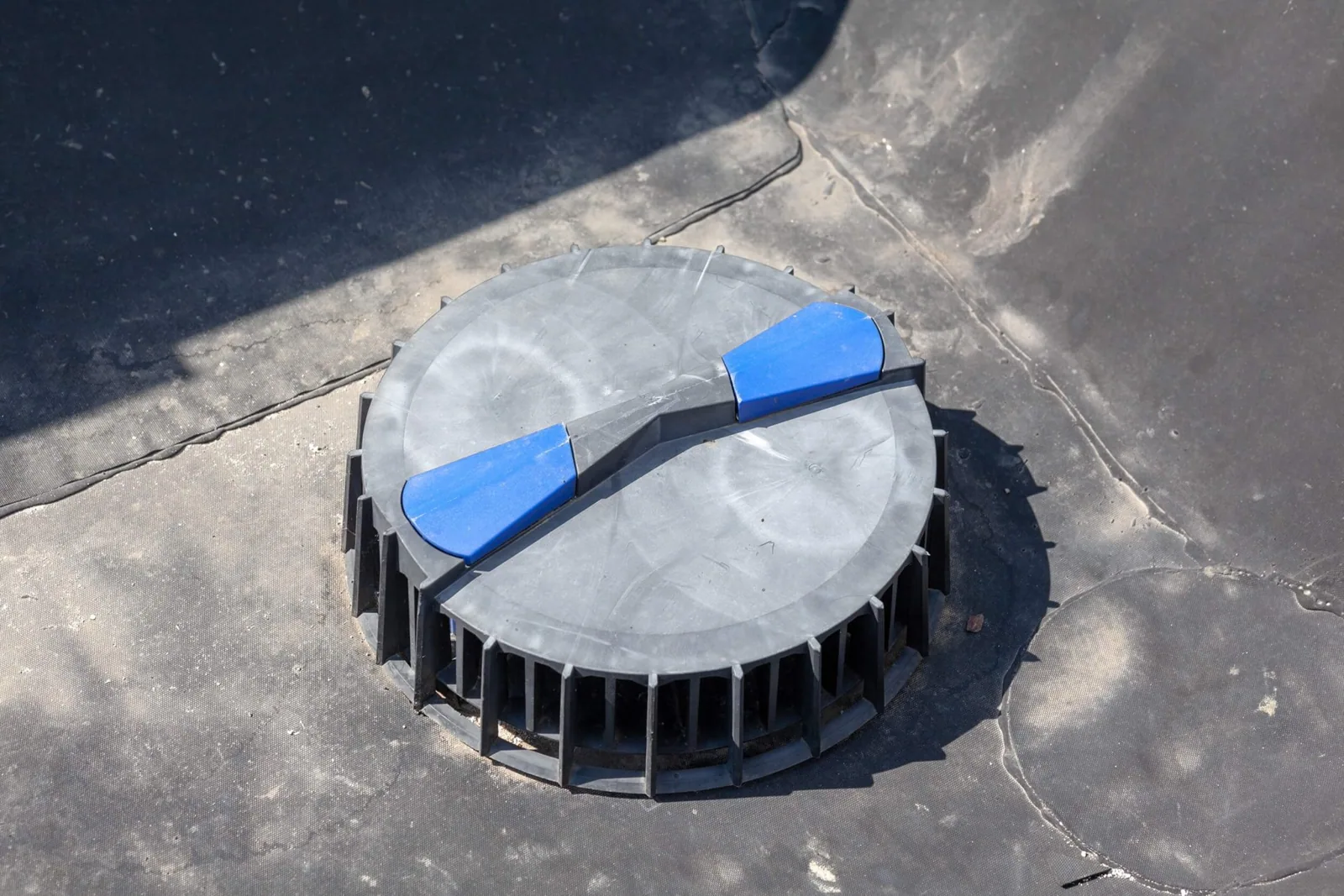
The Southern Pacific railroad alignment passes through Livingston near the Merced River. That geographic fact does not establish drainage conditions at a roof. We inspect each outlet, slope change and roof edge directly. Debris at a drain can slow discharge, while a low area may reflect slope, deck deflection or insulation build-up. Those causes need different decisions. We check the membrane around drain bowls and scuppers for pullback, cracks and past repairs. If a rain event leaves water after outlets are clear, we measure its extent and review the underlying assembly. A drain or scupper repair restores a failed roof connection; it cannot correct a structural condition by itself. We describe what we saw and keep any structural question visible in the report. The owner can then decide whether to engage an engineer or proceed with a defined waterproofing scope.
Packaged food and poultry facilities
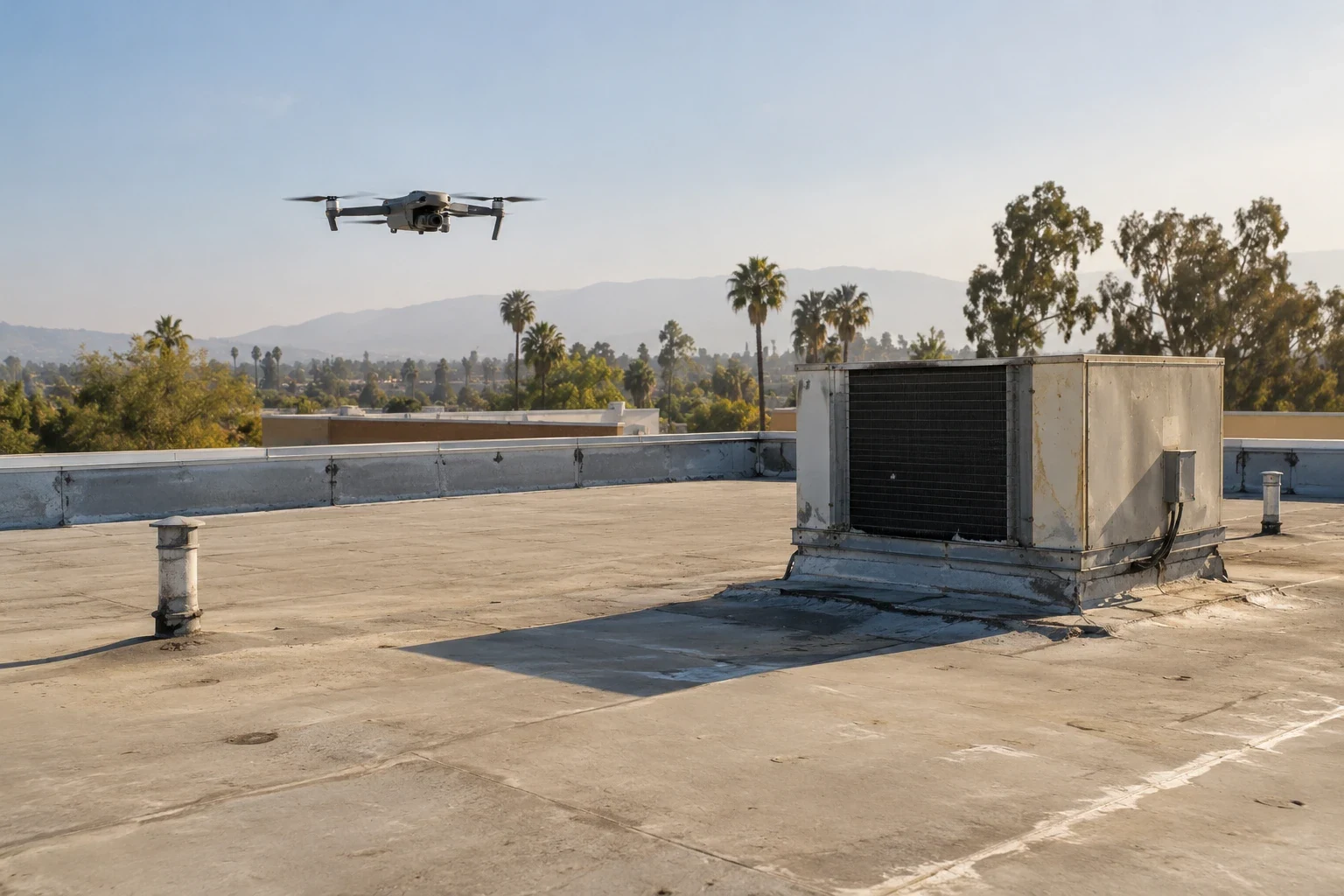
Packaged-food and poultry-processing uses are present in the Livingston area, along with winery businesses. These operations make the condition of roof penetrations, exhaust connections and interior protection important questions during planning. We do not assume that a facility has a particular process or roof layout. The manager identifies sensitive rooms, intake locations, sanitation controls and production windows. We inspect the exterior first and mark any opening that could release debris or dust. If a curb or exhaust penetration needs repair, the plan covers the exposed area and protects the interior below. The same visit can note damaged edge metal or a blocked drain, but unrelated work stays separate in the scope. For a roof with repeated defects, a drone inspection may document visible field conditions while a hands-on check confirms attachment and moisture at selected points.
Choose a repair or larger scope
A localized seam repair fits when adjacent membrane remains bonded and dry, and the failure stops at a clear transition. We prepare the surface, restore the lap and verify the tie-in. If moisture extends beneath neighboring sheets, or several seams have released, repairing only the visible opening may leave wet insulation in place. A repair scope should separate confirmed work from areas that still require an opening. When the assembly has recurring failures, we compare that plan with a replacement option by roof section. We list tear-off, retained insulation, deck review, drainage, edge details and phasing around production. Timing depends on access, weather, material compatibility and how much of the roof must stay dry each day. The owner gets alternatives with limits, not a single outcome presented before the assembly is understood.
Permit and closeout records
Where the scope needs permit review, we confirm the application process and schedule with the local enforcing agency before work begins. The roof plan records each section and the phasing needed to keep the building dry. After work, we record the completed lap, edge or penetration, photograph concealed layers before closure and note any remaining observation. The manager receives a marked roof plan where one is available, plus maintenance items for drains and seams. A maintenance inspection can revisit those details after seasonal weather. If the scope includes solar or mechanical equipment, we identify the trades and access sequence before opening the roof. This makes the handoff useful for the person responsible for the assembly, rather than only a receipt for completed work.
A defined route from Merced
State Route 99 provides Livingston’s north-south corridor, and Merced lies southeast of the city. Regional travel can connect inspections, but it does not change what needs to be verified at each building. We confirm the property’s entry point, roof access and staging plan with its manager before arrival. A previous report can help locate a suspected leak, though we retest the area because conditions change. If a concealed layer is wet, we document its extent and pause at the agreed boundary before expanding the scope. In Atwater, food processing and building-products manufacturing shape different coordination questions; Merced has its own industrial and office mix. Each location needs its own roof record. Request an inspection of the seam, outlet or transition where the water path begins, and we will tie the recommendation to what the assembly shows.
Commercial Roofing Questions
Is the leak always below the roof opening?
No. Water can move along insulation, a deck or another layer before it reaches the interior. We trace the suspected path and check nearby transitions before selecting the repair area.
Does State Route 99 affect the roof repair?
It is a local transportation corridor, not a roof condition. We use the property’s actual access and delivery constraints to plan arrival and staging.
Can we patch one seam and monitor the rest?
Yes, when the surrounding assembly is sound and the defect has a clear boundary. We document nearby seams and identify any condition that warrants follow-up.
When is a test opening useful?
When surface observations cannot establish whether insulation, deck or attachment is affected. We place an opening to answer that question and record how it is closed.
What do you need before scheduling work?
A leak location, roof access contact, operating limits and any prior repair notes help. We confirm those details onsite and set the scope from current roof evidence.
Follow the seam to sound material
Request an inspection focused on the open lap, roof edge or outlet connected to the reported moisture.
Related Roofing Work