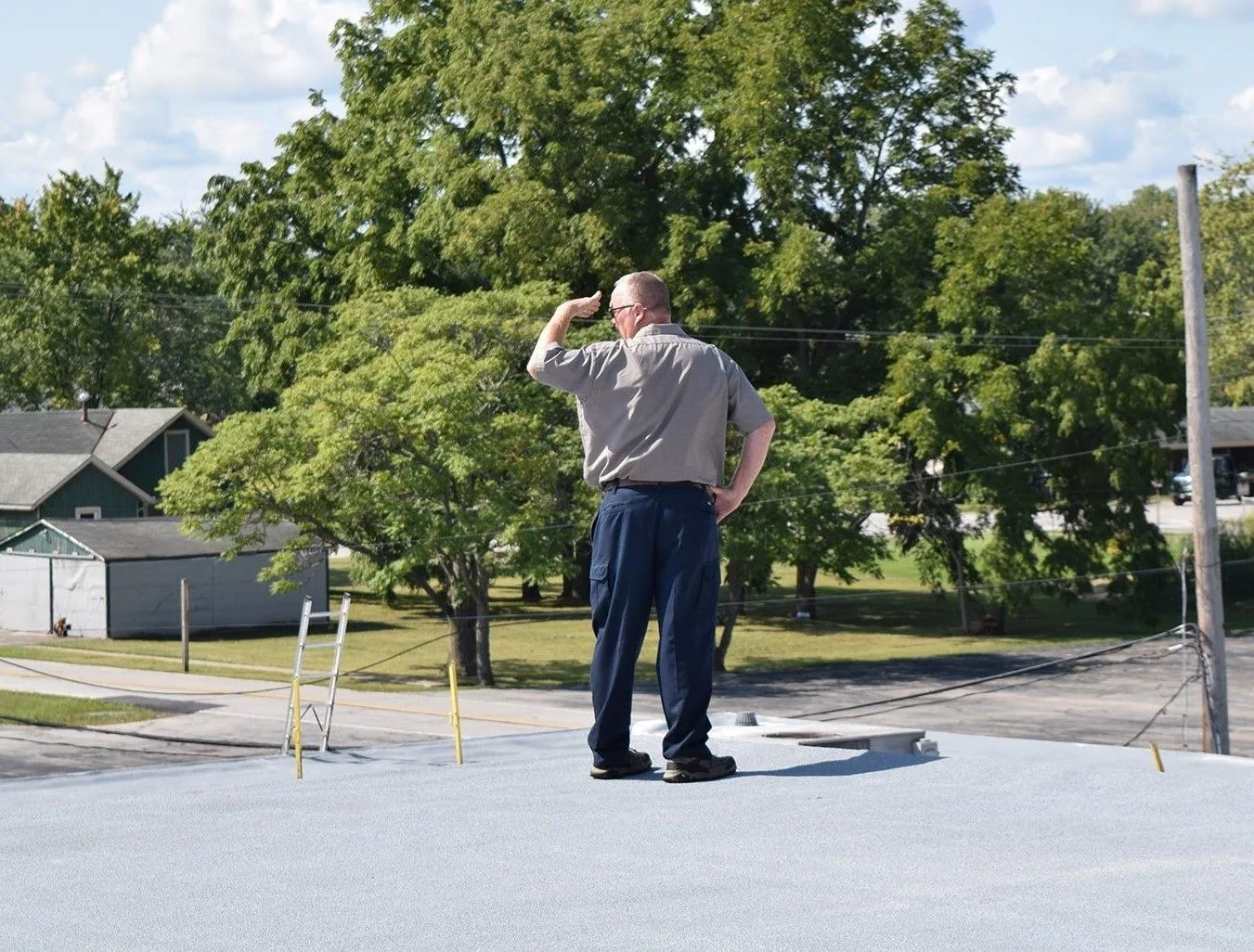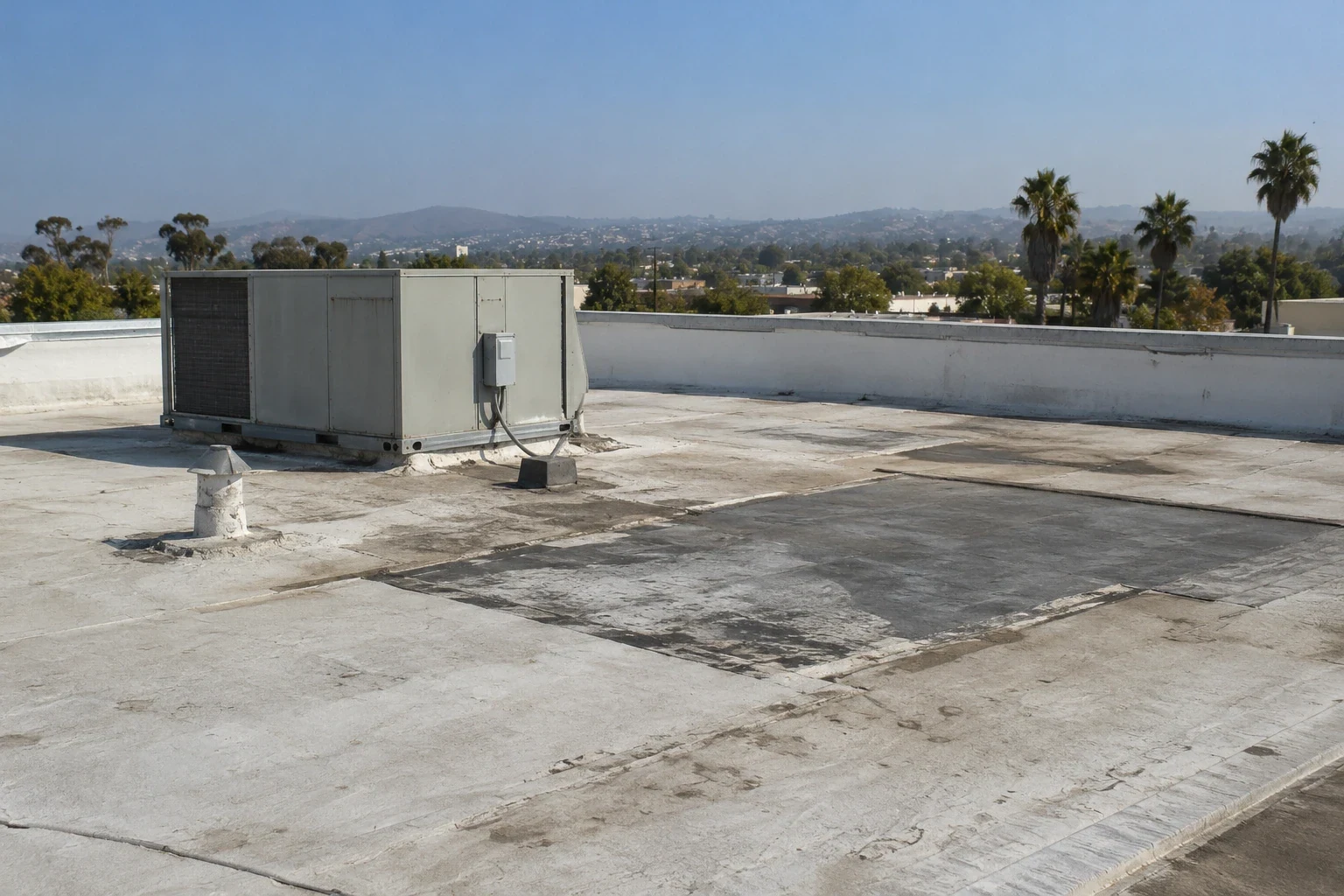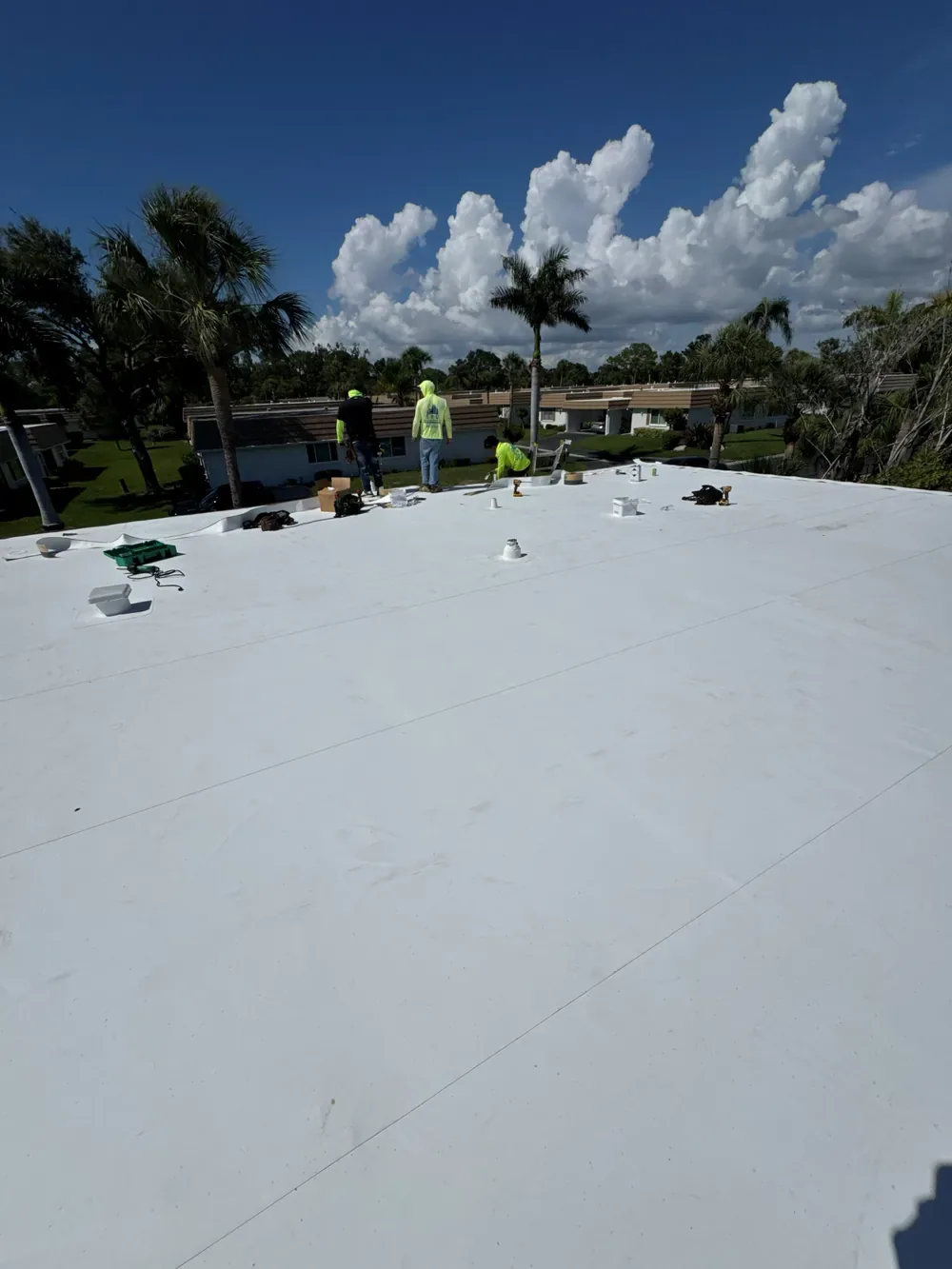
A separated lap can admit water well before a ceiling shows a mark. For commercial properties in Los Banos, CA, we inspect the seam, nearby transitions and the insulation below before we recommend a repair. That sequence matters on a low-slope roof. A surface split, an open lap and wet insulation do not call for the same work. We document what is visible, identify what needs a test opening, and put the repair boundary in writing. A manager can then decide whether to close one detail, address a larger wet area or compare a replacement scope. We schedule a commercial roof inspection around access and the building's operating needs. Where the failure point is clear, a defined roof repair can isolate the work from unaffected areas. The report names the materials and transitions included, so the manager can compare a focused fix with a wider assembly decision.
Heat at the bond line
Merced's summer heat makes movement at roof connections worth checking, while the condition of a Los Banos assembly must be established on that property. Repeated heating can move metal edges, stress a termination and expose a weak bond line. We check whether a seam has lifted along its length or only at one curb, repair or change in plane. That distinction separates a local transition failure from a condition that may extend across a larger area. The inspection record keeps those findings tied to the roof section where they appear.
A surface split, open lap and wet insulation call for different work. We photograph the condition and mark where a test opening may be needed. If the insulation is dry and the surrounding membrane is sound, a localized repair may fit. If water has reached the layers below, we identify the removal boundary before closing the detail. The written scope separates necessary work from a broader replacement option.
Water has more than one route
A ceiling stain is a starting point, not a map of the defect. Water may travel along a deck flute, insulation joint or wall transition before it appears indoors. In Los Banos, we compare the mark with roof seams, drains, curbs and penetrations above it. The location record connects the observation to a roof area. When the path remains uncertain, a small test opening can show whether insulation is dry, compressed or holding moisture.
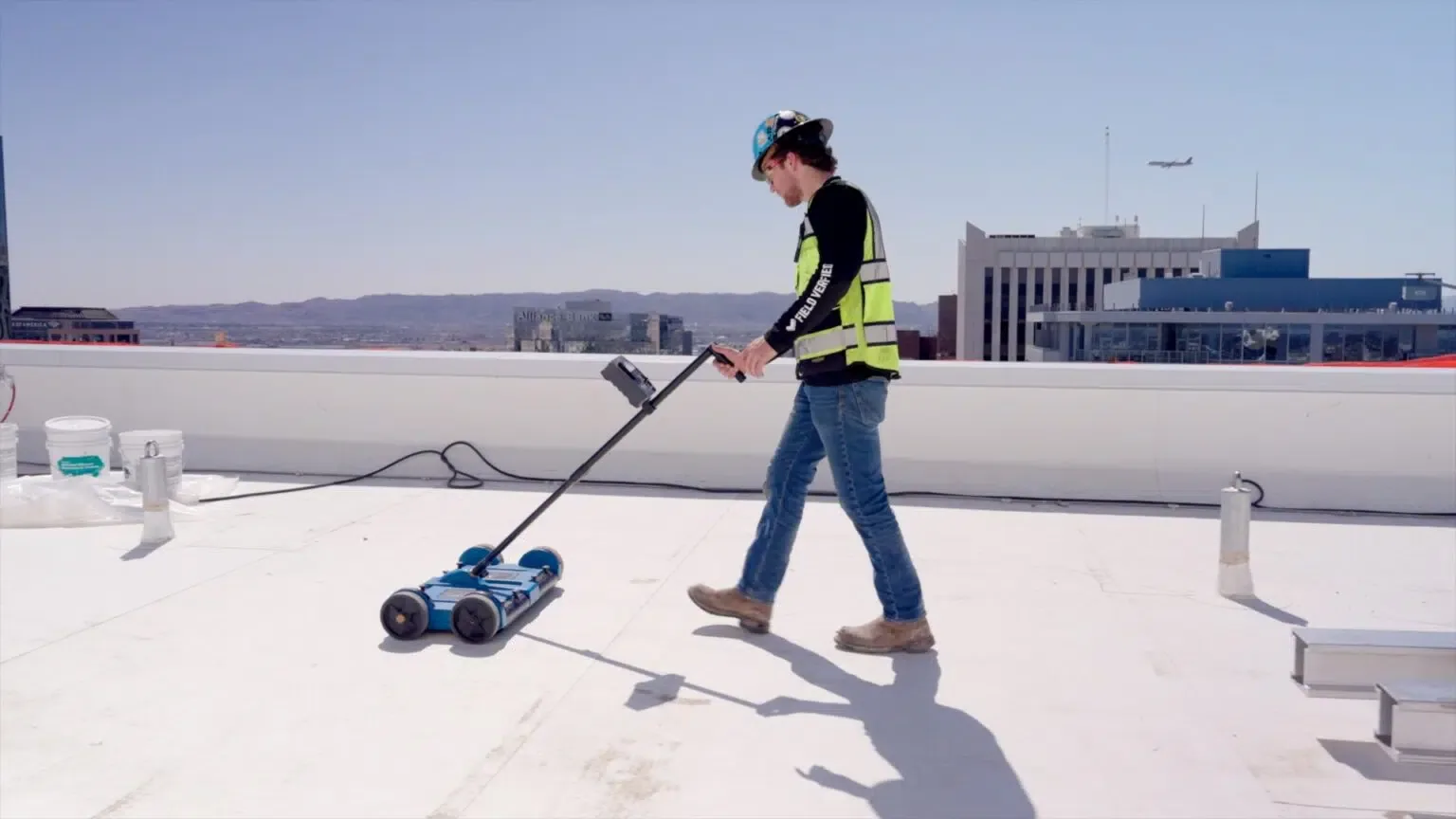
An infrared moisture survey can help select areas for closer examination when conditions support a useful scan. We compare it with surface observations and verify suspected moisture before specifying removal. Drainage gets a separate check: debris, a blocked outlet or a low area can keep water against seams. The scope states whether the next step is a drain correction, membrane detail or both.
What the opening can establish
A visual inspection records accessible details but cannot show every concealed layer. If stains or movement suggest trapped moisture, we explain the proposed test opening first. It can expose the deck, insulation and attachment at that point. We photograph the layers before closing the area. One opening speaks to one location; other roof sections may need separate checks.
The city lies near State Route 152 and Interstate 5, geographic context that does not establish a property's use or roof type. We inspect the actual assembly. A TPO assembly calls for checks at welds, flashings and attachment. A metal roof needs attention to panel laps, fasteners and transitions. Merced's industrial parks and food-distribution activity provide regional context only. We confirm building use, roof records and access before setting the work plan.
A repair, a recover or a replacement
A localized defect with dry surrounding insulation may support a repair. Multiple wet areas, widespread seam separation or recurring failures can justify a broader evaluation. A recover is considered only after checking moisture, attachment and compatibility. Replacement becomes stronger when the deck or insulation cannot support a reliable surface repair, or when another patch would leave the main failure in place.
We state each choice separately. The repair scope names the area, materials and detail to rebuild. A recover describes preparation and retained layers. Replacement identifies removal, substrate review and rebuilding sequence. For an operating warehouse, access, staging and daily use may govern timing. Our warehouse roof work follows the property in front of us. Los Banos, Merced and Planada remain distinct service locations with separate roof conditions.
From inspection to written scope
The inspection begins with roof plans, leak notes and safe access. We photograph seams, edges, penetrations, drains and interior evidence that can be matched to a roof location. If a condition cannot be resolved visually, we mark a proposed test opening and explain what it can answer. The site contact coordinates access and interior protection before any layer is removed.
Findings are separated by roof area. The report states what was seen, what remains concealed and the next step that fits. A repair can proceed where its boundary is clear; a test opening may come first where moisture extent is uncertain. Before work, we confirm staging, delivery, protected paths and operating hours. Closeout photos show what was removed and installed, giving the manager a record for future inspections.
The decision follows the evidence
Start with the condition needing attention: an active leak, separated seam, obstructed drain or suspected wet area. The Merced service area receives its own assessment; Los Banos is a separate municipality. Planada and Chowchilla are distinct communities in the wider service area. Managers can compare our Planada service coverage and Chowchilla roof work as separate local scopes, not as assumptions about this building. For portfolios, we keep roof records distinct and state the defect, proposed test or repair, and the point at which a larger scope should be considered.
Timing depends on roof access, material lead time, weather exposure and the area that must remain open. We discuss the sequence before work and document any change if removal reveals concealed moisture. When requesting an inspection, identify the leak location, roof section or assembly detail, and include prior repair notes if available. We will trace the moisture path as far as the evidence allows and provide a written next step for the Los Banos property.
Commercial Roofing Questions
A ceiling stain appears far from the roof drain. What should be checked first?
We compare the interior mark with seams, penetrations, transitions and drainage paths above it. Water can move before it shows indoors. The inspection records the likely route and identifies any test opening needed to confirm hidden moisture.
Can a separated seam be patched without replacing the roof?
A localized repair may be appropriate when the surrounding membrane and insulation remain serviceable. We check the seam length, bond, substrate and nearby details first. Wet insulation or repeated failure can change the scope.
What does a test opening tell a property manager?
It exposes the layers at one selected location, including insulation condition and attachment. We photograph and record what is removed. The finding applies to that opening, so additional areas may need separate checks.
Should an infrared scan be the only basis for a repair?
No. A scan can help identify areas for closer inspection when conditions support it. We compare the reading with visible roof conditions and verify the suspected area before specifying removal or repair.
What should be ready before roof work begins at an operating property?
We confirm roof access, staging, delivery routes, interior protection and the site contact. The work sequence follows the building's use and the area that must stay open. Those details are written into the scope and schedule discussion.
Schedule a Los Banos roof inspection
Request an inspection for the seam, drain or roof section that needs attention in Los Banos. We will document the condition, trace the moisture path and provide a written scope for the next step.
Related Roofing Work