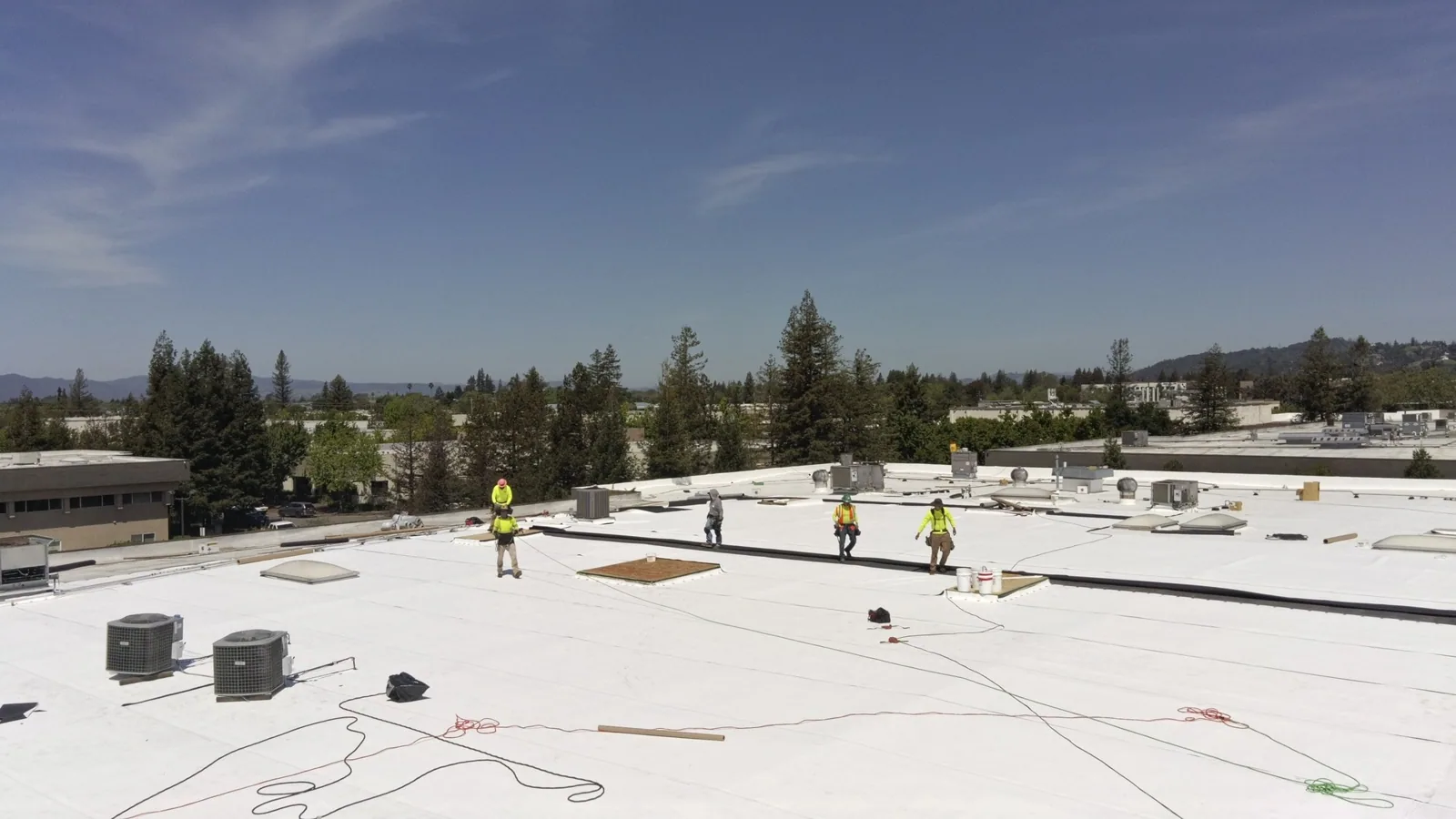
A separating curb flashing above retail space needs its equipment and tenant zone identified. For shopping center roofing in Merced, CA, we inspect the detail and locate the interior use beneath it. Several tenants may share a roof while using different equipment and schedules. The manager needs a repair boundary and the affected service arrangements before layers are opened.
Merced's commercial economy includes retail and office activity. Downtown Merced has restaurants, cafes and professional space. Businesses in Franklin-Beachwood occupy an area bounded by the Highway 99 corridor and Santa Fe Road. We coordinate roof work with the actual tenant access and service routes at the property, then define the construction from its examined membrane and layers.
Tenant zones beneath shared roofing
A leak report should identify the room or business area and its timing. We compare that location with the roof layout, equipment and accessible details. One roof may cover several interior uses with different protection needs. The removal plan identifies affected zones rather than assume a repair can proceed without coordination simply because the opening is small.
Retail roof leak investigation examines suspect seams, flashing and outlets. Another wall or equipment condition may need separate review. We describe the evidence supporting the roof work and any focused next check. The manager can then coordinate access with the relevant tenant while avoiding a broad intervention that does not identify the entry detail.
Tenant and owner responsibilities may also need clarification by the property team. We identify the roofing construction and equipment interfaces included in our scope. Lease or service arrangements are a separate management review. The proposal should make the affected connection understandable so responsibility questions can be addressed before removal or another trade's work delays the roof closure.
Shared access to tenant equipment
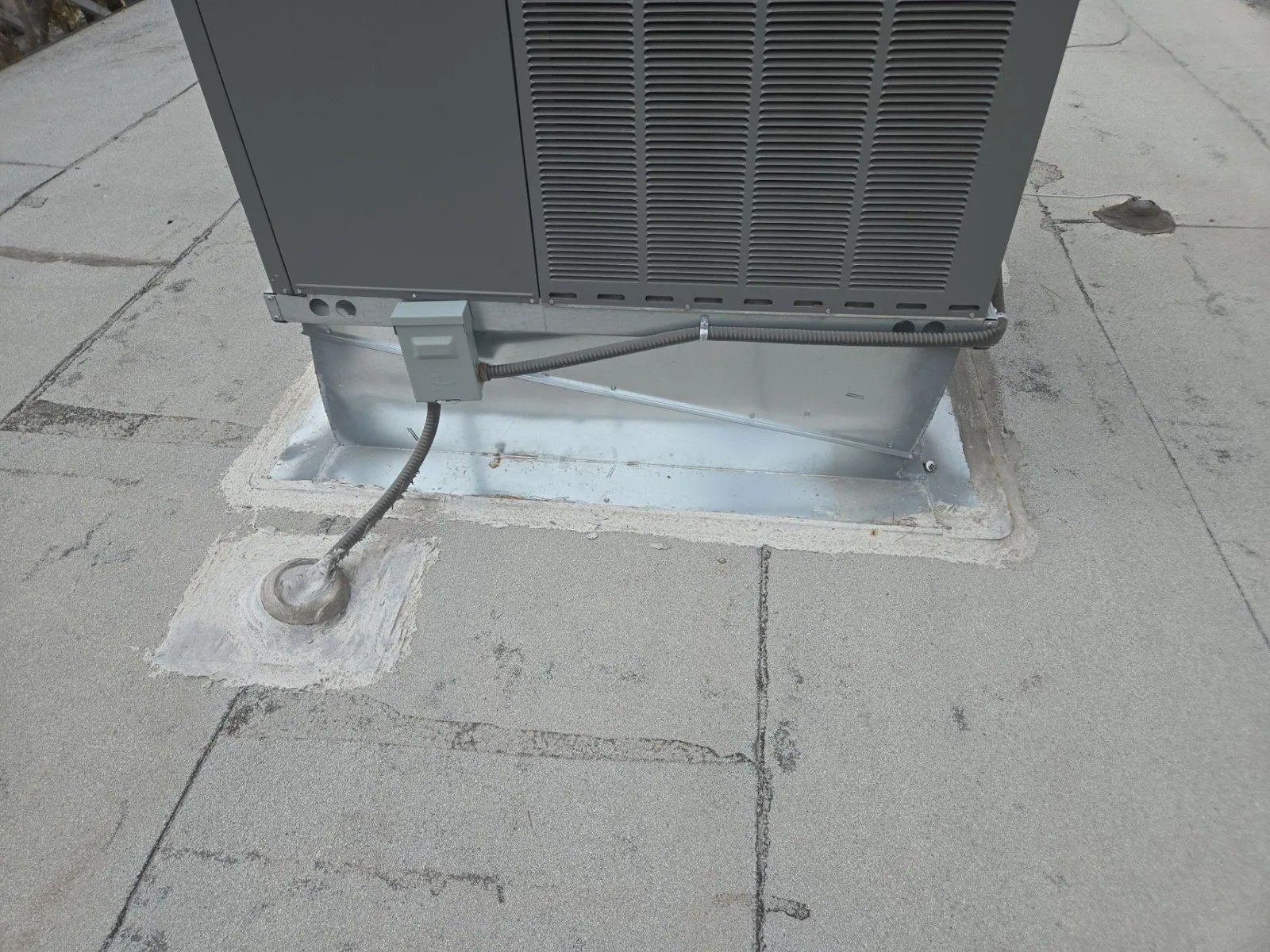
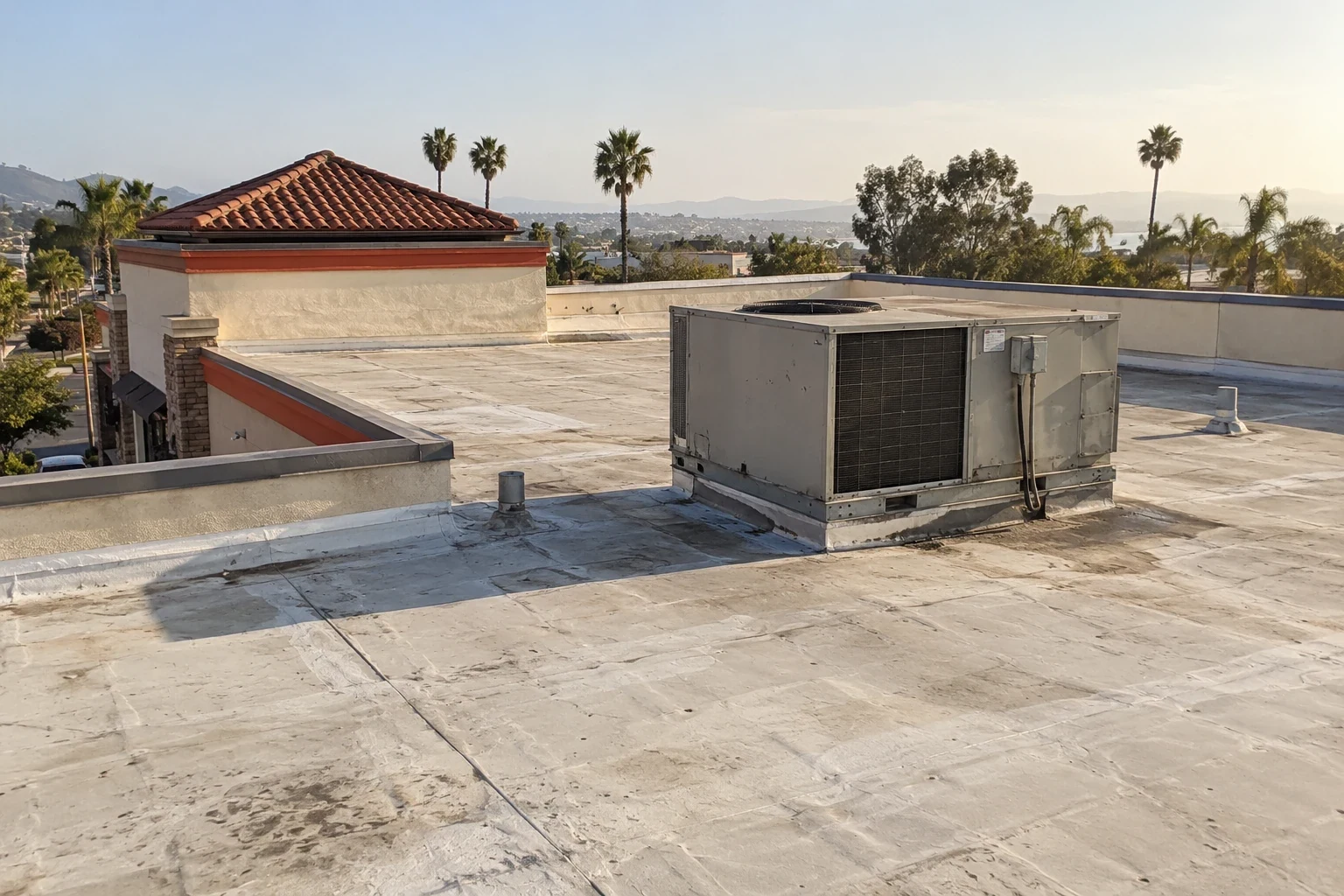
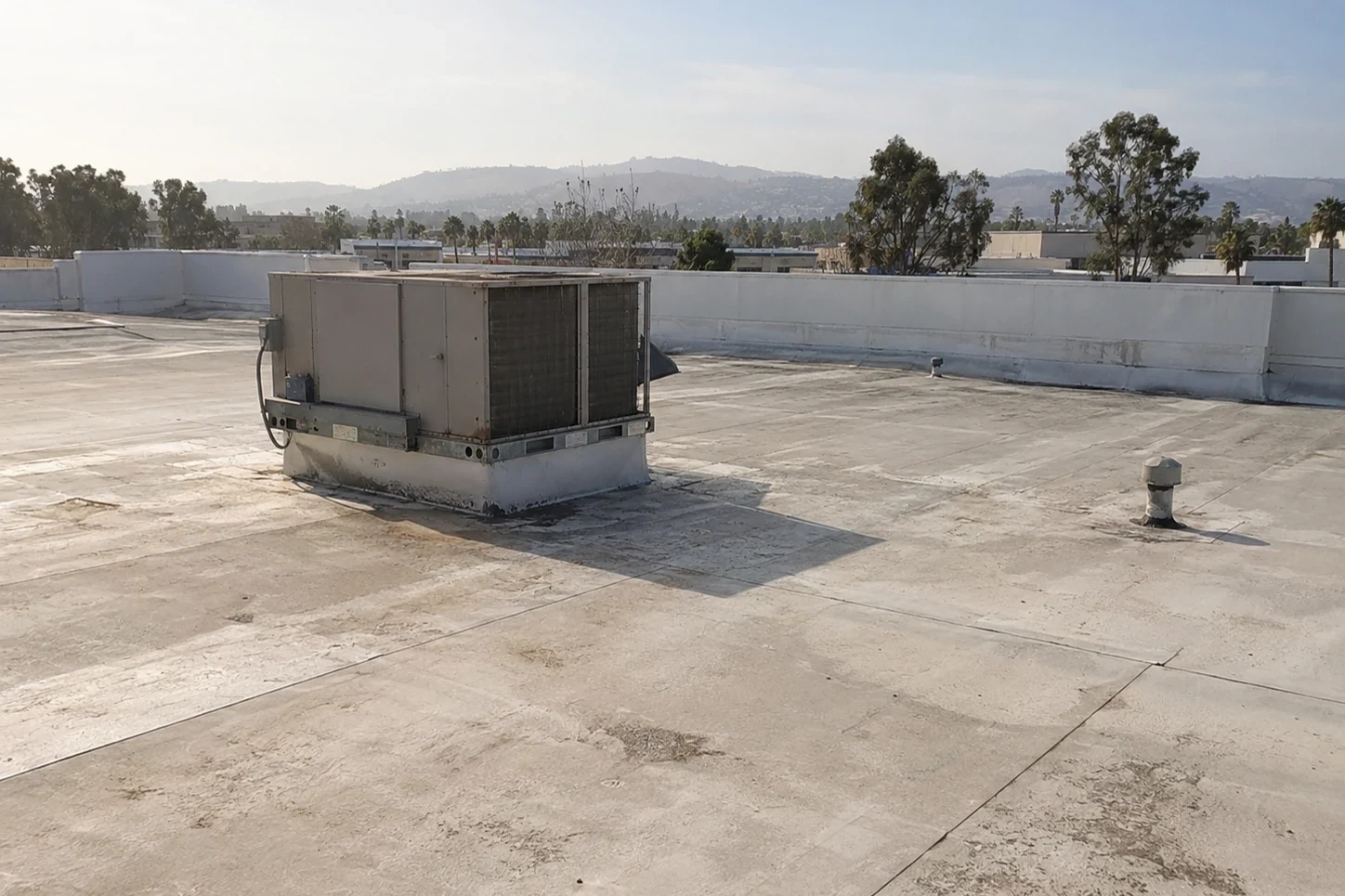
Rooftop equipment can serve different suites while using a shared service route. We ask the manager which systems are affected and which work windows are usable. A curb repair may require equipment coordination. Curb and support assessment examines flashing attachment and bearing conditions. Equipment disconnection and structural changes require their own appropriate review.
Traffic can damage a membrane near a unit or access hatch. We examine the route and protective material. A compatible roof repair should be paired with suitable access protection where repeated contact is evident. The finished surface should not be returned to the same unprotected service pattern without considering how technicians will reach the equipment safely and without damaging the roof.
For a restaurant tenant roof area, exhaust operation can add a surface-exposure question. We identify actual discharge and observed residue before reviewing material compatibility. A mixed retail roof should not receive one preparation assumption across clean field sheet and affected equipment areas. The proposal describes the material and preparation at each relevant zone.
Flashing at parapets and equipment bases
A parapet transition needs examination of the membrane base, vertical material and upper termination. An outer seal may appear intact while another part of the detail has separated. We identify the complete connection. The repair needs sound surrounding material and appropriate attachment, rather than another layer over loose earlier flashing.
Merced's hot summer conditions make movement between metal and membrane components relevant to inspection. We look for strain, separating edges and damaged corner reinforcement. The suitable repair follows the observed materials and geometry. A rigid patch across a moving transition can leave the original stress inside the repair. The manager should understand which part of the detail needs rebuilding.
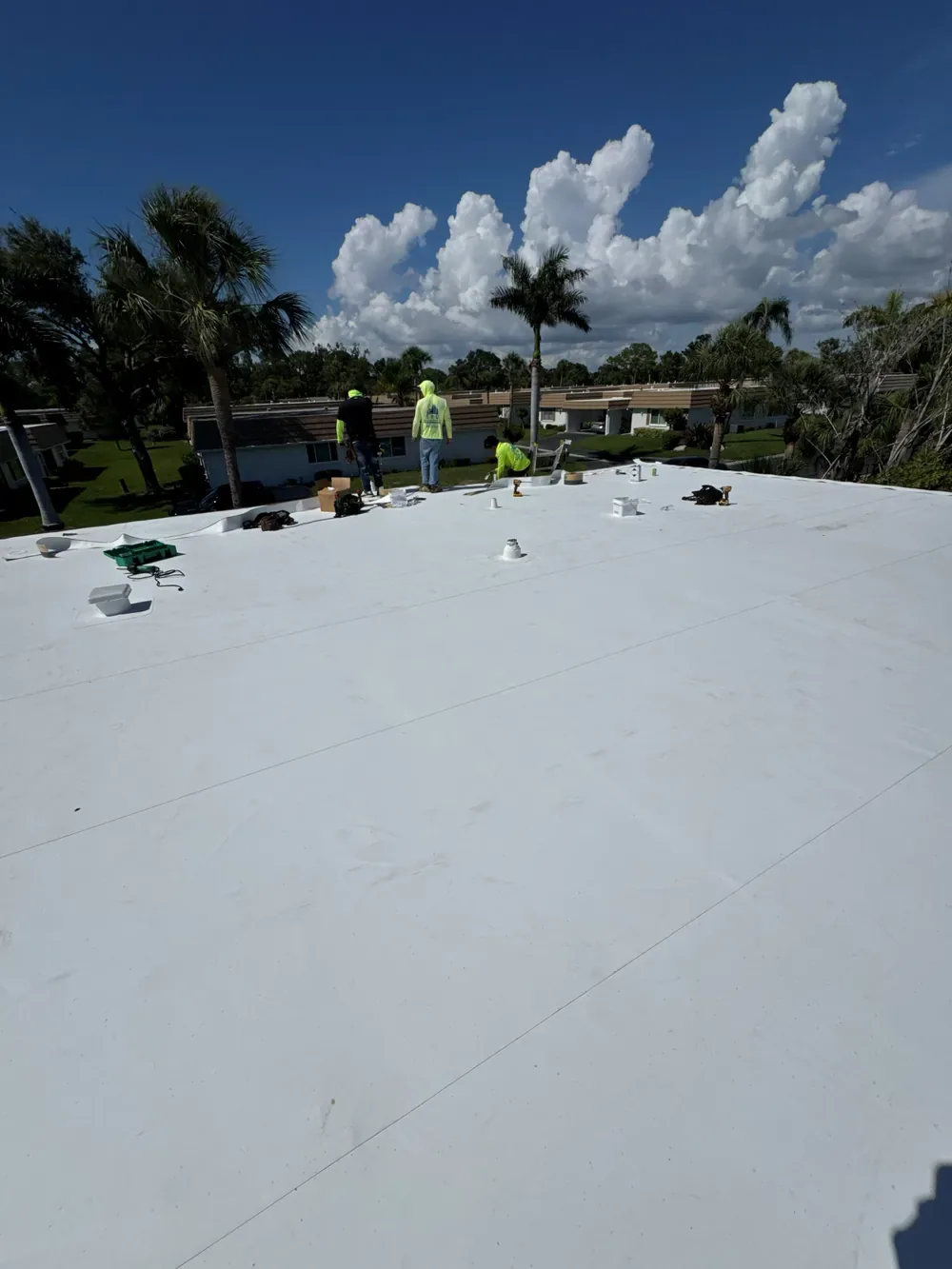
A TPO retail roof assembly requires compatible welded connections and suitable support. Other systems have different repair methods. We identify the membrane and earlier work before selection. New material should join the actual construction, with a defined removal boundary where contamination or damaged sheet prevents an appropriate connection.
Outlets serving occupied roof sections
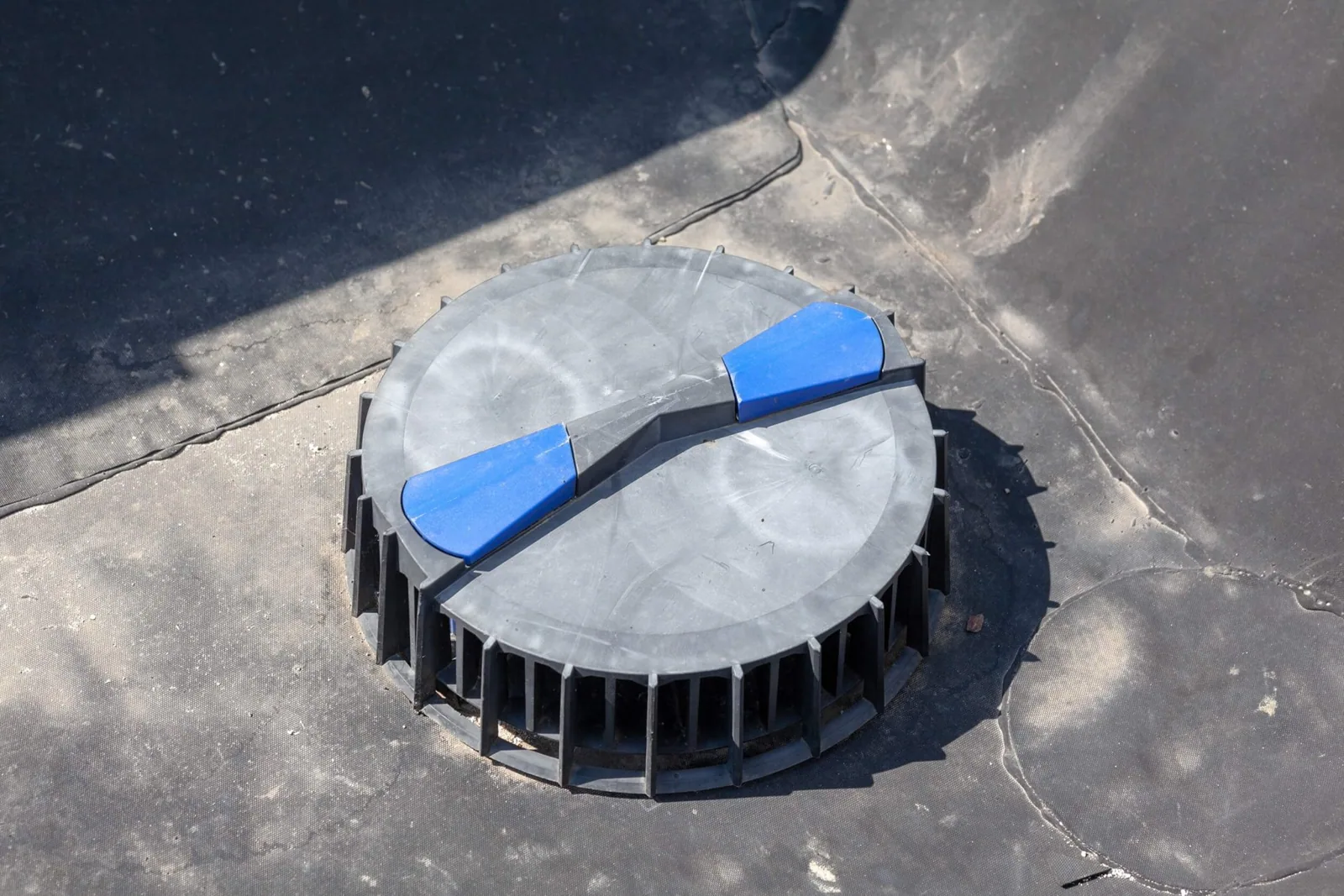
Debris accumulation can affect a roof outlet even where the field remains suitable. We examine the approach, accessible flashing and discharge arrangement. Drain and scupper repair may need more than clearing when a connection is damaged. A persistent low area can require another geometry assessment. The scope separates those tasks so repeated maintenance does not leave an unresolved construction condition.
Normal winter rainfall in Merced is higher than midsummer rainfall. A dry interval can be useful for planned detail repair before renewed exposure. Current findings determine urgency. The manager should have the affected roof zone and work window identified, with suitable temporary protection if layers must be removed before permanent closure can proceed.
Replacement insulation or recover work can change finished levels. We review outlet approaches and curb clearance against the proposed thickness. Perimeter details may also need modification. The new surface should have a coherent water path and flashing arrangement. A field-only scope can overlook those connected construction items above different tenant areas.
Customer routes and ground work areas
Roofing material deliveries and removed layers need ground routes that fit the occupied retail setting. We identify usable space with the manager and coordinate separation from customers and tenant service. Work at an entry-side perimeter can need a different arrangement from a rear equipment area. The access plan should follow the phased roof zones rather than assume one staging location suits every part of the project.
A single large retail roof may emphasize another operating plan from a property shared by several tenants. We establish the actual routes and services affected. The construction remains the basis for removal and close-in. Protection and scheduling need to match the interior use below each work zone.
For roof work in Downtown Merced, the established restaurant, cafe and office mix makes occupied access coordination practical. We ask about current business hours and usable service windows. The planned opening needs enough time for material preparation, supporting repair and complete detail work, not only placement of the outer patch.
Located findings and the next construction choice
A retail roof condition report connects photographs with tenant zones and proposed action. We separate current defects from questions needing further examination. Wet insulation, damaged support and recurring connection distress can change the repair boundary. The manager should see the layer findings behind that decision rather than receive an unlocated list of roof concerns.
At property in Franklin Beachwood, the established local business base provides an occupied commercial context for planning. We identify the actual access and interior arrangement. Cost drivers include preparation, affected layers, equipment coordination and connected detail work. The proposal distinguishes a bounded repair from a broader renewal option through the examined assembly and its usable connections.
Commercial Roofing Questions
Can one shopping center roof require different tenant work windows?
Interior uses and equipment services may differ beneath its zones. We identify the areas affected by the planned opening and coordinate them with the property team. The removal boundary must also support suitable roofing closure within the usable window.
Should a restaurant exhaust area receive the same preparation as the clean field?
Observed residue and material compatibility need examination. We identify the actual discharge and appropriate preparation where relevant. The repair should reach a suitable surface rather than assume one cleaning method works across every tenant equipment area.
How are equipment responsibilities separated from the roofing scope?
We identify the connection, opening and roof reinstatement. The property team coordinates equipment handling and applicable tenant arrangements. Those responsibilities should be clear before removal so the permanent detail is not left waiting on an unresolved service task.
What makes a shared-retail repair proposal useful for the manager?
The roof zone, affected tenant use and construction boundary need clarity. Preparation, damaged layers and permanent connections should be identified. The manager can then coordinate access and compare repair with renewal using located assembly findings.
Inspection of the shared retail roof zone
Request examination of the failed curb, outlet or membrane area needing coordination with tenants and customer access.
Related Roofing Work