A loose edge-metal corner can admit wind-driven rain where a roof turns down at a parapet. For a Chowchilla, CA property manager, the useful first step is to identify whether movement stops at one transition or continues along a longer run. Highways 99, 152 and 233 serve Chowchilla, where commercial and industrial zoning shapes planned development. Those routes help orient a crew, while the manager confirms where deliveries can stage. For a property in those districts, delivery movement can affect where material is staged. We still identify the actual roof assembly before selecting a repair. We check the assembly, fasteners, membrane termination and substrate before naming the repair. A commercial roof inspection records the exposed detail, likely water path and area that still needs confirmation.
Plan the work zone
Near Robertson Boulevard and Highway 99, delivery movement can shape where materials stage. For each property, we confirm gate hours, delivery movement and safe roof access with the site contact. We ask the manager to identify delivery doors, active lanes, overhead lines and restricted areas before choosing a ladder point or staging location. A roof with a loading dock below may need a separate debris path and short work window; an office roof may require intake protection and notice to occupants. These are field questions, not assumptions tied to a business name. We compare the site plan with actual roof access and mark equipment that must remain available. The schedule lists sections that can be opened and closed in a shift. For a roof scope over an occupied building, the sequence preserves safe access and leaves temporary openings weather-tight.
Heat at metal transitions
At the Merced station, the July normal high is 96.3°F, a regional heat marker that helps frame movement at metal edges. Repeated heat changes the movement of metal edges and can stress sealant or a membrane connection. We inspect counterflashing, cleats, fastener lines, termination bars and corners as a system. A split bead may be a surface symptom while the underlying attachment has loosened; adding sealant will not correct that movement. We probe adjacent material and check whether the sheet remains bonded at the transition. If the membrane is dry and stable, a defined flashing reconstruction can be enough. If separation repeats at several elevations, we map each point before pricing a longer run. A compatible edge-metal and coping repair must connect to sound material and handle the movement the detail is meant to accommodate.
Trace water to its entry
A ceiling stain below an edge does not show where water first crossed the roof. We work from the parapet inward, inspect laps and penetrations, and note any path toward a drain or opening. The inspection record separates visible conditions from areas still covered. If infrared readings or surface clues identify a suspect zone, we compare them with the assembly before selecting a test opening. The opening should answer a repair question: whether insulation is wet, a fastener backed out or the deck is affected. We photograph the layers before closing the cut with compatible materials. Where the defect is isolated, a bounded commercial roof repair can stop at sound membrane. When moisture extends beyond the first mark, the owner sees that added boundary before work grows.
Read the drainage path
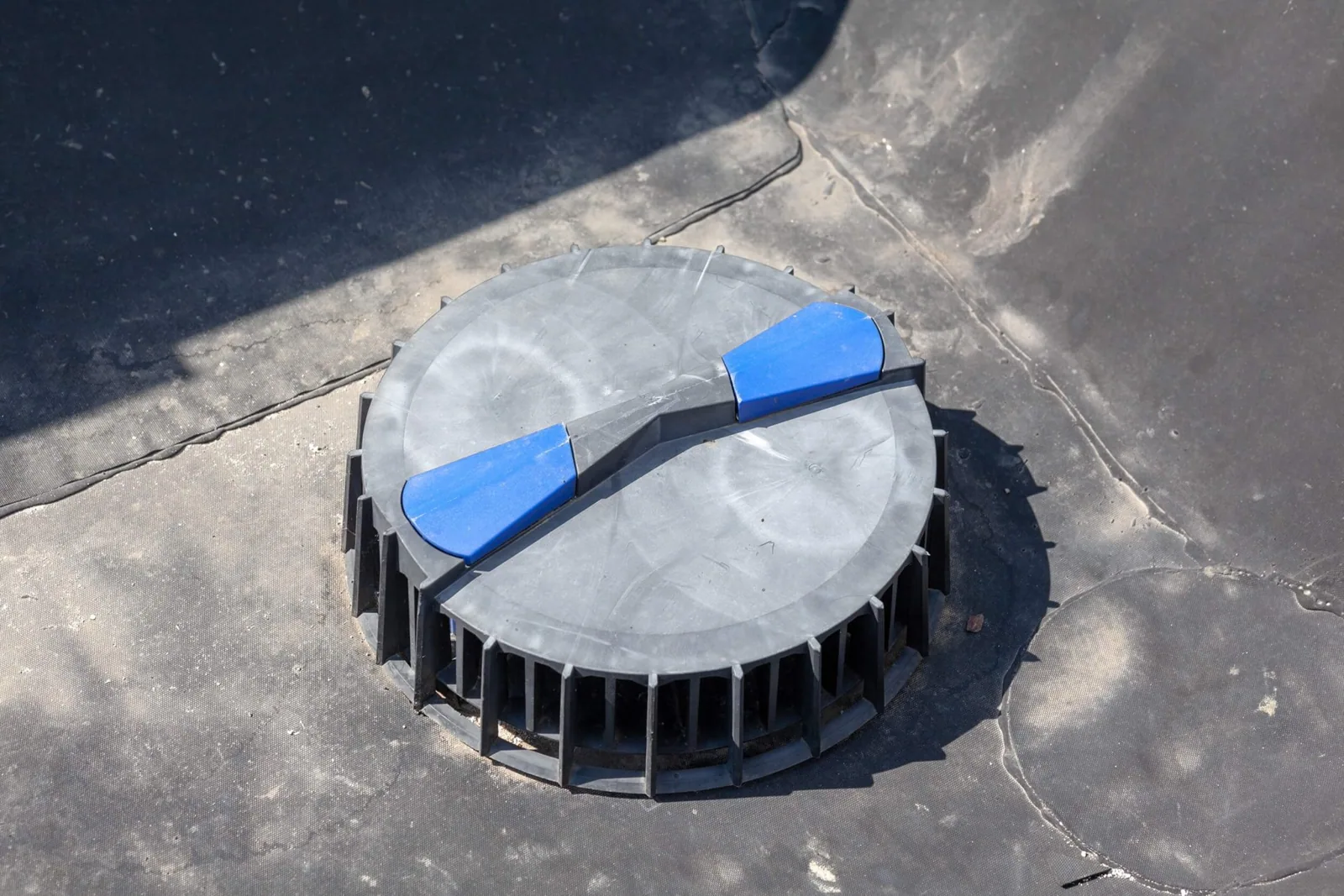
A blocked strainer and a low roof area can look alike after a storm, yet they call for different work. We clear loose debris, inspect the bowl and flashing, and follow the discharge path where access permits. Water that remains after an outlet is clear may point to slope, deck movement or insulation buildup, so we record the area rather than sealing the symptom. At curbs and scuppers, we look for membrane pullback, split corners and old patches that may conceal another opening. If a controlled opening is required, we choose a place that lets the manager inspect the layers and understand why removal is proposed. A drain or scupper repair restores a continuous roof-to-outlet connection. The closeout notes which outlet was checked and whether a larger drainage review remains useful. We also mark roof hatches, expansion joints and larger curbs on a field sketch. That gives the owner a way to compare the reported leak with the routes water could take. If a current drawing is unavailable, a simple orientation sketch can still connect the roof observation to an interior ceiling mark. We ask which rooms were affected during rain and whether the stain changed after the last repair. A small opening should answer whether damage is limited to the top layer or extends to insulation or deck. The result changes removal quantity, temporary cover and whether a later visit should inspect another section.
Set a repair boundary
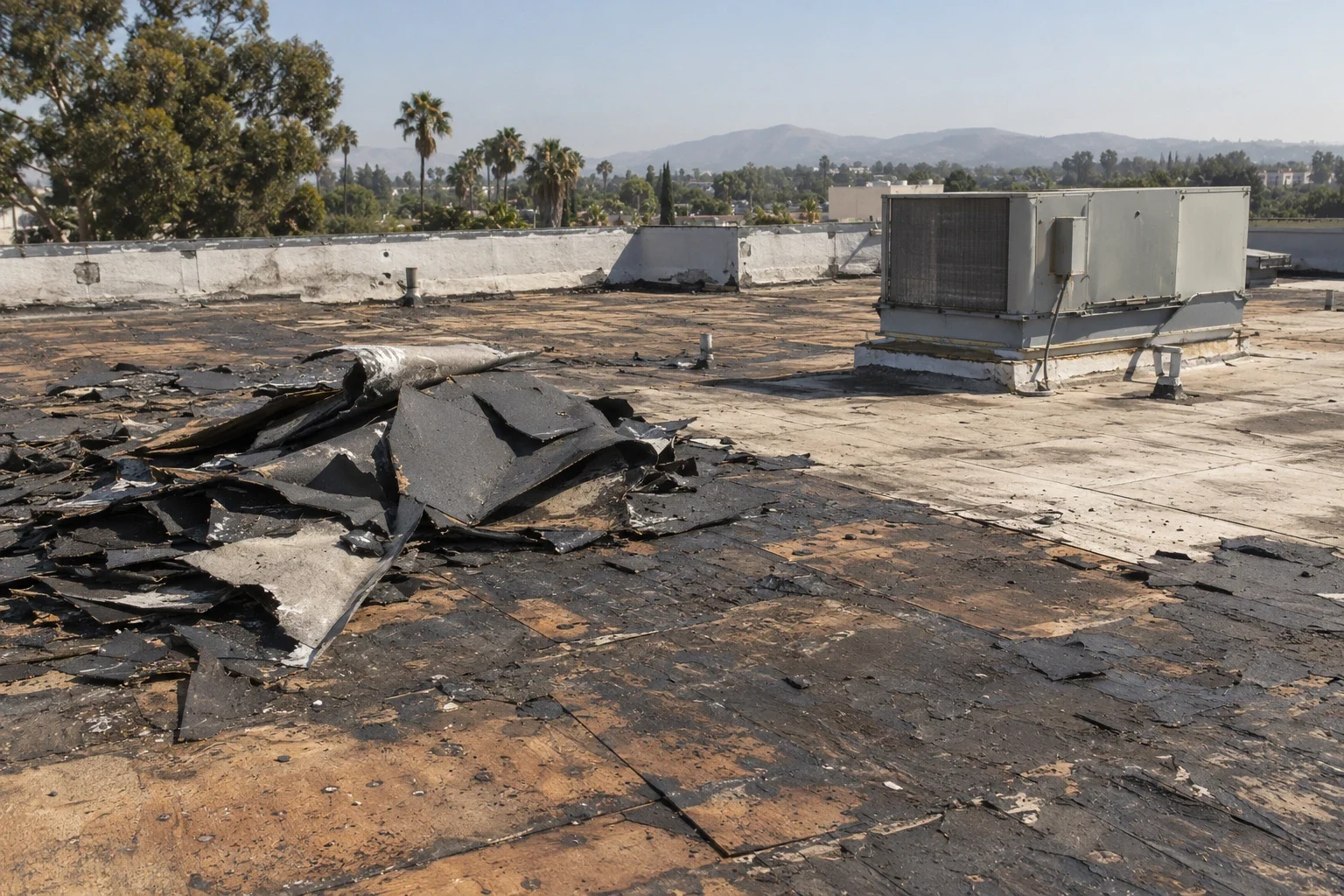
A local repair makes sense when the surrounding field stays attached, insulation is dry and the defect ends at an identifiable seam or transition. We list removal, surface preparation, flashing or membrane work, and the tie-in to sound material. A recover or replacement discussion starts when defects recur across a section, moisture reaches multiple layers, or repairs leave incompatible details side by side. Chowchilla's commercial and industrial zoning can guide a discussion about proposed development. For each building, our scope follows the installed layers and attachment found on site. We compare the proposed boundary with the layers and note what a test cut could change. A replacement evaluation can distinguish necessary removal from optional upgrades without treating one visible leak as a whole-roof diagnosis.
Protect the open assembly
A roof opening has to be protected before a workday ends or weather shifts. We limit removal to the area the crew can inspect and close, stage compatible materials in advance, and set a temporary dry-in line around the exposed layers. The manager confirms alarm controls, access and sensitive interior areas before cutting begins. At a multi-section property, we label each work zone so another crew or facility contact can distinguish active work from completed repair. Photos show deck, insulation, attachment and finished tie-in. If rain threatens, we secure the opening and revise the sequence instead of leaving a broad area exposed. For active water entry, a stabilization visit starts with the interior location, safe access and equipment below. The permanent scope follows after we document the exposed layers. A stabilization visit can protect the interior while the permanent scope is documented.
Keep the record useful
A repair record should let the next manager find the same roof section without relying on memory. We label photographs by elevation or zone, note the assembly we verified and separate immediate work from deferred items. We use Chowchilla's highway network to orient crews, then record the roof hatch, staging position, drains, curbs and transitions on a marked sketch. If a prior contractor left a drawing, we compare it with the roof and mark changes instead of assuming it is current. Closeout lists material installed, areas left undisturbed and follow-up observations. Owners with facilities in nearby Merced can use the same record fields while keeping property findings separate. A Planada roof inspection needs its own access plan and roof evidence.
Commercial Roofing Questions
What should a Chowchilla inspection record first?
We mark the reported leak, trace nearby edges and drains, and record the layers we can see. A controlled opening is noted separately when concealed conditions matter.
Does highway access establish the crew route?
The city's routes help orient a crew. The manager confirms property-specific gates, delivery windows, overhead clearance, ladder position and staging.
When is a sealant touch-up too small?
We check whether the metal or membrane remains attached. If movement continues below the bead, the detail needs to be rebuilt to sound material.
Can one leak require a wider roof review?
Yes, when nearby seams show the same failure or an opening finds wet insulation. We map the evidence before adding that area to the scope.
What belongs in the repair closeout?
The record identifies the repaired zone, materials, photographs, conditions left in place and any inspection follow-up approved by the owner.
Inspect the edge and its attachment
Request a Chowchilla roof inspection focused on the moving metal transition, adjacent membrane and water path.
Related Roofing Work