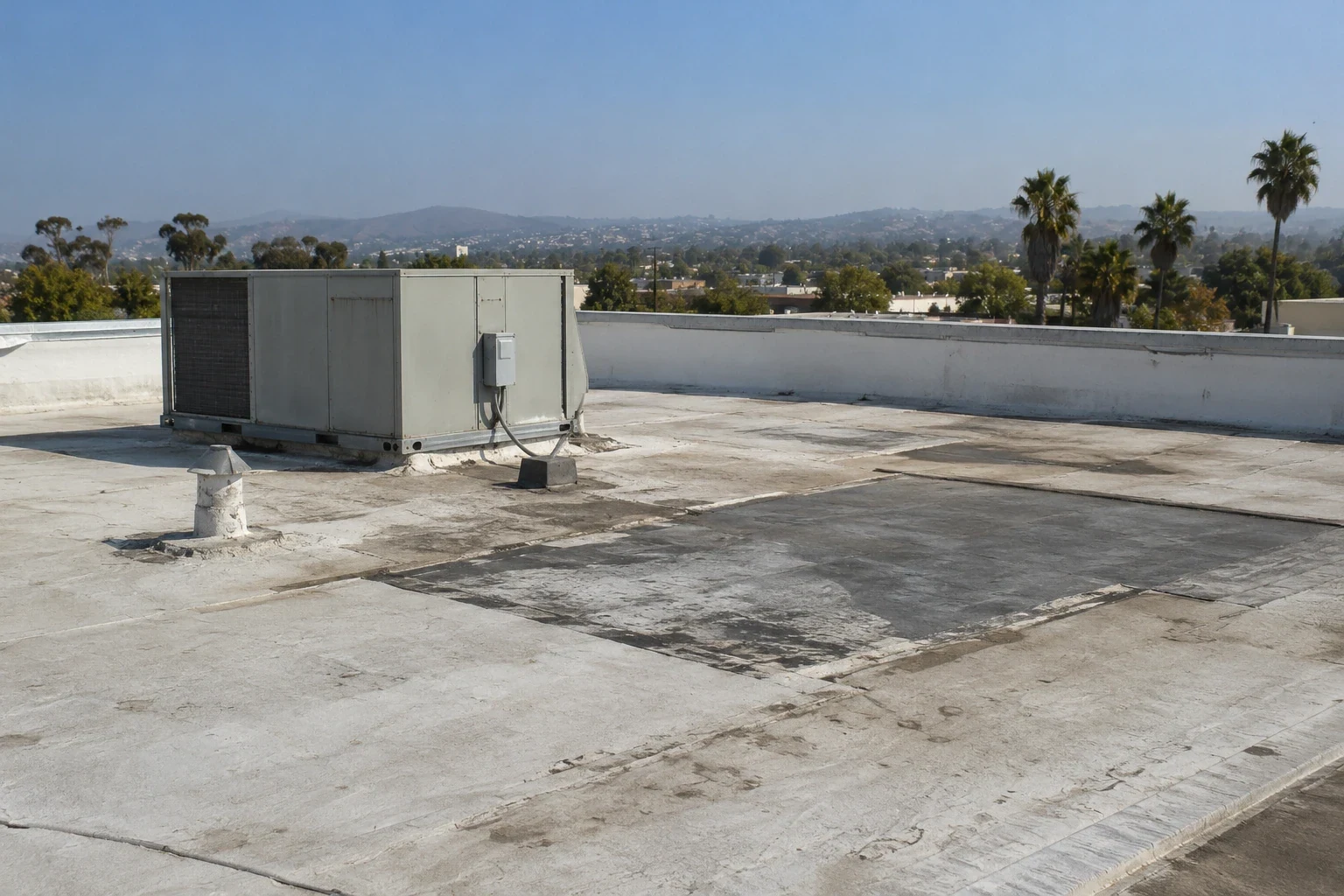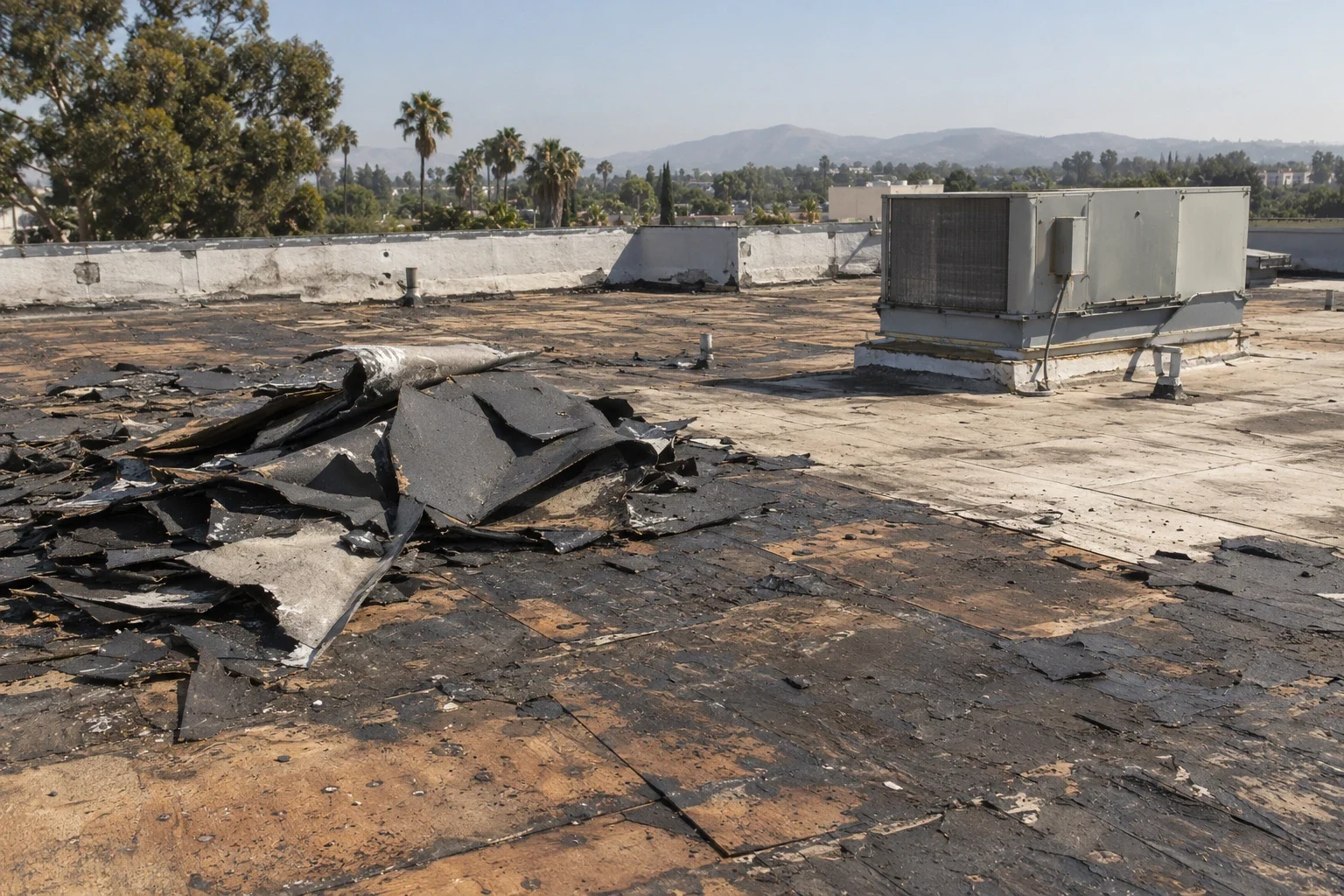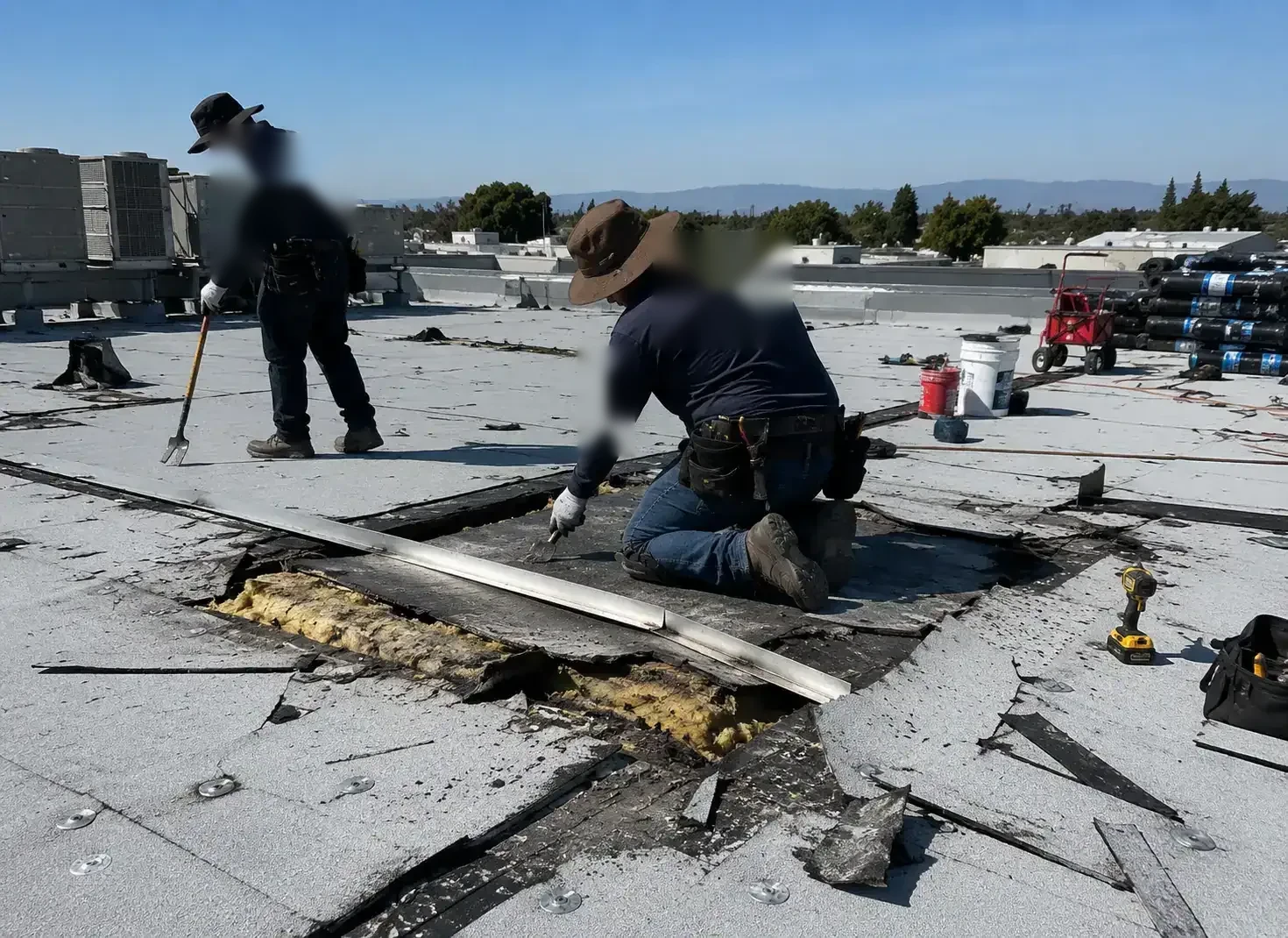
A loose flashing termination at a parapet can admit water behind a wall before the interior shows a stain. In Downtown Merced, we inspect the edge, its attachment and the roof layers beside it. Government, finance, professional offices, restaurants, cafes, galleries and theaters form part of the district’s commercial mix. Those uses bring different access hours and entry conditions, but they do not tell us what roof assembly is installed. We begin with the visible defect and the areas that must remain open below it. Photos and a measured repair boundary let the property manager compare a local reconstruction with broader roof work. When the membrane is sound beyond the transition, a bounded commercial roof repair may preserve more of the assembly than an unexplained coating or a premature replacement.
Office, civic and street-level operations
Downtown Merced’s offices and government uses can have scheduled public access, while restaurants and cultural spaces depend on predictable entry and service routes. A repair plan above those uses needs a ground-level map as well as a roof sketch. We identify the work zone, lift placement, debris path and areas where people enter or gather. The building owner or manager identifies hours, security requirements and any interior rooms that cannot be interrupted. We keep the roof inspection separate from assumptions about the structure. A historic-building investment program does not establish the age, material or condition of a particular roof. We inspect what is present: membrane, seams, penetrations, edge metal, drains and visible deck conditions. If the property has more than one addition, we label each roof area so a defect on one section does not expand the scope by association.
Read the interior sign against the roof
A ceiling mark near an office wall may sit below a roof edge, a pipe penetration or a distant low point. Water can move through insulation or along a deck before it appears indoors. We begin above the reported room, trace seams and transitions, and compare the suspected path with drainage. If a surface reading cannot distinguish dry material from trapped moisture, a carefully located test opening can show the layers. We document what the opening confirms and what remains unexamined. A repair should remove unsound material, dry or replace affected insulation and rebuild the flashing or field membrane with a compatible tie-in. The manager receives a record of the opening and its closure. For a broader condition survey, a commercial roof inspection can map other sections without treating one interior symptom as proof of building-wide failure.
Movement at a roof connection
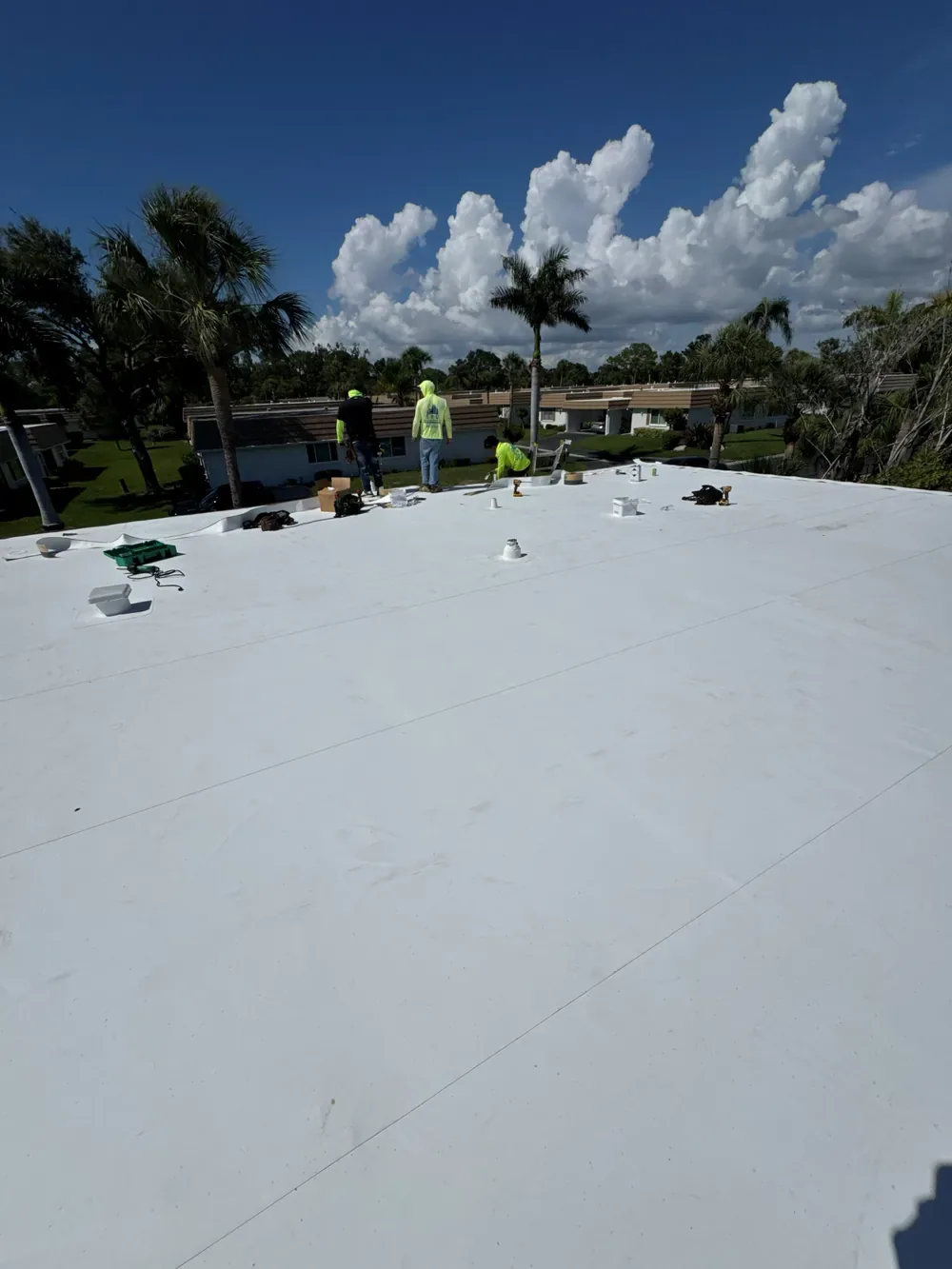
Merced station normals show repeated summer heat, including a normal July high of 96.3°F during 1991-2020. For a Downtown Merced property, we inspect the actual roof surface and seam connections before assigning a repair scope. Heat movement can stress a metal termination, sealant bead or membrane tie-in. We look for a split, lifted edge, open lap or fastener that has withdrawn, then test the surrounding bond and attachment. If the repair line ends at sound material, the scope can stay local. If movement has opened several adjacent transitions, the repair boundary must account for those connected details. A TPO assembly needs a compatible weld and clean tie-in surface; other membranes call for their own repair method. We identify the installed system before choosing a patch material, and we do not cover a defect before its cause is understood.
Drainage where rain concentrates
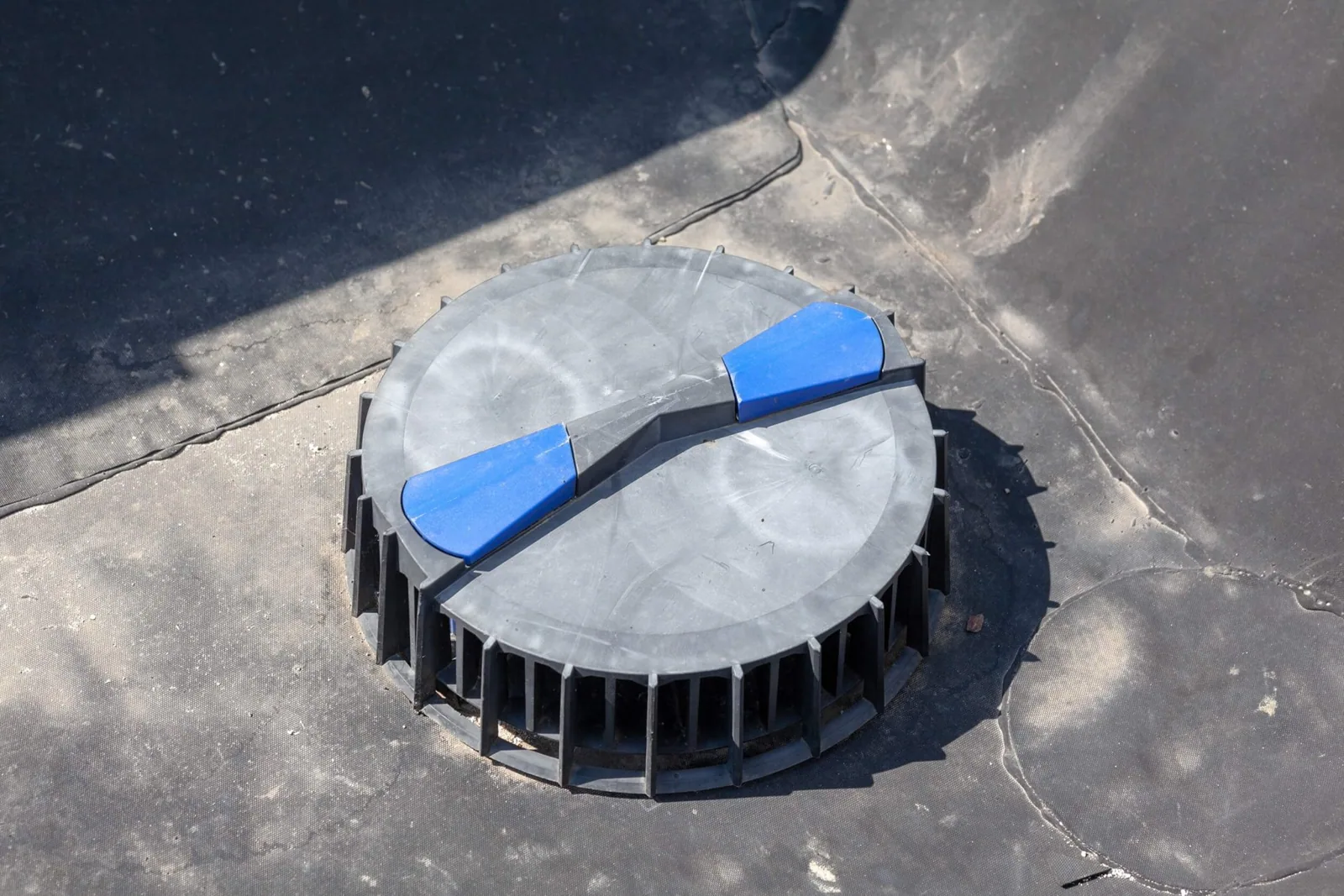
The the Merced station records normal precipitation concentrated in winter, with 2.37 inches in January and 2.20 in February and July and August rounding to zero. A roof still needs a dependable water path when the rainy period arrives. We inspect drain bowls, strainers, scuppers, slope breaks and discharge connections, then look for debris or membrane damage around each outlet. Water held at a drain can reach a seam or curb that otherwise looks intact. We distinguish a blocked outlet from a low area caused by deflection or an assembly problem. Cleaning alone will not correct a structural or slope issue. A drain or scupper repair should reconnect the roof surface to a clear discharge path, with the membrane restored around the opening. We record the condition before work and test that the repaired connection is not left as a new leak point.
Local repair beside broader renewal
When the surrounding membrane bonds well and the insulation is dry, we can often define a repair around one failed edge or penetration. If open seams recur, moisture crosses several sections or the surface has lost reliable attachment, a series of patches may leave the owner paying for repeated access. We compare that path with a replacement scope that identifies tear-off, retained layers, deck review, drainage and phasing. The work plan must account for public-facing doors, food service, office hours and any permit review. California’s statewide building bulletin says the 2025 standards apply to permit applications dated January 1, 2026 or later, with application date set by the local enforcing agency. We confirm what applies to the actual scope. A written estimate separates necessary roof work from optional upgrades and records the assumptions that could change after opening.
Keep the entrance usable
Before staging begins, we walk the roof and ground route with the manager. The plan marks ladders, fall protection, material storage, delivery timing and a protected path around the entrance. If a kitchen exhaust or rooftop unit must keep operating, we coordinate the detail and sequence before removing adjacent material. Work can proceed in sections when the building’s activities permit it, but weather, roof condition and safe access still govern the order. We protect equipment and the interior below the opening, then document each concealed layer before it is covered. A coating is not a substitute for repairing a failed transition; surface preparation and the existing assembly must support that choice. A maintenance inspection can track the repaired edge and nearby drains after closeout, while a Merced roof assessment can address other city properties with a distinct operating profile.
A scope with a defined edge
The useful handoff is a decision record. It should show the observed failure, photographs of the repair area, layers opened, material removed, tie-in limits and any condition left for later examination. We note whether the affected office, restaurant or public room remained in use and which access route the crew protected. If a larger replacement is a reasonable alternative, we outline the roof sections and phasing rather than burying that option inside a patch proposal. The owner can then compare repair, renewal and timing with the building’s planned use. A commercial roof in Atwater faces different building uses, while the same inspection discipline applies: identify the roof that is there and the decision its condition supports. Request an inspection of the open edge, interior stain or drainage point. We will trace the moisture path and return a written scope tied to the roof evidence.
Commercial Roofing Questions
Does a historic-building investment mean the roof is historic?
No. The district’s investment activity does not establish any individual roof’s age or materials. We inspect the assembly, document what is present and set the work scope from those observations.
Can a repair happen while a downtown business is open?
We coordinate the access route, overhead protection, delivery timing and work area with the manager. The building’s use and the exposed roof condition determine how the work can be phased.
Should a stain inside the building be patched from above?
We first trace the water path and check the roof layers. If the insulation is wet or the failure extends beyond the visible mark, the repair must include that confirmed area.
What information belongs in a roof repair report?
The report records the defect, photographs, material removed, repair boundary, access plan and any open question that requires another inspection or owner decision.
When should we compare repair with replacement?
We compare them when failures repeat, moisture spans multiple sections or the assembly no longer supports a localized tie-in. The scope lays out both paths and their limits.
Trace the edge before water travels
Request an inspection of the parapet, transition or drain connected to the reported interior condition.
Related Roofing Work