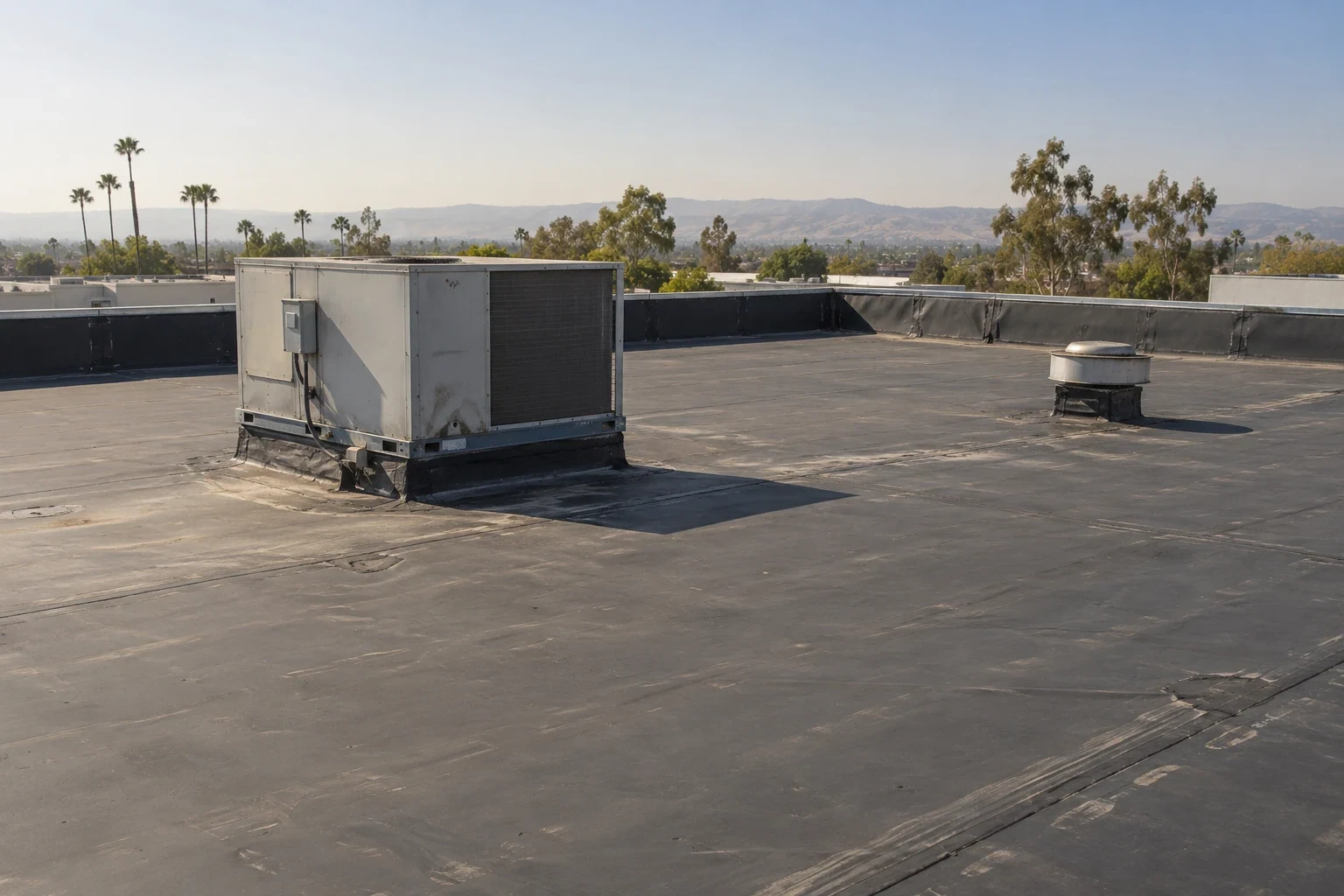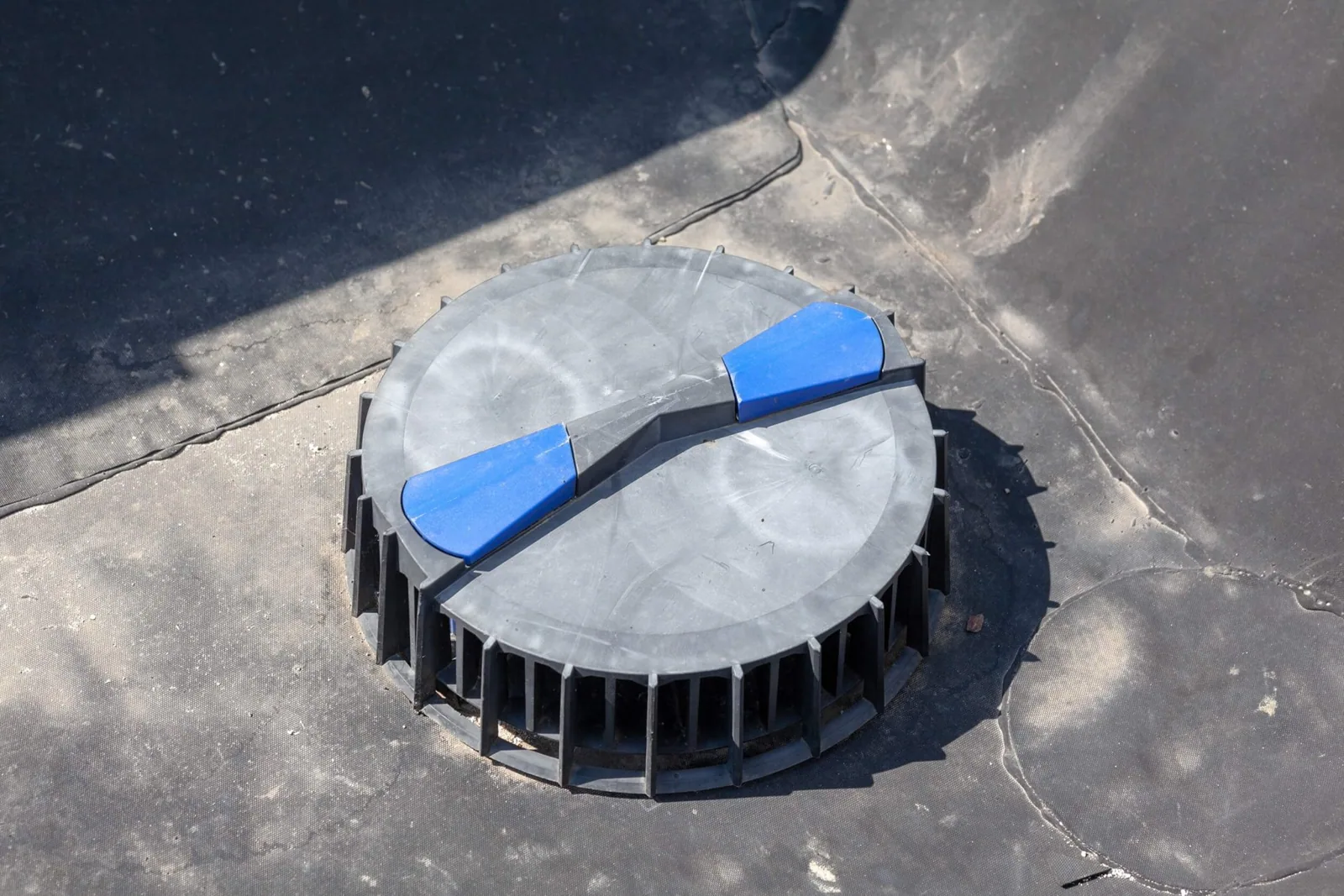
A support foot pressing into a roof sheet deserves examination before another protective pad is added. At a commercial property in Merced, CA, we inspect the membrane, the bearing arrangement and the material beneath that foot. A pad may protect a suitable surface from contact. It cannot resolve an unsuitable load arrangement or concealed damage in the roof support layers.
Equipment curbs and supports connect roof work with mechanical and structural questions. Merced manufacturing and distribution properties have operating equipment that needs building-level coordination. Downtown Merced has professional offices and restaurant uses with different service needs. We identify the affected roof detail, the equipment it serves and any separate trade work before defining the roofing reconstruction.
Bearing at support feet and bases
An indentation can indicate concentrated pressure or damaged underlying material. We examine its shape, the support contact and surrounding roof condition. Selected opening may be needed where the support layers are uncertain. The roofing assessment identifies visible damage and needed reinstatement. Any question about load capacity or the equipment support design needs appropriate technical review rather than a roofing patch presented as structural correction.
A movable pipe support can affect the membrane through repeated contact. We examine the protection, its position and the movement arrangement. The support should not rub directly across vulnerable roofing or obstruct the intended water path. We coordinate the suitable support method with the equipment requirements. The repair then reinstates the affected roof surface beneath a workable arrangement.
For a manufacturing plant roof, connected equipment may carry vibration or movement that influences the detail. We ask the building team to identify its use and any planned replacement. The inspected construction determines the roof work. A similar-looking foot on another building may have a different bearing requirement and should not receive an assumed standard repair.
Curb condition below the equipment
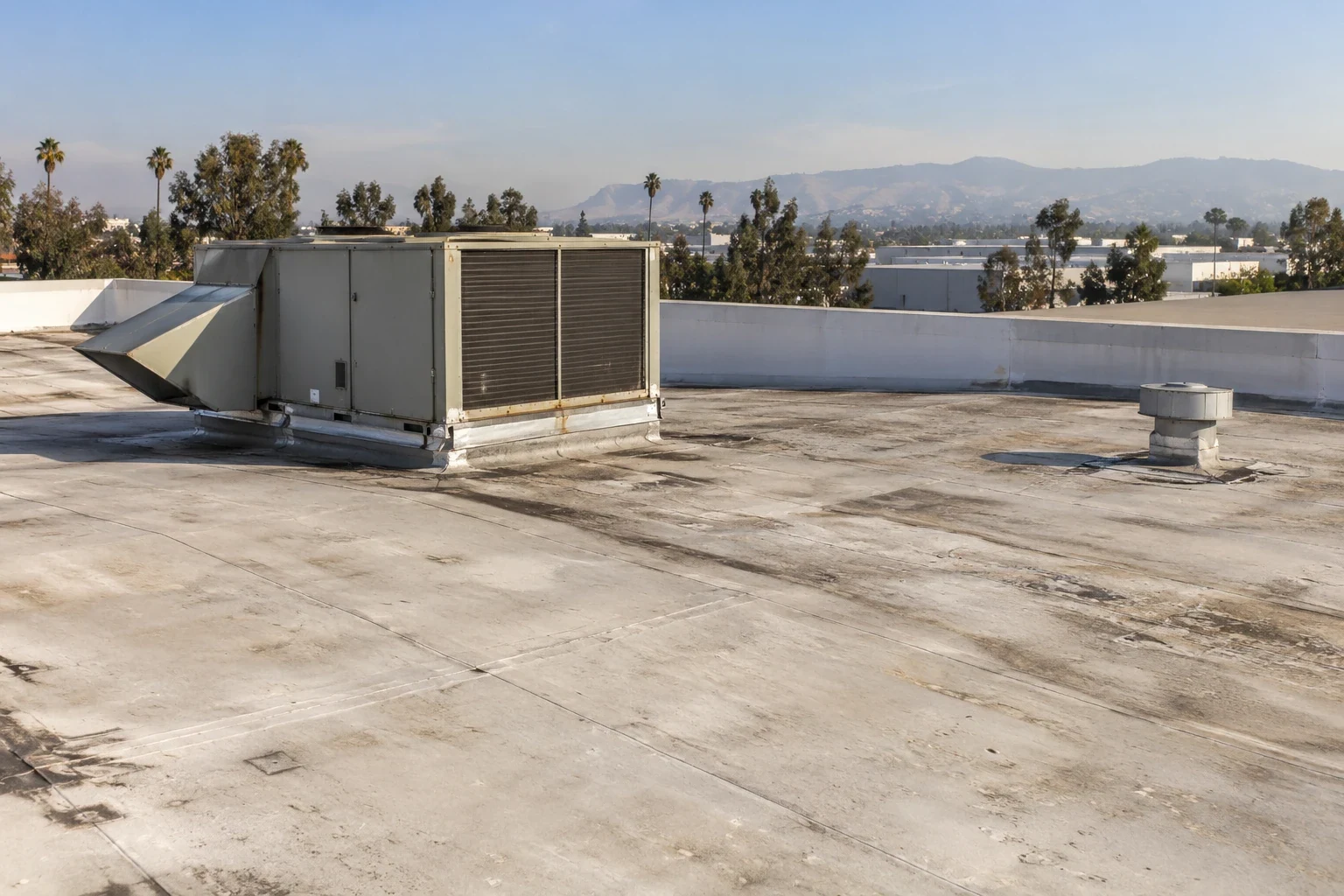
A rusted or damaged curb can make a flashing-only repair insufficient. We examine accessible curb construction, attachment and the connection with the roof assembly. Some deterioration is visible only when roofing or equipment is removed. We identify that uncertainty and coordinate the opening needed to assess it. The manager should know which part of the scope is roofing and which part requires equipment or supporting-construction work.
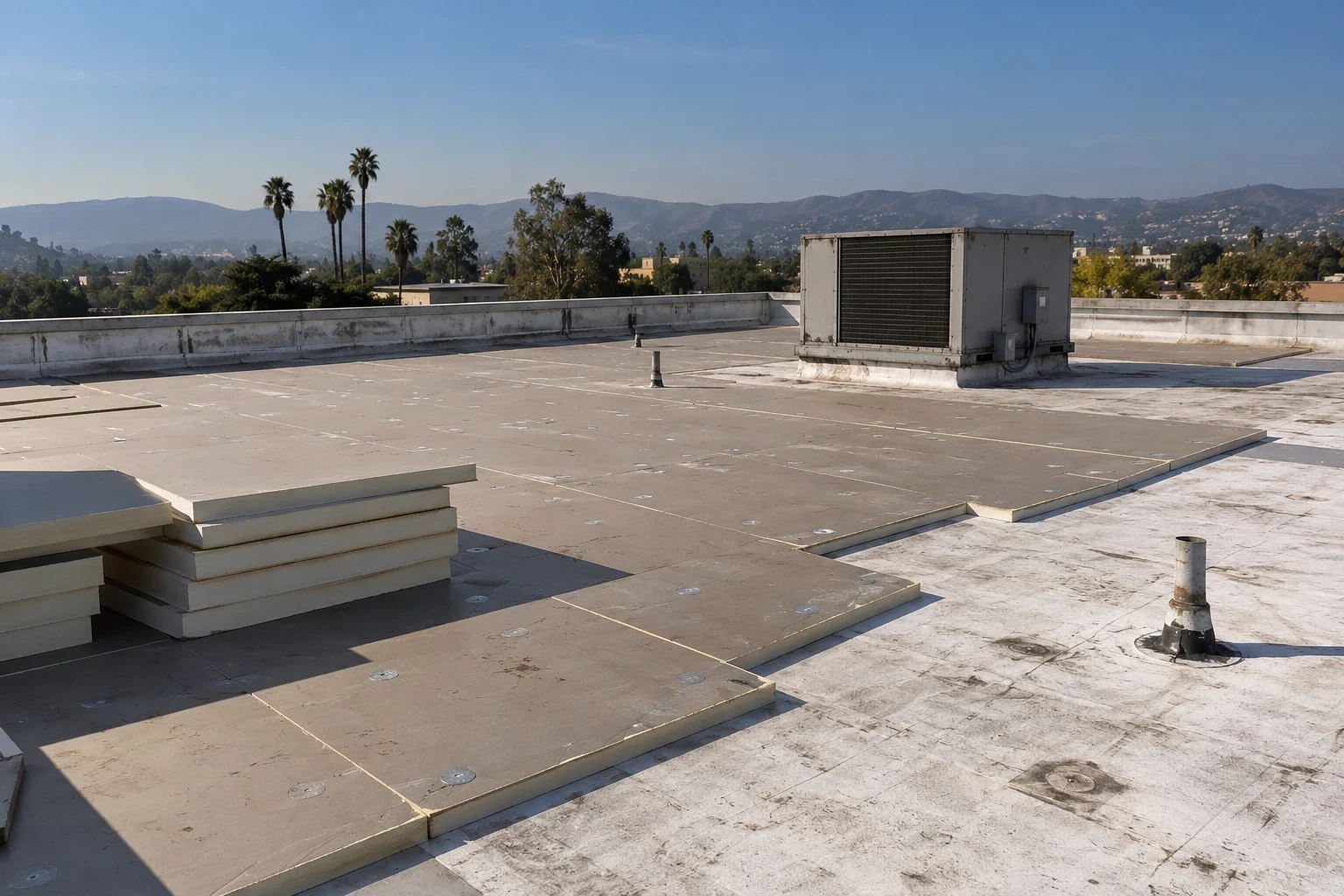
The curb needs suitable height for the finished roof. Adding insulation or a recover layer changes the clearance at an unchanged base. We measure the relationship before installing new roofing. Insulation layer changes may require curb modification or another compatible detail. The proposal should settle that interface before material arrives, rather than adapt the flashing after its usable height has been reduced.
Equipment replacement can also change the curb footprint. A new unit may require an adapter, a new base or a changed opening. We coordinate with the mechanical and design team as applicable. Occupied reroofing work needs that sequence aligned with operating requirements. The roof should not be closed around a base that must immediately be disturbed by planned equipment work.
The membrane transition into the curb
A curb base brings the horizontal membrane into a vertical detail. We examine its corners, attachment and termination. Strained material or failed earlier repairs can require removal before rebuilding the connection. Curb flashing reconstruction must reach appropriate surrounding material. A new outer patch should not rely on a loose layer that remains underneath.
Merced summer heat makes the connection between rigid equipment construction and flexible roofing important. We look for evidence of restraint or separation at that interface. The suitable repair depends on the roof material and curb arrangement. Heat provides a local inspection concern; the observed attachment and surface condition establish what needs changing in the detail.
For an EPDM membrane assembly, the curb repair uses preparation and materials suited to that rubber roof. A thermoplastic or bituminous system needs a different method. We identify any surface coating or incompatible repair buildup before selection. The completed transition should connect the actual materials rather than treat every curb as a sealant-only task.
Equipment obstructions in the water path
A curb or support can interrupt drainage. We examine sediment marks, retained debris and nearby low areas to understand how water approaches the equipment. A support placed across a drainage route may need a coordinated arrangement change. A curb may need an appropriately designed cricket. We identify the roof geometry question before proposing material that could simply divert water into another depression.
Roof outlet work may be necessary where the equipment area connects with a damaged drain approach. We compare finished elevations and the discharge path. Merced winter precipitation is greater than midsummer rainfall normals, making the condition worth addressing before renewed rain. Current water retention still needs its own examination regardless of the normal season.
In the industrial areas served by Highway 99, manufacturing and distribution provide useful context for equipment coordination. We ask the property team which systems need uninterrupted operation and what work windows are available. Those answers shape removal and temporary protection. They do not establish the drainage correction, which follows the examined roof and connected outlet layout.
Removal, reinstatement and operating coordination
Moving equipment can expose roofing previously covered by its base or supports. We plan the sequence so those areas can be examined and repaired before the equipment returns. Damaged insulation or membrane should not remain concealed beneath a newly placed support. The manager needs clear responsibility for lifting, temporary services and roof restoration where those tasks are part of the project.
At a property in Downtown Merced, rooftop systems may serve occupied office or restaurant space. We identify the actual service restrictions with the building team. The roofing work then follows a usable opening and closure window. We ask which occupied rooms each unit serves and whether its curb can be opened within the available service window. That answer connects the roofing removal with a practical equipment sequence.
A replaced curb needs the surrounding layers reinstated at a suitable height and condition. We inspect the final flashing, support contact and water path. Separate unresolved equipment or structural concerns are identified rather than folded into a roof completion statement. Cost drivers include access, lifting coordination, damaged support layers and the amount of connected membrane needing reconstruction.
Later equipment service should have a usable route across the finished roof. We discuss walking protection and locations vulnerable to repeated contact. A completed support repair loses value if ordinary service movement immediately damages the adjoining membrane. The operating arrangement and roofing detail need to remain compatible after the installation team leaves.
Commercial Roofing Questions
Will a thicker pad correct a support indentation?
The bearing arrangement and underlying layer condition need examination first. Protection can address contact on a suitable assembly. It does not establish load capacity or restore damaged insulation. We identify the roofing repair and any separate technical review required.
Should curb height be checked before adding roof insulation?
The finished roof level changes the available flashing clearance. We measure that relationship and coordinate necessary curb work before installation. The new layers should connect with a workable detail rather than crowd an unchanged equipment base.
Who handles the equipment when a curb must be replaced?
The project needs clear coordination with the appropriate mechanical and lifting parties. We define the roofing opening and restoration. Equipment disconnection, support design and reinstatement responsibilities should be settled alongside that scope.
Can a pipe support remain if it blocks roof drainage?
Its arrangement needs review with the connected system requirements. We examine the affected water path and suitable alternatives. A roof repair should not preserve a support location that leaves an unresolved obstruction in the intended drainage route.
Examination of the equipment bearing detail
Request inspection of the indented support, damaged curb or flashing connection before equipment movement or roof-layer changes proceed.
Related Roofing Work