A shallow pool that remains after surrounding roof areas have dried points to a drainage condition worth measuring. On a commercial roof in Merced, we map the water boundary, note the drain or scupper serving that zone and inspect the surface for deformation. The dark outline alone cannot tell whether the roof deck has settled, a drain is restricted or insulation has compressed. Repair planning starts with the shape and duration of the pond, not a guess based on one photograph.
Merced’s July normal high is 96.3°F, and the station normals include 22.8 days per year at 100°F or higher. Heat is relevant to material movement and surface exposure, but it does not explain every low spot. We examine drainage during and after a controlled water test only when appropriate, then relate the observations to the roof assembly and interior conditions. The goal is a defined correction that moves water toward a functioning outlet without concealing a structural or insulation problem.
Measure the low area
We record the pond’s approximate perimeter and depth at repeatable points, then locate nearby drains, scuppers, overflow paths, curbs and roof transitions. The findings help distinguish a broad plane that slopes poorly from an isolated depression around damaged insulation. A blocked strainer or debris accumulation may be a maintenance issue. A drain bowl set too high, compressed cover board or deck deflection can require a different scope. We describe what the inspection can establish and what may require a test opening.
Interior observations matter when water is persistent. Staining, odor, soft ceiling material or active dripping should be tied to a location and date, but the ceiling point is not assumed to sit directly under the roof defect. We trace plausible routes through the roof layers and note whether the wet area coincides with a low spot. Drain and scupper work can address an obstructed or poorly functioning outlet. A roof-side correction may still be needed where water cannot reach it.
For the maintenance team, a useful map identifies the roof access point, drain number, observed water boundary and any obstruction removed during the visit. Photographs taken from several directions are more useful than a close image without context. We also note whether the pond remained after a specified observation period. That creates a baseline for a later check without promising that one inspection captures every rain condition.
Why water collects
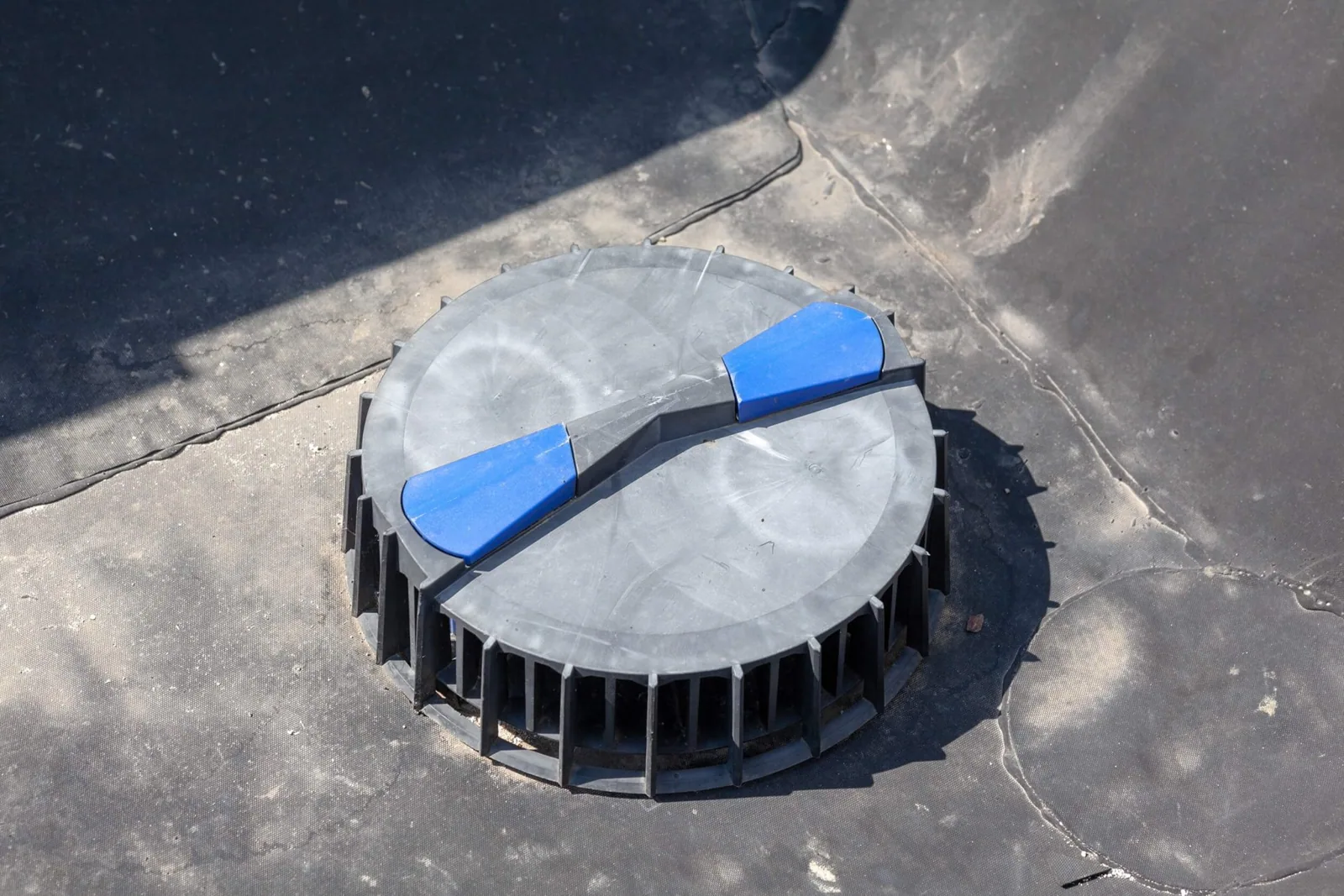
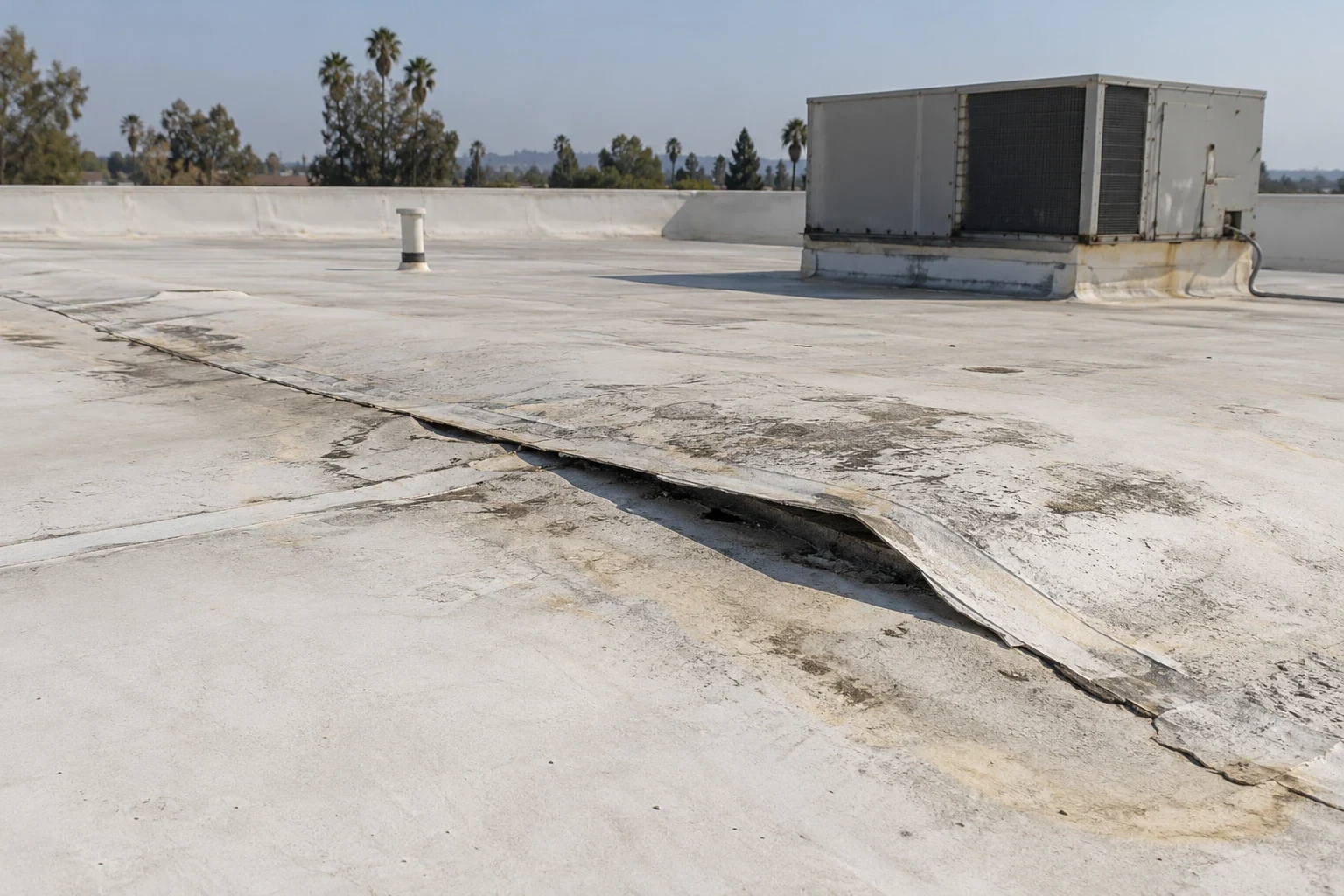
Drainage depends on the roof plane, outlet elevation and path between them. A small change in any of these can leave standing water. Debris can reduce the opening at a drain, while a damaged drain bowl or loose clamping ring can compromise the membrane connection. If the low area has developed over time, the supporting insulation or deck may have changed. We inspect the surface for crushed cover board, wrinkles, membrane distortion and signs that water is entering beneath the visible pond.
Persistent ponding can lengthen exposure of seams and repairs. It can also add load, particularly when the collection is broad or deep. We do not estimate structural capacity from a visual roof visit. If the water depth or deflection raises a structural question, the owner should engage the appropriate design professional. Our roofing scope can identify the location, drainage behavior and assembly conditions that need review. Seam repair may be relevant where a seam is open at the wet zone, but it does not correct the elevation problem.
Merced’s dry summer months do not remove the need to resolve chronic ponding. Merced station normals show July and August precipitation rounding to 0.00 inches, while annual precipitation normal is 11.80 inches. We keep the diagnosis tied to observed grade, outlet condition and evidence of damage rather than inferring performance from season alone.
Drainage and membrane choices
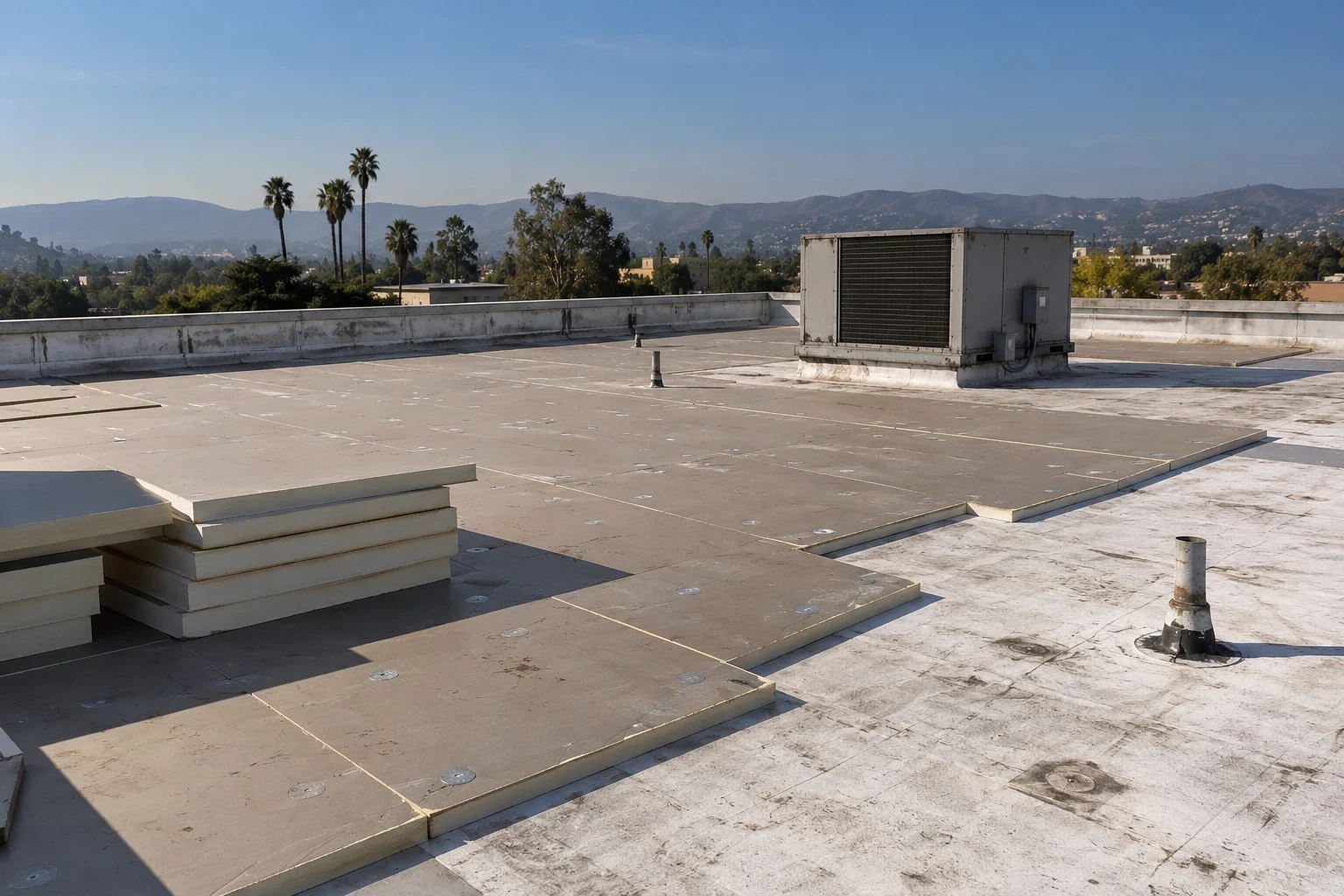
If debris is the cause, clearing the outlet and setting an inspection interval may be sufficient. If the drain connection is damaged, repair can require removing membrane around the bowl and rebuilding the flashing. Where the low area is formed by compressed insulation or a changed substrate, a localized tear-off and tapered replacement may restore the intended drainage path. The selected repair must account for the existing membrane, attachment and transition details at adjacent material.
We assess whether a coating or patch would leave water standing in the same location. A new surface layer cannot raise a depressed roof plane by itself. Insulation and cover-board work may be needed if those layers have lost support. Where water has traveled beneath a seam, flashing repair or a membrane opening may be part of the corrective work. The written scope separates drainage correction, wet-material replacement and membrane restoration so the owner can see what each item addresses.
When the roof has several low zones or repeated water entry, a broader drainage review may be more useful than treating each stain independently. We identify the number and location of affected areas and any pattern across the deck. The manager can compare localized correction with a more comprehensive plan. Neither option should assume that all adjacent roofing is damaged without inspection evidence.
Work above an active building
Drainage repairs may require removing material while the roof remains exposed. We define the work limits, protection beneath the opening and a close-of-shift condition before starting. In a building with inventory, food production or sensitive equipment, the interior contact should know where removal will occur and how the area will be protected. We also identify whether temporary drainage or weather protection is needed during the sequence.
Merced’s industrial parks include food and grocery distribution activity, and local industrial sites connect to Highway 99 and rail service. For a warehouse roof, staging and access can affect receiving lanes or stored goods. A downtown property may instead need a narrow access path through occupied space. We coordinate with the site contact and keep roofing work distinct from building operations that are outside the repair scope.
Closeout records the outlet condition, changes made to the roof plane, replaced layers and remaining observations. If a water test is performed, the report identifies its limits and the conditions observed. The owner receives a repair boundary and any maintenance action still required. Merced commercial roofing service can begin with the drain, low area or interior symptom that needs examination.
Choosing the right correction
The central question is whether the water has a clear route to an outlet and whether the roof material at the collection area remains sound. A drain cleanout, connection repair, insulation replacement and larger slope correction are different scopes. We explain which condition the evidence supports and whether concealed layers need confirmation. If the roof is dry during inspection, the report should say so and describe the basis for locating the historic pond.
Request an assessment with the drain location, approximate pond dimensions, duration after rain and any interior leak point. If available, provide roof plans or earlier photographs. We can examine the outlet, map the low area, identify material concerns and present a repair boundary that reflects the observed condition rather than a generalized promise to eliminate every wet spot.
Nearby service-area context includes Turlock Regional Industrial Park, a multi-parcel industrial area with cold storage, food processing and manufacturing users. Los Banos sits near State Route 152 and Interstate 5. A roof drainage plan for either location begins with its actual slopes, outlet elevations and observed water boundary.
Commercial Roofing Questions
How long is water allowed to remain on a commercial roof?
That depends on the roof design, applicable requirements and project specifications. We document observed drainage behavior and refer structural or code questions to the appropriate professional.
Will adding a roof coating solve ponding?
A coating may renew a suitable surface, but it does not correct a depressed plane or obstructed outlet. The drainage cause needs assessment first.
Can ponded water cause a leak?
It can expose weak seams and details for longer periods, but a leak path must be traced. We inspect both the collection area and nearby connections.
Should drains be cleaned before the inspection?
Do not remove evidence that may help explain the condition. Share any recent cleaning history, and we can note the outlet state during the visit.
Assess a recurring low area
Request an inspection of the standing-water boundary, nearby drain or scupper, and any interior symptom. We will distinguish outlet maintenance from roof-plane or membrane repair.
Related Roofing Work