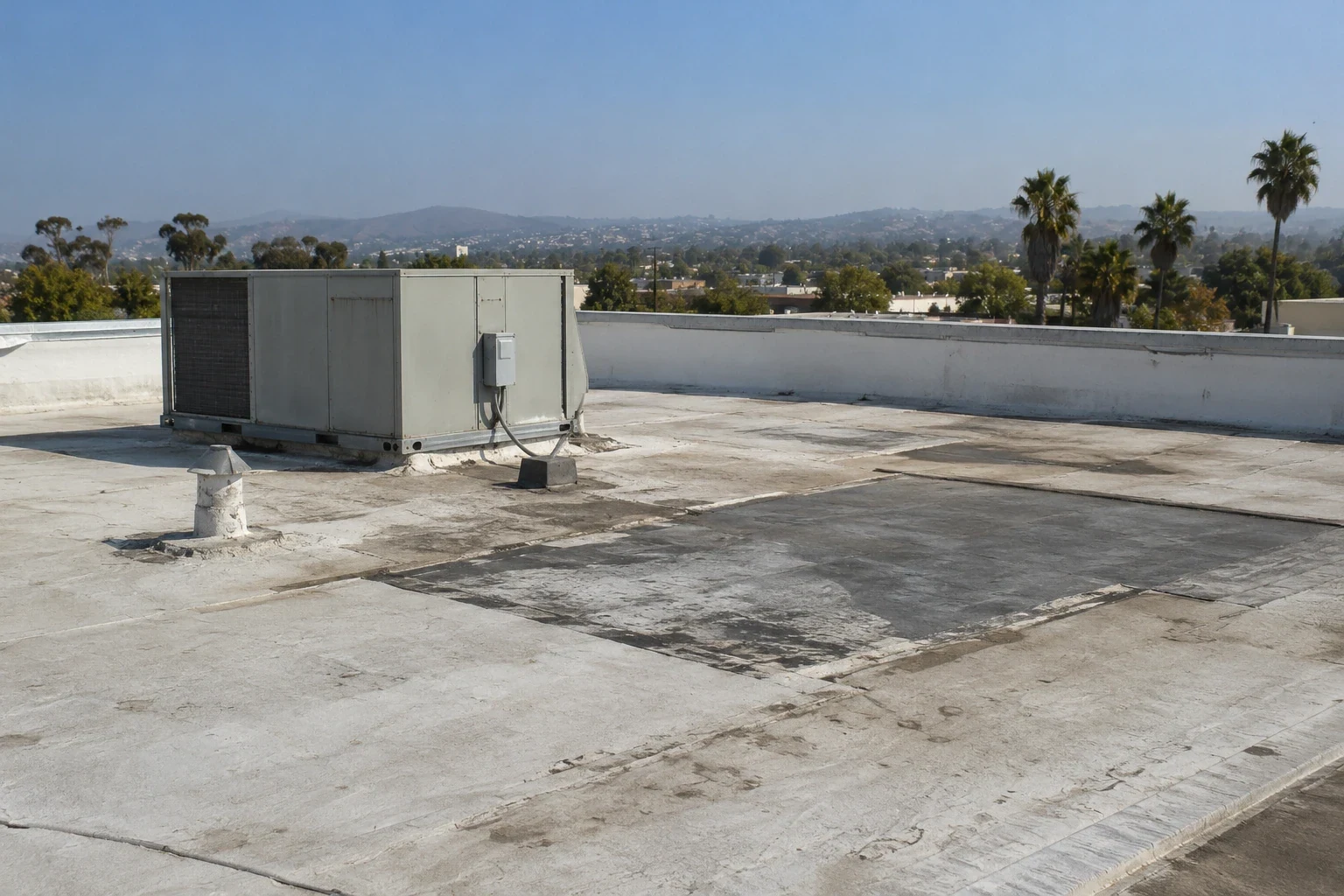
A bare strip in roof surfacing needs an examination of the plies underneath. For built-up roofing in Merced, CA, we assess the protective surface and the multilayer construction together. The roof can have aggregate or another specified finish. Its condition helps locate the concern, while the underlying plies establish what the repair needs to restore.
Built-up roofing uses successive reinforced plies joined within a bituminous assembly. Merced summer heat makes exposed surface protection and transitions relevant to examination. Le Grand has food-related businesses and existing commercial land uses. Planada includes agriculture and food processing. For a roof above active business space, we identify the occupied zone and protective arrangements before opening the layers. Material examination determines the repair connection, while the operating use determines its work window.
The protective surface over the plies
Aggregate can conceal the membrane surface beneath it. We identify where suitable clearing is needed for examination and how the surfacing will be restored. Loose material near an outlet can also affect drainage. A patch placed without assessing the underlying layers may not connect with serviceable roofing. The inspection needs more than a view of the gravel distribution across the field.
Other built-up assemblies may have a coating or cap finish. We identify that exposed material and its condition before repair selection. Bare reinforcement, surface cracking and separation deserve different responses. A built-up roof repair should identify which layers are affected and how the new construction will join the remaining plies. The surfacing is part of the detail, not the whole assembly.
Merced heat can affect exposed bituminous materials, especially where protective surfacing is damaged or missing. We examine the actual roof condition and the appropriate restoration method. A finish chosen for appearance alone may not suit the existing assembly. The proposal describes compatible preparation and protection rather than simply replace a worn area with an unidentified surface compound.
Ply bonding and separation
A raised area can indicate separation between layers. Moisture or trapped air may be involved, and the surface appearance does not identify every affected interface. We examine its location and the adjoining construction. A selected opening may be appropriate when it changes the repair decision. The opening needs a defined restoration method before the existing layers are cut.
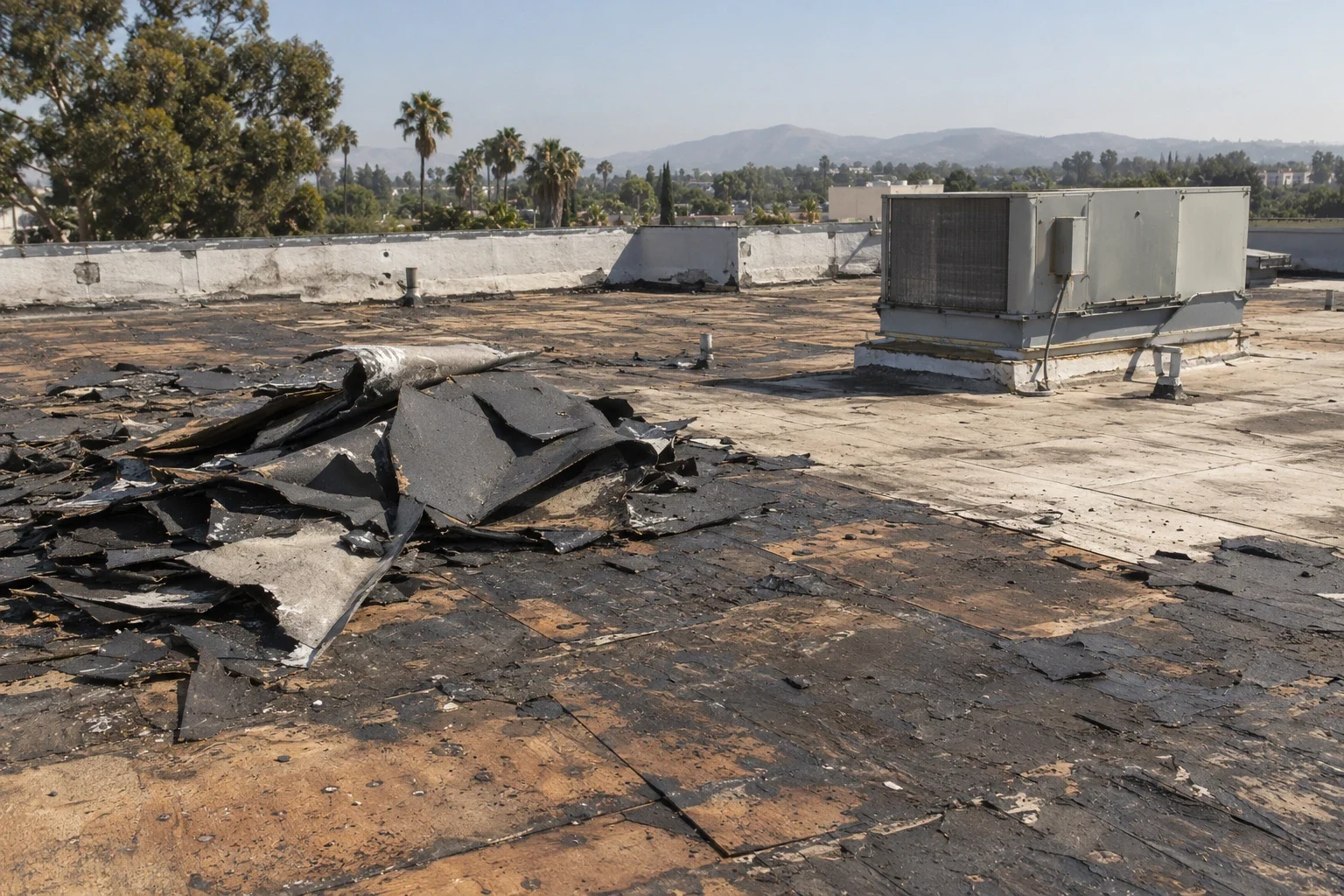
The repair boundary should expose material suitable for connection. Loose or damaged plies may need removal farther than the outer surface mark suggests. We identify that extent and the construction being reinstated. A new top layer over unsuitable plies can leave the original separation inside the repair. The manager should understand which part of the scope restores the membrane and which restores its support.
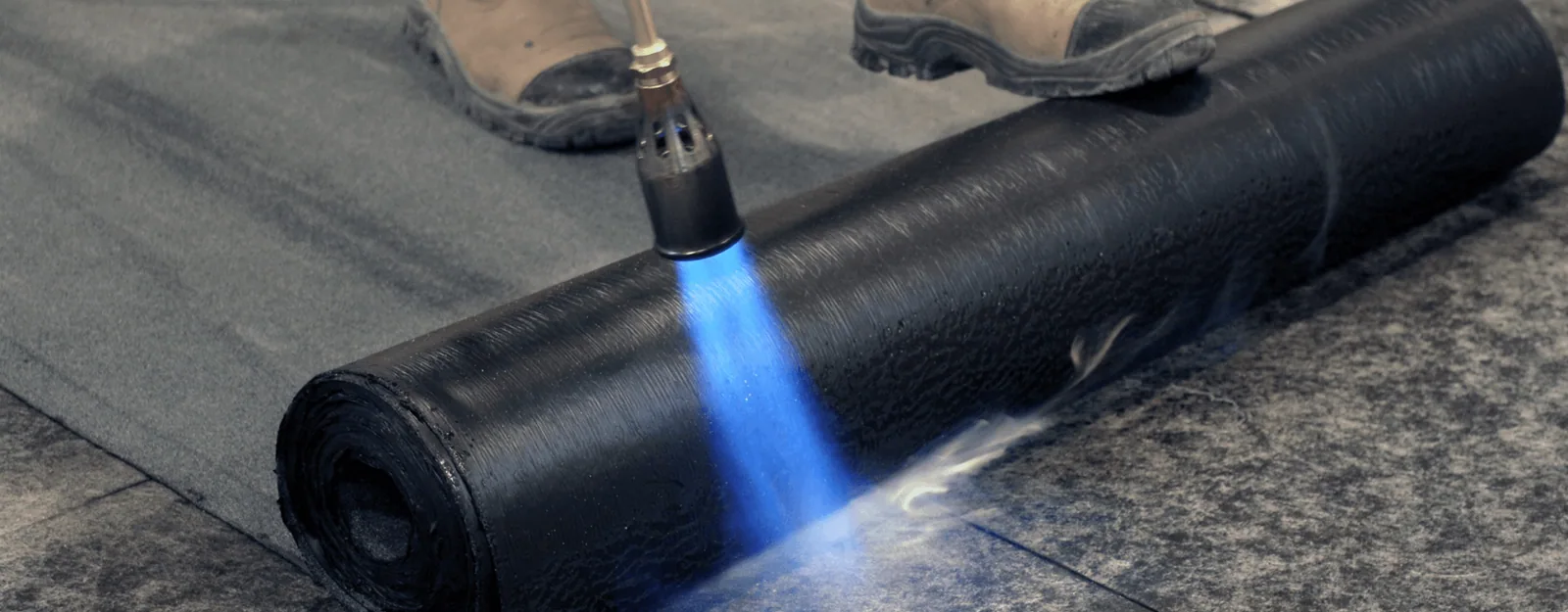
A modified bitumen sheet assembly differs in its layer arrangement and application requirements. It should not be assumed identical to built-up construction just because both have a bituminous surface. We identify the existing materials and any mixed earlier repairs. That distinction guides compatibility and the connection between the new work and the retained roof.
Moisture within the layered construction
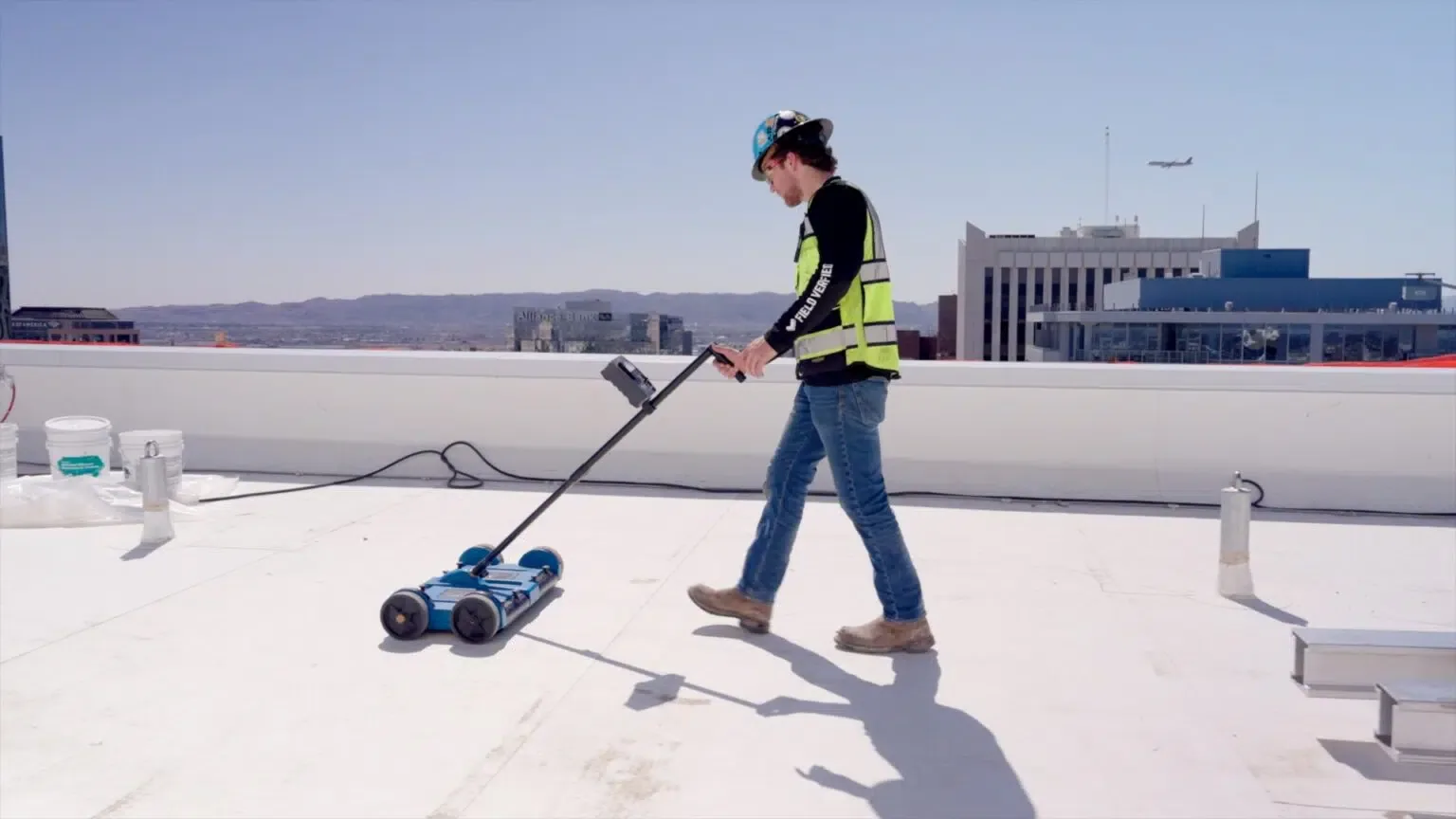
A small opening may affect insulation beyond its visible perimeter. We examine moisture concerns before choosing retention or replacement. Appropriate thermal imaging with confirmation can assist where the assembly and survey conditions support it. Physical checks identify affected layers. We distinguish those findings from an image pattern still needing interpretation.
Surfacing and several membrane layers can complicate examination. We plan confirmation locations around the construction question and identify the limits of each sample. A test opening should not be treated as a roof-wide condition by itself. We compare its findings with the accessible detail examination and wider pattern before defining removal quantities.
Wet or deteriorated support material needs its own removal and reinstatement. A repaired ply surface cannot restore damaged insulation or deck construction below it. We examine those conditions and coordinate any appropriate technical review. The roof closes only after the supporting repair has a suitable plan. The manager receives the layer sequence, not just a patch shape.
Walls, curbs and outlet tie-ins
A vertical flashing detail needs a workable transition from the field plies. We examine its base, reinforcement and upper closure. Repeated outer repairs can hide loose construction beneath them. Flashing rebuilding may be appropriate where the connection cannot remain suitable. The new work should reach serviceable material and form the intended transition rather than conceal another unstable layer.
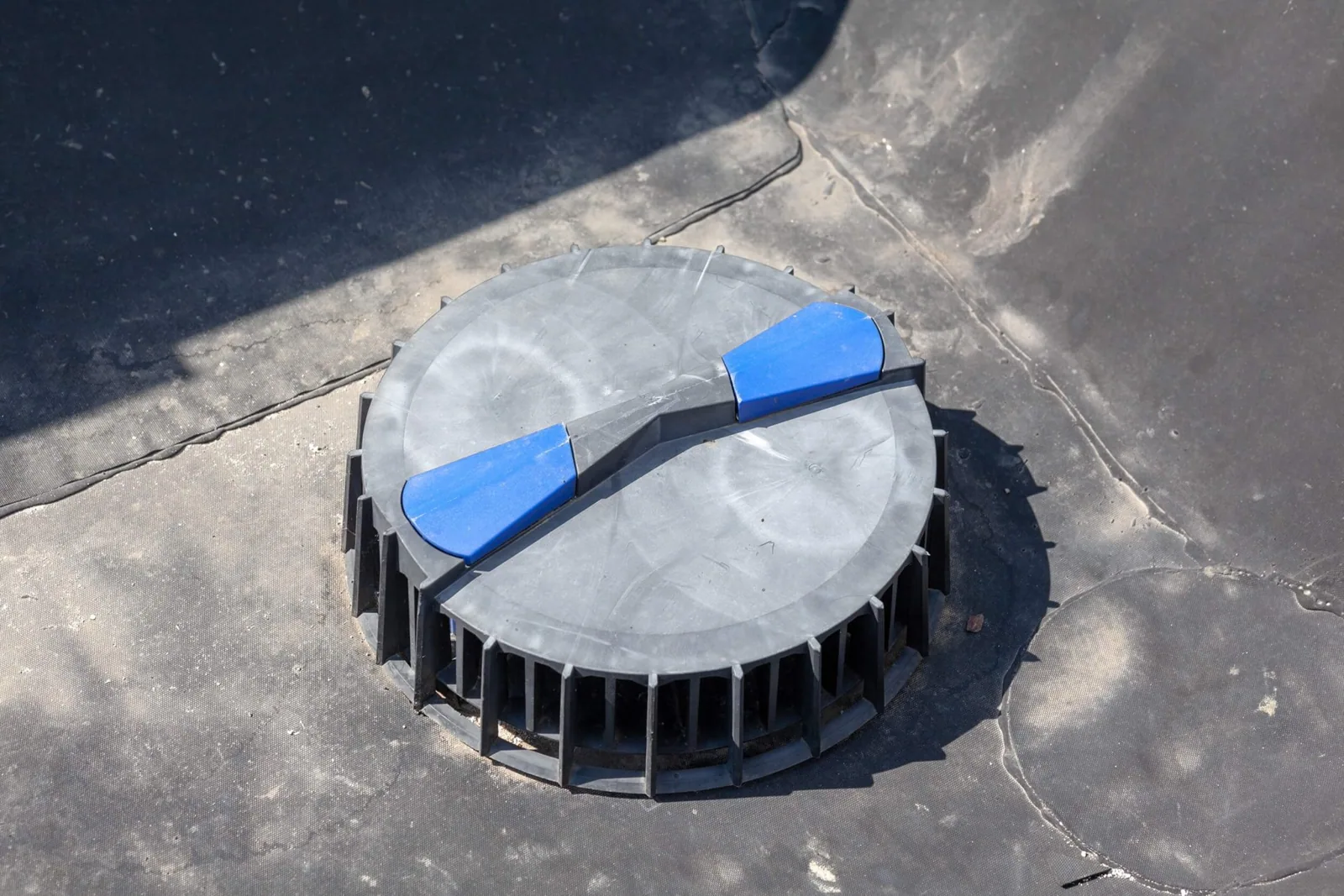
Drains and scuppers also involve a multilayer connection. We examine the membrane at the outlet and how water reaches it. Outlet repair or slope work may need coordination with the field repair. Debris clearing, connection reconstruction and geometry correction are separate responses. A broad surface treatment should not leave the affected drain detail unresolved.
Merced winter precipitation normals exceed those of midsummer. A dry interval can provide a useful repair opportunity before renewed exposure. Current conditions and the chosen application method still govern timing. The assembly needs enough preparation and closure time, with protection appropriate to any area left open during the work.
Retaining plies or changing the assembly
A bounded defect may permit repair where the remaining layers and supporting construction are suitable. A broader pattern of separation or wet material can change the comparison. We assess those conditions before proposing roof replacement. The recommendation should explain why the retained assembly can support the intended work or why removal offers a more workable approach.
A silicone restoration system requires substrate and compatibility review if considered over existing bituminous construction. Loose layers, moisture and unsuitable surfacing need their own response. We specify preparation and detail work for the particular system. A coating choice does not automatically make the entire layered roof a suitable restoration substrate.
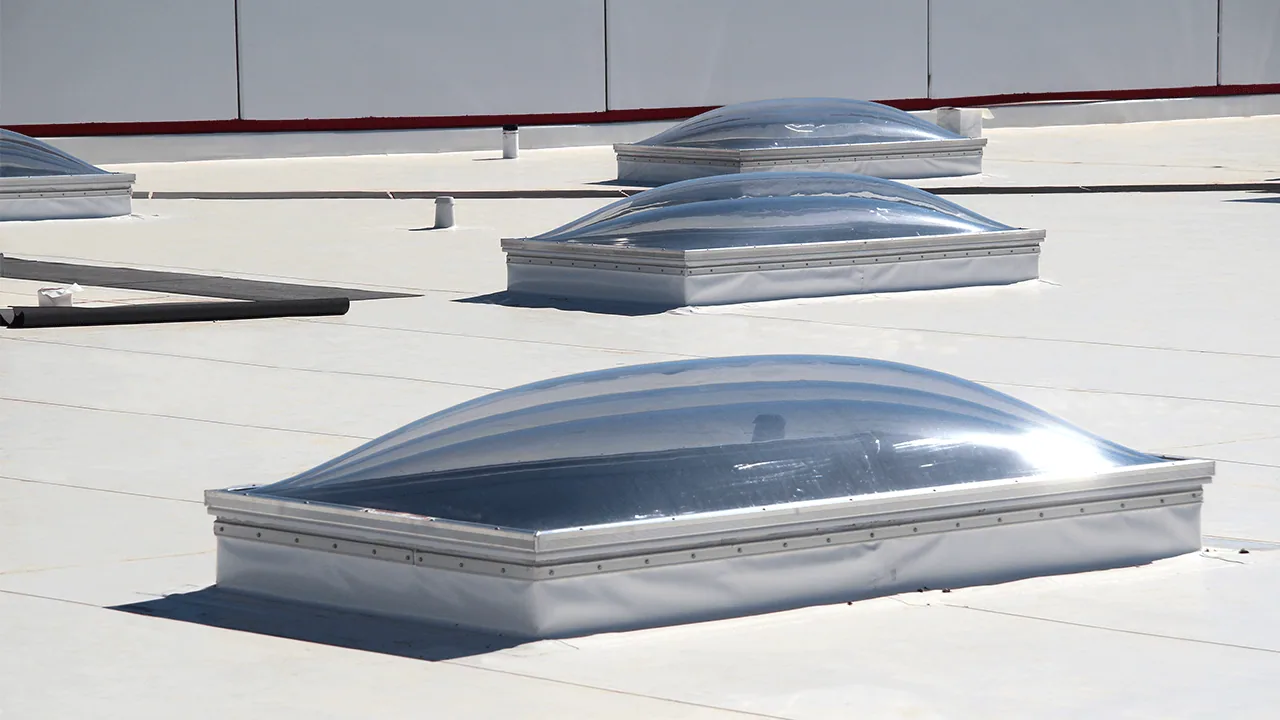
Added layers can change curb clearance and roof elevations. We compare the proposed thickness with outlets, perimeter terminations and equipment details. Retaining more material is not simply a disposal decision. The resulting roof still needs appropriate attachment, support and connections. The manager should see those items in the scope before choosing a recover or replacement option.
Opening the roof above operating space
At a property in Le Grand, local food businesses and commercial use make interior protection useful planning questions. We ask what actually sits below the proposed roof opening. A proposed opening above protected product needs a defined removal boundary and enough time for reinstatement. We identify that boundary with the roof detail and the interior zone before starting work. The building team identifies the operating needs, and the roof examination defines the construction work.
In Planada, agriculture and food processing provide another occupied-business context. We coordinate removal routes and usable work windows with the actual property. Material handling and layer removal can affect access and timing. The daily boundary needs appropriate protection and a permanent connection to be completed as the sequence progresses.
Cost drivers include surfacing removal, affected plies, wet support layers and detail reconstruction. We describe those separately enough to compare a repair with broader work. After closure, outlets and equipment routes still need maintenance. The completed built-up scope restores the affected layers and their protective surface while identifying any separate construction question that remains.
Commercial Roofing Questions
Can aggregate hide membrane defects needing repair?
The surfacing can limit direct examination. We identify where suitable clearing or a selected opening is needed and plan restoration. The layer condition beneath the aggregate matters to repair selection, not just the visible distribution of loose material.
Does a blister prove insulation beneath it is wet?
A raised area needs investigation of its affected layers. Separation can involve more than one condition. We use suitable checks to identify the material and moisture question before assigning a removal boundary or cutting the assembly.
Why distinguish built-up roofing from modified bitumen?
Their ply arrangements and application requirements differ. Repairs need compatibility with the construction actually present. We identify the layers and any earlier mixed work before specifying the material and connection used to restore the affected area.
Can coating repair separation between roof plies?
A surface application does not restore unsuitable layers beneath it. We examine separation and define necessary removal or reconstruction first. Restoration requires a suitable assembly and preparation, not only a finish that can cover the exposed roof.
Inspection of the built-up roof layers
Request examination of the bare surface strip, raised area or damaged outlet tie-in before the layered roof repair is defined.
Related Roofing Work