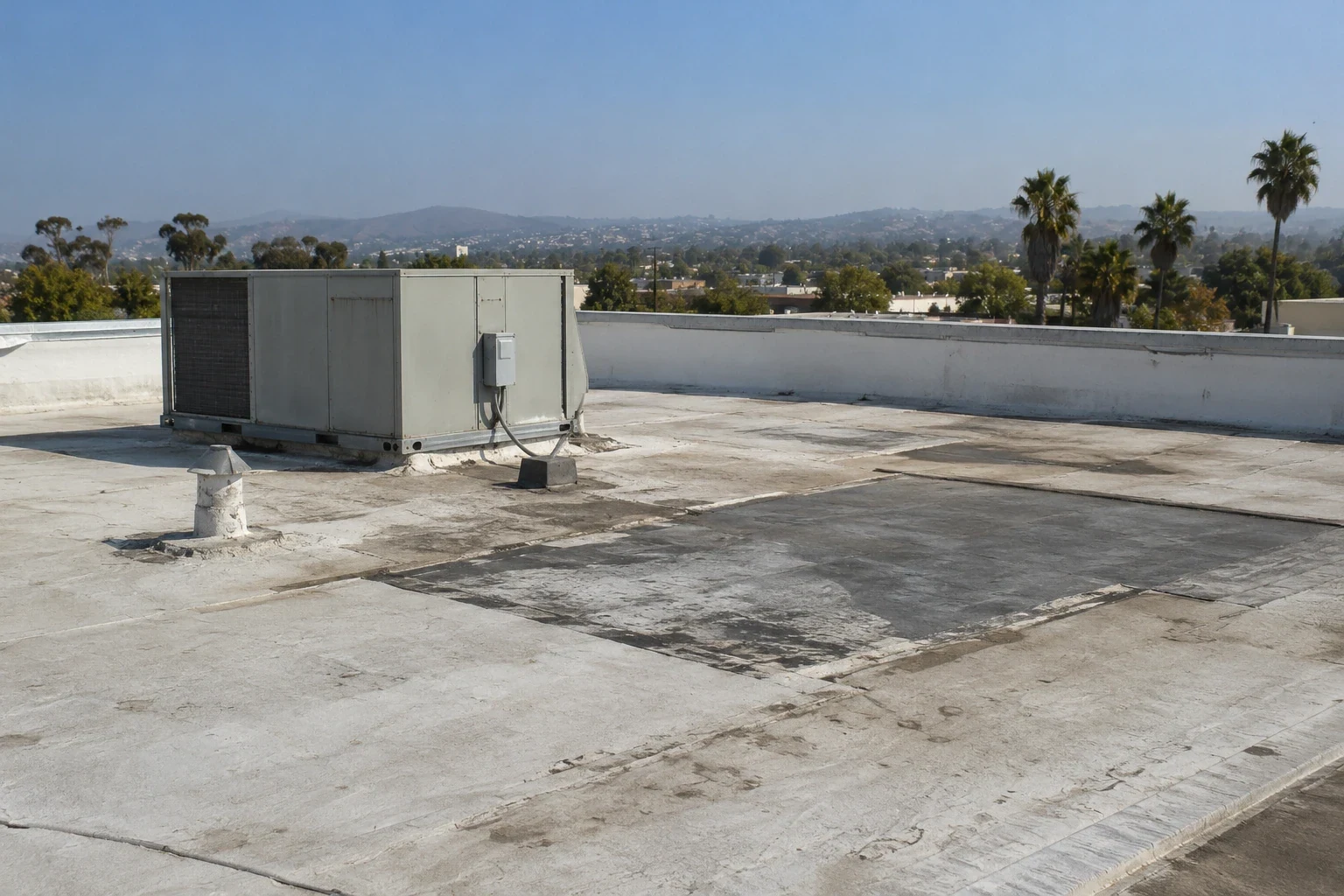
A lifted lap near a mechanical curb leaves a sharp inspection question: did the bond fail at the corner, or has the seam begun to release along the run? For a property in Winton, CA, the answer affects how much membrane can remain. Winton includes commercial, industrial, and institutional uses alongside its residential areas. Before scheduling, we ask each manager about occupancy hours, deliveries and systems that need to stay active. We check the actual seam, attachment and nearby insulation before setting a work boundary. A commercial roof repair should reconnect the layers that failed, not hide movement beneath a surface patch.
Find the end of the failure
A seam can appear closed from a distance while its edge has lost bond for several feet. We probe the lap carefully, note dirt or moisture at the opening, and check where the weld or adhesive still holds. Where fasteners hold the sheet, inspect their alignment beside the lap; a bonded membrane calls for a clean surface at its repair edge. We mark start and stop points on the roof plan and compare them with nearby curbs, penetrations and edges. If the release stops at one corner, a bounded repair may fit. If it follows a long line or repeats elsewhere, the scope needs a broader map. A condition inspection with seam locations gives the manager a basis to sequence repairs without assuming the entire field has the same defect. We also check how the lap responds at its ends, where movement can concentrate near a termination or cross seam. A probe that meets resistance in the middle but releases at a corner points to a different repair extent than a fully open bond line. We record both the sound and released portions before applying a patch. If the seam lies beside a curb, we inspect that flashing independently; one connection can be secure while the other has failed. The work plan identifies which detail is rebuilt and where the existing sheet remains. This keeps a narrow repair from becoming an unmeasured allowance.
Set access before staging
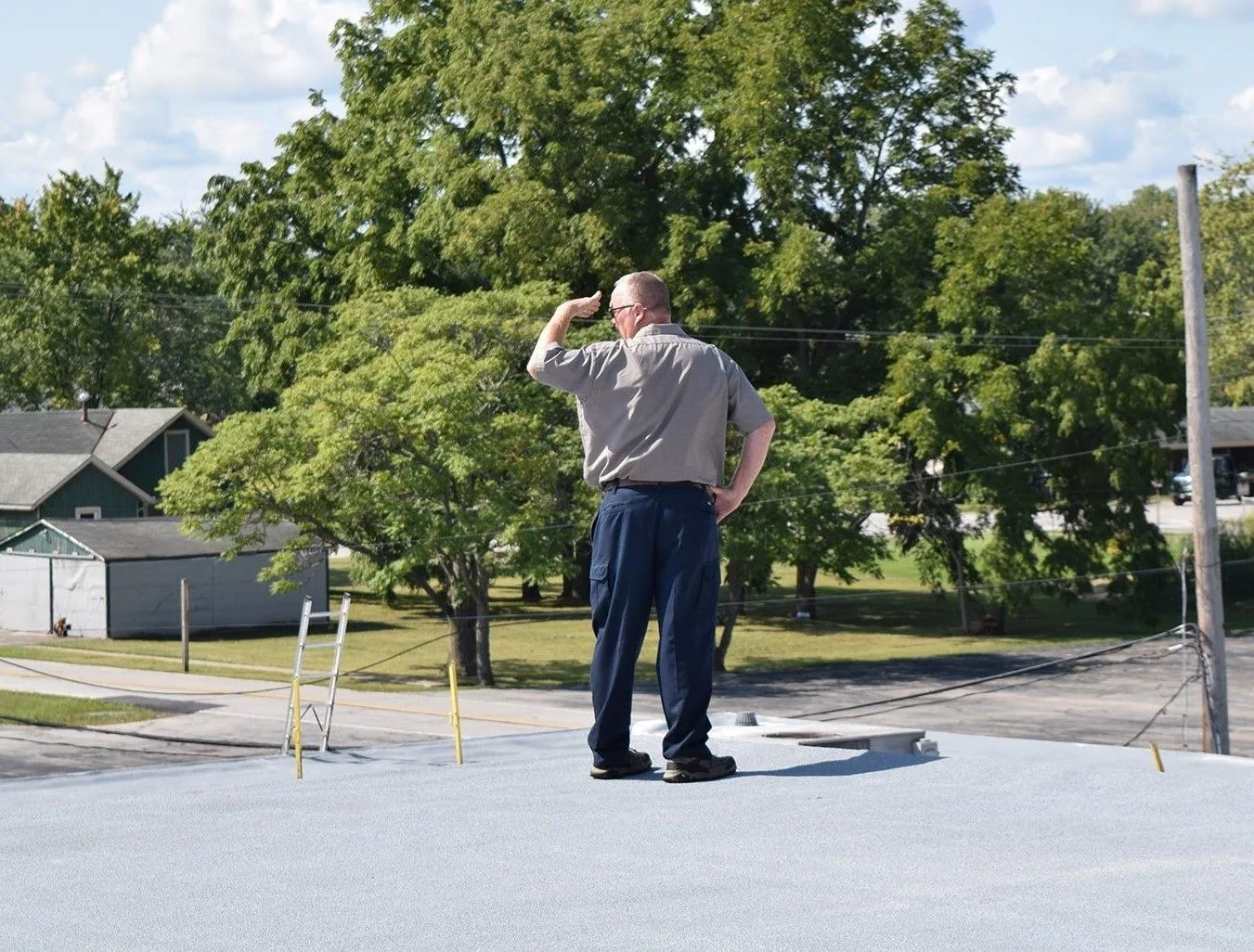
Freight rail and Highway 99 run roughly two miles west of Winton. We use that orientation to start a logistics discussion, then agree on the delivery entrance, staging position and rooftop access with the property contact. We confirm gate hours, loading movement, roof ladder security and staging space with the site contact. Where a delivery lane must remain open, material movement can be timed outside its busiest interval. We also identify rooftop equipment that cannot be shut down and plan dust protection at nearby air intakes. A clear path keeps seam repair separate from unrelated site work. If a facility has several connected sections, the manager marks which area can be isolated at one time. A reroof sequence over active operations uses those limits to keep temporary cover and interior protection specific.
Watch the sheet and fasteners
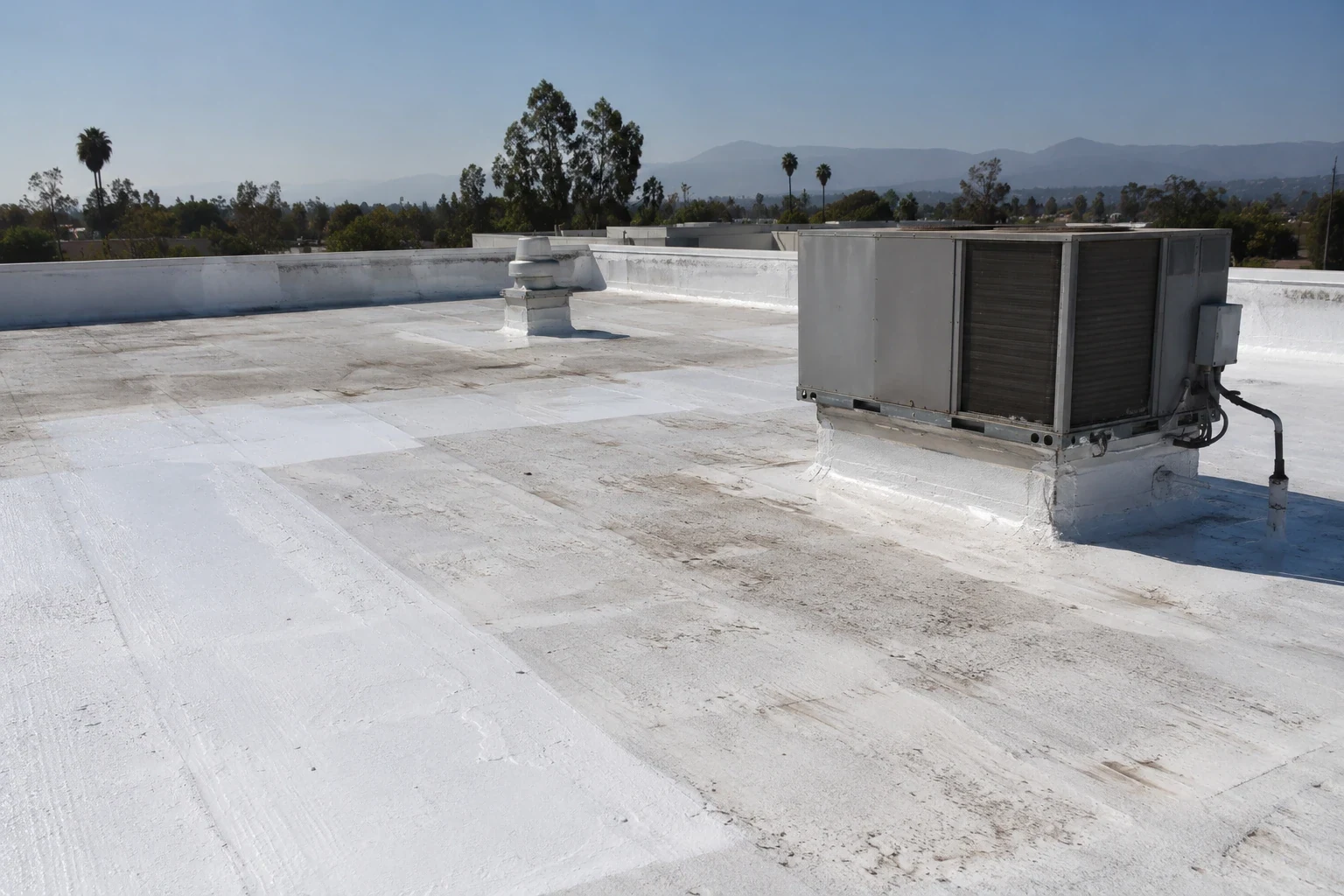
At the Merced station, the 1991-2020 normal period averages 22.8 days each year at or above 100°F. This heat pattern makes lap movement and metal transitions useful inspection points; we check them alongside the assembly and attachment found on the roof. A membrane can expand while a curb, pipe and edge restraint stay fixed. We look for a split at corners, a loosened termination bar or a fastener that no longer holds the sheet flat. On a coated roof, we check for a brittle surface, exposed reinforcement or a coating released from its base. The repair choice starts with substrate and attachment. A coating restoration assessment is useful only when the assembly and adhesion support another layer.
Open only to answer a question
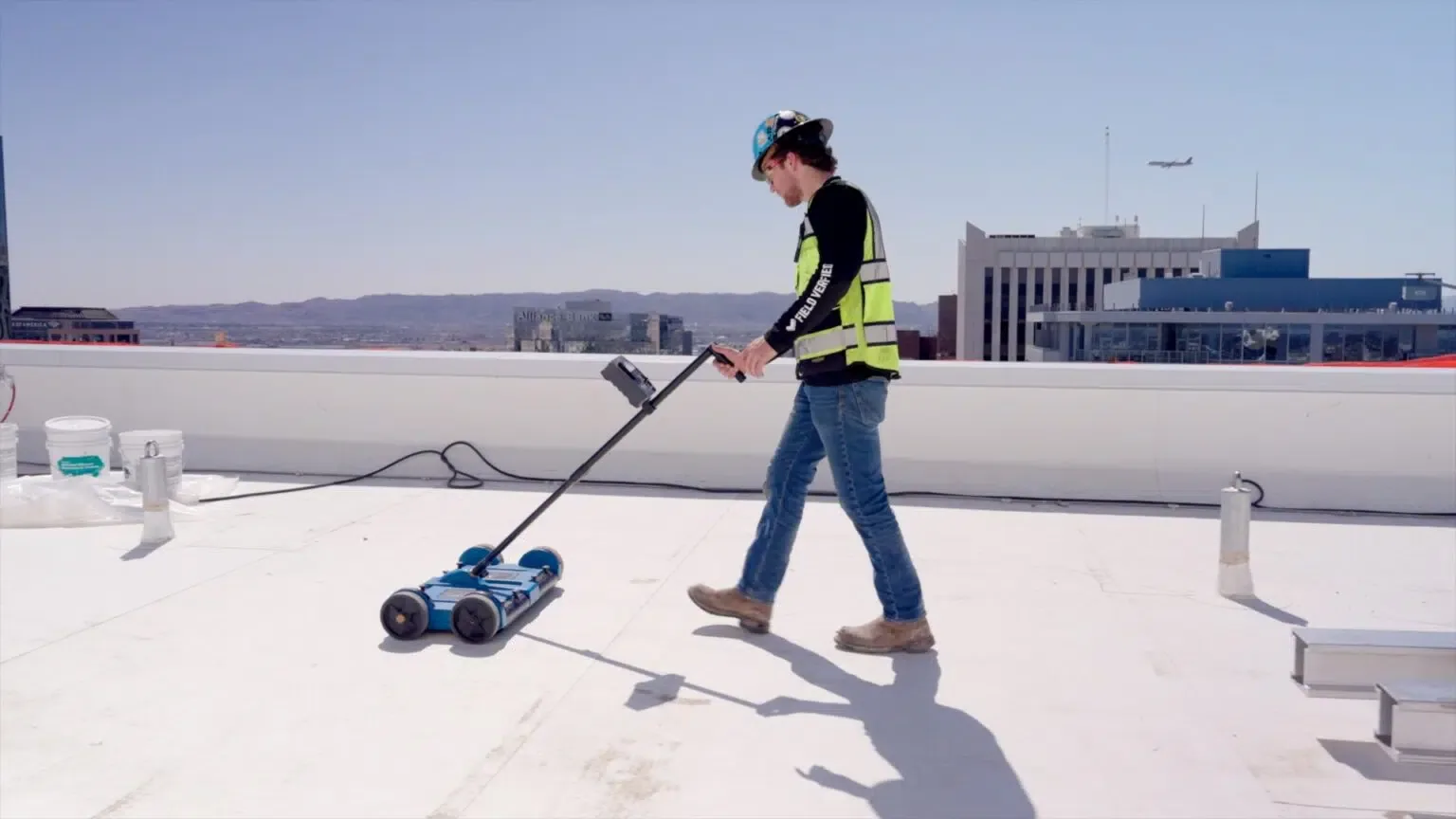
An infrared image can flag a suspect area, but a reading needs comparison with the assembly and weather history. We mark the location, check nearby seams and drainage, then use a test opening if hidden conditions would change the scope. The opening shows whether insulation is dry or compressed, whether the deck is sound and where the membrane attaches. We photograph each layer and close the cut with a compatible detail before leaving. If more than one section is suspect, we document those areas separately rather than blending them into one allowance. A moisture survey paired with selective openings helps distinguish wet insulation from surface temperature changes. Findings state which points were confirmed and which still need access.
Compare local work with wider renewal
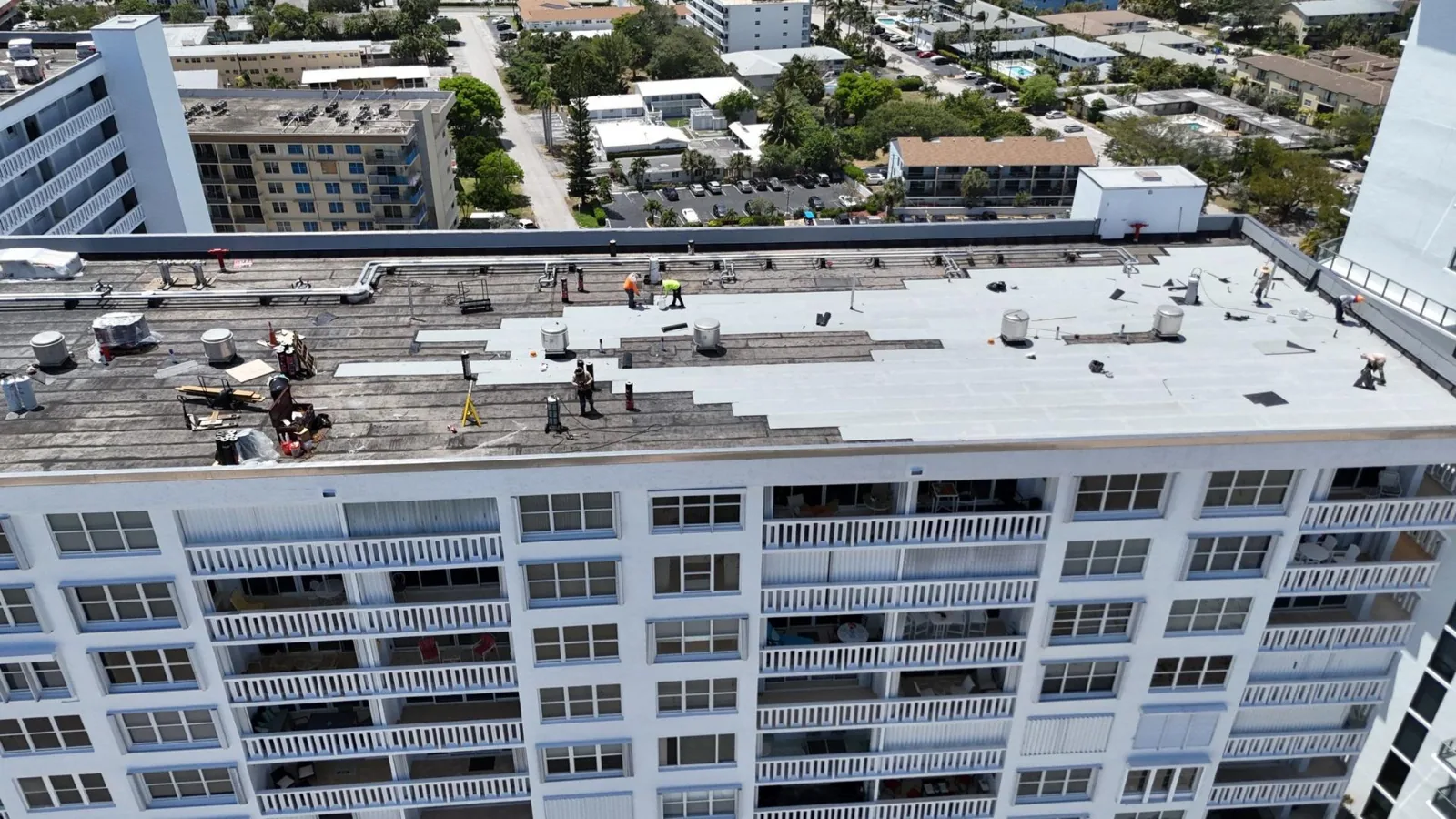
A local seam repair can preserve an assembly when the sheet and insulation remain sound outside the failed lap. A recover decision may differ if moisture extends under several seams, attachment has failed across a roof zone or previous layers complicate the tie-in. We list removal and tie-in quantities from measured conditions, then identify what an opening during construction could change. The owner sees the difference between necessary repair and an alternate renewal scope. Winton's plan record describes commercial, industrial and institutional uses. Our inspection identifies the membrane, insulation and attachment before we compare repair with recover options. A recover evaluation checks retained layers and attachment before recommending a cover. If conditions do not support it, a replacement scope defines tear-off and deck review.
Keep the repair contained
A repair over a working property needs a dry-in limit the manager can inspect. We agree on the work window, protect entrances and equipment, and remove only the area the crew can prepare and close. If material crosses an operating area, the contact selects a safe route and confirms who controls access. Temporary cover is checked before the crew leaves, then the final seam or curb tie-in is photographed. For active water entry, we identify the exposed area, protect interior equipment and secure a temporary cover; the permanent scope follows once the assembly and limits are known. A storm-related roof assessment separates new impact from older seam movement so the repair addresses observed damage without widening the claim unnecessarily.
Record what changed on the roof
The finished record identifies the seam run, curb or drain repaired, the attachment observed and the material installed. We add a marked photograph that lets a later visit return to the same point. If an inspection finds a new split, the manager can compare it with the older repair boundary instead of treating every stain as the same event. We list follow-up items with a roof section and reason, such as a nearby termination or drain connection. Winton is a Census-designated community in Merced County, and nearby Atwater and Merced are separate service areas with their own access and roof conditions. For each Winton property, we confirm access limits and work windows with its site contact before the crew stages material. A maintenance visit can check the repaired lap after the next weather cycle. The manager can also keep the repair photograph with the roof plan, then compare its marked seam with a later observation. That makes a follow-up concrete: the crew can tell whether movement continued at the same joint or a separate detail needs attention. A documented result helps the owner decide whether to extend inspection to the neighboring section.
Commercial Roofing Questions
How far should a seam repair extend?
We probe until the sheet holds and the tie-in can reach compatible, sound material. The boundary changes if an opening finds wider moisture or attachment loss.
Does an infrared reading prove insulation is wet?
No. We compare the signal with roof conditions and confirm the suspect area through a controlled opening when that result changes the repair.
Can roof work stay separate from loading activity?
We coordinate a staging point and movement window with the site contact. The actual route and access rules come from that property.
What changes the choice between repair and recover?
Moisture extent, attachment, retained layers and seam condition set the comparison. We record those findings before presenting an alternate assembly.
What should the closeout show?
It should show the repaired seam, exposed layers, materials installed and any area left for follow-up. Photographs should locate the work precisely.
Inspect the seam and curb
Request a Winton roof inspection focused on the released lap, curb corner and attachment beneath the membrane.
Related Roofing Work