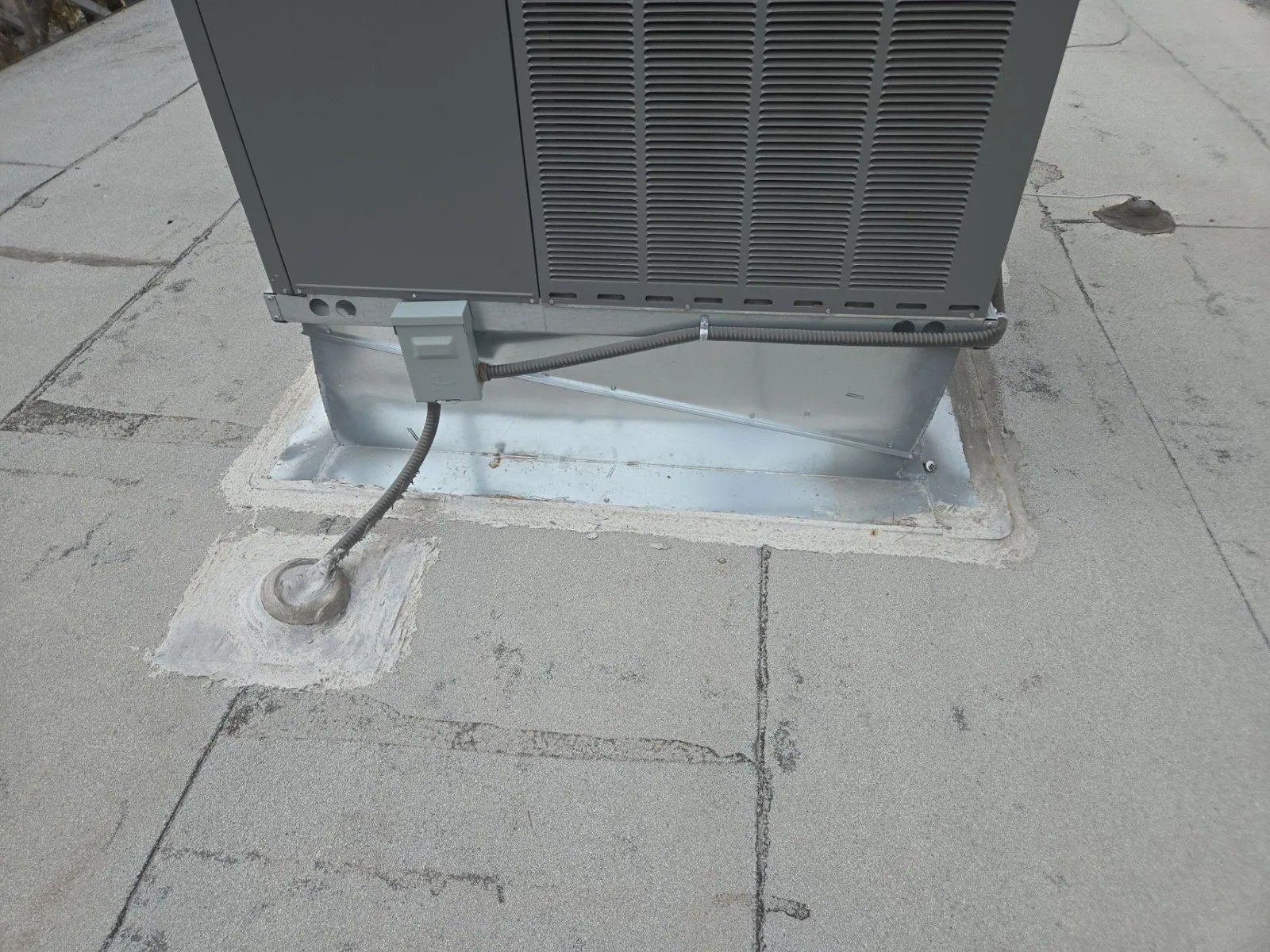
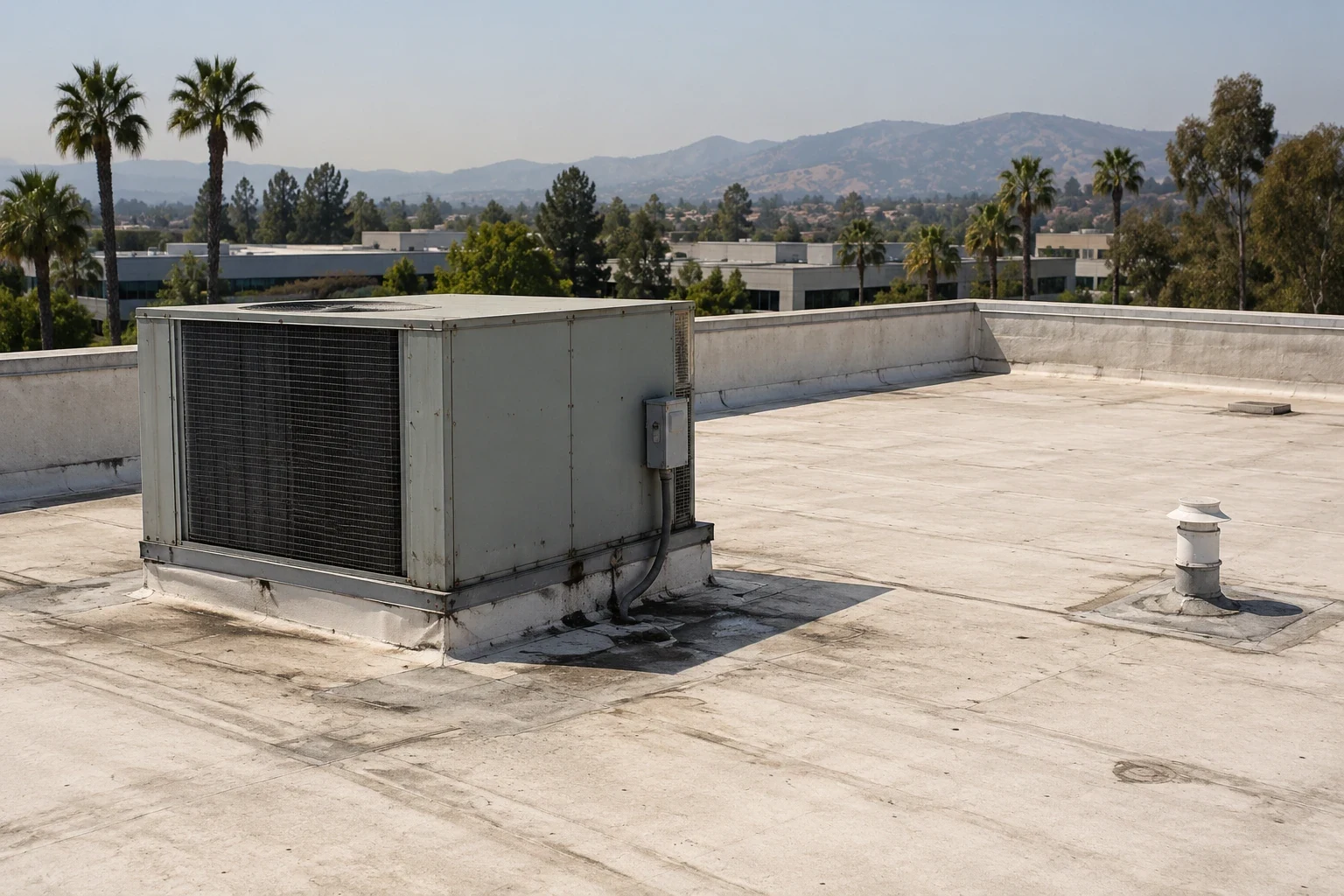
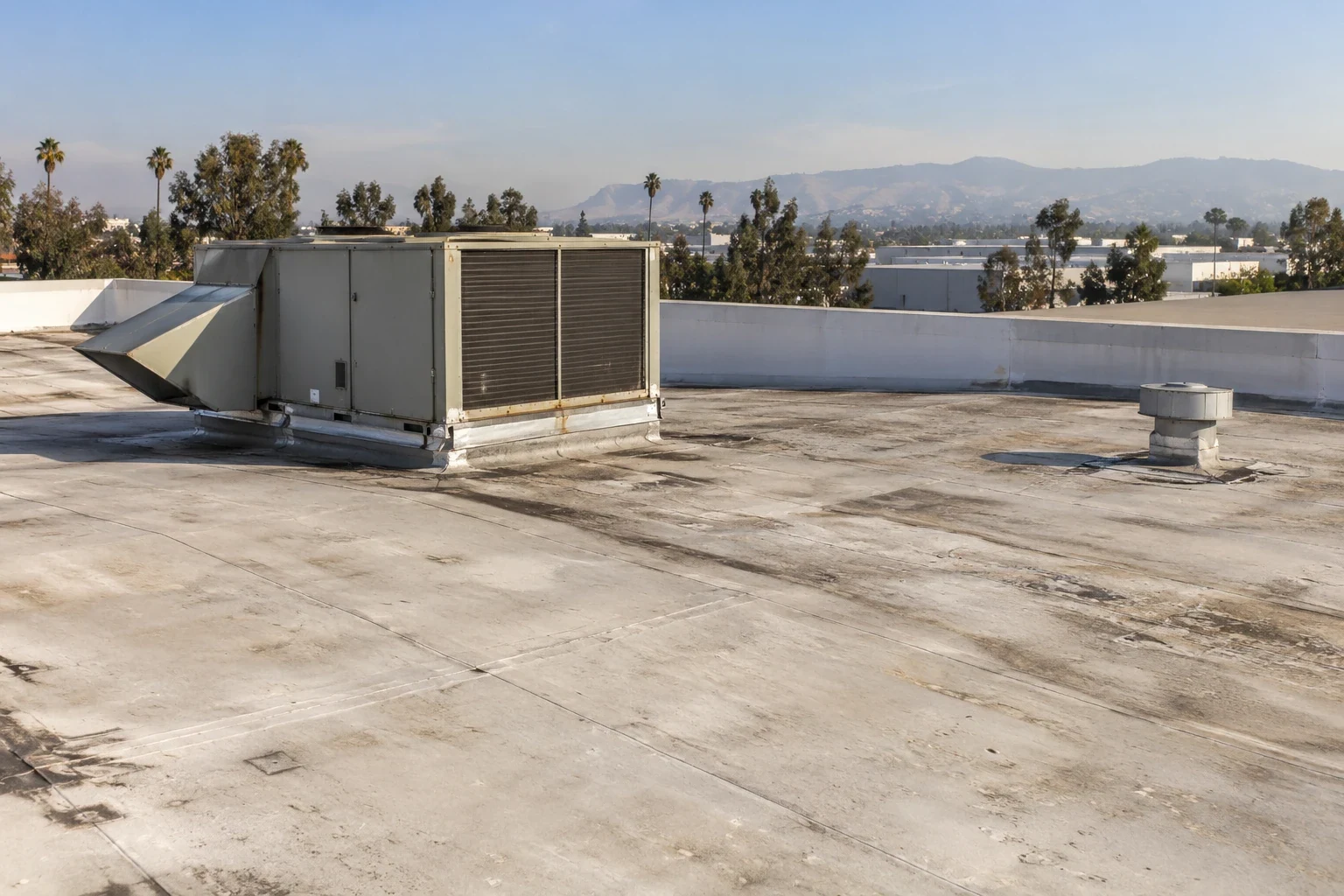
A failed termination beside cooling equipment needs a precise opening and closure plan. For data center roofing in Merced, CA, we examine the connection and identify the protected area below it. The manager needs to know what construction will be disturbed and which services require coordination. A suitable repair addresses the roof assembly while fitting the agreed equipment and interior arrangements.
Merced has hot summer conditions, industrial parks with Highway 99 access and finance and professional office activity downtown. Those surroundings shape local access discussions. For a technical roof project, we ask about the actual cooling systems, sensitive equipment and available roof routes. We then define inspection, repair or replacement from the material and layers at the affected building.
Sensitive interior zones and the roof boundary
A roof defect needs a location that the technical operations team can relate to interior space. We identify roof zones, nearby equipment and the area beneath the proposed opening. That information supports suitable protection and work coordination. A repair over a service area can have a different operating sequence from one above sensitive equipment. The roof construction and interior use both belong in the opening decision.
We describe removal depth and the layers expected to be exposed. Concealed conditions may require selected examination before the main work. The manager should know what is established and which construction question remains. Protection should match the actual opening, not only its membrane patch dimensions. Supporting repairs can change the usable work boundary and the time needed for closure.
A technical roof inspection can establish visible findings and identify further checks. We coordinate access and any testing with the property team. The resulting scope connects observed defects with useful action. It should distinguish an active connection failure from another detail needing examination, so the manager can prioritize work without treating the entire roof as one uniform risk.
Cooling equipment and roofing interfaces
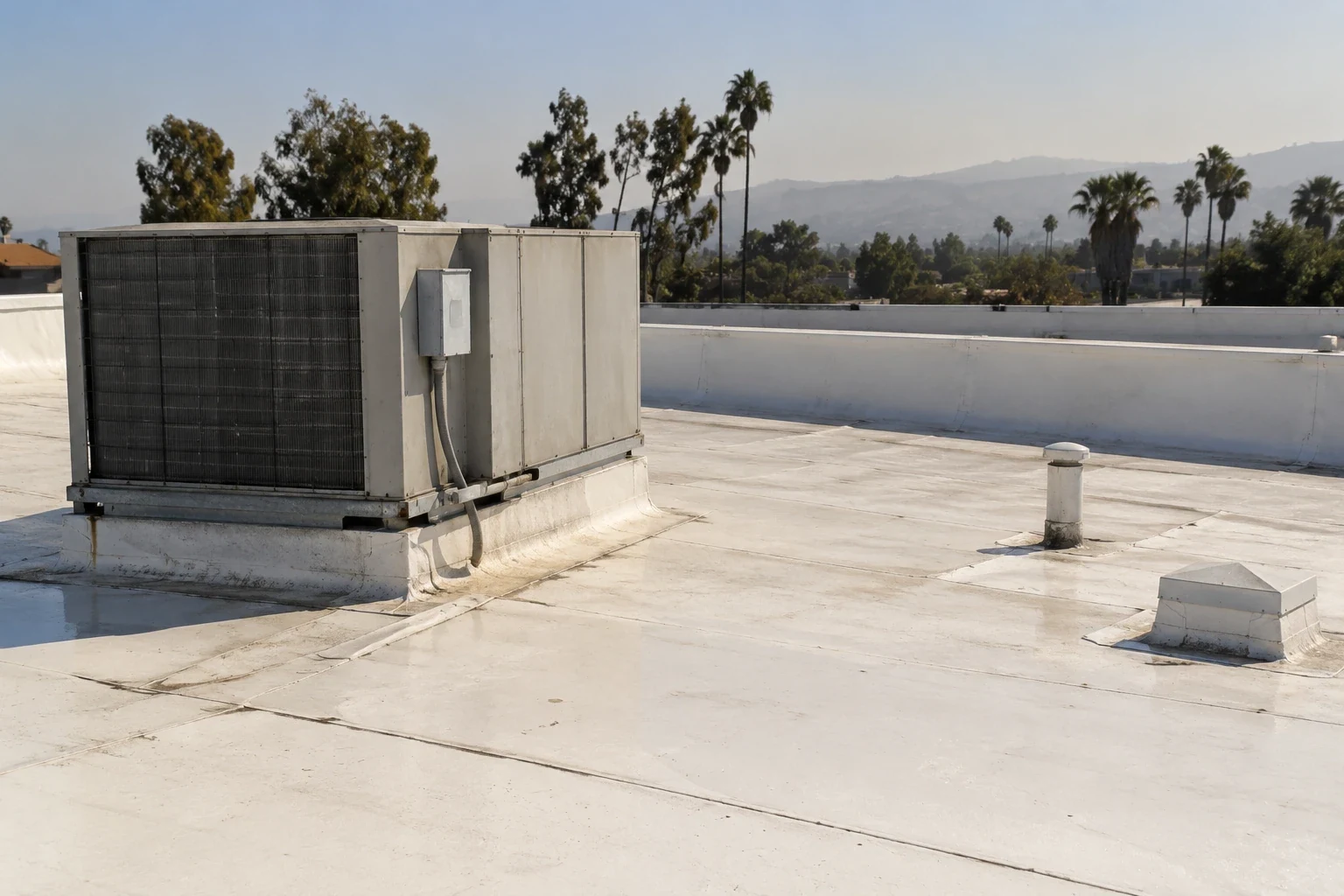
A cooling unit can have several interfaces with the roof: its curb, supported lines and service route. We inspect the accessible membrane transitions and ask which equipment arrangements affect removal. A curb flashing repair may need another trade's intervention. We identify those responsibilities before opening the detail. The roofing connection must be suitable at completion even where operating continuity narrows the available window.
Curb and support assessment distinguishes roofing damage from equipment or structural questions. A pad beneath a support does not establish bearing capacity. A new outer patch does not restore a damaged base. We examine the affected layers and coordinate appropriate review where needed. The manager should see which construction item resolves which observed condition.
Merced summer heat makes movement at rigid equipment transitions relevant to inspection. We look for strained membrane, separating terminations and loose attachment. The permanent detail needs the materials and geometry suited to that interface. Another surface treatment can leave an underlying restraint unresolved. We explain the observed mechanism and the connection to be rebuilt rather than attribute every defect to temperature.
Water routes and outlet examination
Water above sensitive equipment needs a focused entry assessment. We compare roof seams, penetrations and outlets with the reported interior location and timing. Another building component or equipment issue may require separate review. The roofing scope should identify the evidence supporting its repair. A visible opening is useful information, but it does not automatically describe every possible water route.
Drain and scupper work may involve obstruction removal, connection rebuilding or another geometry correction. We examine the accessible discharge route. Merced winter rainfall normals exceed midsummer rainfall normals, making suitable outlets relevant even when the roof is dry at the visit. Current findings determine whether maintenance or construction is needed.
Changing insulation thickness or the finished membrane can alter the outlet approach and curb clearance. We compare those relationships before installation. A PVC membrane assembly or another selected system needs appropriate support and detail connections. Its material name does not settle how the new field will reach the existing drain or terminate at equipment.
Concealed moisture and retained material
A serviceable-looking surface may cover damaged insulation. We investigate suspect material where retention affects the proposed work. Selected checks identify layer type and condition at their locations. The findings need interpretation with the wider roof examination. We define the removal boundary and identify further checks rather than assign a roof-wide condition from one sample.
Wet support or damaged decking requires attention before new roofing closes the area. The project needs a defined response to concealed discoveries. We identify appropriate reinstatement and any necessary technical review. The manager can then compare retaining layers with removal using actual construction. A limited operating window should not turn unknown support into assumed suitable material.
For a roof above office and technical space, interior uses may differ between zones. We locate those differences with the building team. Protection and scheduling should follow the area affected by the opening. The inspected membrane and support still determine the construction, so one project may need different repair boundaries within the same property.
Controlled removal and equipment service routes
We define the daily opening and the suitable temporary connection if work pauses. Permanent close-in needs enough time for support repair, layer placement and flashing completion. The scope should identify the response to an unexpected damaged area. A sequence planned only around laying the field membrane can leave the more demanding detail construction outside its usable window.
Ground staging and roof material routes need coordination with technical operations. We identify the appropriate access arrangement and protect serviceable roof areas from installation damage. Equipment technicians also need usable routes after the work. Walking protection and a clear approach to critical details should be considered before new roofing makes a service path harder to maintain.
A process-equipment roof can raise similar coordination questions while having different interior needs. We establish the actual service requirements for the technical project. The construction plan should connect those requirements with the roof zones and closure method rather than use one generic occupied-building arrangement for every operation.
The repair scope and operating window
At a property in Downtown Merced, financial and professional activity can influence occupied access arrangements. We identify the relevant equipment and protected zones with the building team. The proposal defines the roof construction and its workable sequence. A termination repair near service equipment needs an accessible connection and enough time for closure. We identify that requirement alongside the agreed operating window.
For industrial property in Merced, usable staging and service access need the same building-level coordination. Cost drivers include investigation, damaged layers, detail count and operating restrictions. A bounded defect may permit repair; broader deterioration can warrant renewal assessment. We explain those findings so the manager can choose roof work that has a clear construction basis and a practical operating window.
Commercial Roofing Questions
Can a roof repair be scheduled without locating the sensitive space below?
The opening and interior arrangement need coordination. We connect the roof zone with the area identified by the building team. Protection and service windows should follow the actual construction affected, not only a general roof-access date.
What if cooling equipment prevents access to a failed flashing detail?
The project needs a suitable equipment and roofing sequence. We identify the obstruction and any separate trade work required. The permanent connection should be rebuilt with proper access rather than improvised around an inaccessible damaged area.
Does a new membrane solve every water-exposure concern above technical equipment?
Support layers, drainage and connected details also need examination. We identify the conditions requiring repair or review. A field sheet alone does not restore a failed curb transition or correct an unresolved outlet approach.
What should a proposal show about concealed damage?
Known layers and examination limits need clarity. We describe the response if removal exposes additional unsuitable construction. The manager can then coordinate the operating window with a workable repair and protection plan rather than an assumed uniform close-in task.
Assessment of the technical roof opening
Request examination of the failed termination, equipment interface and protected interior zone before the data center roof scope is scheduled.
Related Roofing Work