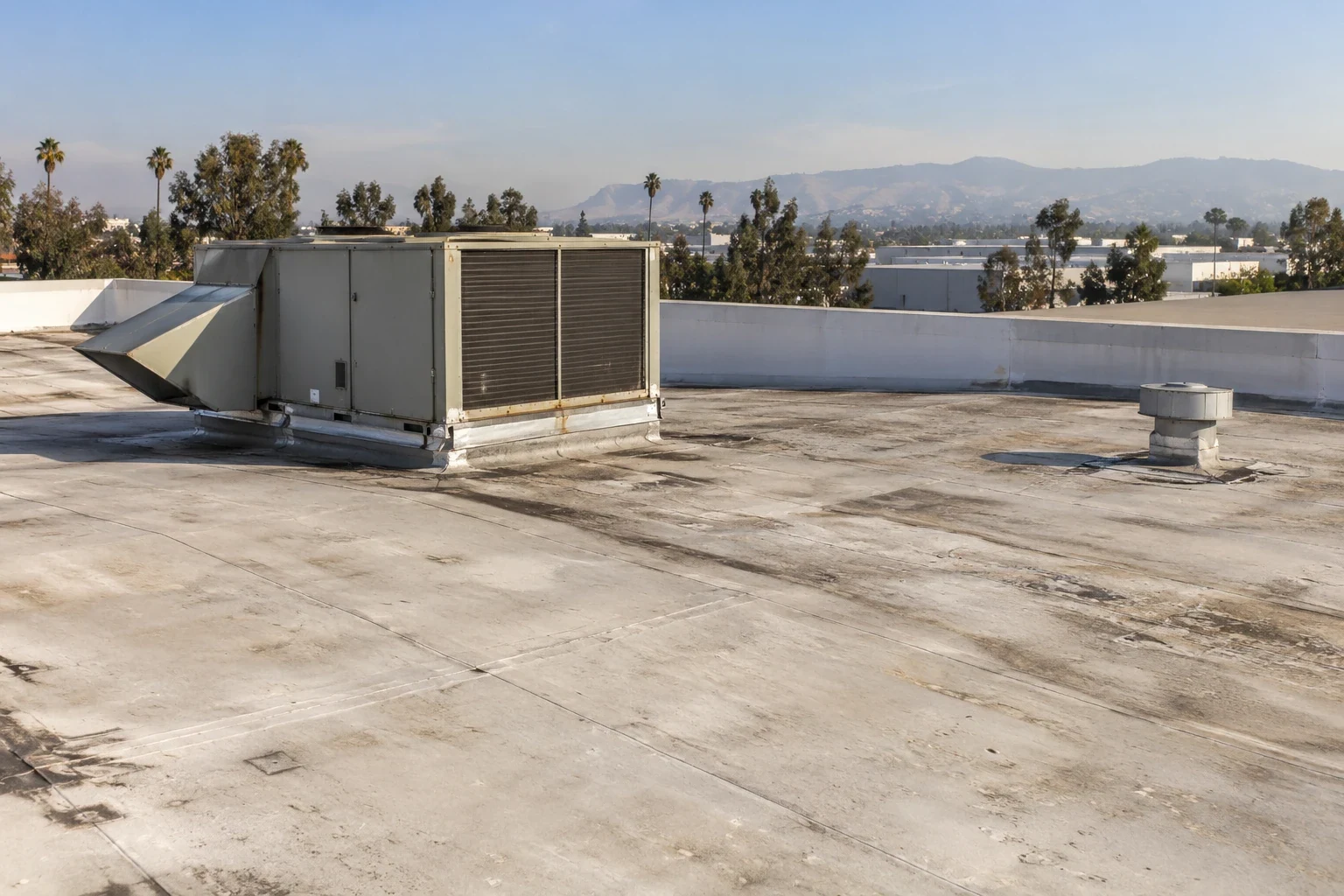
A chalked coating surface needs an adhesion examination before another layer is applied. For roof coating restoration in Merced, CA, we assess the existing finish and the assembly beneath it. Loose coating, moisture and damaged flashing require different preparation. The restoration decision rests on a roof that can receive the selected system, not simply a surface that could be covered.
Merced has food-production and packaging activity, while Livingston includes packaged-food and poultry-processing businesses. A coating proposal above an operating property needs the manager to identify sensitive equipment and ventilation arrangements. Exhaust outlets and roof service routes deserve examination where residue or traffic could affect preparation. We identify those areas before broad application begins. We examine the actual surface, its connections and the work required before a restoration system becomes a useful option.
Adhesion at the existing finish
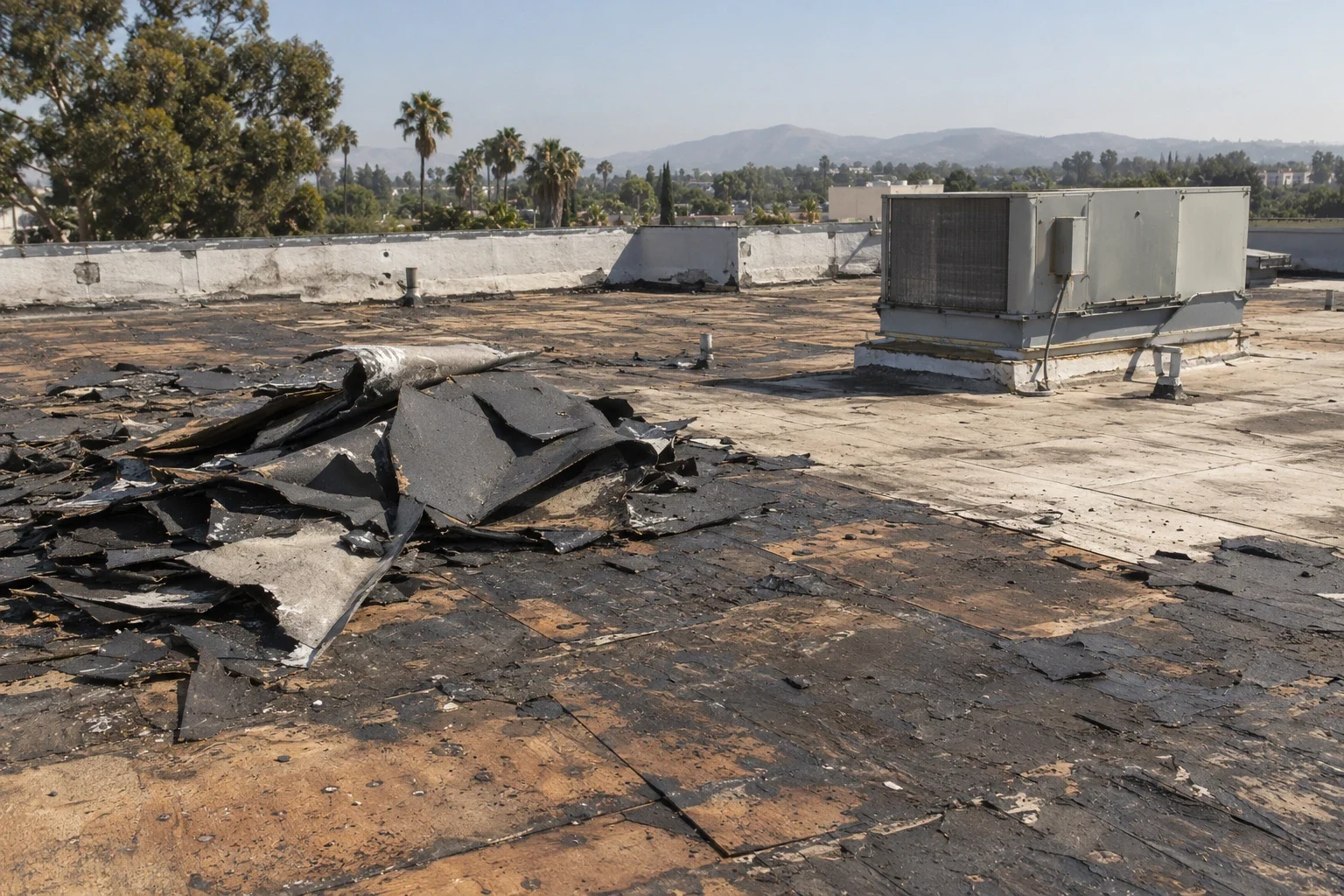
A peeling edge shows where the current finish has lost its connection. We examine whether that separation is localized or extends across a broader area. Surface cleaning alone cannot restore a coating that remains poorly attached. Unsuitable material needs removal or another preparation method consistent with the proposed system. The resulting surface must provide a usable bond line.
Existing membranes, coatings and repair compounds may interact differently with a new system. We identify the exposed materials and discuss suitable adhesion testing and preparation. A trial application can help assess the connection where needed. The result guides the work rather than replacing the system requirements. A coating should not be selected solely because its color resembles the existing roof finish.
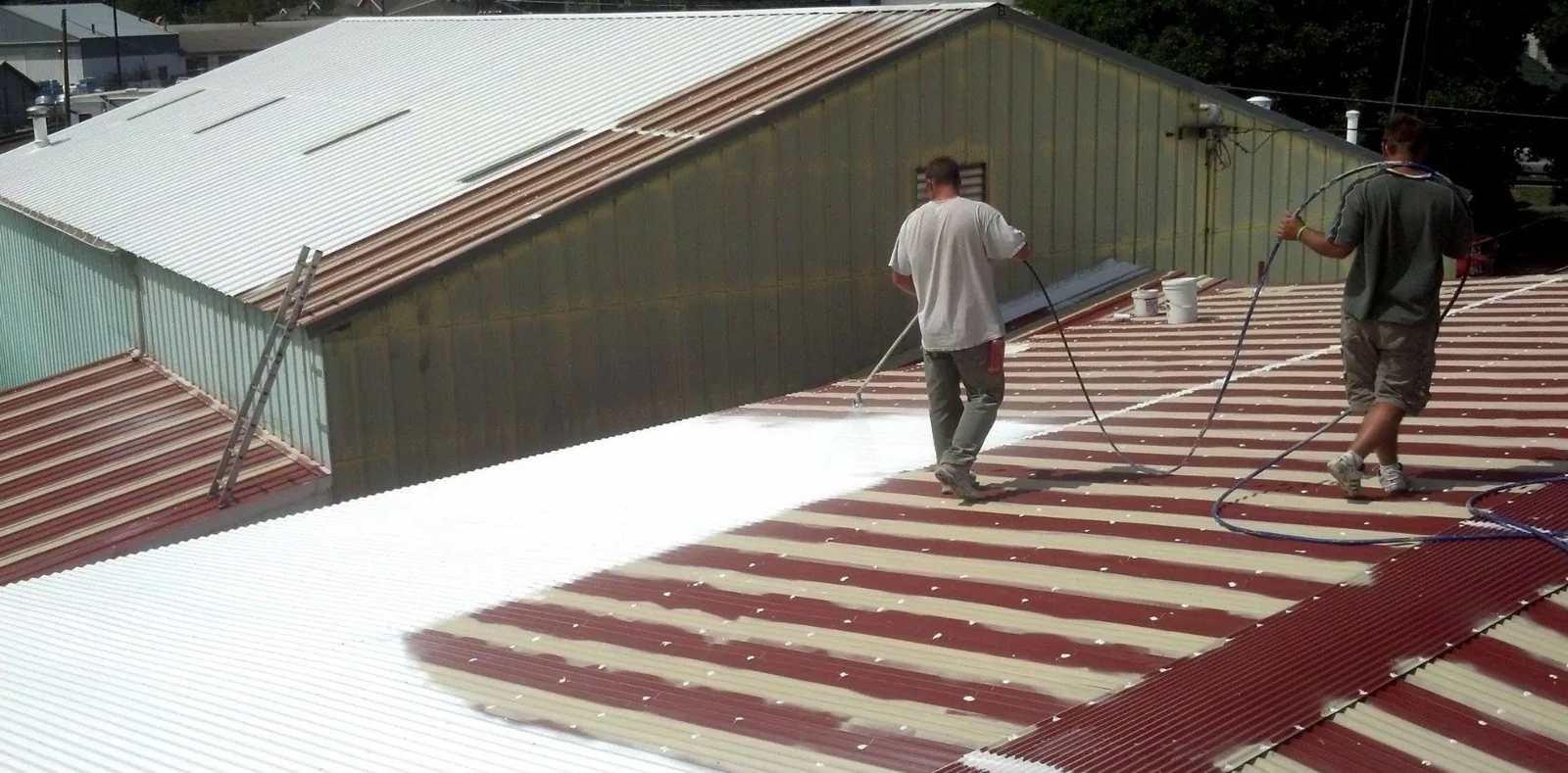
Silicone coating systems and other restoration materials have distinct requirements for substrate condition and application. We specify the preparation, primer where appropriate and detail treatment for the selected approach. The manager can then compare a complete restoration scope. A proposal that lists only the coating leaves the critical preparation work difficult to evaluate.
The assembly under the coating
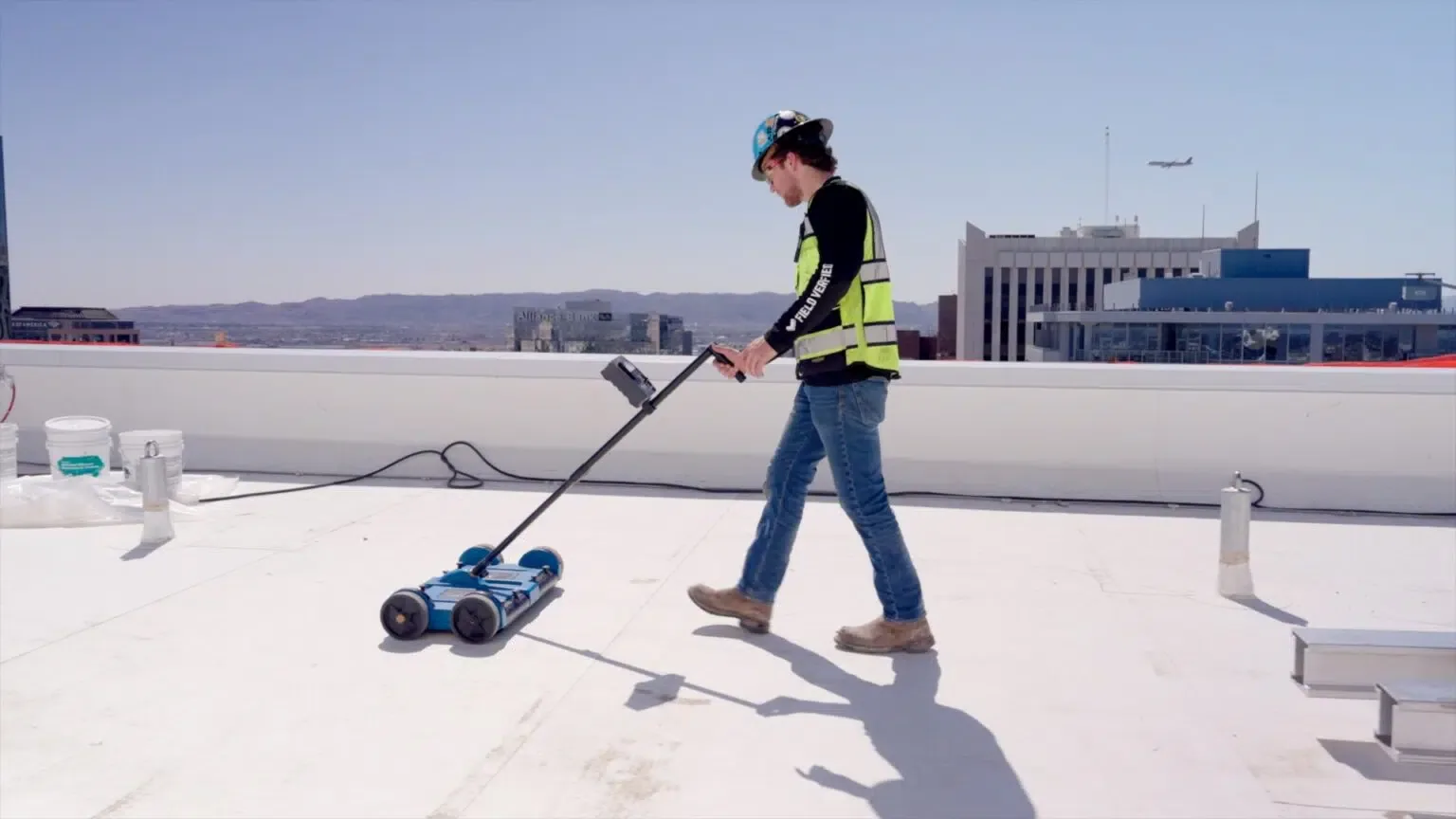
A smooth finish can conceal saturated insulation. Before restoration, we investigate suspect moisture and determine whether damaged material needs removal. Coating over that condition leaves it within the roof. An infrared moisture assessment can help identify areas for physical confirmation when the assembly and conditions support it. Confirmed damage becomes a repair item before the broad coating application.
Soft areas also require examination of support beneath the surface. Compression, deteriorated decking and separation between layers can make a coating-only approach unsuitable. We identify where a test opening is useful. The manager should understand which layers remain and how affected construction will be reinstated. Restoration becomes more substantial when the roof first needs a number of concealed-layer repairs.
Where the membrane has widespread distress or the supporting assembly is unsuitable, a replacement scope may deserve comparison. We explain the inspected conditions driving that choice. Coating is a surface restoration method within a suitable assembly. It should not carry responsibility for replacing damaged support or resolving a construction problem beneath the roof.
Reinforcement at seams and penetrations
A splitting seam needs treatment suited to its movement and condition before field coating proceeds. The selected system may require reinforcement or a distinct repair at that connection. We examine the seam and identify sound surrounding material. Applying field coating directly across an unsuitable gap can leave the same failure mechanism under a new finish.
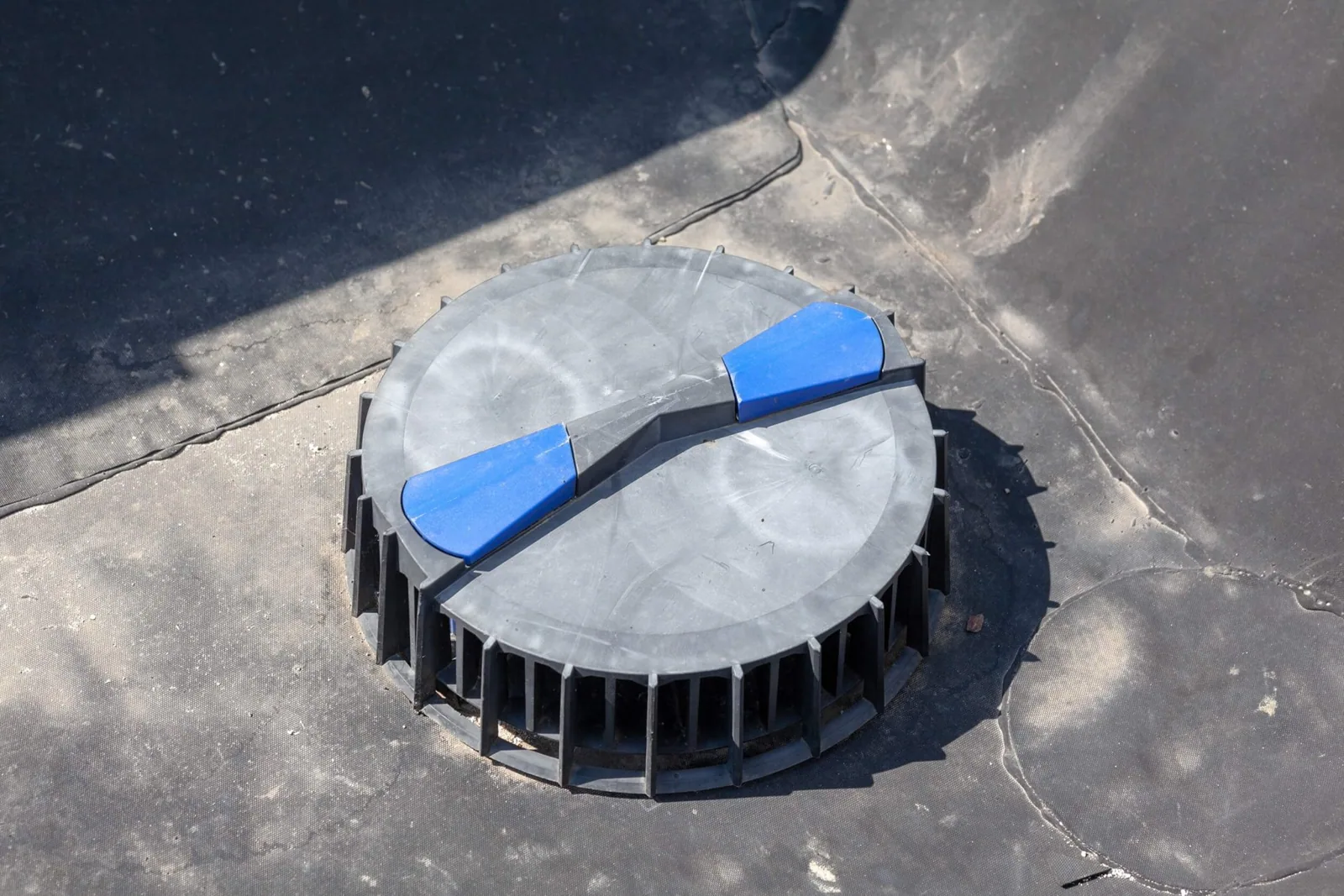
Penetrations need attention at their bases, vertical transitions and upper terminations. We identify the appropriate reinforcement and closure for the actual materials. Loose flashing may need rebuilding before liquid application. Merced summer temperatures make movement between metal and membrane components relevant here. A restored detail needs to accommodate that connection rather than use additional thickness as a substitute for suitable construction.
Edges and outlets require their own preparation. A coating must preserve the intended drain opening and water path. We inspect drainage details before treatment and identify any damaged connection needing repair. The restoration scope should state how those details are handled. A uniform field appearance does not describe the construction at the roof perimeter or discharge point.
Surface preparation and application conditions
Dirt and loose residue interfere with bonding. We plan cleaning for the roof material and the selected system, then allow the surface condition to meet the application requirements. Washing water needs a suitable route. Areas near equipment or vulnerable details may need particular care. The cleaning method should prepare the surface without creating another opening or driving water into damaged construction.
Application timing considers temperature, weather and curing requirements. Merced has hot, mostly dry summer conditions, but the actual workday still matters. A coating system needs a usable temperature and moisture window. We plan the sequence around those requirements and the building operation. A dry forecast alone does not establish that every surface is ready for coating at any hour.
For an industrial manufacturing roof, ventilation and rooftop equipment can affect working arrangements. We identify operating needs with the building team and coordinate any necessary separation or temporary equipment arrangement. The application method belongs in that discussion. We avoid treating all occupied industrial properties as suitable for the same material handling or work sequence.
Merced industrial parks have Highway 99 access. On an operating industrial property, the preparation scope also needs usable delivery and waste-removal space. We identify those ground arrangements before roof washing and repair removals begin. Vehicle access supports the work, while surface and detail conditions determine the restoration method.
Coverage and the completed restoration
The selected system requires its specified coverage and detail treatment. We plan application checks so the installed work can be evaluated against those requirements. Thin areas, missed transitions and unsuitable substrate preparation each need a different response. The finished roof should show a complete restoration assembly rather than merely an even-looking color.
At properties in Livingston, the established food-processing mix makes coordination with actual production activity important. We ask about equipment exhaust and protected interior areas before work begins. Those arrangements support application and preparation. The roofing assessment still determines which materials and details can accept the restoration system.
A maintenance plan for the restored surface identifies compatible repair methods and areas needing recurring examination. Equipment traffic can damage a coating if its route is poorly protected. Outlets still need clearing, and transition details still need examination. Restoration changes the exposed surface; it does not remove the need to maintain the connections and water path.
Cost depends on preparation, damaged material removal, detail count and application requirements. We separate those items from the broad field treatment. The manager can then compare restoration with repair or replacement using the assembly work actually required, rather than choosing from finish appearance alone.
Commercial Roofing Questions
Can a new coating be applied over peeling material?
Loose material needs an appropriate preparation response. We determine how far separation extends and which removal or preparation method suits the new system. Applying another layer over an unsuitable bond leaves that underlying weakness in place.
Does a coating eliminate the need to remove wet insulation?
Moisture-damaged layers require their own assessment and repair. A surface application leaves those layers concealed. We define necessary removal and reinstatement before treating the remaining assembly as suitable for restoration.
Why are seams treated separately from the roof field?
Seams and material transitions can concentrate movement and openings. The selected system may require specific reinforcement or rebuilding there. We identify that detail work before broad application so the field coating is not expected to bridge an unsuitable connection.
What should a manager compare besides the coating material?
Preparation, substrate repairs, detail treatment and application controls affect the completed work. We specify those items in the proposal. They explain the difference between a suitable restoration assembly and a price based only on covering the exposed field.
Assessment of the coating bond
Request an examination of the existing finish, concealed moisture concerns and transition details before selecting roof restoration.
Related Roofing Work