
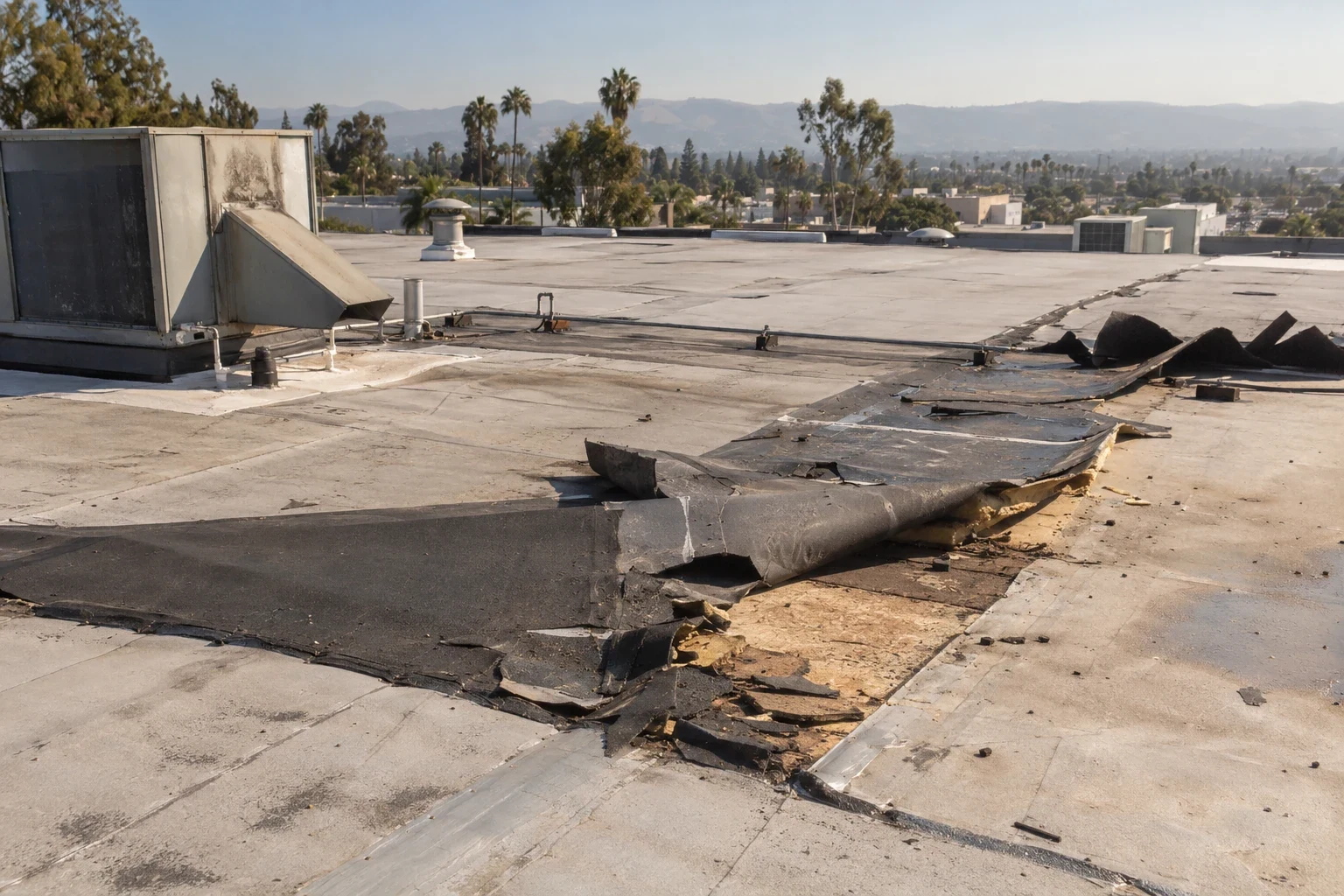
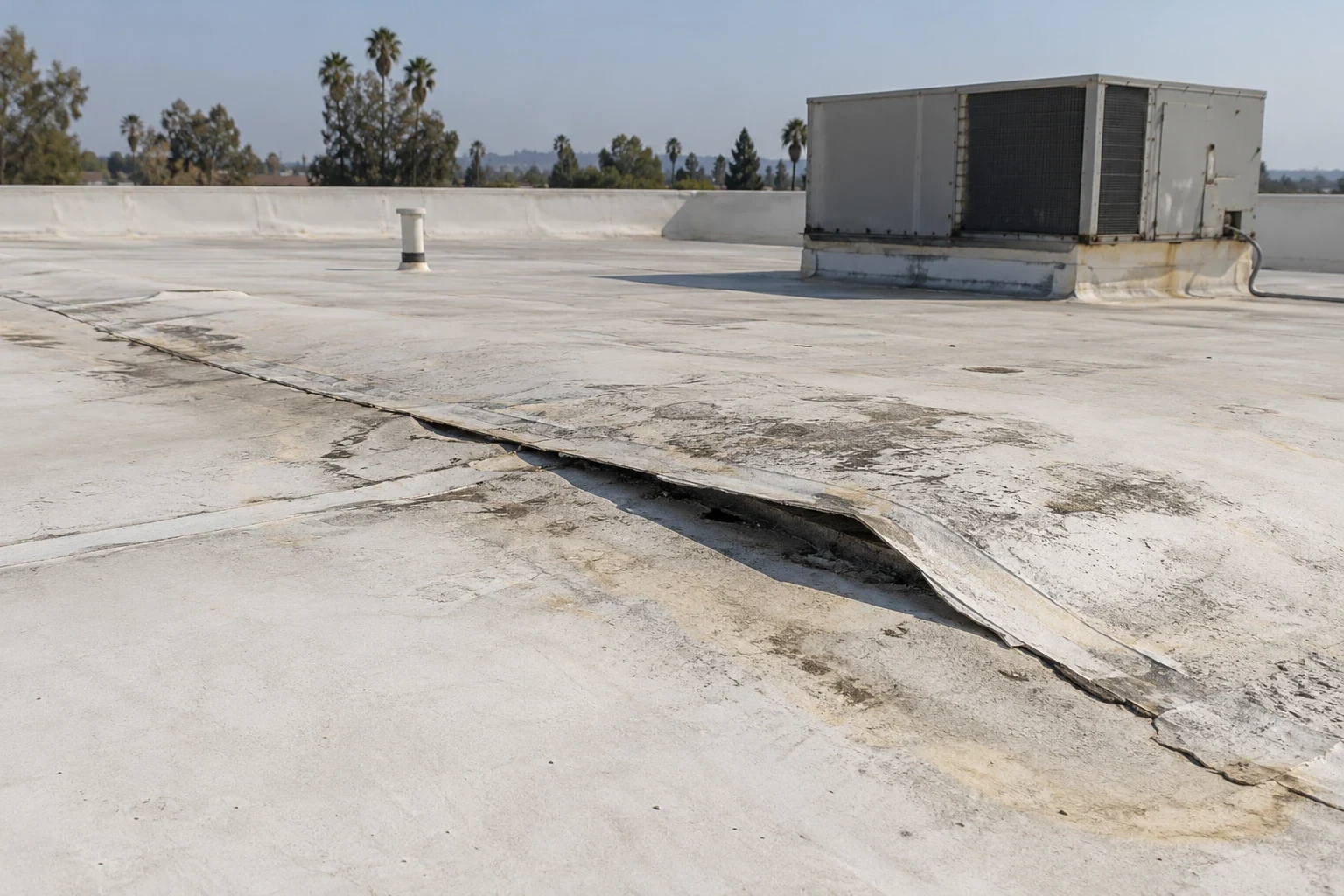
A fresh split, loose flashing or displaced edge metal gives a repair inspection a specific starting point. We photograph the detail, examine nearby seams and check whether moisture reached insulation or deck. The roof condition determines whether a local repair can hold or a wider section needs review. Merced's summer heat can stress exposed connections, while winter rain makes closure and drainage important. We keep those market conditions separate from the findings on the property.
Wind movement at exposed details
Wind damage may appear as lifted edge metal, loose fasteners, open laps or a membrane wrinkle. The repair must follow the connection that failed. We check attachment along the affected run and compare it with adjacent material before setting removal limits. A wind-damage review documents the observed detail and any area not safely accessible. If the edge is open, temporary protection and a permanent tie-in plan should be clear before the next weather window.
Water paths and failed flashing
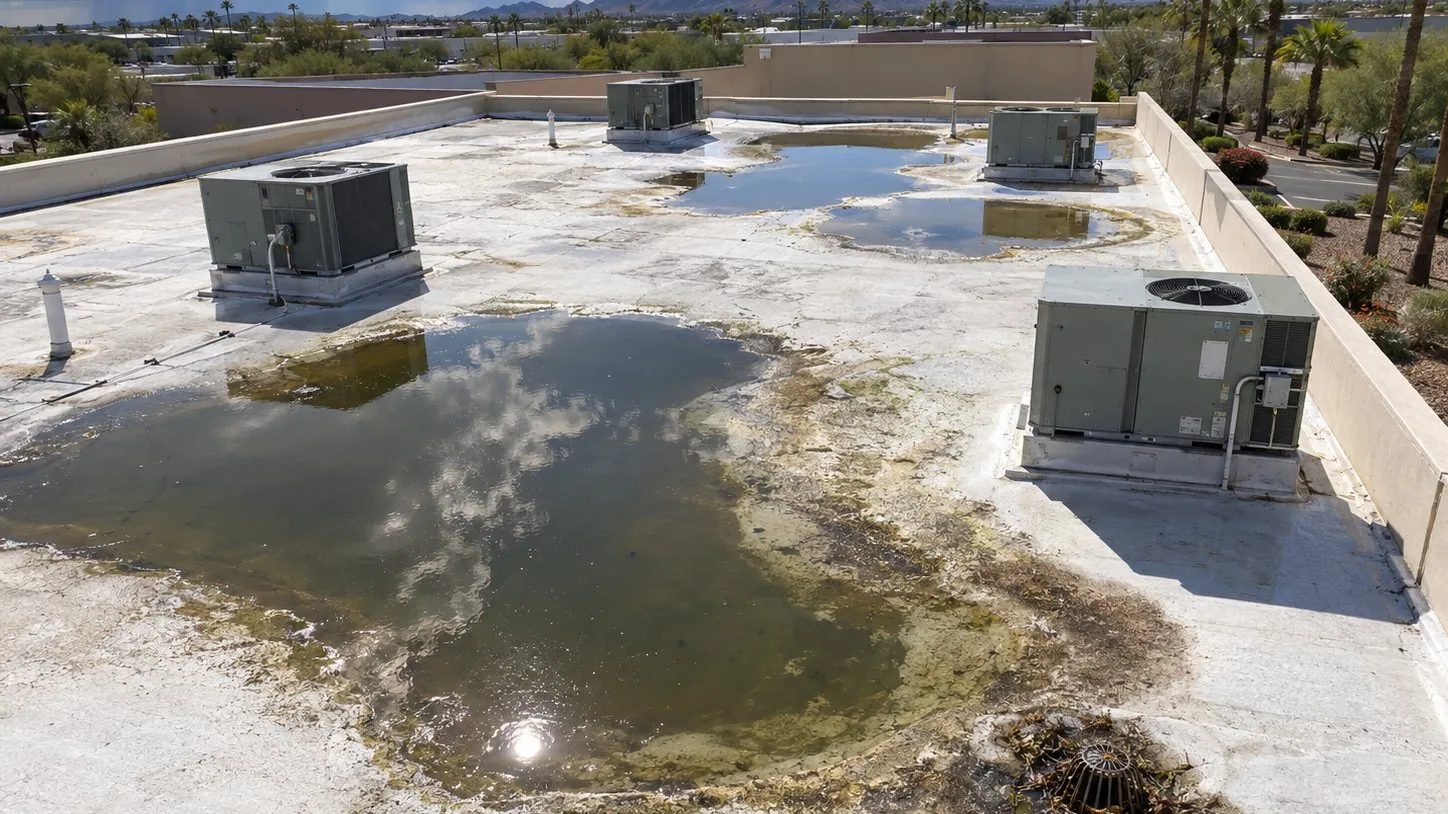
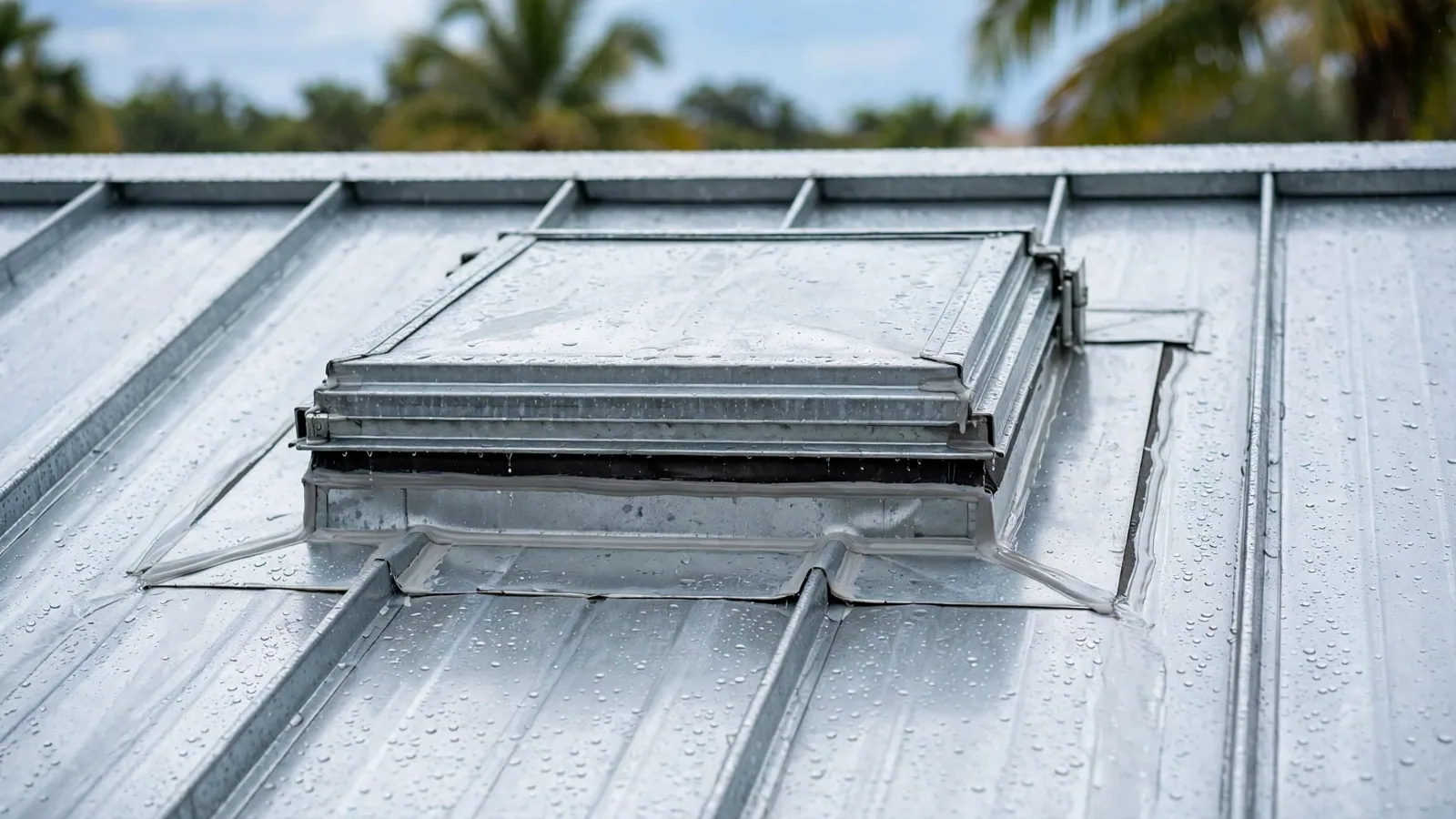
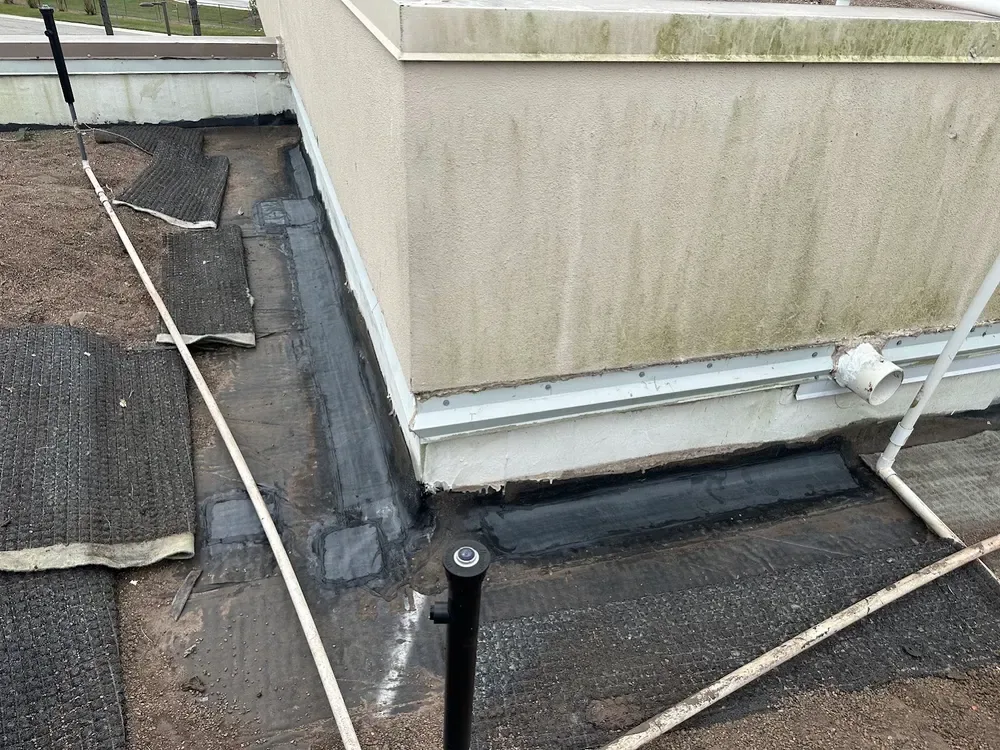
A ceiling mark can sit away from the opening that admitted water. We trace seams, curbs, drains and wall transitions above it. A flashing repair checks the vertical rise, corner and termination, while a ponding-water assessment examines the drain path and any low area. If moisture is suspected below the sheet, an infrared moisture survey can help select a controlled opening to examine insulation and deck.
Heat, UV and membrane condition
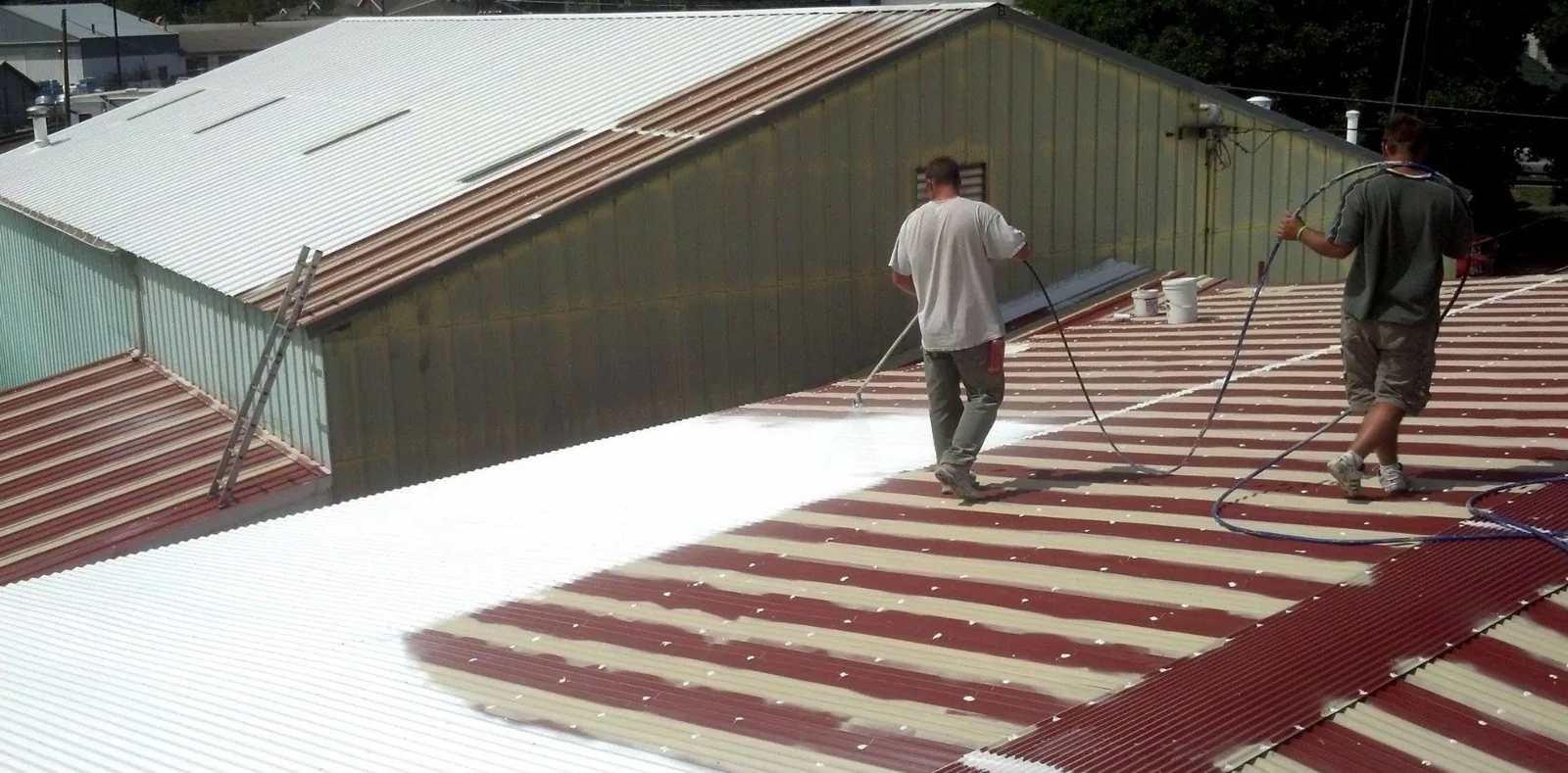
Merced station normals average 22.8 days each year with a high of at least 100 degrees Fahrenheit. We inspect the exposed membrane and metal connections directly before setting a heat-related repair limit. We look for surface cracking, brittle sealant, open seams and connection movement instead of assigning cause from the weather alone. A heat and UV assessment records what is visible and whether the surrounding sheet remains repairable. Coating can be considered only when the assembly beneath it is suitable and dry.
From emergency protection to permanent repair
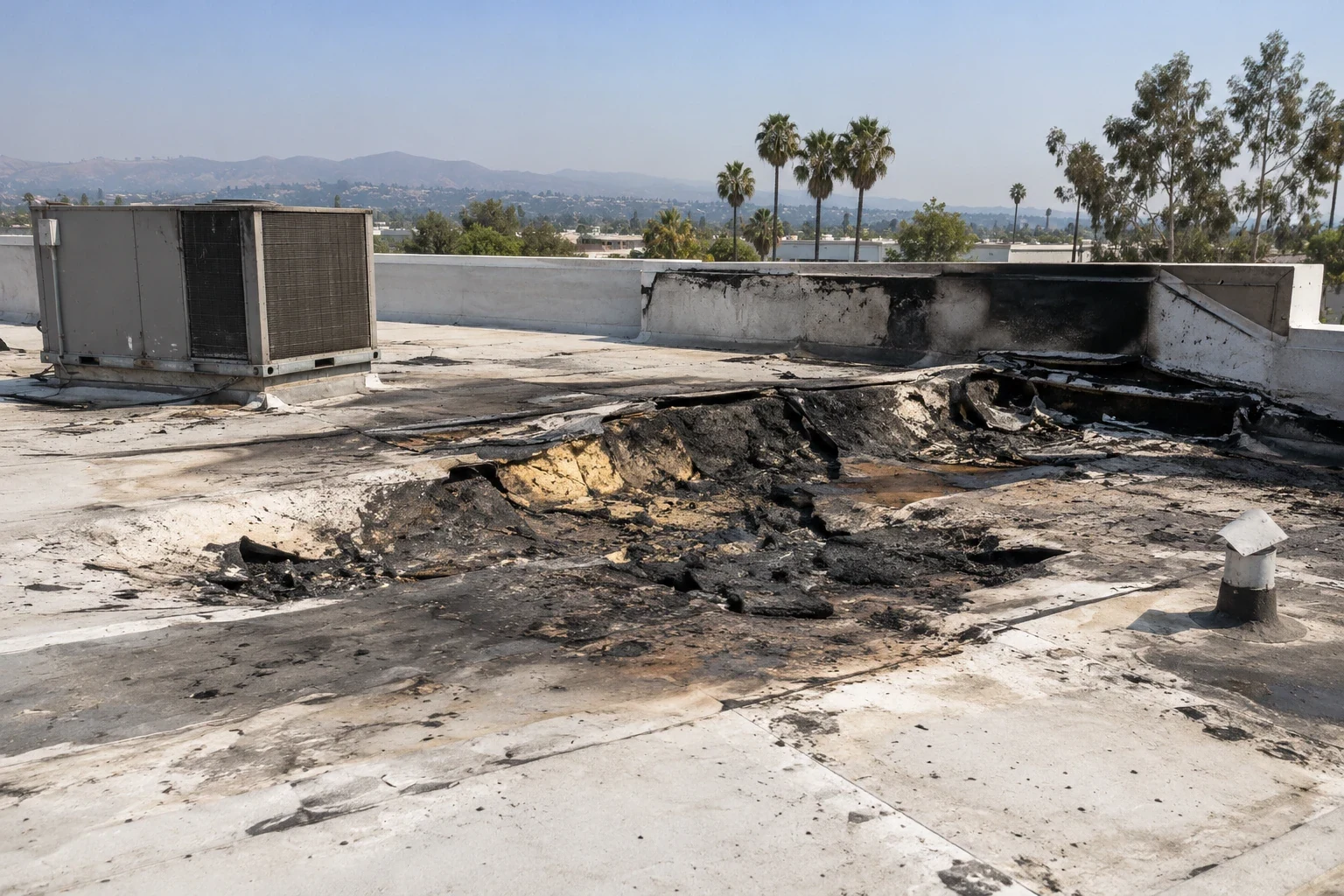
An emergency roof response can secure an opening and protect the interior before permanent repairs are scoped. The first work may secure an opening and protect the interior. The permanent scope still needs a compatible material, sound tie-in and removal limit. A seam-failure evaluation checks whether separation is local or repeated. We record the repair, identify concealed areas and note any condition that needs owner review before removal expands. The written scope connects the visible damage to the layer being repaired. A Merced inspection can start with the address, leak timing and access notes.
Commercial Roofing Questions
Does a storm report define the repair area?
The observed damage does. We inspect the affected detail and adjacent material, then document the boundary. The scope can include temporary protection while a permanent repair is prepared.
Can a roof be repaired after water reaches insulation?
It can be, but wet material needs a defined removal and replacement scope. We test where needed, photograph exposed layers and close the assembly with compatible materials.
What if the source of a leak is not visible?
We compare the interior symptom with roof seams, penetrations and drains. A moisture survey or limited test opening can help locate the path before a broader repair is considered.
When is a surface coating appropriate?
Only when preparation, adhesion, drainage and the existing assembly support it. A coating does not correct trapped moisture or loose attachment beneath the surface.
Document the damaged detail
Request an inspection of the split, flashing, edge or wet area so the temporary and permanent scopes have clear limits.