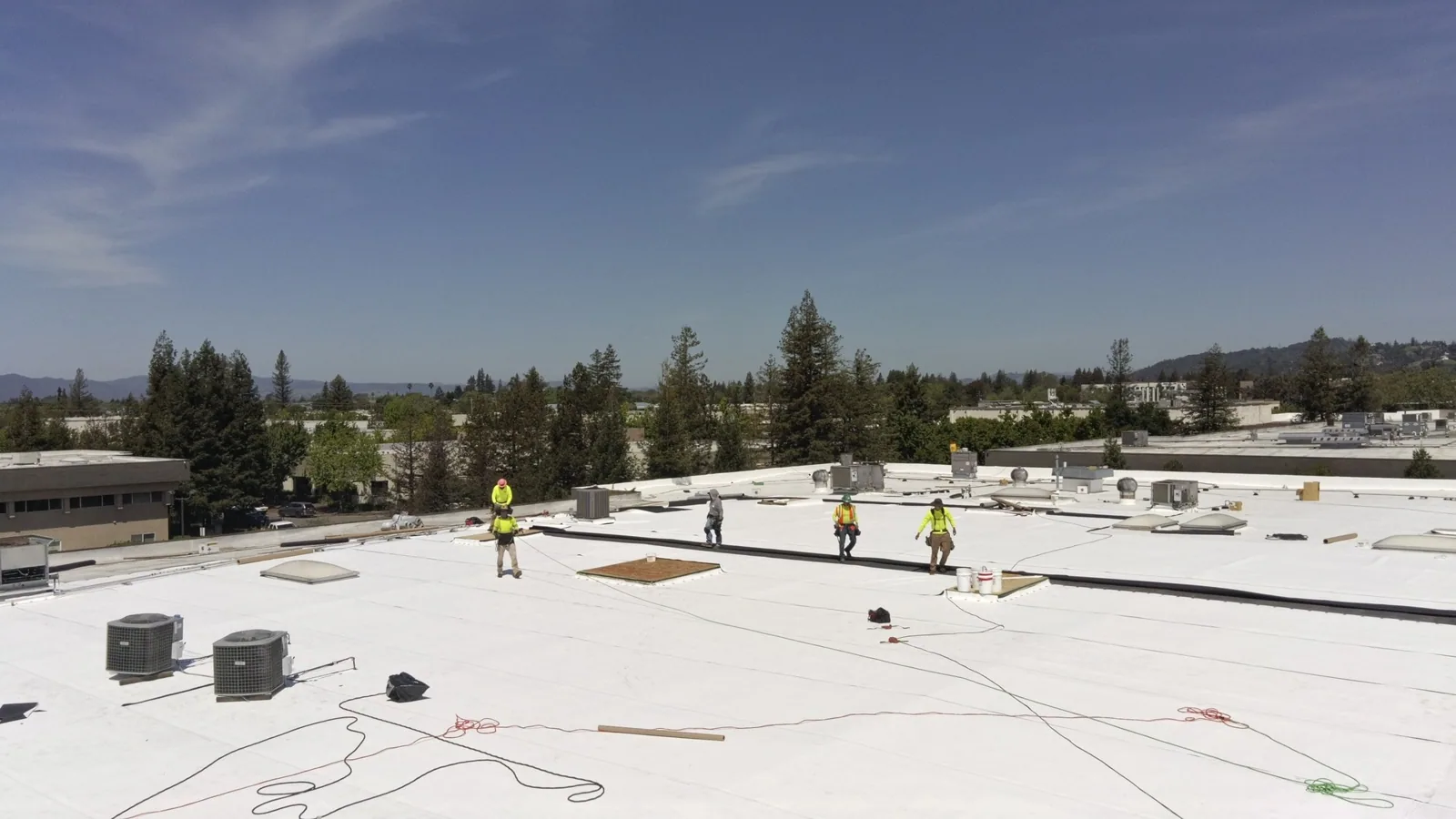
A lifting patch edge needs a closer look than another coat of sealant. On a commercial roof in Merced, CA, we examine the old repair, the underlying membrane and the detail it was intended to close. The edge may have separated because the surface was poorly prepared. It may also be responding to movement or moisture beneath the patch. Those conditions call for different work.
Our repair scope starts at that distinction. We identify the damaged construction and the sound material available for a new connection. Merced industrial properties with Highway 99 access include distribution uses. A repair above stored goods needs an opening sequence suited to the occupied space. Downtown Merced offices and restaurants need the same material examination with different access and scheduling arrangements.
Sound material beyond the defect
A visible split gives us a starting point. We examine the surrounding field for brittleness, separation and prior patch buildup. The new repair needs enough sound material for its specified connection. Extending a patch over another loose patch only moves the vulnerable edge farther out. We determine whether removal is needed to expose a usable surface before choosing the repair dimensions.
Water may have damaged material beneath a small opening. We check the insulation where the defect and interior symptoms make concealed moisture a concern. A wet area needs removal and reinstatement rather than closure beneath a clean-looking surface. Leak investigation helps connect the roof condition with the water path. Repair limits then follow the affected layers, not only the visible puncture.
The edge of a repair is a construction detail in its own right. A welded sheet patch, bonded membrane repair and modified bitumen repair use different preparation methods. We identify the existing material and select compatible work. Unknown coatings or accumulated sealant may need removal. The manager receives an explanation of what must be exposed for the new connection to hold.
Movement at a recurring opening
A split that returns beside a curb suggests more than isolated surface damage. The membrane may be restrained, the flashing may lack a suitable movement detail or the supporting connection may be loose. We examine where the materials change and how they are attached. Repeating the same rigid patch can leave that mechanism in place. Rebuilding the transition may be the useful repair.
Merced summer heat encourages expansion and contraction in exposed materials. Metal and flexible sheet roofing respond differently. We examine termination bars, flashing corners and changes between the field and vertical surfaces with that movement in mind. Heat does not establish the cause of every split. The attachment and material condition provide the evidence needed to decide what should change.
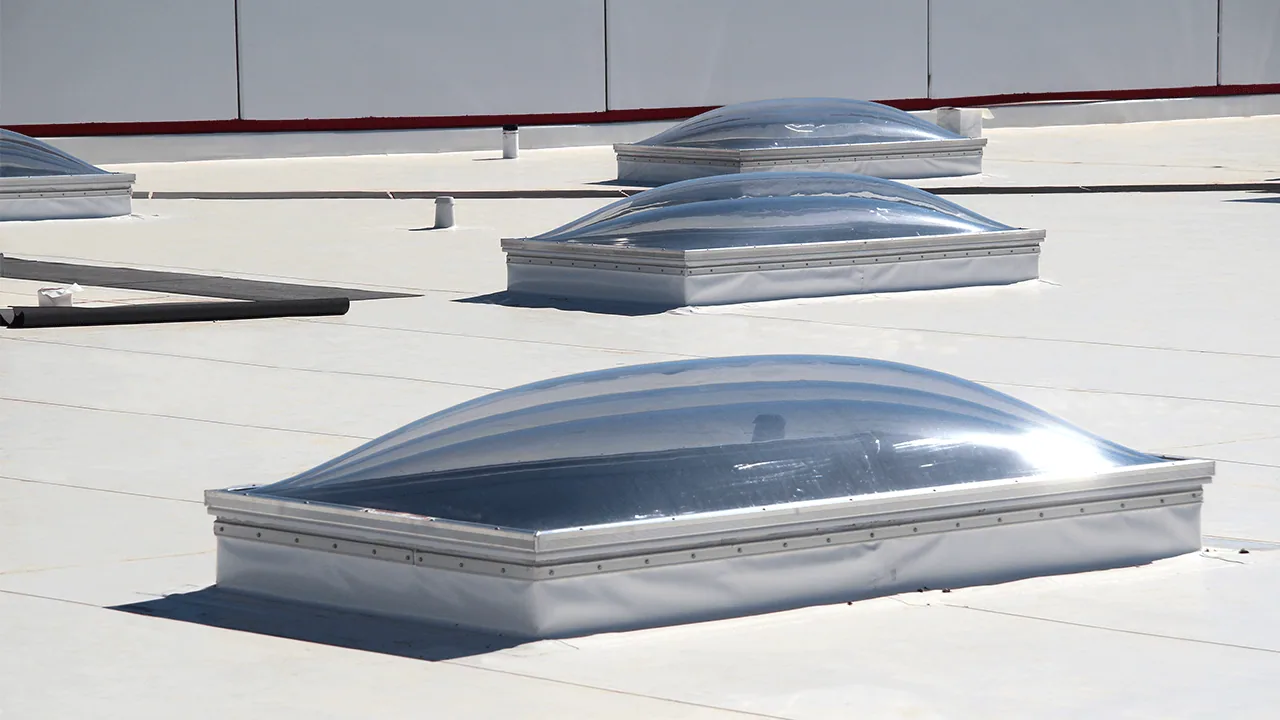
At penetrations, a repair may require removal of the existing flashing rather than covering its outer edge. We inspect the base, the vertical connection and any seal at the top. Penetration flashing repairs need a complete path back into sound roofing. A sound field membrane can remain while a failed boot, curb transition or corner is rebuilt with compatible materials.
Repair choices for the actual membrane
A cleanly bounded puncture in otherwise serviceable roofing can permit a localized repair. Several brittle sections or numerous failing details present a different choice. We assess whether the roof has enough usable material around each defect. The owner should know whether the proposed work addresses a distinct failure or is one intervention in a broader deterioration pattern.
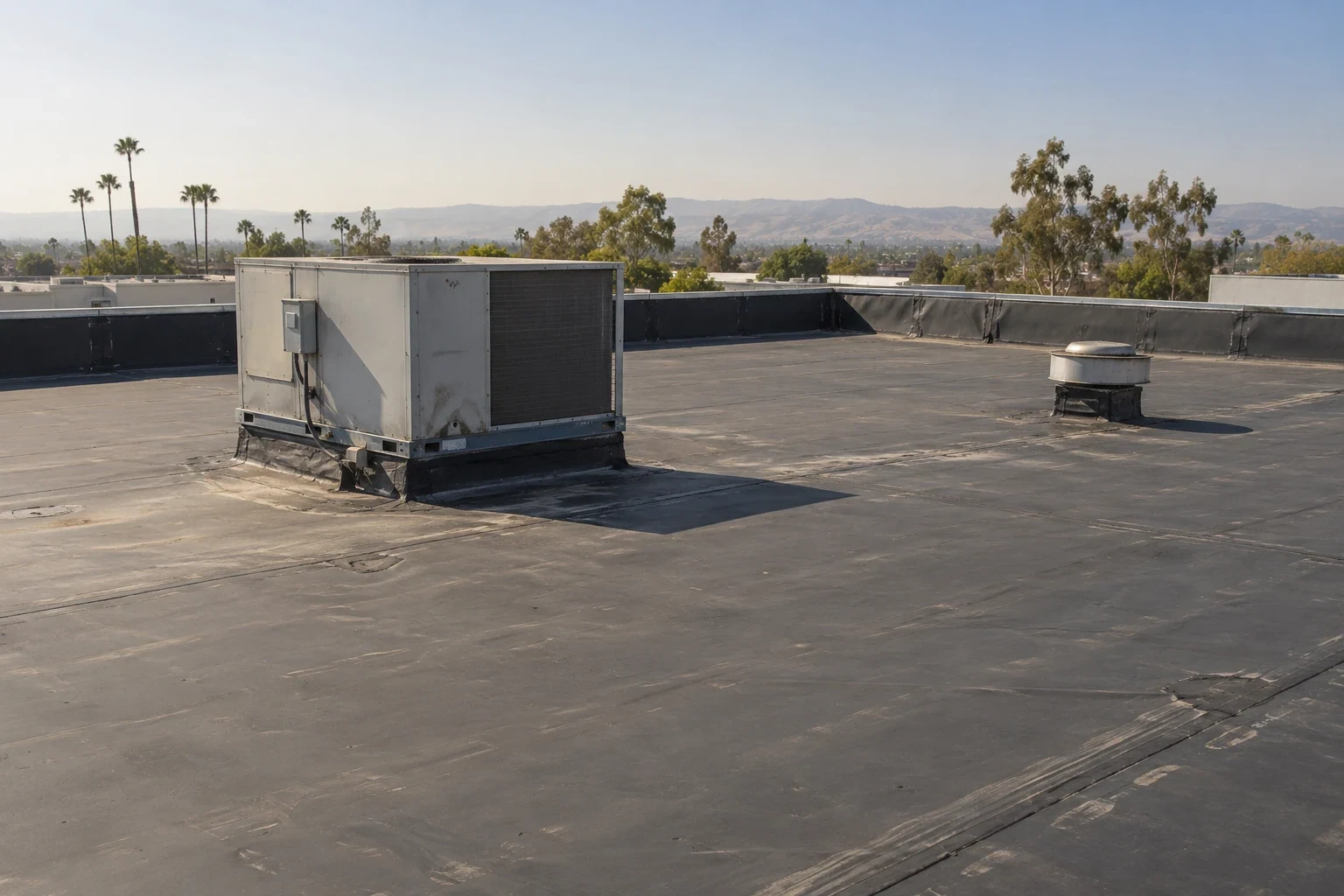
For an EPDM roof, surface preparation and the condition of the existing rubber influence the repair connection. Welded thermoplastic roofing needs a different method. Metal roofing brings panel joints, fasteners and closure details into the assessment. We avoid treating a tube of sealant as the same answer for every assembly. The repair material must suit the construction it touches.
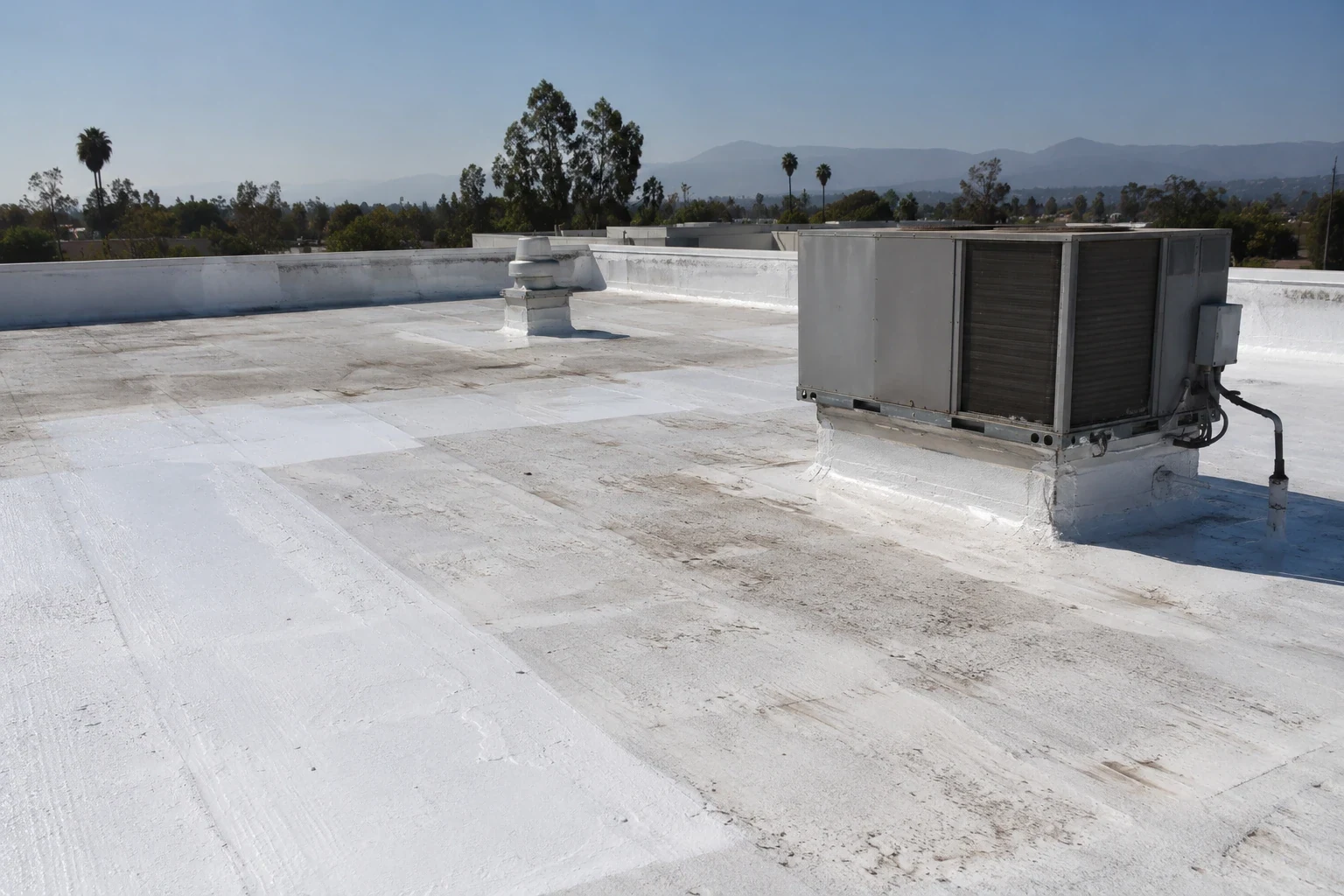
Coating can be considered only after the underlying roof is suitable for that approach. It does not remove saturated insulation or restore a damaged deck. A restoration coating scope needs preparation and detail treatment distinct from a spot repair. We explain the difference where an owner is weighing localized work against a broader surface treatment.
An opening above active business space
Repair removal can expose the space below even when the work area is small. We identify the opening, the material to be removed and the protection needed during reconstruction. Interior equipment, sensitive finishes and building users influence the sequence. A repair should close with the intended assembly detail, rather than leave a temporary patch carrying an undefined long-term role.
The food and grocery distribution activity in Merced makes product protection an important discussion for a distribution building. We ask where the roof defect sits relative to stored goods and active handling areas. The building team can then arrange any required interior protection or temporary movement. Roofing work still depends on the inspected conditions at that exact roof zone.
For properties in Downtown Merced, we coordinate roof access and debris movement with occupied commercial space. A repair near an entry-side parapet can require a different ground arrangement from one reached through a service yard. We establish those practical constraints before removing damaged flashing. The aim is a usable work area with a defined closure sequence.
The completed detail and its maintenance need
We inspect the finished connection for complete bonding or welding, appropriate termination and a usable water path. The closing work needs to match the repair material. Cleaning off debris also matters. Loose pieces left near a drain can turn a completed patch into a new drainage problem. The repair scope includes the detail that restores the roof, not just the material placed over the opening.
We distinguish nearby conditions that need attention from the defect being repaired. A blocked outlet, another separating seam or heavy service traffic can affect the same roof area later. Those findings help the manager decide whether to include additional work now. They also establish useful maintenance priorities without expanding every small repair into an unsupported replacement recommendation.
Waiting can enlarge the affected insulation area if water continues entering. An exposed membrane edge may also become harder to connect as the surrounding material deteriorates. We explain that consequence in relation to the observed detail. The manager can then choose a repair window based on the actual opening, interior exposure and availability of sound adjoining material.
Commercial Roofing Questions
Can a failed patch be repaired without removing it?
Its attachment and compatibility determine the approach. A loose or contaminated patch may need removal to expose sound material. We examine the old connection before deciding whether any part of it can remain beneath the repair.
Why would the proposed repair extend beyond a small cut?
A connection needs sound surrounding roofing. Moisture or material deterioration can also extend beyond the visible cut. We identify those conditions and explain the boundary before removal, so the larger area has a construction reason.
Will another sealant application stop a recurring curb split?
Movement at the curb may keep reopening it. We examine restraint, attachment and the flashing arrangement. A rebuilt transition can address that mechanism where another surface application would leave the same stressed connection in place.
Which nearby defects should be handled during the same visit?
Active openings and drainage obstructions deserve specific attention. We separate those items from general surface wear. The manager can choose additional repairs based on their location and consequence rather than a broad list of cosmetic observations. A second defect beside the planned opening can sometimes be included without duplicating access or protection work.
Inspection of the failed repair edge
Request a repair assessment of the separating patch, split membrane or damaged flashing and the layers beneath it.
Related Roofing Work