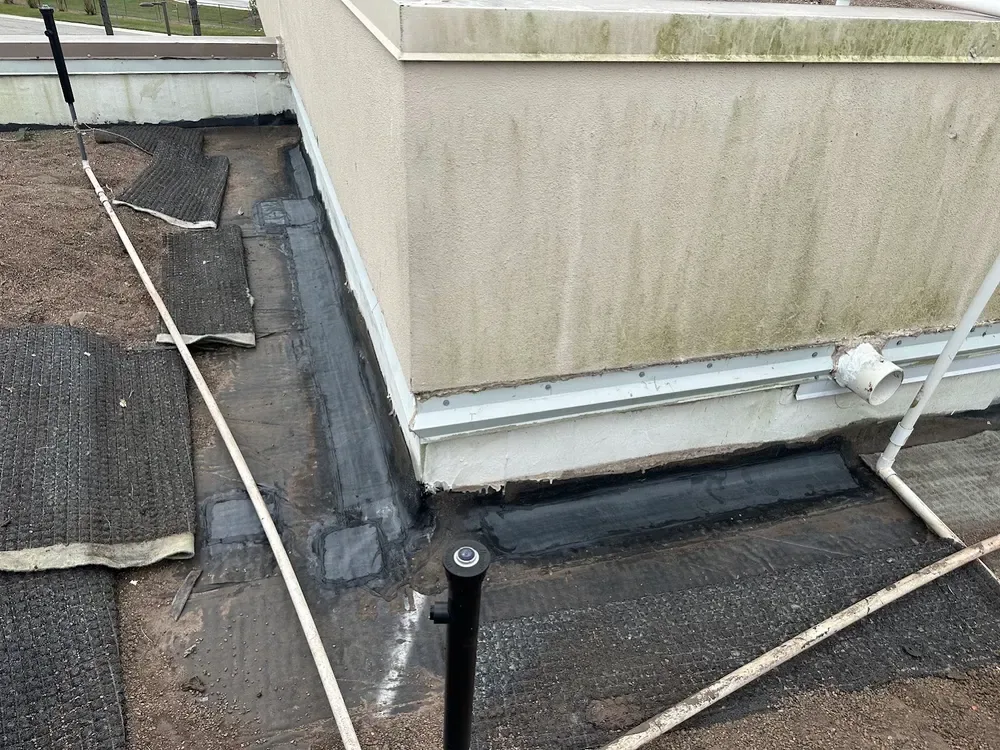
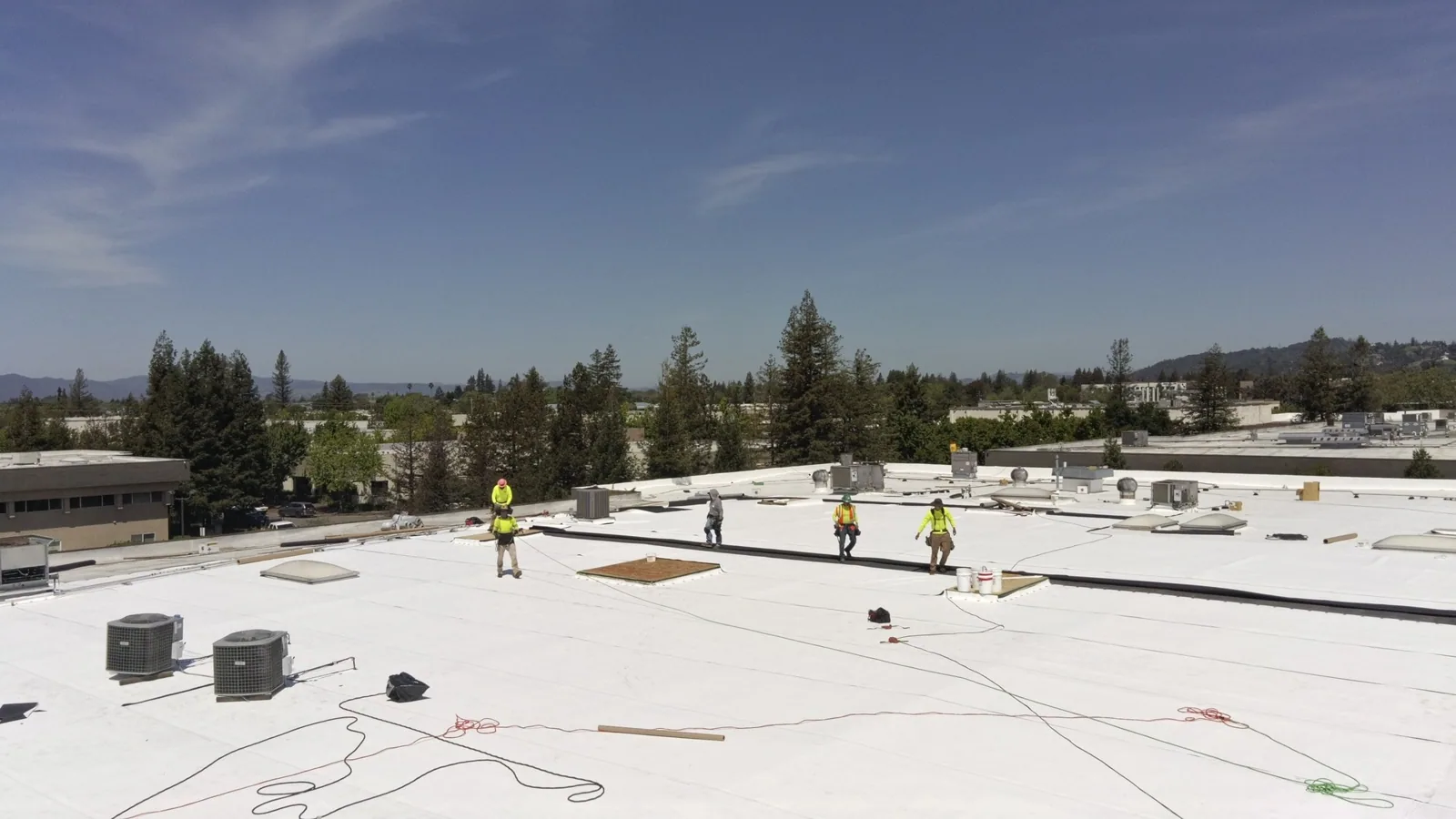
Water staining below a rooftop curb is a reason to inspect the transition, but the visible crack may not mark the full repair boundary. On a commercial roof in Merced, we inspect the flashing height, corner joints, termination and connection to the field membrane. The detail may have separated from movement, poor attachment or deterioration beneath a prior patch. We identify the assembly before selecting a repair method.
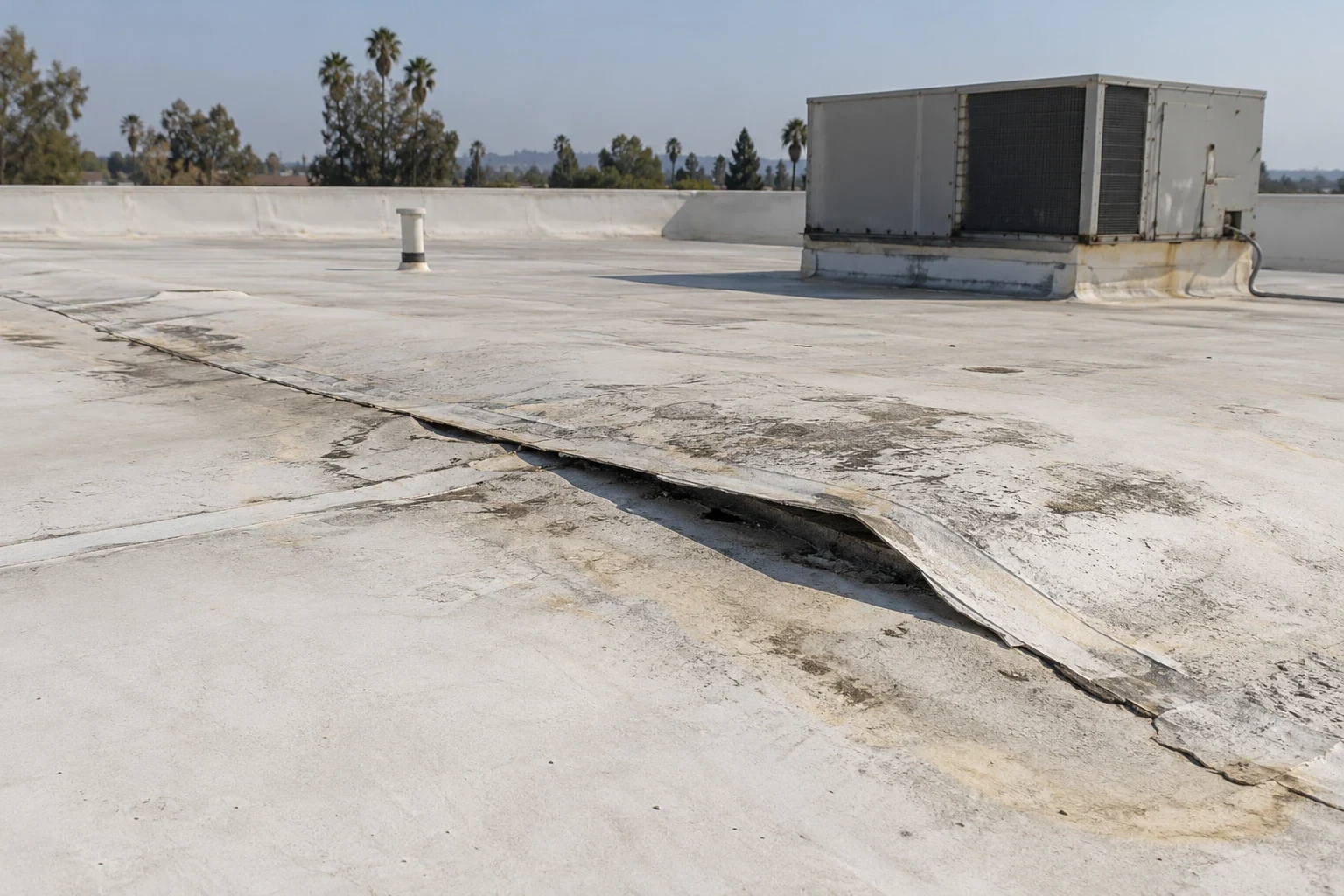
Merced’s summer heat makes movement at metal-to-membrane transitions a reasonable inspection concern. At a failed flashing, we inspect the termination bar, corner, and adjoining sheet for a continuous entry path. We look for lifted edges, open laps, cracked sealant, loose counterflashing and concealed moisture where the roof detail allows a controlled opening. A useful scope states which flashing component failed, what material will be removed and how the replacement will tie into sound roofing.
Read the whole transition
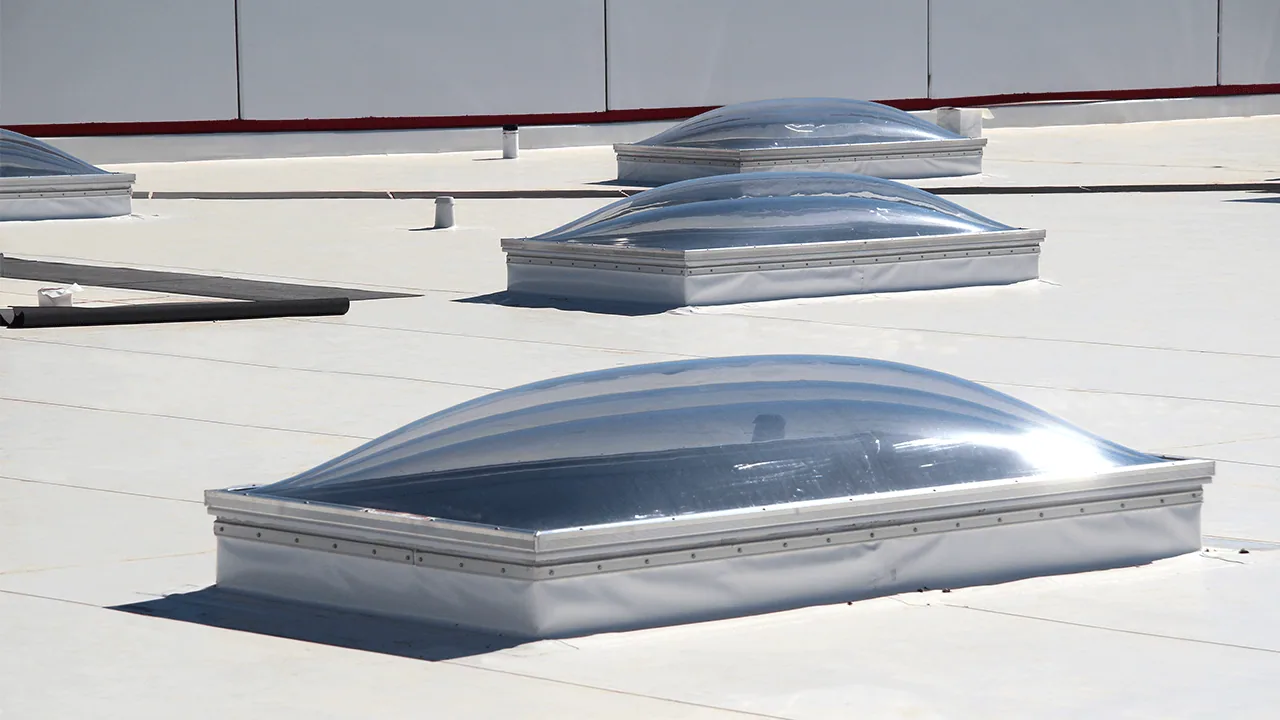
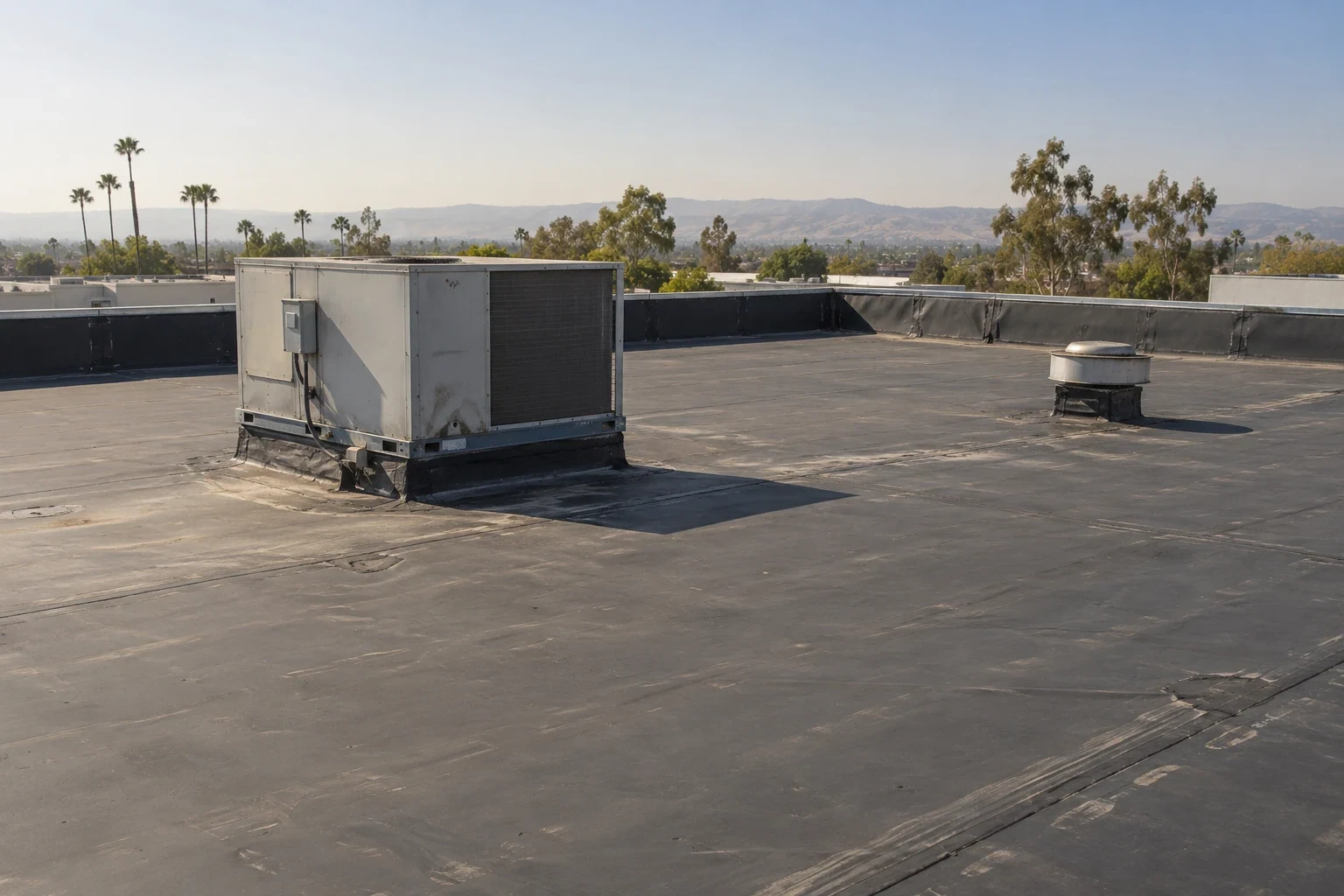
Flashing is a sequence of connected parts, not a bead of sealant around an object. At a curb, we review the membrane base, vertical flashing, corners, top termination and any counterflashing. At a wall, the roof membrane, cant or transition, reglet and wall finish can affect how water moves. A defect at one junction can allow water to travel before it appears inside. Our Diligence Notes tie the observed opening to the larger detail.
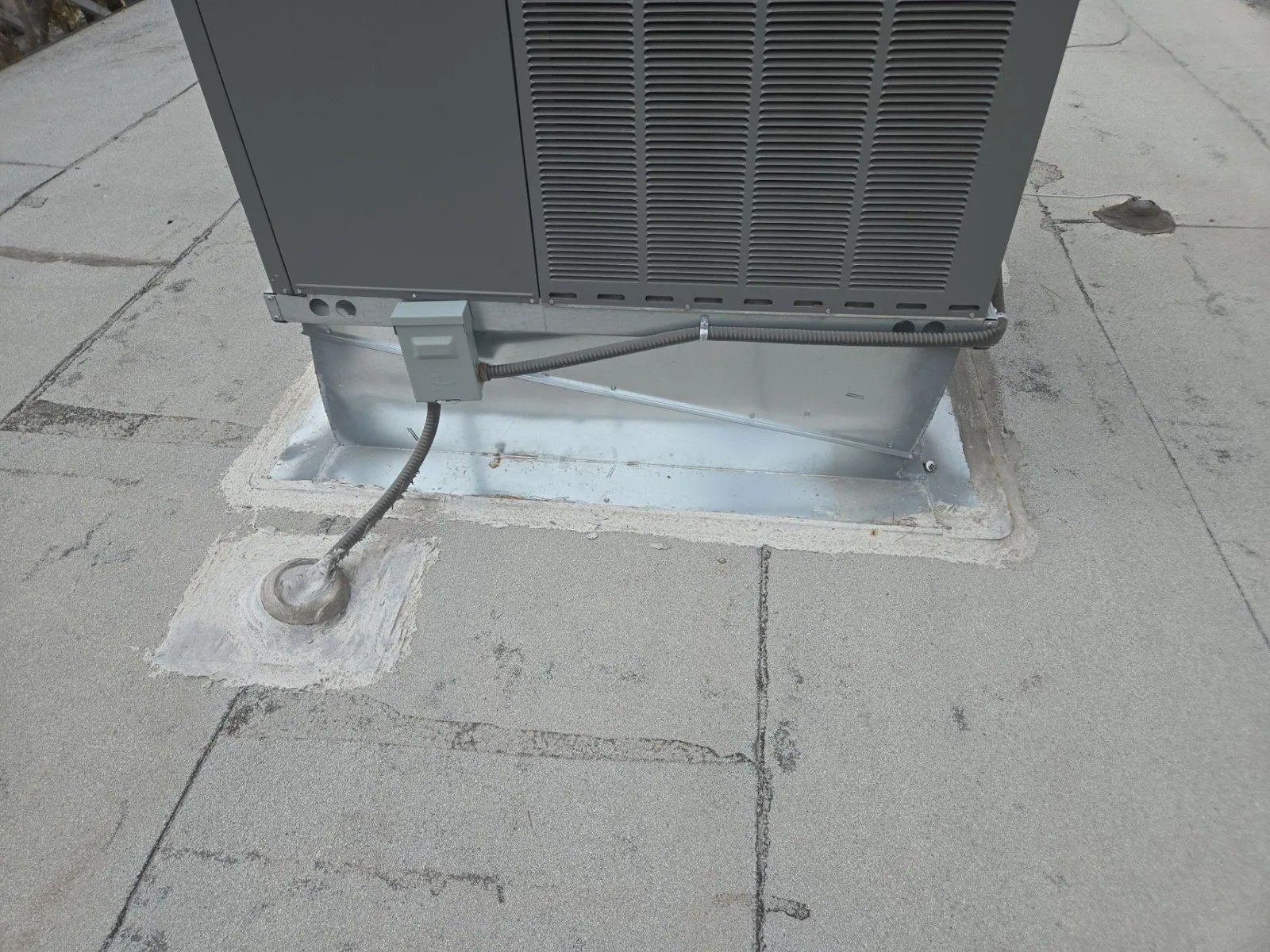
We check the substrate near the failure for softness, corrosion, split coating or movement. A loose curb or unstable support may keep a new flashing from holding. On a pipe penetration, we inspect the boot or formed flashing, clamp, pipe condition and surrounding membrane. Penetration-detail work can address that assembly, while curb and equipment supports may need attention where the transition itself is unstable.
Interior staining helps focus the search but does not prove the source. We compare the location with roof slopes, seams, penetrations and structural paths. Where the pathway remains uncertain, we state that limitation and propose the next inspection step. A small test opening can show whether insulation is dry, damp or deteriorated. It should be closed with a specified repair, not left as an untracked exploratory cut.
Movement and material compatibility
Flashing details experience movement where unlike materials meet. Sheet membrane, metal curb, masonry and sealants respond differently to temperature and moisture. Merced station normals record a July high of 96.3°F and 99.7 days per year at or above 90°F. That context supports close review of attachment and transitions; it does not justify assigning every split to heat. We inspect the bond line, fasteners, laps and exposed edges to find a direct failure mechanism.
A previous repair can hide the original connection. Multiple sealant layers may make it difficult to see whether the flashing is attached, or may trap water against a vertical surface. We remove only the material required to expose the repair area and document what is uncovered. If the substrate is sound and the membrane remains compatible, a localized rebuild may be appropriate. If the curb is moving or the deck is compromised, the scope needs to address that condition before the roof is closed.
Material compatibility matters. A thermoplastic membrane, EPDM sheet, modified bitumen and liquid-applied coating each require different preparation and connection details. TPO assemblies and EPDM assemblies are not repaired with interchangeable methods. We confirm the existing system where possible and identify any uncertainty if records or markings are absent.
Repair options and boundaries
A localized flashing rebuild can involve removing failed sealant or sheet, preparing the base, installing compatible flashing and restoring the termination. Metal counterflashing may need reseating or replacement when it no longer sheds water. A curb that lacks stable attachment may need mechanical correction before membrane work. If water has damaged insulation or cover board, those layers must be removed and reinstated. We separate each activity so the owner can see why the repair includes more than a surface patch. Seam-failure assessment can identify a connected field-lap problem.
The repair boundary should extend far enough to reach sound, usable material. It should not expand by default into all surrounding roof areas. We note the visible limit, any opened area and the condition of the transition after preparation. If adjacent membrane is brittle or multiple details show the same failure, we discuss broader evaluation as a separate choice. Membrane puncture repair addresses field damage but does not replace rebuilding a failed curb or wall connection.
For repeated leakage, a temporary seal may reduce exposure while a permanent detail is planned. We define the temporary work and its limitations. Leak investigation can help connect interior symptoms with the roof assembly. It does not replace the written repair scope, which should identify the expected material and finished connection.
Coordinate the opening
Flashing repairs often require opening a small roof area and leaving it exposed during preparation. We plan the work sequence around weather, access and the building below. The site contact should know the opening location, expected duration and protection method. In an occupied property, interior equipment or tenant activity may affect the work window. Each shift should end with a defined watertight condition, even if the permanent repair is not complete.
Downtown Merced includes government, finance, professional offices and restaurants. Those uses can have different access and operating needs than industrial properties. We confirm where the crew enters, whether the affected room can be accessed and who receives updates. For a building with active rooftop equipment, we coordinate shutdown or clearance only when the equipment owner requires it; we do not assume roofing work authorizes changes to building systems.
Closeout photos should show the detail before removal, the exposed layers and the finished flashing. The report identifies the repair boundary and any component left outside the work. Downtown Merced roofing service can start with a curb, wall or penetration that needs examination.
A documented transition repair
A sound transition sheds water and remains attached through expected movement. The inspection should establish whether the defect is a failed flashing component, a support issue, damaged roof field material or a combination. We explain the evidence and identify what remains concealed. If the owner approves a test opening, the scope should include reinstatement and documentation of the layers found.
Request an inspection with the type of penetration or wall transition, approximate leak location and any past patch history. Include roof plans or material records if available. We can trace the detail, inspect its bond and attachment, and prepare a bounded repair recommendation for the actual assembly.
Site conditions differ across the service area. Downtown Merced includes finance, professional offices, restaurants and arts-related uses, so access coordination may involve several occupants. Atwater has food-processing and building-products activity. Those local details inform scheduling, but the flashing recommendation comes from the inspected curb, wall or penetration.
Commercial Roofing Questions
Can failed flashing be repaired without replacing the roof?
Often, when the surrounding membrane and substrate are sound. Inspection determines whether the failure is localized or linked to broader deterioration.
Does sealant fix a leaking curb?
Sealant may be one component of a specified detail, but it cannot correct loose attachment or wet layers by itself.
Why inspect inside the building?
Interior evidence can help locate a moisture path, though water may travel before appearing. We compare it with roof details rather than assuming direct alignment.
What if the flashing material is unknown?
We document the visible construction and any uncertainty. A small opening or material identification step may be needed before selecting a compatible repair.
Inspect a failed roof transition
Request an assessment of the curb, wall or penetration where flashing has opened. We will identify the connected components, moisture evidence and repair boundary.
Related Roofing Work