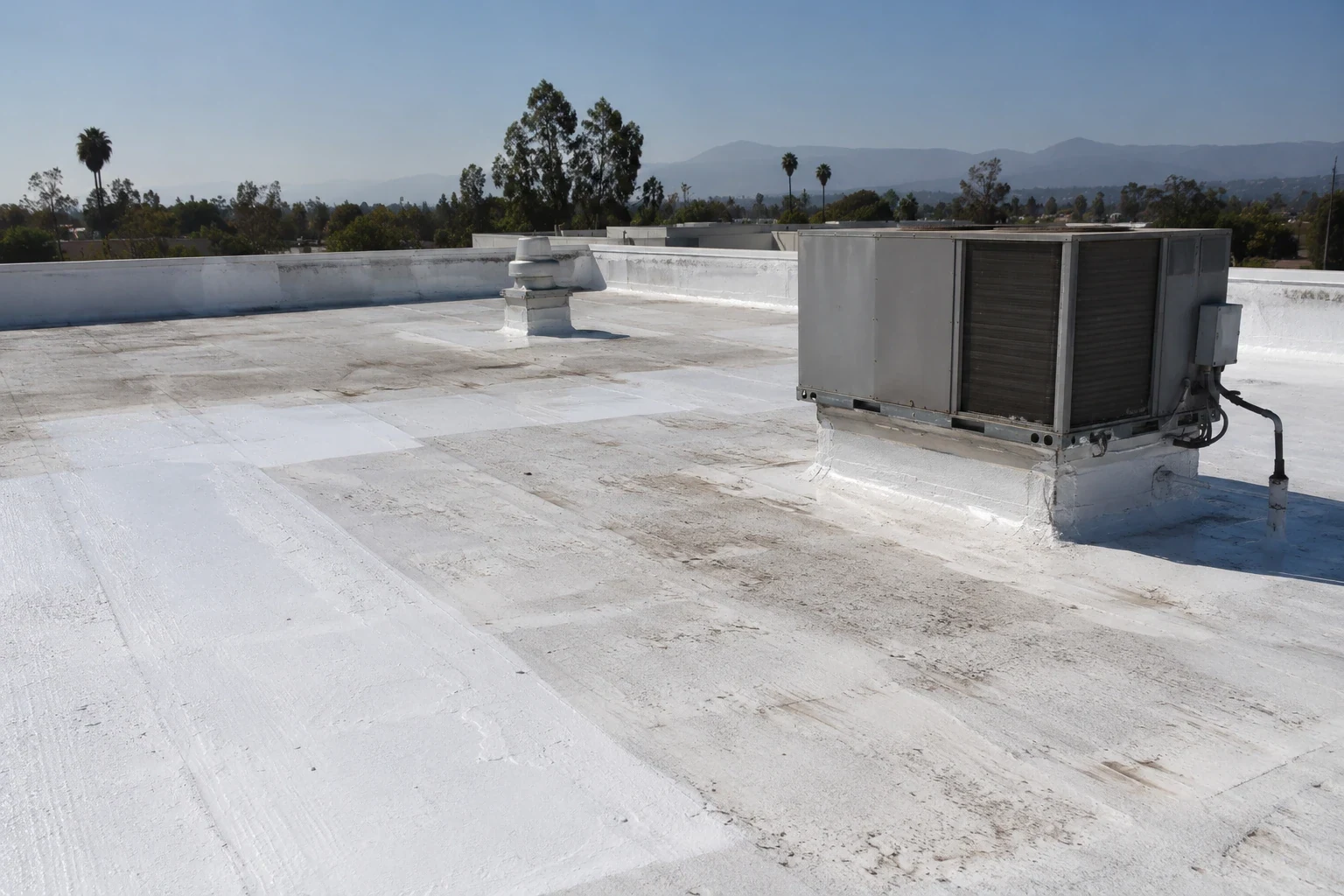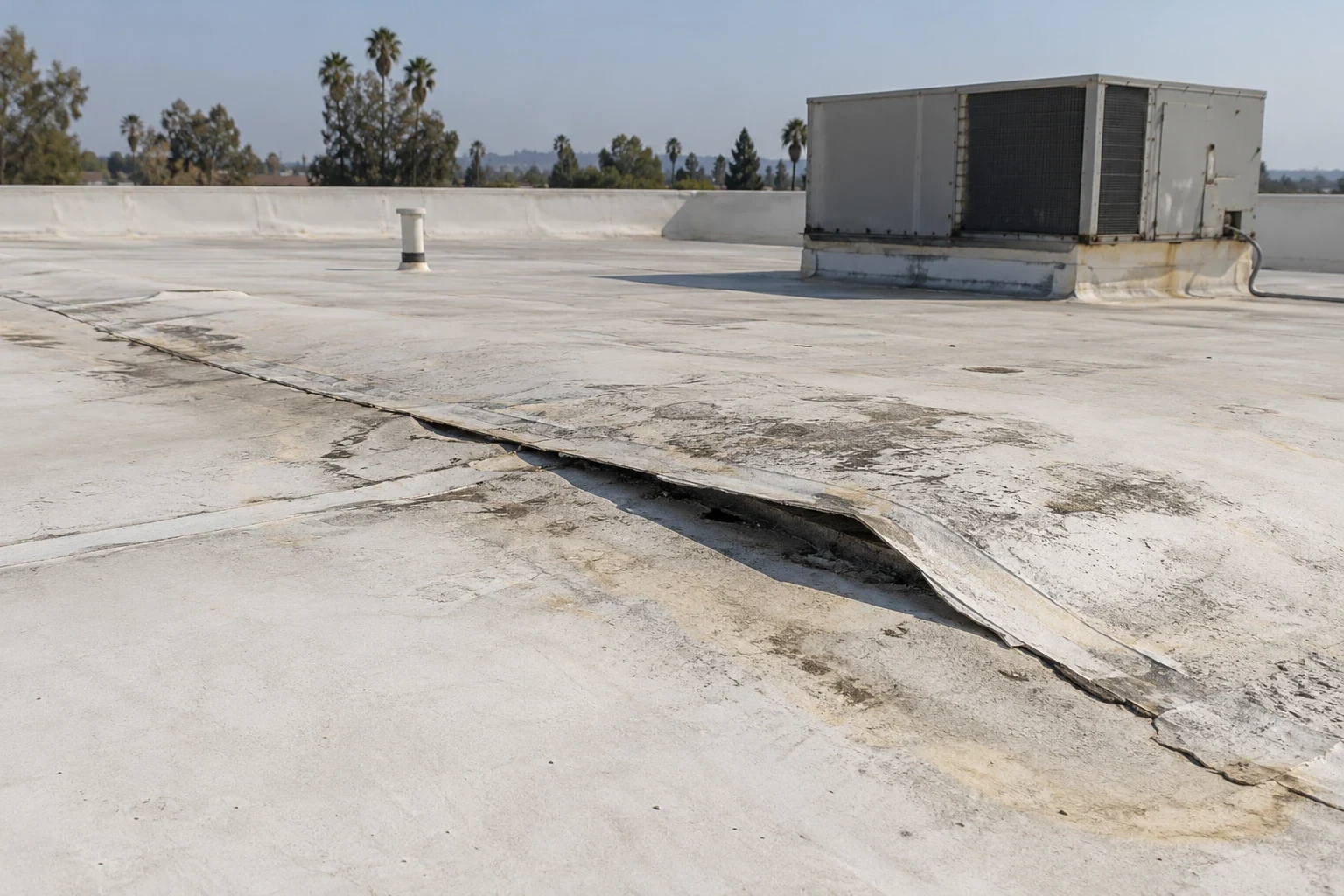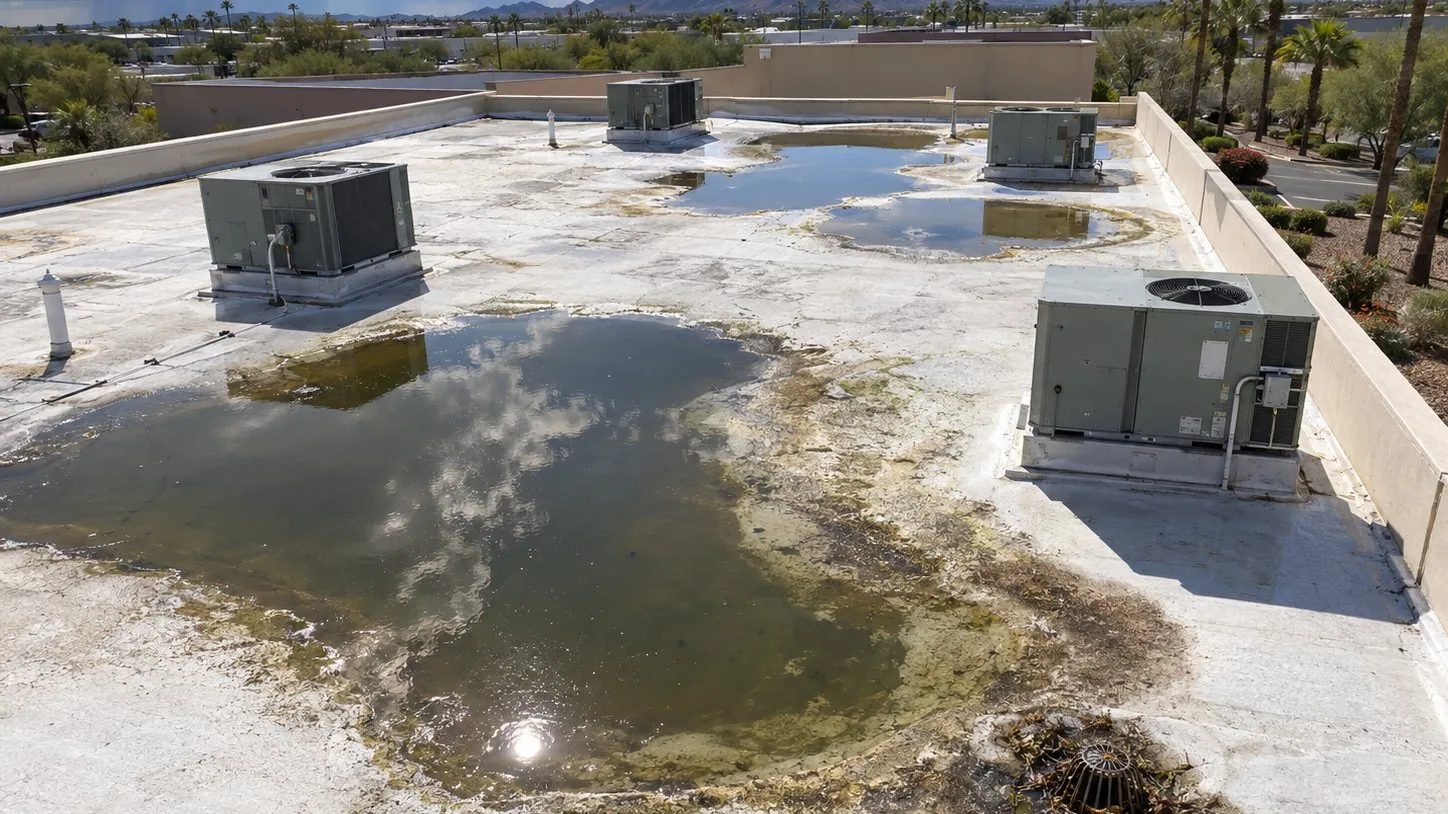
A pale, rough membrane changes the inspection question. On a commercial roof in Merced, CA, surface chalking may be limited to the finish, or it may sit beside a brittle seam, split flashing, or weakened sheet. We examine the finish and connection before assigning a repair boundary. A roof can show weathering while its field remains serviceable. A uniform surface can also hide a failed transition.
Merced station climate normals average 99.7 days each year at or above 90 degrees and 22.8 at or above 100. Repeated heating and cooling put movement at seams, penetrations, and edges into the inspection. We document the condition, check attachment and moisture where indicated, and prepare a commercial roof inspection scope that separates observed damage from broader aging.
Finish wear and membrane condition
A chalky film can transfer to a glove without showing that a membrane has lost its working thickness. We compare the finish across sun-exposed and shaded areas, then check for cracking, surface splits, exposed reinforcement, and edges that lift under light pressure. The pattern matters. Isolated finish wear may call for cleaning and a compatible restoration system. Cracking that continues through the sheet calls for a different scope.
We test suspect material at representative points rather than treating every discolored area as a failure. The examination records where the finish releases, whether the membrane flexes without splitting, and what prior repairs cover the surface. Material identification also matters. A thermoplastic field seam is not evaluated like an EPDM lap or an asphaltic surface. The findings tell us where testing should continue and where the roof can remain closed.
Merced’s industrial districts combine light and heavy uses, with Highway 99 and rail connections shaping regional logistics. A roof serving manufacturing or distribution activity may have equipment, exhaust, and service routes that affect access to test locations. We map those constraints with the surface findings. A proposed TPO repair or EPDM repair must match the installed assembly and its prepared bond line, not just the visible color.
Seams under heat movement
A seam edge that curls in the afternoon may lie flat when the roof cools. We inspect it when accessible and record the opening, contamination, and attachment. Heat changes roof dimensions and the conditions at its connections. Repeated movement can expose weak welding, an aged adhesive bond, or a termination that no longer holds. The visible opening starts the check, not the repair dimension. A seam failure repair begins with locating a stable connection.
At curbs, pipes, skylights, and parapets, dissimilar materials meet in a small area. Sealant can harden or separate, but replacing it alone will not rebuild loose flashing or an unsupported transition. We examine the sheet, fasteners, metal, and substrate. Sound parts may accept a compatible detail repair. Fractured membrane or separated attachment needs a rebuilt connection.
We distinguish UV exposure from other causes before recommending work. Foot traffic, chemical contact, ponding, previous patches, and incompatible coatings can create similar surface symptoms. Our inspection notes their location beside each seam or penetration. A coating restoration evaluation fits only where adhesion, drainage, and assembly condition support it. A coating does not repair a failed seam beneath it.
Moisture below a weathered surface
A stain inside a building and a sun-checked surface can occur in different areas. Water follows laps, fasteners, curbs, and insulation joints before it appears indoors. We compare the reported moisture path with roof details and interior conditions. If insulation has taken on water, covering it leaves a damaged layer in place and can make later diagnosis harder. Ponding water roof repair also begins with the moisture path.
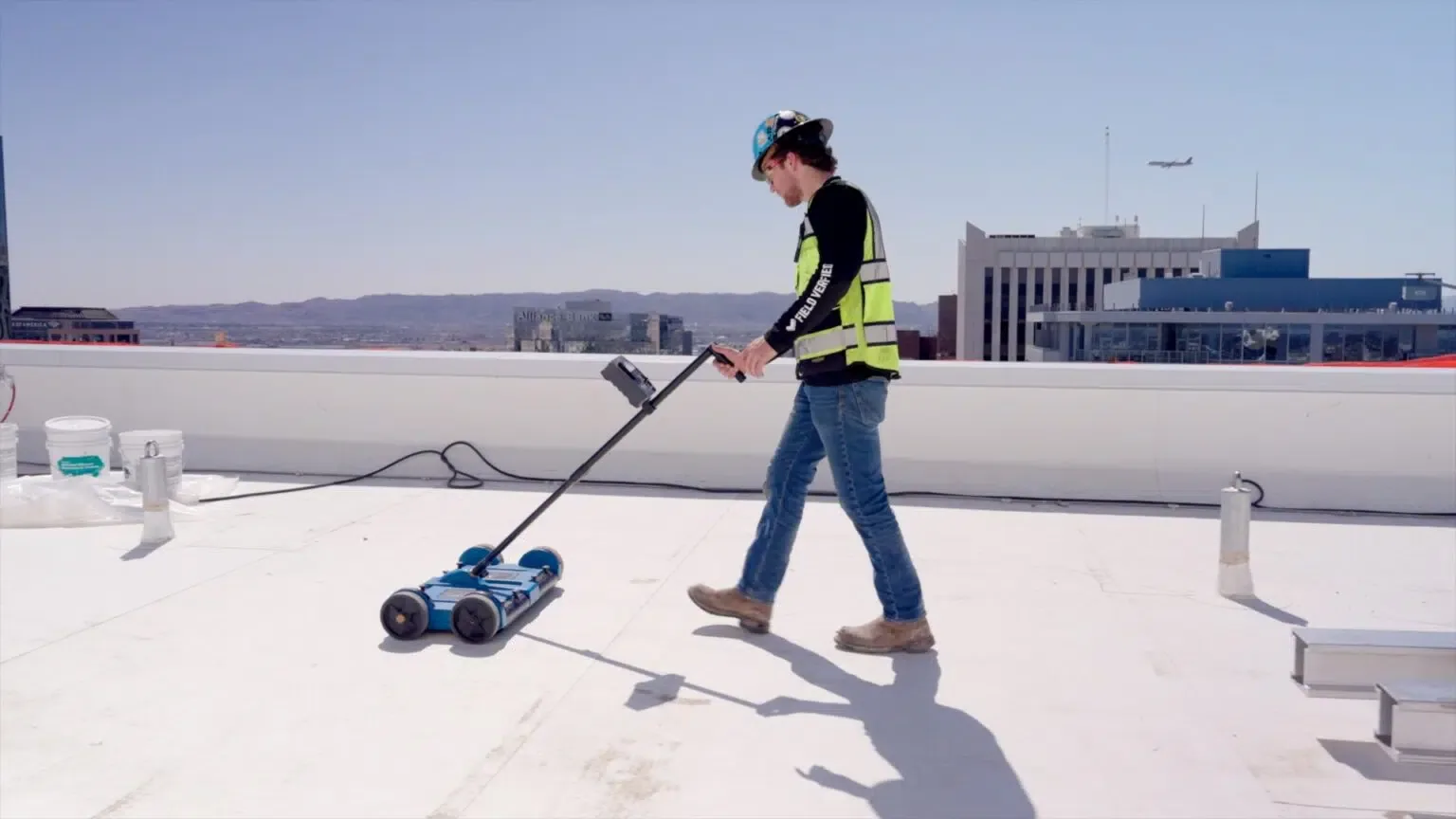
Infrared scanning can help locate temperature patterns after conditions support a useful survey. It does not identify a wet layer by itself. We compare suspect areas with roof construction and confirm findings through a test opening when the decision depends on what is below. The exposed layers establish whether insulation can remain, where removal should stop, and how the roof will be closed. A moisture survey and selective opening serve different steps in that decision.
For a building in Downtown Merced, occupied offices, restaurants, and government uses can affect where an opening is placed and how materials move through the property. We agree on access and interior protection before disturbing the assembly. The same planning helps a facility in an industrial park keep roof work clear of equipment and deliveries. The Downtown Merced service area needs a roof-specific plan.
Repair, restore, or replace
A localized split with sound material around it can support a bounded repair. We remove failed material to the point where the replacement detail can connect to a stable surface. The written scope identifies the membrane or flashing being removed, the material used to close the opening, and any insulation that needs reinstatement. For a thermoplastic sheet, that may mean preparing and welding compatible membrane. Other assemblies require their own approved repair method.
A roof with broad chalking but stable seams, dry insulation, and working drainage may be a candidate for a restoration system. Preparation, adhesion testing, detail reinforcement, and application conditions determine whether that option fits. If brittleness crosses multiple details, wet insulation extends beneath the field, or the roof cannot accept a reliable connection, replacement may be the more coherent scope. We compare the affected area and remaining serviceable assembly rather than treating color as a condition rating.
Cost and timing follow the work that must be exposed and rebuilt. Access, equipment coordination, substrate repair, moisture removal, and weather conditions all change the sequence. A repair scope addresses a defined defect; a replacement scope deals with broader system limits. The manager receives the condition, quantities, and boundary in writing so budgeting can follow the actual roof findings.
A test opening with a closing plan
A test opening needs a planned close before the first cut. We select a representative location, confirm access below, and document the roof layers as they are exposed. The opening shows the condition of the membrane underside, insulation, cover board, and deck within that small area. It does not replace a broader condition survey, but it can answer whether a suspected moisture area is suitable for repair or requires removal.
We record the opening dimensions, material condition, and moisture evidence, then define the work limit. Removed material is replaced in the specified order. Seams, corners, and temporary protection receive attention before the work area is left. If the opening reveals a larger wet zone, we explain the added boundary and obtain direction before widening the scope. The closeout includes photographs and a written description of what was exposed and restored.
Maintenance after repair should track the same details that informed the scope. We note seam edges, penetrations, drains, coating condition, and areas where service traffic crosses the membrane. A scheduled inspection can return those points to a repeatable record. That record is useful when heat wear is gradual and a later comparison must separate new damage from an existing condition.
Commercial Roofing Questions
Does surface chalking mean the roof needs replacement?
No. Chalking describes a surface condition. We check membrane thickness, flexibility, seams, details, and moisture evidence before setting a repair or replacement boundary.
Can a coating correct brittle membrane?
A coating can restore a suitable surface, but it cannot make fractured membrane sound. We test adhesion and examine the assembly first, then specify a system only where the substrate can receive it.
What happens during a test opening?
We expose a selected area, photograph the layers, and check insulation and deck condition. The opening is closed with compatible materials after the findings set the repair limit.
Can the building remain open during this work?
Most inspection and localized repair can be sequenced around occupied operations. Access below, odors, noise, and equipment routes determine the controls for that roof.
What should the scope show before work is approved?
The scope should identify the affected material, preparation, repair boundary, any insulation removal, and the detail being rebuilt. We document those items before the crew starts.
Inspect the heat-worn details
Request an inspection of the membrane, field seams, and exposed transitions. We will document the findings and define a repair, restoration, or replacement scope for the roof.
Related Roofing Work