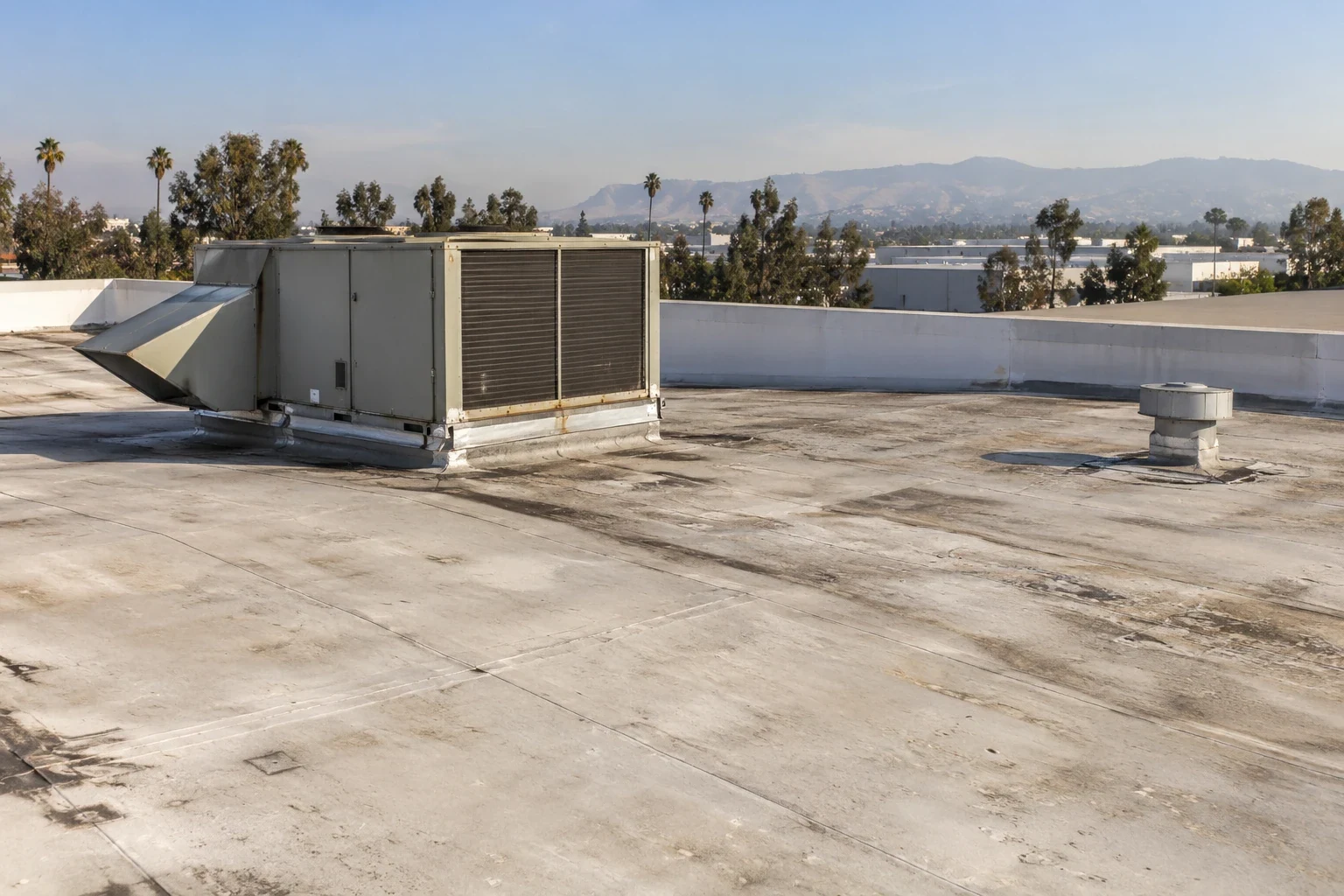
Scorching on a roof membrane is a visible condition, not a complete damage map. After a fire, we inspect heat-affected surfaces, seams, penetrations and the layers below before recommending roof repair. Smoke residue, suppression water and debris may affect different parts of the assembly. The first decision is whether the area can be accessed safely and what information the fire response or building team has already established.
Merced’s summer heat is a normal operating condition for roofing materials, while fire exposure is an abnormal event that can alter them rapidly. We do not infer the extent of heat damage from discoloration alone. The inspection records visible distortion, loss of attachment, blistering, melted or charred material, and signs of water entry. Where structural or hazardous-material questions arise, the appropriate specialist must evaluate them before roofing work proceeds.
Clear the work boundary first
Roof access follows the site’s incident controls. We confirm that the building representative has released the area for inspection and identify any restricted zone, unstable surface or ongoing fire-department activity. Roofing personnel do not determine structural stability, electrical hazards or air quality in place of qualified specialists. If the roof cannot be entered safely, the review remains limited to available observations until access is authorized.
Suppression operations can leave standing water, damaged equipment or debris on the roof. We avoid disturbing material that may be relevant to an investigation. The owner or incident lead identifies what can be moved, what must remain in place and who controls access. A roof inspection should not interfere with fire investigation or remediation. It should answer the roofing questions within the authorized area and record any blocked locations.
The initial record establishes roof type if known, affected section, observed heat pattern and the conditions that limit inspection. We also note interior reports, but distinguish them from roof findings. A simple plan view with marked areas can help the property team coordinate later testing and repair. Commercial roof inspection can document accessible conditions without making a broader building-safety determination.
Separate heat, flame and water effects
Direct flame, radiant heat and hot smoke can affect materials differently. A membrane may shrink, blister, soften or lose bond. Metal components can discolor or distort. Sealants and plastic accessories may change shape. We examine each affected assembly and compare it with a nearby area that appears undamaged. A visual comparison is useful, but it does not prove the concealed layers remain unaffected.
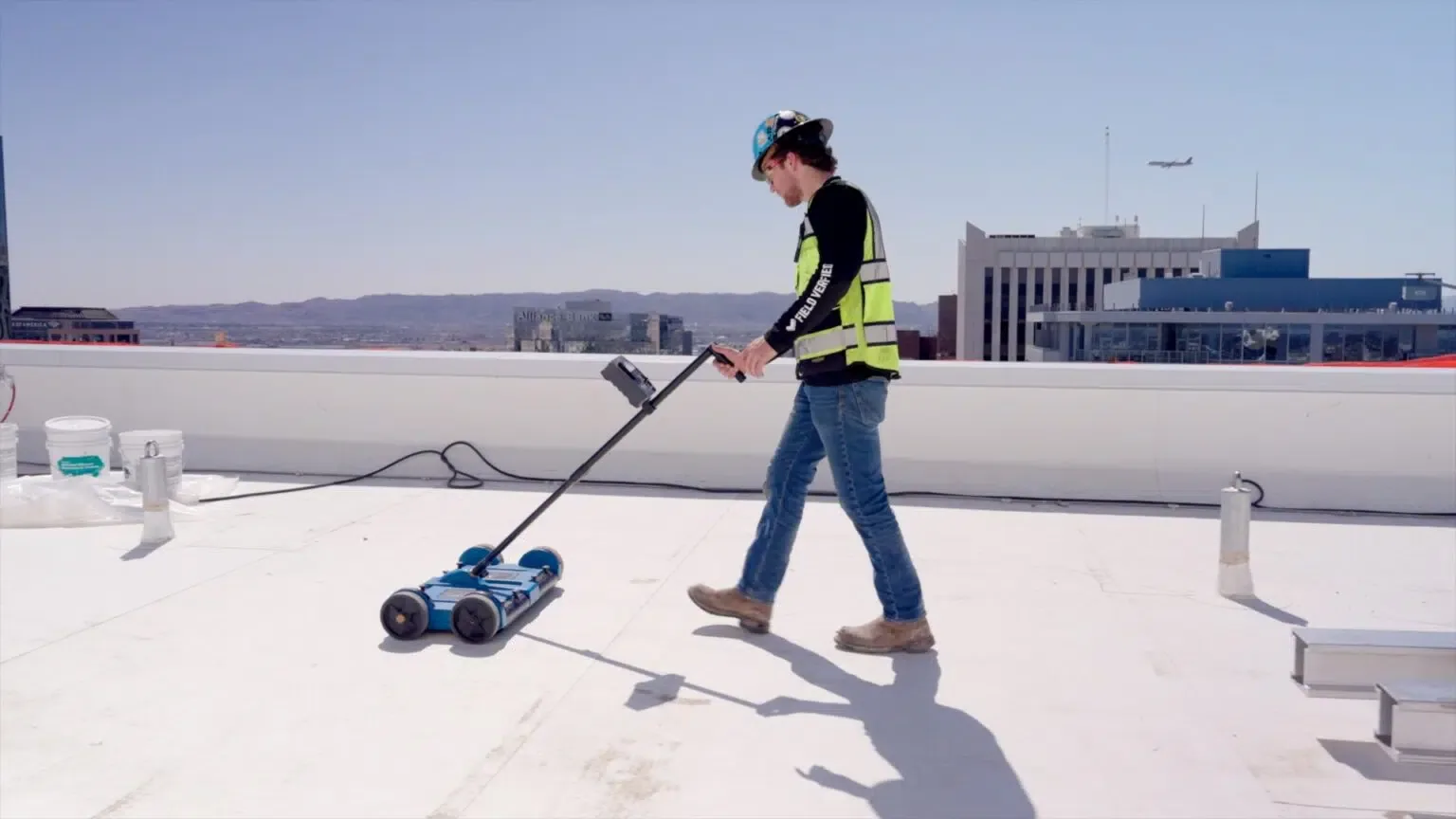
Suppression water can enter through openings created by heat or through the normal drainage system. We inspect low areas, drains, seams and transitions for water accumulation or residue. If water reached insulation, the owner may need a test opening or moisture survey to determine the extent. Moisture mapping can help target investigation, subject to surface conditions and method limits. It should not be described as a definitive substitute for opening a specific area when layers require direct review.
Damage may extend beyond the most visible burn mark. Heat can travel through attached components, while water may follow the deck or insulation plane. We document the direction and limits of inspection, then recommend further testing only where it answers a concrete question. If a support or deck appears deformed, structural review is needed before the roof repair scope is set.
Restore only after conditions are known
Roofing repair begins after the affected layers and safe work limits are established. A localized area may require removal of charred or heat-degraded membrane, inspection of cover board and insulation, replacement of damaged components and installation of a compatible roof section. Edges must tie into sound material. A coating over a heat-damaged sheet does not restore strength or attachment, and a simple patch may trap compromised layers.
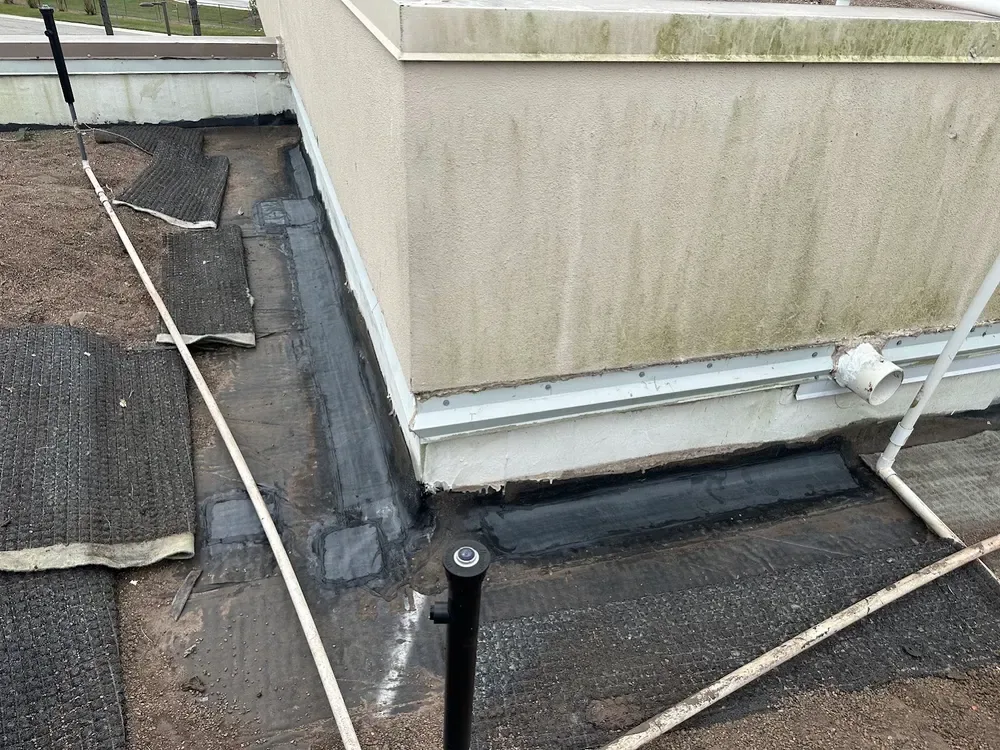
If suppression water reached the assembly, wet insulation should be handled according to the confirmed boundary and building requirements. We identify the opened area, record what was found and restore the layers in sequence. Membrane repair may be part of closing a specific opening, while flashing reconstruction may be needed at a heat-affected curb or wall. Each condition belongs as a separate item in the written scope.
Replacement can be a practical option when the heat pattern is broad or the existing assembly cannot be reliably joined to sound material. That recommendation should follow inspection evidence and account for roof system, tie-ins and occupied-space needs. We do not treat one damaged zone as proof that every roof section requires replacement. The owner can receive a localized repair option and a broader alternative when both are supported.
Coordinate roof work with recovery
Fire recovery may involve several trades and separate investigation timelines. We identify who controls roof access, when equipment can be moved and whether interior protection or temporary weather cover is needed. A temporary measure should have a stated purpose and follow-up point. If an opening is left exposed during removal, the crew plans how to protect it at the end of each shift.
Merced’s commercial base includes manufacturing, distribution, healthcare and retail or office activity. The affected building’s use determines which spaces below need protection and who receives updates. For a manufacturing facility, equipment shutdown and production recovery may require coordination with site operations. Downtown office and restaurant properties may prioritize occupant access. Roofing scope remains separate from fire restoration, electrical work or contents handling.
Closeout documents repaired areas, materials removed, concealed conditions and locations that were not opened. Photographs should show the heat-affected boundary before removal and the restored assembly afterward. The owner can use that record to coordinate with the restoration team, insurer or building consultant. Merced commercial roofing response can be requested once the roof area has been released for inspection.
Evidence-led next steps
The next step may be additional testing, localized roof restoration or replacement of a larger affected section. We state the evidence behind the recommendation and identify areas that could not be inspected. If a test opening is approved, the question, location and closing repair should be agreed in advance. A written scope should avoid claiming that unaffected areas have been fully evaluated when they were not opened.
Share the incident date, building access status, known roof system, suppression activity and any fire-response restrictions when requesting an inspection. Provide a roof plan or marked incident area if available. We can then examine authorized sections, describe heat and water effects on the roof assembly, and define repair work after the appropriate safety and investigation clearances.
Recovery planning can differ by location. Downtown Merced includes government, finance, professional offices and restaurants. Atwater includes food-processing and building-products manufacturing. We use the building’s actual access controls and occupancy needs to coordinate an authorized roof review, while safety clearance remains with the responsible site or incident authority.
Commercial Roofing Questions
Can a roof be inspected while a fire investigation is active?
Only within areas released by the responsible site or incident authority. We do not disturb restricted materials or interfere with investigation work.
Does a scorched membrane always need replacement?
Not necessarily. The affected layers and connection to sound material must be assessed. Discoloration alone does not define the repair area.
Can suppression water damage the roof assembly?
It can enter through openings or collect at drainage points. Inspection and, where needed, targeted testing establish whether concealed layers were affected.
Will the roofing contractor determine whether the building is structurally safe?
No. Structural stability, electrical safety and hazardous-material decisions belong to qualified specialists. Roofing work follows their clearance.
Inspect a released fire-affected roof area
Request an assessment after the site representative clears roof access. We will document heat and water effects, inspection limits and the roof repair boundary.
Related Roofing Work