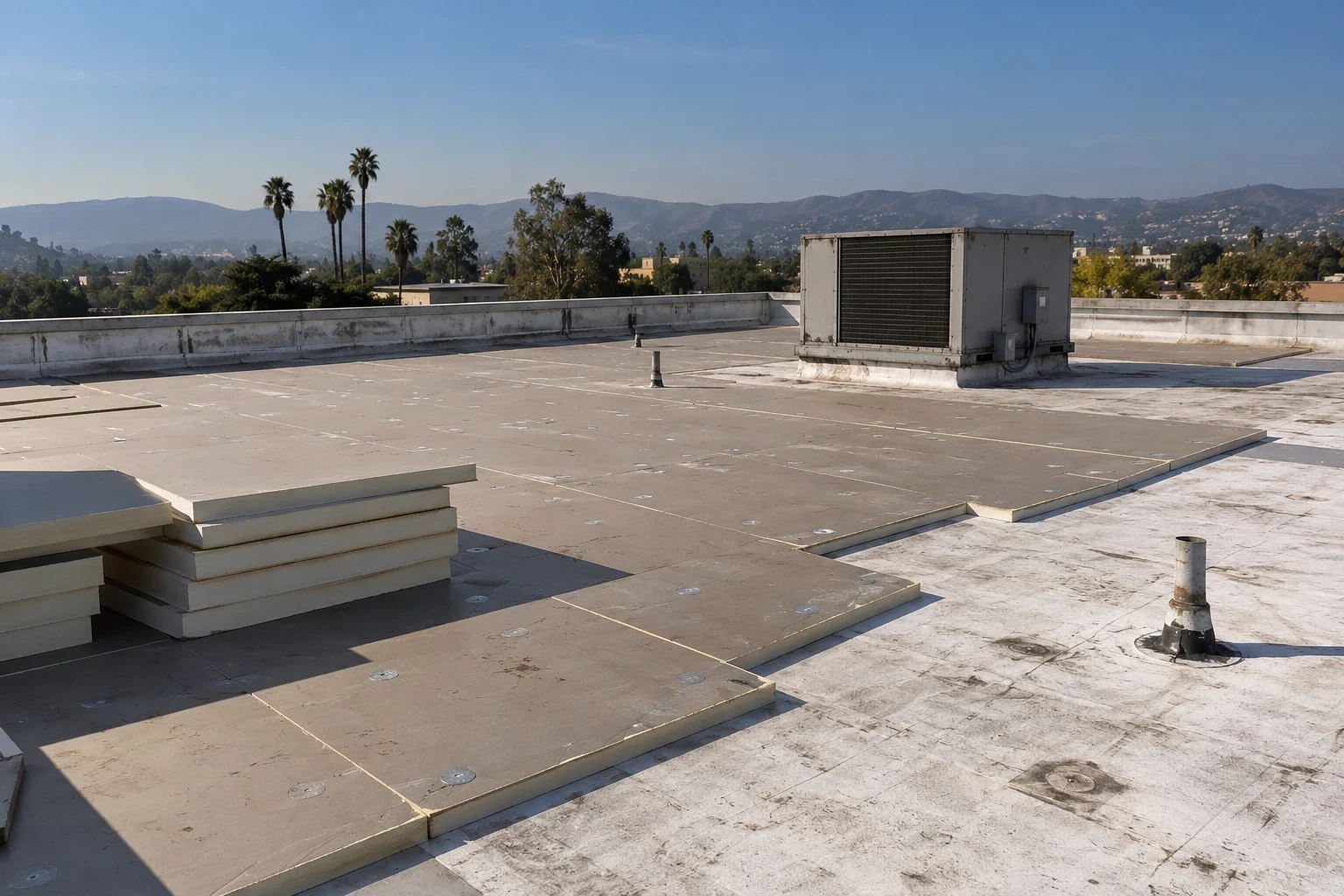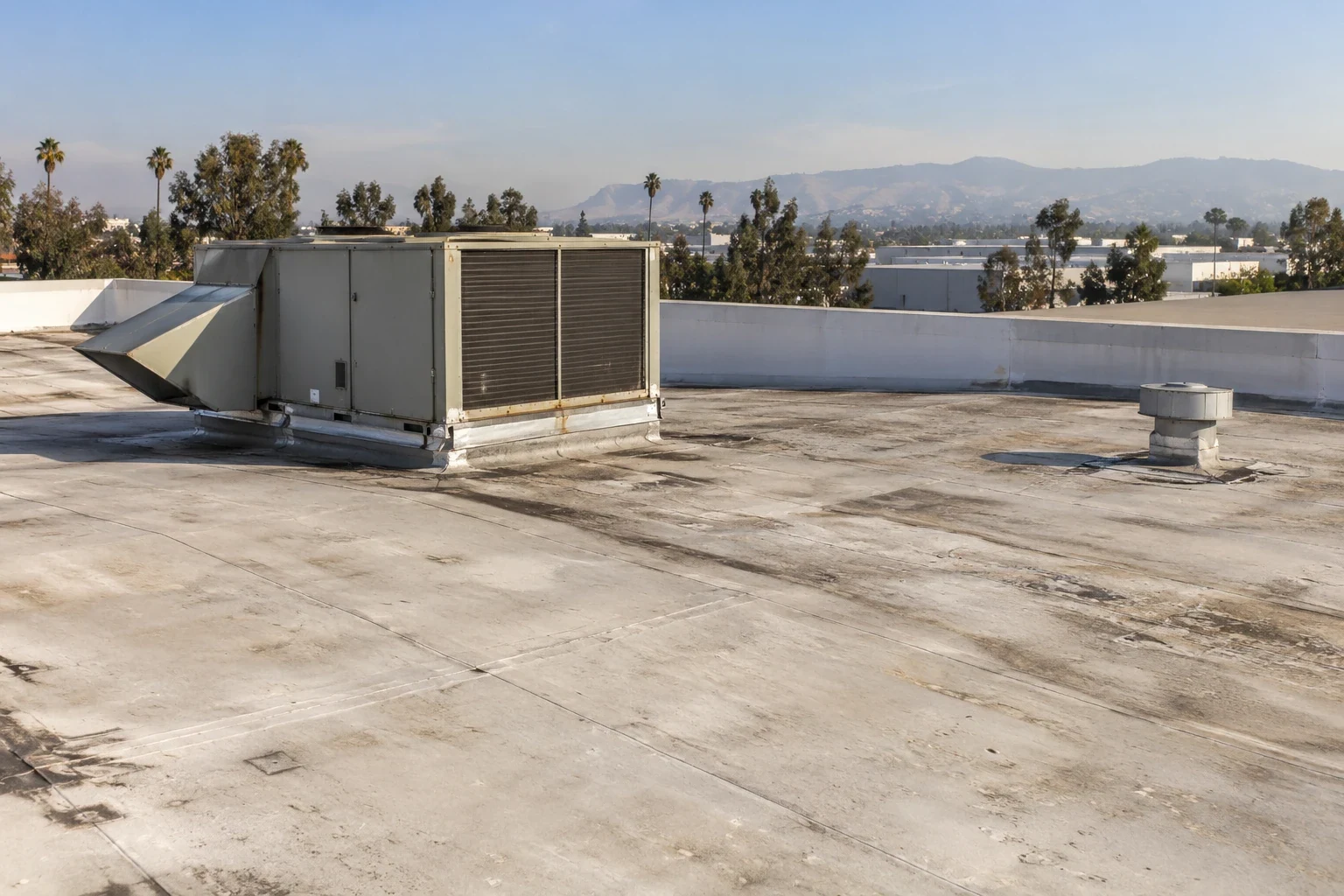
A seam that opens under light hand pressure is no longer performing as a continuous connection. On a commercial roof in Merced, we identify the membrane type, locate the separation and examine the surface on both sides. A split may reflect poor preparation, contamination, movement, age or water beneath the sheet. The repair choice depends on the cause and on whether sound material remains beyond the opening.
Merced’s hot summer conditions make movement at sheet laps and transitions worth close attention. We inspect movement marks, fasteners, and membrane stress at the failed seam before setting the repair boundary. We inspect the bond line, edge condition and nearby attachment, then compare the failed area with adjacent seams. The property manager needs a repair boundary that follows the actual separation and states whether concealed insulation or cover board needs examination.
Locate the full separation
We trace the seam in both directions until the membrane is bonded, welded or otherwise connected as intended. A surface mark may extend beyond the portion that has released, while a small visible split can conceal a weak bond underneath. We document the length of the failure and note nearby patches, wrinkles, fishmouths and water staining. Where the seam disappears under flashing or equipment, we describe the limit of what can be seen.
The surrounding roof matters. We check whether nearby seams show similar weakness and whether the field sheet is brittle, distorted or poorly attached. If only one joint is open in an otherwise stable area, a localized repair may be appropriate. Several related failures can indicate a larger material or installation issue that merits broader review. A roof-condition inspection can map those patterns without turning every seam into a replacement recommendation.
Water entry can travel from the failed joint to another part of the ceiling. We compare the leak location with roof slope, deck direction, insulation joints and interior obstructions. Leak tracing is useful where the moisture path is unclear. If a test opening is warranted, we state what it should resolve and how the assembly will be restored afterward.
Why a joint lets go
Thermoplastic seams depend on adequate preparation and a complete weld. EPDM lap joints use adhesive or tape systems with their own substrate and pressure requirements. Modified bitumen laps rely on a different bond. Heat, dust, moisture or incompatible residue can interfere with a connection, while movement can place stress on a poorly detailed transition. Identifying the system is essential before choosing a repair method.
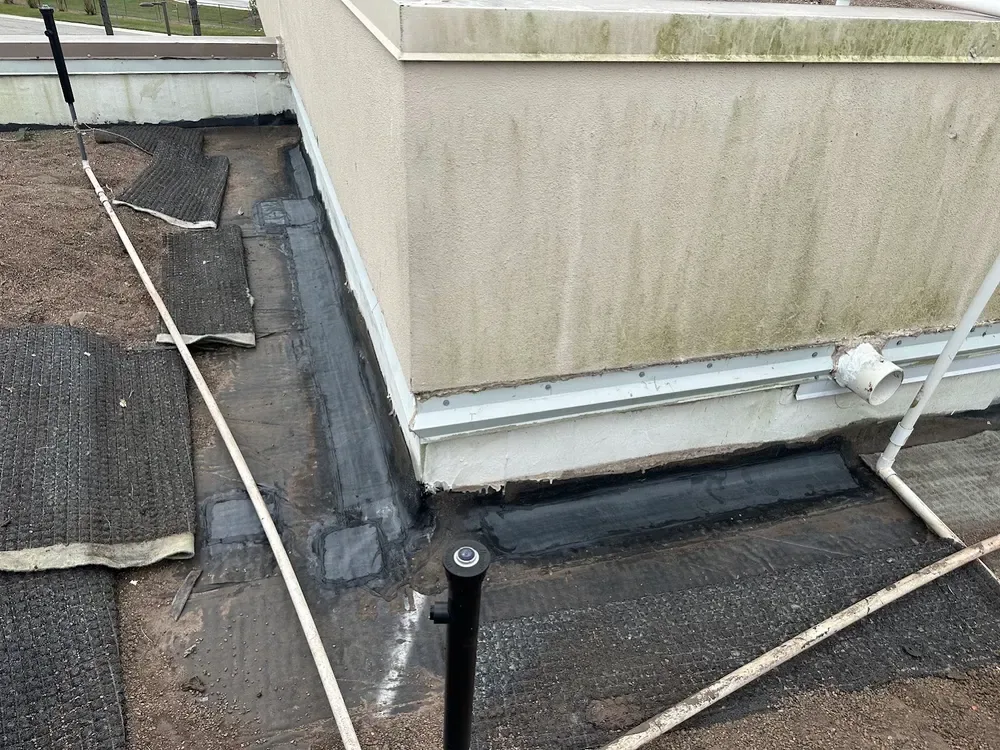
A seam that separates near a curb or drain may be responding to movement at that transition rather than a defect in the open field. We examine whether the sheet is restrained, a metal edge is shifting or the support below has changed. Merced station normals average 22.8 Merced days annually at or above 100°F in its climate normals. This provides local context for material movement, though it is not a diagnosis. The evidence remains the attachment and condition at the failed joint.
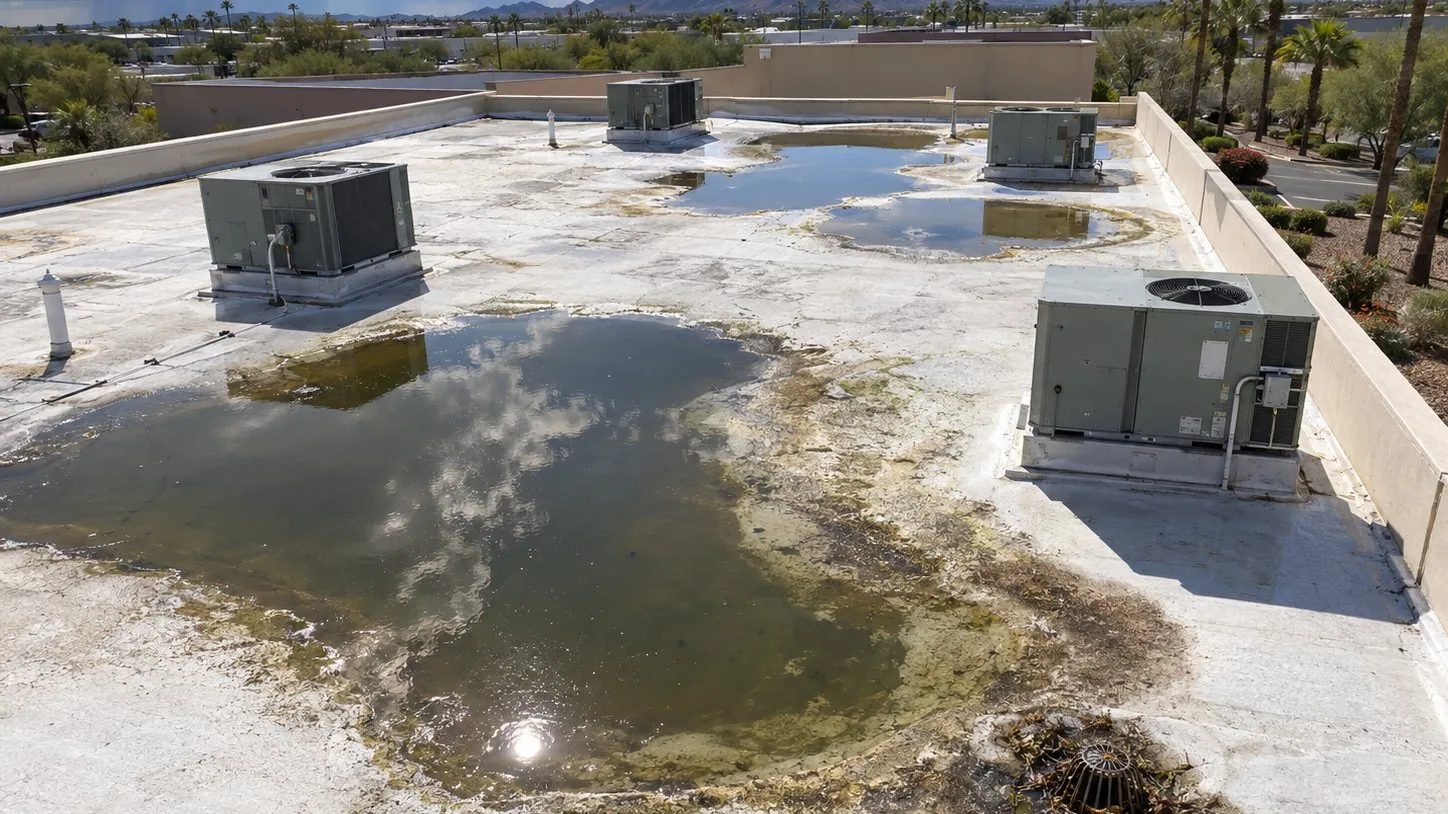
Moisture beneath the seam can reduce support and complicate repair. We look for surface depression, discoloration and soft areas, then determine whether a small opening will help. Ponding-water assessment may be relevant when standing water repeatedly covers the same joint. Drainage correction and seam reconstruction are distinct tasks, even when both appear in one scope.
Rebuild the seam
For a thermoplastic sheet, a repair may involve cleaning and preparing the surface, then welding a compatible patch or overlay with verified edge engagement. For EPDM, the repair requires preparation and a compatible tape or adhesive detail. Other assemblies call for their own methods. We avoid placing a new strip over an unstable or contaminated bond and calling the seam complete. Preparation and finished-edge checks belong in the scope. Puncture repair is separate when an impact has also cut the sheet.
If the sheet has pulled back far enough that there is no dependable lap, the repair may need to expose more material or add a new termination. If insulation below is wet, it needs removal and replacement before the membrane is closed. Insulation and cover-board replacement should be identified separately from seam work. A repair may also require restoring nearby flashing or edge metal to preserve the assembly connection.
We specify the repair limit and what would trigger a change. If opening the seam reveals wet layers beyond the planned area, the crew should pause, document the finding and obtain direction before expanding the work. This prevents an unreviewed change in scope and keeps the final repair record tied to what was actually installed.
Plan for safe access
Seam work can be a short localized task or part of a larger roof operation. We coordinate access, fall protection, staging and any interior protection required by the opening sequence. If work occurs above active equipment or inventory, the site contact helps identify sensitive areas. The crew should know where the seam begins and ends, how the work zone is marked and what condition must be reached before leaving the roof.
Merced’s industrial parks include light- and heavy-industrial sites, and local distribution uses benefit from Highway 99 and rail connections. In a manufacturing building, production schedules may shape access to the roof and ceiling below. In downtown offices, building entry and occupant notification may take priority. We match coordination to the specific site rather than assume all facilities operate the same way.
At completion, records should show the seam before repair, material removed, layers exposed and finished connection. A simple description of location and length helps maintenance staff find the repair later. Merced roof repair can be requested with the seam location, system if known and any interior symptoms.
Localized repair or broader review
A single failed seam with sound sheet around it supports a different decision from a roof where multiple joints have released. We explain the number and distribution of failures, whether water reached lower layers and whether the repair restores the connection. If the pattern suggests aging or widespread bond issues, the owner can consider a broader assessment separately from immediate repair. The route can include Atwater sites along State Route 99; the local commercial mix includes food processing and building-products manufacturing.
Request an inspection by naming the seam location, nearby drain or curb and whether the separation has changed over time. Photos taken from a distance and close range can help orient the visit. We can confirm the membrane type, trace the bond line and recommend a repair that reaches stable material.
Local operating patterns can affect roof access. Turlock Regional Industrial Park includes cold-storage and food-processing users, while Livingston has packaged-food and poultry-processing businesses. We coordinate around the actual production and storage conditions at each facility; those place facts do not determine the seam repair method.
Commercial Roofing Questions
Can a failed seam be patched from the top?
Sometimes, when the surrounding membrane is sound and the repair can connect to prepared material. Inspection determines whether the existing lap can be rebuilt.
How do you know whether insulation is wet?
Visual signs can raise concern, but confirmation may require a test opening. The scope should state the question and include restoration of the opening.
Are all roof seams repaired the same way?
No. Thermoplastic, EPDM and bituminous systems use different connection methods and preparation requirements.
Will one open seam mean the roof is failing?
Not by itself. We check nearby joints and attachment to determine whether the issue is isolated or part of a broader pattern.
Trace an open roof seam
Request an inspection of the separated lap, nearby transitions and any moisture evidence. We will identify the membrane and define the repair limit.
Related Roofing Work