A loose perimeter edge can let wind-driven rain move beneath the roof before a ceiling shows a stain. In Franklin-Beachwood, CA, we inspect the attachment, membrane termination and nearby drainage as one connected detail. The community adjoins Merced on its eastern side, and its local business base lies between Highway 99 and Santa Fe Road. That setting can make access and keeping entrances usable part of a repair plan, but it does not establish what assembly any one property has. A commercial roof inspection begins with the installed system.
Franklin-Beachwood is an unincorporated urban community administered by Merced County. State Route 99 forms its southern boundary. We use those facts to orient the work, then document the actual roof, penetrations and interior signs on the building. If the defect remains localized, a commercial roof repair can address the affected area. If water may have reached insulation or the deck, the investigation needs a defined opening and a different repair boundary before the membrane is closed again. For an adjacent industrial setting, the Highway 59 corridor review records the conditions found at that separate property.
Termination at the business edge
At a wall, parapet or roof edge, metal and membrane must remain attached through temperature movement and weather exposure. We check laps, cleats, fasteners, sealant and the transition from roof field to vertical surface. A small separation at the cap may let water travel behind the visible edge. The repair depends on whether the metal itself has loosened, the membrane has pulled free or both layers need rebuilding.
Merced's summer heat makes movement at connections worth checking, especially where a repair has been applied over a rough or contaminated surface. We look at the bond line and substrate before selecting a compatible patch. Where a perimeter defect meets an opening or gutter, an edge-metal and coping review can help identify which component is admitting water. The work scope states what we will remove and how the replacement ties back to stable material.
Drainage before interior patching
Water from one opening can travel along insulation, a deck flute or a framing member before it appears inside. We compare the reported room and timing with the roof layout, then trace likely paths across seams, penetrations and low points. A wet ceiling tile marks where water emerged. It does not pinpoint the entry. We check drains and scuppers for obstruction, then note whether water remains at the roof after the outlet is clear.
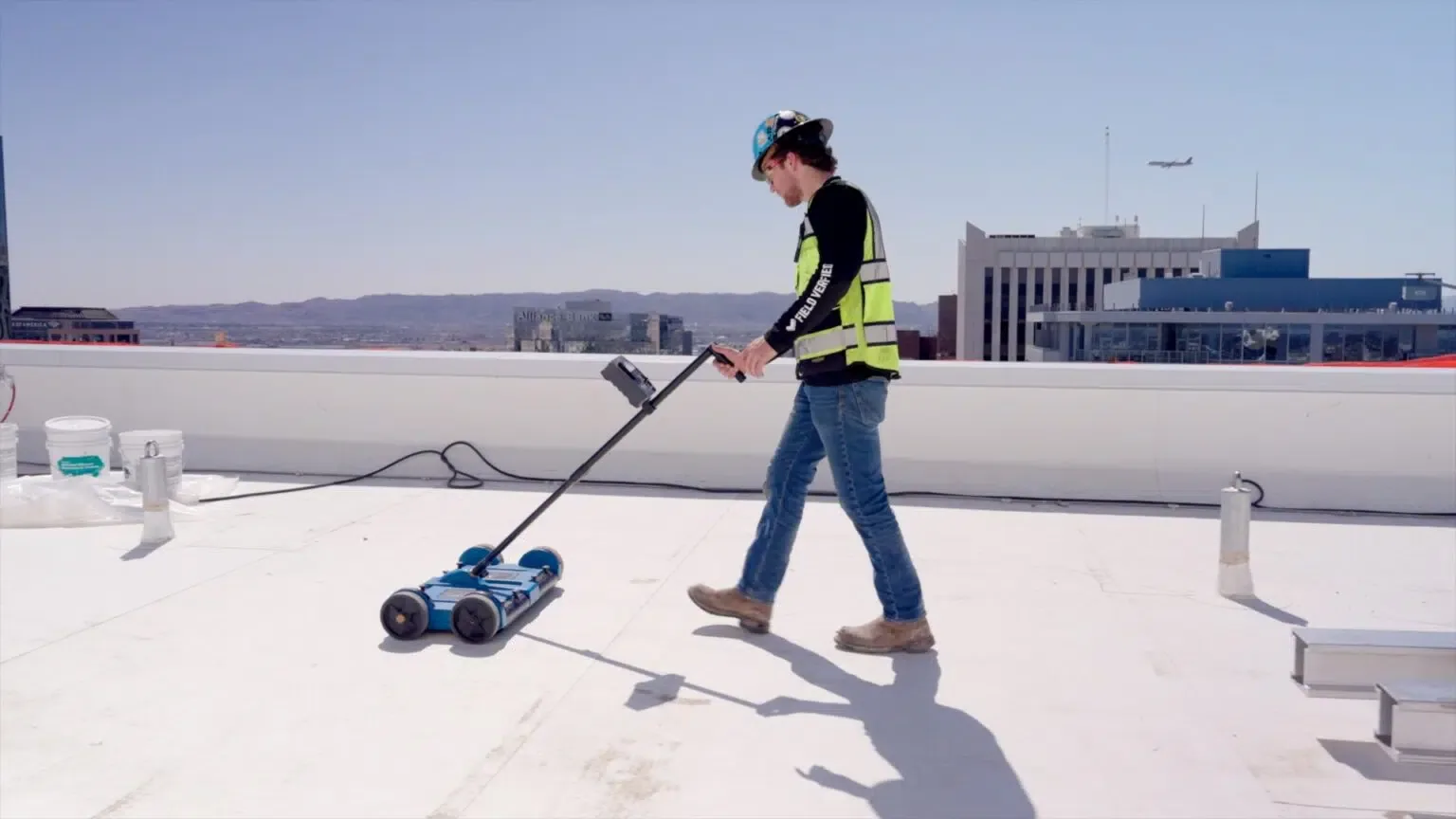
When the source is uncertain, a moisture survey may help direct test openings if the membrane, weather and interior conditions suit the method. The report distinguishes measured indications from exposed, confirmed moisture. Merced and Franklin-Beachwood share a municipal edge, yet the findings remain specific to one roof. A commercial roofing assessment in Merced likewise starts from the local building and not from a neighboring property's repair history.
A test opening with a purpose
A test opening should answer a question that changes the scope. If the issue is a failed boot, we may need to expose only the transition and its underlying insulation. If moisture could have spread beyond the visible stain, the opening may need to reach a dry boundary. We mark the location, photograph each layer and keep the temporary closure in view. The test can distinguish wet material to remove from sound material that can remain.
Access and interior protection come first. We identify the route up, the area below that needs covering and any restriction on opening the building envelope. The written scope identifies the test area, repair materials and what happens if the opening reveals a wider condition. That sequence keeps the decision tied to evidence instead of expanding the work without explanation. If the roof stays occupied, we coordinate the open-and-close period around the property's operating schedule.
A local repair or broader work
A patch makes sense when the membrane and its attachment remain serviceable around a discrete defect. Several active leaks, repeated repairs at the same edge or moisture in multiple roof zones point toward a wider review. We compare repair and replacement only after the assembly is identified, including layers that a prior recover may have left in place. A recover evaluation checks whether the existing roof can accept another assembly without burying moisture or overloading the structure.
A coating can extend service only when the substrate, drainage and adhesion support it. It will not correct loose perimeter metal or wet insulation. We document preparation needs, surface repairs and areas that do not qualify before a coating restoration is considered. Cost and timing change with removal depth, deck condition, access, occupied space, weather and material staging. The scope separates urgent water control from a capital option so the manager can choose each step deliberately.
Keeping the entrance in service
The community's business areas sit between Highway 99 and Santa Fe Road, so a site may need work scheduled around customers, deliveries or office access. We confirm the entrances and service routes actually used at the property; the location fact does not tell us its operating hours. A roofing sequence for an occupied building can divide the roof into manageable work areas, with a daily dry-in limit and clear protection below active work.
Before mobilization, we identify staging, equipment lifts, temporary barriers and any work that needs a quiet or closed window. The manager receives a sequence for removal, substrate repair, installation and inspection. If a weather change could leave an opening exposed, the work plan states how the crew will secure it. These controls matter whether the project is a short transition repair or a larger re-roof. The schedule is revised when the observed assembly or site conditions differ from the initial walk.
The findings that move the scope
Merced's climate normals include a pronounced dry summer and winter precipitation. We still inspect drains and overflow paths at the property before scheduling work around seasonal conditions. We look for open seams, backed-up outlets, brittle sealant and moisture beneath the surface. When the cause remains unclear, a flashing failure assessment can separate a failed transition from a membrane split. A condition report records the observations, photos and limits of access.
Franklin-Beachwood's connection to Merced and its Highway 99 boundary help describe location, not construction. The report instead names the roof zone and repair materials that were actually observed. Request an inspection when an edge, penetration or drainage path needs attention. We will show what can be corrected in place, which test could change the recommendation and whether a larger scope is supported. That gives the property manager a clear written decision before work begins.
Commercial Roofing Questions
What can loosen a roof edge?
Heat movement, water exposure, failed fasteners or a weak tie-in can affect the edge. We inspect the metal, cleats and membrane together before choosing the repair.
Does a ceiling stain locate the roof opening?
No. Water can travel below the membrane. We compare the interior mark with roof details, drainage and the assembly before setting a repair boundary.
When should we open the roof?
Open it when concealed moisture or substrate condition could change the scope. The report records the opening, exposed layers and temporary closure.
Can business continue during a repair?
We plan access, protection and the daily work area with the manager. The sequence depends on the building's actual operations and the size of the opening.
What changes the repair schedule?
Access, material compatibility, moisture extent, removal depth, occupied areas and weather all affect timing. We identify these constraints before setting the work sequence.
Inspect the edge and drainage path
Request a commercial roof inspection in Franklin-Beachwood. We will examine the termination, attachment and nearby roof layers, then provide a written scope tied to observed conditions.
Related Roofing Work