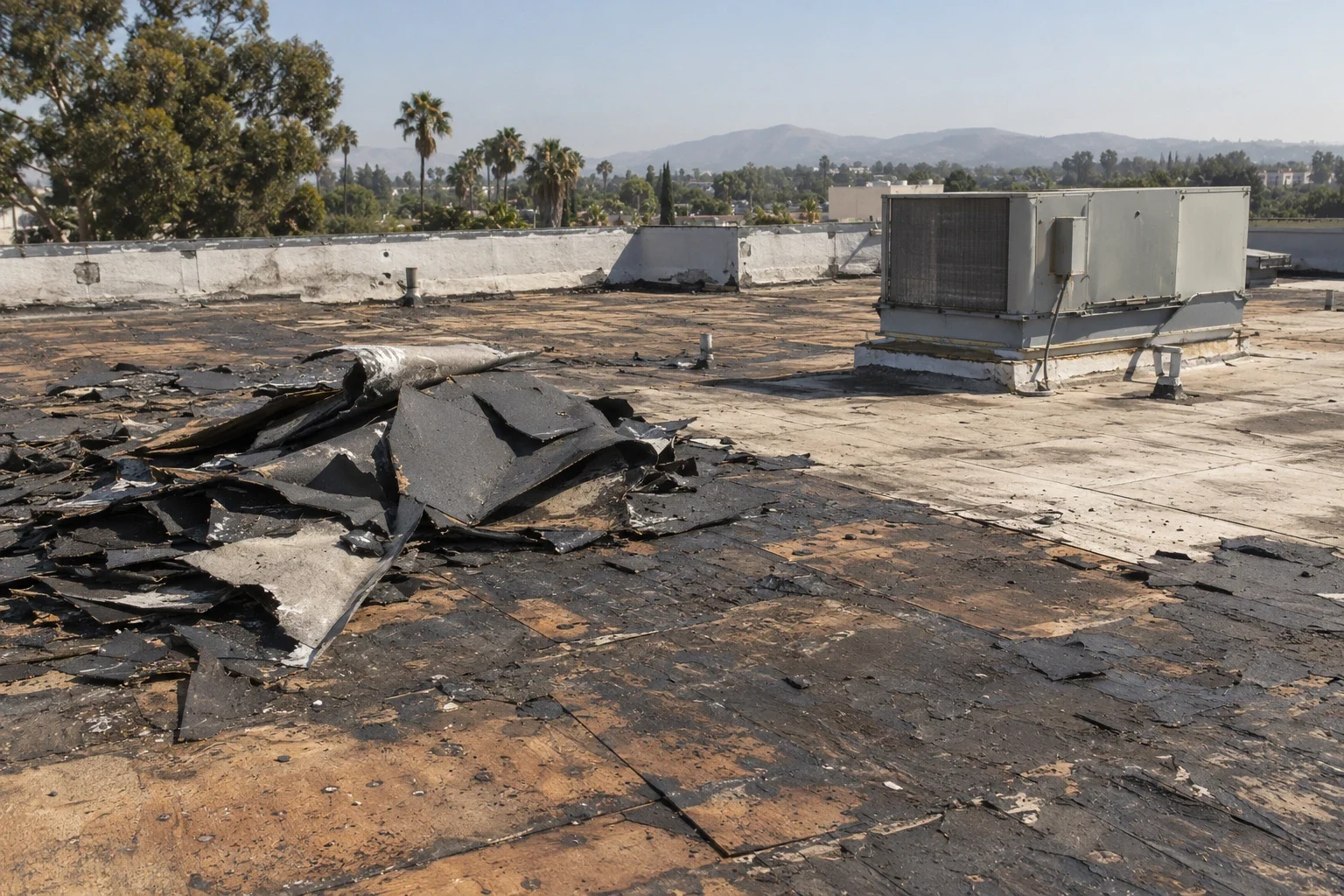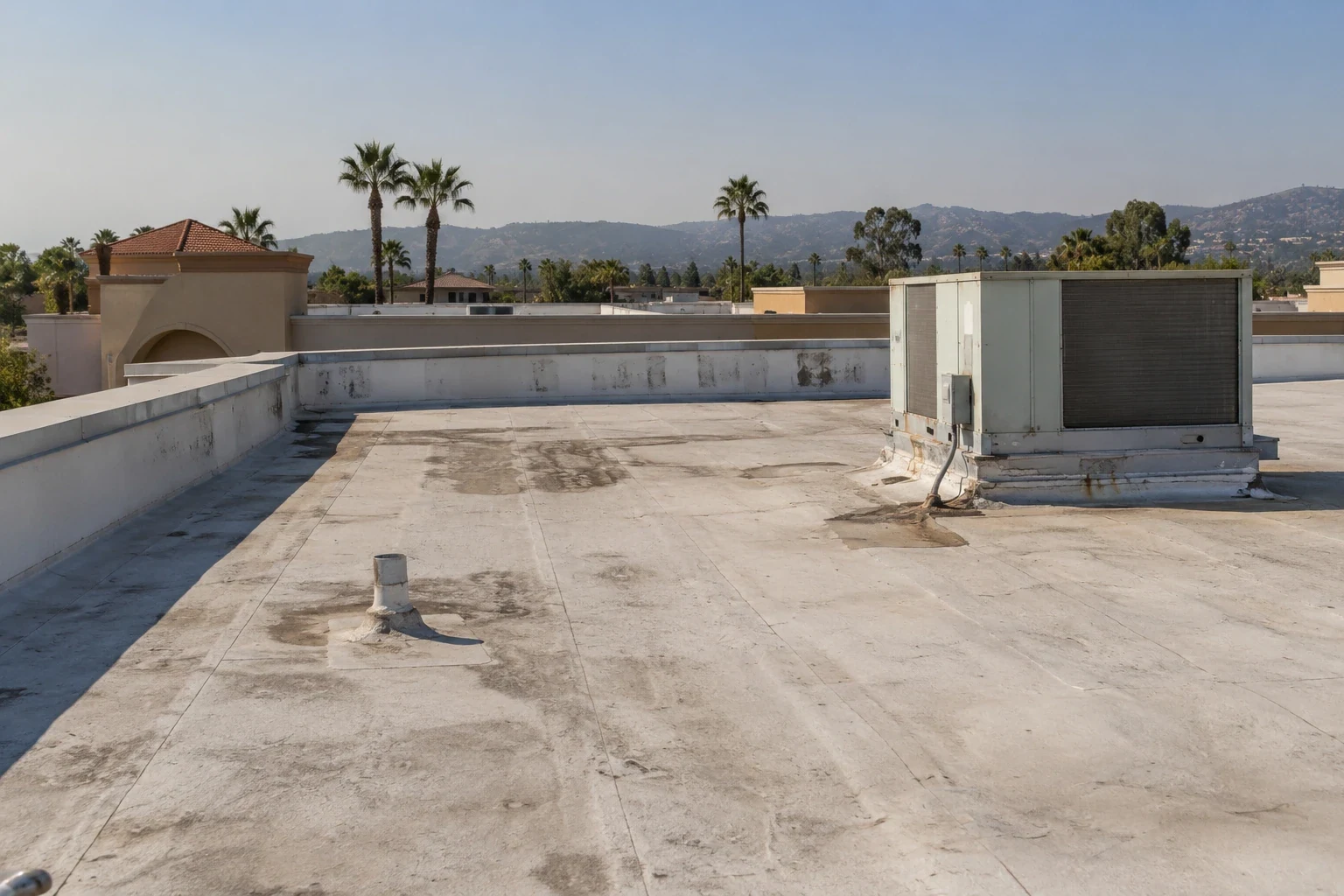
A split roof sheet above the sales floor needs a located repair and an interior protection decision. For big-box retail roofing in Merced, CA, we inspect the membrane and its surrounding support. The affected area may extend beneath the surface. The manager needs to know the proposed opening and closure before arranging customer movement, merchandise protection or service access below it.
Merced includes retail activity alongside manufacturing and distribution. Highway 99 serves the city's industrial parks, and Franklin-Beachwood has an established local business base. Retail roof work needs the actual property layout and operating schedule identified. We examine each affected roof zone before selecting repair, replacement or maintenance, with its assembly construction kept distinct from the sales operation it protects.
Sales areas beneath the work boundary
A room or floor-zone description helps locate the interior area affected by roofing. We connect the roof defect with the manager's plan of customer, merchandise and service areas. Different uses may need different protection. The opening boundary should support a workable roof closure as well as an interior arrangement. A convenient floor separation does not determine the suitable membrane tie-in.
We describe whether work is limited to surface connection or includes layer removal. Wet insulation and damaged deck construction can change that exposure. The building team can then arrange protection for the actual work. A retail membrane repair should identify preparation and reinstatement rather than imply that every patch involves no opening beneath its outer sheet.
Customer routes and staff access need appropriate coordination during material handling. We identify affected entrances and usable service areas before deliveries or debris removal. The roof task and ground staging should remain connected in the plan. A repair at one perimeter can need a different separation from work reached through a rear service location.
Field inspection by recognizable roof zone
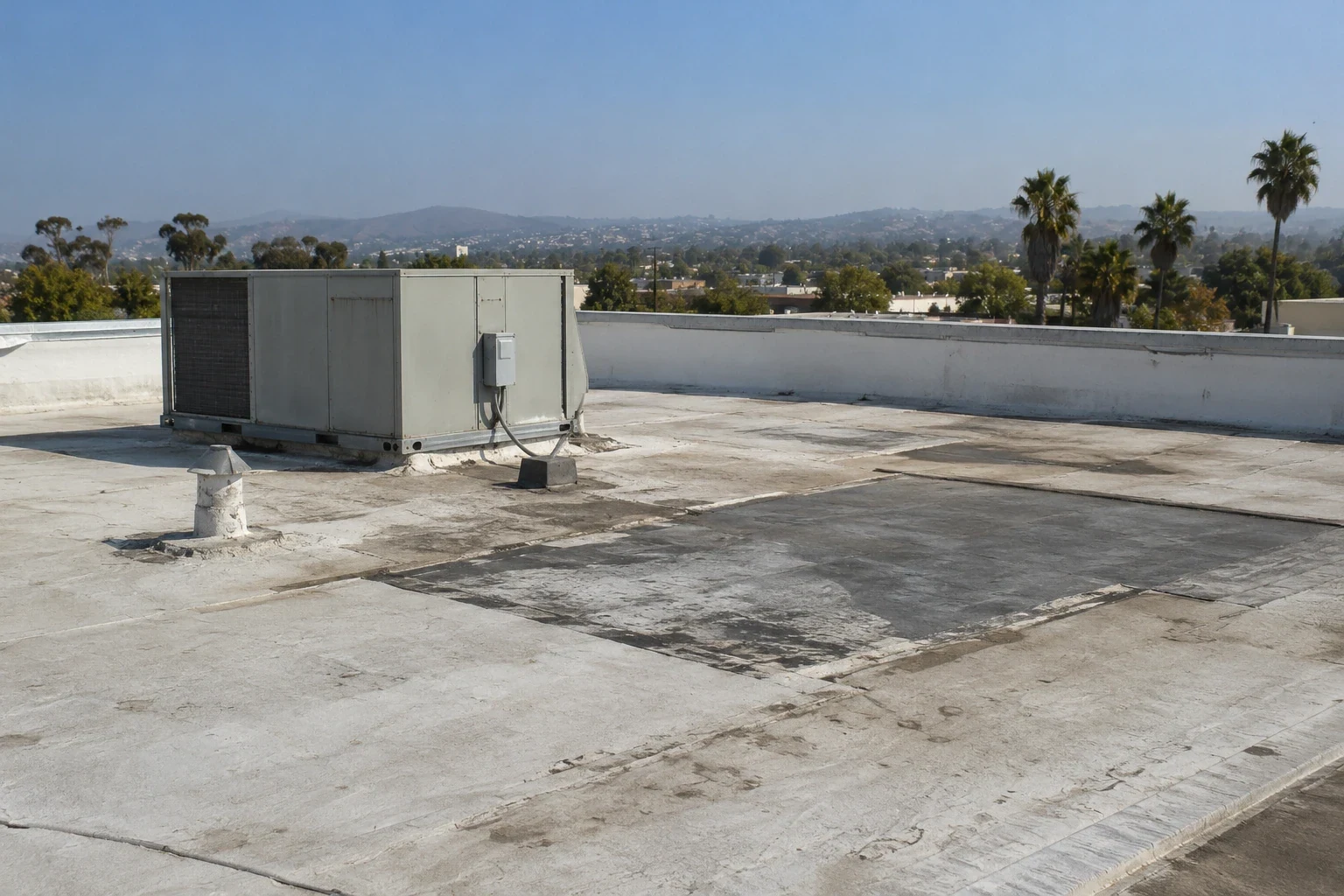
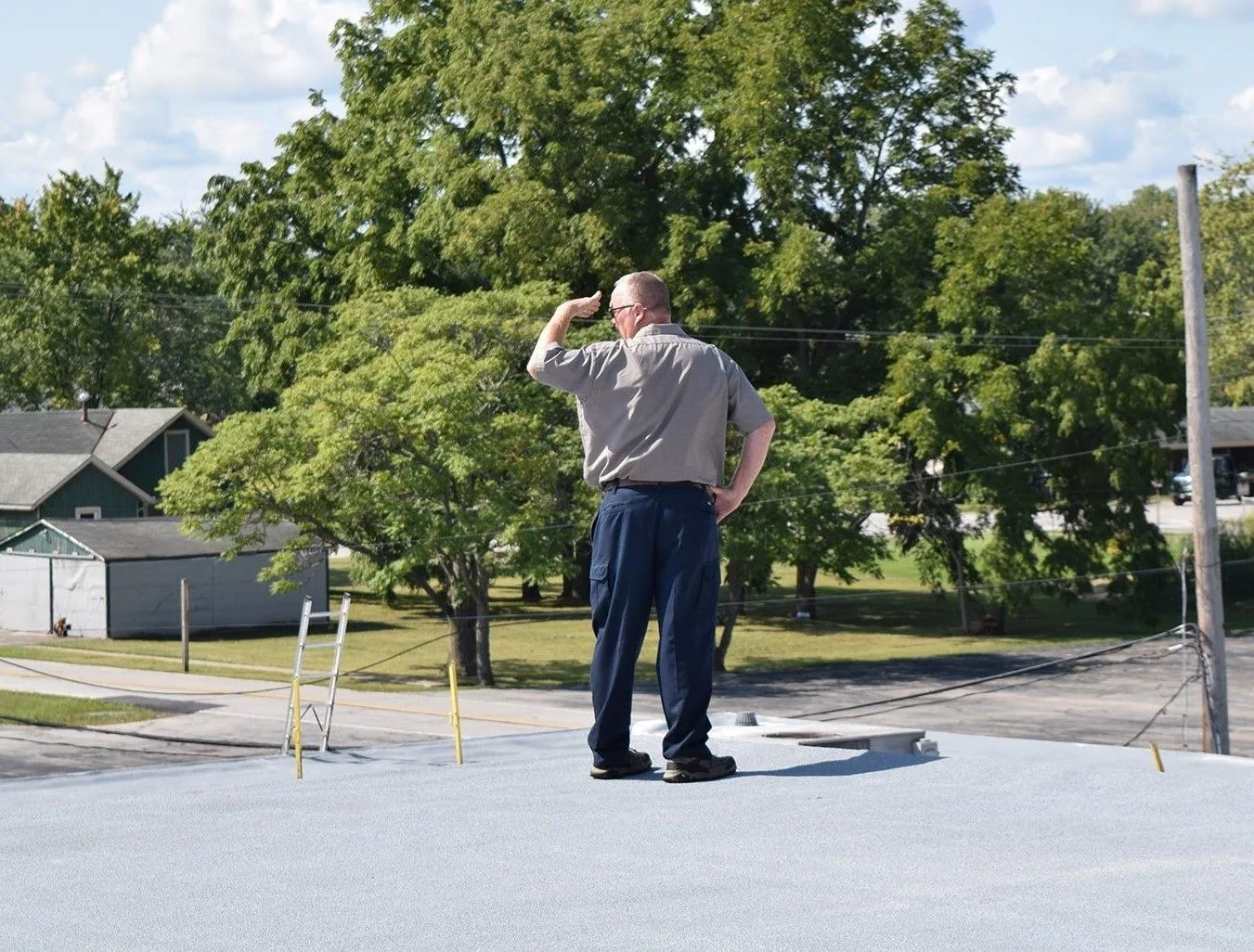
A roof can have different sections, equipment groupings and prior repairs. We locate findings by those features so the manager can relate them to the building. A retail roof inspection examines accessible seams, flashing and outlets while identifying concealed-layer questions. The result should connect each observation with repair, maintenance or a focused next examination.
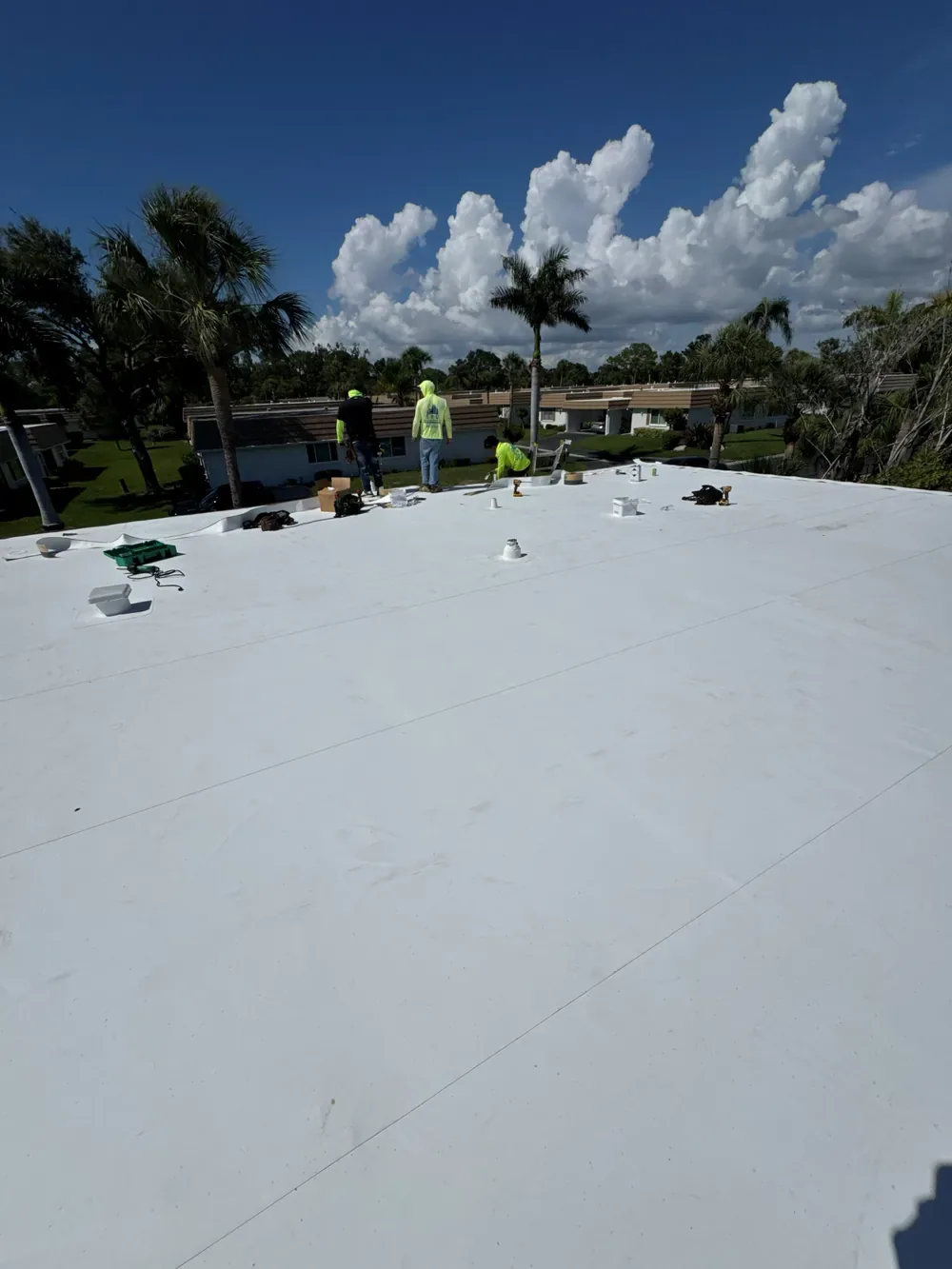
Membrane identity matters to the repair. A TPO roof surface needs compatible welded work and suitable preparation. Rubber, bituminous and metal systems have other connection requirements. We identify the material and old patches before selection. Similar color or a familiar building type should not substitute for examination of the actual sheet and support.
Merced's hot summer conditions make exposed transitions relevant to inspection. We check rigid curb and perimeter connections for separation, strain and unsuitable restraint. Those findings determine the construction response. Another outer patch may leave the same stressed interface underneath it. A repair should reach sound material and restore a detail suited to the assembly's movement.
Service equipment and roof traffic
Rooftop equipment can serve the sales floor and other areas. We ask the property team which systems must operate during the work and where service windows are available. A flashing reconstruction may need mechanical coordination. The roof opening, equipment responsibility and permanent closure should be defined together before damaged material is removed.
Repeated service traffic can wear a membrane near a hatch or unit. We examine walking protection and details along the route. A compatible repair may need an accompanying protection change. New material should not be returned to unprotected sharp contact or concentrated traffic that visibly damaged the area. The plan should leave technicians a usable route that suits the finished roof.
Skylights, where present, also need suitable safety arrangements around work. They are not walking surfaces. We identify them and other openings before planning material movement. The manager should know the actual roof features limiting the route. A broad roof plan is useful only when its access and protection fit the construction encountered.
Outlets and recurring low areas
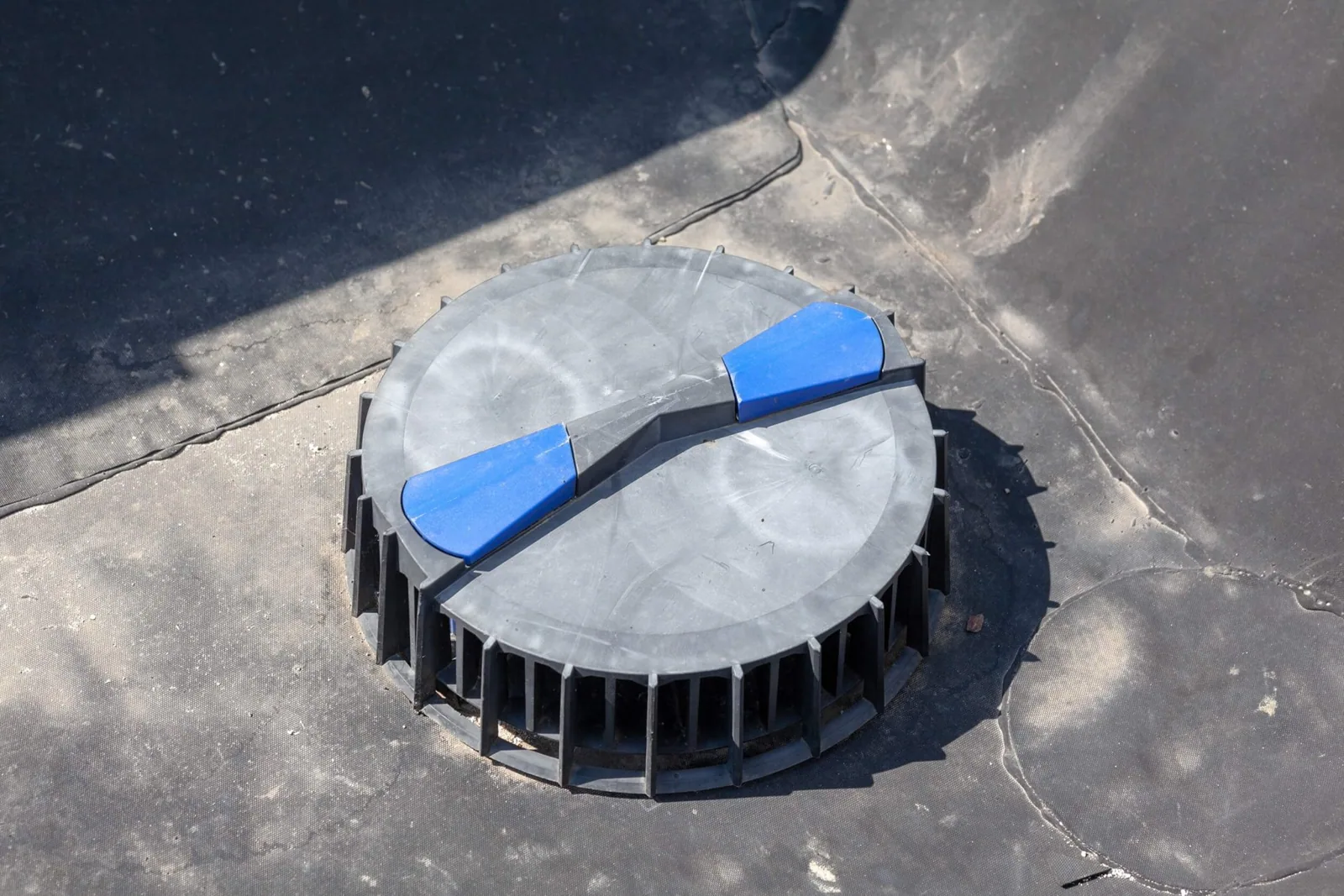
An outlet concern can involve debris, damaged flashing or a poor approach from the field. We examine those conditions separately. Drain and scupper correction may require more than clearing an opening. A persistent depression can need another geometry or technical assessment. The scope should identify the useful response rather than repeatedly assign the same maintenance task.
The Merced rainfall normals are greater in winter than in midsummer. A dry visit can identify open connections and blocked approaches before another wet interval. Current exposure still governs urgency. We define the repair window and protection for the sales zone below. The completed detail needs a suitable water route as well as compatible membrane closure.
New layers can alter finished levels. Added insulation may reduce curb clearance and need a tapered transition into a drain sump. Perimeter terminations also require review. A renewal proposal should identify those connected modifications before installation. A field-only material price can leave substantial work at the roof's outlets and equipment interfaces outside the comparison.
Repair and renewal above occupied retail
A bounded defect may be repairable where surrounding material remains suitable. A wider pattern of distress or wet support can shift the choice toward roof assembly replacement. We identify the layer findings behind that comparison. The manager should understand what can remain and how the new construction will connect to it.
A shared-tenant retail roof can need another equipment and access plan from a single-store property. We establish the actual operation rather than carry one arrangement between projects. The roof construction determines preparation and closure, while the interior use and service routes determine the usable work sequence.
For a grocery retail roof, product and refrigeration equipment may add particular operating questions. We identify those conditions with the building team. The proposal should connect them with the affected roof zone and actual construction. Different retail uses can need different protection without making their membrane systems interchangeable.
Located scope and continuing roof access
At commercial property in Franklin-Beachwood, the local business base makes occupied access coordination useful. We identify the actual entrance and staging arrangements. Roof findings remain located by zone and component. The manager can authorize a bounded repair or further examination using that information rather than an unlocated list of surface concerns.
For retail roofing in Merced, cost drivers include preparation, damaged layers, detail count and protection arrangements. The final proposal distinguishes permanent closure from any temporary phase edge. Later equipment service and drainage still need appropriate maintenance. The useful big-box roof decision gives the manager a clear assembly scope and a practical way to coordinate it with the sales operation.
Commercial Roofing Questions
Why connect a roof opening with the retail floor plan?
The affected zone may need customer separation or merchandise protection. We identify removal and closure against the interior location provided by the building team. The work arrangement should follow the actual construction exposed rather than only its outer patch dimensions.
Can equipment service traffic be addressed during a membrane repair?
The route and protection deserve examination where repeated damage is visible. We repair compatible material and discuss suitable access protection. The restored surface should not immediately face the same unprotected contact that caused its distress.
What separates outlet maintenance from drainage reconstruction?
Clearing addresses debris. A damaged connection or persistent geometry issue requires another response. We identify the condition and appropriate next step so the manager can compare a maintenance task with the construction needed at the affected detail.
What should a renewal option include besides field membrane?
Support layers, attachment and connected flashing need specification. Outlet approaches and retained curb heights also need review. We describe those items so a replacement comparison shows a complete assembly rather than a sheet price without its necessary details.
Inspection above the affected sales-floor zone
Request examination of the split membrane, outlet approach or service-route damage before the retail roof repair is scheduled.
Related Roofing Work