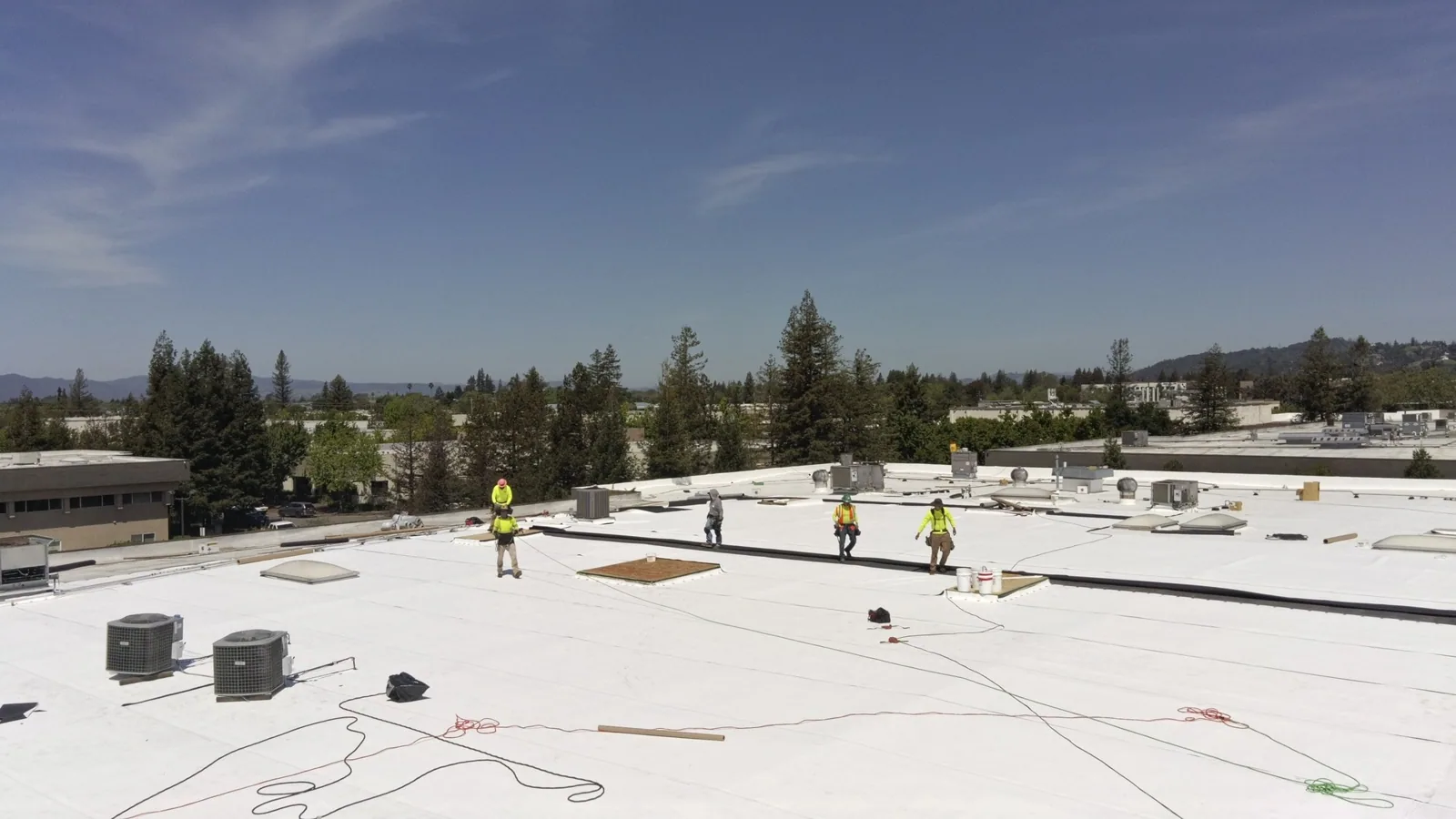
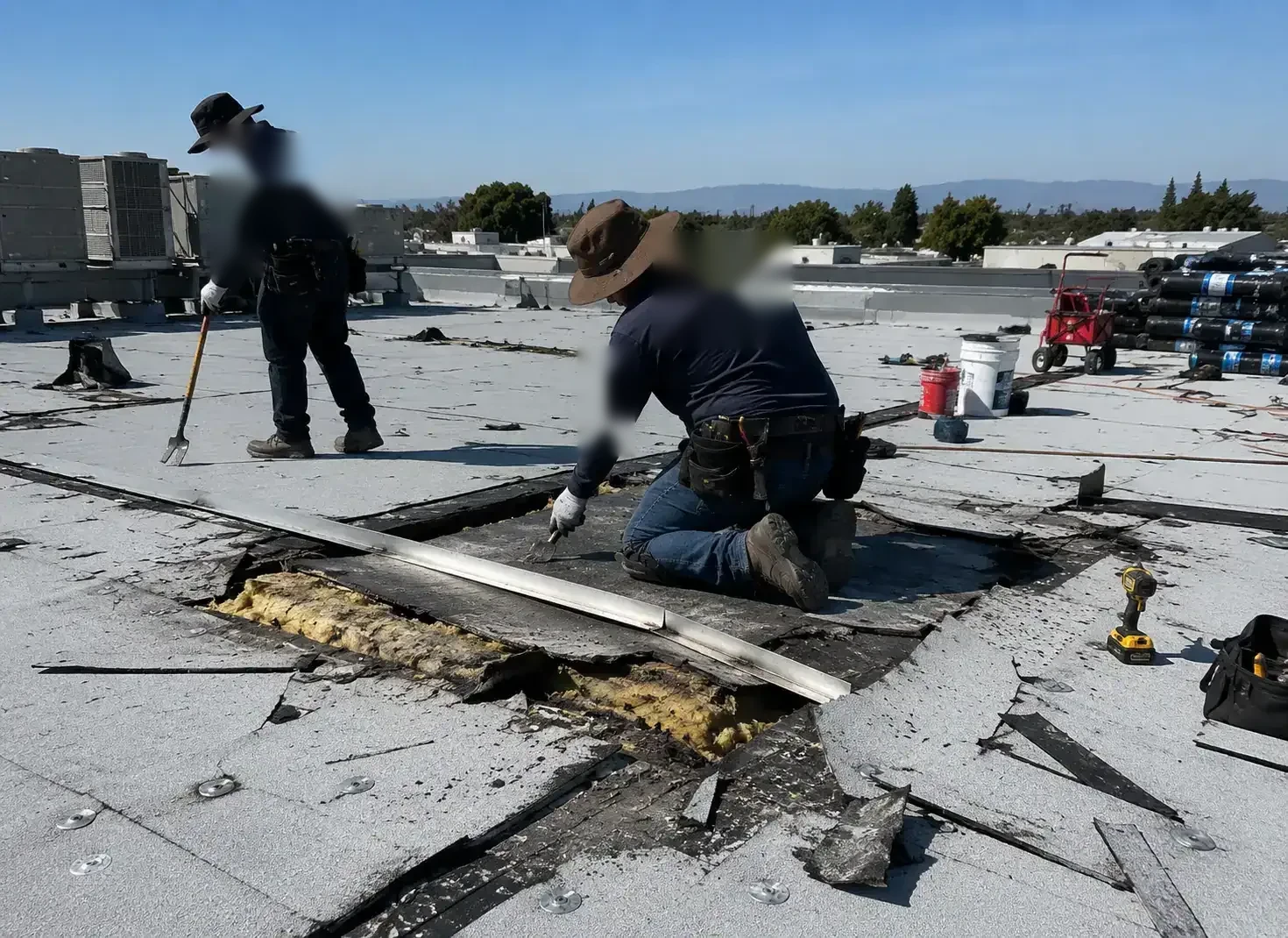
Residue at an exhaust-curb base needs examination before flashing repair. For restaurant roofing in Merced, CA, we inspect the affected surface and ask about the equipment discharge. Preparation and compatibility matter to the new connection. A patch applied over unsuitable residue can leave a weak interface beneath an otherwise neat-looking repair.
Downtown Merced includes restaurants and cafes, while Franklin-Beachwood has a local business base between Highway 99 and Santa Fe Road. An occupied food-service roof project needs the actual equipment, interior use and access identified. We examine the assembly and define repair or renewal around a workable opening and closure sequence, with kitchen services coordinated before material is removed.
Exhaust equipment and the exposed roof surface
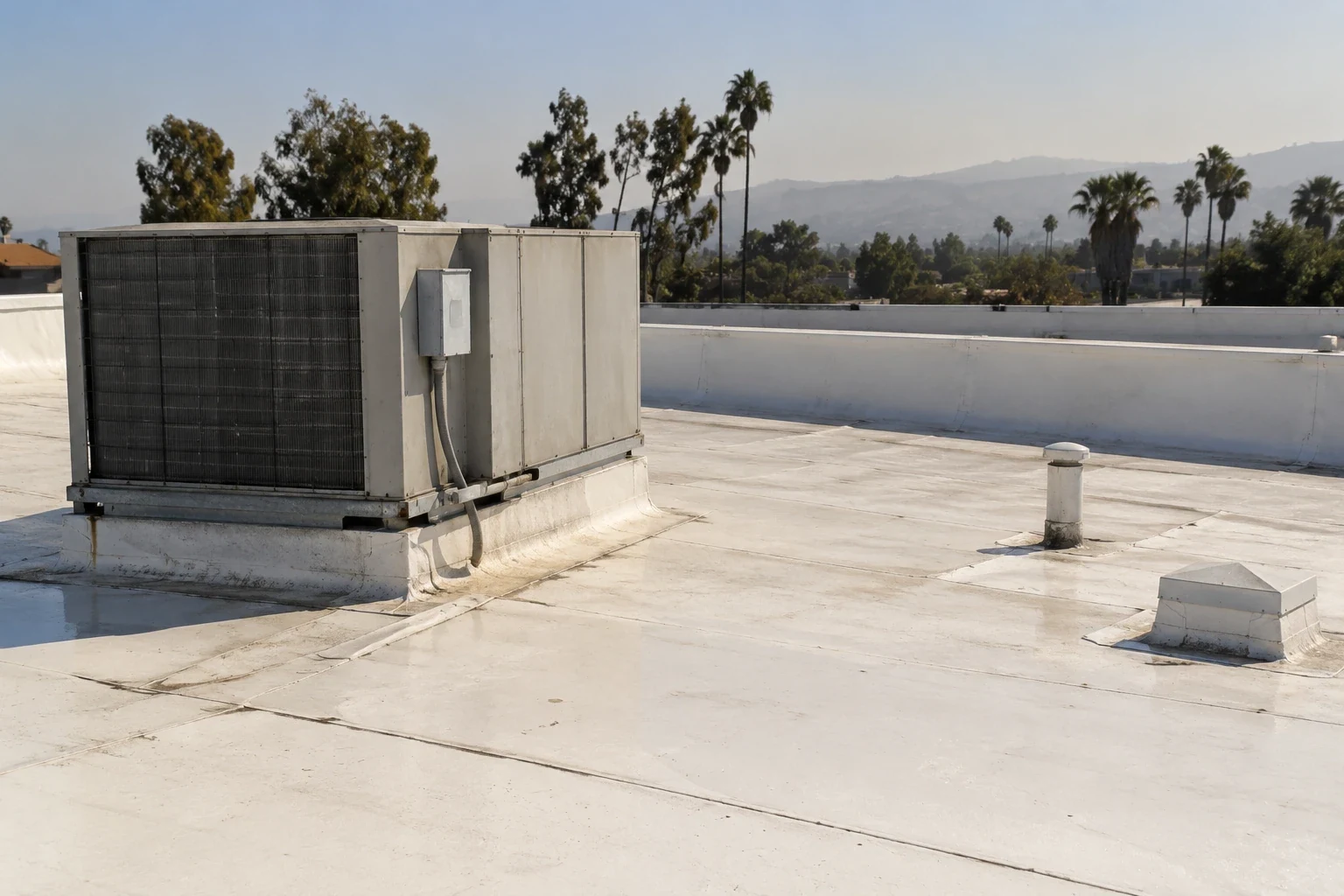
An exhaust outlet can affect the roof around its base or service area. We ask the property team about the actual discharge and examine visible material condition. Compatibility with the particular substance needs product review where relevant. A broad membrane description does not settle every exposure question. The repair material and preparation should address the condition identified at the roof.
The equipment itself may need cleaning or another service response separate from roofing. We identify the affected membrane and connection work. The building team coordinates equipment handling and control of continuing discharge. Restoring the surface without addressing a relevant ongoing exposure can leave the new repair facing the same condition. Those responsibilities should be established before the roof detail is rebuilt.
A PVC restaurant roof assembly needs its particular compatibility and welding requirements followed. Other roof systems use different repair methods. We identify the material and any prior coating or patch buildup. The suitable connection may require removal to expose serviceable roofing rather than another application over unidentified compounds.
Curb flashing and kitchen service continuity
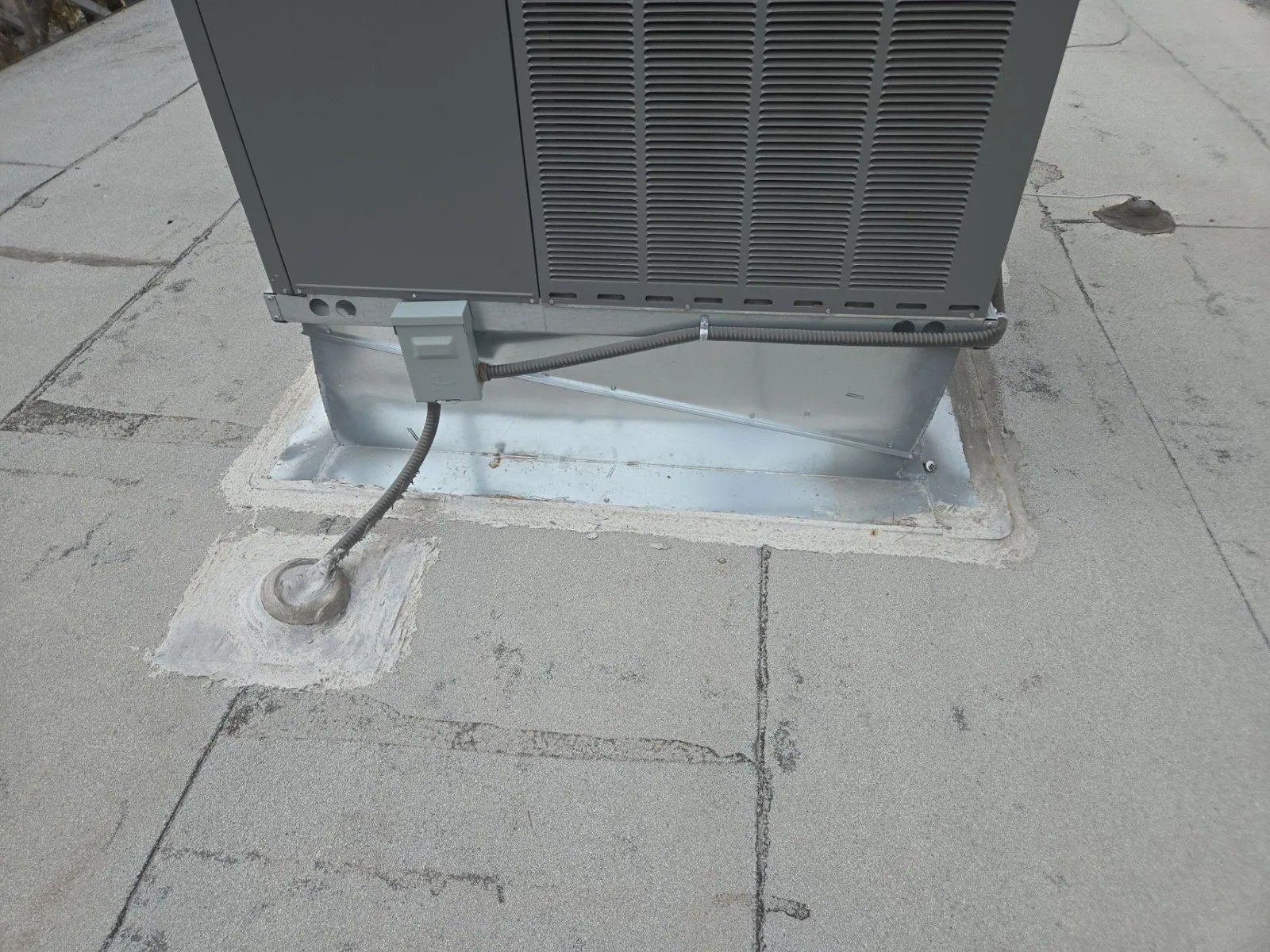
A curb detail connects the horizontal field with vertical flashing and the equipment base. We examine corners, attachment and the upper termination where accessible. A surface split may require rebuilding the transition. Exhaust-curb flashing repair needs an appropriate connection through that detail, not merely a seal along its outer edge.
Kitchen service may constrain the available work window. We ask which equipment must operate and which can be isolated. Curb or support reconstruction can require another trade's work before roofing closes the area. The project needs clear responsibility for disconnection, lifting and reinstatement so the roof detail is not left open while service arrangements remain unresolved.
Merced summer heat makes movement between equipment metal and flexible roofing relevant to examination. We look for strain, separation and unsuitable restraint. The repair should suit the materials and assembly geometry. A rigid outer compound can leave the same stressed transition underneath it. The observed connection establishes which part needs reconstruction.
Food preparation areas beneath removal
A roof opening should be located against the kitchen, dining or support space below it. We identify the planned removal and affected layers with the manager. The restaurant team establishes product protection and operating requirements. A small flashing defect may involve insulation removal, so the interior arrangement needs to reflect the actual construction exposed rather than only the outer patch size.
Removal and material handling can have different implications from applying a surface repair. We explain the tasks and usable close-in sequence. Temporary protection needs a defined role if permanent construction cannot proceed immediately. The plan should fit the protected interior use while allowing suitable preparation and closure. Operating convenience should not conceal damaged layers that need repair.
A grocery food-service area may combine product handling and refrigeration with another layout. We establish the restaurant's actual operation rather than transfer one commercial food-use sequence between buildings. The assembly determines compatible construction. Equipment and interior activity determine how its opening can be coordinated.
Leak routes and concealed material condition
Water reported near an exhaust unit may need roof and equipment examination. We compare its timing with rain and operation, then inspect relevant seams, curb connections and outlets. Restaurant leak investigation identifies the evidence supporting roofing work. Another mechanical or wall condition may need separate review when the roof findings do not explain the symptom.
Wet insulation can affect the repair boundary beyond the visible entry. We confirm relevant layer condition before assigning removal. Supporting damage needs its own response. The new membrane connection should not seal unsuitable material inside the assembly. We describe reinstatement thickness and the usable adjoining roofing so the manager understands the construction included beneath the patch.
Where broader deterioration is found, another repair or renewal option may deserve comparison. The proposal distinguishes known damage from a question requiring further opening. A selected sample needs interpretation with the wider roof examination. One wet point should not become a roof-wide quantity without suitable supporting checks.
Outlets and retained roof water
Debris around equipment can move into the outlet approach. We examine accessible drains and scuppers, their flashing and surrounding water marks. Clearing and connection repair are separate tasks. A persistent low area may need another geometry assessment. The proposal identifies the useful response rather than use surface coating as the only treatment where drainage remains unresolved.
Merced's normal seasonal rainfall is heavier in winter than in midsummer. A suitable dry interval can be useful for planned detail work before renewed exposure. Current condition still determines urgency. The opening needs preparation and closure appropriate to the roof material and occupied space. Temporary protection should have a stated permanent next step.
Food-service roof maintenance should include equipment-side material, outlets and traffic areas. Suitable cleaning and repair methods need compatibility with the installed system. Repeated service contact may require a protective route change as well as membrane repair. The completed roof should remain accessible for equipment service without returning the same vulnerable detail to unprotected damage.
Dining entrances and the construction scope
At a property in Downtown Merced, restaurant and cafe activity makes occupied entrance coordination practical. We identify usable roof access, deliveries and removed-material routes. Work near a customer entrance needs appropriate separation. The roofing sequence should connect with the actual food-service schedule and allow enough time for supporting repair and complete flashing construction.
A restaurant within shared retail space may also need coordination with neighboring tenants and common service routes. The property team identifies those arrangements. We define the affected roof zone and equipment interfaces. Responsibility for shared access or services should be settled before removal rather than delay closure after the detail has been opened.
At commercial property in Franklin-Beachwood, we establish the actual occupied access and operating needs. Cost drivers include residue preparation, damaged layers, equipment work and the number of connected details. A bounded repair can be practical where surrounding construction is suitable. The final scope explains that boundary and its permanent closure, so the kitchen schedule can be assessed against the proposed removal and permanent repair sequence.
Commercial Roofing Questions
Should exhaust residue be removed before a roof patch is installed?
The surface and intended connection need suitable preparation. We identify the material and observed exposure, then review compatibility where relevant. A patch should reach a usable surface rather than cover residue or loose earlier repair compounds.
Can equipment service be separate from the restaurant roof repair?
The tasks can have different responsibilities, but their sequence needs coordination. We identify the roof opening and closure. The property team arranges equipment handling and any continuing discharge response so the rebuilt detail is not left facing an unresolved condition.
Why locate roofing removal against kitchen and dining areas?
Their operating and protection needs may differ. We describe the actual layer opening and connect it with the area below. The restaurant team can then arrange suitable product protection and access within a usable work window.
What should be compared when the proposal extends beyond a curb patch?
Preparation, affected insulation and supporting damage may change the boundary. We identify those findings and the connection needed to close the repair. The manager can assess the scope through examined construction rather than the visible crack alone.
Inspection of the restaurant exhaust transition
Request examination of the residue-affected membrane, curb flashing and interior zone before compatible restaurant roof work is scheduled.
Related Roofing Work