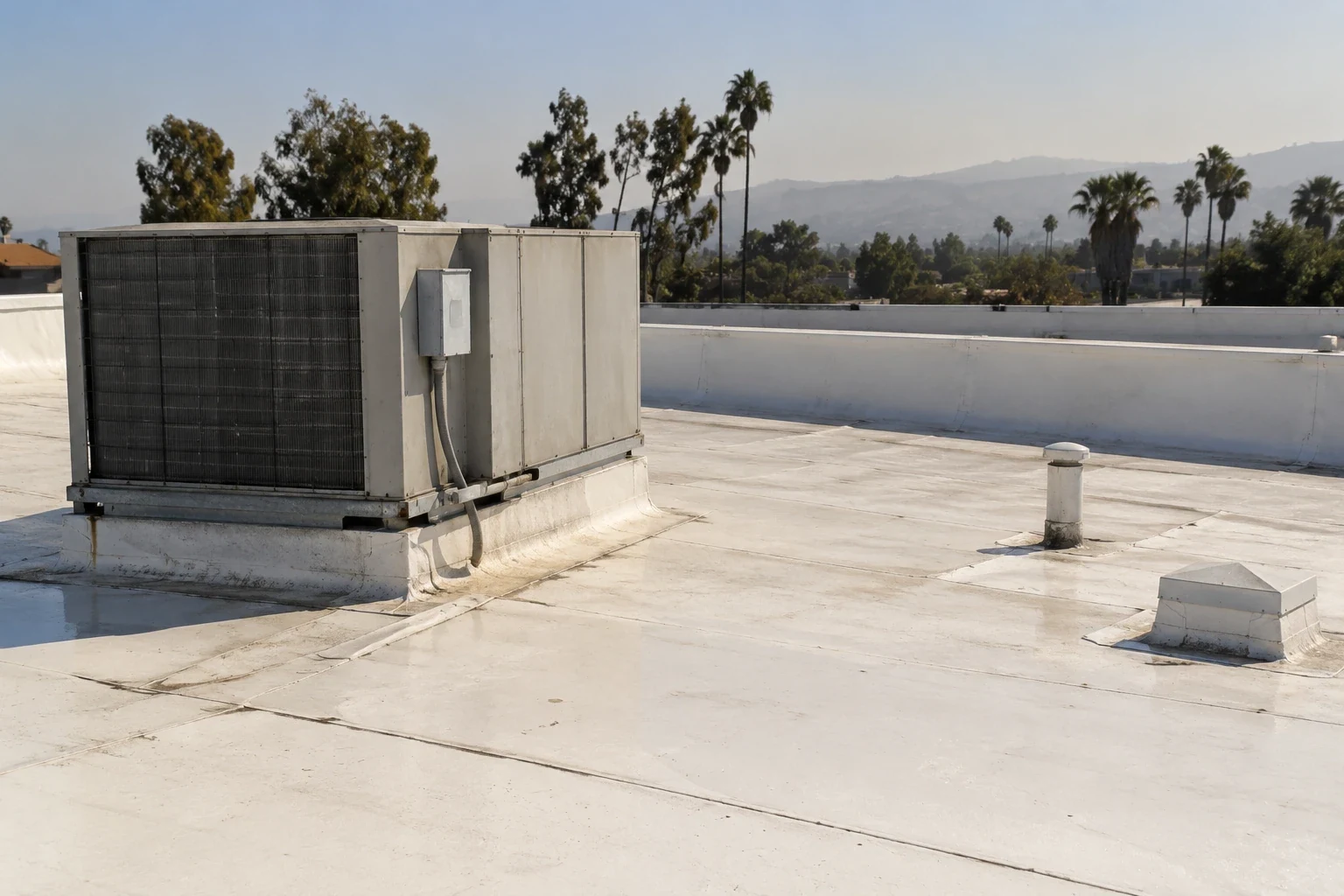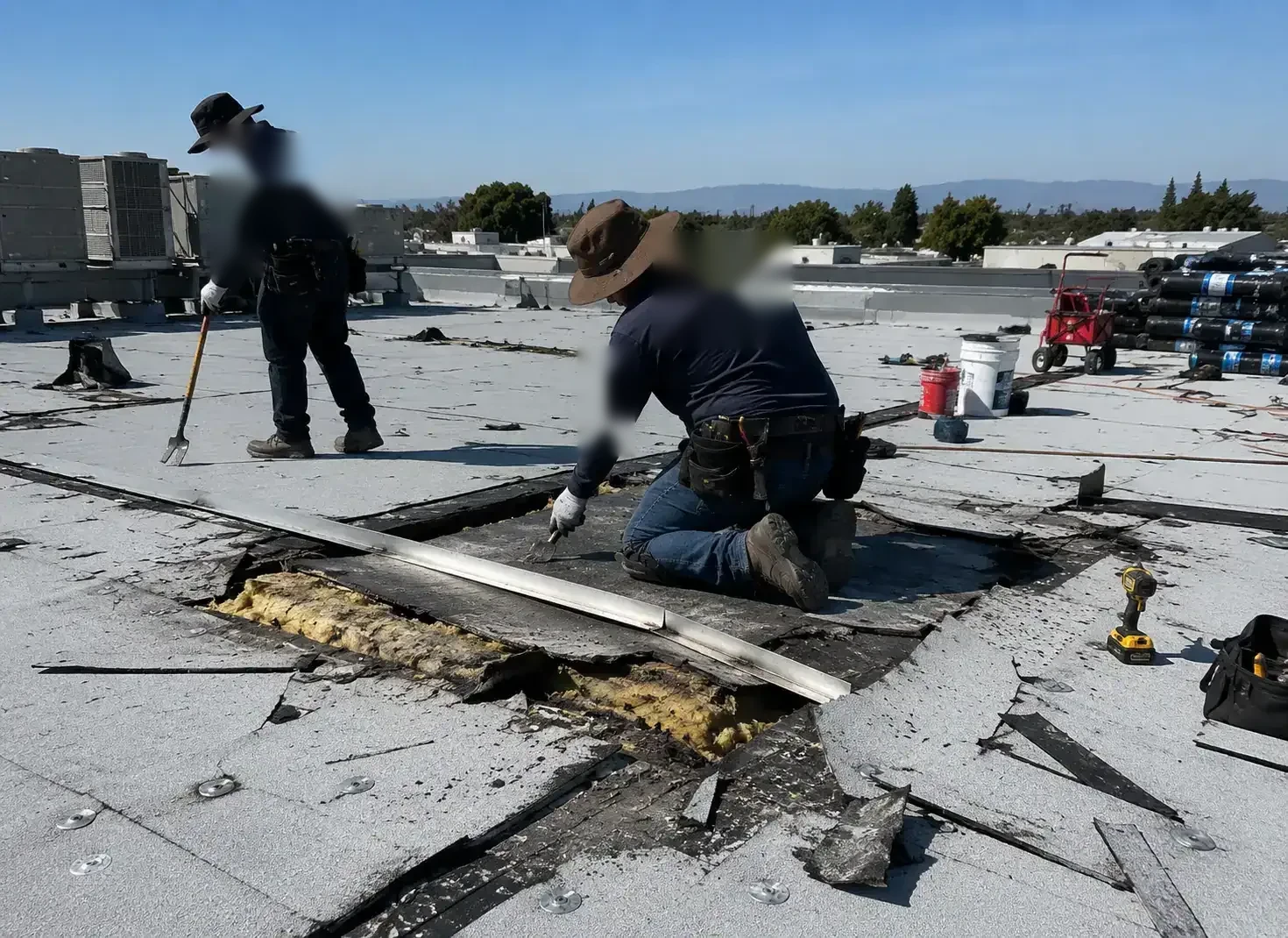
A loose penetration boot beside refrigeration piping needs a connection and service review. For grocery store roofing in Merced, CA, we examine its base, upper closure and surrounding membrane. The repair may need equipment coordination and insulation reinstatement. The manager should know the affected roof zone before arranging protection for merchandise, refrigeration service or occupied access below it.
Merced includes retail activity and food and grocery distribution in industrial parks with Highway 99 access. Livingston also has food-processing businesses. Those local uses make product protection and equipment continuity practical discussion points. We identify the actual store layout and roof assembly, then define investigation, repair or renewal suited to the material and occupied operation.
Refrigeration piping at the roof connection
A pipe penetration can have an opening at the flange, vertical material or upper closure. We inspect those components rather than treat the visible base as the only possible entry. The detail must suit the membrane and pipe arrangement. Surface material accumulated around several lines may require removal and reconstruction before a compatible repair can be made.
Pipe and curb flashing repair identifies the complete transition into the roof field. We ask the building team which refrigeration lines or units are affected. The sequence may need another trade's work. The roofing connection should be constructed with usable access rather than improvised around equipment because its service arrangement was left unresolved.
Condensate or another equipment-water condition may also need review where water appears near a unit. We compare reported timing and roof observations. A mechanical issue and rain entry can require different work. The manager receives an explanation of the roofing findings and any separate equipment examination needed, so a membrane repair is not expected to solve every water symptom nearby.
Protected merchandise below the opening
A roof opening should be located against the store's interior zones. We identify merchandise, equipment and public areas affected by the proposed removal. The building team determines appropriate protection and any relocation. The roofing scope defines exposure and closure. A small outer membrane defect may involve wider layer repair, so protection should not be based only on the patch dimensions.
Where food preparation or sensitive stock is present, the property team identifies the relevant operating requirements. We coordinate removal and material handling with those arrangements. The plan should provide a suitable work area and usable interior route. It should not assume that all portions of the store can use the same access or protection during roof construction.
A large retail sales floor can involve different merchandise and service priorities. We establish the actual grocery operation. Refrigeration equipment, stock handling and customer movement may all affect the sequence. The roof material and affected layers determine the construction, while those operating needs determine how its opening can be managed.
Leak examination and the outlet route
A leak symptom needs a focused comparison with nearby seams, curbs and outlets. Grocery roof leak investigation identifies the observed condition supporting repair. Suitable testing may help separate suspect details, with interior protection coordinated first. Another wall or equipment component may also need examination. The proposed roof work should have a defined entry or construction basis.
Debris at an outlet and damage in its flashing are different findings. We examine accessible discharge and surrounding water marks. A persistent low area can need geometry or technical review beyond clearing. The scope identifies the appropriate response. A new field finish should not be the only treatment where an outlet connection or supporting slope remains unsuitable.
Winter rainfall normally exceeds midsummer rainfall at the Merced station. That seasonal pattern can support planned repair in a suitable dry interval. Current conditions still determine urgency. An observed opening should receive a stated decision before renewed rain exposure, with preparation and closure appropriate to the material above the occupied store.
Insulation and the refrigerated enclosure
Wet support layers can change a repair boundary beyond the visible boot opening. We confirm suspect material where condition affects removal or retention. The new layers need appropriate thickness and support. Deck deterioration requires its own response before closure. A fresh membrane connection should not leave damaged insulation concealed simply because the original outer defect was small.
Where the roof forms part of a refrigerated enclosure, air and vapor control need the appropriate project review. The assembly may have several functional layers affected by an opening. We identify the construction and coordinate suitable reinstatement. A surface patch alone may not restore every enclosure interface disturbed during the repair.
The manager should know which layer work is included and which question needs further examination. Selected openings provide findings at their locations and need interpretation with the wider roof observation. Removal quantities should follow the affected construction. We explain the boundary so the proposal distinguishes membrane repair from support and enclosure reinstatement.
Membrane selection and exposed service areas
A PVC roof material has particular compatibility and repair requirements. Another sheet or coating system needs different preparation. We identify the existing surface and any equipment-related residue before selection. Chemical suitability should be reviewed for the actual product and exposure where relevant, not assumed from a broad membrane family.
Merced has substantial summer heat. We inspect rigid equipment transitions for strain, separation and loose attachment. The permanent detail should suit the adjoining materials and their movement. Another rigid outer treatment can leave the same stressed connection beneath it. The repair method follows the observed assembly, with suitable preparation for the intended bond or weld.
Service traffic around refrigeration equipment can damage vulnerable roof material. We examine routes and protective arrangements. Maintenance of equipment-side roofing should include those areas and the outlets. A compatible repair and improved traffic protection may both be needed where repeated contact is evident. The finished surface needs a workable path for later service.
Receiving routes and the final repair scope
Roof material deliveries and removed layers need ground arrangements that fit store operation. We identify receiving routes, customer access and usable staging with the manager. Work near an entrance can need different separation from a rear service area. The roof-zone sequence should connect with those routes, so necessary preparation and closure have a practical working area.
At property in Livingston, established food-processing activity provides a local context for coordinating product and service needs. We identify the actual affected operation. Roof findings remain tied to the zone and component examined. A repair choice should not transfer one area's layer condition to another section without suitable investigation.
For grocery roof work in Merced, cost drivers include preparation, damaged insulation, connected equipment work and access. A bounded defect may permit repair where adjoining material remains suitable. Broader damage can change the renewal comparison. The proposal explains that construction difference and the operating sequence needed to restore it above the occupied store.
Commercial Roofing Questions
Can a refrigeration pipe boot leak above its base flange?
The vertical material and upper closure also need examination. We identify the complete detail before repair. A base patch may leave a separate opening above it, so the proposed work should address the observed connection rather than only the nearest surface edge.
What if water near a unit occurs without rain?
The equipment and timing need review alongside the roofing. Condensate or another mechanical issue may require separate work. We examine accessible roof details and distinguish confirmed findings from an equipment-water question needing the appropriate trade.
Why identify merchandise zones before membrane removal?
The opening can affect product and occupied routes below it. We locate removal and closure with the building team. Protection should fit the layer work actually planned, including any support repair beyond the visible outer defect.
Does every grocery roof repair involve refrigerated enclosure layers?
The actual assembly and area determine that question. Where the roof serves a refrigerated enclosure, affected air or vapor control needs review. We identify the construction rather than apply one layer assumption to every roof zone in the store.
Inspection at the grocery refrigeration interface
Request examination of the damaged pipe boot, equipment-side membrane or leak zone before the grocery roof repair is scheduled.
Related Roofing Work