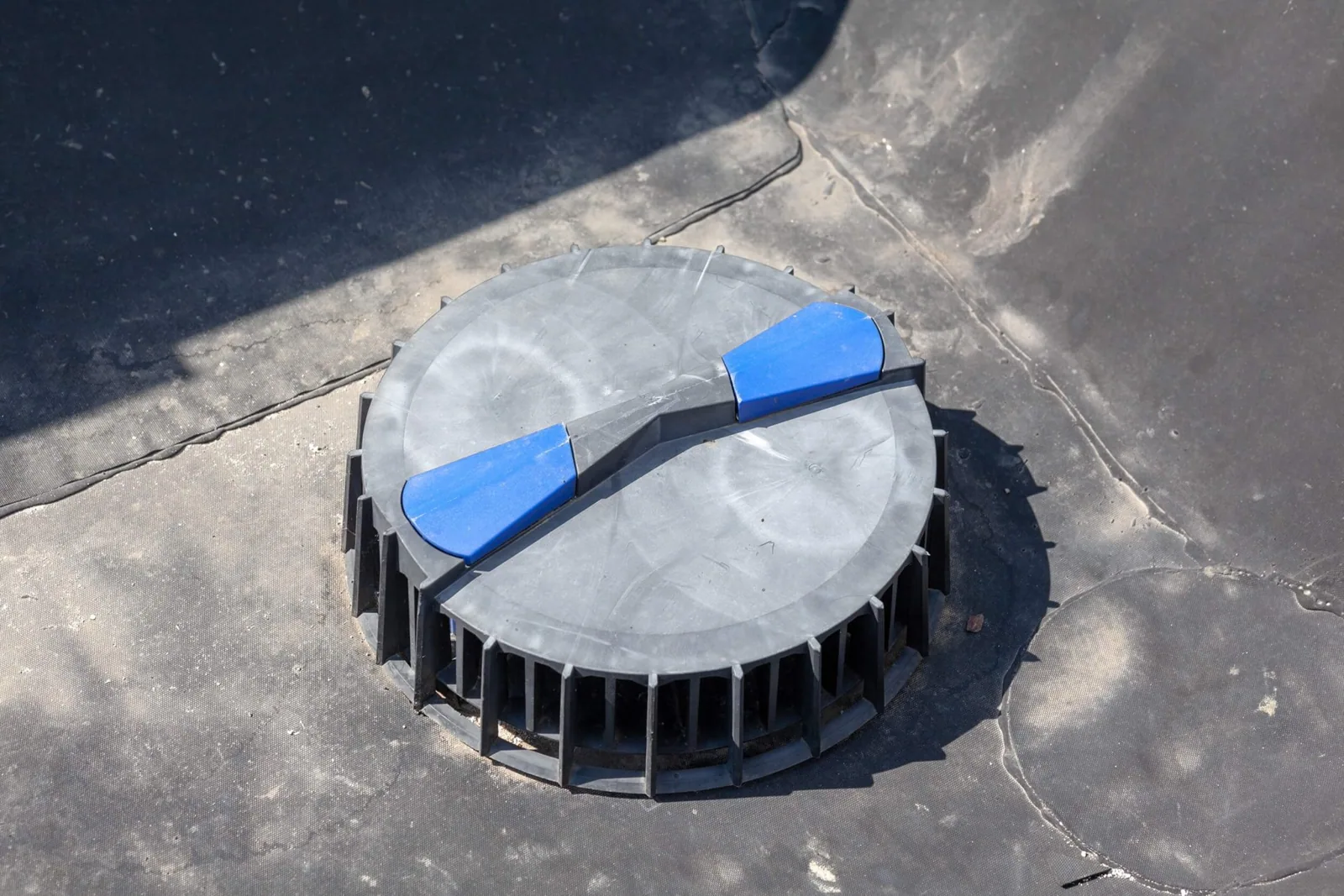
Leaves caught against a drain basket give a maintenance visit an immediate task. On a commercial roof in Merced, CA, we examine the outlet, clear suitable debris and check the adjoining membrane connection. Clearing the basket restores only part of the water path. A split flashing edge or damaged sump still needs repair. Preventive maintenance keeps that distinction visible before the next wet period.
A program should respond to the roof material and building use. Merced has manufacturing and distribution activity in industrial areas served by Highway 99. Equipment access and product protection can shape the maintenance route there. In Downtown Merced, occupied offices and restaurants bring different roof-access arrangements. We establish a practical schedule for examining and maintaining the details on the actual building.
Debris at the outlet approach
A drain can have a clear opening and still receive water poorly if debris blocks the approach. We examine the surrounding roof surface and remove material that can be handled safely within the maintenance scope. Loose fasteners, packaging and discarded service materials can also damage a membrane. They should not remain on the roof after an equipment visit merely because they are away from an outlet.
We inspect accessible drain flashing and scupper connections during clearing. A separating connection belongs in a repair scope. A persistent low area may need an examination beyond routine maintenance. Drainage correction is a construction decision when roof geometry or a damaged component prevents suitable flow. We identify that condition so repeated debris clearing does not become the only response.
Merced winter precipitation normals exceed midsummer rainfall normals. That makes preparation before a wetter interval useful, while current debris conditions can warrant attention at any time. We select a maintenance window around the roof exposure and operating schedule. The calendar supports the work; an observed blocked outlet still needs a condition-based response rather than waiting for a predetermined future visit.
Small changes at exposed connections
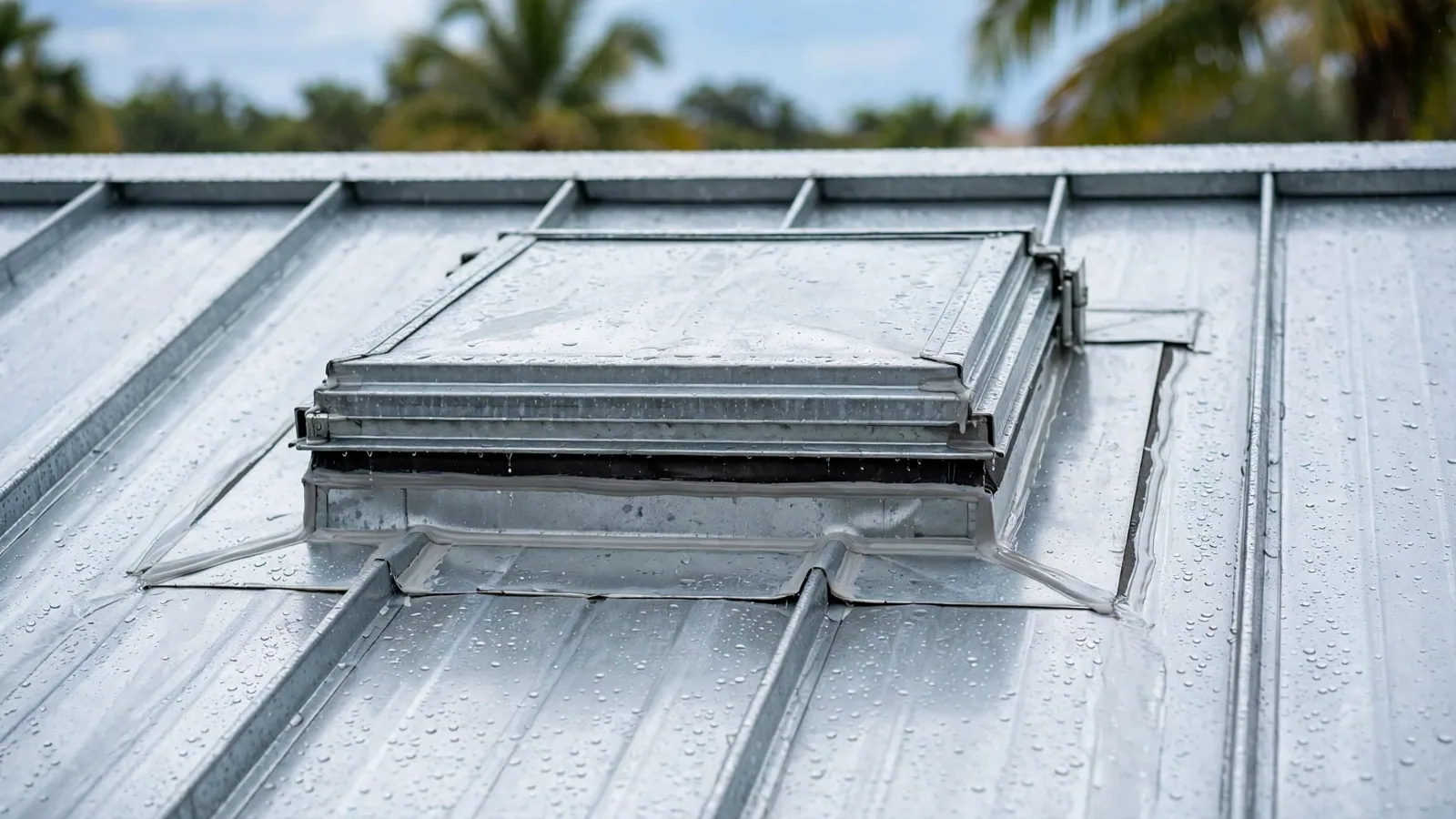
A sealant edge beginning to separate can indicate a detail needing close examination. We look at the connected materials and the role of that seal. Some details require renewal of a specified sealant joint. Others need membrane or flashing reconstruction. Applying new material over a failing connection without suitable preparation can conceal the condition without restoring the intended detail.
Merced summer heat affects exposed material movement. We examine transitions at equipment curbs, wall terminations and metal edges with that concern in mind. The inspection looks for an opening, strained material or loose attachment. Those observations determine the response. A flashing repair may be needed where maintenance alone cannot restore the connection.
Accessible seams also need attention appropriate to the roof system. A surface mark is not the same as a separating seam. We identify the material and use a suitable examination method. The result guides a focused repair of damaged roofing where necessary. Maintenance should address serviceable details and identify construction work rather than blur the two together.
Equipment traffic and protective routes
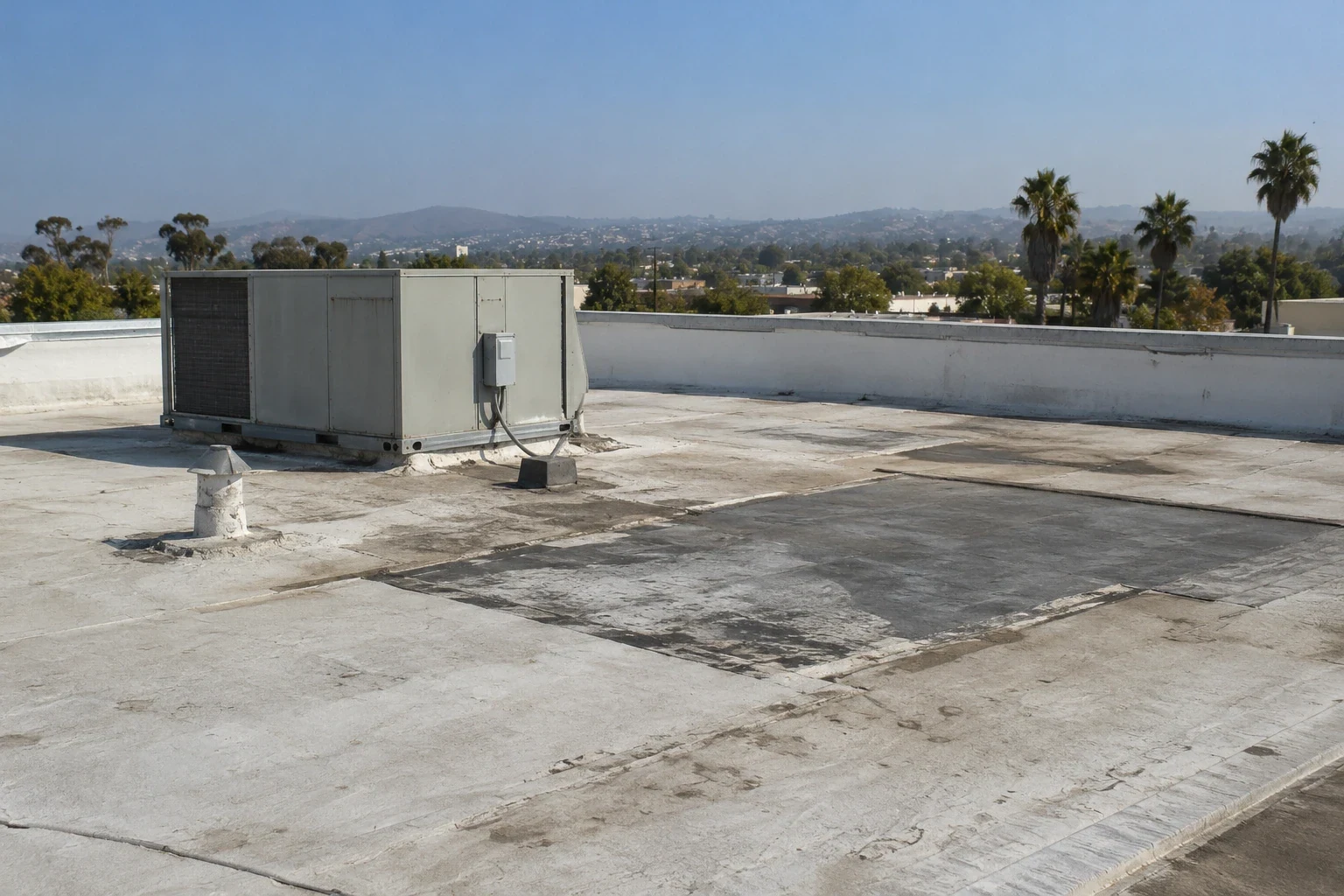
A worn strip leading to a rooftop unit can reveal repeated service traffic. We examine the route, its walking protection and the details technicians cross. A protective pad in the wrong location leaves the vulnerable connection exposed. We discuss suitable route protection for the assembly and identify any puncture or abrasion needing repair before protective material is placed over it.
For a manufacturing property, roof access may serve several operating systems. We ask which equipment needs regular service and which roof areas receive that traffic. The answer helps set examination priorities. It does not establish the roof construction. We inspect the membrane and connections directly before deciding whether the condition calls for cleaning, repair or a change in traffic protection.
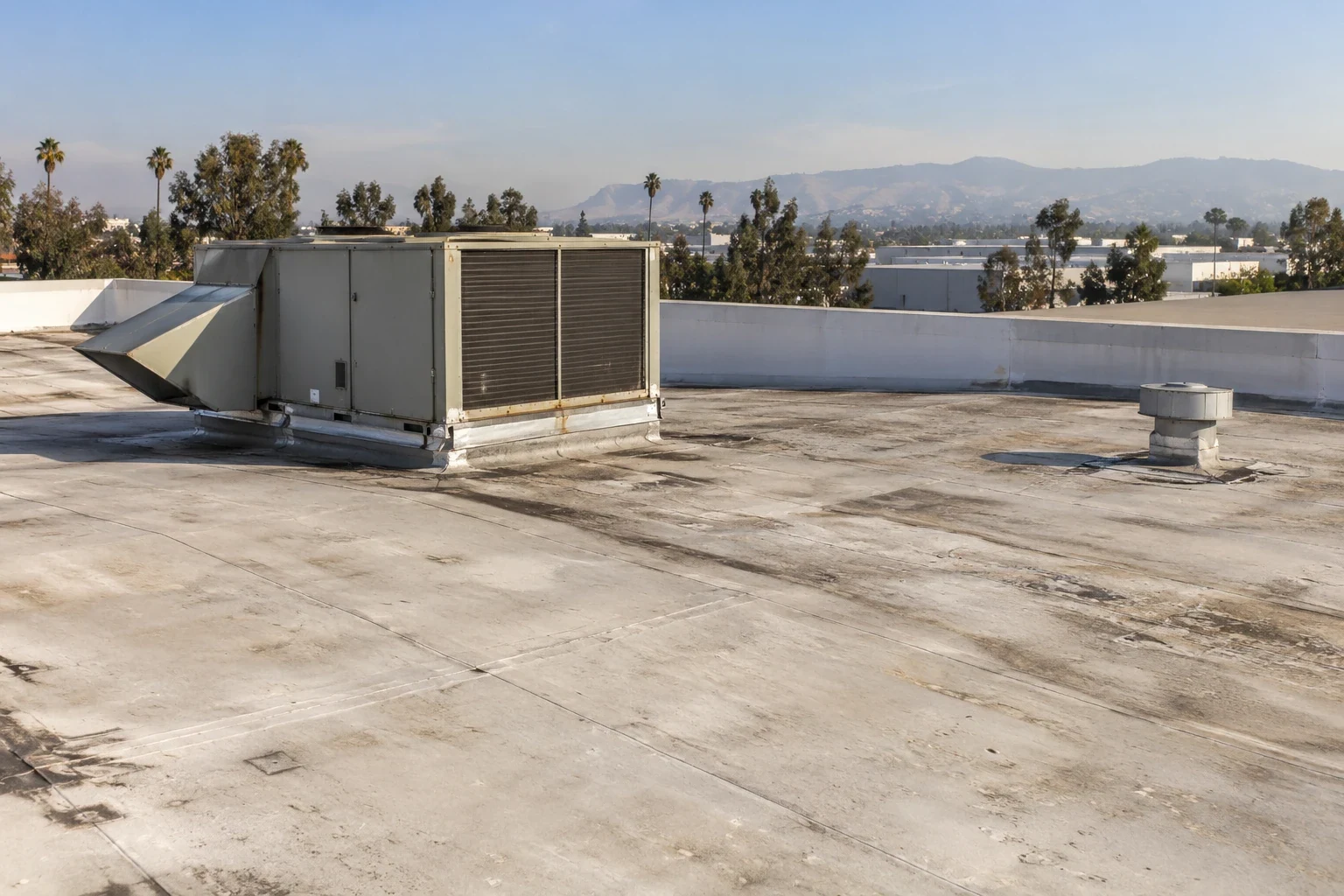
The building team can help by identifying recent equipment work. A replaced unit, new cable or moved support may have changed a roof detail since the previous maintenance visit. We inspect those changes as part of the current roof condition. Where a new penetration has an unsuitable closure, maintenance should identify the construction remedy rather than repeatedly apply temporary surface material around it.
Visits matched to condition and exposure
A maintenance interval should reflect the inspected roof, its surroundings and its operating use. Debris accumulation, service traffic and the condition of exposed details affect what needs attention. We establish the initial scope from a roof condition inspection. Later visits can refine it when the same outlet clogs repeatedly or another area begins showing material distress.
At an Atwater property, food processing and building-products manufacturing form part of the local commercial mix. A maintenance visit needs the building team to identify actual operating restrictions and access arrangements. We separate those requirements from the roofing tasks. That allows a useful visit without assuming that every industrial building has identical equipment, debris or roof traffic.
Weather and service changes can justify examination outside the regular interval. A visible displaced component after a weather event or an active interior leak deserves a separate response. The maintenance plan should make that distinction clear. Routine visits preserve a recurring opportunity to examine the roof; they are not a reason to defer a new opening until the next scheduled date.
Maintenance findings and construction priorities
After the visit, we identify tasks completed and conditions needing another scope. Cleared debris, examined details and minor work should be described specifically. A photograph of a defect needs a location and a proposed action. The manager can then distinguish a maintained component from an unresolved construction issue. That distinction helps keep an open seam from disappearing into a general maintenance entry.
A roof asset maintenance plan can connect those findings with longer-term decisions. Recurrent failures in one roof zone may justify additional examination or replacement planning. A stable zone may need only continued maintenance. We explain the observed pattern without assigning an unsupported remaining lifespan. The next decision follows the condition of the assembly and its usable connections.
Cost drivers include access, debris volume, detail count and the repair work identified during examination. A maintenance agreement should specify which work belongs in the visit and which requires separate authorization. We describe that boundary early. The manager then has a practical route for addressing newly found damage without confusing preventive tasks with a complete roof reconstruction.
Commercial Roofing Questions
Can drain clearing be completed without examining the flashing?
Clearing removes an obstruction but leaves the connection question unanswered. We examine accessible flashing during the visit and identify visible damage. A split or separating detail needs an appropriate repair scope even when water can pass through the outlet again.
Should maintenance change after rooftop equipment is added?
New penetrations and service routes can alter roof exposure. We examine their connections and traffic protection, then update the tasks where needed. The maintenance approach should respond to the changed construction rather than preserve an outdated roof route.
Which findings require work beyond a maintenance visit?
Damaged layers, failed attachment and details requiring reconstruction need a defined construction scope. We identify those findings separately. The manager can authorize a repair with its proper preparation and closure instead of treating every defect as a small cleaning task.
Can a regular program replace a response to a new interior leak?
An active leak needs its own assessment. A scheduled maintenance date does not establish the cause or address current exposure. We examine the new symptom and relevant roof details, then connect any confirmed findings with the ongoing maintenance priorities.
Maintenance of the exposed roof details
Request a maintenance assessment of the outlets, equipment routes and connections needing recurring attention on your building.
Related Roofing Work