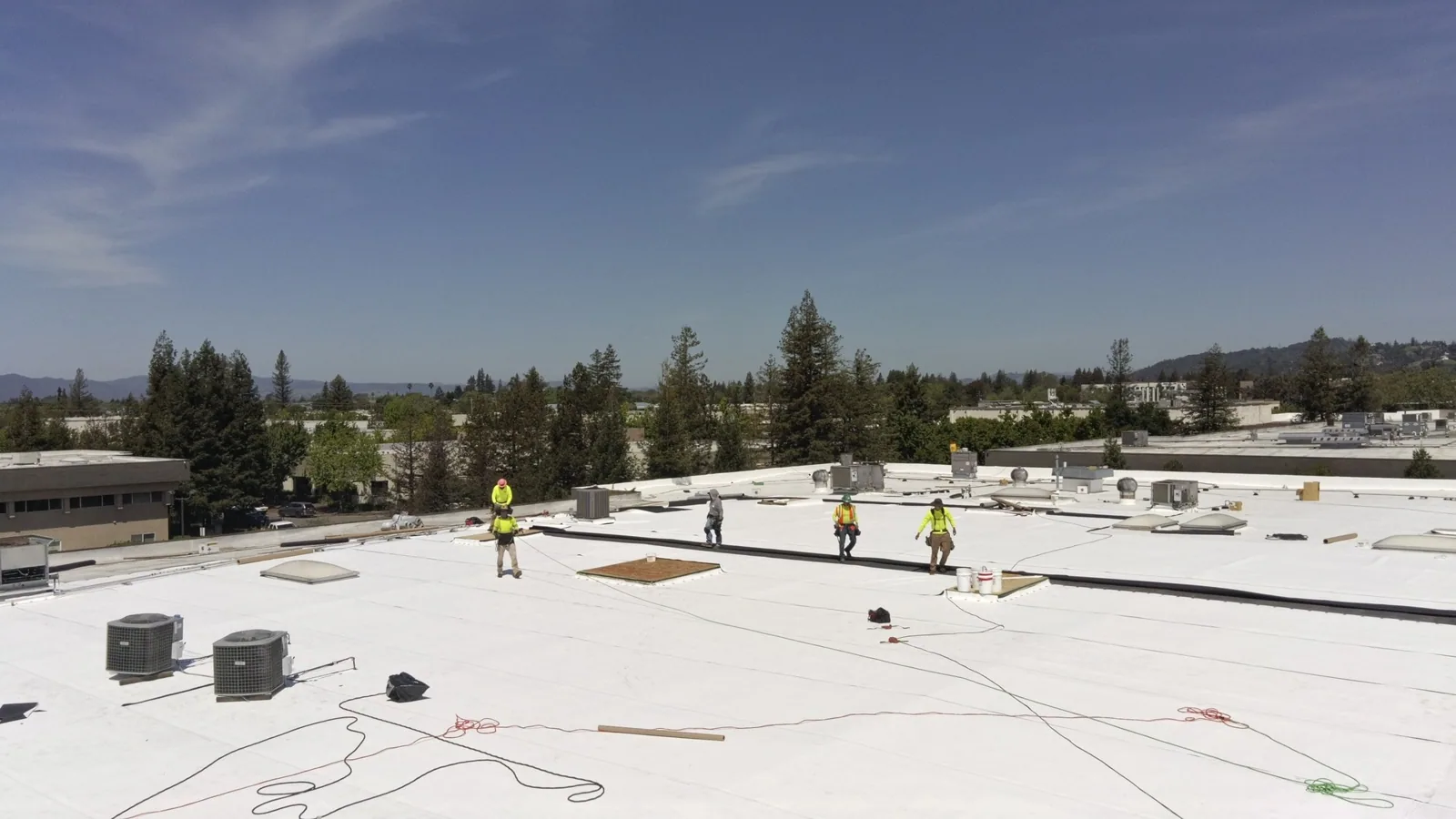
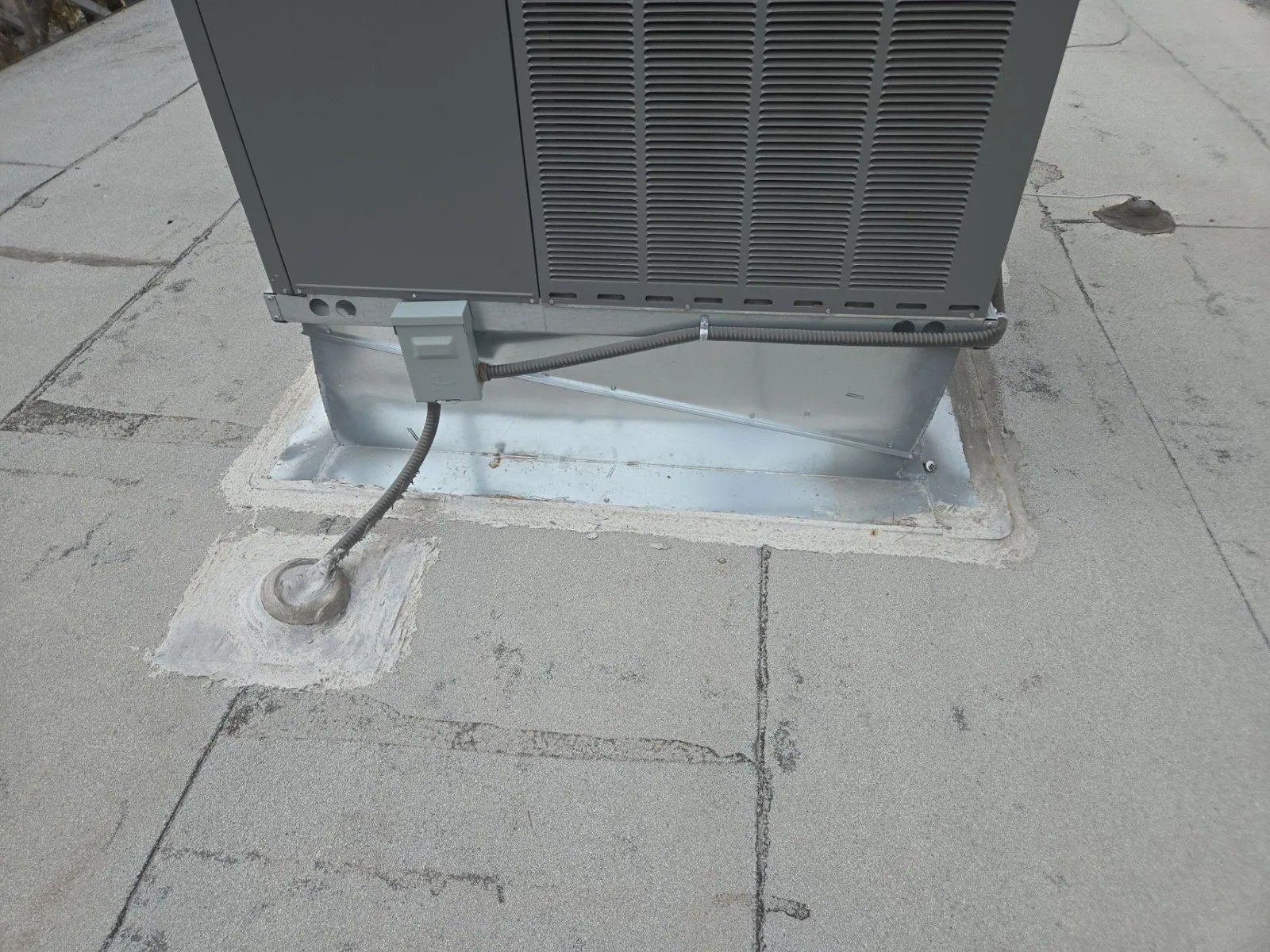
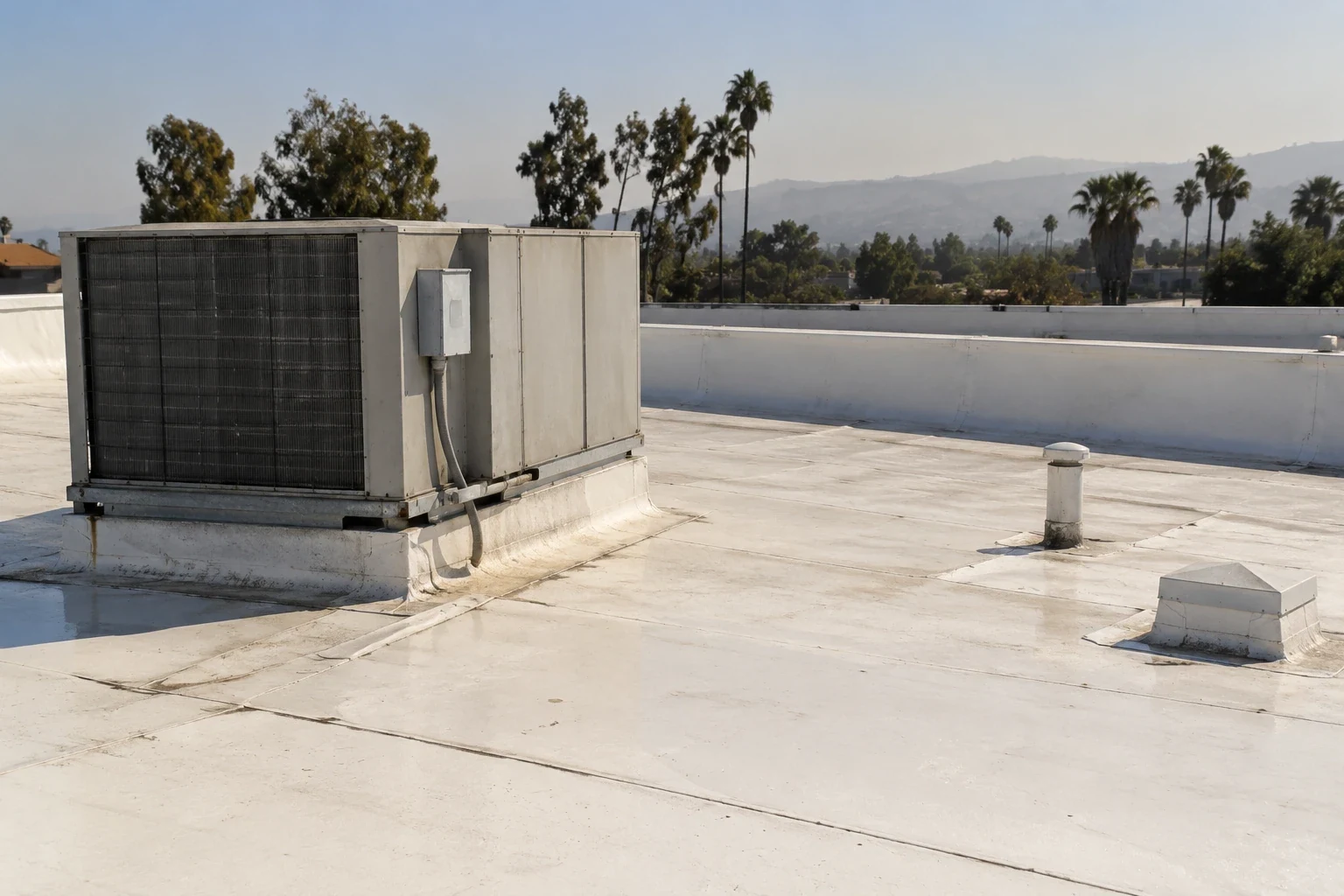
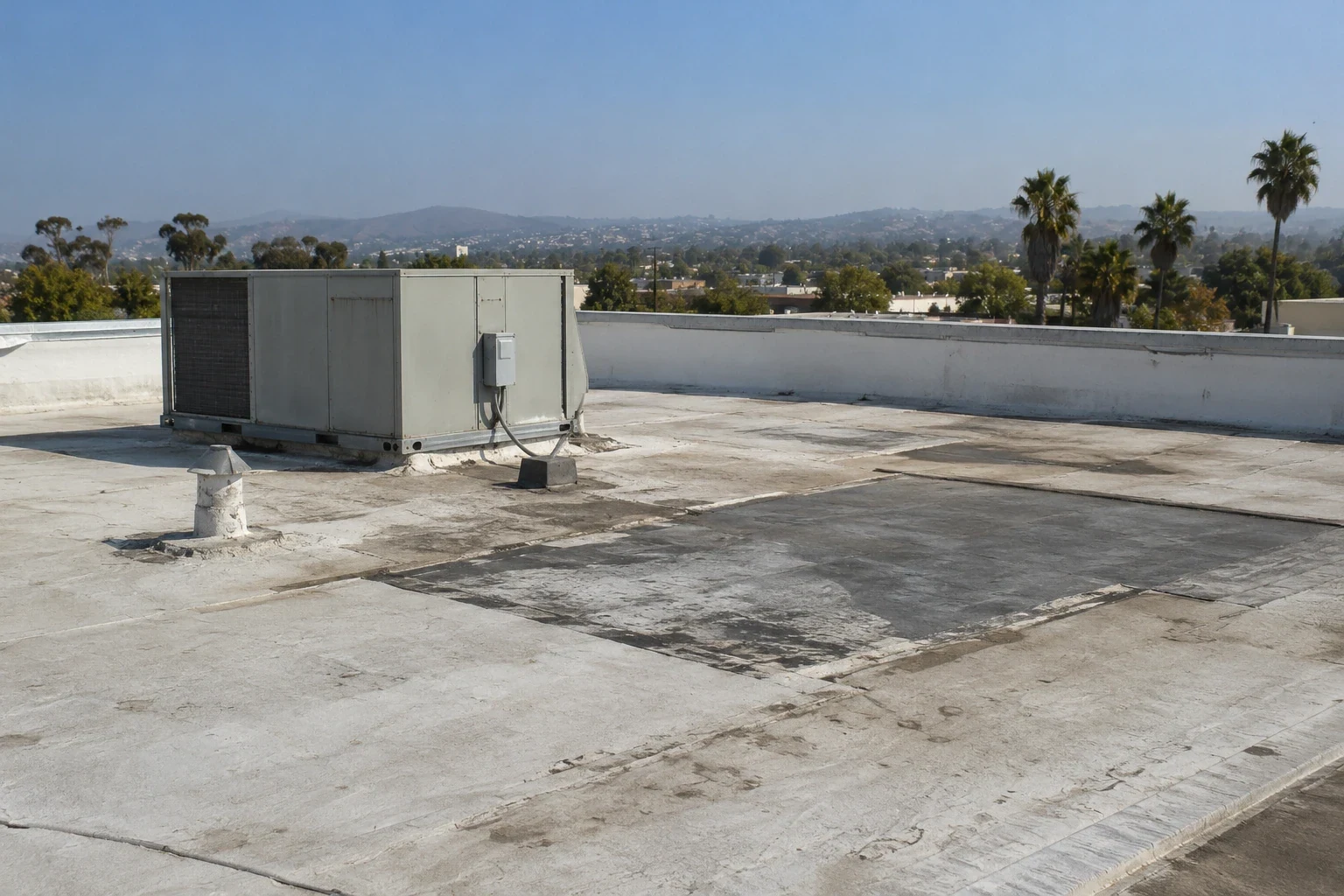
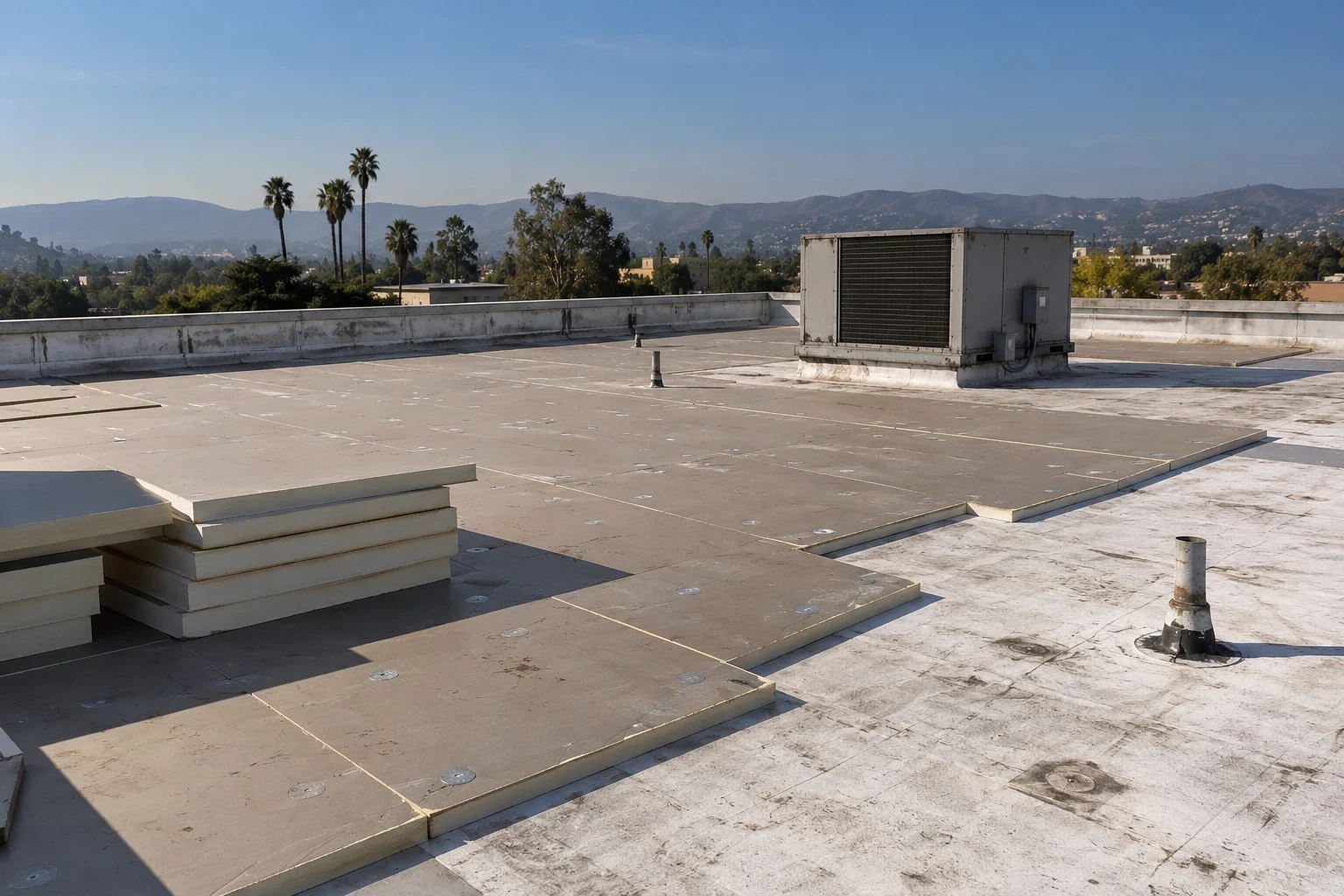
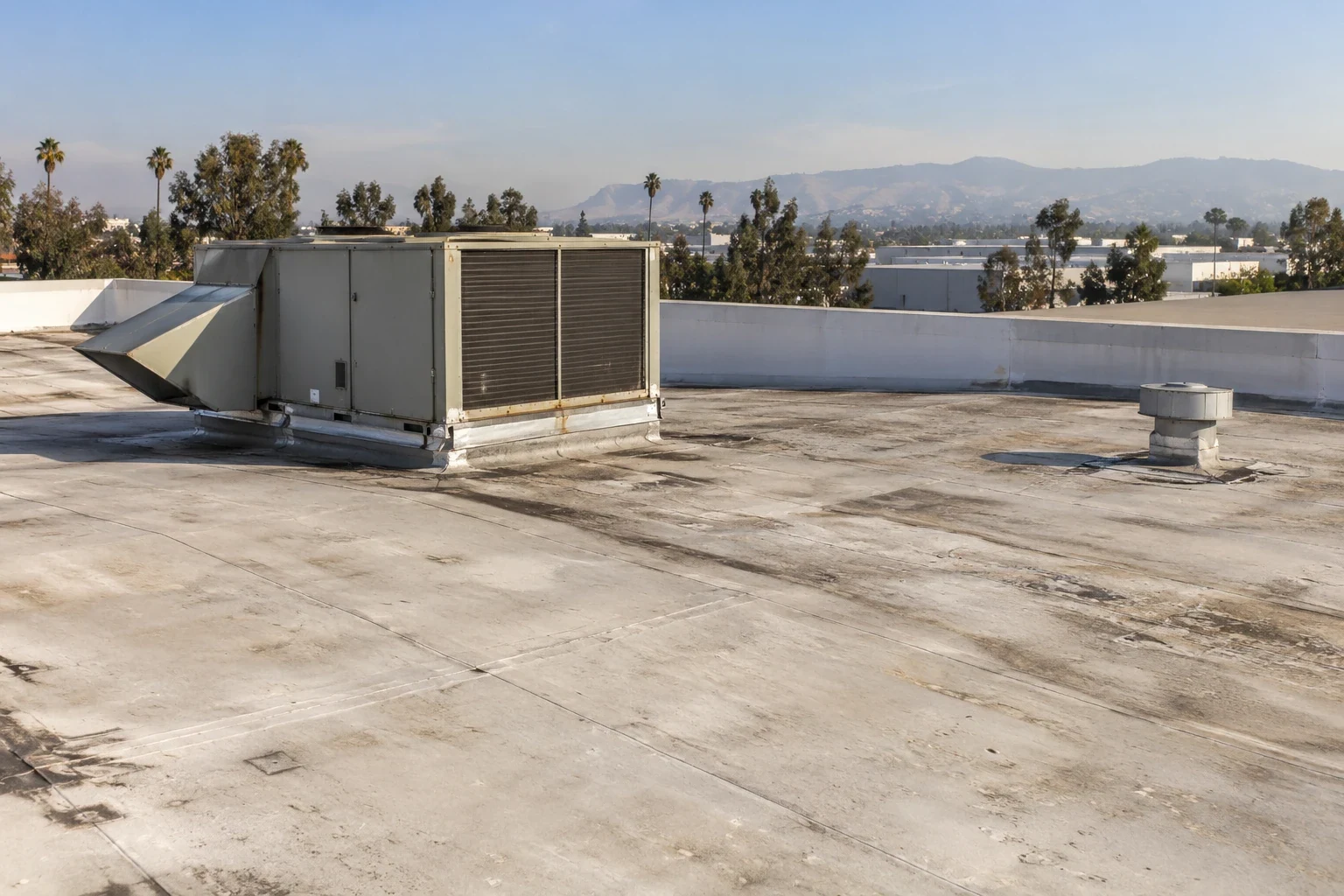
A split at the base of a pipe boot leaves a defined transition to examine. For penetration flashing work in Merced, CA, we inspect the boot, adjoining membrane and upper connection before selecting the repair. Water may enter at the base, the vertical detail or another part of the assembly. The repair needs to address the observed opening and connect with usable surrounding roofing.
Merced summer heat makes material changes at rigid penetrations worth close attention. Downtown Merced includes galleries, theaters and professional offices. Atwater has processing and manufacturing uses. A flashing repair above either commercial setting needs the manager to identify operating equipment and sensitive interior space. We examine the roof detail rather than infer its construction from the building use.
Pipe boots and upper closures
A pipe boot can fail at several locations. We examine the flange connection with the field sheet, the flexible material around the pipe and the upper closure. A base repair will not address a separate opening at the top. We identify which parts remain suitable and whether the boot can be repaired or needs replacement with a compatible detail.
Pipe movement also affects the connection. The roof and penetration may respond differently to temperature or equipment use. We look for strained material, displaced clamps and signs of repeated repairs. The finished boot detail should suit the pipe and existing membrane. We avoid making the flange rigid with an unsuitable repair compound where the connection needs a compatible flexible or welded arrangement.
A focused leak examination can help distinguish the boot opening from another nearby entry path. If testing is appropriate, we plan it so the result is interpretable. The manager should know why the proposed repair addresses the observed symptom. A visible split deserves attention, but proximity to an interior drip does not identify every route water may take.
Curb corners and vertical transitions
A curb corner concentrates several changes in material direction. We examine reinforcement, the base connection and the vertical flashing. A surface split may require removal of unsuitable material before rebuilding the corner. The new repair needs sound roofing for its connection. Covering a loose earlier repair can leave that weak attachment beneath a new outer layer.
The curb height and upper termination also matter. We examine where the flashing ends and how that end is protected. A roof recover or insulation change can reduce available clearance at an unchanged curb. Equipment curb work may need coordination when the supporting assembly or equipment arrangement must change. The flashing scope should identify those connected tasks before installation.
For a PVC roof membrane, the repair connection requires compatible materials and suitable welding preparation. Other systems use different flashing methods. We identify the existing assembly, any coating and accumulated repair compounds. Those findings determine what must be removed before the new corner or vertical transition can be properly connected.
Skylight curbs and adjacent roof material
A skylight presents both a roof-flashing detail and a glazing assembly. We examine the accessible curb connection and surrounding roofing. Damage at a lens, frame or glazing seal may need the appropriate separate repair. The roofing assessment distinguishes those components so a membrane repair is not expected to correct a problem in the skylight unit itself.
Skylight areas also need suitable access protection. A lens is not a walking surface. We plan work around the opening and the applicable site safety requirements. The manager needs to identify interior activity below any proposed removal. A damaged curb connection may require exposed layers to be examined, and that opening needs a suitable restoration sequence.
Adjacent membrane can be worn by equipment access or past repair work. We examine its condition beyond the curb perimeter. A bounded membrane repair may accompany flashing reconstruction where that surrounding material is damaged. We separate those quantities from any glazing work. The proposal then describes which part restores the roof and which component needs another scope.
Grouped penetrations and service changes
Several pipes close together can restrict usable flashing space. We examine their arrangement and the condition of the existing closure. Some details may require rebuilding rather than individual patches applied within an unsuitable cluster. The method needs to suit the materials and available dimensions. An accumulation of sealant around several penetrations does not establish a serviceable long-term roof connection.
New equipment service can also introduce cable routes or unused openings. We identify active components with the building team before removal or modification. Abandoned penetrations may need a defined roof closure. Insulation and support layers beneath that closure must be reinstated where affected. A sheet patch alone may leave an unsupported void if removed construction is not restored.
For a manufacturing building roof, ventilation and process equipment can make penetration coordination important. We ask which systems must remain operating and which can be isolated for work. Atwater's established manufacturing mix makes those questions locally useful, but the actual equipment arrangement is determined at the property. The repair sequence follows that arrangement and the inspected detail.
The completed transition and surrounding layers
Wet insulation near an opened flashing detail requires examination before closure. We define affected layers and identify any necessary removal. The rebuilt transition should connect with the restored assembly thickness and usable field material. If the existing deck or supporting construction is damaged, that condition needs attention before the membrane conceals it again.
At properties in Downtown Merced, access to a flashing zone above occupied commercial space needs a practical plan. We identify removal limits and suitable temporary protection. Interior operation may determine a work window, while surface preparation and connection requirements govern the roofing method. We keep those decisions connected without assuming that all occupied properties need the same schedule.
We examine the finished base, corner and upper termination as applicable to the detail. The manager receives the location repaired and any separate condition outside that work. Maintenance of exposed flashing can identify later separation or traffic damage. The recurring examination should focus on actual material condition rather than repeatedly add surface sealant to every penetration.
Cost drivers include access, preparation, wet-layer removal and the number of connected components that must be rebuilt. A simple pipe detail can be localized. A crowded curb or skylight with damaged supporting construction can require more extensive work. We explain that difference through the inspected assembly so the repair boundary has a clear construction basis.
Commercial Roofing Questions
Can a pipe boot be repaired only at its flange?
The upper closure and vertical material also need examination. A separate opening there can continue admitting water after flange work. We identify the complete boot condition and specify the repair or replacement connection that addresses it.
Does water near a skylight always require roof flashing work?
Glazing, frame and roof connections are different components. We examine the accessible roof detail and identify where the skylight unit needs separate review. The proposed roofing work should address the condition found rather than assume every nearby symptom comes through the membrane.
Why rebuild a curb corner instead of adding more sealant?
Loose material, a strained transition or incompatible earlier repairs can require reconstruction. We expose suitable material and use the connection appropriate to the assembly. Another surface application may leave the original movement or attachment problem unresolved.
What happens to insulation beneath an abandoned penetration?
Its support and condition need examination during closure. Removed or damaged layers may need reinstatement before a new membrane connection is made. The closure scope should restore the roof assembly rather than span an unexamined opening with a surface patch.
Examination of the penetration transition
Request an inspection of the split boot, curb corner or skylight flashing and the surrounding roof layers.
Related Roofing Work