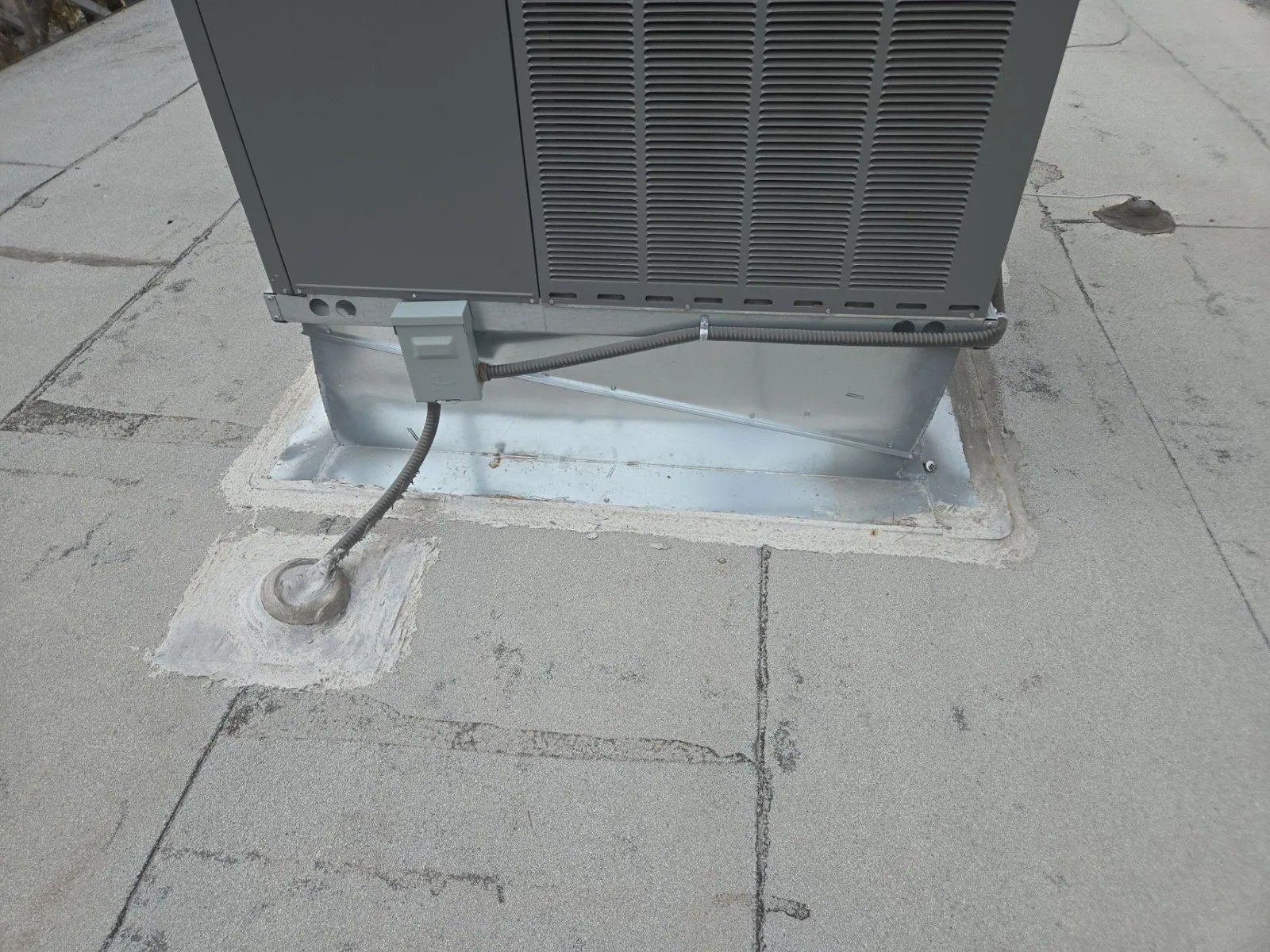
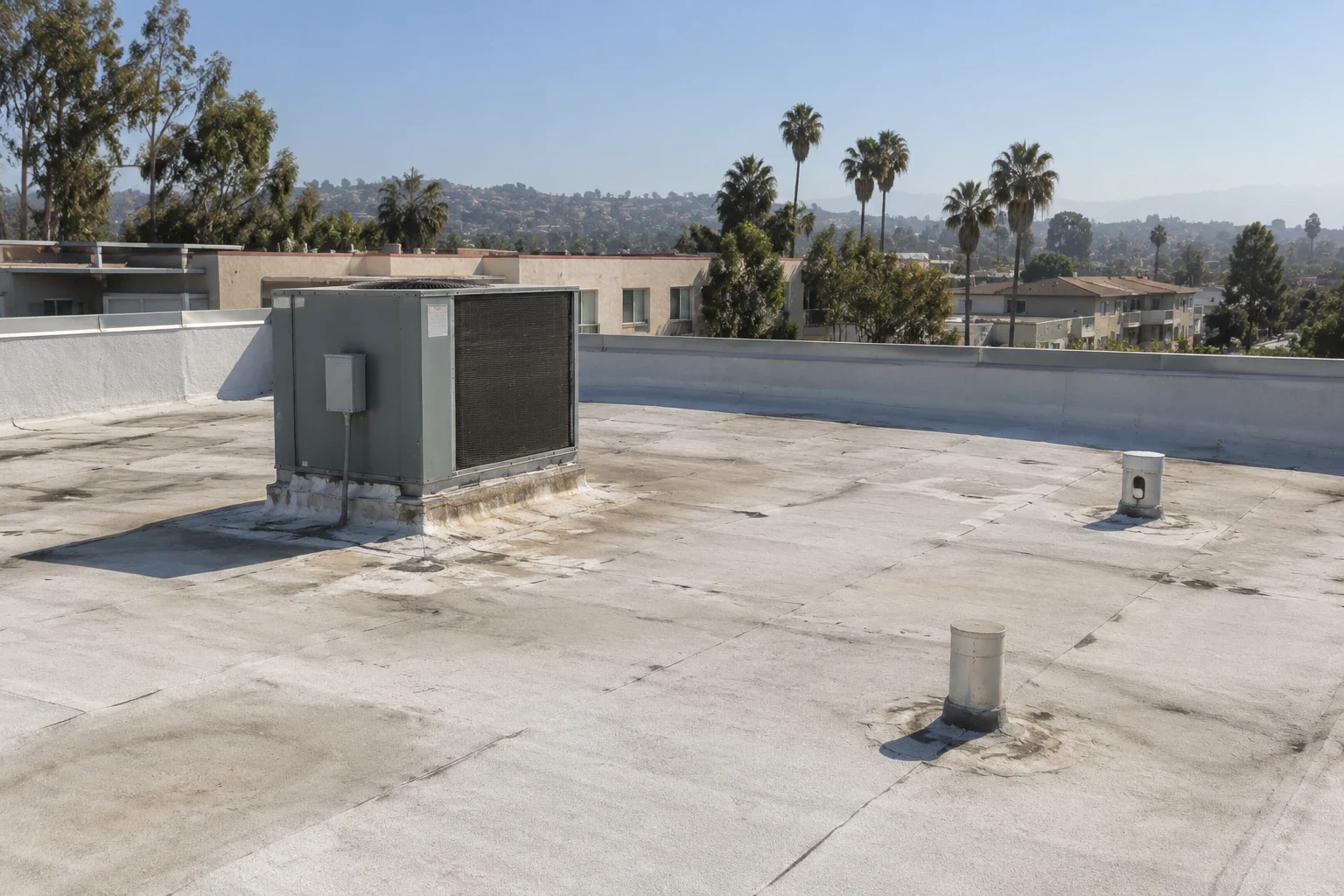
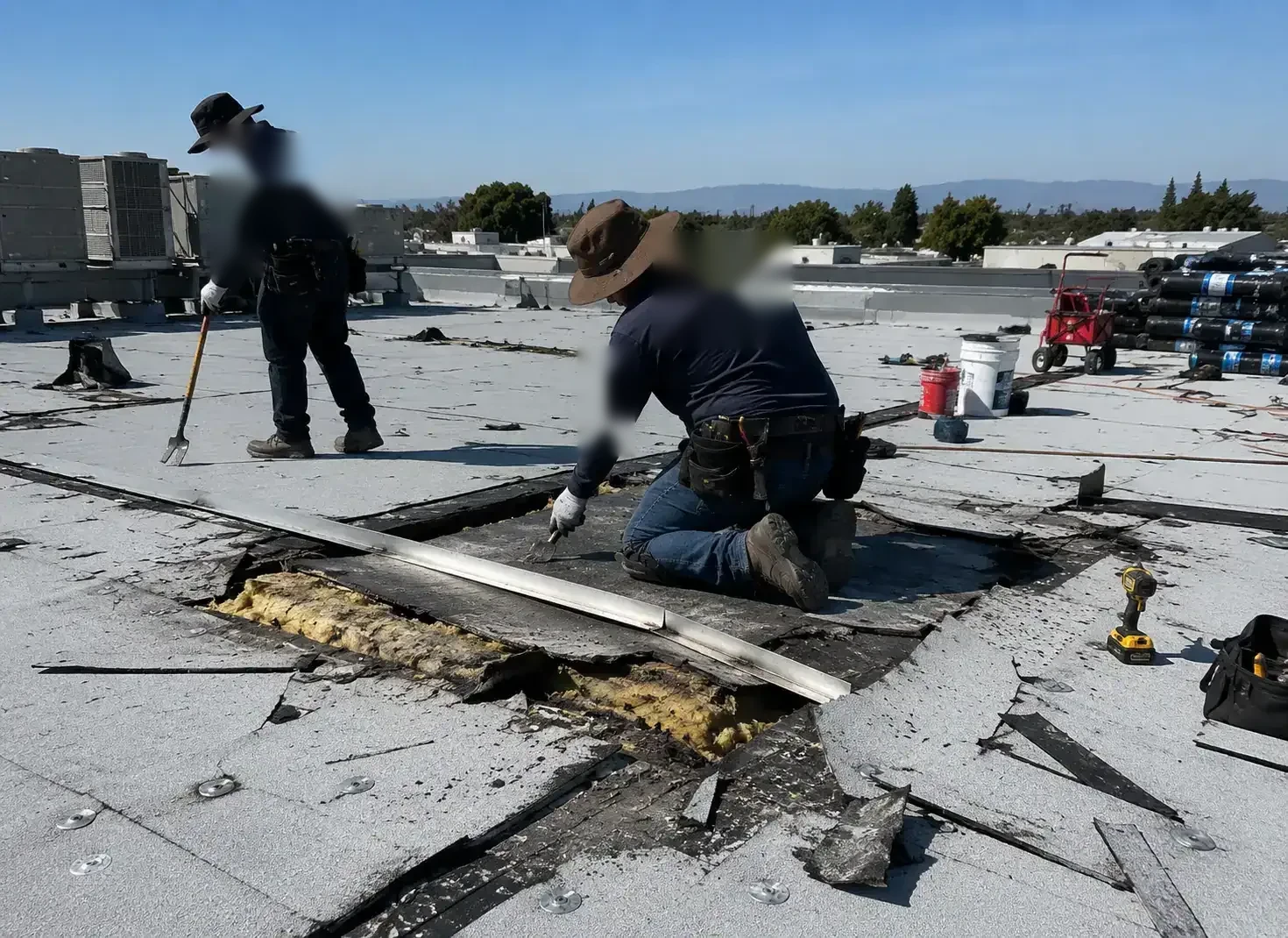
A cracked vent boot above a guest-room wing needs a located repair and room-use decision. For hotel roofing in Merced, CA, we examine the boot and its adjoining membrane, then identify the area below. The repair may involve insulation beneath the visible opening. The manager needs the construction boundary before arranging room availability, interior protection or equipment service.
Santa Nella has a longstanding traveler-service role. Its traveler-serving context helps frame occupied lodging as a roof-planning question, but the property's own use and roof assembly determine the work. We ask about the actual guest and service areas affected. The inspected membrane, support layers and connections determine repair or renewal, with access and room operation coordinated around that construction.
Guest rooms beneath the roof boundary
A reported interior symptom should be located by room or service zone and compared with the roof arrangement. We ask about timing and ongoing water. That helps focus examination of seams, penetrations and outlets. Another wall or equipment condition may also need review. The proposed roof work should identify its supporting finding rather than assume the closest visible detail explains every room symptom.
Hotel roof leak investigation can include suitable testing where it helps separate suspect connections. We coordinate interior observation and protection first. The manager should understand what the check will answer and how any opening will be restored. A broad test without a defined question can create additional exposure above occupied rooms.
Room-use arrangements need the actual removal depth identified. A surface repair differs from opening insulation or supporting construction. We locate the affected boundary with the hotel team. Protection and any temporary room restriction should match that work. The roofing sequence still needs suitable preparation and closure, rather than assume every small outer defect can be handled without an interior operating decision.
Equipment services above occupied lodging
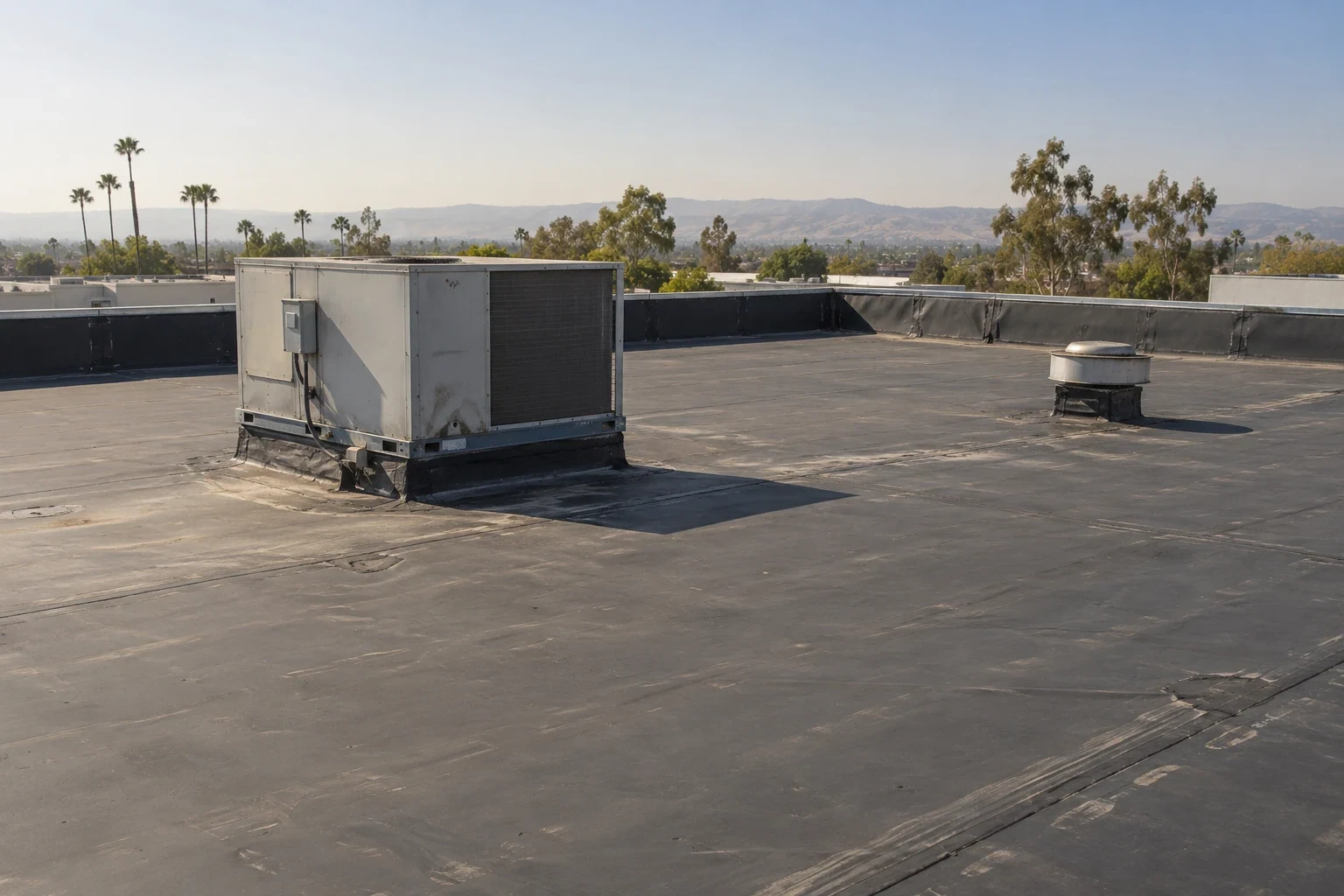
A rooftop unit can serve rooms or common areas that have different usable service windows. We ask which systems need operation and which can be isolated. A curb or penetration repair may require another trade's intervention. The roof opening, equipment responsibility and permanent closure should be coordinated before damaged flashing is removed.
Equipment curb and support repair examines the roofing interface separately from mechanical or structural work. A protective pad does not restore a damaged base. An outer membrane patch does not establish the condition of concealed support. We identify the affected layers and appropriate technical review where needed, giving the manager a clear construction sequence.
Merced summer heat makes exposed material transitions relevant to inspection. We examine restraint, separation and loose attachment where roof sheet meets rigid equipment. The repair should suit the intended movement and geometry. Repeated surface material over a strained corner can leave the same stressed connection inside the work. We identify what needs rebuilding from the detail actually observed.
The membrane and concealed support
A boot opening may admit water into insulation beyond its visible edge. We investigate suspect layers where condition affects the repair choice. Selected checks identify material at their locations and need interpretation with the wider roof examination. The removal boundary should follow affected construction. It should not be fixed solely by the outer dimensions of the cracked boot.
Dry support can still require repair where it is compressed or poorly attached. Deck deterioration needs an appropriate response before close-in. We describe layer reinstatement and any technical review needed. The proposal distinguishes the membrane closure from construction beneath it. A new roof surface should not conceal unsuitable support merely because the usable guest-room window is limited.
An EPDM hotel roof assembly uses compatible bonded repair methods and particular preparation. Other membranes require different connections. We identify the material and prior work before selecting a patch. The finished repair should join serviceable surrounding roofing with the system's intended detail, not use an unfamiliar compound because it appears convenient for a short visit.
Room operation and daily roof closure
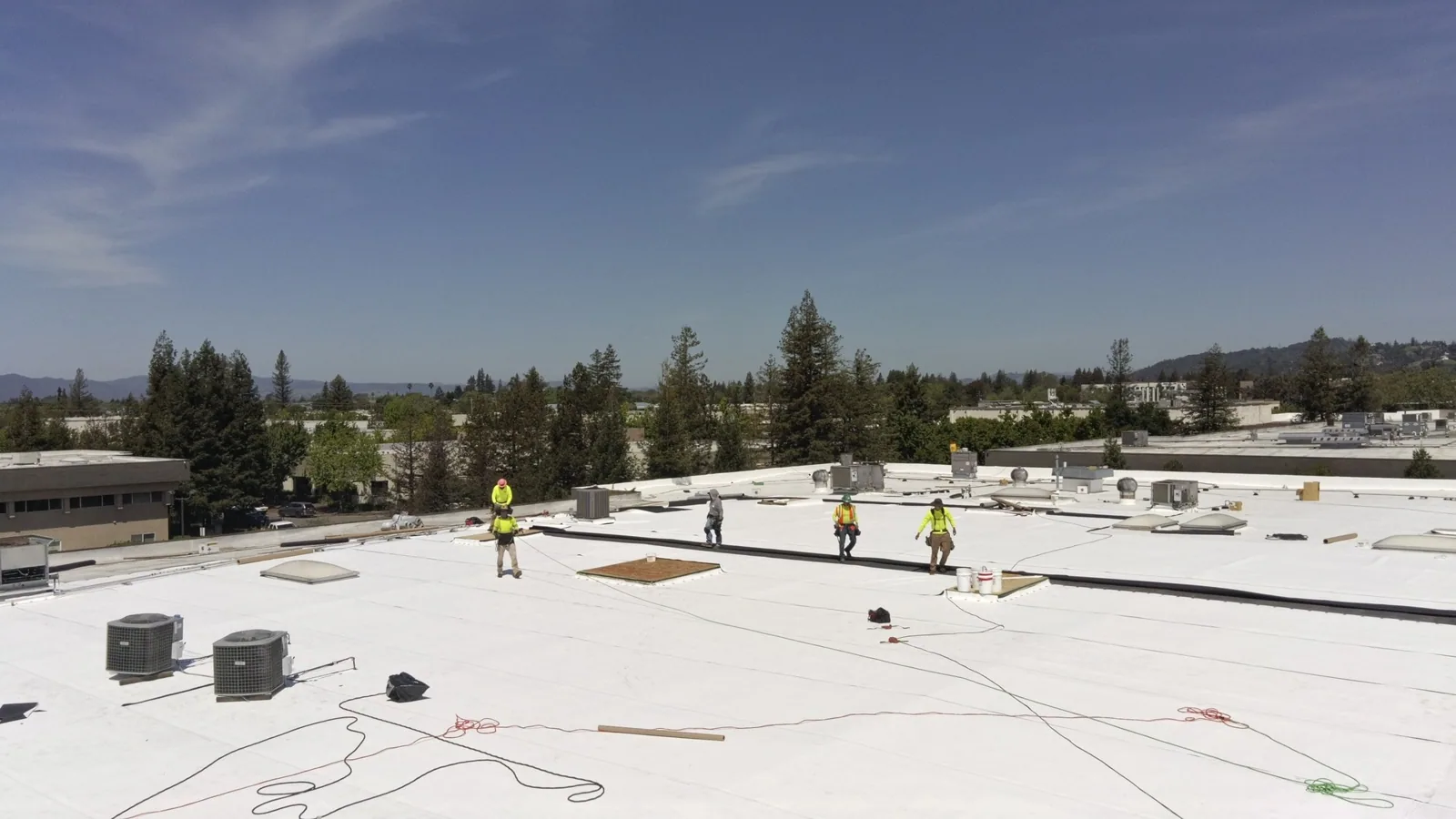
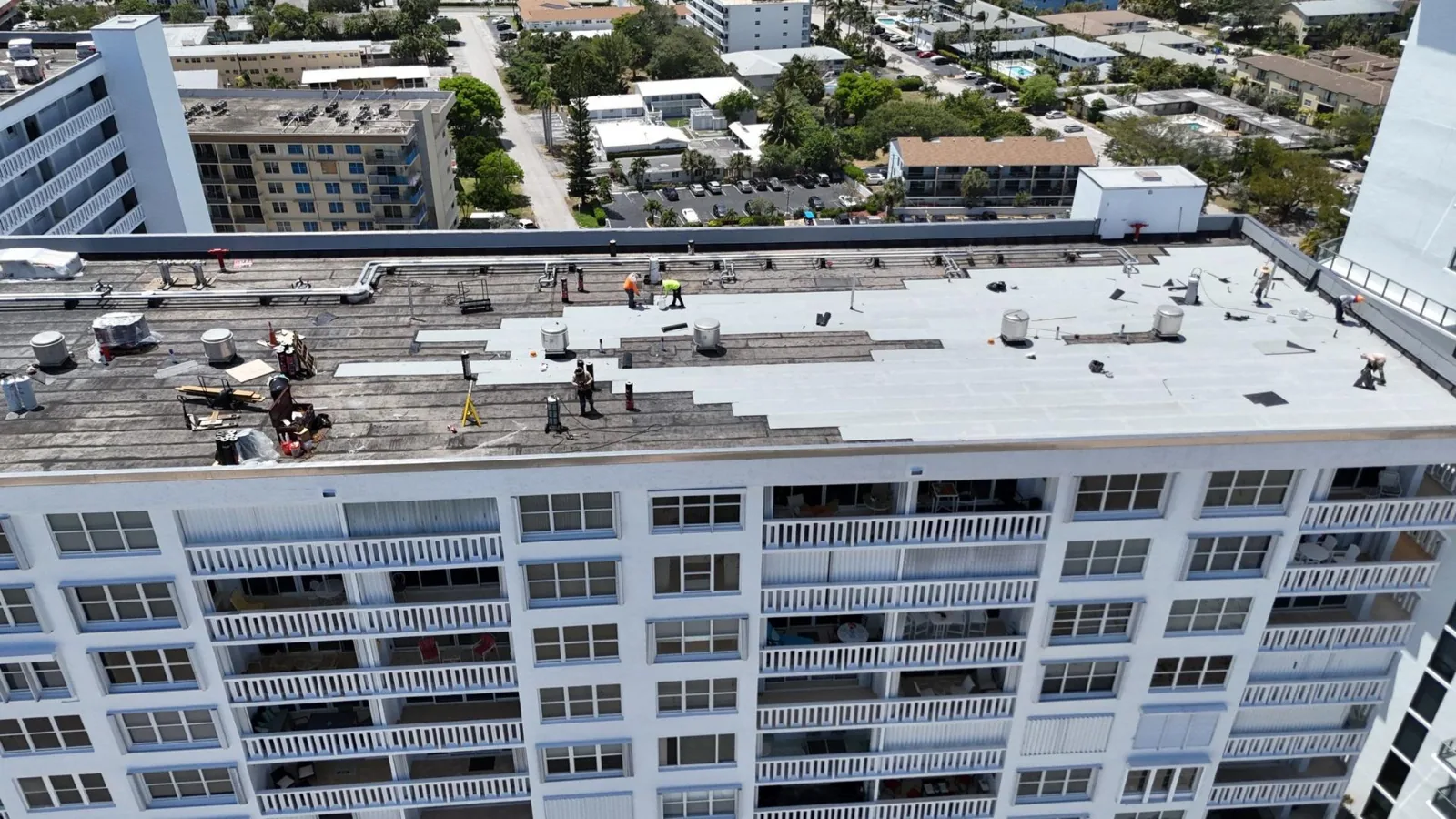
Phased lodging reroofing locates work zones above actual guest and service areas. The plan identifies removal limits, temporary tie-ins and permanent detail construction. A daily window must allow support repair and suitable protection before work pauses. A schedule based only on field membrane placement can leave important transitions incomplete at the end of a phase.
The hotel team identifies room availability, service routes and operating restrictions. We connect those arrangements with the actual roofing tasks. Work above a guest area can have a different plan from removal above unused support space. A roof boundary also needs a suitable assembly connection, so the construction sequence must be reconciled with the preferred interior arrangement.
Multifamily roof work raises another occupied-room discussion, but its access and resident arrangements can differ. We establish the lodging property's actual use rather than transfer one occupied-building plan. The manager should know which area has permanent closure and what work remains at temporary phase boundaries before arranging the next room-use window.
Outlets and service traffic
Accessible drains and scuppers need examination of debris, flashing and the outlet approach. Clearing an obstruction and rebuilding a connection are separate responses. A recurring low area can need another geometry assessment. The scope should identify that condition rather than apply another surface treatment where the water path remains unsuitable.
Merced's rainfall normals show a wetter winter than midsummer. A separating detail found during a dry interval can receive planned repair before renewed rain exposure. Current condition governs urgency. The material needs its appropriate preparation and work window. Temporary protection should have a clear permanent closure decision rather than remain unidentified after room operation resumes.
Hotel roof maintenance can keep equipment routes, outlets and exposed connections under observation. Repeated traffic damage may need improved protection along with compatible repair. For a restaurant service area, equipment discharge can add an exposure question. We identify the actual surface condition and compatible response rather than assume all lodging roof zones share the same preparation needs.
Regional lodging work and the repair comparison
At property in Santa Nella, the traveler-service role makes occupied access useful to coordinate. We establish actual guest and equipment arrangements before roof removal. The proposal identifies the affected assembly and its suitable closure. Local business use provides context, while the examined layers establish the construction boundary.
For lodging roof work in North Merced Villages, the range of corridors and land uses makes each property's operating needs essential to confirm. We ask about actual guest and service arrangements before work. Cost drivers include investigation, damaged layers, equipment interfaces and access. A bounded defect may allow repair where surrounding material remains suitable. More extensive deterioration can change the renewal comparison, and the scope should explain that difference through located roof findings.
Commercial Roofing Questions
Should a hotel leak report identify room location and timing?
Those details help focus roof examination and interior protection. We compare the reported symptom with nearby connections and suitable testing where needed. A located report supports a repair decision better than treating every guest-room water issue as the same roof opening.
Why can a small vent-boot repair affect room-use planning?
Wet or damaged support may require removal beneath the outer detail. We define that opening and coordinate appropriate protection with the hotel team. The work window should allow suitable reinstatement and closure, not only application of a surface patch.
What should be clear at the end of a reroofing phase?
Permanent roof zones and temporary boundaries need identification. We explain remaining construction and any operating restriction relevant to the next step. The hotel team can then plan room use around the actual roof closure status.
Can maintenance address repeated equipment-route damage?
It can identify and repair compatible material, but the access protection also deserves review. We examine repeated contact and suitable route measures. Restoring the surface without changing a damaging service arrangement can leave the same detail exposed again.
Inspection above the affected guest area
Request examination of the cracked boot, leak zone or phased renewal area before the hotel roof scope and room-use window are set.
Related Roofing Work