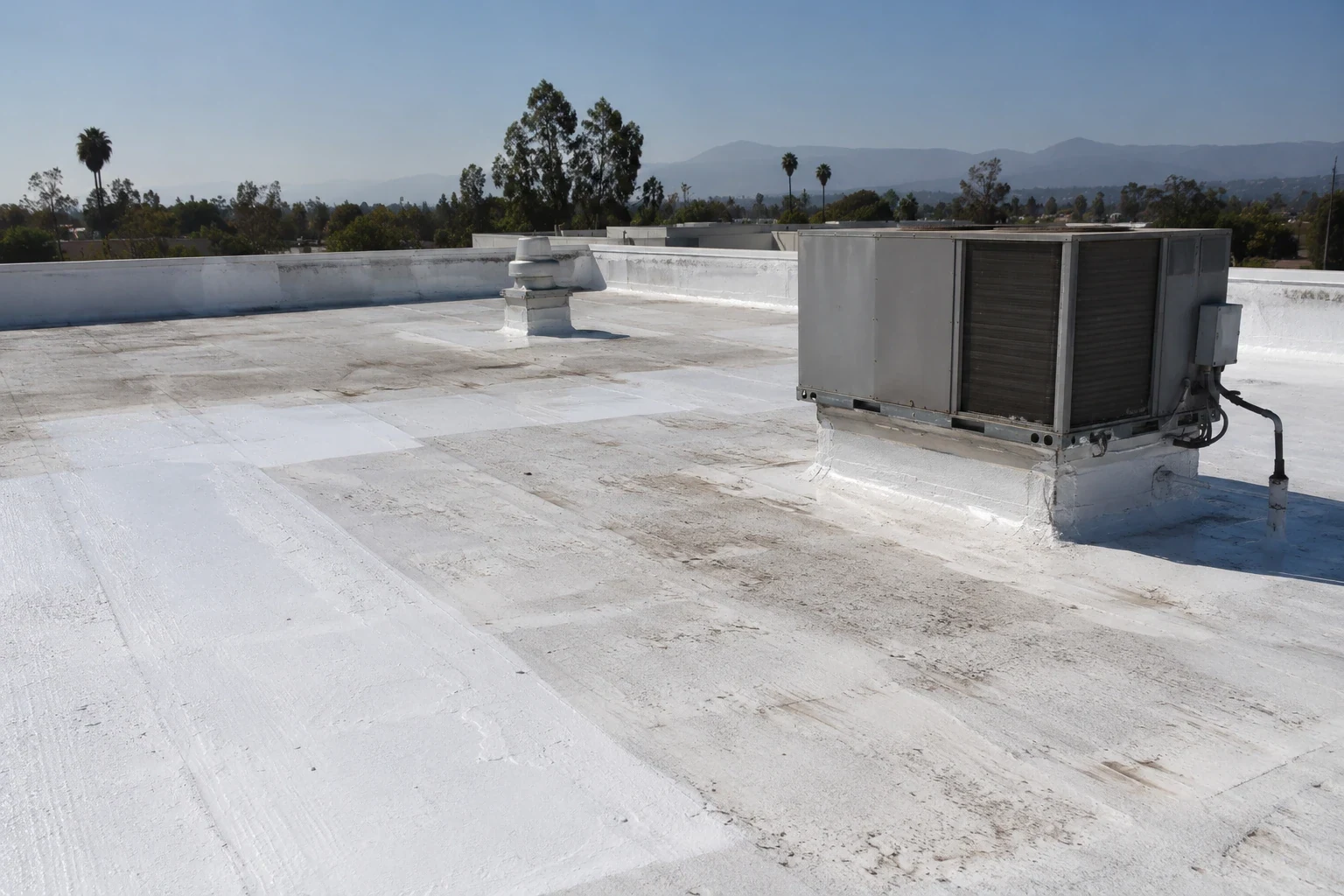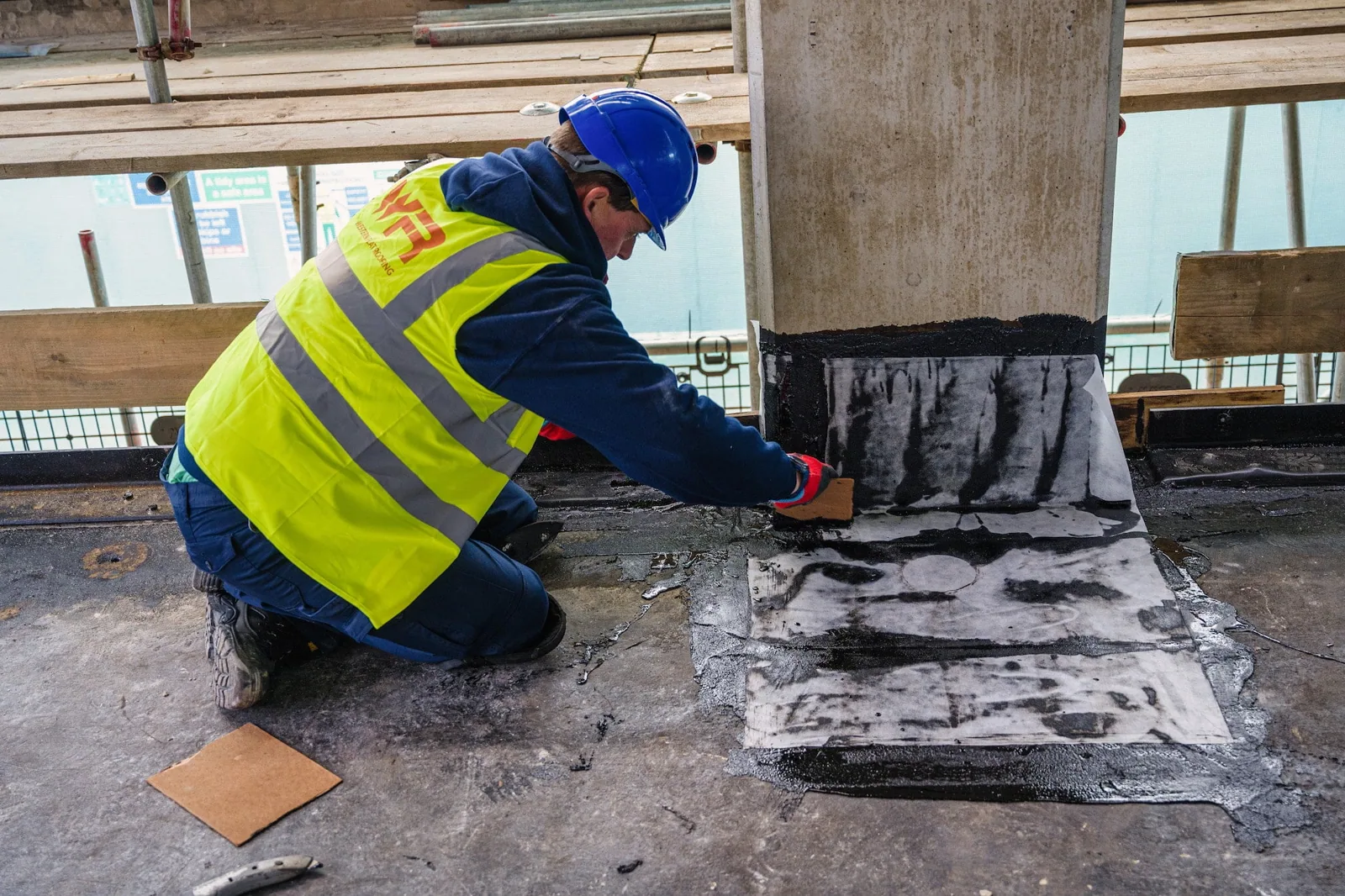
A lifted termination at a roof edge can let wind-driven rain reach insulation and deck. For commercial and industrial property along the Interstate 5 corridor in Santa Nella, CA, the first decision is whether the affected edge is isolated or part of a longer attachment problem. We inspect the membrane, metal and fasteners before choosing a repair. The scope should name the opening, the material to remove and the detail to rebuild. If water has traveled, the repair boundary follows the evidence, not the ceiling stain.
Santa Nella has a traveler-service role, and county economic-development material identifies commercial and industrial property along its Interstate 5 corridor. Those uses make access, deliveries and customer movement part of the roof plan. We can schedule a commercial roof inspection, document the exposed layers and compare a local repair with a broader commercial roof repair or replacement scope. The building's actual assembly and condition still decide the work.
At the perimeter
A roof edge has several parts that can move differently: membrane, termination bar, coping, fasteners and the surface receiving the attachment. We check the metal, bond line and path behind the termination. A loose fastener is not the same finding as a split membrane or wet insulation. The scope should name which layer failed and where sound material begins.
Along a commercial route, the edge may sit above a drive, entrance or loading area. We identify a safe work zone and keep access open where possible. If temporary protection is needed, its location and removal belong in the sequence. We check nearby corners and transitions because movement farther along the perimeter can pull a repair.
Movement at the attachment
Merced's summer heat can move metal, membrane and fasteners at different rates. For a Santa Nella roof, we verify the actual drainage, membrane, and edge condition during the site inspection. We look for a stretched slot, a backed-out fastener, a wrinkle at the transition or a released bond line. Each clue points to a different repair. A patch placed over a moving connection may hide the split while leaving the attachment unchanged.
Where the assembly is unfamiliar, a small test opening can establish the membrane type, insulation condition and attachment below. We keep the opening limited and close it with compatible materials after recording what is exposed. If insulation is damp, closing the surface alone leaves the moisture path in place. A perimeter-metal inspection focuses on the termination itself. The written scope should answer the question the roof presents.
Trace the water inward
A drip near an exterior wall does not identify the roof entry point. Water can follow a deck flute, framing member or conduit before it appears. We compare the interior mark with seams, penetrations, drains and edge conditions above it. If clues do not line up, an infrared survey or controlled opening may locate retained moisture. The report notes what remained concealed before the owner approves a larger removal area.
Santa Nella is served by Interstate 5 and State Route 33. Those corridors inform arrival and staging, not assumptions about a property's access or roof condition. Near a drive or customer entrance, the plan should identify lift placement and pedestrian routing. A close inspection remains necessary at a suspect bond line. The report separates visible findings from items needing an opening.
Choose the repair boundary
A local flashing repair fits when the surrounding membrane is sound, the substrate is dry and the termination can accept a compatible detail. A longer loose run may need new attachment and rebuilt edge metal. Wet insulation, broad seam separation or a brittle surface can shift the decision to a larger section or replacement. We mark the affected area and list the assumptions behind the choice. The manager can compare that scope with a roof replacement evaluation.
Coating does not correct an open edge or trapped water. We check adhesion, existing coatings, repairs and drainage before considering a system. If eligible, a restoration scope should state preparation, reinforcement and termination work. Otherwise, the report explains the condition that prevents application. A defined repair boundary keeps coating from covering a defect that needs rebuilding.
Keep operations in view
For traveler-serving businesses, a blocked entrance or unmarked work area can disrupt daily activity. We plan access, material handling and noisy work around operating hours when the owner provides those limits. Inspection can be separated from repair so an opening is not exposed while approvals or materials are pending. The written scope identifies temporary protection and any return visit needed to finish the work.
Photos should show the detail before and after work, the areas opened, materials installed and conditions that remain. A roof condition report connects the repair to later maintenance without implying a new warranty for the full assembly. For an insurer review, we prepare roof claim documentation from observed damage and requested work. Coverage remains the insurer's decision.
From inspection to scope
The first visit starts with the symptom, roof access and the assembly visible at the edge. We photograph the termination, check fasteners and seams, test nearby drainage and compare interior evidence. If an opening is warranted, we record its size, location and exposed layers before closing it. The written scope separates removal, substrate work, membrane or metal repair, flashing and cleanup. The manager can review it against access limits and approvals.
Santa Nella's highway setting can make delivery timing relevant, but the property manager controls site access. We confirm the work zone before dispatch and coordinate staging with operations. The same care applies in the Los Banos service area or elsewhere in the county. A Merced inspection request can start with photos, the leak location and the last known roof work. Inspection establishes what the assembly supports.
Commercial Roofing Questions
Can a loose edge be repaired without replacing the roof?
Yes, when the membrane around it remains sound, the substrate is dry and the attachment can be rebuilt. We inspect beyond the visible looseness before setting that boundary. If the edge failure continues along a longer run or insulation is wet, the scope changes to include those conditions. The written findings should show why the selected repair stops where it does.
Does a ceiling stain identify the entry point?
No. Water can travel along the deck or framing before it becomes visible. We compare the interior mark with roof seams, penetrations, drainage and edge metal, then open a limited area only when the evidence supports it. The report distinguishes the observed stain from the roof detail that needs repair.
What can a test opening tell us?
A controlled opening can reveal membrane type, attachment, insulation and moisture below the surface. We photograph each exposed layer and close the opening with compatible materials. It helps define the repair boundary, but it represents only the area opened. A broader survey may be needed when conditions change across the roof.
Can roof work continue while customers are on site?
Often, with a work zone and sequence matched to the entrance, drive and delivery activity. We confirm access, lift placement, noise restrictions and temporary protection before the repair begins. If the affected area cannot be isolated safely, the schedule needs a different window. The property manager's operating constraints belong in the work plan.
What should the repair record include?
It should identify the original condition, exposed layers, materials installed and the completed termination. Photos and a repair boundary make later inspections more useful. We also list any area that remained concealed or was not included in the scope, so the record does not imply work beyond what was completed.
Inspect the roof edge
Request an inspection of the loose termination, adjoining membrane and substrate. We will document the repair boundary and the access sequence for the property.
Related Roofing Work