A split at the edge of a sanctuary roof can admit water above a room with few practical alternate uses. For church roofing in Merced, CA, we locate the detail, identify the space below, and examine the membrane and layers before setting a repair boundary. The building manager or facilities contact can point out worship areas, offices, kitchens, classrooms, and scheduled gatherings. That map changes how an opening is protected and when a crew can work below it. Merced summer heat also puts movement at sheet-to-metal transitions on the inspection list. A commercial roof inspection can trace the reported condition to the roof assembly and document the next decision.
Downtown Merced contains government, finance, professional office, restaurant, and arts-related commercial uses. Atwater is another Merced County city along Highway 99. Those places mark different access settings across the service region. We confirm the actual congregation entrance, material staging area, and roof route at the church rather than assume the event entrance is the best way to bring materials.
Rooms below the repair boundary
Water staining near a sanctuary ceiling does not establish where it entered or how far it traveled. We compare the interior location with accessible seams, curbs, vents, skylights, drains, and prior patches above it. The facilities contact identifies rooms that cannot be closed during a service, meal, or community meeting. We can then plan inspection and removal to avoid opening over an active gathering where another sequence is practical. If the affected zone serves several rooms, the work note names each area that needs protection or temporary access control.
A phased roof work plan can define which rooms remain available while an assembly is repaired. It should identify the roof section opened, the temporary tie-in, and the condition that must be met before the crew leaves for the day. A short work window is useful only if the detail can be prepared and closed within it.
Membrane, flashing, and concealed layers
Aged sealant at a curb, a lifted membrane edge, and a loose field seam are different findings. We identify the roof material and examine how the detail attaches to the surrounding sheet and metal. If the surface is wet or soft, we check whether a test opening or moisture survey will answer a question about insulation or deck support. A moisture survey can help locate areas for physical confirmation when the roof conditions suit the method. The report separates visible damage from a concealed condition that still needs testing.
The manager approves a test location before we cut the assembly. We describe how the opening will be closed and what result would change the repair boundary. If wet insulation extends beyond a flashing repair, covering it would leave the cause of repeated failure in place. We identify removal and replacement only where field evidence supports it, then specify the tie-in and termination that complete the repair. A layer repair scope can state how insulation and cover board connect to the surface work.
Heat, drainage, and service timing
Merced station normals put July's normal high at 96.3 degrees, with 22.8 days a year reaching at least 100 degrees. We check the roof surface, seam bond, and edge details before choosing a heat-related repair. They make heat planning a real part of membrane preparation, material storage, and safe daily close-in. We check the current forecast and the product instructions before selecting a work period. A roof surface that is too hot for the specified procedure can affect how an adhesive or flashing detail is handled, so the crew needs a usable stop point rather than a calendar promise.
Winter precipitation is higher than the station's July and August normals. We inspect drain approaches and low areas before a storm window, especially where water could reach an occupied room. A drain and scupper review can separate a blocked outlet from a damaged connection or a condition needing further assessment. The schedule should leave time to restore the complete water path before the building resumes its usual use.
Worship spaces and roof openings
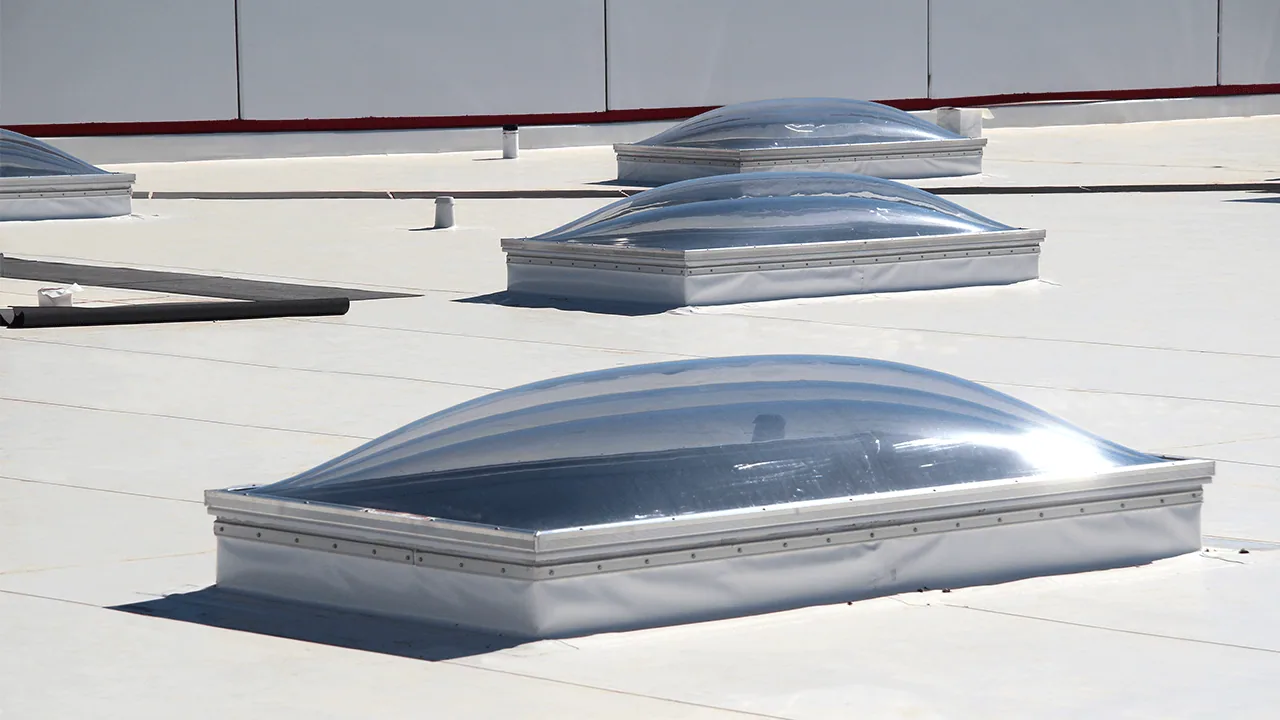
Sanctuary roofs can have high interior volume, roof openings, lighting supports, sound equipment, or transitions to lower classrooms and offices. We verify which features are present instead of assuming every church has the same arrangement. A skylight or curb repair must preserve the adjoining membrane and maintain safe separation while work is underway. We photograph the detail and label its location so a later service call can compare the repaired area with the original condition. A skylight and penetration review can identify the flashing, support, and interior protection needed at an opening.
Kitchen exhaust, condensate lines, and mechanical equipment may require another trade to coordinate a shutdown or keep a system available. We identify the connection that roofing must restore and the service contact who controls nearby equipment. The roof scope should not leave a trade-made curb or pipe penetration outside the inspection merely because another contractor installed it. If access across the roof is part of maintenance, we also note where repeated foot traffic has worn or punctured the membrane.
Repair, replacement, or a wider review
A bounded split with dry, sound material around it may need a focused repair. Several openings, repeated failed patches, extensive wet insulation, or weakened support can change the choice. We compare the observed area, the likely removal, and the details that must be rebuilt. A church roof repair scope should state the location, compatible repair method, protection below, and closeout evidence. If replacement is under consideration, the proposal identifies phases, temporary connections, and whether worship or community use can continue in affected spaces.
Uncertain quantities should remain visible until a test resolves them. The manager can approve a base repair and a separate contingency when the concealed layer may change the work. We explain what finding triggers the added work and who authorizes it. A school roof comparison or commercial kitchen roof comparison may help when the building combines assembly, classroom, or food-service areas, but the church's roof plan and calendar govern the actual scope. We do not assign a remaining life from one patch or a single inspection.
A closeout the next facilities lead can use
Keep the roof map, date-stamped photographs, confirmed material, test results, approved work, and unresolved items together. Label the sanctuary, office wing, kitchen, and lower roof areas consistently if they were included in the inspection. Record any section that could not be reached and set the follow-up needed to resolve it. The property team should be able to tell which seam or flashing was repaired without searching through a folder of unlocated images. A photographic condition record can link each finding to an observed action and an open question.
The final work note lists materials installed, preparation completed, weather holds, and any maintenance or inspection procedure required by the actual warranty documents. It also identifies the contact who received the handoff. Downtown Merced's active commercial uses make clear access and room coordination relevant for many properties, while a church's own schedule determines its constraints. We leave the facilities contact with the roof areas completed, the condition that remains, and the next decision date.
Commercial Roofing Questions
Can a roof leak be repaired between services?
A small repair may fit a short interval if access, preparation, and the required cure or closure time allow it. We inspect the actual detail first and confirm the area can be made weather-tight before the next use.
What if the stain is below a different roof section?
We map the room and compare it with seams, penetrations, drainage, and prior work overhead. The interior mark guides the search; the roof evidence sets the repair location.
Do we need to empty the room beneath the work?
The answer follows the opening, debris risk, ceiling condition, and protection method. We identify the affected space and coordinate a suitable access or protection arrangement with the facilities contact.
Can you patch over damp insulation?
No. We determine whether moisture is present and how far it reaches. Confirmed wet material may need removal and replacement before the membrane detail is closed.
Which records help set the inspection?
Send the roof plan, leak location, prior repair notes, warranty documents, service schedule, and access contact. Those items help us choose the inspection route and identify the rooms that may need protection.
Inspect the church roof detail
Share the Merced address, reported leak area, room schedule, and available roof records. We can identify the assembly and set a repair boundary that fits the building's use.
Related Roofing Work