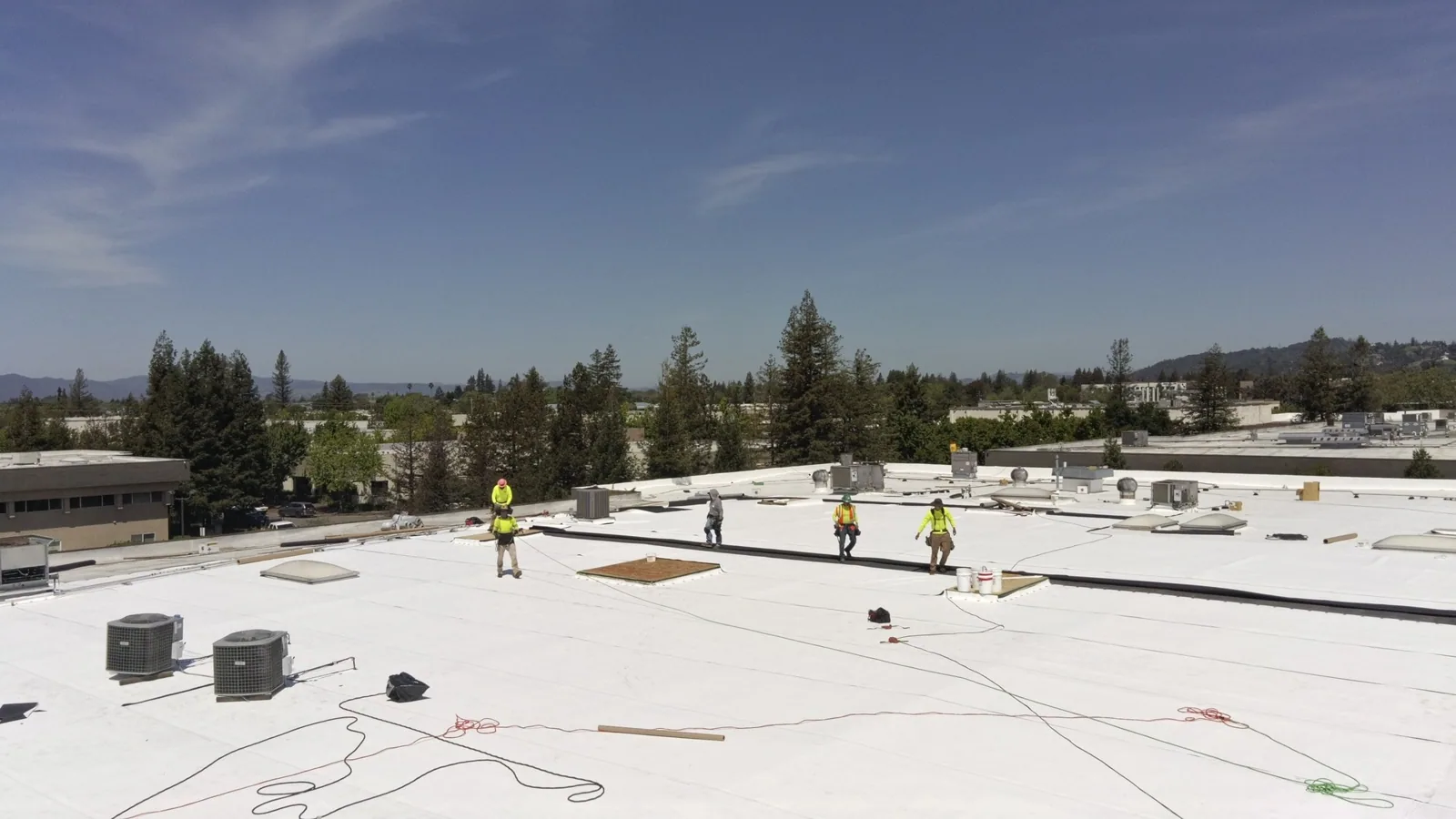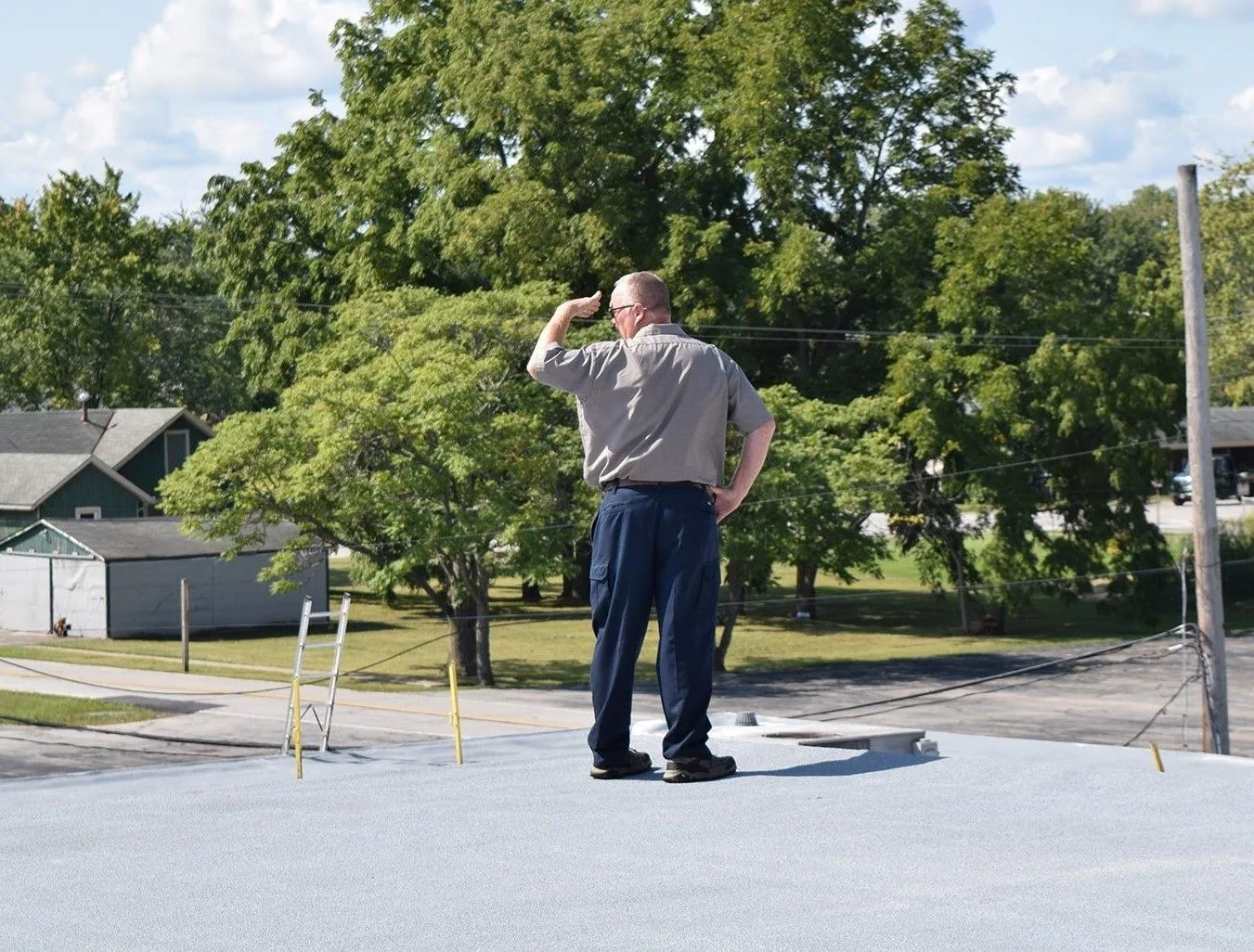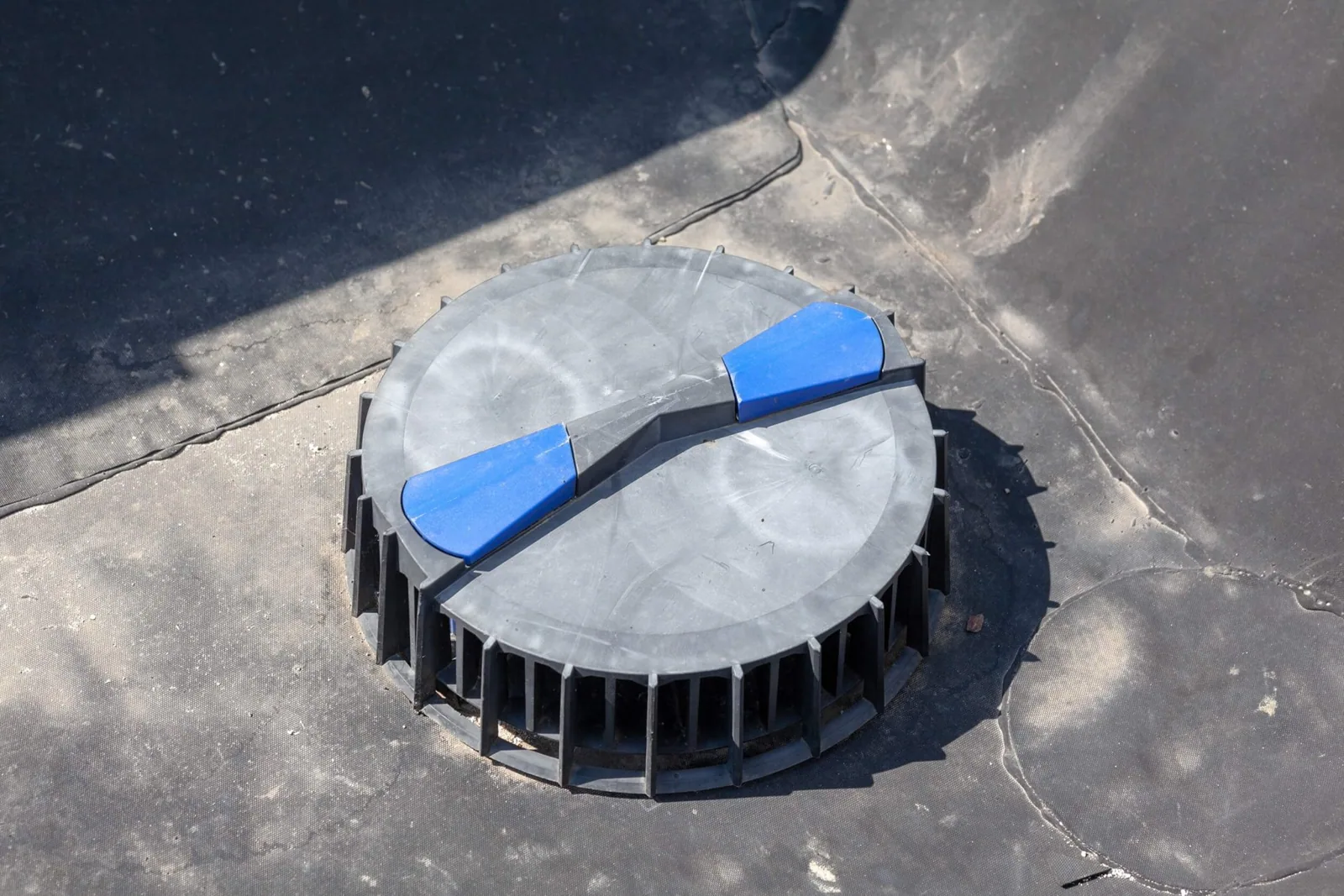
A water mark near a ceiling joint can point away from the roof opening that caused it. In McSwain, CA, we trace the report back through the roof field, penetrations and drainage before selecting a repair. McSwain is an unincorporated Merced County community bordered by Atwater to the north. State Route 99 marks its northern boundary, and State Route 140 connects east toward Merced and west toward Gustine. Those routes orient a service call, but the roof assembly still has to be identified at the property.
Our walk checks seams, flashings, drains, edge metal and any prior patches that could have changed the moisture path. We compare the visible conditions with the manager's timeline and the interior area affected. A commercial roof leak repair may stay local when surrounding material is dry and attached. If repeat leaks or soft insulation point farther into the assembly, a commercial roof inspection can define what additional testing is needed before permanent work begins.
Follow the report to the roof
Water can move along the deck, a lap or a framing member, then appear inside at a lower point. We use the room, timing and conditions during the leak to narrow the search. The roof check includes nearby penetrations and transitions, not just the spot above the stain. We note whether the defect is open, patched or concealed and whether the adjacent membrane remains bonded.
Route information helps coordinate the visit: State Route 140 links McSwain toward Merced and Gustine, while the community borders Atwater on the north. Those connections do not tell us how a particular building is used or what its roof contains. A roof assessment in nearby Atwater therefore receives its own inspection and report. For a roof where the leak history is unclear, the record should distinguish observed water entry from the interior location where it was noticed.
Water at the low points
A drain that is partly blocked can hold water near seams and old repairs. We clear the immediate obstruction when that is part of the work, then check the bowl, clamping ring, flashing and discharge path. If water remains after the outlet is clear, the roof may have a low area, a compressed layer or a slope issue that needs measurement. The report says what was observed instead of assigning a cause from the stain alone.
Merced's rain is concentrated in the cooler months, while the Merced station records very little normal precipitation in July and August. For a McSwain work window, the current forecast and exposed substrate condition set the dry-in sequence. It helps explain why a manager may schedule broader drainage corrections before the wet season, with the actual roof survey controlling priorities. A drain and scupper repair addresses the outlet detail; a larger water problem needs an assessment of slope, seams and material condition around it.
Identify the installed assembly
We do not choose a repair material from the building's address. A thermoplastic membrane, EPDM sheet, built-up roof and standing-seam panel each require a different tie-in. The walk looks for markings, seam construction, edge conditions and prior repair materials. If the assembly cannot be identified at the surface, records or a controlled test opening may provide the missing layer information.
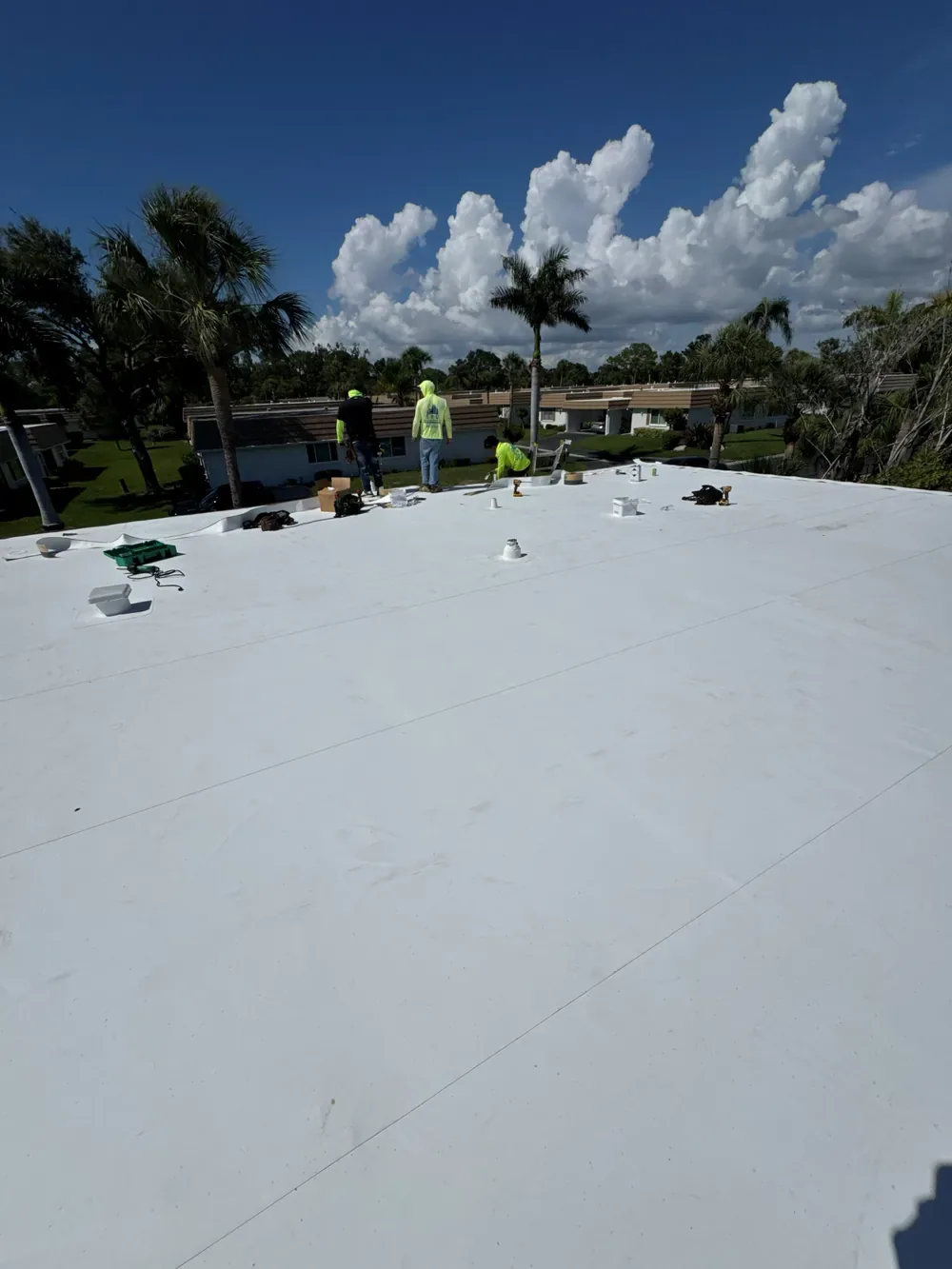
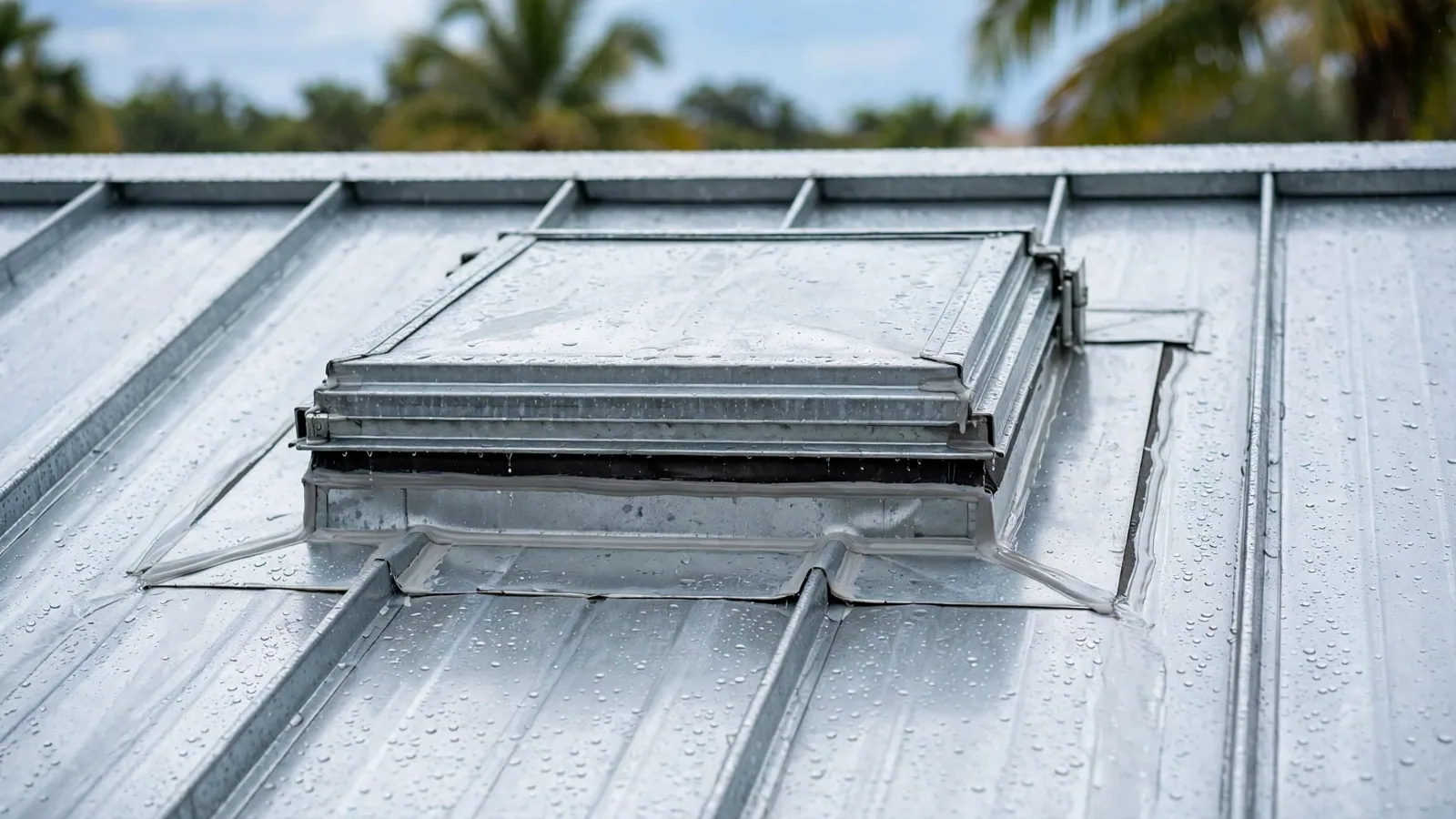
For a thermoplastic surface, a TPO seam review may involve cleaning, weld testing and inspection of patches around curbs. On a metal roof, fasteners, laps and panel movement become part of the repair. The scope states what the inspection confirms, what remains hidden and whether a sample or opening is needed. Merced's summer heat can stress transitions, yet the visible bond and attachment determine the work at this specific property.
Set the edge before replacing material
When insulation is wet, removing only the ceiling stain will not correct the roof. We mark the affected zone, expose enough material to find sound edges and replace damaged layers before installing a compatible membrane patch. If moisture extends into another roof section, the scope explains the expanded boundary and the reason for it. Photographs of each exposed layer help the manager see what changed from the initial walk to the completed repair.
A flashing repair assessment can distinguish a failed vertical transition from a field seam split. If openings and patches have accumulated, we compare the total assembly condition with the cost and disruption of continued repairs. A recover review asks whether existing layers can stay in place. Saturated insulation, weak attachment or concealed deck problems can make removal the better path, even when the visible surface looks serviceable.
Access beside Route 99 and Route 140
State Route 99 lies at McSwain's northern boundary, and Route 140 connects the community east and west. We use these local facts for orientation, then confirm gate access, staging and roof entry with the property manager. No roadway establishes where a building sits or whether a lift can reach the roof. The visit identifies traffic areas, customer entrances, delivery paths and equipment that must remain accessible during work.
An occupied-site sequence separates removal, substrate correction, membrane work and final inspection into controlled areas. We set a daily dry-in limit and identify the temporary closure before opening the roof. The schedule can coordinate interior protection and the times when noisy work takes place. If the scope expands after a test opening, we stop at the agreed boundary and review the added conditions before continuing.
Repair now or plan renewal
One isolated defect on a sound assembly may justify a local repair. Repeated seam openings, broad moisture or failing attachment can support replacement planning. A coating is considered only after the surface is clean, bonded and suitable for that system; coating does not remove wet insulation or correct a moving edge. Our coating restoration evaluation identifies preparation, repairs and excluded areas before the owner compares that option with reroofing.
Timing depends on how much material must be opened, access, dry-in protection, equipment coordination and weather. Merced's winter rain pattern makes exposure control part of the sequence, while very hot days can affect surface preparation and work windows. We also note whether the proposed work can be completed in one mobilization or needs a return visit after material or moisture checks. A roof condition report keeps photos, observed defects, repairs and open questions with the building record. In Merced, this separates the work along the Highway 140 corridor from a separate review near Highway 99. Request an inspection when a leak, drain or seam needs examination; we will state what the roof supports and what evidence is still needed.
Commercial Roofing Questions
Why is the ceiling stain far from the leak?
Water can travel through insulation, along a deck or across a roof transition. We compare the interior location with seams, penetrations and drainage before choosing the repair point.
Will clearing the drain stop the leak?
Only if obstruction is the relevant condition. We also inspect the drain flashing, nearby membrane and any low area that keeps water against the roof.
Can we patch a roof with wet insulation?
The wet layer must be exposed and addressed before a permanent patch closes the surface. We establish the removal limit with a test opening and moisture evidence.
Does the route location affect the roof scope?
The road helps orient access, but it does not identify the assembly or the work area. We confirm staging, roof entry and building operations at the property.
When do repairs stop making sense?
Recurring failures, widespread moisture or weak attachment can shift the decision toward replacement. We document the condition and compare options after identifying the layers.
Trace the leak before setting the repair
Schedule a commercial roof inspection in McSwain. We will compare the interior report with roof details and drainage, then provide a written scope for the affected assembly.
Related Roofing Work