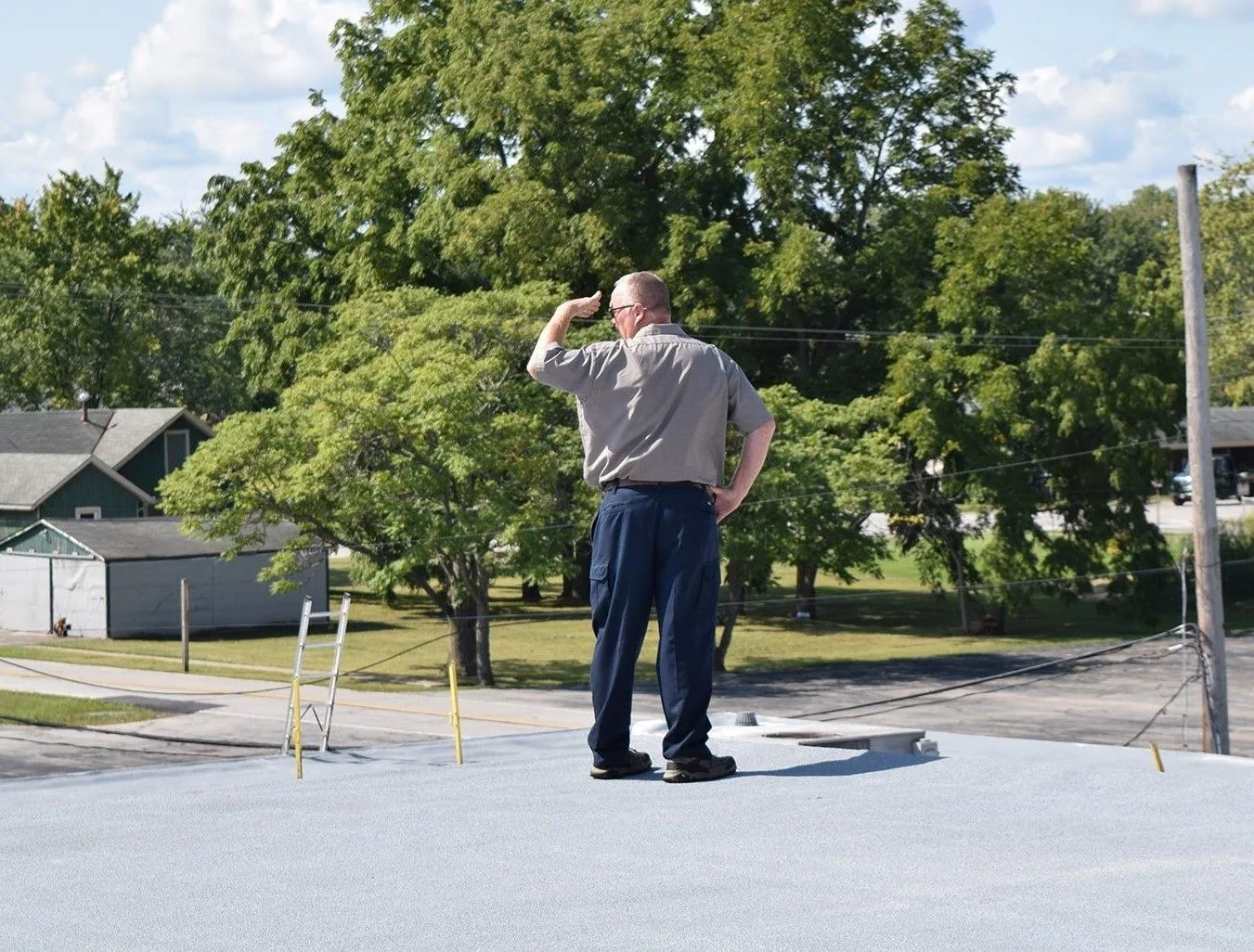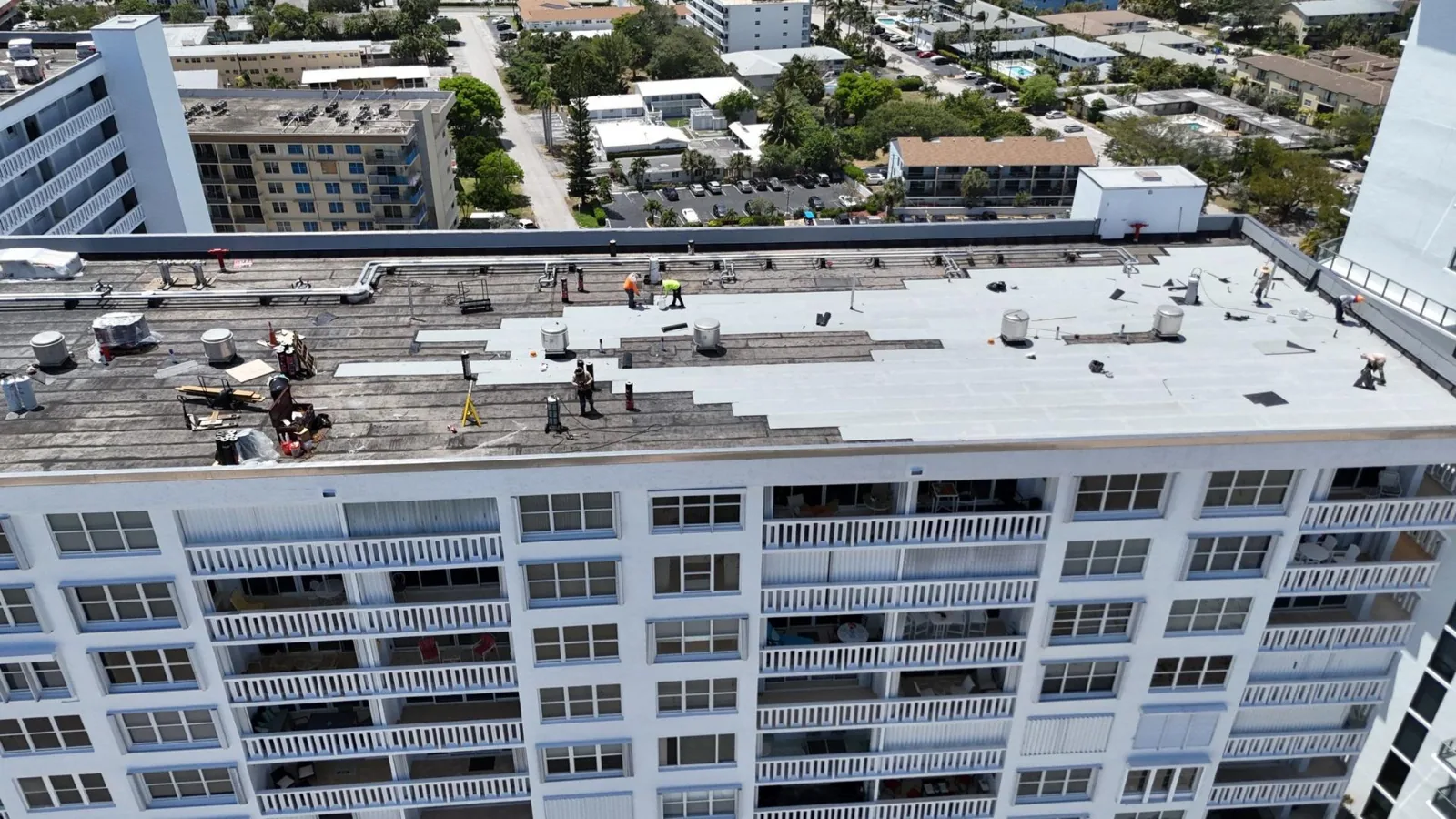
A drain bowl holding grit can leave water at the roof longer than the surrounding field. Along Merced's Highway 140 corridor, we check that low point against nearby seams, curbs and interior marks before recommending a repair. Highways 99, 59 and 140 form Merced's major junction and connect local business districts to the wider road network. The highway junction does not identify the membrane, drainage, insulation or operating needs of an individual building. Ask for an inspection when ponding, a recurring leak or a split transition needs a documented answer.
Water movement at the low point
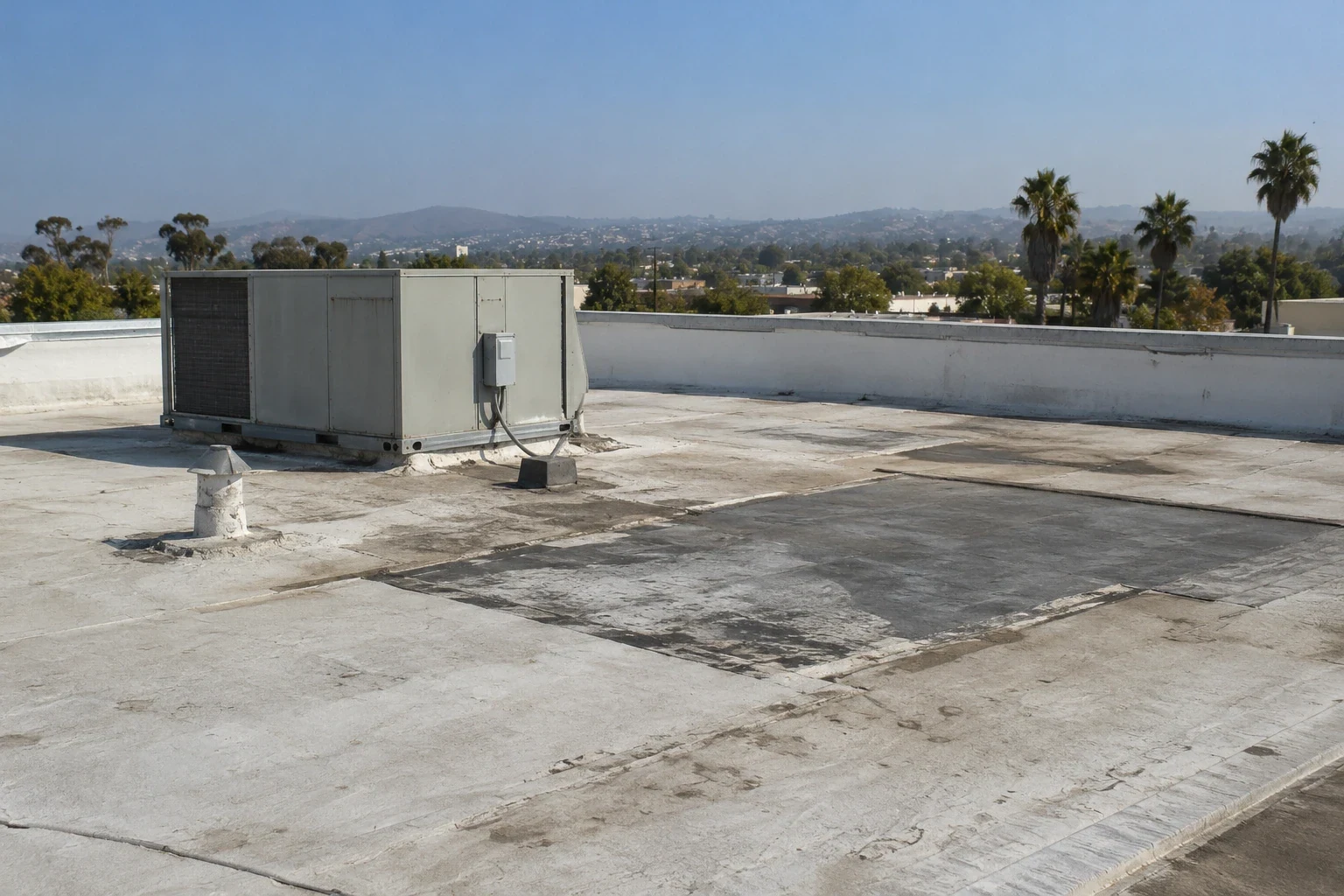
Standing water changes the inspection route. We measure its footprint, check the drain strainer and bowl, then look for deformation, loose flashing and sediment that can restrict flow. A drain can be clear while its sump or connection remains the problem. We note water lines and compare them with roof slope, nearby penetrations and any interior staining. Photographs capture the condition before debris is removed, so the owner can see what changed and what still needs correction.
Merced station normals show a July normal high of 96.3 degrees and an average 99.7 days each year reaching at least 90 degrees. Along the Highway 140 corridor, we inspect actual edge restraint and seam bond before recommending a repair. Prolonged heat can make movement at seams and flashing transitions worth inspecting. We look for membrane shrinkage, open laps, brittle sealant and detached edge details, then test the attachment where the surface gives reason. We confirm the roof material and tested layer condition before sizing the repair.
From roof mark to interior effect
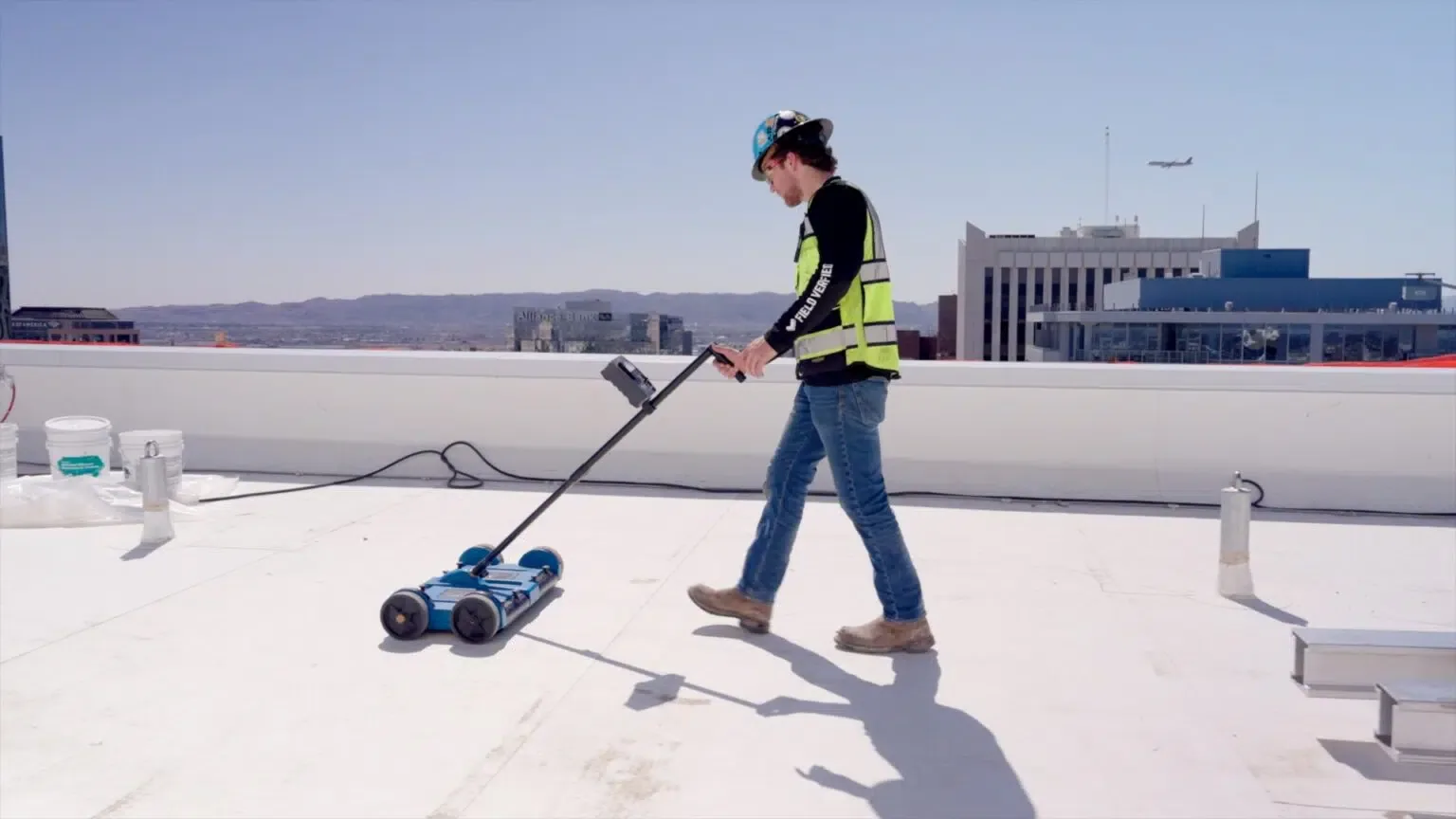
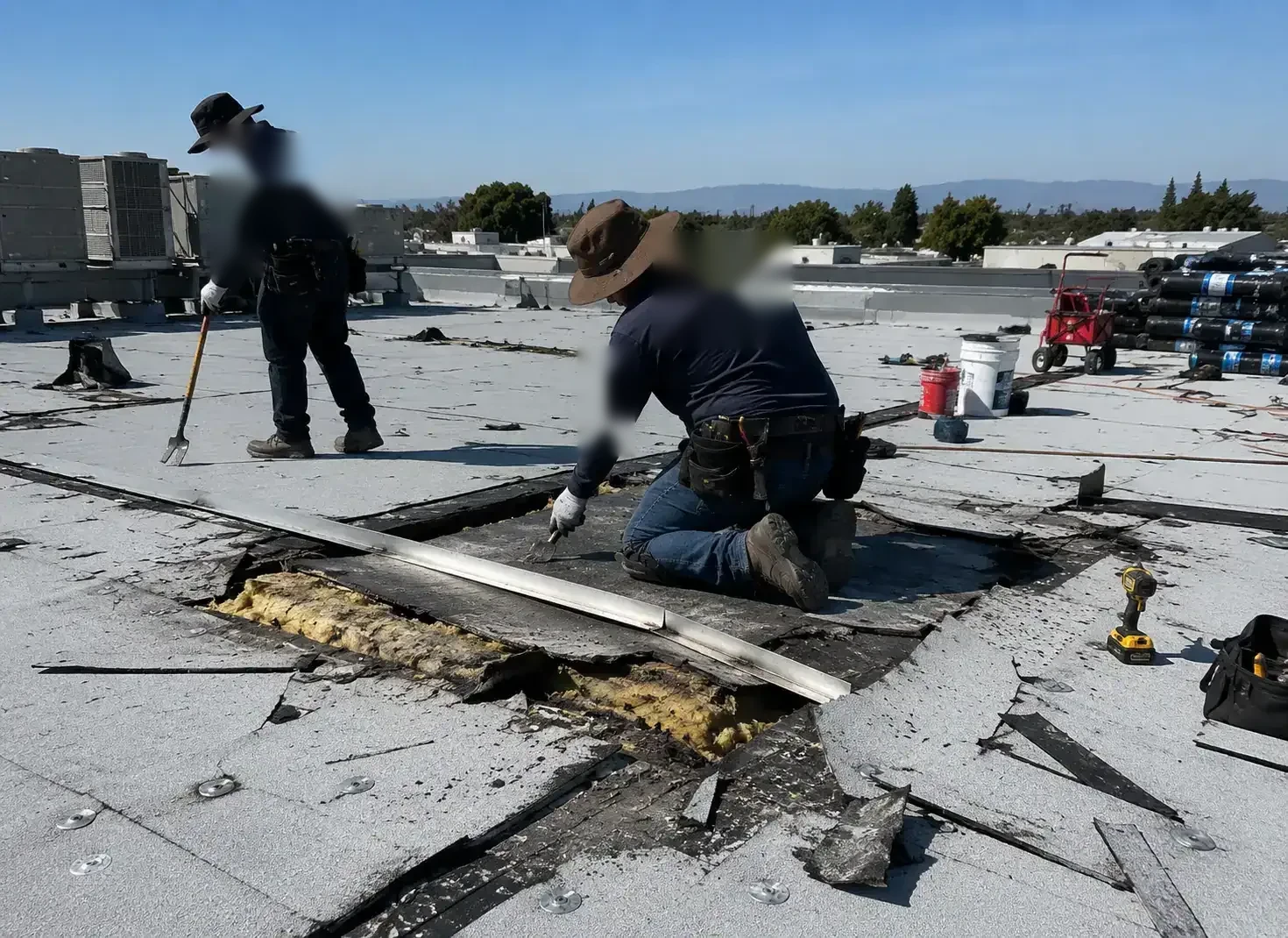
A ceiling stain under a corridor roof does not identify the entry point. Water can track along insulation joints, deck flutes or framing before it appears inside. We map the mark, inspect the roof area above and around it, and note transitions that could carry moisture. When surface evidence cannot establish whether insulation is wet, infrared scanning can guide a test opening. The opening exposes the actual layers at that point. We photograph the membrane, insulation and deck and record the limits of what was inspected.
That sequence gives the manager a choice based on evidence. A dry, secure field with one open penetration may need a localized flashing repair. A wet area that extends beyond the first opening may require selective removal. Where the roof contains multiple failing layers or attachment has loosened broadly, a larger recovery or replacement review may be more useful. A moisture survey can map suspected areas, and a roof inspection records the visible condition and the tests that changed the decision.
Repair limits and assembly choices
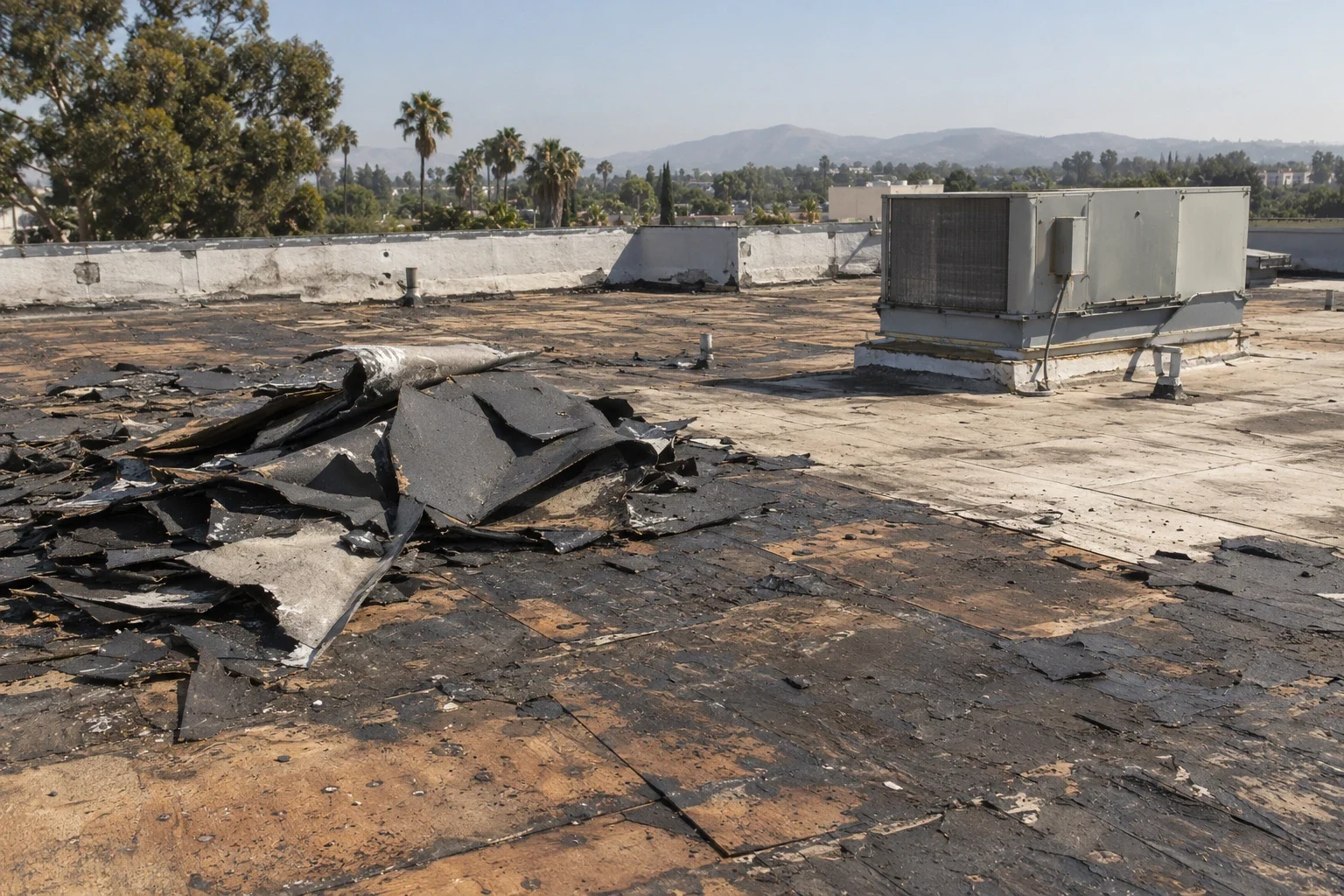
A patch belongs on a sound substrate with compatible materials and a defined edge. We clean and prepare the membrane, rebuild the defect, and tie the repair into the surrounding field. At a curb or pipe, the transition often controls the result: the flashing needs secure attachment, correct height and sealed corners. If water has reached insulation, we remove wet material rather than cover it with a coating. The written scope states which layers are retained and where the repair stops.
Cost and timing vary with access, roof height, removal depth, deck condition, drainage corrections, disposal and the number of transitions involved. A building with active office or industrial operations may need a protected route, limited staging area or work window. We review those constraints before setting the price and sequence. For a stable roof with localized defects, a bounded repair can preserve sound material. A coating or recovery is considered only if the membrane, attachment, drainage and moisture condition support it. When the assembly is too wet or compromised, a replacement evaluation compares tear-off and rebuild options.
The opening and dry-in sequence
Before work starts, we confirm hatch access, equipment clearances, staging and the area below each planned opening. The scope identifies the first cut, the layers to remove and the point where temporary protection will be secured. We inspect exposed insulation and deck before rebuilding. If the condition extends past the marked repair boundary, work pauses while the owner reviews photographs and the revised limit. That keeps added tear-off connected to an observed condition.
Along Highway 140, building operations differ from one property to the next. A retail or office tenant may need a clear entrance; a production space may require separation from equipment and stored goods. The roof crew keeps drains open, secures loose materials and checks temporary dry-in at the end of the shift. A phased work plan can divide a larger project into roof sections that align with access and interior protection. Once permanent repairs are complete, a maintenance inspection records the drain, seams, penetrations and repair edges for later comparison.
A scope for Merced's connected corridors
Merced's Highway 140 connection meets a wider road network that includes Highways 99 and 59. Industrial properties rely on road and rail connections noted by the city, while Downtown Merced includes government, finance, professional offices and commercial uses. The mix changes access and interior protection needs, while Atwater is another nearby service area. Those different uses can change access and interior protection needs, but they do not establish the roof type or condition at a particular address. We inspect the property named in the request and build the scope around its actual assembly.
A useful report identifies the defect, moisture findings, materials removed, repair boundary and unresolved conditions. It separates urgent work from items that can be monitored. If a leak opens during off-hours, we can stabilize the roof and return to plan permanent repairs after conditions are safe to access. Send the interior area, leak timing, known roof material and access limits with the request. We will walk the roof, photograph the details and provide a written scope that gives the property manager a clear next decision. The record can also support a maintenance schedule that tracks whether the same seam, drain or flashing changes over time.
Commercial Roofing Questions
Ponding returns after a drain is cleared. What should be checked next?
We check the bowl, sump, slope, nearby seams and any depressed area that holds water. If the drain path is open but water remains, the roof geometry or a deformed substrate may be involved. The inspection documents the ponding footprint and whether drainage correction belongs in the repair scope.
Can infrared scanning confirm that insulation is wet?
No. A thermal pattern can point to areas that deserve closer inspection, but a test opening confirms the layers at that location. We compare the scan with roof conditions and interior evidence, then photograph any exposed insulation and deck. The report states which areas were tested and which remain unconfirmed.
How do you keep a repair from expanding without review?
The scope marks the starting boundary and layers authorized for removal. If the opening shows wet insulation or deck damage beyond that line, we secure the area, photograph the condition and review the added work with the owner before extending the repair. The record shows why the scope changed.
What is needed before coating an existing roof?
The membrane needs to be sound enough for preparation and bonding, with drainage working and no concealed wet material in the proposed area. We inspect seams, attachment, penetrations and substrate condition first. If the roof fails those checks, we compare repair, selective removal or replacement instead of coating over the problem.
Can work be limited to the Highway 140 side of a larger building?
A repair can be bounded when the roof inspection confirms the affected area and the surrounding assembly is serviceable. We map the location, check adjacent details and note any shared drainage or membrane transitions. The scope explains what is included and which roof areas were not part of the work.
Request a Merced roof inspection
Identify the roof area, visible defect, leak timing and building access window. We will inspect the membrane, drainage and transitions, then return photographs and a written repair boundary.
Related Roofing Work