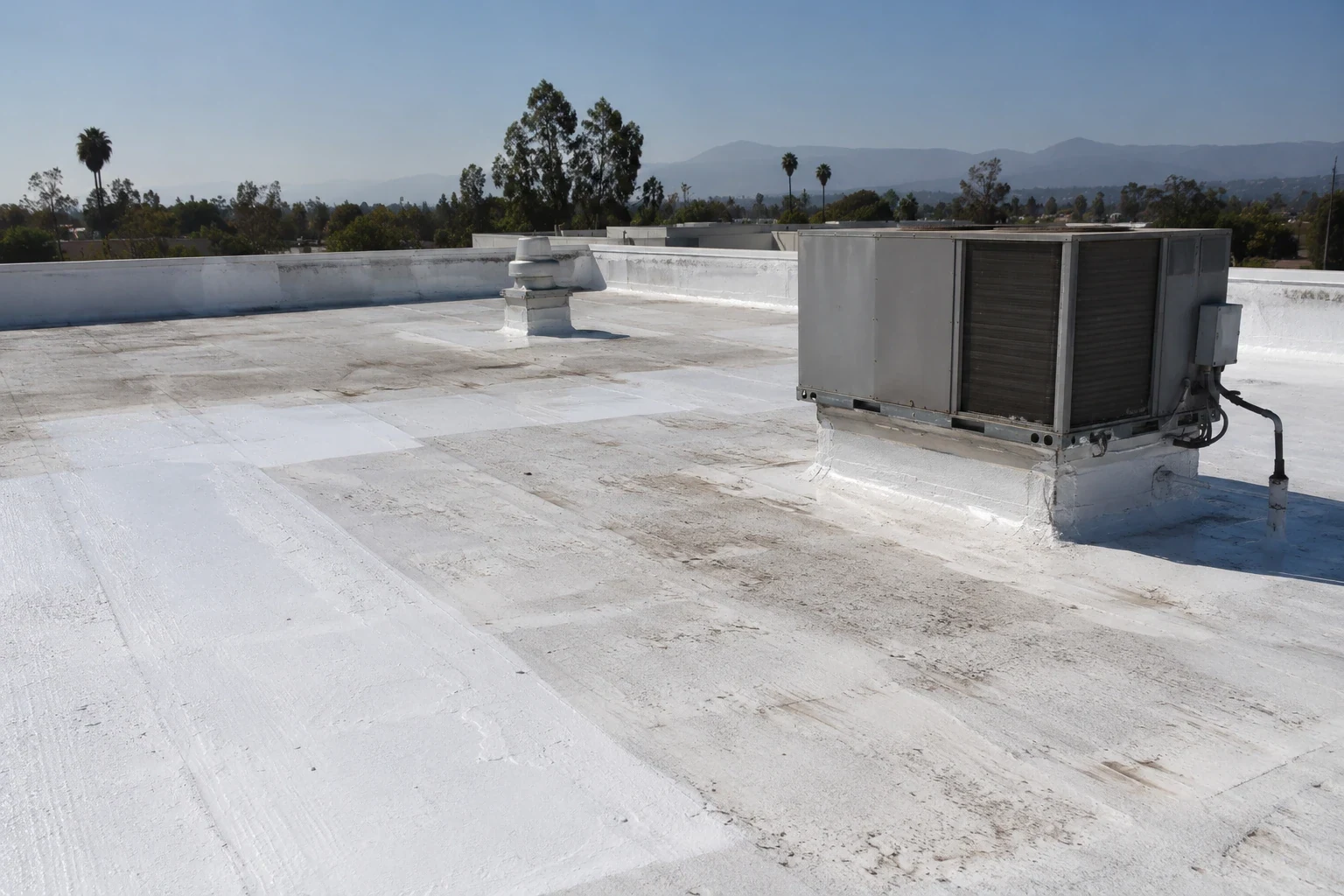
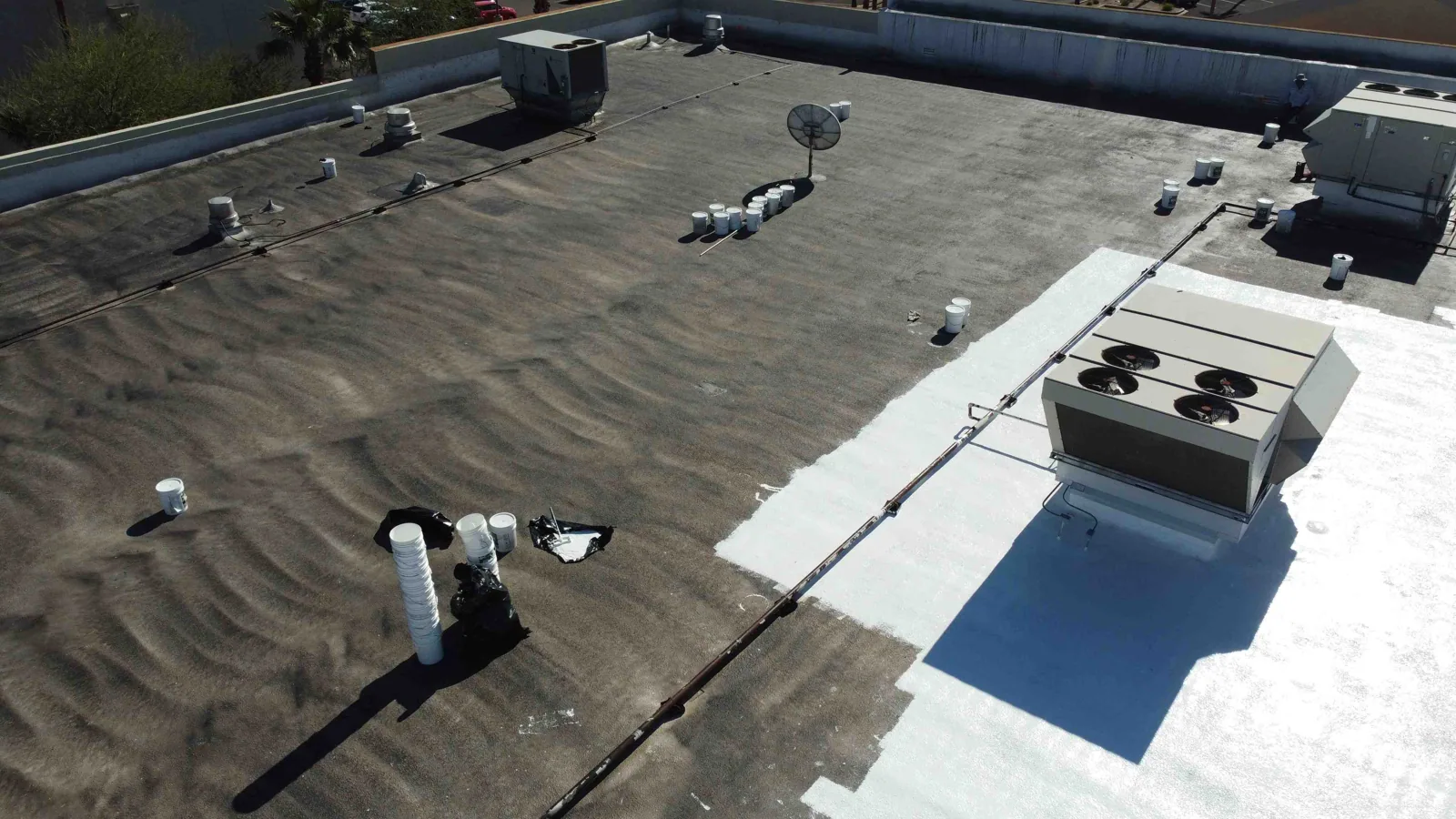
A loose silicone edge needs a bond investigation before renewal. For silicone roof coatings in Merced, CA, we examine the finish, receiving surface and surrounding details. A separated area may need removal and preparation. Damage beneath it may need another construction response. The coating decision starts with the assembly condition rather than a plan to cover the entire roof uniformly.
Silicone coating can protect a suitable roof surface within a specified restoration system. Merced summer heat makes exposed finish and transitions useful inspection targets. Downtown Merced contains offices, restaurants and government uses. Atwater has food processing and manufacturing activity. We coordinate the preparation and application with the actual occupied property, then specify the material and detail requirements.
The existing bond and receiving surface
A peeled finish exposes the interface that failed. We examine whether the coating separated from the substrate or whether an underlying layer moved with it. Those findings lead to different preparation. A new coating applied over loose material leaves the same weak connection inside the work. Removal needs to reach suitable construction before the intended restoration bond is formed.
Compatibility depends on the actual substrate and coating system. We identify existing membrane, old finish and earlier repair materials. Appropriate adhesion testing can help assess preparation and selection where needed. The specification may require particular cleaning or primer. We explain those items so the manager can compare the complete preparation, not assume that every clean-looking surface is ready for silicone application.
A coating restoration scope should distinguish field preparation from detail repair. The substrate needs to be suitable across both. Patch buildup, contaminated areas and damaged flashings can require more work than the general surface. We identify those locations and the intended response before broad application makes the underlying interface harder to examine.
Moisture and damaged construction below the finish
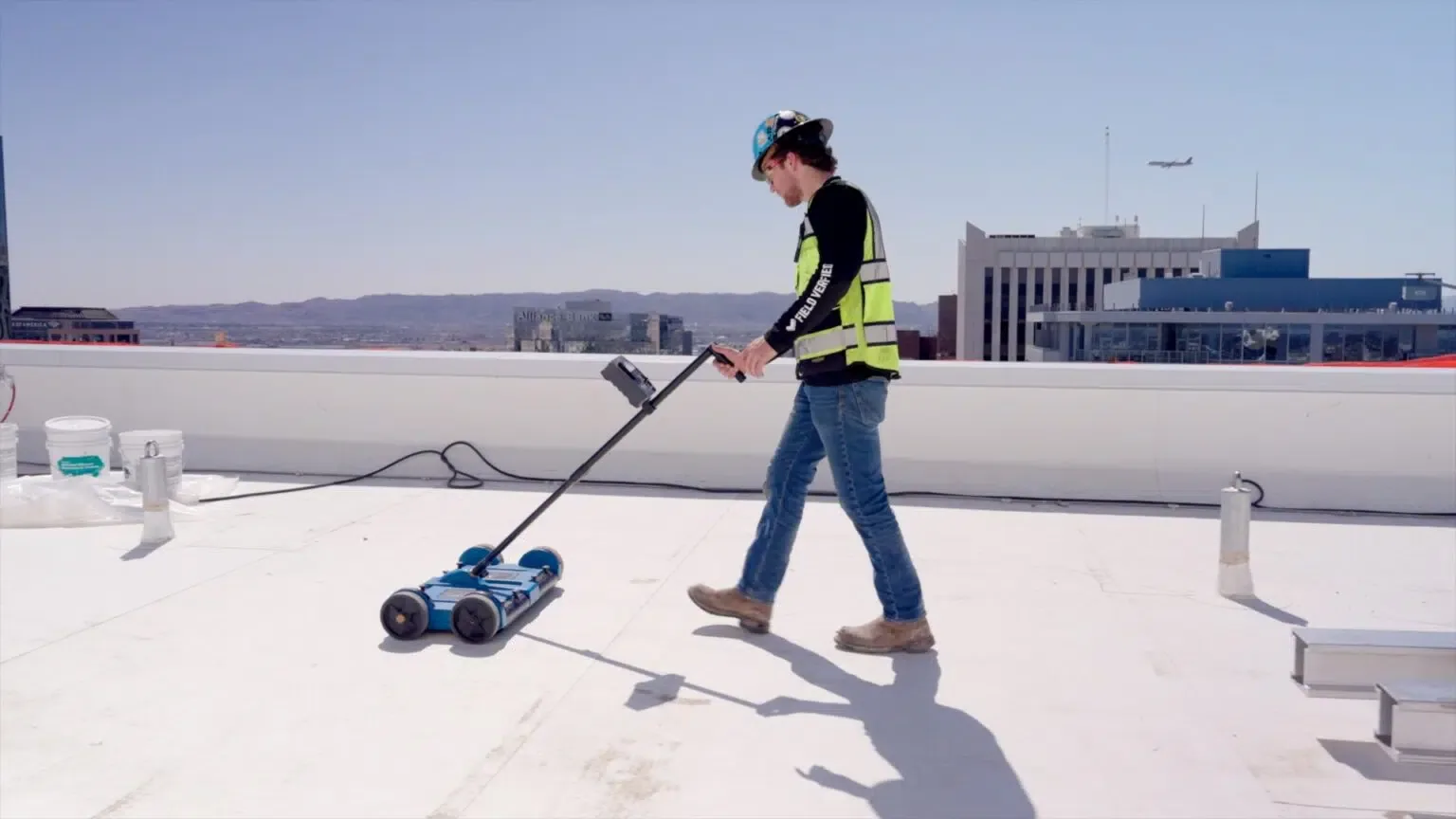
Wet insulation cannot be assessed by the outer finish alone. We investigate suspect areas and identify suitable confirmation checks. A thermal moisture examination can assist under appropriate roof and weather conditions. The physical findings establish which layers need removal. We describe that boundary separately from the coating application quantity.
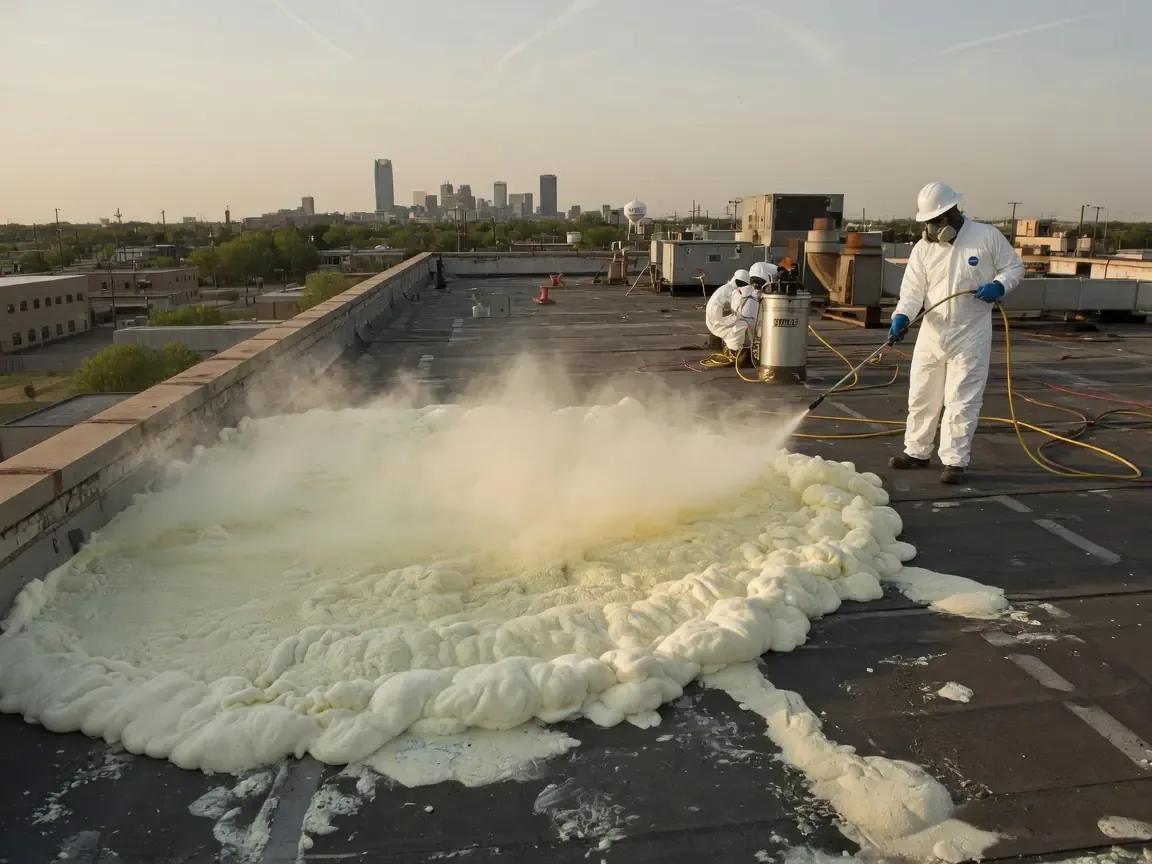
Damaged support, loose membrane or deteriorated foam also changes the restoration choice. A silicone layer does not replace the construction beneath it. We identify where repair must precede the application. For a spray foam roof, the foam condition and existing protective finish need evaluation together. Suitable protection should not conceal damaged foam requiring removal.
Where widespread deterioration makes preparation extensive, another assembly option may deserve comparison. We explain the construction needed before restoration becomes suitable. The manager can weigh that work against replacement using known layers and details. A coating-only price is incomplete where the roof first needs substantial support-layer or membrane reconstruction.
Detail treatment before field application
A seam or corner may need repair and reinforcement distinct from broad field coating. We examine its movement, attachment and substrate condition. The selected system determines the appropriate treatment. A coating should not be expected to bridge an unsuitable opening without that detail work. The proposal identifies which connections are repaired, reinforced or rebuilt before the field receives material.
Merced heat can affect movement where roofing meets metal or a rigid curb. We inspect for strain and separation at those interfaces. The final detail should suit the materials and required movement. Added coating thickness is not a substitute for suitable geometry or attachment. A repair needs to address the connection mechanism observed beneath the finish.
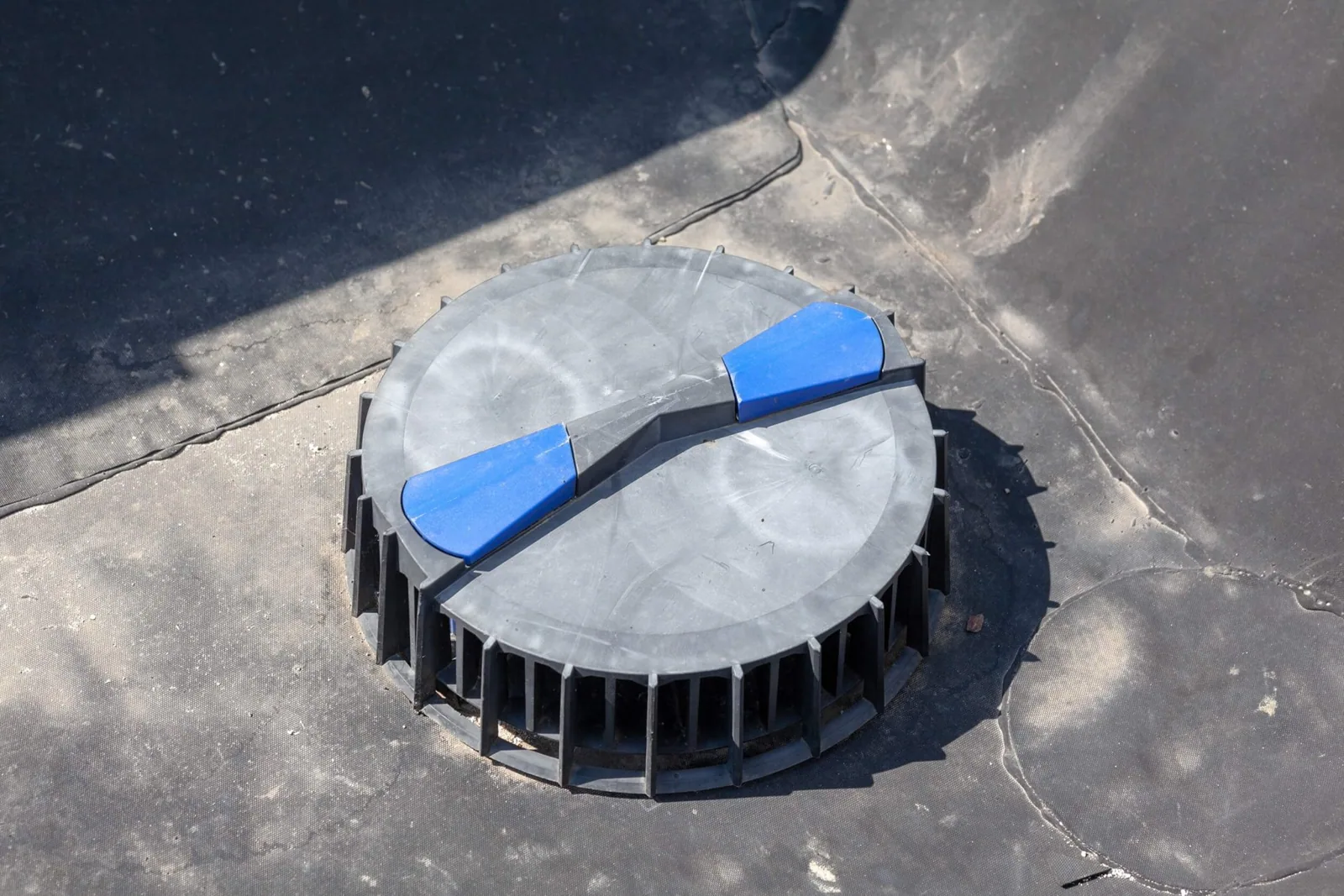
Outlets require a clear opening and complete surrounding treatment. We examine the water route and preserve the discharge detail during application. Drainage repairs belong in the scope where a damaged connection or poor approach needs correction. Silicone coating should not become the only response to an unresolved low area simply because the field can be covered.
Application control and the usable cure window
The coating needs the specified substrate condition and installation environment. We plan preparation, application and curing around the particular product requirements. Rain, surface moisture and temperature can affect the usable window. Merced's summer conditions provide scheduling context, but the actual roof and weather need assessment. Work should proceed when the selected system can be installed appropriately.
Coverage and thickness need controls suited to the specification. Thin or missed areas can leave the intended protection incomplete. We identify application checks and detail treatment in the scope. The manager should be able to assess the installed work beyond its color. A uniformly bright appearance does not establish the required material coverage at every roof transition.
At a property in Downtown Merced, occupied offices or restaurants may affect ventilation, access and adjacent protection arrangements. We coordinate the actual application method with the building team. Nearby equipment and ground activity need suitable protection where relevant. Those operating needs belong in the plan before material handling and application begin.
Compatible repairs after restoration
An existing silicone finish needs compatible preparation and repair methods when later work is required. Another material should not be applied solely because it is available at the service visit. We identify the coating and assess adhesion for the intended repair. Unknown patches or incompatible compounds can complicate later renewal and should be examined before another surface treatment is selected.
A proposed acrylic coating has different material and application considerations. It should not be assumed interchangeable with silicone. We compare the actual substrate, detail requirements and conditions. The manager can then choose an appropriate system rather than treat coating families as equivalent finishes that can be layered in any order.
Equipment traffic and debris can damage or soil the restored surface. Maintenance of the coating system should include accessible details, outlets and traffic areas. Cleaning and repair must suit the installed material. We identify the observed condition and appropriate response rather than repeatedly apply an unidentified compound over each mark.
Restoration scope and continuing drainage needs
Merced winter precipitation normals are greater than midsummer normals. A coating project planned in a dry interval still needs a suitable water path for the finished roof. Product-specific suitability for expected exposure needs review. The coating does not change a structural depression or repair a downstream drainage restriction. We identify those questions as separate construction or technical tasks.
For a manufacturing roof, preparation and opening work may need coordination with process equipment. Atwater has established manufacturing and food-processing activity, making those useful operating questions. We ask about the actual affected zone. Cost drivers include cleaning, repair extent, detail count, application controls and usable access. The finished proposal shows both restoration and necessary preparatory construction.
Commercial Roofing Questions
Can silicone coating be renewed over a peeling finish?
The failed interface needs examination and suitable preparation. Loose material may require removal before application. We identify the receiving surface and assess the bond needed for the new system rather than cover the separation with another layer.
Does silicone coating correct persistent roof ponding?
It does not change the roof geometry or downstream discharge. The selected product's exposure requirements need review, while the cause of retained water needs a separate assessment. We distinguish coating suitability from necessary drainage correction.
Can another coating family be used for a later silicone repair?
Compatibility and adhesion need review before selection. We identify the installed finish and suitable preparation. An available product should not be assumed to form the intended connection with every silicone-coated surface.
Why measure application coverage if the finished color looks even?
Appearance does not establish the specified thickness at each area. The selected system needs suitable application controls and completed detail treatment. We describe those checks so the manager can assess the installed restoration beyond a uniform-looking field.
Assessment of the silicone coating interface
Request examination of the loose finish, suspect support layers and detail preparation needed before silicone restoration proceeds.
Related Roofing Work