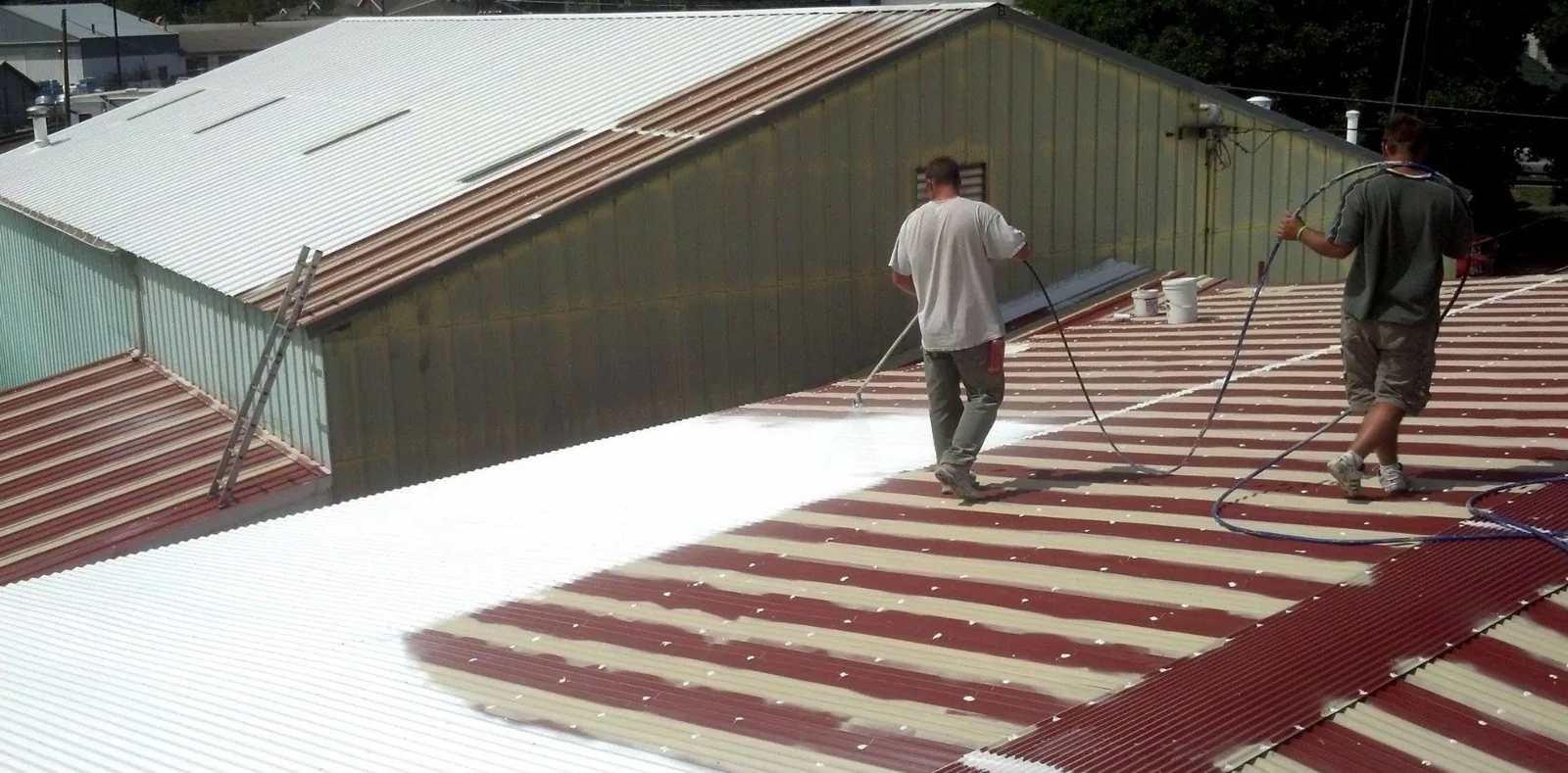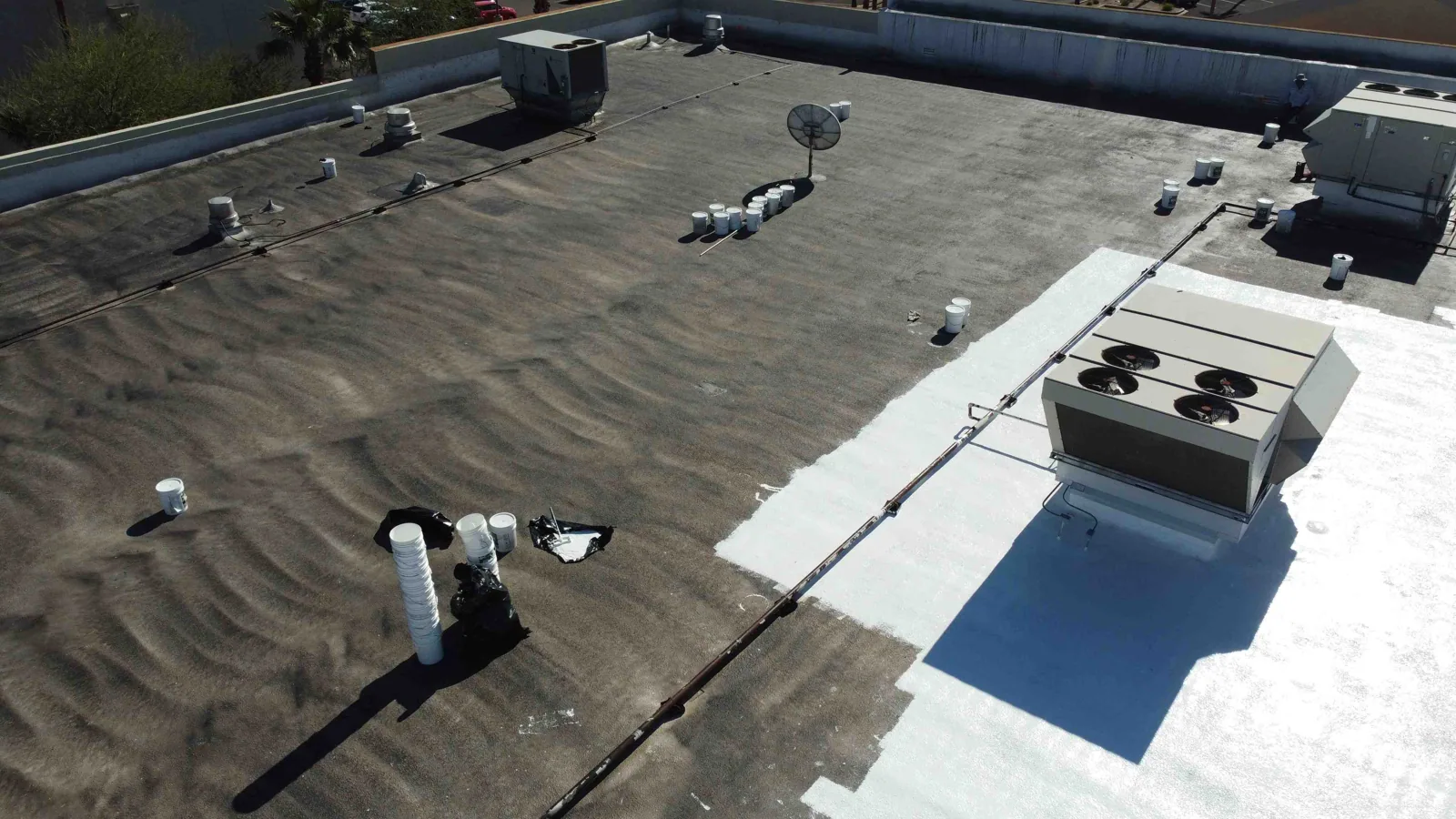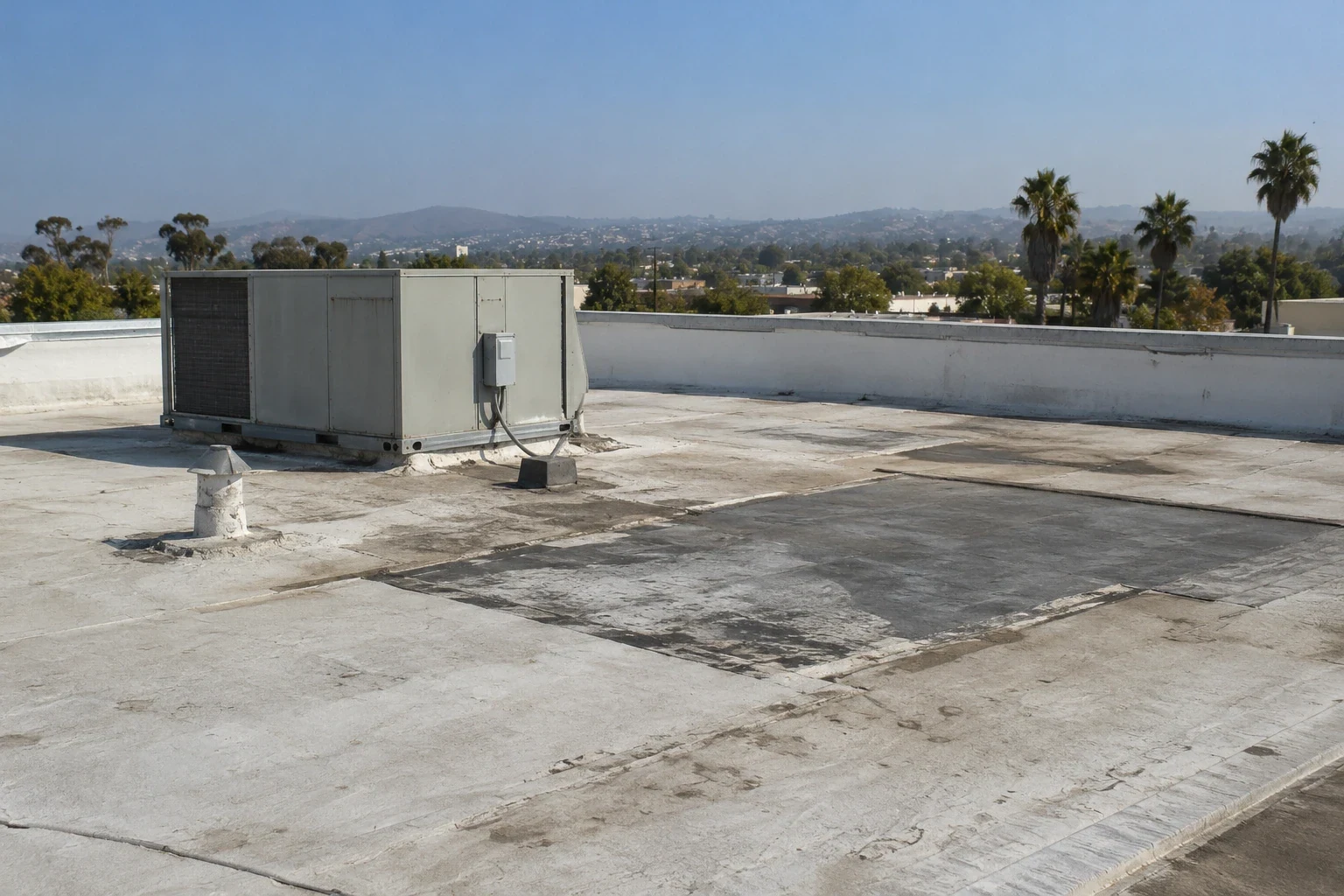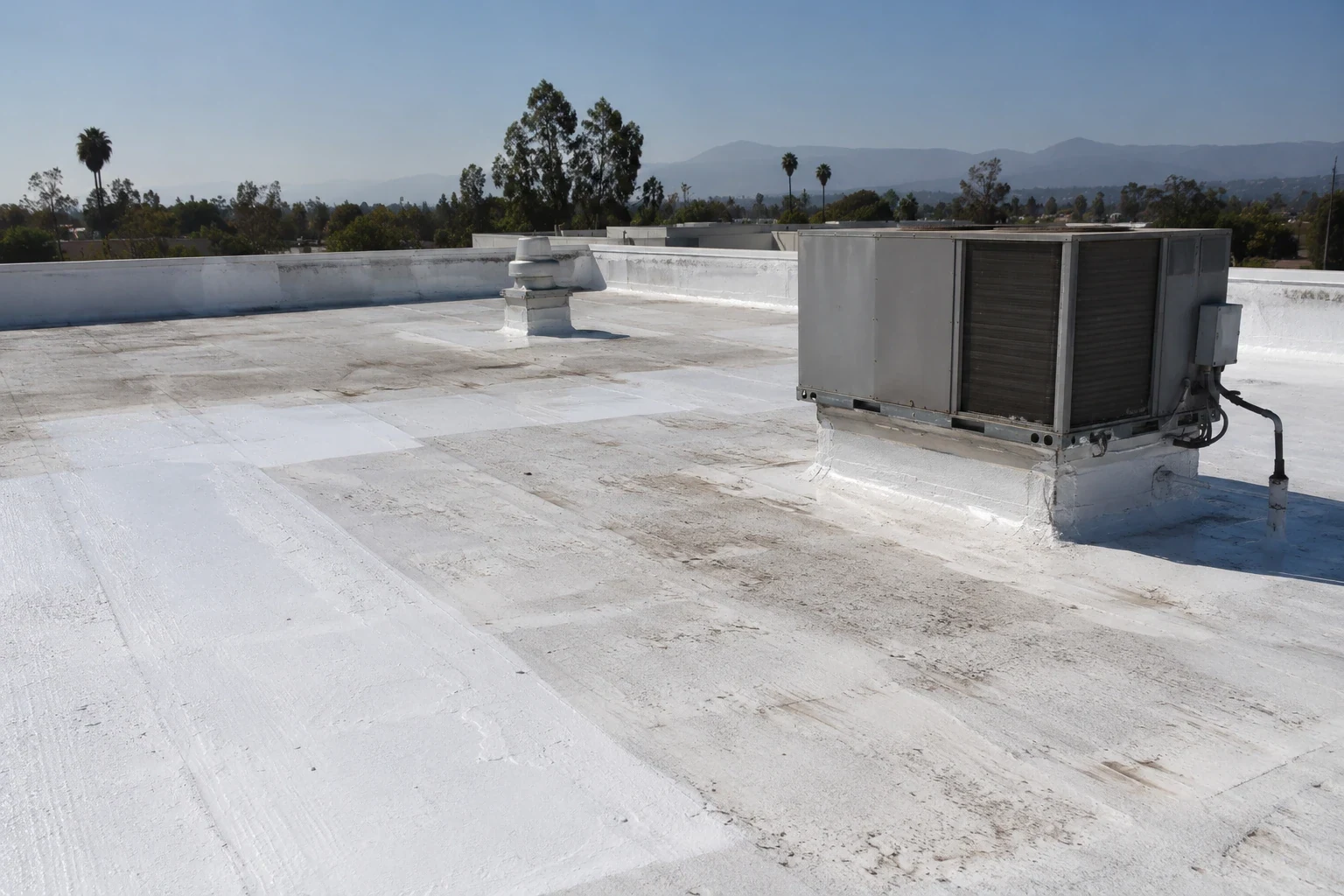
Uncoated foam beside a peeling finish needs a depth examination before recoating. For spray polyurethane foam roofing in Merced, CA, we assess the protective surface and the foam beneath it. Exposure can damage the foam, and unsuitable material may need removal. Another coating layer should not conceal that condition. We identify usable foam and the construction required to restore its protection.
Sprayed polyurethane foam expands and cures into an insulating roof layer. Its assembly includes an appropriate protective coating and detail treatment. Merced has hot summer conditions, occupied commercial uses downtown and industrial parks with Highway 99 access. We assess the substrate, existing layers and building operation before deciding whether a foam repair or new application is suitable.
The coating and the foam beneath it
A coating split can expose foam even where the surrounding finish appears intact. We examine the opening, protective surface and affected foam condition. A bounded damaged area may be removable and repairable. Broader coating separation can require more substantial preparation. The repair needs a compatible connection to suitable adjoining material, not merely coverage of the exposed outer mark.
The protective coating is part of the foam roof's continuing function. Silicone roof protection has particular substrate and application requirements. An acrylic coating system has another set of conditions. We identify the installed or proposed system before selecting repair material. Similar surface appearance does not establish compatibility with an existing finish.
Merced summer heat and solar exposure make the protective layer worth close attention. We look for wear, separation and damage around service areas. The response follows its condition and the foam beneath it. Renewal timing should come from the examined assembly and system requirements rather than an unsupported fixed lifespan for every foam roof.
Substrate condition before foam application
Foam needs a suitable receiving surface. We examine attachment, cleanliness, moisture and the material arrangement below the proposed work. Loose roofing or wet layers require attention first. The application should not be used to hide an unsuitable retained assembly. We specify preparation and any necessary removal so the new layer has a workable substrate.
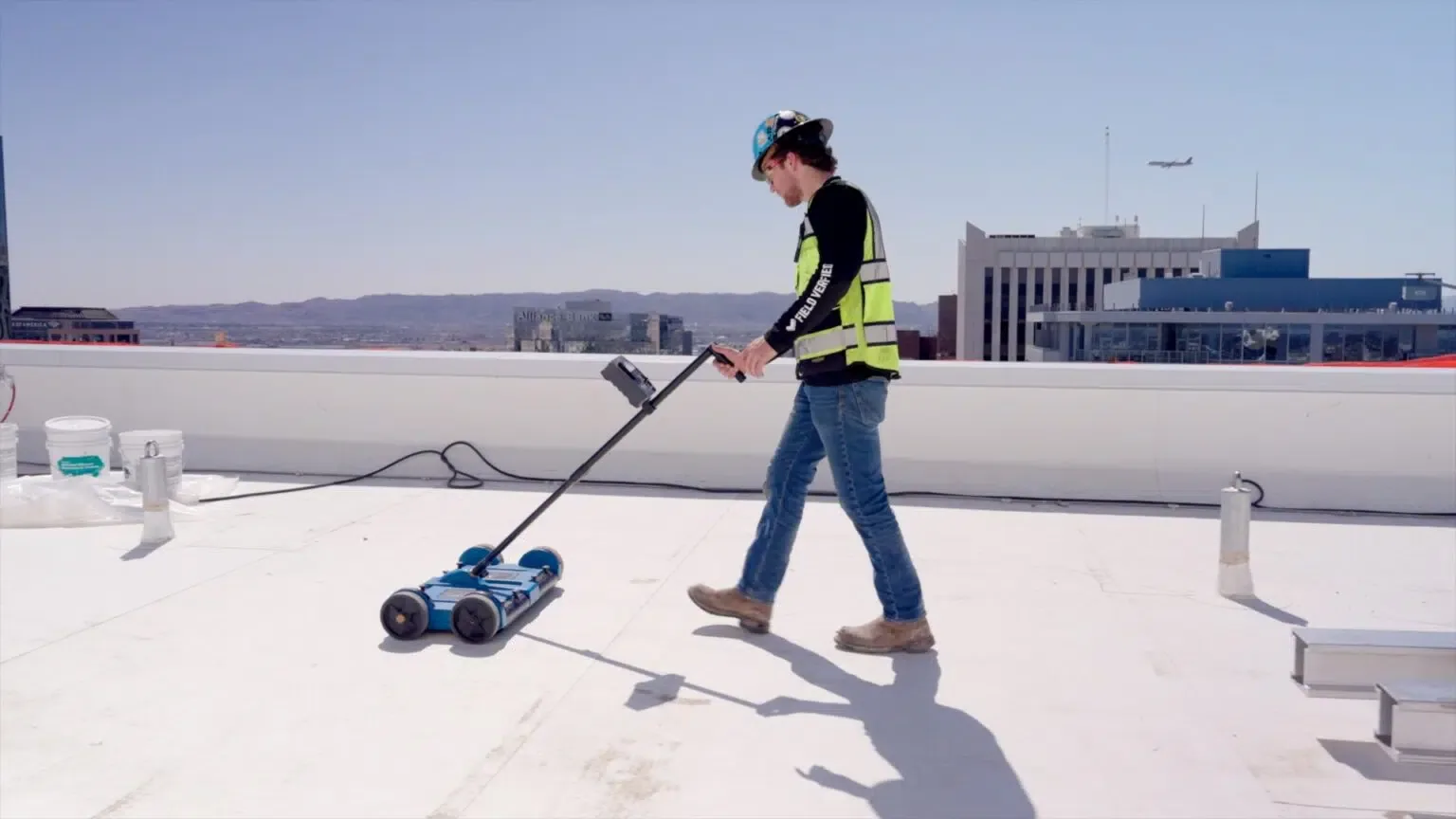
An infrared survey with physical checks can help locate suspect concealed moisture where the roof and conditions are appropriate. Confirmation identifies the layers affected. The new foam should not seal damaged insulation inside the assembly without its own repair. The scope distinguishes material retained from material removed and describes the support restored beneath the application.
Deck and attachment questions may need appropriate technical review. We identify accessible conditions and the examination required where the supporting construction is uncertain. A foam layer is not structural repair. The manager should understand which part insulates and forms the roof surface, which part provides support and how the proposed assembly relies on the retained construction.
Applied thickness and the water route
Foam application can form part of a designed slope arrangement. The proposed thickness must suit the project and connected details. We review outlets, curbs and roof boundaries before work. Building a slope in one area without examining where the diverted water will go can leave another low condition. The application needs a coherent route to its intended discharge.
Curbs and terminations need suitable height above the finished roof. A thicker layer can reduce available clearance at an unchanged detail. We identify any required modifications before spraying. The protective coating and flashing treatment should connect with the final geometry. A broad foam field is not complete if its perimeter or equipment transitions remain undefined.
Water marks can help locate drainage concerns on an existing foam roof. We examine those areas and distinguish surface wear from damaged foam or another geometry issue. Suitable correction may involve removal and reinstatement, outlet work or separate review. The repair proposal should identify the mechanism, rather than add material indiscriminately where water has remained.
Weather, spraying and adjacent protection
Application depends on suitable substrate and weather conditions. Wind can affect spraying and overspray control. Surface moisture or unsuitable temperatures can also interfere with the intended work. We plan the application window for the actual system and property. Merced's generally hot, dry midsummer conditions provide context, but the current surface and weather still govern whether work can proceed.
We identify adjacent vehicles, equipment and building areas needing protection from the application. Occupied surroundings can constrain the usable work zone. The property team helps establish service arrangements and access. A suitable spray plan should have enough separation and protection for the method chosen, not assume that an open roof means unrestricted use of the surrounding ground area.
For a warehouse roofing project, we ask about product handling and the equipment serving the work zone. Merced has food and grocery distribution activity, so those are practical local questions. The building team identifies actual sensitive areas. Foam and coating work then follows an application and protection plan suited to that operation.
Punctures, compressed areas and compatible repair
Equipment traffic can damage the protective coating or foam. We examine a puncture or compressed area to determine whether removal is needed and how the assembly will be restored. The new detail must reach suitable adjoining foam and coating. A compatible foam-roof repair may require more than filling the visible mark with an unrelated compound.
Service routes deserve a protection review after repair. Repeated pressure or sharp contact can reopen the affected area. We identify the actual equipment route and suitable measures for the system. A repair should leave a workable surface and access arrangement. It should not be returned to the same unprotected contact that visibly damaged the roof.
Protective coating restoration can be considered where the foam and supporting assembly are suitable. Loose finish, moisture and deteriorated foam need their own response before broad renewal. We define those preparation items and the required application controls. The manager can then compare restoration with a larger repair or replacement based on the examined layers.
The foam assembly and its continuing care
At a property in Downtown Merced, occupied office and restaurant uses can shape the available application window. We ask about ventilation, service access and neighboring activity relevant to protection. The roof examination determines preparation and repair. The work sequence connects those construction needs with the property team's actual operating arrangements.
The Merced station's normal rainfall pattern favors the winter months over midsummer. Open coating defects or damaged foam need a clear repair decision before renewed wet exposure. The manager should know the affected layer and proposed closure. Maintenance after repair examines outlets, traffic areas and protective finish condition rather than assume that the continuous-looking field has eliminated every roof detail concern.
Cost drivers include substrate preparation, damaged foam removal, application requirements and connected flashing work. We identify those items in the proposal. The finished scope should show a suitable insulating foam layer, compatible protection and a usable water path. That gives the manager a construction basis for choosing repair, restoration or a different assembly intervention.
Commercial Roofing Questions
Can exposed foam simply receive another coat of finish?
Its condition needs examination first. Deteriorated or wet material may require removal and reinstatement. The coating should protect suitable foam, not conceal an unexamined damaged layer that remains inside the repaired assembly.
Does foam application correct structural deck damage?
Supporting construction needs its own repair or technical evaluation. Foam forms an insulating roof layer within a suitable assembly. We identify deck questions and preparation before application rather than treat the new surface as structural restoration.
Why can a dry roof still be unsuitable for spraying that day?
Wind, temperature and system requirements can limit the usable window. Adjacent protection also matters. We assess current conditions and choose a method and work area appropriate to the property rather than rely on the season alone.
What changes a small foam puncture repair into broader work?
Moisture, deteriorated foam or loose coating can extend beyond the visible mark. We define the affected layers and suitable connection boundary. The repair restores the foam and its protection where needed, with preparation appropriate to the installed system.
Examination of the exposed foam layer
Request inspection of the peeling protective finish, punctured foam or substrate being considered for a new spray foam roof assembly.
Related Roofing Work