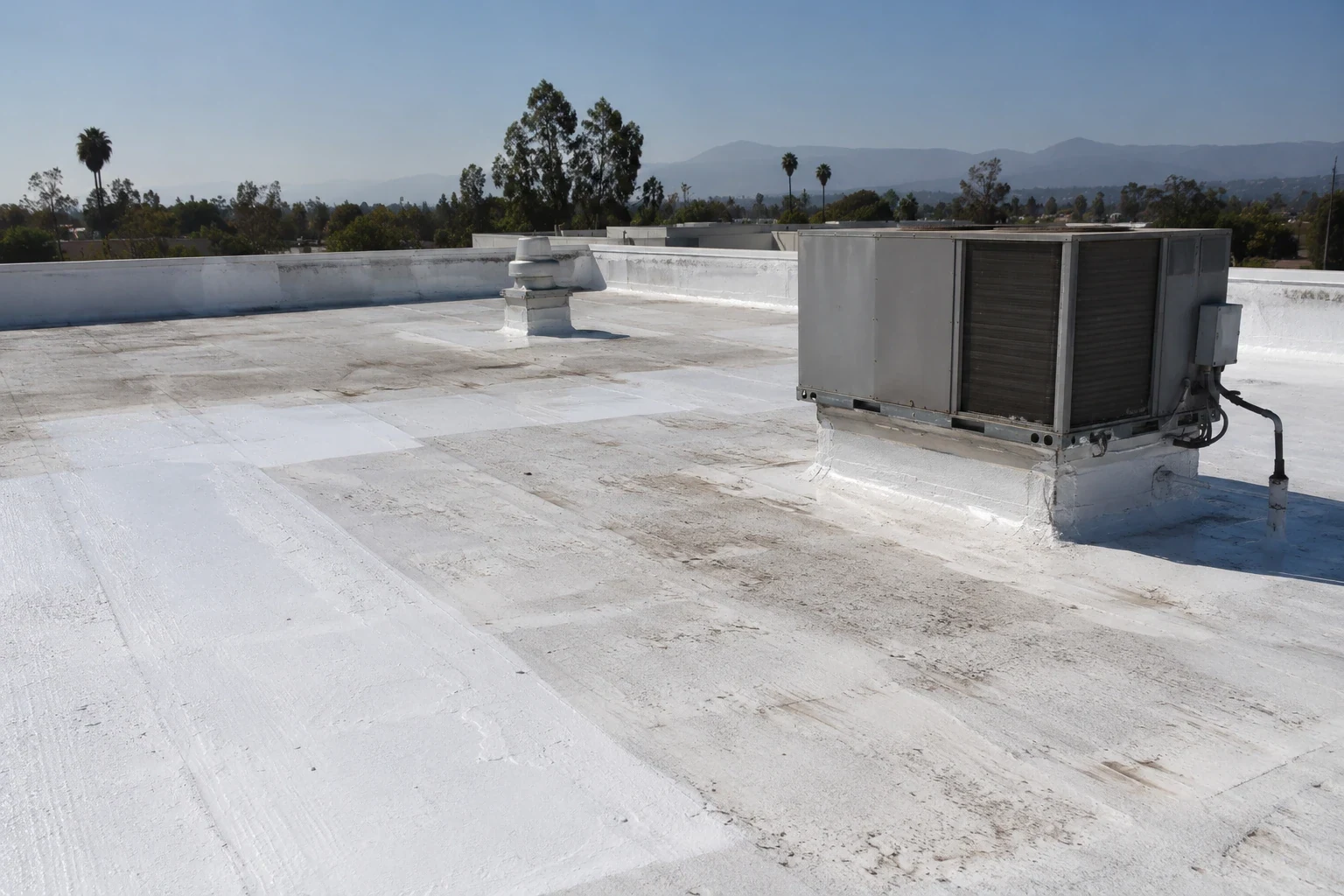
Soft coating near a persistent wet area calls for a substrate and exposure check. For acrylic roof coatings in Merced, CA, we examine the finish, drainage and construction beneath it. The affected area may need removal, a detail repair or another material choice. Applying more coating without identifying the condition can leave an unsuitable surface inside the renewal work.
Many acrylic roof coatings are waterborne systems whose application and drying need a suitable work window. Merced summers are hot with little normal midsummer rain, while winter precipitation is higher. Livingston has food-processing activity, and Planada includes agriculture and food processing. We coordinate restoration with the actual operating property and select preparation for the inspected roof.
Drying conditions and application sequence
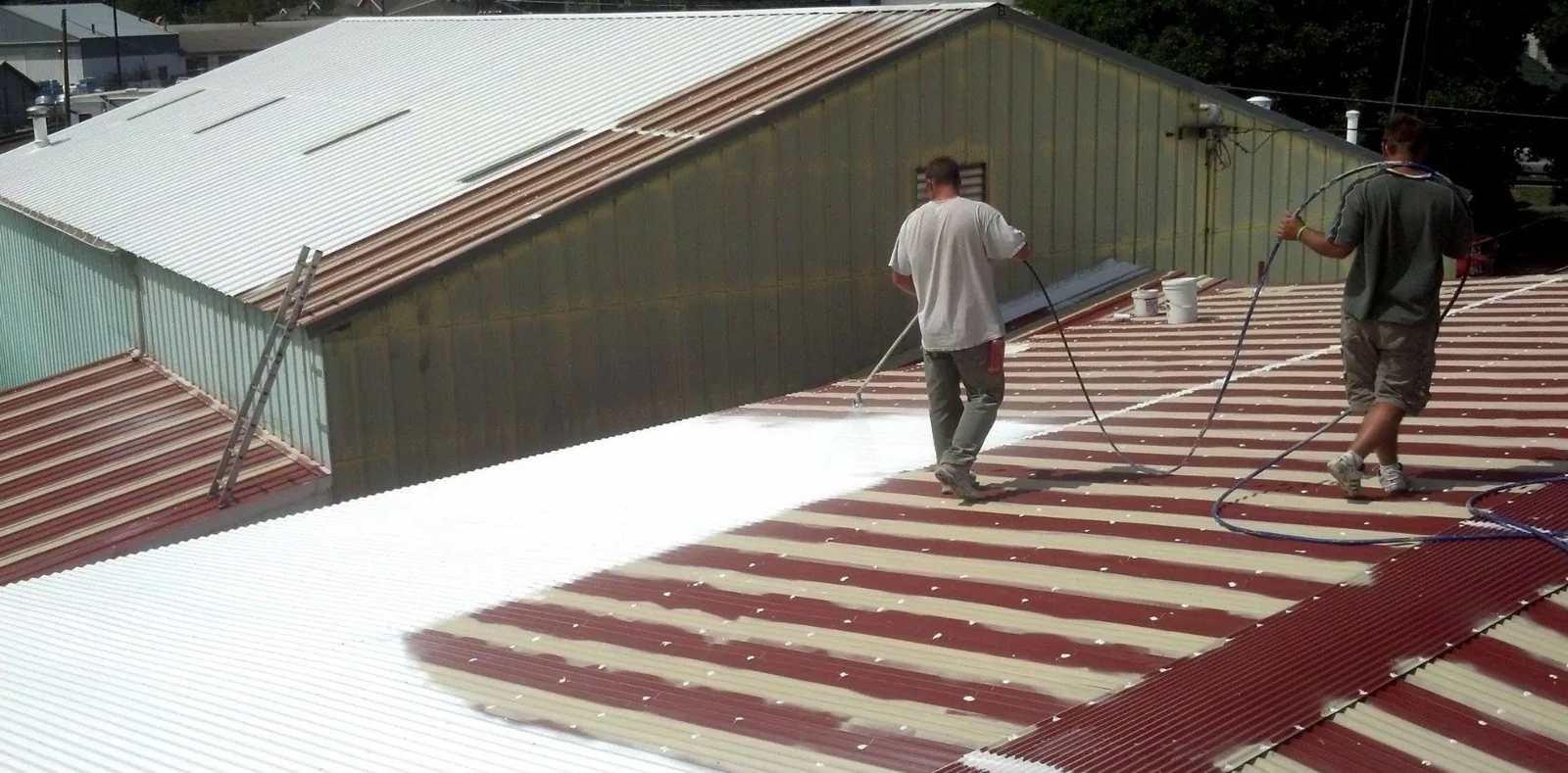
A coating application needs enough time under suitable conditions to form the intended finish. Temperature, moisture and the product requirements affect that window. A dry surface at the start is only part of the decision. Expected weather during application and drying also matters. We plan the sequence for the selected system rather than assume a normally dry month permits work at any time.
Thick or uneven application can change how the material dries. The system may require separate coats with suitable time between them. We identify the specified sequence and its controls in the proposal. A manager should know what work remains between applications and how the area will be protected. The finish should not be treated as complete simply because material has been spread over the field.
Merced's hot summer conditions can also affect usable application timing. We review the current roof temperature and weather against the product requirements. Work may need a different window or sequence. Before coating work, we test adhesion and confirm that surface temperature and moisture meet the product's limits. The application plan needs to suit the substrate and the selected material throughout the work period.
Preparation beneath the acrylic film
A loose existing finish needs examination of the interface that separated. We determine whether coating, membrane or another layer is affected. Suitable removal and cleaning come before the new application. Roof restoration preparation should describe that work clearly. Covering an unstable interface can leave the new finish dependent on the same failed bond.
Adhesion and compatibility require attention for the actual materials. We identify the substrate, earlier coating and repair compounds. Appropriate test work or primer may be required for the selected system. The proposal should explain those items. A surface that looks clean after washing is not automatically a suitable receiving layer for every acrylic roof coating.
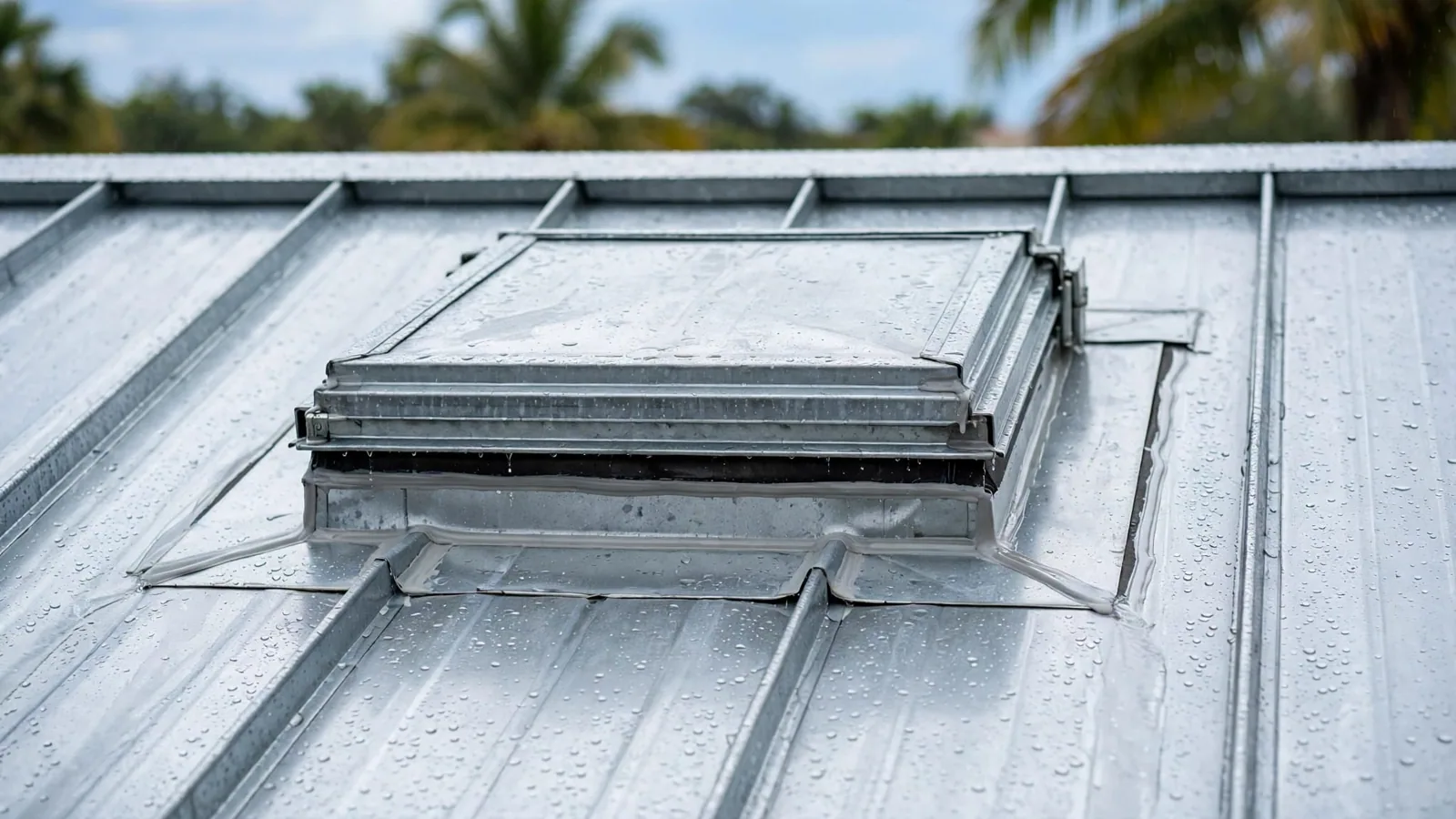
On metal, surface finish and corrosion condition can affect preparation. A metal roof restoration option also needs panel and attachment assessment. Coating cannot restore a failed supporting connection. We identify required detail repairs before selecting the broad surface treatment. The work should separate restoring a suitable finish from rebuilding damaged construction.
Retained water and coating suitability
A repeated wet area deserves its own drainage examination. We compare the low area with nearby outlets and the surrounding roof shape. Product requirements need review for the expected exposure. The material choice should not be based on a general acrylic label alone. A suitable coating cannot be expected to change a structural depression or clear a concealed downstream restriction.
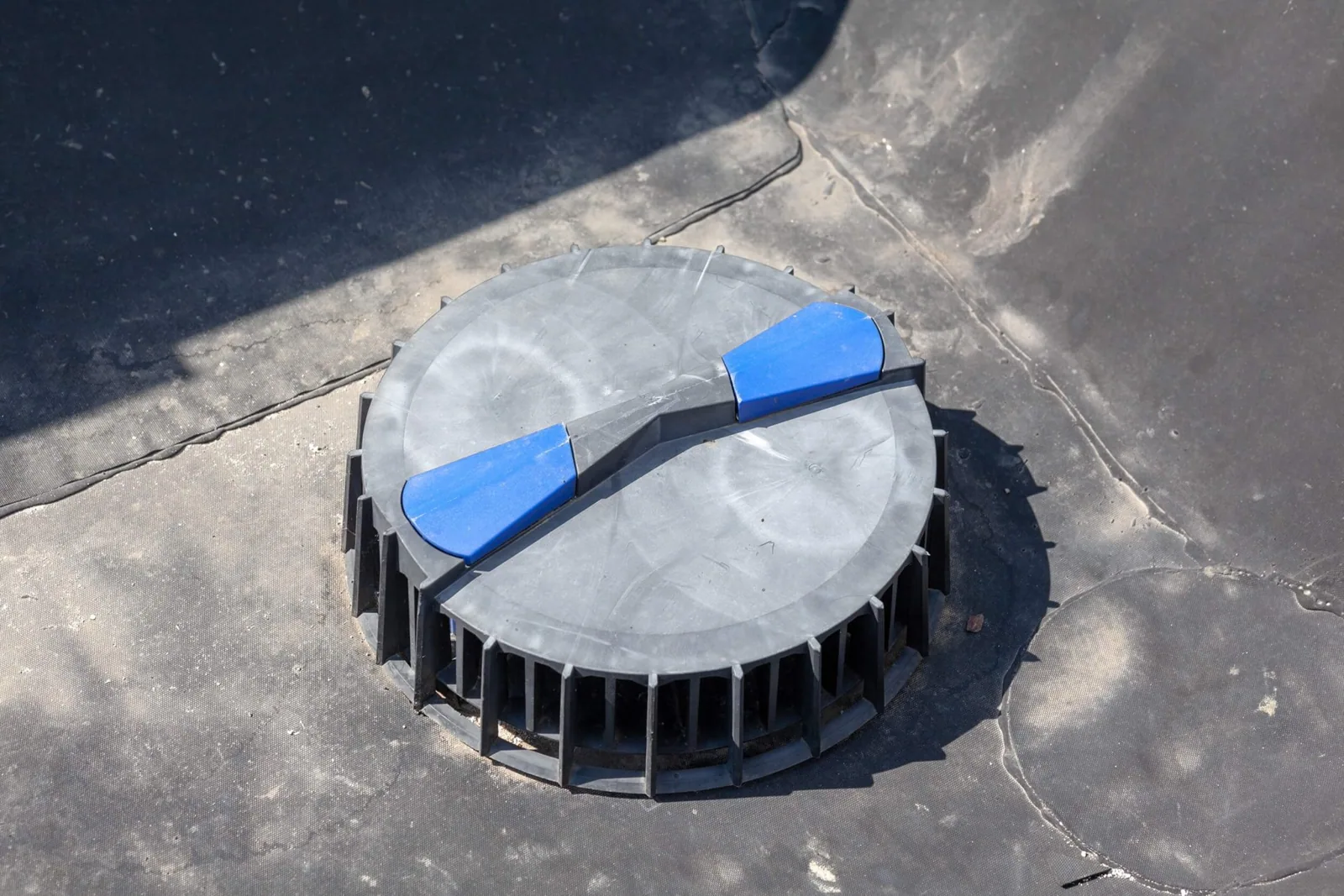
Drain or scupper correction may be needed where the water path has a damaged connection or obstruction. Insulation shaping may be another option when the assembly permits it. We identify the cause requiring construction before coating proceeds. Otherwise, restoration can leave the same wet exposure affecting the new finish.
A silicone coating alternative has different material considerations. Its suitability must also be reviewed for the substrate and expected conditions. We compare complete systems and necessary preparation. Choosing another coating family does not remove the drainage question. The manager should understand what the surface system addresses and which water-path work remains necessary.
Seams, fasteners and vertical details
Field coating and detail treatment are not the same task. A separated seam or loose flashing needs an appropriate repair before broad application. The selected system may require reinforcement or another specific transition method. We examine the material and movement at that detail. A thin film across an unsuitable opening is not a completed reconstruction of its underlying connection.
On an exposed-fastener metal roof, washer and fastening condition need examination before treatment. A worn surface component and a damaged fastening hole can require different work. The coating scope identifies those repairs rather than assume every head can simply receive the same dab of material. The finished system should have suitable support and a connection method appropriate to each detail.
Merced heat can affect transitions between metal and flexible roofing. We look for restraint, separation and repeated repair buildup. The detail should suit the materials and their intended movement. Broad application should follow that reconstruction, not be used to conceal another strained interface. The manager can then see why preparation includes more than surface cleaning.
Concealed-layer questions before restoration
A coating cannot establish whether the insulation beneath a roof is suitable. We examine suspect areas when moisture or instability affects the restoration decision. A layer-focused inspection can identify necessary confirmation work. Selected openings need compatible closure. The proposal should distinguish the examined substrate from concealed construction that still needs investigation.
Wet insulation, damaged foam or deteriorated deck material requires a separate response. We identify removal and reinstatement where needed before broad coating renewal. The resulting assembly must provide appropriate support. A clean field finish should not cover damage merely because it is outside the visible peeling area. The scope follows affected layers and usable connections.
For a manufacturing building, confirmation or preparation work may need coordination with production equipment. We ask which areas and systems are affected. The interior arrangement helps set the opening window and protection. Roofing material condition determines the construction response. Those decisions need to connect without substituting operating convenience for suitable layer repair.
Application above occupied business space
At a property in Livingston, established food-processing activity makes ventilation and sensitive equipment useful planning questions. We identify the actual work zone and usable access with the building team. The application method needs appropriate adjacent protection. Equipment routes and ground activity should be considered before preparation and material handling begin.
For Planada properties, agriculture and processing uses provide another operating context. We ask which interior areas need protection if damaged material is removed. Removal above handling areas needs protection and suitable closure before operation resumes. The proposal should connect the actual opening and coating requirements with a practical business window agreed for the affected zone.
Cost drivers include cleaning, removal of unsuitable finish, substrate repair, detail reinforcement and application controls. We describe them separately enough to assess the completed system. Later maintenance needs compatible cleaning and repair methods, with examination of traffic areas and outlets. The manager should choose acrylic restoration through a suitable substrate and exposure review, not merely an attractive finished color.
Commercial Roofing Questions
Why might acrylic application need more than one work window?
The system may require separate coats and suitable drying time. Current weather and substrate conditions also affect the sequence. We identify the specified application steps so the manager can plan access around the actual work, not only the first material placement.
Can acrylic coating be applied over another unidentified finish?
Its compatibility and bond need review. We identify existing material and suitable preparation, using test work where appropriate. An unknown layer should not be assumed ready merely because washing has improved its appearance.
Does changing coating type eliminate a persistent low roof area?
The roof geometry and discharge remain separate questions. We examine the water path and necessary correction. Product suitability for expected exposure also needs review, but a surface choice does not replace a drainage remedy.
What should be repaired before the acrylic field treatment?
Open seams, damaged flashing and unsuitable supporting layers need defined responses. We identify those items and the required preparation. Broad application should follow appropriate repair so the finish protects construction suitable to remain in the assembly.
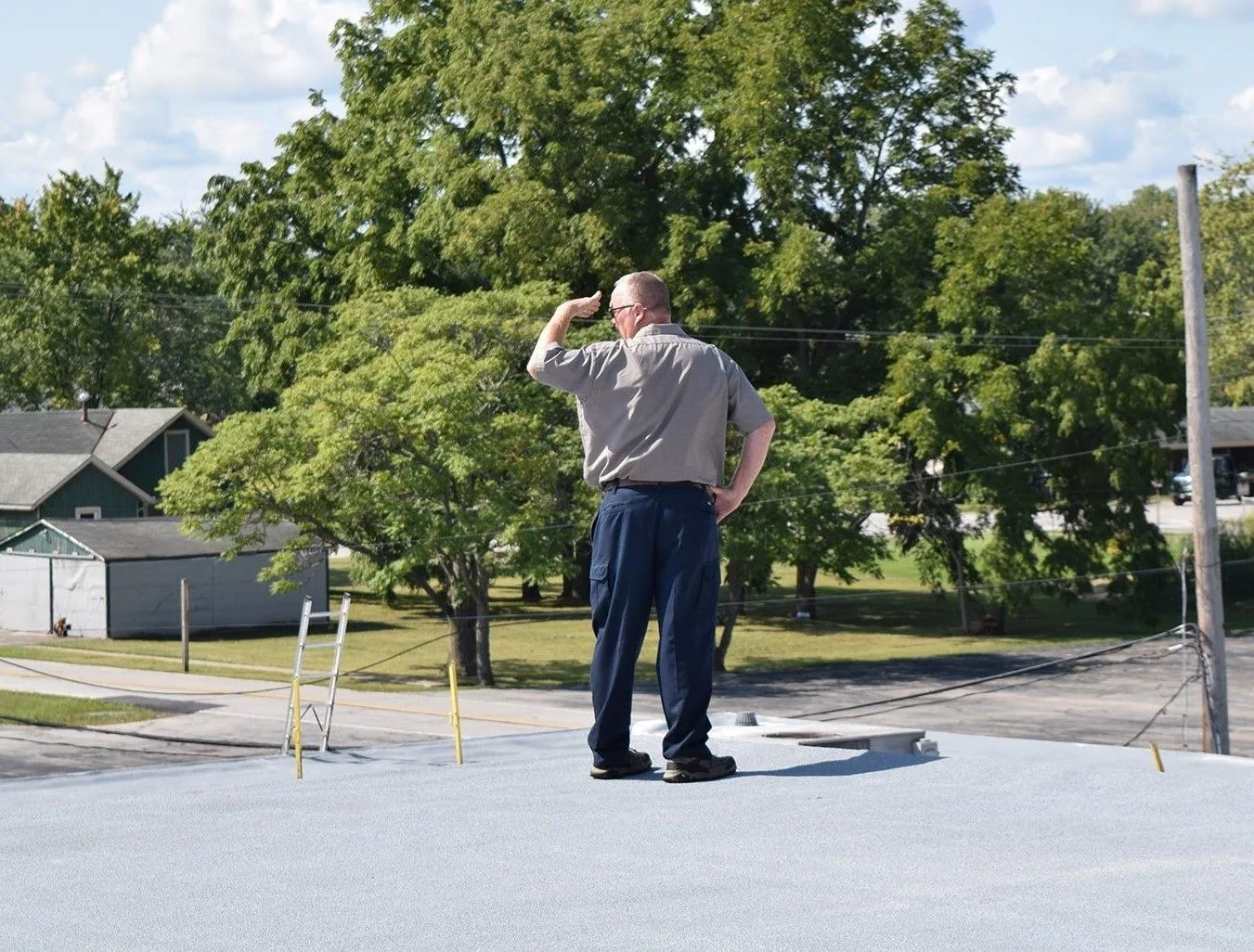
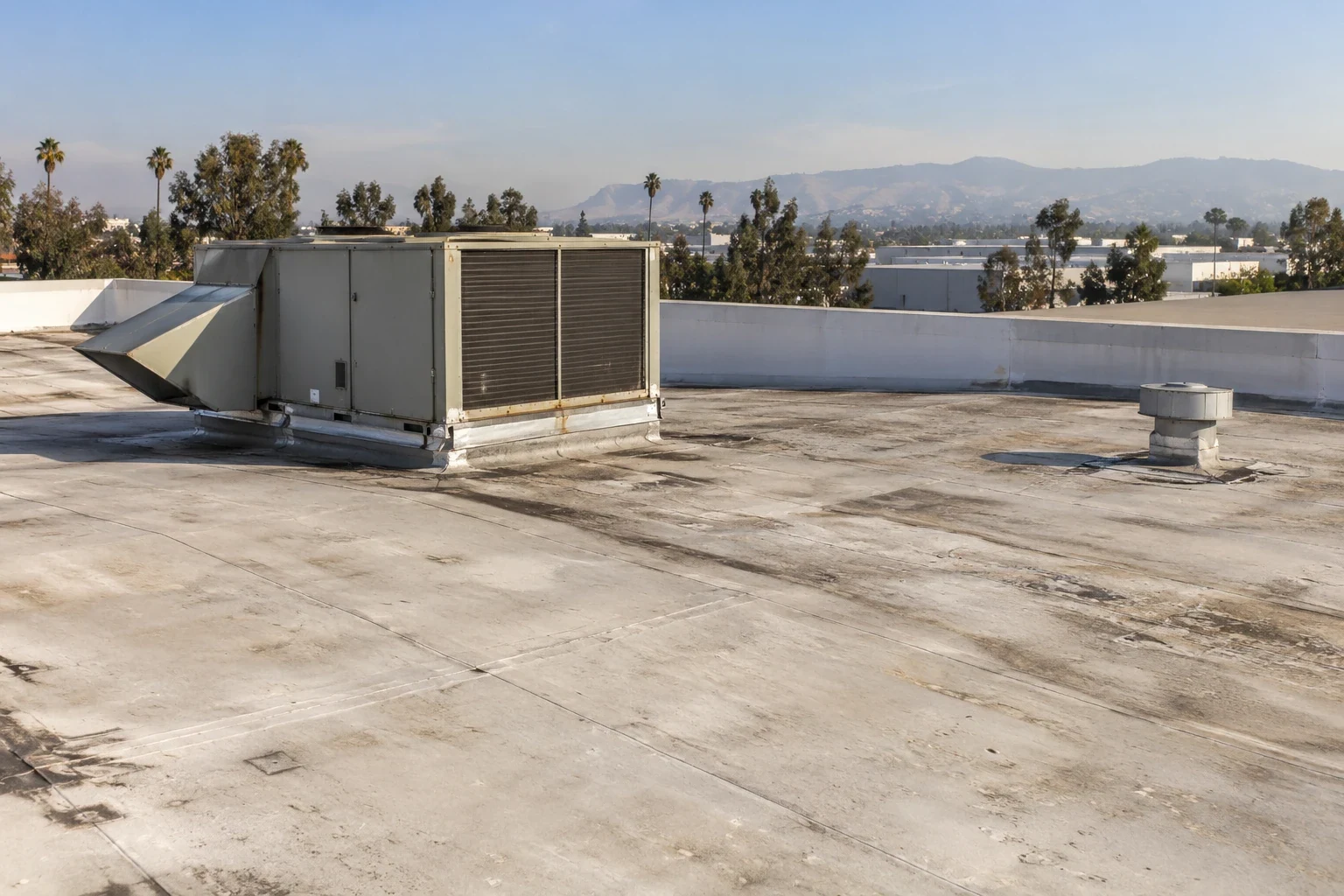
Examination of the acrylic restoration surface
Request assessment of the soft finish, drainage exposure and substrate preparation before selecting an acrylic coating system.
Related Roofing Work