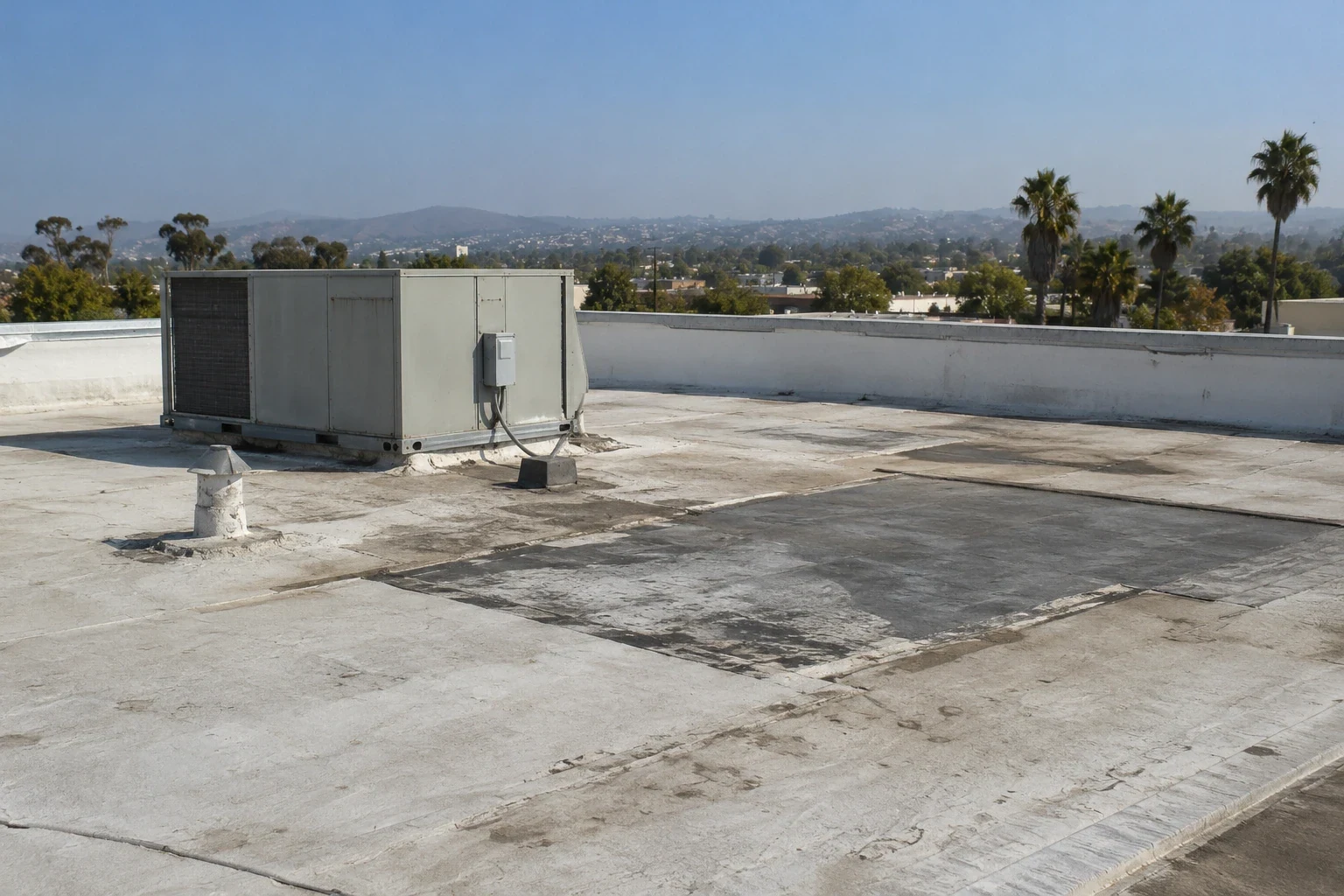
Separated washer edges along an exposed-fastener panel need a bounded repair assessment. For metal roof retrofit in Merced, CA, we examine those fasteners alongside the panels, joints and supporting construction. Some conditions permit focused restoration. Others justify a new assembly over suitable existing material or removal of damaged construction. The visible fastener wear starts the comparison but does not settle it.
Merced industrial parks have Highway 99 and rail access, with manufacturing and distribution among the city's uses. Turlock's regional industrial area includes food processing and cold storage. Operating needs can shape when a roof can be opened, while its actual construction determines the retrofit method. We separate those decisions and identify the retained material before proposing another roof layer.
Exposed fasteners and panel connections
A worn washer, loose fastener and enlarged fastening hole are different conditions. We examine the attachment and surrounding panel rather than replace every visible head with an assumed standard item. The repair needs a suitable connection to supporting material. Where the hole or metal is damaged, the response may require more than changing the exposed washer.
Panel side and end laps also need examination. An opening at a joint can have a different water path from an individual fastener. We identify compatible sealing and repair requirements for the actual assembly. Focused metal roof repairs should specify those detail connections and any preparation needed. Covering the area broadly can conceal an unresolved loose joint beneath the new surface.
Merced summer heat makes expansion and contraction relevant to metal connections. We look for movement-related distress and unsuitable restraint. A repair should suit the panel arrangement and supporting attachment. Additional fasteners or rigid compounds can change the way the roof moves. The method needs to address the observed construction rather than introduce another stressed connection.
Retained panels and supporting construction
A retrofit depends on material that will stay in place. We inspect accessible panel condition and identify any need to examine concealed support. Corrosion, deformation and damaged connections can make retention unsuitable in affected areas. Load capacity and structural condition need appropriate technical evaluation where relevant. A roofing overlay should not be presented as a substitute for repairing weakened supporting construction.
The proposed assembly also changes loading and attachment. We coordinate those questions with the design requirements for the building. The attachment path must be identified rather than assume that the old sheet is the appropriate fastening substrate. A new metal or membrane assembly needs a suitable relationship with the retained roof and the structure beneath it.
Existing penetrations, insulation and underside conditions can affect the evaluation. We ask the building team about interior moisture and examine the available construction information. Some questions may require selected openings. The proposal identifies the material to remain, the investigation supporting that choice and any damaged area requiring removal before the retrofit work proceeds.
Restoration and new covering choices
A restoration approach may use compatible surface treatment after necessary panel and detail repairs. Suitability includes adhesion, corrosion condition and movement at joints. Preparation must suit the actual finish. A coating cannot recreate a failed structural connection. We distinguish the repair needed before treatment from the broad application selected for the serviceable remaining surface.
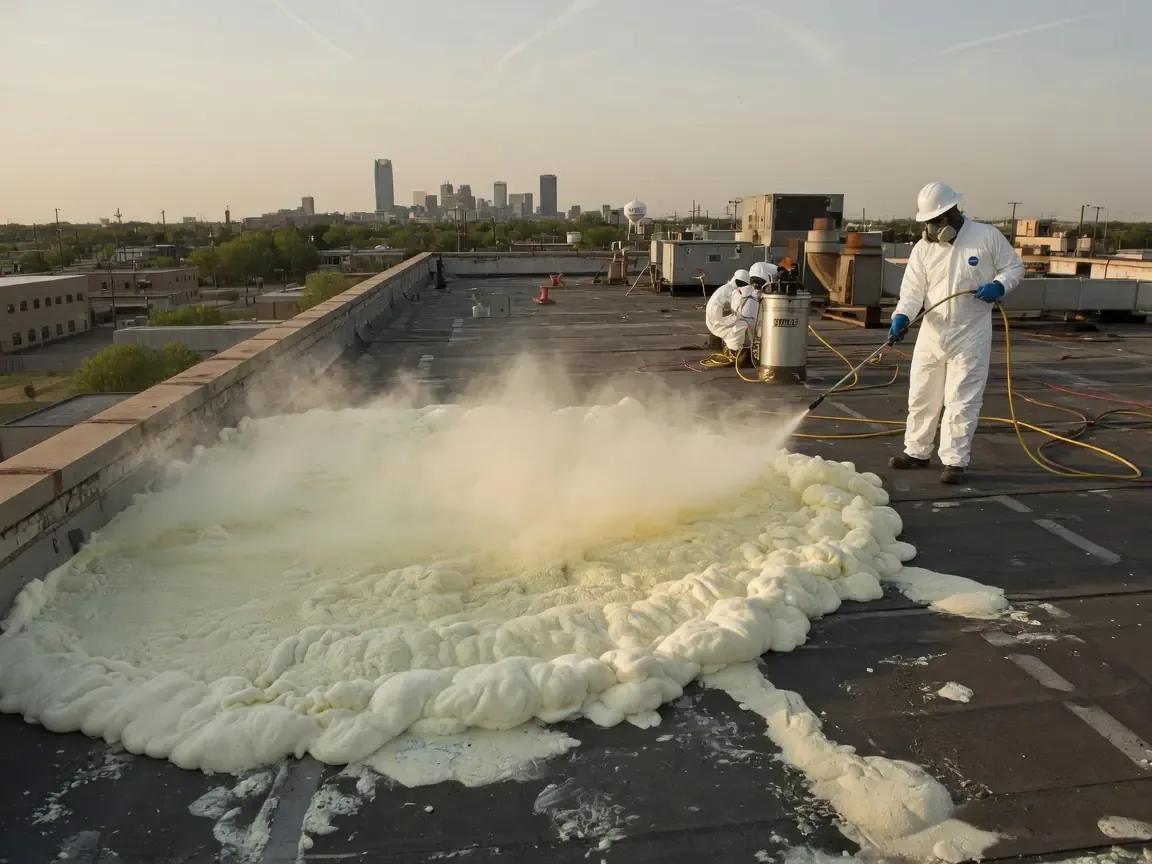
A spray foam roof option has different substrate, application and protective-coating requirements. It requires review for the particular metal construction and project. We identify how damaged panels, outlets and penetrations will be handled. The comparison should show the complete system and its continuing maintenance needs, not treat foam as a generic filler for unknown defects.
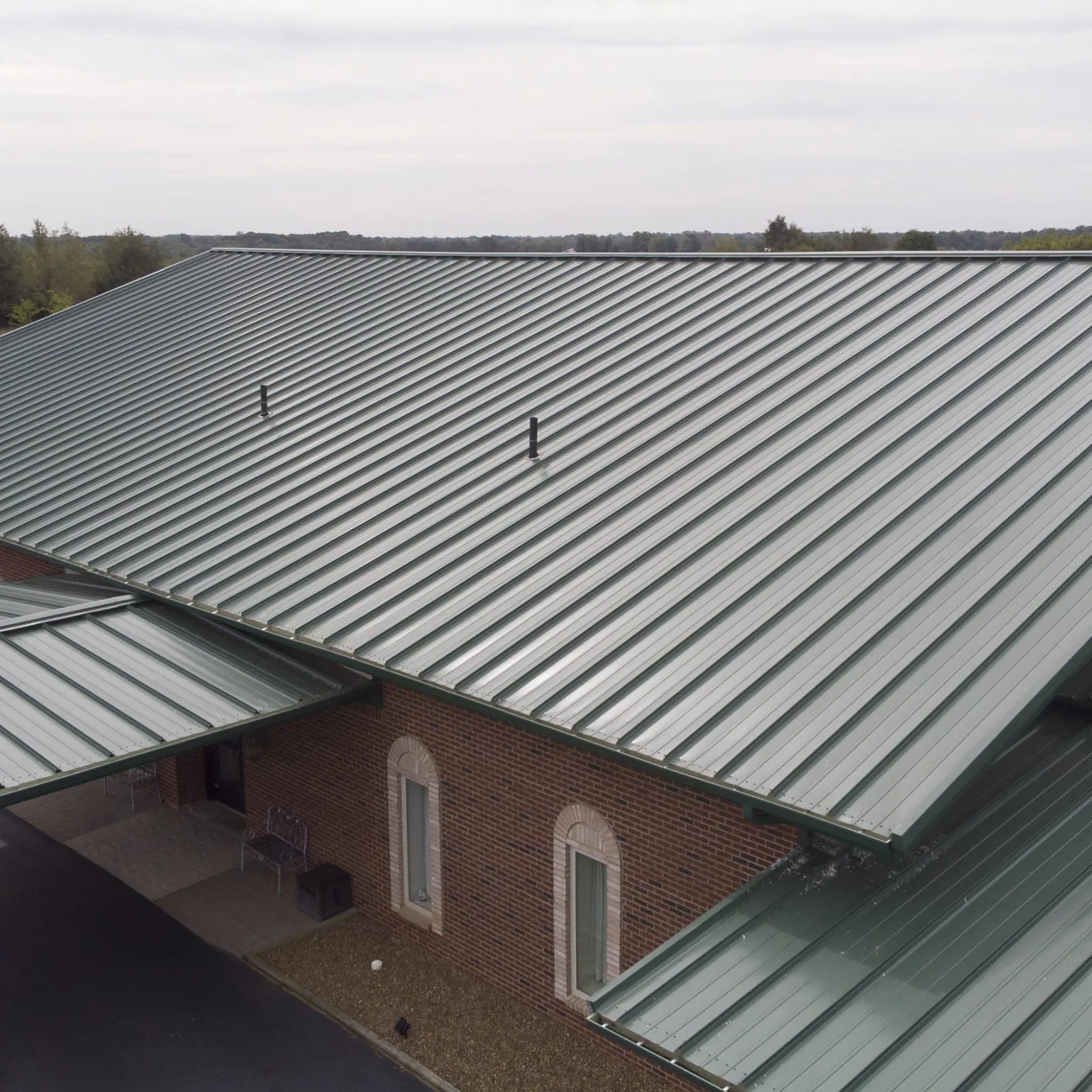
A framed retrofit or another standing seam metal assembly involves a different attachment and detail arrangement. We coordinate supporting design and the selected panel system. Its new perimeter, transitions and outlets need specification. Retaining the old roof does not eliminate the construction work required for the new assembly to function independently as intended.
Changed elevations and the water path
Adding another assembly alters finished roof levels. Equipment curbs, wall terminations and outlets need review against that change. The retrofit may require raised or rebuilt details. We identify them before selecting the final layer thickness or support layout. A new field should not leave the manager with inadequate flashing clearance at an unchanged penetration.
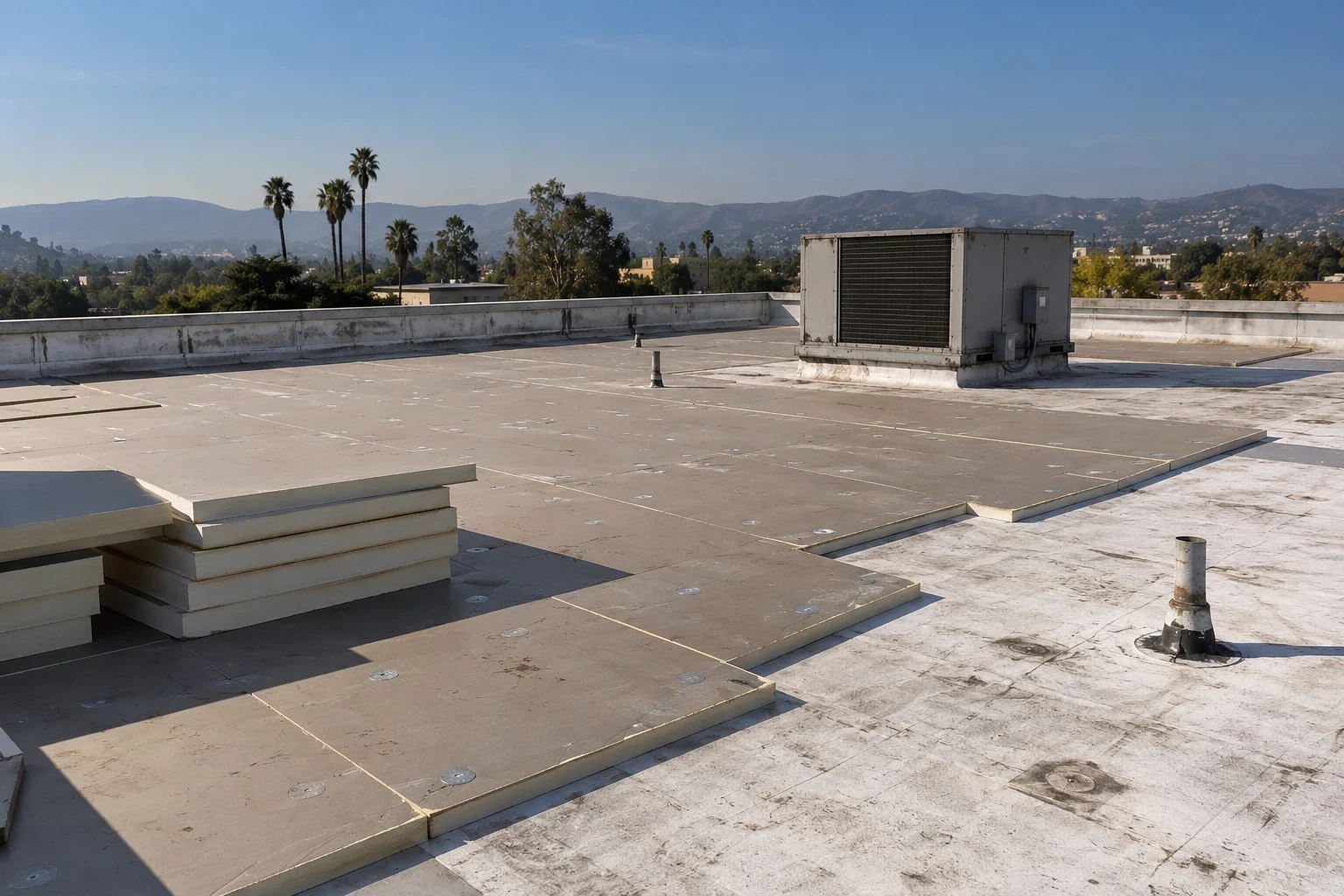
Insulation and cover-board planning can form part of a membrane-over-metal option where appropriate. The filler and support arrangement must suit the panel profile and chosen assembly. We specify those layers instead of assuming that any board can span the existing corrugation. Supporting construction and attachment requirements need evaluation for the actual system.
Drainage review considers the new surface and discharge arrangement. A raised area can redirect water, while a revised perimeter may need new outlet details. Merced winter precipitation normals exceed those of midsummer, making suitable discharge important before renewed exposure. The current geometry determines the remedy. Seasonal context does not choose the outlet or establish its capacity.
Retained-roof work above active space
A retrofit may limit removal, but damaged sections and new details can still require openings. We identify where those operations sit above the interior. Temporary protection and daily closure belong in the construction sequence. The manager should not assume that retaining the old panels means every part of the roof stays sealed and untouched throughout the project.
For a distribution roof project, goods and handling routes can influence staging and protection. Merced has food and grocery distribution activity. We ask which areas are affected at the property and connect them with the roof zones. The work plan needs usable access without obstructing essential movement or leaving an opening above unprotected materials.
Planned rooftop additions also belong in the retrofit discussion. Preparation for a future solar array can change access and support questions. We coordinate those intended details with the roof design. A retrofit should not create a new assembly that immediately needs unsuitable penetrations or attachment modifications when the next equipment project arrives.
A complete retrofit comparison
At a property in Merced, we examine the usable retained construction and define preparation, attachment and detail work. Cost depends on support repairs, layer requirements, access and the new perimeter or penetration arrangement. A low field-material price can exclude substantial work at those connections. The manager needs the assembly items clearly identified.
At Turlock Regional Industrial Park, food-processing and temperature-controlled spaces can make continuity at a metal retrofit especially important. We identify the actual operation and any air or vapor control review required. The retrofit comparison should account for the full layer arrangement. Covering an existing roof without examining those conditions can leave the enclosure question unresolved.
The final scope distinguishes restoration, new covering and removal alternatives. We explain why the observed panel and support condition favors one approach. Completed work needs a compatible maintenance method and usable service routes. The useful decision retains only material suitable for its intended role and specifies how the new assembly connects around it.
Commercial Roofing Questions
Can worn fastener washers be treated as the entire metal roof problem?
The panel connection and supporting attachment also need examination. Loose fasteners or enlarged holes can require a different response. We identify those conditions before deciding whether focused repair is sufficient or a broader retrofit deserves evaluation.
Does retaining panels remove the need for structural review?
The new assembly can change load and attachment requirements. Appropriate technical review is needed where those questions affect the project. We identify roofing condition and retained material without treating an overlay as proof of supporting capacity.
Why may curbs need modification during a retrofit?
The finished roof level can change. An unchanged curb may have reduced flashing clearance or an unsuitable transition. We compare the proposed height with its connection and identify necessary reconstruction before new field installation.
What belongs in a comparison between coating and a new metal covering?
Preparation, supporting repairs, attachment and detail construction differ. We identify the assembly work for each option. The manager can then assess complete scopes rather than compare broad surface treatments without the connections and layers they require.
Assessment of the retained metal construction
Request examination of the worn fasteners, panel joints and supports before choosing restoration or a new retrofit assembly.
Related Roofing Work