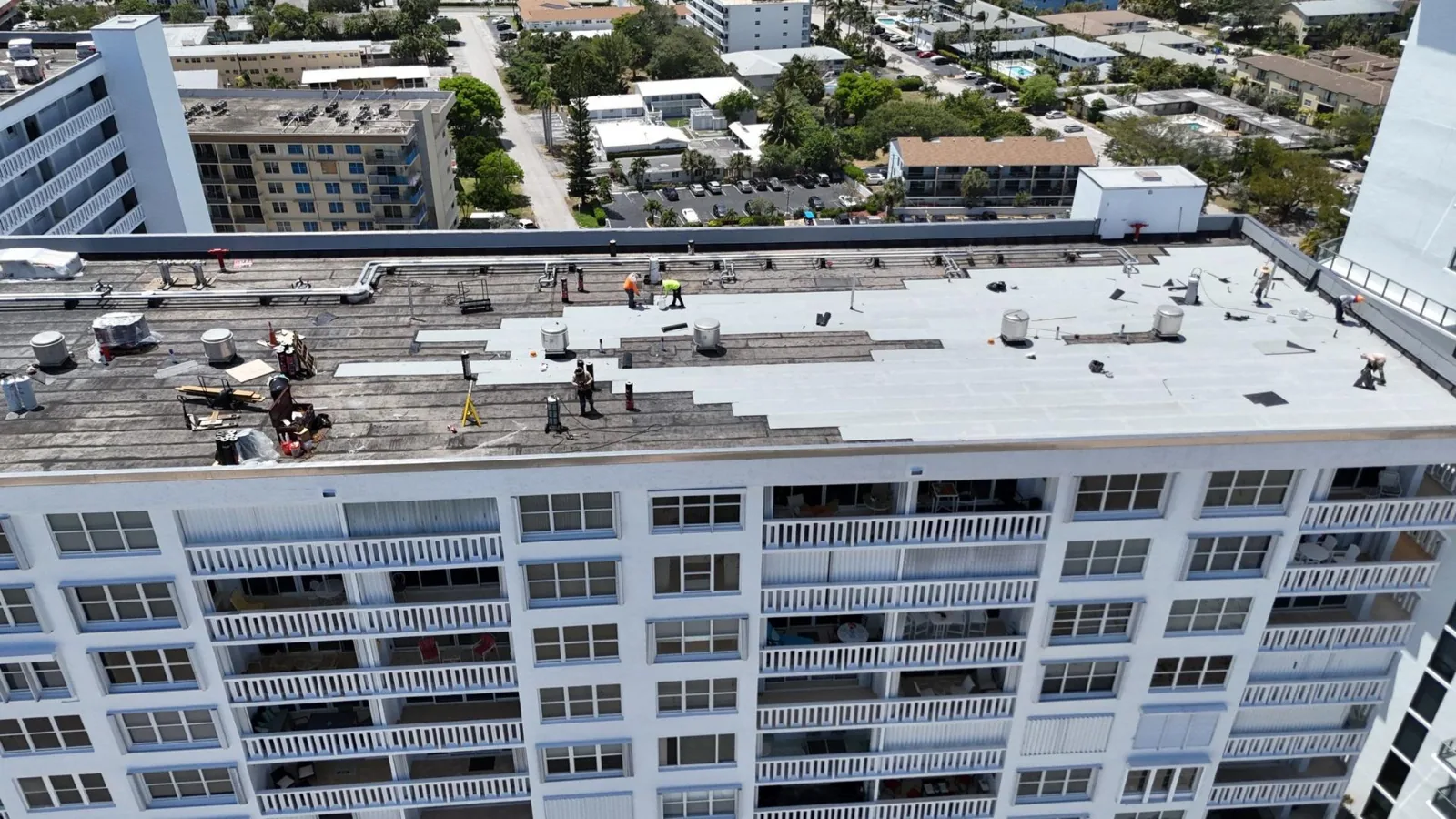
A lifted lap beside a rooftop curb can admit water before a warehouse ceiling shows a mark. At Turlock Regional Industrial Park, that detail matters across buildings used for cold storage, food processing, dairy products and manufacturing. Turlock Regional Industrial Park is a planned, multi-parcel district with more than 1,700 acres of industrial zoning, plus business-park and commercial acreage. We inspect the roof assembly, trace the moisture path and mark a repair boundary that fits the building's operating schedule. Request a roof inspection when a seam, curb or recurring leak needs a field decision.
Seams, curbs and drainage points
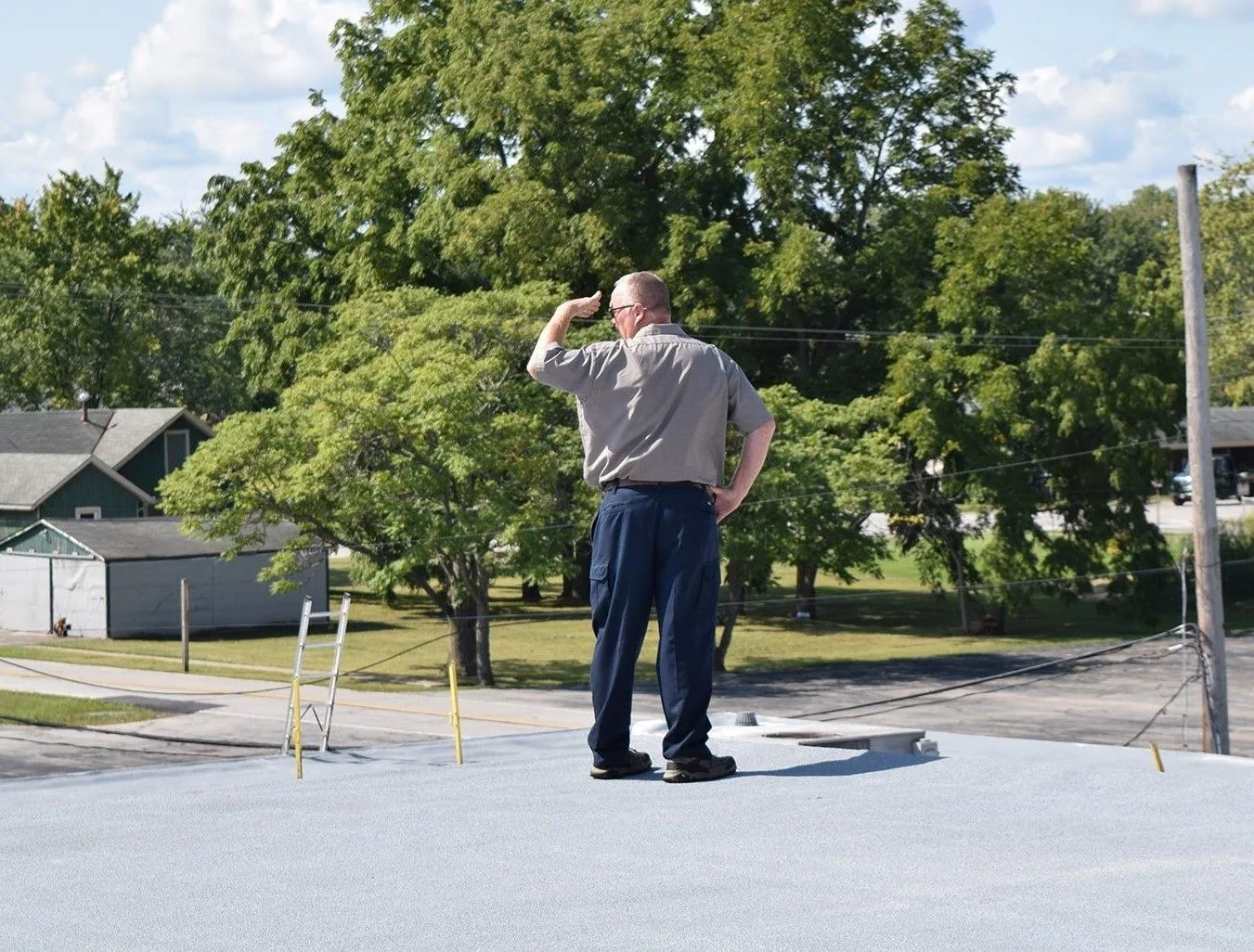
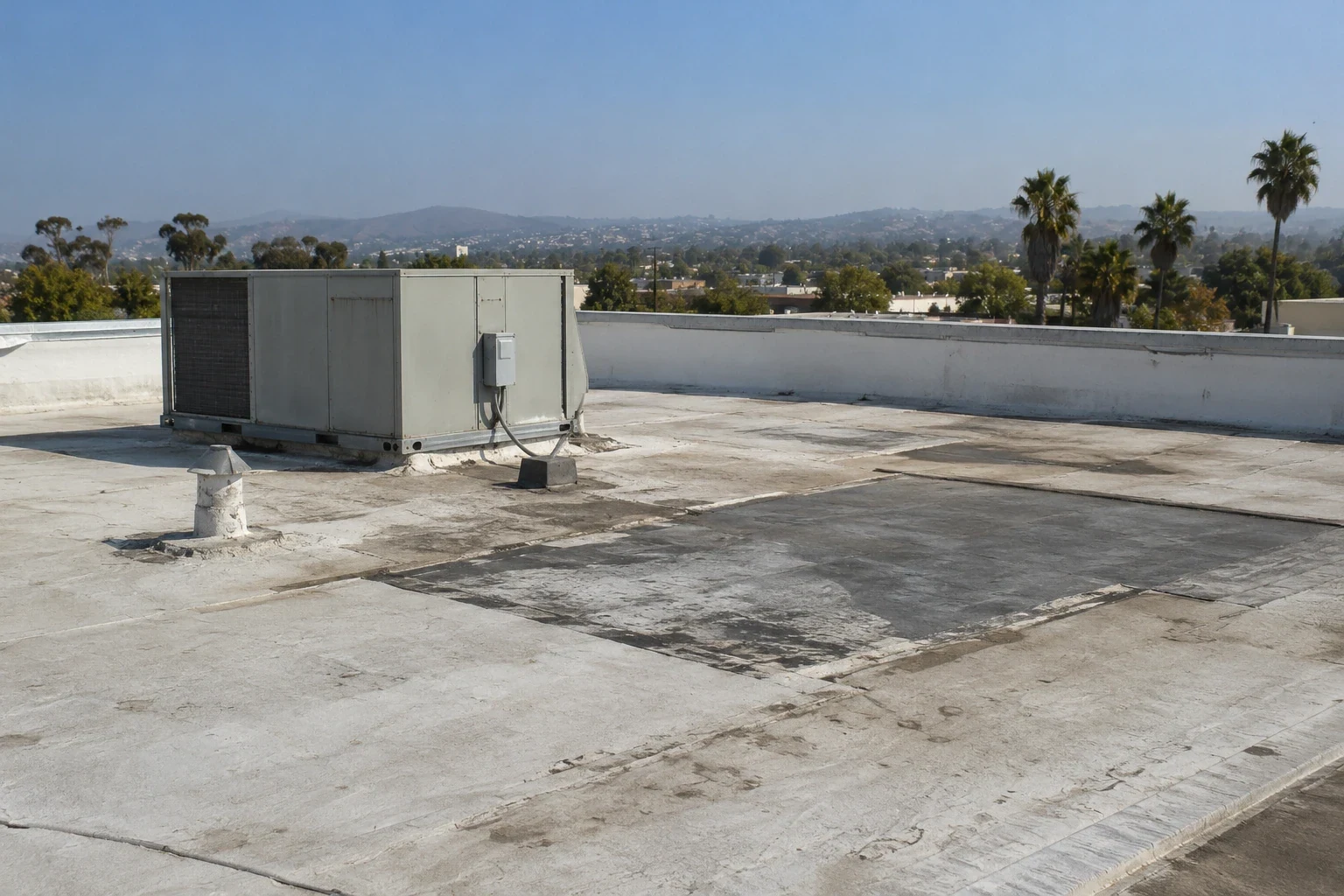
A low-slope roof concentrates risk at the places where the field membrane changes direction or meets another material. We check laps for separation, fastener rows for movement, and curb flashings for open corners or brittle sealant. Drains and scuppers get a separate look because sediment and packaging debris can slow runoff. We photograph the defect, note its position against roof equipment and compare the observation with any interior staining. The report states what is visible and what requires an opening to confirm.
Turlock's industrial park lies roughly between Fulkerth Road, Washington Road, Linwood and Glenwood Avenues, and Highway 99. The road network helps orient a service visit; we confirm each building entrance, equipment route and staging area with the manager. Merced station normals put the July high at 96.3 degrees; at a Turlock property, we inspect seams and metal edges for movement. In this regional heat, we examine exposed sealants and membrane transitions for splits, shrinkage and attachment movement. The actual repair still follows the material and condition on the roof.
Moisture beneath the field
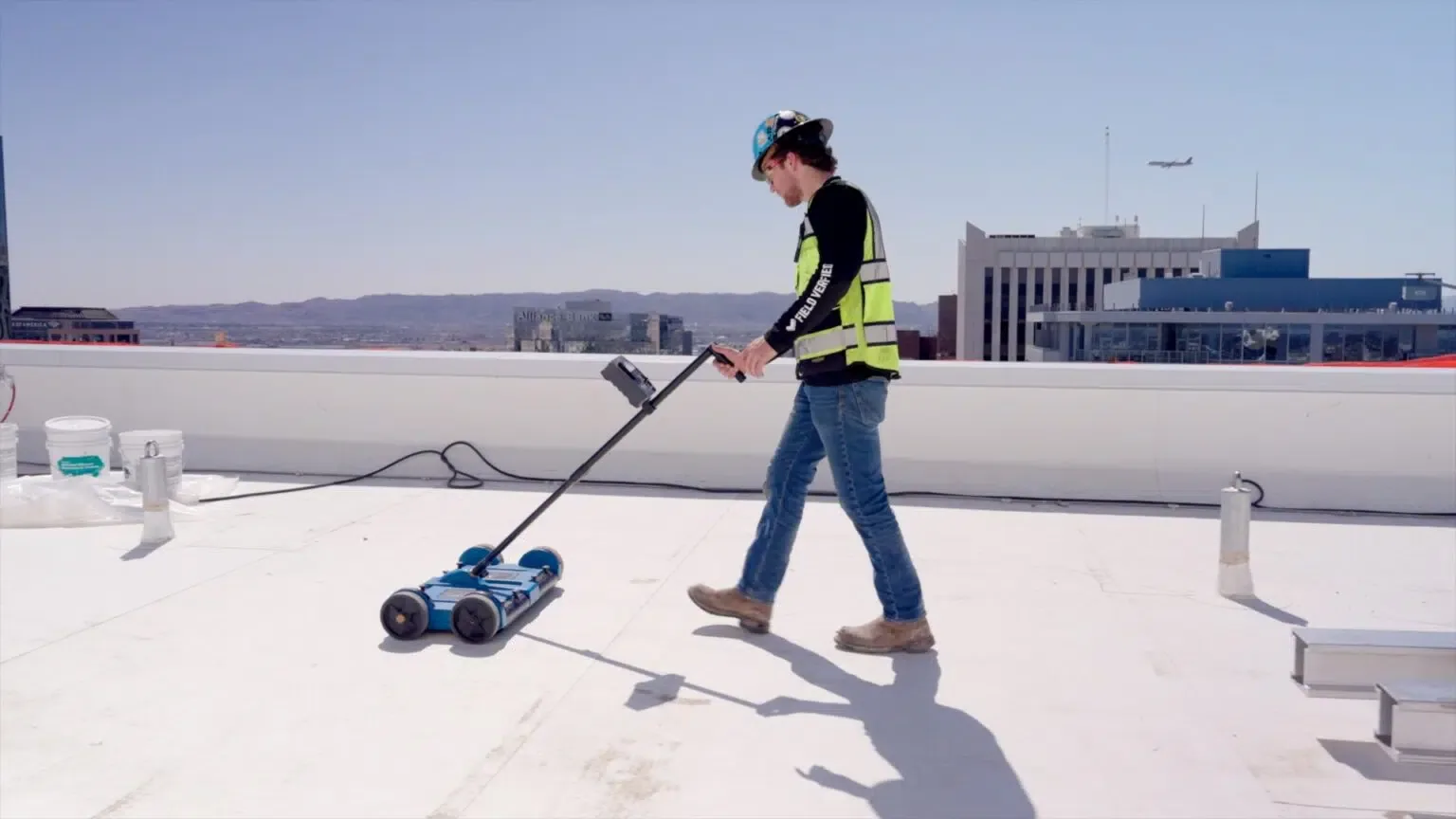
A leak that appears near an interior column may have entered at a distant seam and traveled along the deck flute. On a cold-storage or processing building, that path can cross insulation before it becomes visible indoors. We compare the roof map with the stain location, drains, penetrations and previous repairs. Infrared scanning can help identify temperature patterns that warrant a closer look, while a test opening can confirm wet insulation or show a dry assembly. We do not equate a thermal image with a proven leak; the findings are checked against the roof and, when needed, an opening.
The industrial park supports varied production and logistics uses, so access and interior conditions change by building. A manager may need a quiet work window, protected inventory, or a route that keeps a loading area operating. We identify those limits before placing a test cut or staging material. The repair boundary then reflects both the moisture evidence and the area's operating needs. A targeted moisture survey can help map the extent, while a roof inspection records the seams and transitions that need attention.
The repair that matches the assembly
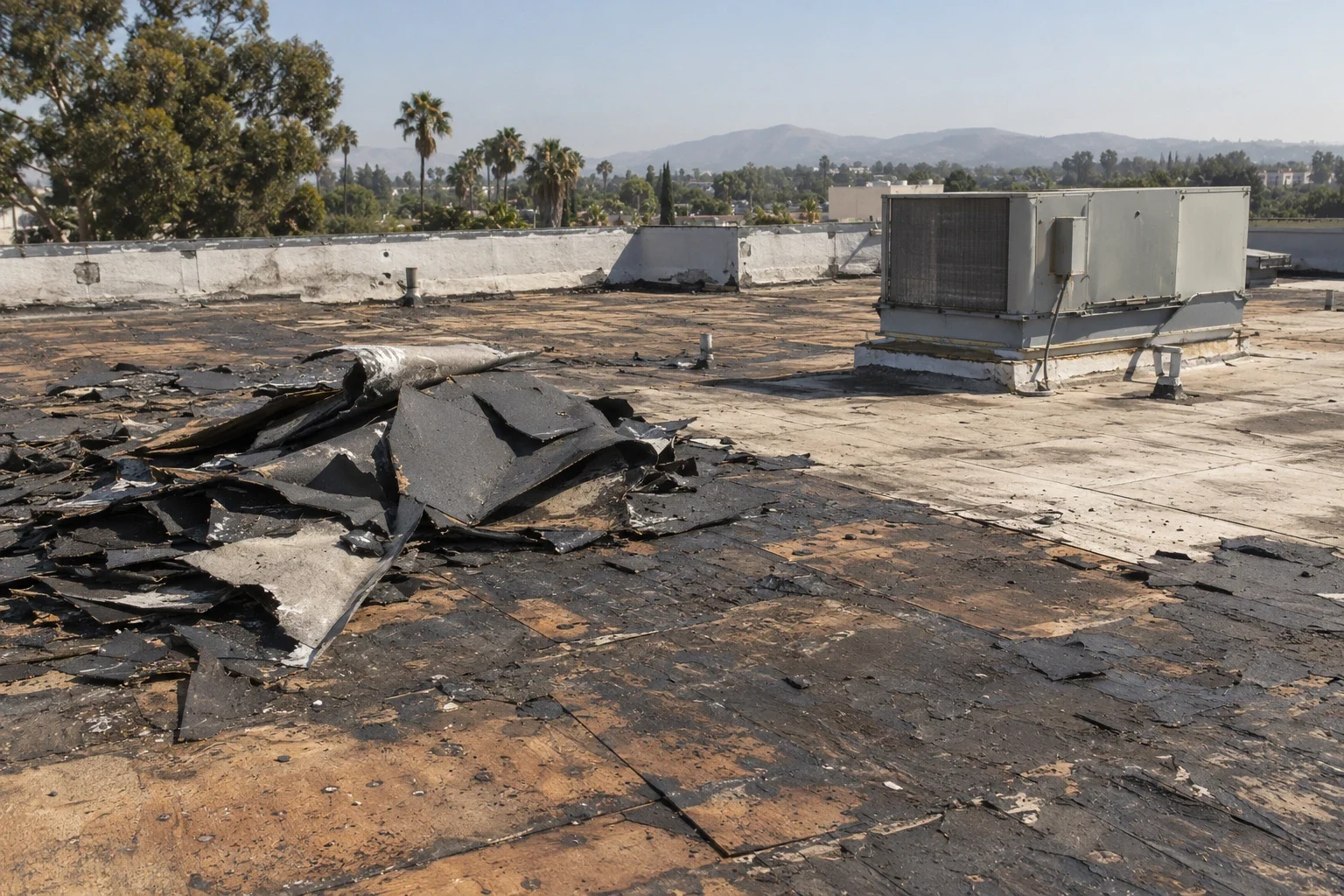
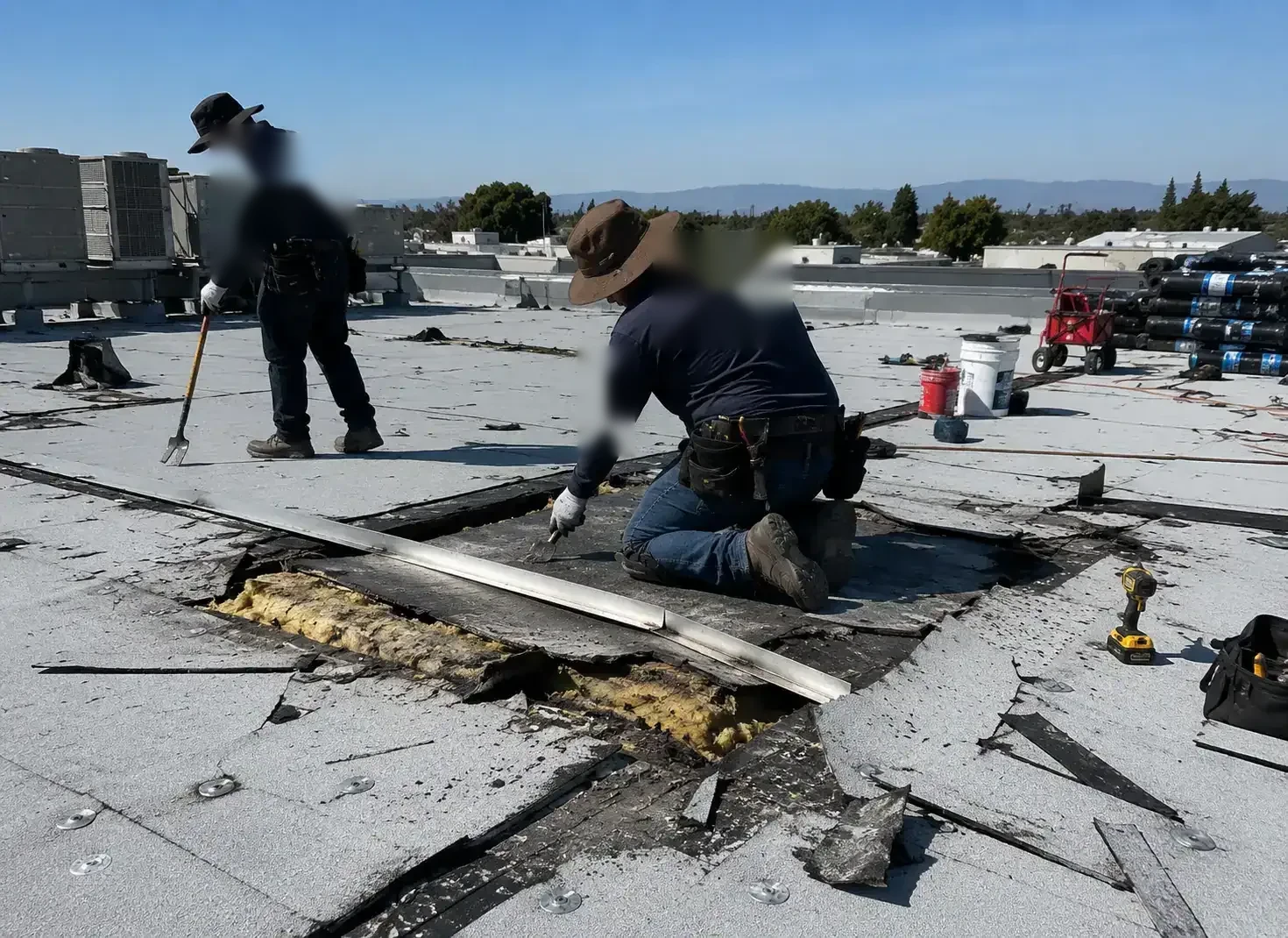
When surrounding membrane is secure and insulation is dry, a compatible patch may close a localized puncture or split. A curb that has pulled away needs its flashing rebuilt and tied back into sound field material. Where water has reached insulation, we remove the affected layers, inspect the deck and photograph what is exposed before rebuilding. If moisture spans several bays or the roof has multiple failed details, selective repair may no longer be the clearest scope. We compare it with recovery or replacement based on attachment, wet material, deck condition and remaining serviceable area.
Pricing and schedule depend on tear-off depth, access, disposal, deck repairs, material compatibility and how many transitions must be reconstructed. A cold-storage building may have temperature-sensitive operations; a processor may need separation from active production. We plan those conditions into staging and the work window rather than assume the roof is vacant. For a sound, dry assembly with manageable details, a defined repair scope can be appropriate. When the existing layers or attachment need a broader decision, a replacement evaluation compares the assembly options without treating a single leak as proof that every roof area has failed.
Access and work sequence
Before the first cut, we confirm hatch access, equipment clearances, staging, interior protection and the planned dry-in point. The crew removes only the material authorized in the scope. We inspect exposed insulation and deck, record the condition, and pause if wet layers or deterioration extend beyond the agreed boundary. The owner sees the evidence and the added work area before the scope expands. That sequence keeps a repair decision connected to what was actually found rather than an assumption made from the surface.
Highway 99, Fulkerth Road, Washington Road, Linwood and Glenwood Avenues connect the district; the property manager confirms loading and roof access. We coordinate access with each property manager and keep drains open during the work. Loose material is secured at shift end, and temporary protection is checked before leaving the roof. A phased occupied-building plan can separate roof sections where operations below remain active. After permanent work, a maintenance visit records seam condition, drainage and prior repairs for the next inspection cycle.
Evidence for the next capital step
Turlock Regional Industrial Park covers a broad commercial area in Turlock. Building owners there can use the same disciplined sequence: locate the opening, determine whether moisture is present below it, then compare a bounded repair with a larger assembly plan. We also serve the Merced market and nearby Merced County places such as Gustine. For a Merced site, the Highway 59 corridor page covers that local route. Each roof scope remains tied to its own assembly and access plan.
A written scope identifies the roof area, membrane or metal detail, wet material to remove, deck condition, new flashing and limits of the work. It separates current repairs from conditions that can be monitored. For an urgent opening, we prioritize stabilization and confirm access timing with the property contact before planning permanent work. Send the affected area, leak timing, roof access rules and any operating restrictions with the inspection request. We will return a photo-backed finding and a next step tied to the assembly, not a generic replacement recommendation.
Commercial Roofing Questions
Does a leak near a loading bay identify where water entered?
No. Water can move along a deck flute or insulation joint before reaching the interior. We compare the stain with roof penetrations, seams, drains and past repairs, then use a test opening if it will settle the repair boundary. The report separates the visible symptom from the confirmed entry point.
Can a repair be phased around cold-storage or food-processing operations?
Yes. We set access, staging and interior protection around the building's operating window. The scope names each roof section and dry-in point, so the manager can review the sequence. If concealed conditions extend the repair, we document the opening and agree on the added boundary before proceeding.
What does a test opening tell us that a surface scan cannot?
An opening exposes the insulation and deck at that location. It can confirm wet material, show attachment or reveal deterioration hidden below the membrane. Infrared results can guide where to test, but the temperature pattern alone does not establish the layer condition. We record both the opening and its limits.
When should the owner compare repair with replacement?
That comparison is useful when wet insulation reaches several areas, attachment is compromised, or repeated details keep reopening. We document the serviceable field and affected layers, then price a bounded repair against a wider scope. The choice follows the exposed assembly and the owner's operating and capital timing.
What should we send before requesting an inspection?
Identify the building use, interior area affected, leak timing and roof access requirements. Include known membrane or metal system information and prior repair records if available. We use those details to plan a safe route and the right inspection method, then confirm the findings in a written scope after the roof walk.
Inspect the roof assembly in Turlock
Share the building use, affected area, leak timing and access window. We will examine the membrane, seams, curbs and drainage, then document what is wet, what can be repaired and what needs a broader review.
Related Roofing Work