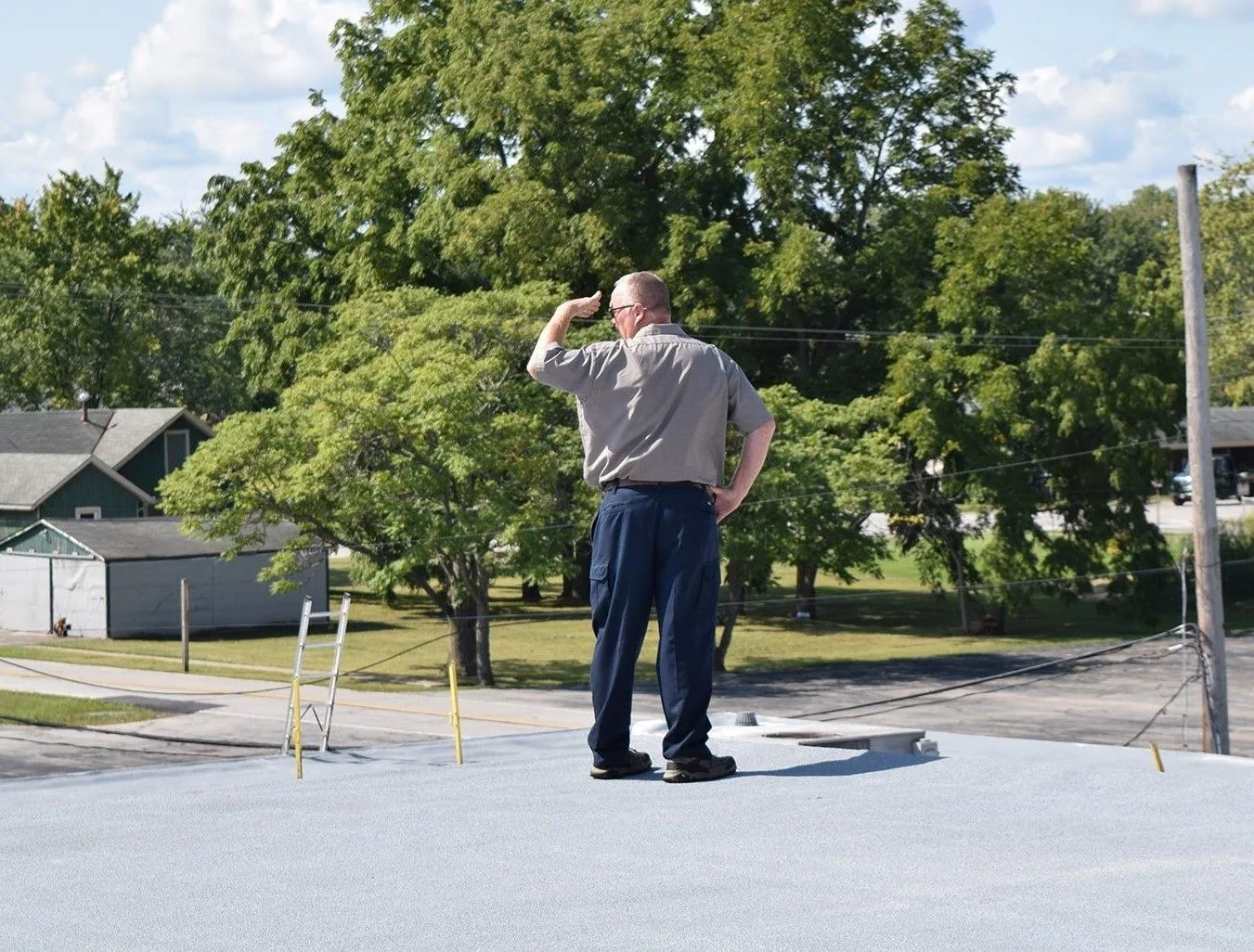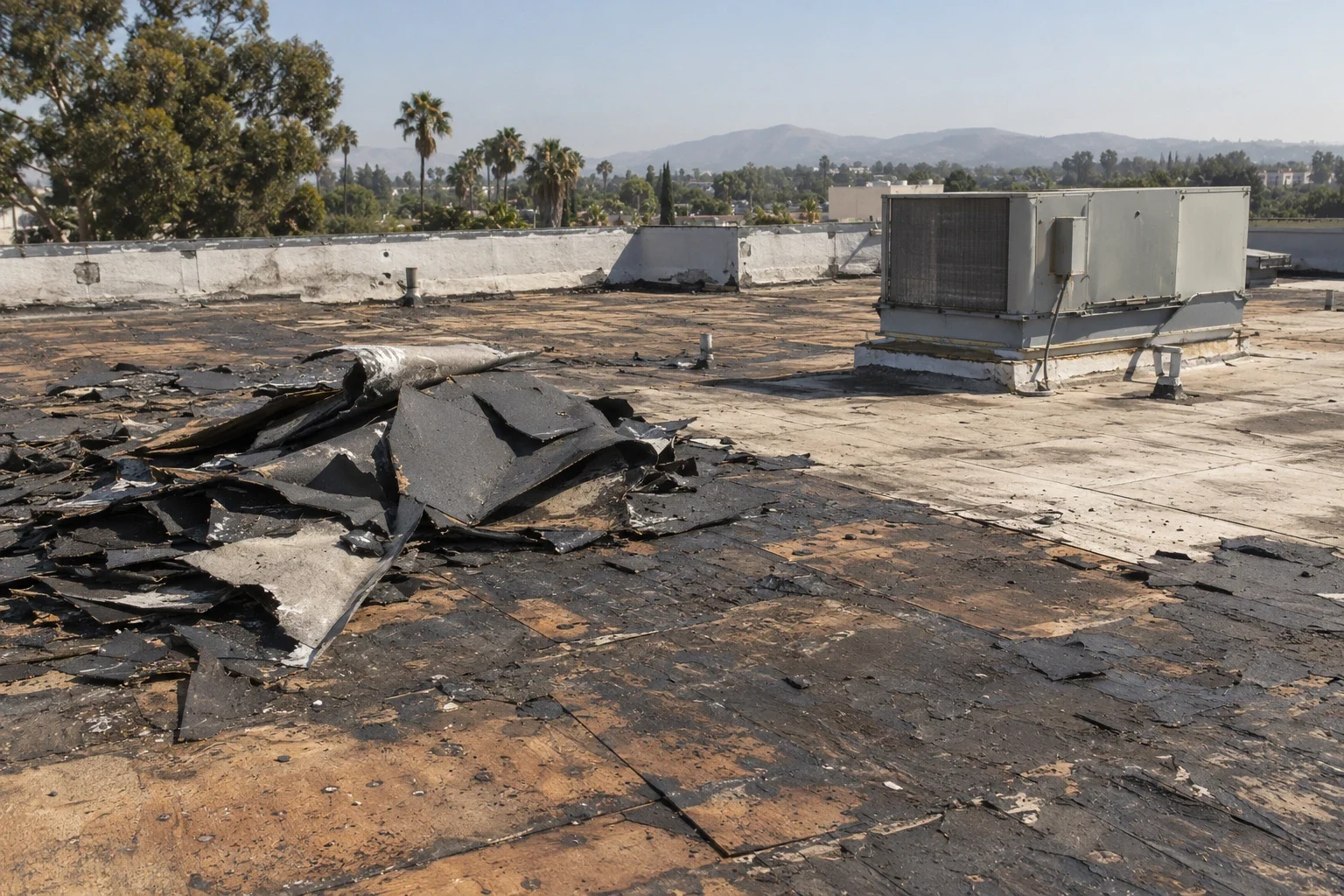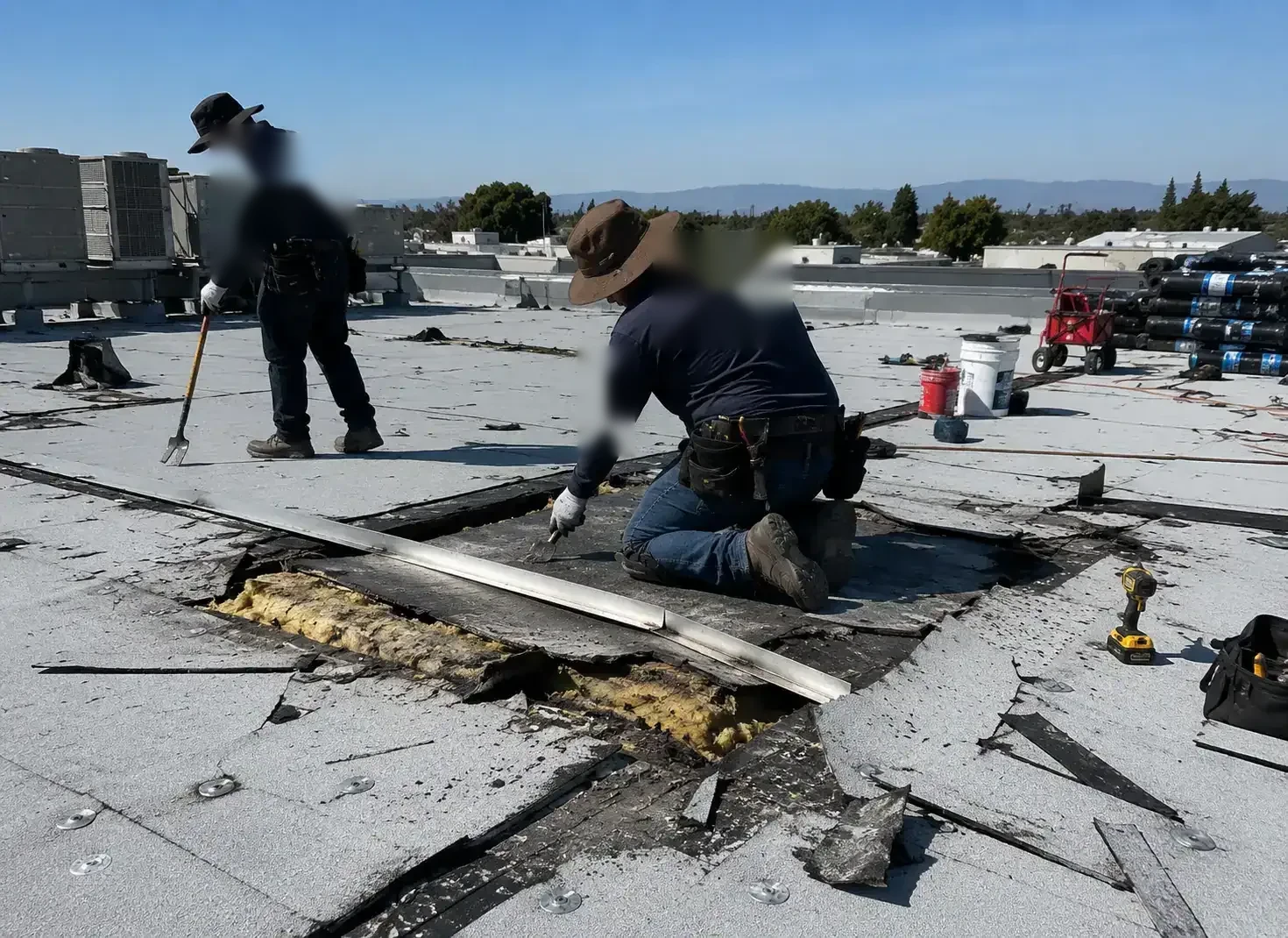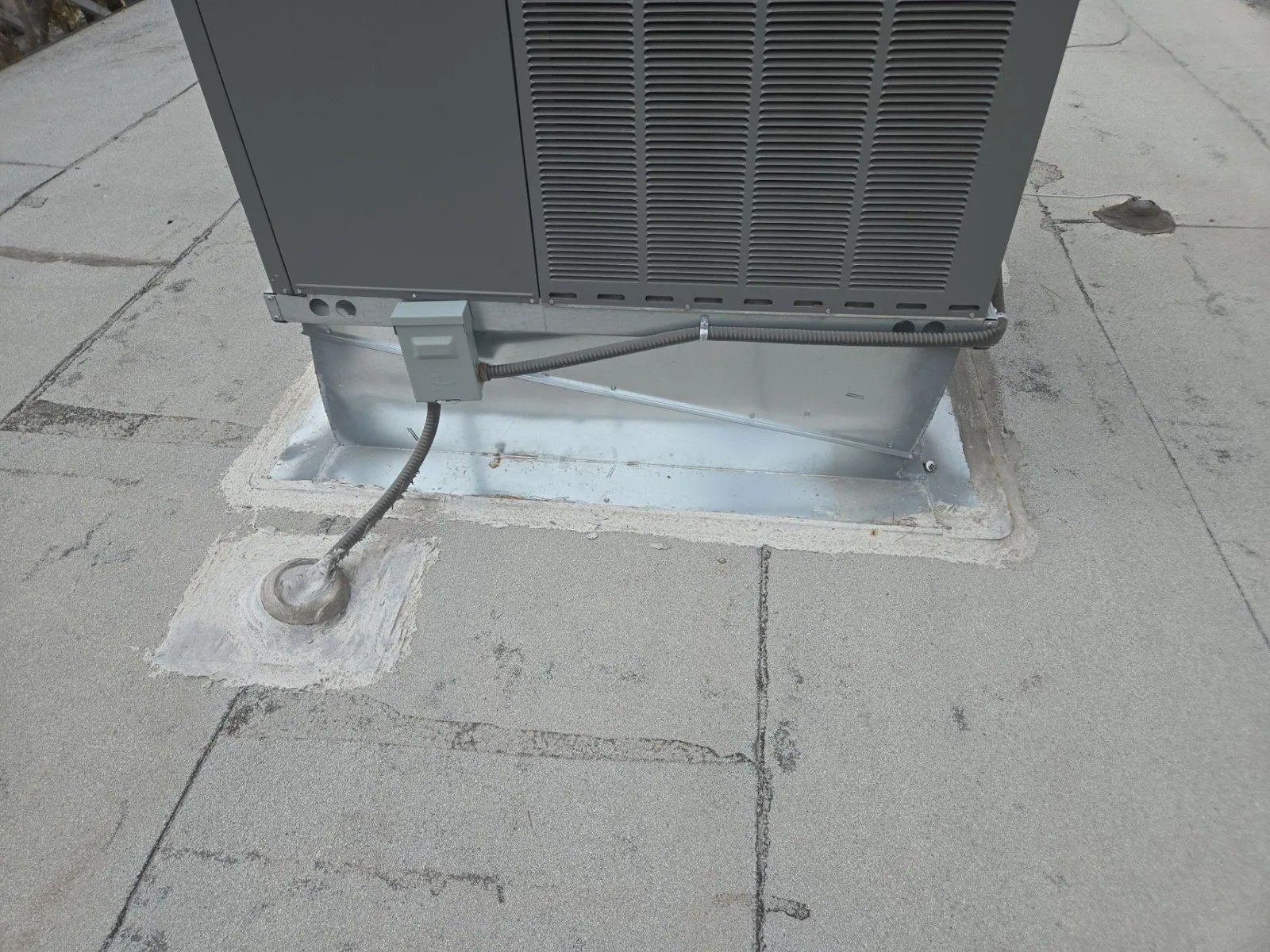
A planned array support beside a separating seam raises a roofing question before installation starts. Solar-ready roofing in Merced, CA, begins with the assembly that will remain beneath the equipment. We examine the membrane, connections and suspect concealed layers. The manager needs to decide whether repair or replacement belongs ahead of the array, while the roof is still accessible for that work.
Merced has hot summer conditions, making both the exposed materials and their connections relevant to planning. The industrial areas near Highway 99 include distribution and manufacturing uses. Downtown Merced has occupied offices and commercial activity. A solar project above either setting needs roof-level examination and coordination with the building's actual operating and enclosure requirements.
Roof condition before array placement
A worn but intact area needs a different assessment from a separating seam or wet insulation. We identify current defects and the surrounding material available for repair. Array placement can make later access more difficult. The useful decision is whether necessary roofing work can be completed before that access changes. We explain the observed conditions rather than assign a remaining roof lifespan without a basis.
A pre-installation roof inspection examines accessible details and identifies concealed-layer questions. Selected test openings or moisture checks may be appropriate when those questions affect retention. We define what needs examination before the array layout becomes fixed. A visual overview alone may not provide enough information for a decision to retain unknown layers beneath long-term equipment.
Where replacement is appropriate, roof assembly renewal can precede the solar work. We coordinate the intended layer heights and details with the project team. Repair is another option where damage is bounded and surrounding construction remains suitable. The comparison should show the roofing scope and the later access implications of each choice.
Accessible roof details within the array layout
An array layout should preserve suitable routes to outlets, equipment and roof details requiring maintenance. We review the proposed arrangement from a roofing perspective and identify potential conflicts. A drain hidden behind tightly placed components can become harder to clear or examine. An access route crossing vulnerable flashing can also create repeated damage exposure. Those concerns are easier to address before installation.
Spacing and access requirements belong to the full project review, including applicable safety and technical requirements. We coordinate roof-maintenance needs with that process. The roofing assessment identifies where a seam, curb or outlet needs physical access. It does not replace the array design. The manager should see how future roof examination will be performed without assuming that every detail remains reachable.
Maintenance after solar installation should include the retained roof and connected supports. We identify areas needing appropriate traffic protection and examination. Service debris should not accumulate near outlets or beneath vulnerable equipment zones. The array changes roof use, but the membrane still needs a workable route for inspection and suitable response to later damage.
Support contact and attachment coordination
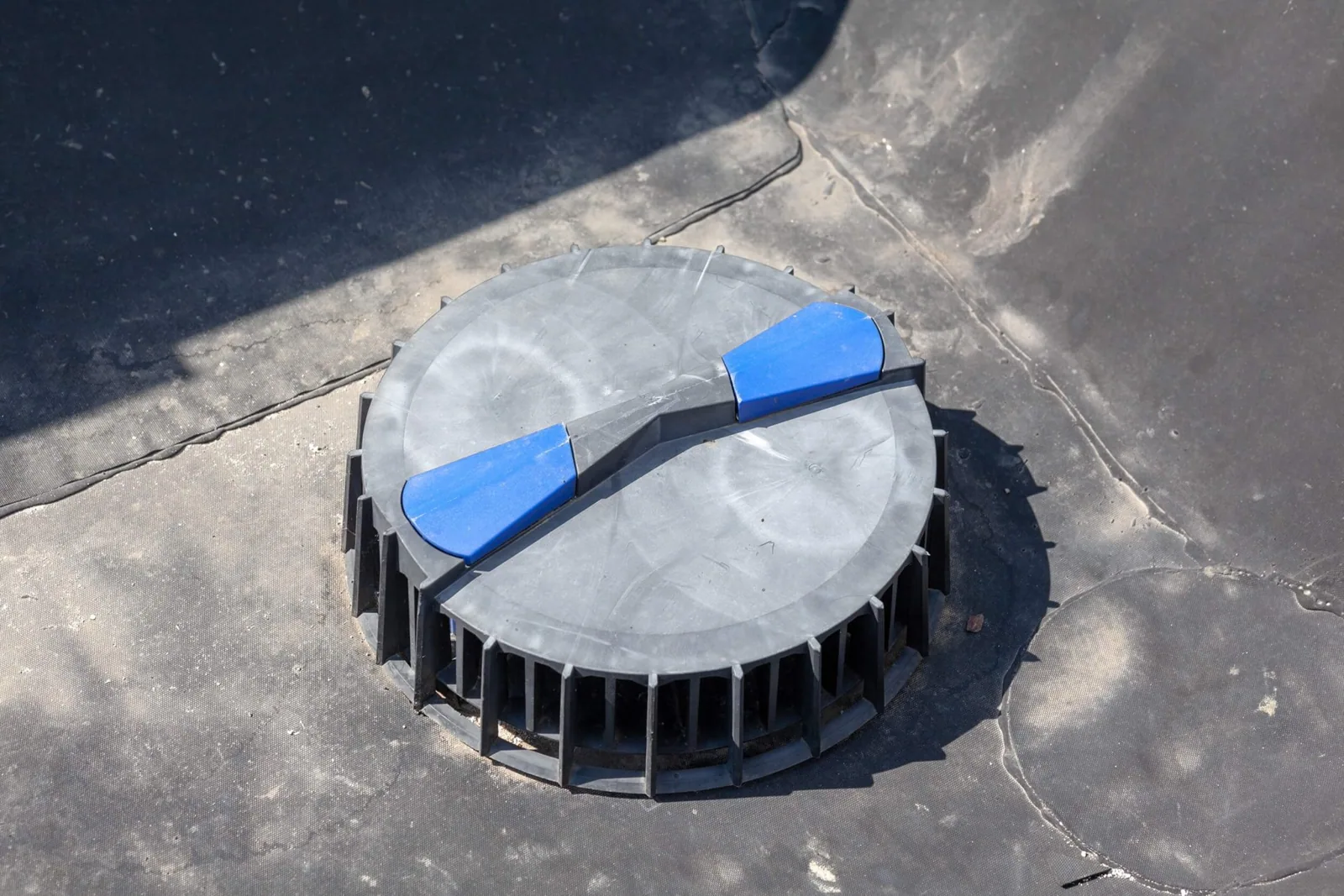
A roof-contacting support needs protection and a bearing arrangement appropriate to the assembly. We examine the intended contact areas and coordinate with the solar and design team. Structural capacity, loading and attachment design need the appropriate technical evaluation. A roof pad alone does not establish that a support arrangement is suitable for the building or the layers beneath it.
Penetrating attachment creates a different roofing detail. We identify how the connection will pass through the assembly and how compatible flashing will be completed. Support and curb coordination can help define the roofing interface. The support design and its roof closure need to be resolved together rather than leave an installer to improvise the membrane connection after placement.
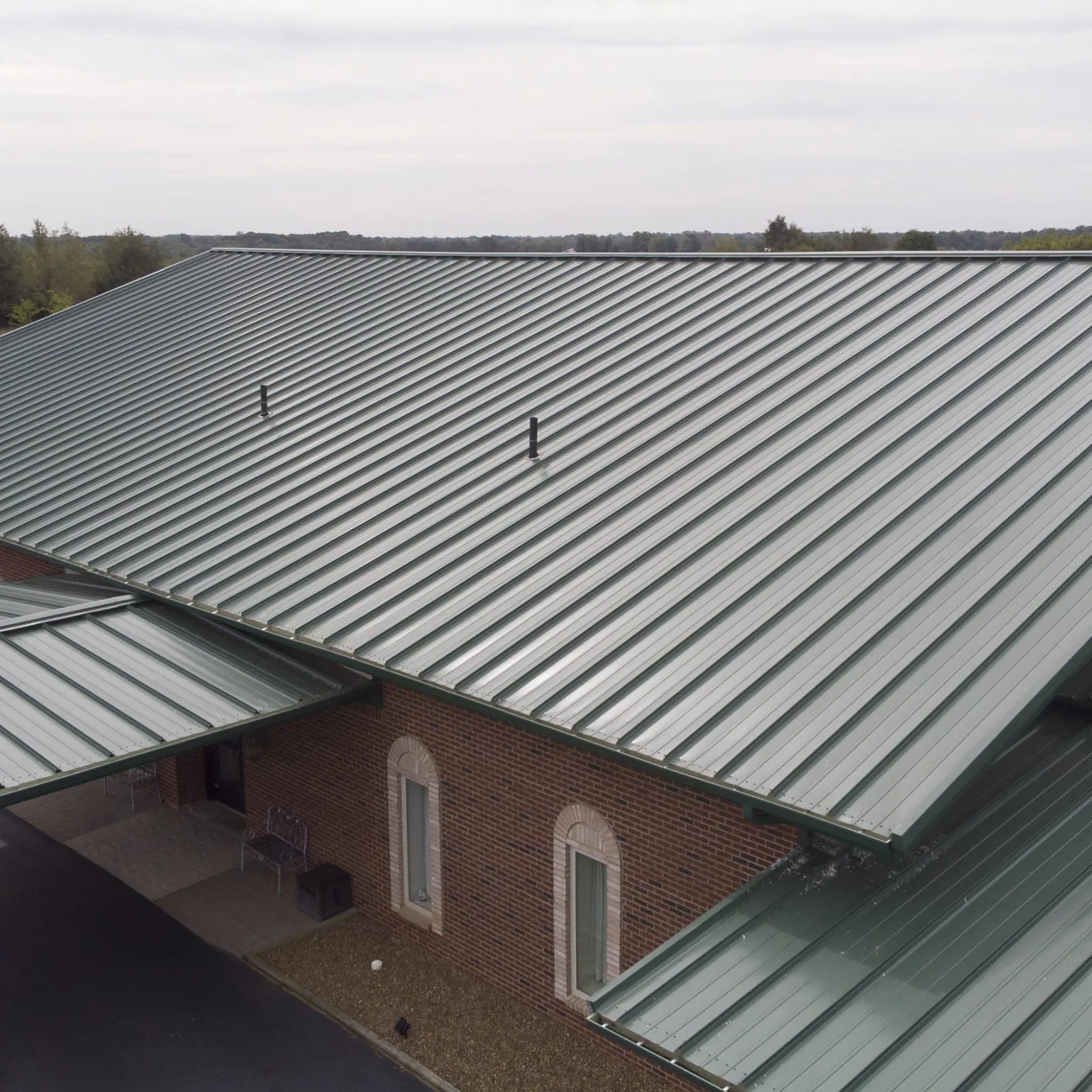
For a standing seam metal roof, the array connection depends on the panel and support design. Different panel arrangements are not interchangeable attachment surfaces. We identify roofing concerns and the need for appropriate system review. The project team must evaluate the intended connection rather than infer suitability from the presence of raised seams alone.
Drainage around equipment contact areas
A support or service route can interrupt water flow or collect debris. We compare proposed equipment positions with the roof slope and outlets. An existing low area deserves attention before it becomes harder to reach. Correcting that condition may involve insulation shaping, an outlet detail or another technical review. The array plan should not conceal the unresolved drainage question.
Roof drainage work needs coordination with final layer heights and array access. Water should reach a functioning discharge route. Merced's wetter winter pattern makes clear drainage paths and a working overflow route important after equipment is installed. We examine accessible details and identify work that should be completed before the next wet exposure.
For a warehouse roof project, the building team identifies the areas below proposed openings or support work. Merced has food and grocery distribution activity, making product and handling protection relevant local questions. The actual interior use still needs confirmation at the property. Roofing preparation should connect the roof zone with suitable operating arrangements below it.
Roof work before and during solar installation
Installing roofing before support placement can provide better access for preparation and detail construction. We coordinate that sequence with the intended array materials and attachment. New roofing should not be immediately damaged by poorly controlled installation traffic. We identify protection and inspection points so the finished assembly remains usable as the next trade begins work.
Cables and conduits may need roof penetrations or supported routes. We coordinate the proposed positions before closure. An unused opening should receive a defined assembly repair. A new penetration should have compatible flashing rather than rely on a surface compound selected only for convenience. Merced heat also makes movement at exposed material changes relevant to those final connections.
If an existing array must be moved for roof work, removal and reinstatement responsibilities need clarity. Electrical isolation, equipment handling and roof reconstruction involve different parties. We identify the roofing opening, its protection and the restored connection. The manager should know which work must precede tear-off and which follow-up occurs before the roof area becomes difficult to access again.
The retained roof and its future repair access
At a property in Downtown Merced, solar preparation may involve equipment serving occupied commercial space. We ask about those service requirements and the usable work windows. Rooftop systems serving a tenant may need to remain accessible while support positions are planned. We identify the routes and connections that the layout must preserve, then assess the layers beneath the proposed array.
The final roofing proposal identifies repairs, retained construction and any necessary detail changes. It also describes areas where later array movement may be required to reach the roof. Cost drivers include damaged layers, access, compatible support closures and coordination with equipment work. That gives the manager a practical basis for deciding what to repair or renew before the array changes roof access.
Commercial Roofing Questions
Does solar-ready roofing establish structural capacity for an array?
Structural capacity needs the appropriate project evaluation. Our roofing assessment addresses assembly condition, compatible details and access. Support design and loading should be coordinated with that assessment rather than inferred from an intact roof surface.
Should existing leaks be repaired before array installation?
Active defects need examination while access remains practical. We identify the entry detail and affected layers, then propose suitable repair. The work should be completed and assessed before equipment placement conceals or restricts the roof zone.
Can a support pad alone protect the roof from every contact load?
The support arrangement and underlying layers also matter. We examine the proposed contact and identify roofing concerns. Suitable protection does not replace the technical review needed for bearing, loading or attachment.
What roof details need access after the solar work is finished?
Outlets, flashing, equipment interfaces and service routes need a workable examination plan. We identify those areas during layout coordination. Future maintenance should not depend on removing equipment unexpectedly to reach a routine roof detail.
Assessment beneath the planned array
Request a roof examination of the seams, support contact areas and drainage details before solar equipment changes their accessibility.
Related Roofing Work