A distorted panel seam beside a service route needs a connection assessment. For standing seam metal roofing in Merced, CA, we examine the panel profile, seam condition and nearby support. The damage may be localized. It may also affect how the adjoining panels join or move. The repair must suit that roof system rather than simply cover the distorted ridge.
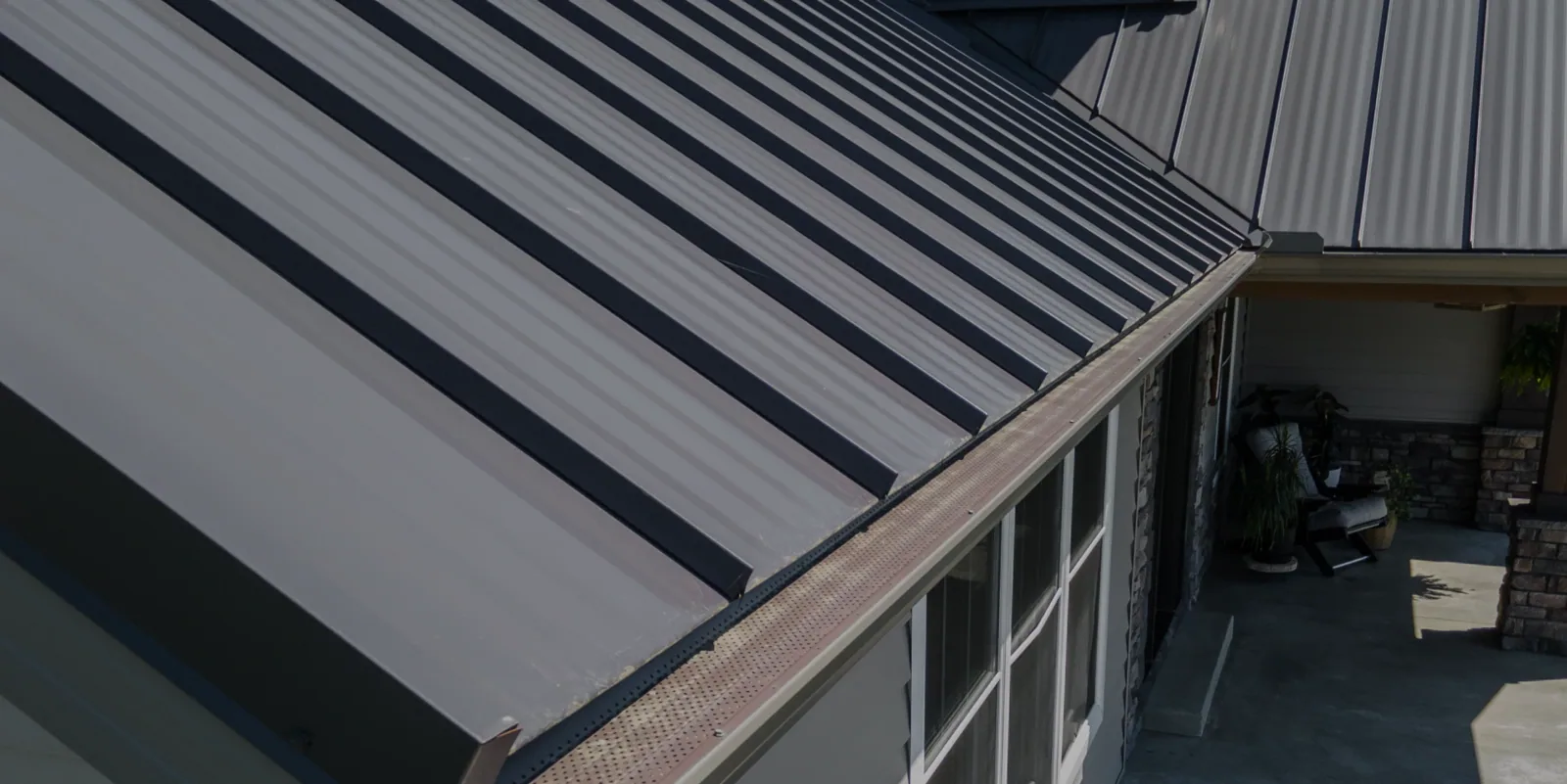
Standing seam roofs use raised panel joints and system-specific attachment. Merced summer heat makes thermal movement relevant to their details. Atwater has building-products manufacturing and food-processing uses. Turlock's regional industrial area includes manufacturing and cold storage. Above an operating property, we examine the actual metal assembly and coordinate work around the equipment and interior areas it protects.
Panel profiles and seam construction
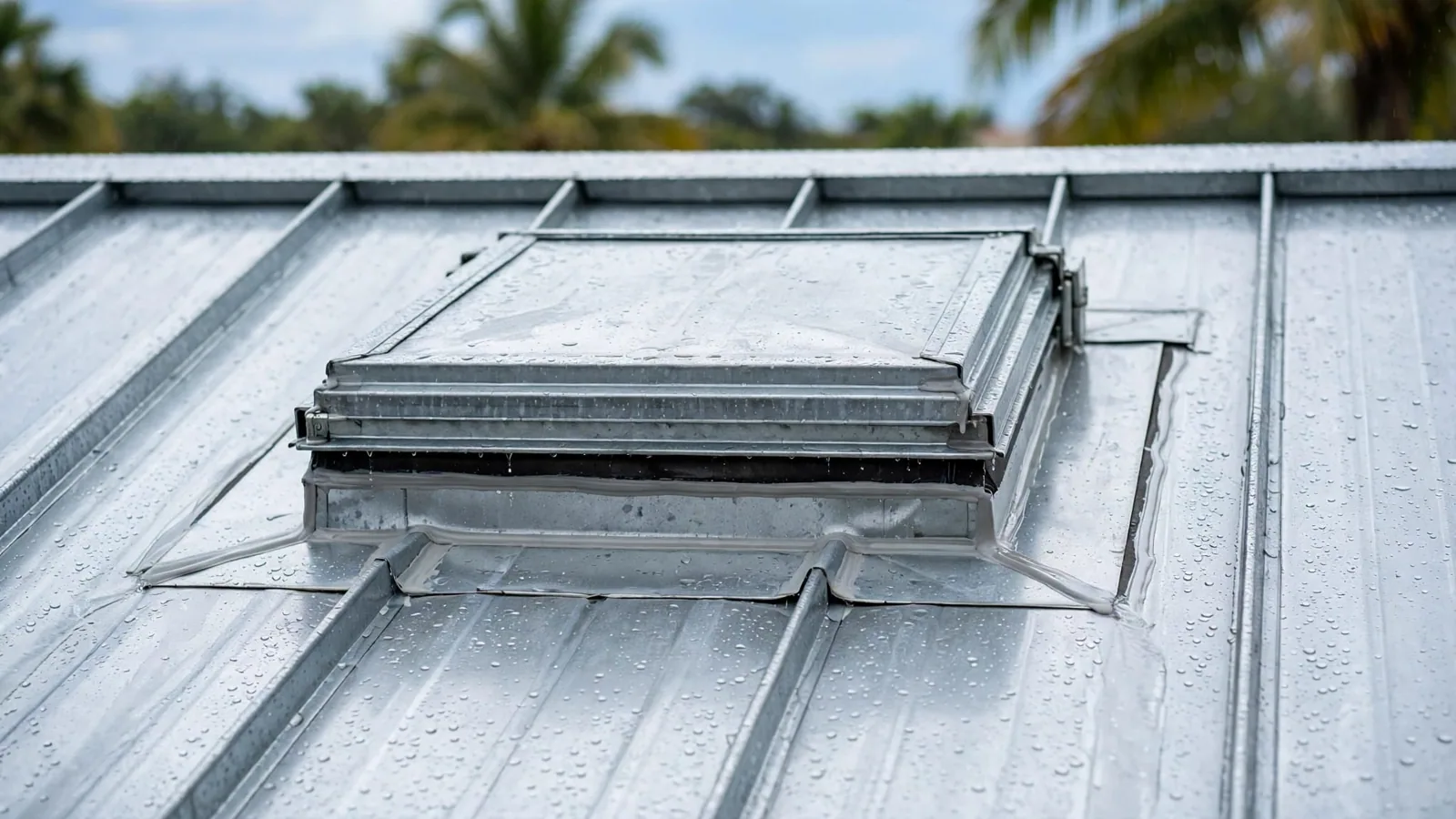
Standing seam profiles do not all connect in the same way. Some require mechanical seaming; others use a different designed connection. We identify the panel system and examine the affected joint. A damaged seam may need panel replacement or a system-specific repair. An outer sealant application does not restore every distorted profile or internal connection.
Panel joints also need a suitable relationship with roof slope and exposure. The system's requirements govern its use. We examine accessible roof geometry and the details around transitions. A seam profile should not be assumed suitable for every low-slope condition. Where the assembly question requires design review, we identify it before choosing a repair intended only for the visible surface.
Leak examination on a metal roof compares the suspected joint with penetrations, panel ends and nearby flashing. Water may enter through more than one detail. We identify the evidence supporting the proposed work. The manager should see whether the repair restores a panel connection, an end detail or another component instead of receiving one general seam treatment.
Clips and thermal movement
Panel attachment can include clips concealed beneath the raised seams. Their arrangement may allow movement at selected locations within the designed system. We identify accessible construction and any need to open an area for examination. A loose or distorted panel surface does not reveal every clip condition below it. The proposed work should distinguish observed damage from concealed questions requiring another check.
Heat movement can strain a connection if the panel is restrained contrary to its design. We examine fixed and moving relationships where the system requires them. Merced has substantial summer heat, making that mechanism useful to consider. The repair should preserve the intended movement arrangement. Adding fasteners without understanding it can introduce a new restraint rather than correct the original condition.
Panel length, attachment and the supporting construction need suitable technical review when they affect the roof choice. We assess visible roofing conditions and coordinate the necessary project input. A metal retrofit option has a different construction basis from a panel repair. Its added layers and attachment should be evaluated as an assembly, not simply placed over an unexplained movement problem.
Curbs and penetrations through the panels
An equipment curb interrupts the panel field and needs a detail suited to the metal system. We inspect its uphill, downhill and side connections. A flashing repair should address how water passes around the curb and how the panels meet it. A broad patch across one edge may leave the rest of the transition vulnerable or improperly restrained.
Equipment curb coordination becomes important if the unit is being changed or the base is damaged. We identify roofing removal and reinstatement alongside the equipment work. The panel arrangement may need modification to receive the new detail. The proposal should settle that interface before cutting or disconnecting the existing roof.
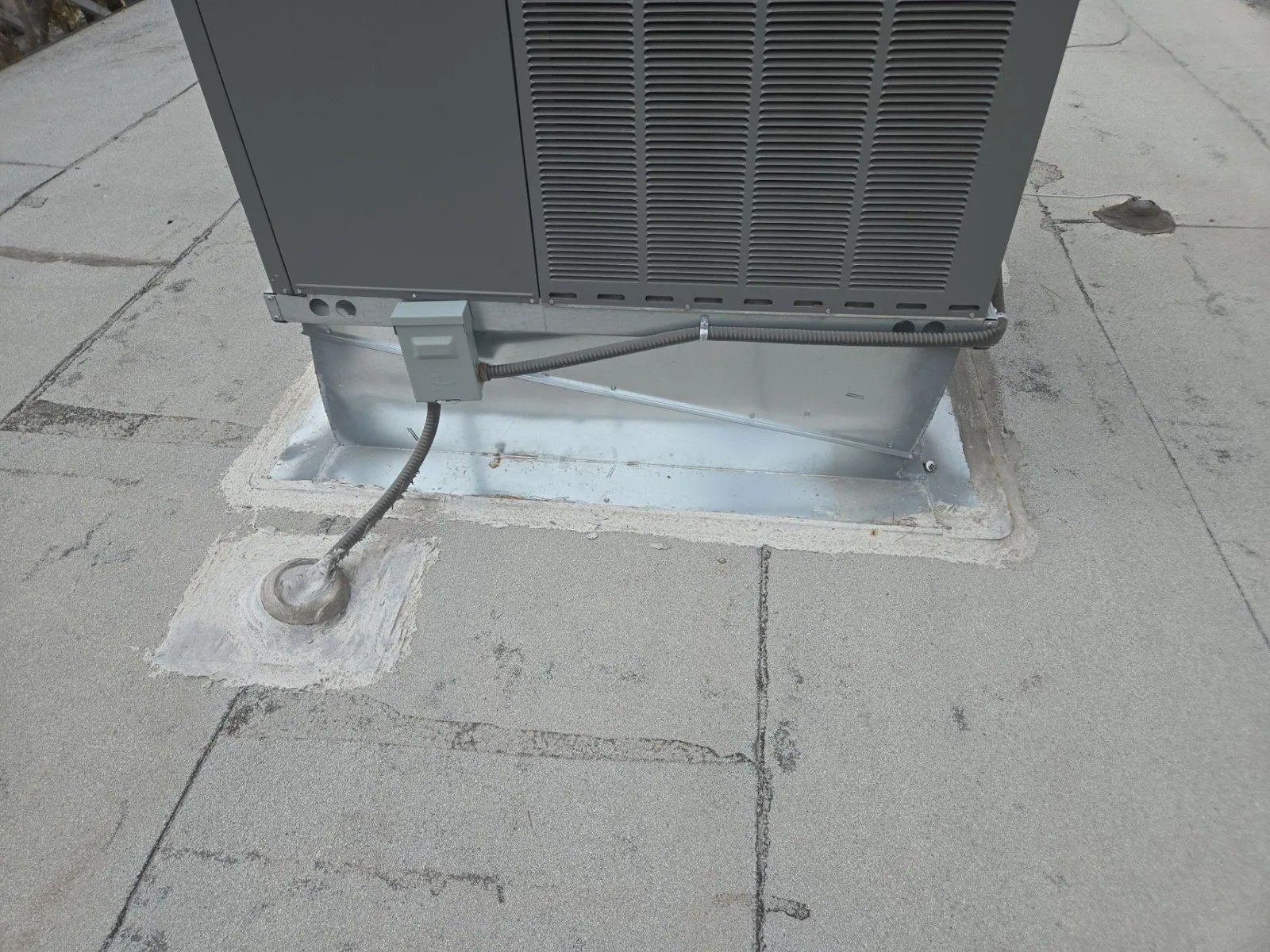
Pipe penetrations and supported routes need the same material awareness. We examine the boot, upper closure and connection to the panel. Service traffic can damage nearby raised joints. The manager should know whether protection or a changed access route is needed after repair. A completed flashing detail should not be placed where ordinary service activity will repeatedly deform its adjoining metal.
Panel ends and perimeter transitions
A ridge, eave or wall transition has its own closure and flashing arrangement. We examine visible separation, loose attachment and the condition of underlying material where accessible. End details need to suit the profile and roof exposure. Replacing a cover without correcting an unsuitable connection beneath it can leave the same water path within the repaired area.
Perimeter and gutter work may need coordination with the panel ends. Water should reach the intended discharge, while the metal connections retain suitable movement and support. We distinguish debris clearing from reconstruction. A gutter issue and a panel-end opening can occur near one another but require different work.
In Merced, the winter precipitation normals are above those for the dry midsummer period. A separating transition found during a dry inspection can warrant planned work before another wet period. We identify the usable repair boundary and application requirements. Permanent reconstruction should address the panel system and connected details rather than rely on a temporary outer closure indefinitely.
Finish condition and compatible surface work
Scratches, corrosion and residue need examination of the actual metal and finish. A surface treatment may be suitable for a bounded finish concern. Deteriorated metal or failed attachment can require replacement or another construction response. We identify the condition before choosing material. Coating should not conceal a damaged supporting connection without its own repair.
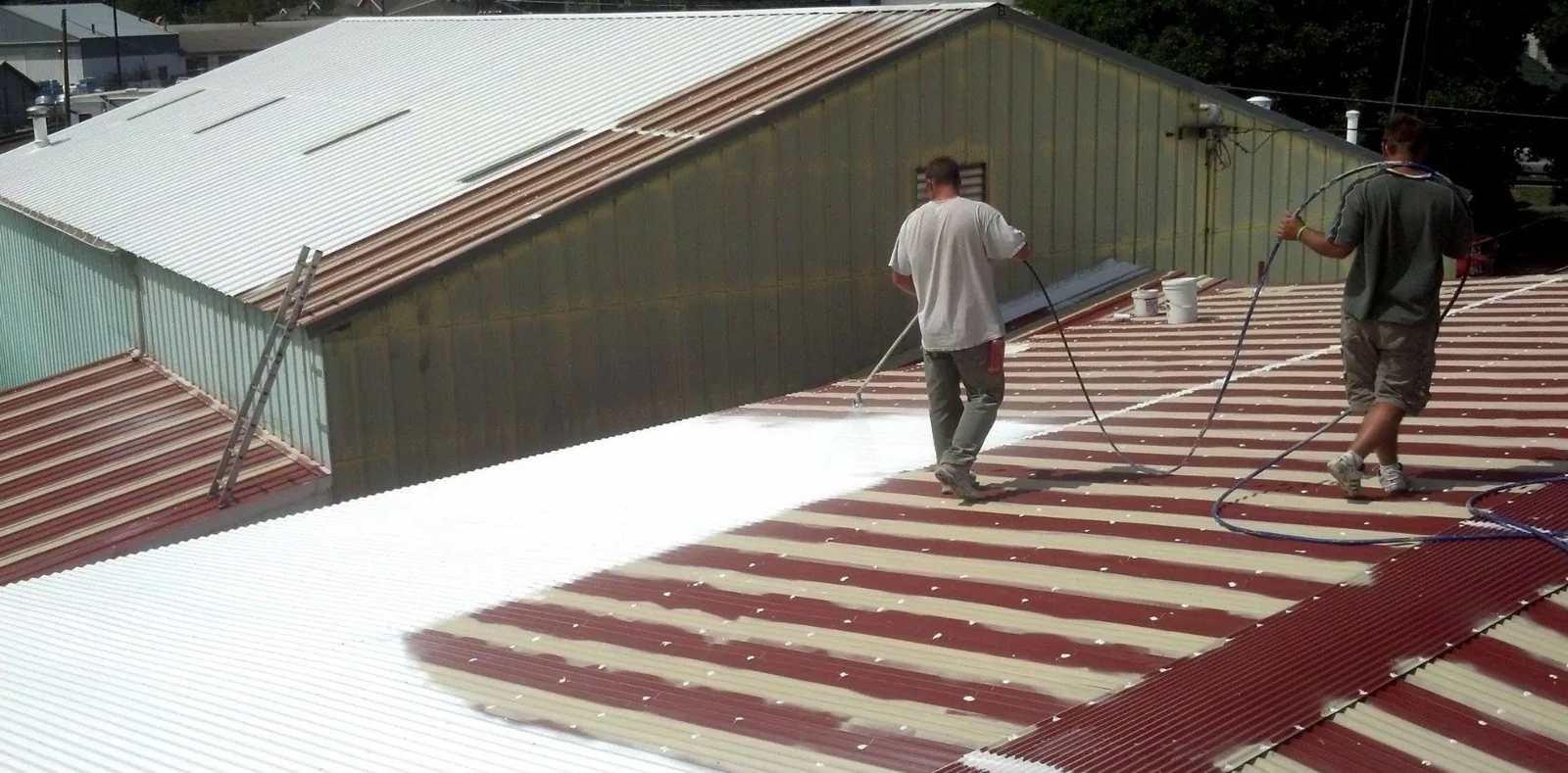
Silicone coating work requires compatibility, preparation and a suitable substrate when considered on metal. Panel joints and movement need particular attention. The system should be evaluated for those details rather than applied as if the roof were a continuous flat sheet. The proposal separates surface restoration from panel or attachment reconstruction.
For a warehouse roof, stored goods and service routes can influence repair timing. We ask the building team about the actual affected interior. Suitable removal and temporary protection need a usable work window. Those operating arrangements support the repair without changing the panel system's connection requirements.
Panel repair and broader roof intervention
At a property in Atwater, manufacturing or processing operations may constrain when a panel can be removed. We coordinate the opening and identify how the assembly will be protected. A localized repair can be practical where adjoining panels and support are suitable. Distorted seams or damaged concealed connections across a broader area can change that choice.
We compare repair, panel replacement and retrofit using the inspected system. Cost drivers include profile availability, removal access, connected flashing and supporting construction. The completed scope identifies what remains and how the new work joins it. Maintenance should preserve usable access and respond to new seam distortion or exposed connection damage before those details become harder to restore.
Commercial Roofing Questions
Can a distorted standing seam be restored with surface sealant?
The joint profile and internal connection need examination. A suitable repair may require system-specific reconstruction or panel replacement. Covering the outer ridge does not establish that its shape, attachment or movement has been restored.
Why avoid adding fasteners before reviewing panel movement?
An added fastener can restrain a panel where its design requires movement. We identify the system and affected connection before modification. The repair should correct the observed condition without introducing a new stress point.
Does standing seam describe one interchangeable roof assembly?
Profiles, attachment and detail requirements differ. We identify the installed system before repair selection. A similar raised joint does not establish the same seaming method or suitability for a particular slope and exposure.
What can increase a localized metal roof repair scope?
Adjacent seam damage, concealed clip conditions or unsuitable supporting material can extend the work. We identify the examination needed and explain the repair boundary. The final scope should restore the panel connection and its relevant adjoining details.
Examination of the standing seam connection
Request inspection of the distorted panel joint, curb flashing or movement detail before the metal repair method is selected.
Related Roofing Work