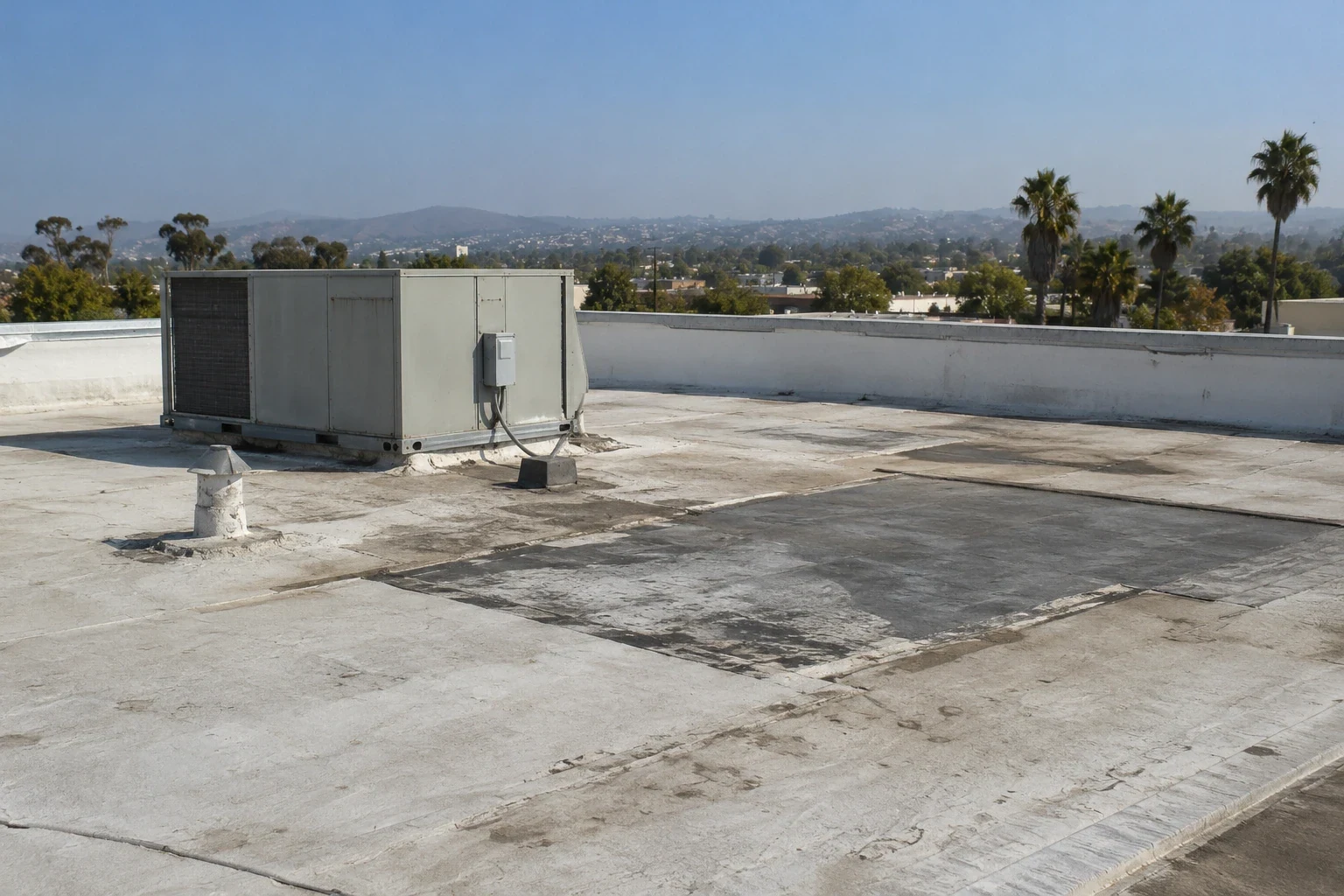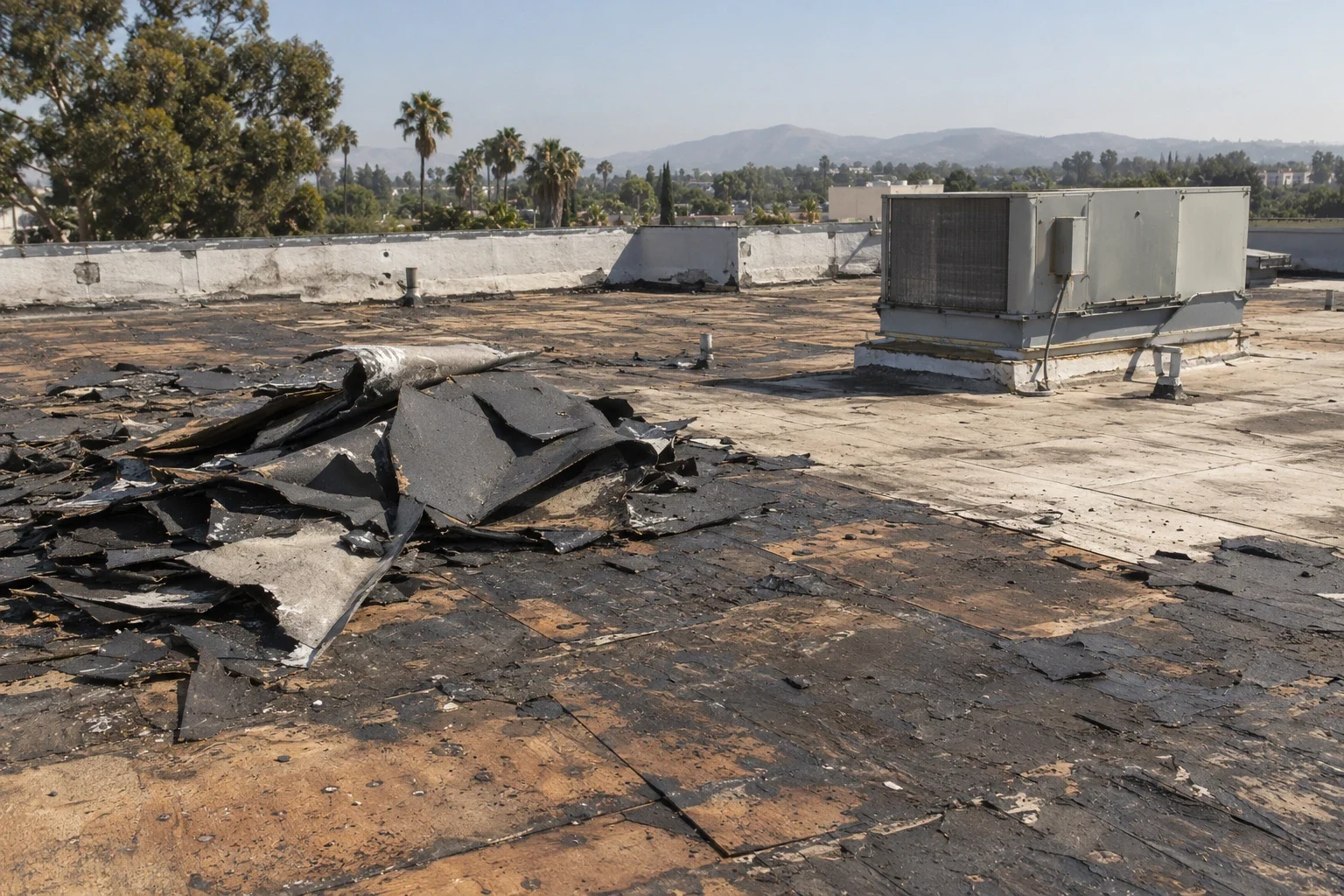
A brittle bead at a pipe boot can crack before the membrane around it shows damage. In Planada, CA, agriculture and food processing are part of the local economy, so a manager may need roof work coordinated with receiving, production or occupied space. We confirm those limits with the property instead of inferring them from the industry. The inspection checks the boot, counterflashing, nearby seams and insulation before a patch is selected. Merced station normals show hot summer afternoons and winter nights near freezing, making boot movement and sealant condition worthwhile inspection points. A commercial roof inspection ties the visible split to the assembly beneath it and identifies what still needs to be opened.
Check the boot after temperature swings
The Merced station records 27.8 average nights a year at or below freezing in its 1991-2020 normals, with a December normal low of 36.0°F. With winter nights near freezing in the Merced climate record, boot collars and sealant transitions deserve a close seasonal check. At a pipe boot, sealant can harden while the pipe moves, leaving a gap at the collar. We inspect boot material, clamp, field sheet and counterflashing, then check for water or compressed insulation below. A surface patch is appropriate only if the base is sound and the product compatible. If the boot or sheet has split through, we rebuild the connection. The scope records whether neighboring penetrations show similar wear. A penetration-flashing repair starts with the actual detail, not the label on a work order.
Keep access clear during work
State Route 140 runs through Planada and links Merced with Mariposa. We use Highway 140 as an orientation point, then agree with the property contact on the delivery entrance, staging position and route to the roof hatch. Before staging, we ask the manager to mark delivery times, staff entrances, equipment that must stay online and areas that cannot be crossed. If a repair sits above a receiving lane, debris control and overhead protection belong in the sequence. We separate active roof zones so temporary cover can be inspected before the next shift. A property with food processing can also have ventilation needs near intakes, which we confirm with the site contact. A work plan for an occupied building identifies these limits before the first cut, not after material is on the roof.
Follow the stain to its source
A ceiling mark can sit downhill from the roof opening where water enters. We examine nearby seams, drains, curbs and penetrations, then trace the path across deck or insulation where evidence allows. The first visit records surface conditions and interior location together. If a moisture survey points to a larger area, we use a controlled opening to verify the layer and avoid extending removal from one reading. The exposed section shows whether insulation is wet, whether the deck needs review and how the membrane attaches. We close each test cut with a compatible repair detail. A moisture survey is most useful when its suspect areas can be compared with drainage and roof-system information. The report distinguishes confirmed material from an area that has not been opened.
Clear the outlet and measure the low area
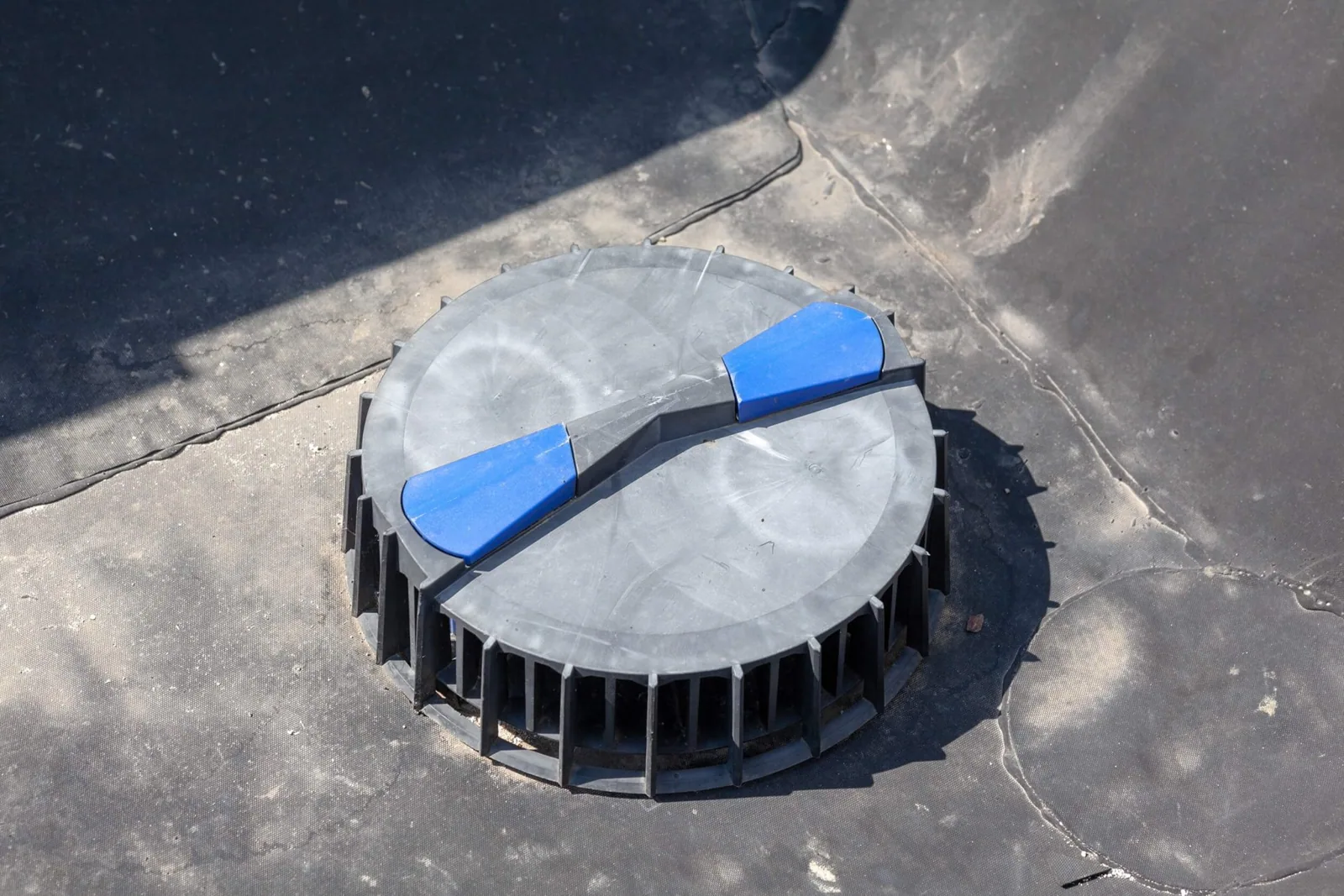
A roof drain can be free of debris while a shallow low area still holds water. We inspect the bowl, strainer, flashing and discharge connection, then measure how far ponding extends after the outlet is clear. That distinction matters because sealing the drain will not correct a slope or deck issue. In a building receiving agricultural goods, a leak near storage or process space can affect work below, so we record the interior area with the roof location and note who needs notice before opening. A damaged bowl connection may need membrane removal and a new tie-in. A broader low area may need drainage review or comparison with another roof section. A drain and scupper repair closes the membrane connection; it does not replace confirming where water remains.
Compare a patch with planned renewal
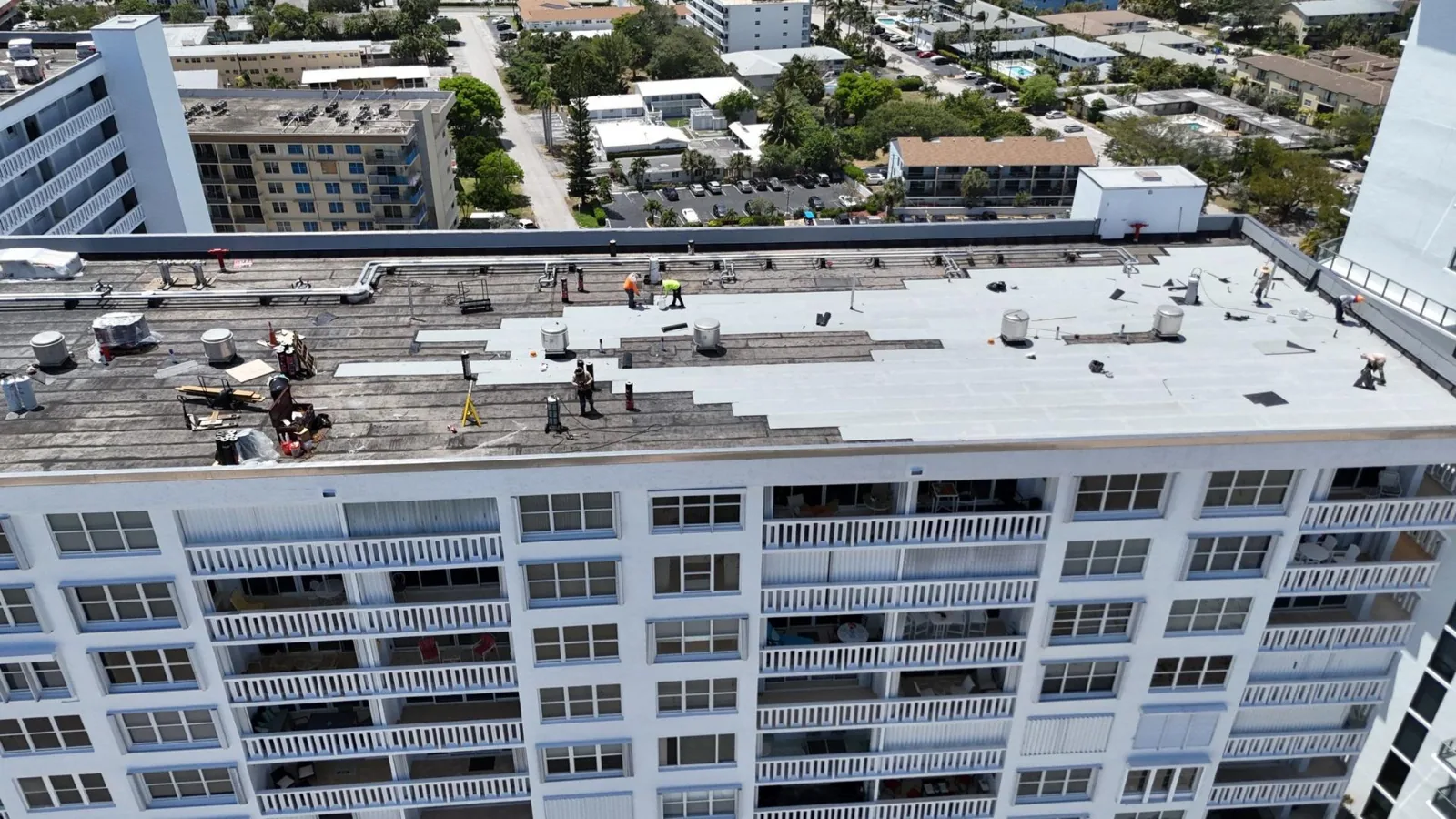
A repair can be limited when the boot, seam or drain is isolated and the surrounding membrane holds. We specify substrate preparation, layers removed and the length of tie-in to sound material. If multiple details fail in one section, or a test cut finds moisture beyond the reported point, the manager can compare repeated repairs with a recover or replacement. The decision rests on attachment, wet insulation, deck condition, previous layers and access. We present those facts separately from optional upgrades such as insulation or walk pads. A repair scope names the boundary and sequence. Where broader renewal is justified, a replacement evaluation states which layers come off, what stays and where an opening could change quantity.
Protect interior operations
An opening above process equipment, storage or a work area can create a second problem if debris or moisture enters. The property contact identifies sensitive rooms, air intakes and equipment that needs uninterrupted power. We place protection before removal, keep the opening inside a defined dry-in zone and close it before the crew leaves. If equipment must pause, the manager confirms authority and timing. If the repair grows, we stop at the agreed limit and document the exposed condition for approval. At an active leak, the manager marks the affected receiving, storage or process area below. We protect that space, confirm the roof-hatch route and secure the work zone before removing material. Photographs of the exposed layers help set a permanent repair quantity. A roof stabilization visit should record the interior, access route and active leak so follow-up addresses the same location. Before work starts, the property contact also tells us which hours allow rooftop noise, how staff will be notified and where tools can be secured. We identify the route from the hatch to the defect and keep it clear of materials that could obstruct another trade. For a repair near an air intake, we coordinate temporary protection and confirm when it can be removed. These decisions affect crew sequence and interior safeguards, not the roof diagnosis itself. If the opening exposes a larger wet area, we pause at the agreed limit, photograph the layers and request direction before moving into another work window. The manager retains control of both access and expansion.
Give the next inspection a useful starting point
A dated roof plan and close photograph help the next visit return to a repaired boot or drain. We identify the roof section, material, moisture status and any limitation that remained after closeout. If later rain produces another stain, the manager can compare its location with the earlier record instead of reopening the same detail by guesswork. We list follow-up items with a reason and place on the roof, such as a nearby termination or outlet. That makes maintenance a targeted visit rather than a broad checklist. A manager who also oversees a roof in Winton can compare the record fields while keeping Planada's observations distinct. For a Chowchilla property, we record its own access limits and repair boundary on a separate report.
Commercial Roofing Questions
How can a pipe boot fail before the roof field?
The pipe and roof sheet can move differently. We inspect the collar, clamp and membrane to see whether a local flashing rebuild can reach sound material.
Does the Merced weather record describe this roof?
Merced station normals include winter nights at or below freezing, so we pay close attention to sealant and boot condition. The inspection identifies which details on the property need work.
What should be protected below an opening?
The manager identifies process equipment, occupied areas, air intakes and storage. We set interior protection and a dry-in limit before removal.
When is a low area more than a drain problem?
If water remains after the outlet is clear, we measure the ponding zone and review slope, deck and insulation. The scope follows the cause found.
What belongs in a maintenance follow-up?
The record locates the repaired boot or outlet, notes surrounding seams and lists any approved observation with its roof section.
Inspect the pipe boot and surrounding sheet
Request a Planada roof inspection of the split flashing, membrane bond and insulation below the reported area.
Related Roofing Work