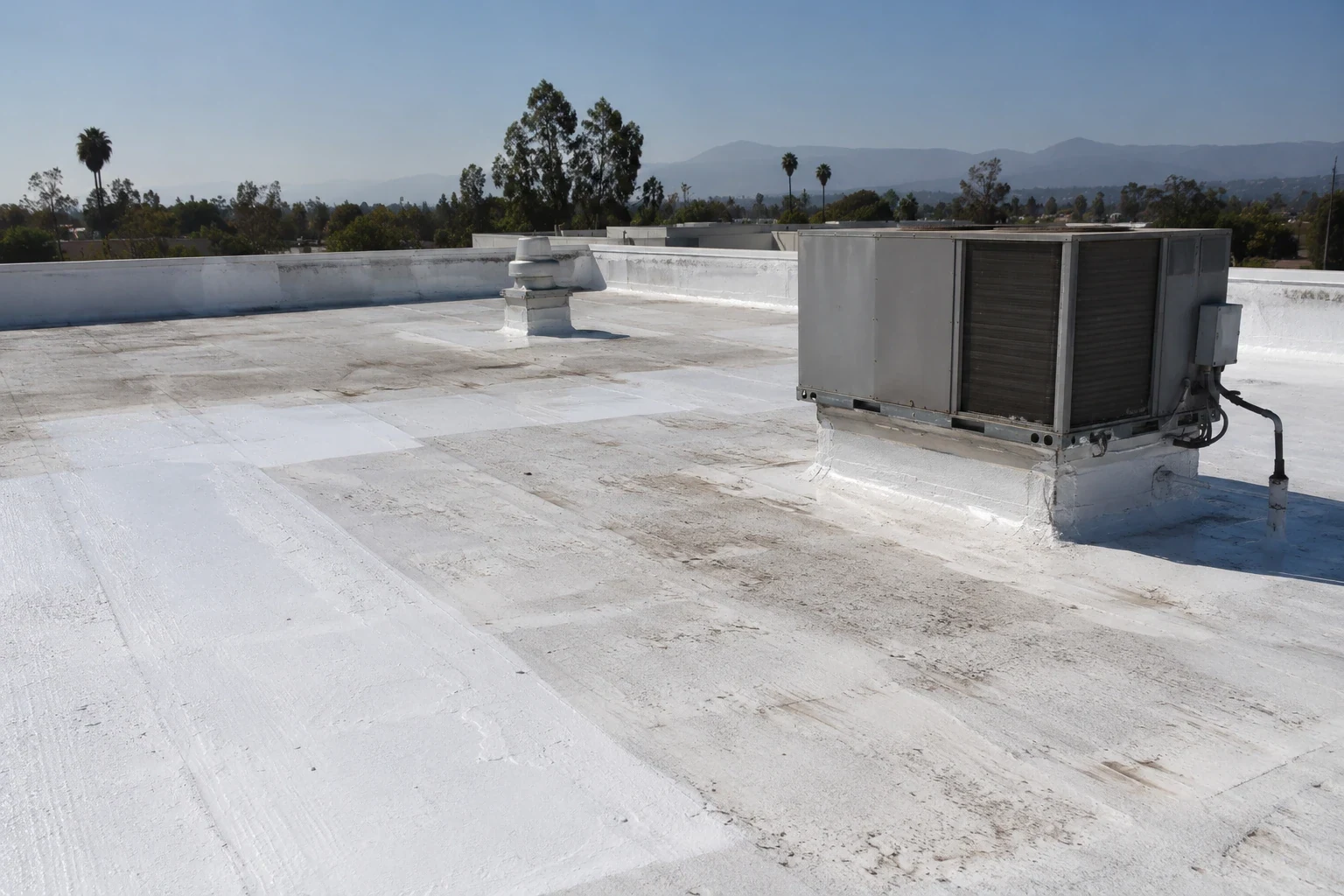
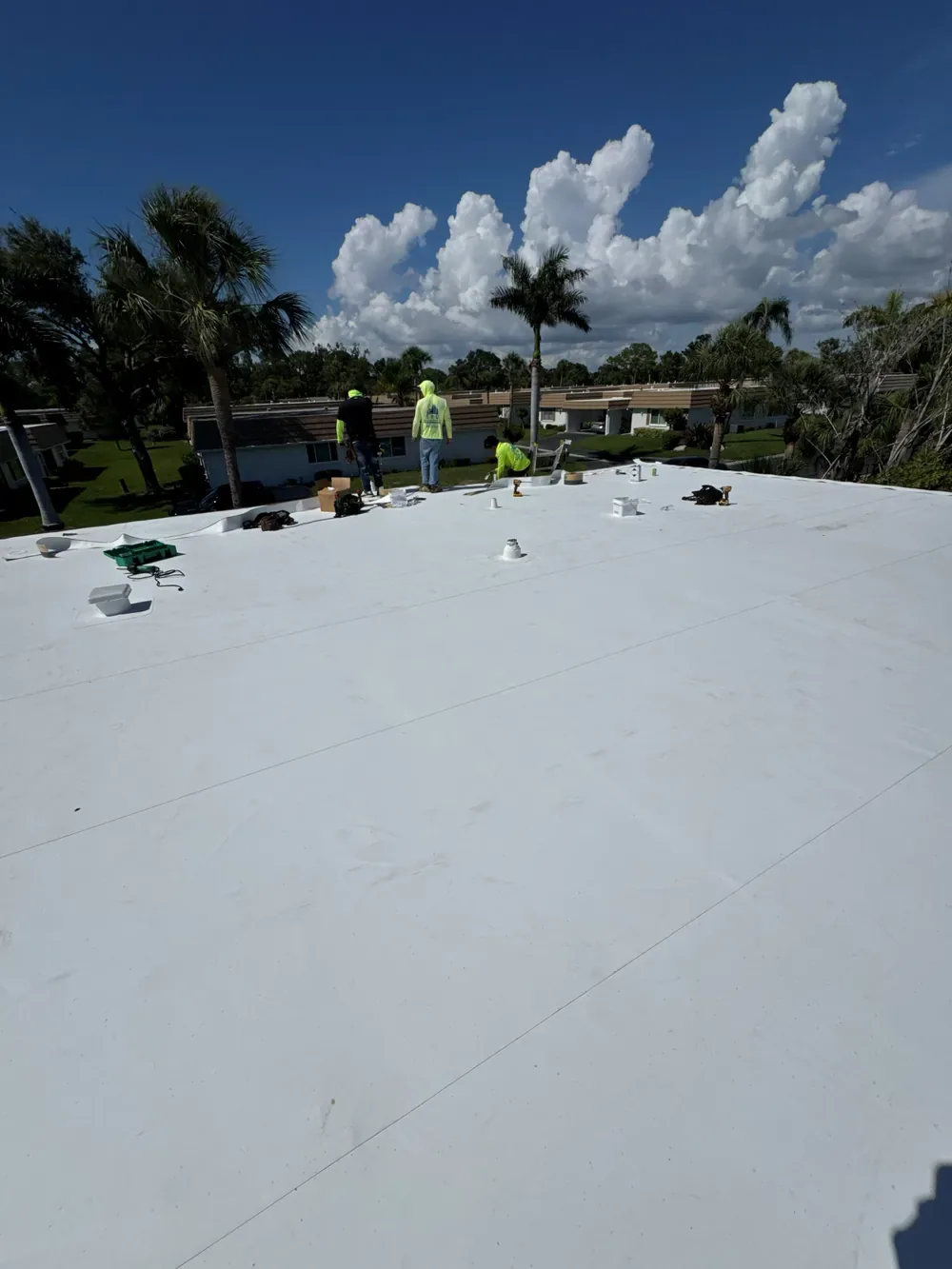
A stain beneath a shared wall may sit below a roof seam, drain or penetration several feet away. In a flex-industrial building in Merced, we map the symptom to the roof area and identify which tenant bay, addition or roof plane is involved. The building can combine office frontage with production, storage or service space. A useful roofing scope separates the observed leak path from the property lines and operational divisions below.
The city’s economic profile includes manufacturing, distribution and food production, while its industrial property program recognizes both light- and heavy-industry sites. That mix makes roof access and opening sequence important. We identify the roof system and affected bay, then consider whether a repair can proceed without blocking receiving, equipment service or office access. Local use informs coordination; it does not establish a particular tenant’s process.
Map bays and roof planes
Flex properties may have joined additions, different roof heights and multiple drainage paths. We locate curbs, drains, expansion joints, parapets and changes in membrane before selecting a repair boundary. A leak at an interior partition may travel through a long deck bay. A roof plan or tenant layout can help link the ceiling observation with the roof surface. If the building has several phases, we note where materials or attachment patterns change.
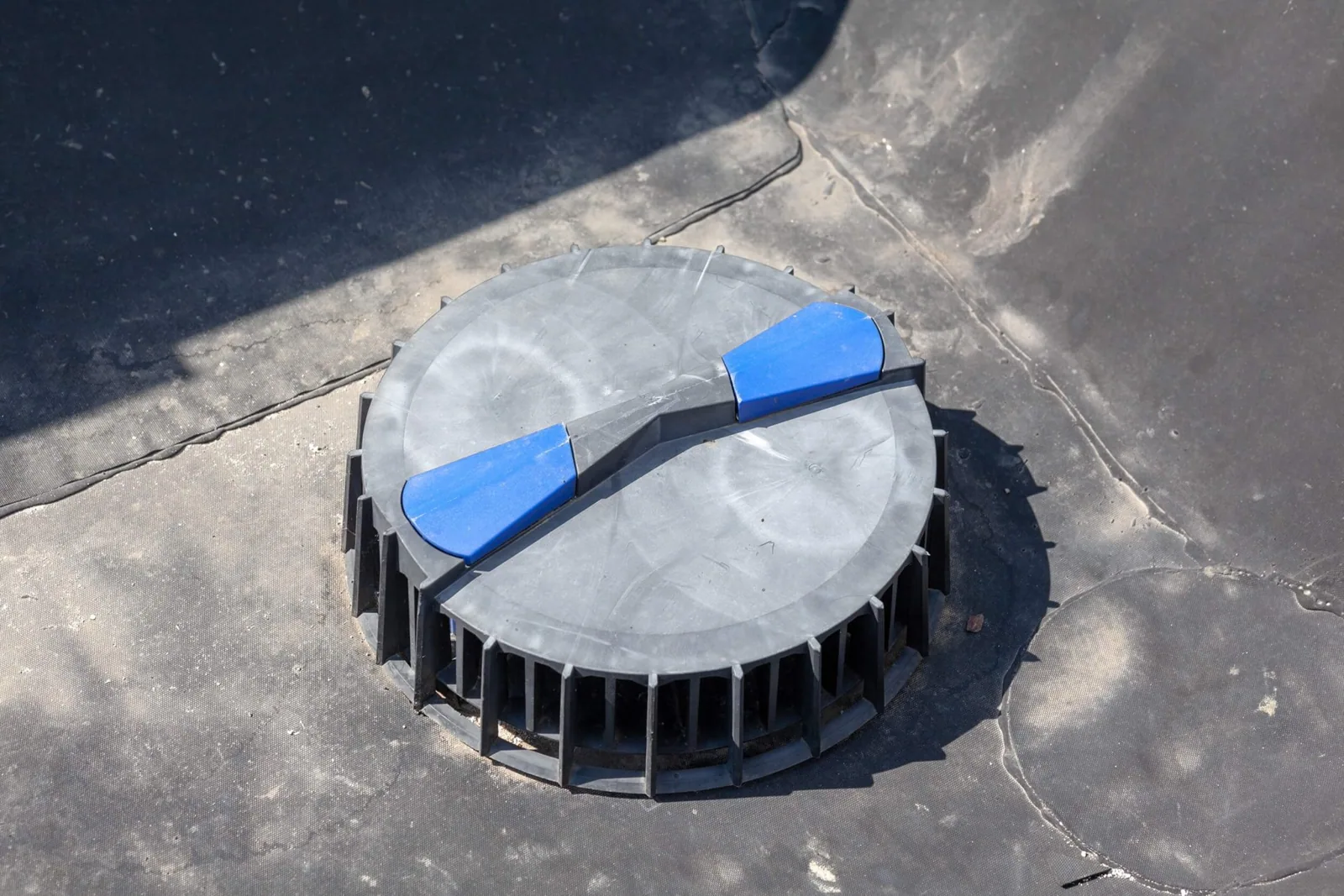
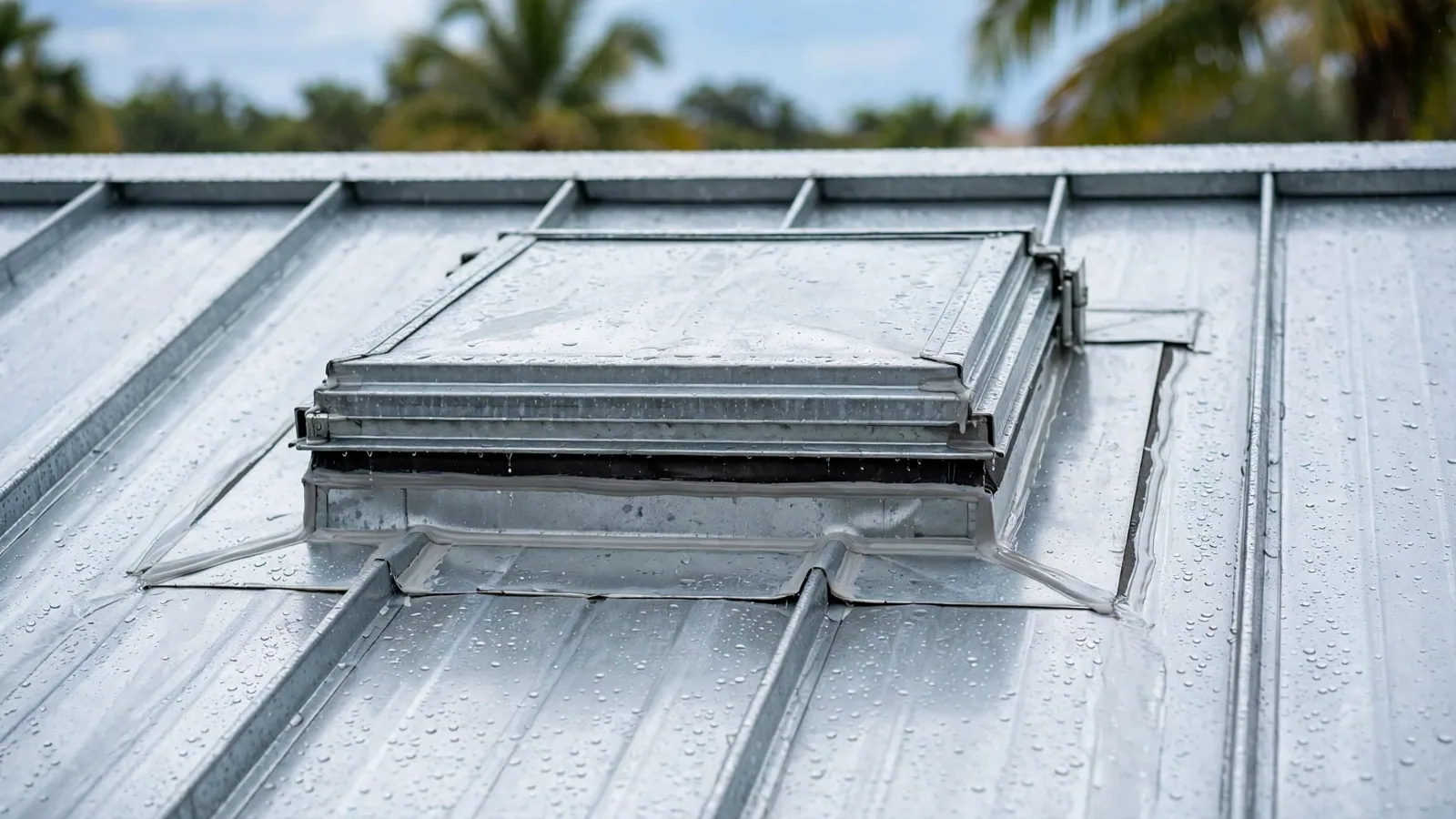
Each transition needs its own review. A low-slope membrane lap, metal edge and wall flashing do not share one repair method. We inspect the bond line, exposed layers and attachment at the specific detail. Drain and scupper service may address an outlet issue, while flashing repair is relevant when a curb or wall joint has opened. We keep those tasks distinct where the evidence points to more than one cause.
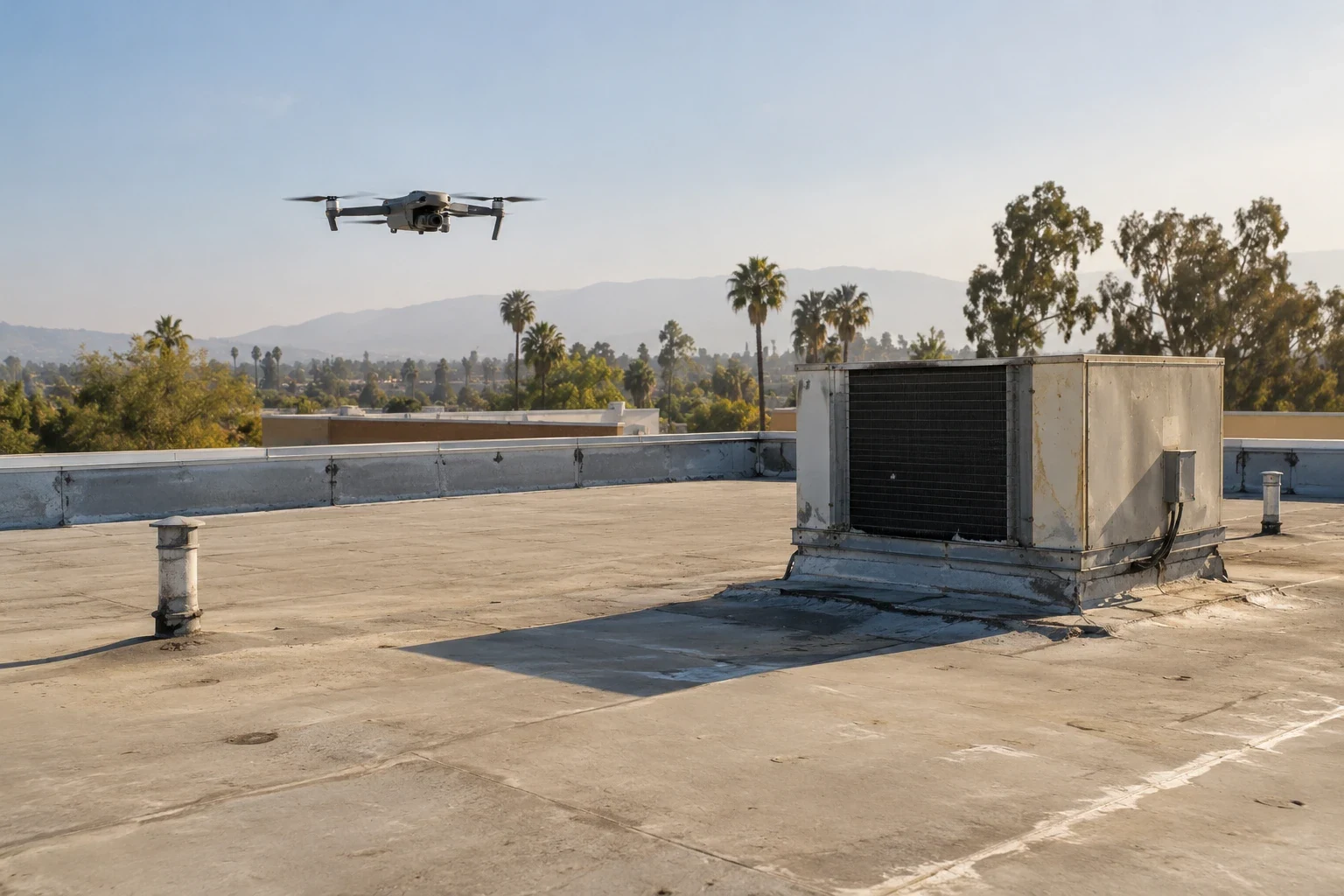
Where the roof area is large or access is limited, a drone inspection can document visible conditions from above. It cannot confirm the state of concealed insulation. A targeted opening may be needed to establish whether moisture reached lower layers. The report should locate the opening and state how the assembly will be restored.
Mechanical and tenant interfaces
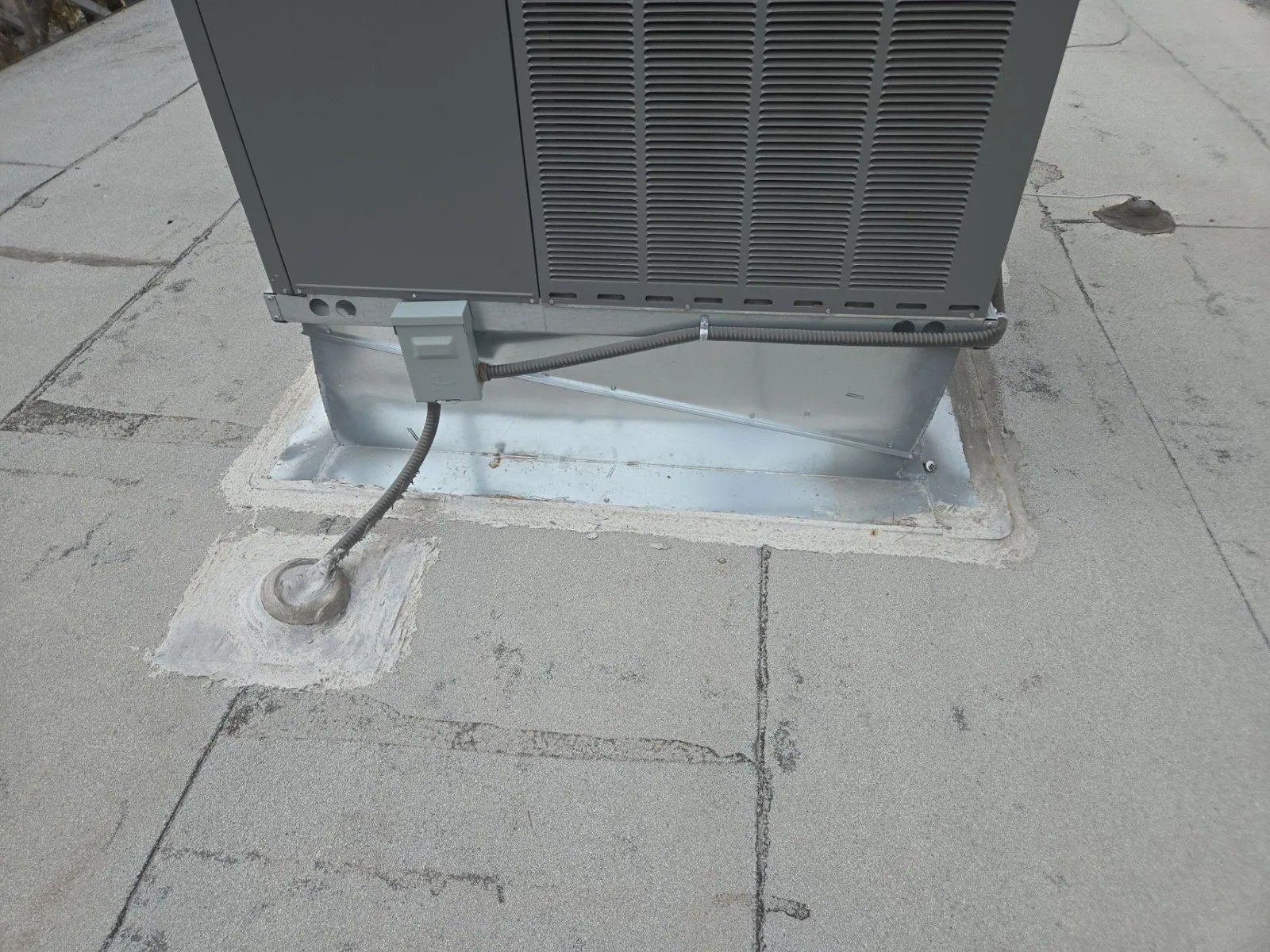
Rooftop units, exhausts, conduits and service routes complicate flex roofs because different tenants may rely on different equipment. We identify the unit serving the area, the curb attachment and the flashing around it. A loose curb, unsupported line or frequent service path can stress the roof surface. Mechanical disconnection and equipment shutdown belong to the responsible trade, but the roofing scope can identify clearance and protection needs before membrane work starts.
Hot summer conditions in Merced make metal supports and membrane transitions worth checking for movement. The station’s July normal high is 96.3°F. We examine whether the fasteners remain engaged, sealant has split, or flashing has pulled at a corner. The temperature statistic is context rather than proof of a failure cause. The defect itself, adjacent material and any interior moisture evidence determine the repair.
When a tenant or service vendor needs roof access during the same period, we coordinate a protected route and identify which work affects the roofing warranty or finished detail. Rooftop curb and support repairs can be included when the support connection is within the roofing scope. The written plan should distinguish roofing work from equipment maintenance to keep responsibility clear.
Repair, restoration or replacement
A contained seam, flashing or puncture failure may permit localized repair if the surrounding assembly is sound. We remove failed material to a stable edge and check insulation where the symptoms or surface condition warrant. If several roof zones have weak attachment, widespread coating failure or repeated leaks, restoring one tenant bay may not address the building-wide condition. We explain the observed pattern before offering a broader option.
Roof coating is a candidate only when the existing surface is suitable and drainage details can be restored. It will not dry wet insulation or correct a depressed roof plane. Coating restoration has a different preparation and detail sequence from a patch. For an existing TPO system, repair preparation and welding need to suit the installed sheet. We identify the material rather than infer it from a color or roof age.
Timing depends on how many bays must be isolated, whether materials can be staged on site, and how interior operations can be protected. A test opening can affect the schedule if it reveals wet layers. The scope should identify the base repair and any added work that requires owner approval after inspection. That makes a multi-tenant project easier to sequence without promising a finish date before access is confirmed.
Coordinate tenant operations
Before mobilization, we confirm a site contact, roof entry, work hours, tenant notification and the route for tools and debris. If a repair opens the assembly, we identify the space below and any equipment or stock that needs protection. An occupied-building sequence can divide the roof into smaller work areas. The crew should know what must be watertight before leaving a bay at the end of a shift.
Highway 99 and rail connections link the area’s industrial sites to regional freight movement. Turlock Regional Industrial Park, a nearby regional industrial area, includes cold-storage, food-processing and manufacturing users. That mix puts access, equipment routes, and operating hours on the inspection checklist for a flex building. The building manager provides tenant-specific restrictions and loading schedules so roof access can be planned around the actual site.
We photograph the roof before removal, record the layers exposed and mark the completed repair area. Warehouse roofing shares concerns about stored goods and delivery movement; office roof work adds occupant access needs. For the Merced area, local commercial roof service can begin with a bay number, leak location or equipment curb.
Scope by assembly and tenant area
The decision is whether the roof problem is limited to a detail or crosses several connected planes. We state what is confirmed, what remains concealed and whether a test opening would change the repair. The written scope identifies the roof area, materials to be removed, connection to be rebuilt and conditions that would require a pause for direction. Tenant boundaries help schedule work, but the roof assembly determines the repair detail.
Request an inspection with the affected bay, any leak history, roof plan and known tenant access limits. If additions were built at different times, note their approximate locations. We can map the roof planes, inspect key transitions and prepare a sequence that keeps the repair boundary clear for the property manager and occupants.
A property with separate suites may also have separate roof histories. One phase could have an older edge detail while a later addition uses a different membrane or drain layout. We record those transitions before proposing a continuous repair across them. If a roof plan is incomplete, field measurements can help locate the work area; they do not establish concealed construction. The owner can use that distinction to separate a known repair from a survey needed for future capital planning.
Commercial Roofing Questions
Can a repair be limited to one tenant bay?
Yes, when the failure and usable material support that boundary. We inspect adjacent seams and transitions before setting a localized limit.
What if two tenants report leaks in separate areas?
We map both reports and trace each to the roof. Separate symptoms may share a drainage zone, or they may require different repairs.
Can equipment service happen during roof repairs?
It can be coordinated when the equipment vendor and site contact agree on access. Roofing work around the curb remains separately defined.
Does a coating fix a low spot?
A coating does not change roof elevation. We check drainage and substrate condition before discussing a surface restoration.
Map a flex building roof issue
Request an inspection with the affected bay, tenant access limits and any roof plan. We will identify the assembly and set a repair boundary.
Related Roofing Work