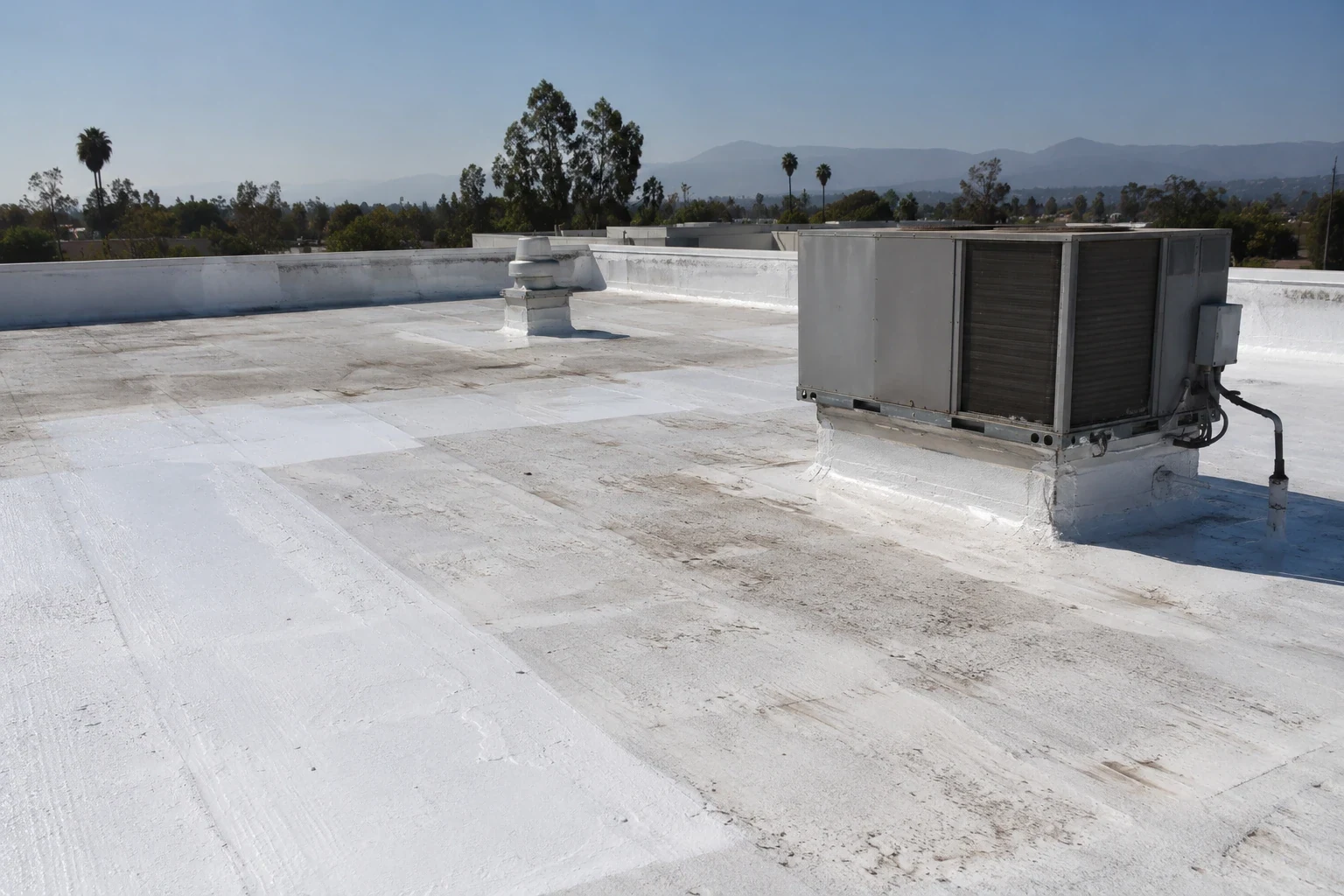
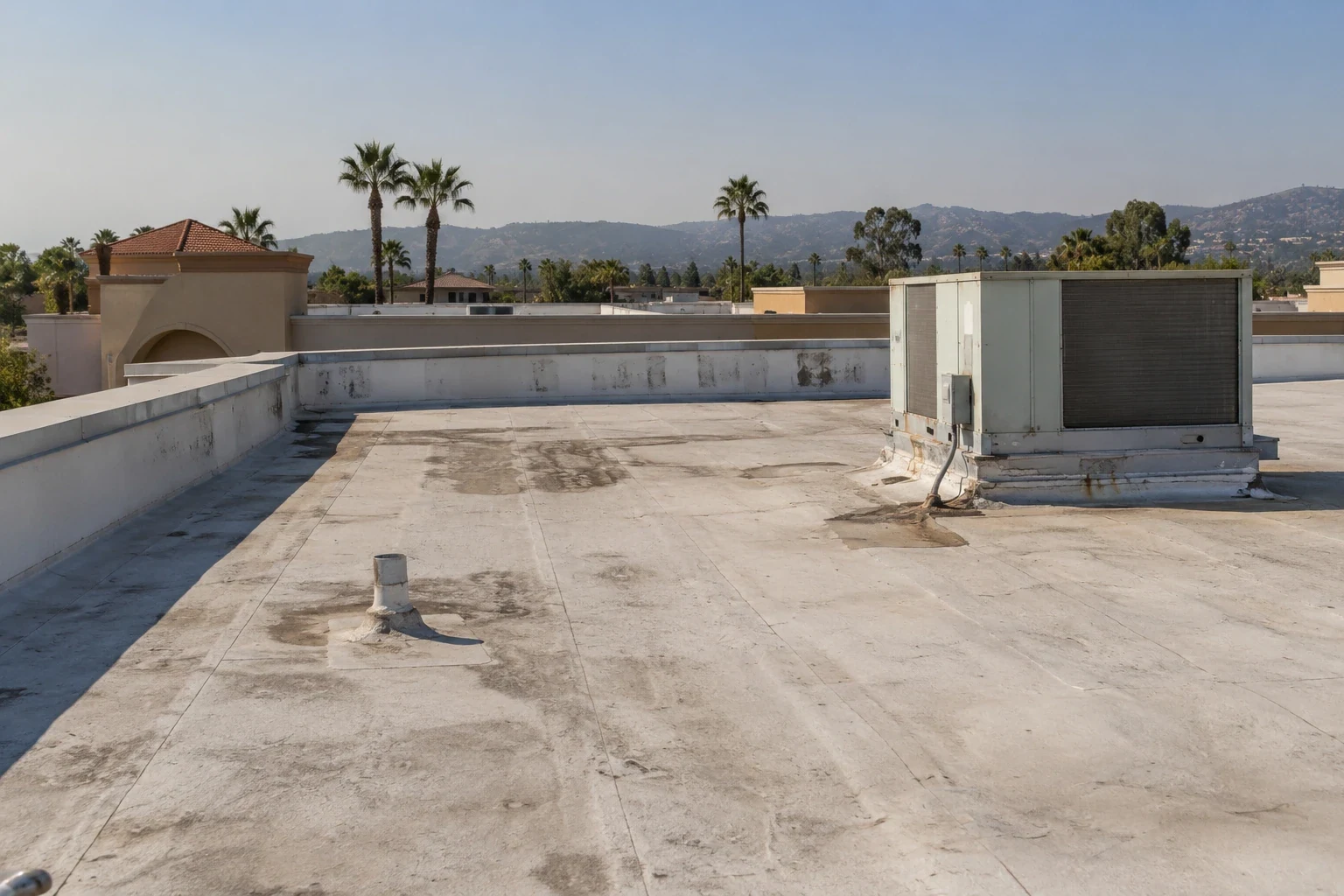
A ceiling tile stained near a kitchen exhaust route can send a manager looking for a roof leak, but the entry may be at a curb, drain or seam farther upslope. For a retail or restaurant chain in Merced, we connect the interior report to the roof assembly and isolate the work area. The operator needs to keep customers and staff away from an active opening while the repair team can reach the failed detail.
Downtown Merced contains restaurants, cafes, galleries and theater uses alongside finance and professional offices. Retail and office activity are among Merced's key industries. A chain property in this market may have a distinct storefront, kitchen or shared center layout. We inspect its actual roof and coordinate with the local site contact rather than assume every location has the same equipment or operating hours.
One standard, site-specific condition
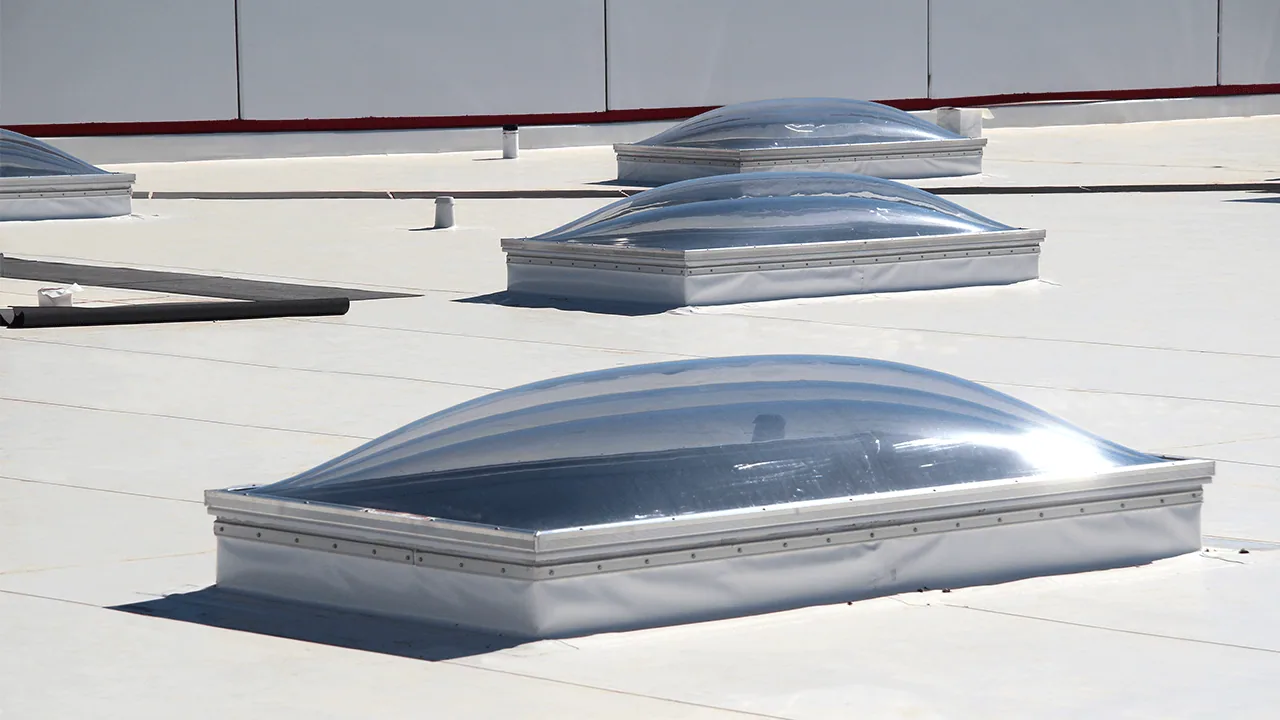
Portfolio standards help managers compare roofs, but repair conditions differ by building. We record the roof system, affected area, nearby seams, drains, curbs and prior patches. A kitchen exhaust curb, rooftop unit or skylight can create a transition that needs its own repair. We note where the visible surface changes or where an addition joins the original roof. The scope identifies the local defect without applying one property’s findings across the chain.
Water from a roof opening can travel through insulation or along a deck before it appears in a sales floor, kitchen or stockroom. We map the reported interior area against roof slopes and penetrations. If the leak source remains uncertain, a targeted test opening can establish whether insulation is wet. Commercial leak investigation can connect the symptom to a roof detail, while the repair proposal defines the specific work needed at that site.
A useful field record has the location, date, photo, observed condition and recommended action. It should distinguish an urgent repair from a maintenance item and identify the limits of what was opened. Property management roofing can coordinate site records across a portfolio, while chain operators retain their own approval and facilities process.
Exhaust and service penetrations
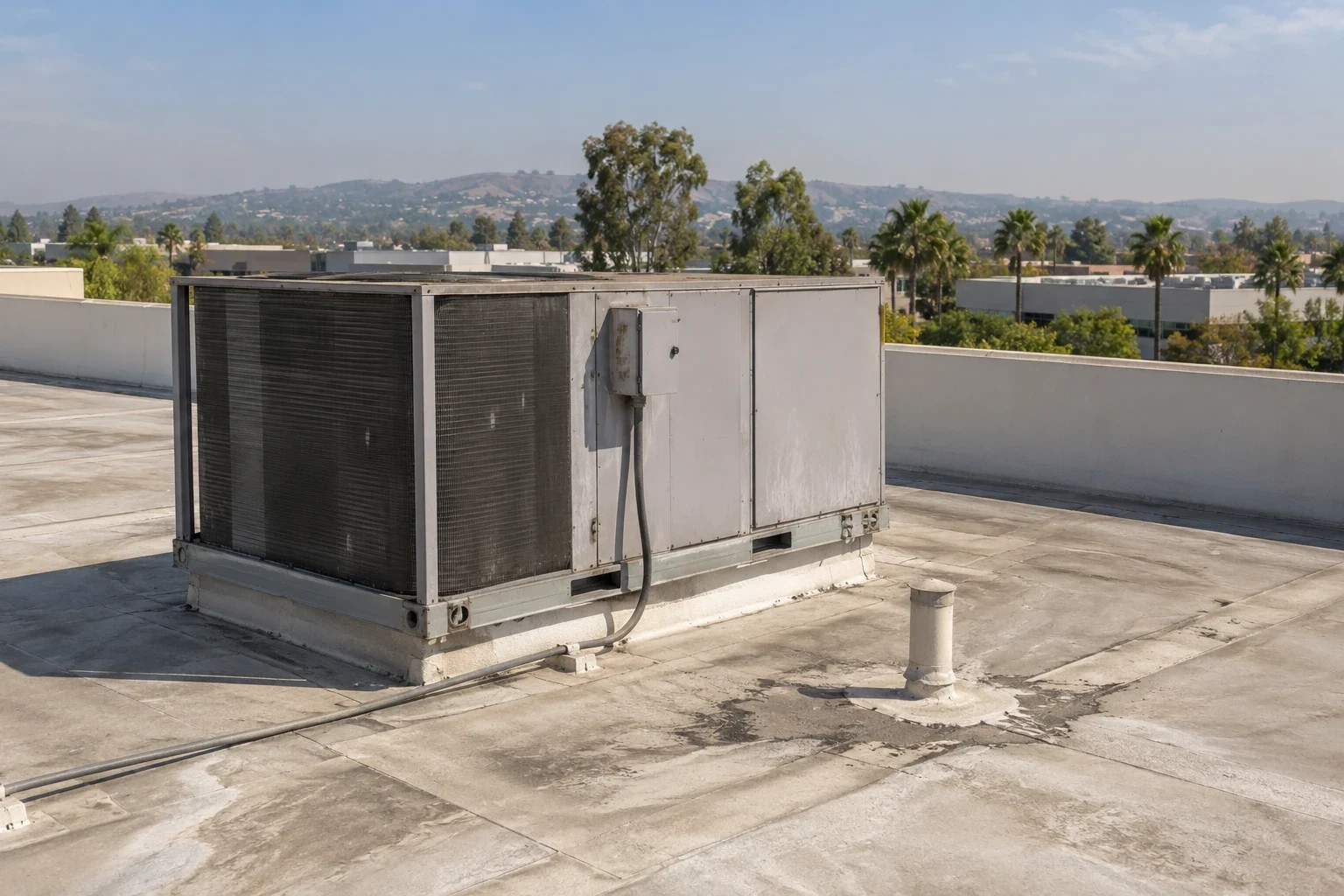
Restaurant roofs often have exhaust, make-up air, plumbing vents and service routes passing through the roof. We examine the flashing around each penetration and the adjacent membrane or metal for heat, grease residue, loose fasteners and split sealant. The equipment vendor handles duct and fan maintenance. Roofing work rebuilds the roof connection when its flashing or substrate has failed. The two scopes should meet at a clearly identified interface.
Merced’s hot summers make movement at metal curbs and membrane terminations worth reviewing. At the Merced station, July’s normal high is 96.3°F. We look for a separated bond line, warped metal or a field seam that no longer remains closed. Heat is one local condition; it is not a substitute for inspection. Penetration and flashing repair can address a failed curb or vent detail after the existing material is identified.
Grease accumulation and cleaning chemicals can affect some roof surfaces. We document residue or physical wear and identify whether cleaning, replacement or a protective detail is appropriate for the installed system. We do not cover contamination with a patch and assume a sound bond. If repeated service traffic crosses the same route, a compatible walkway may help protect the surface, provided it does not obstruct drains.
Drainage near customer areas
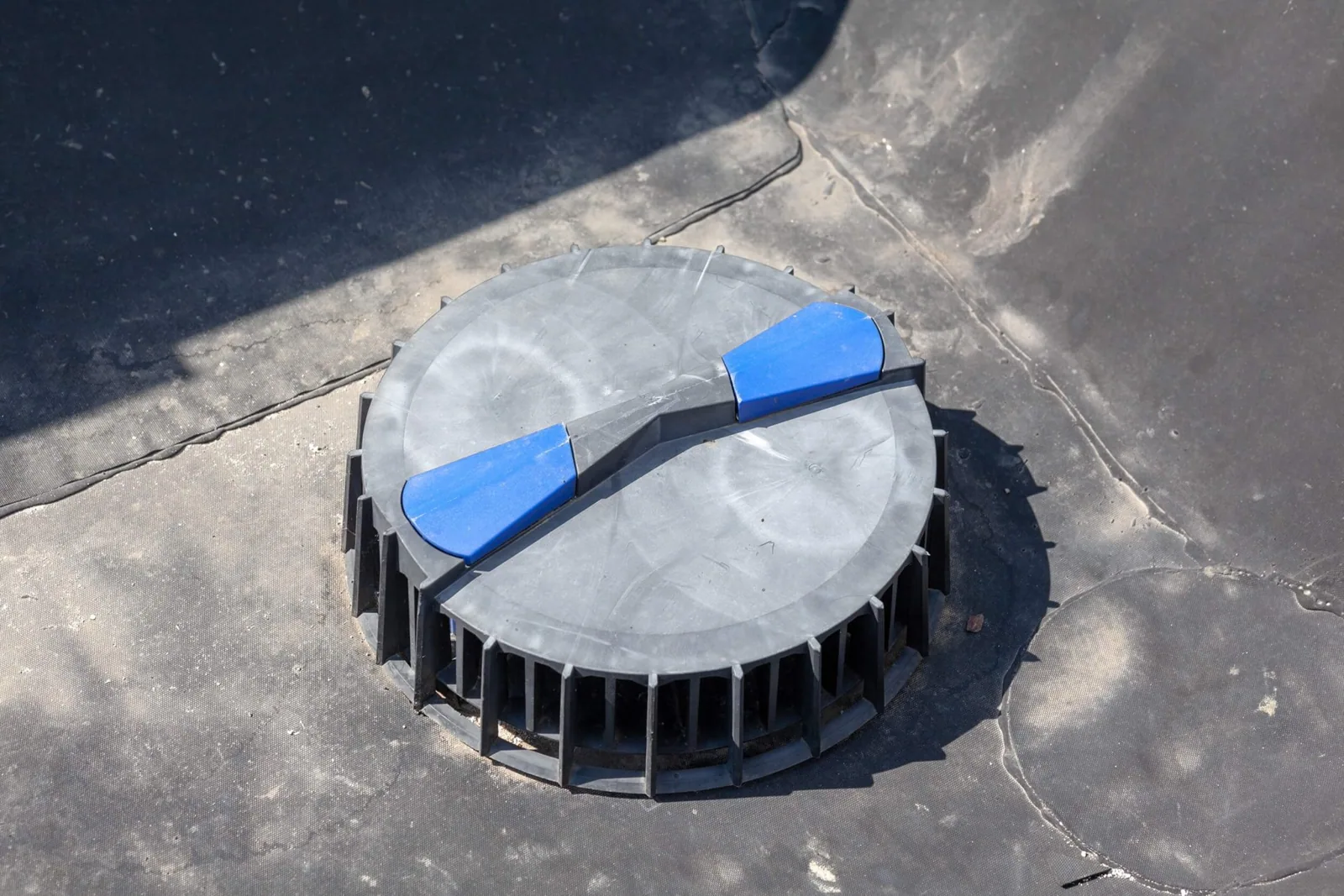
Retail roofs can have broad drainage areas, parapets and several rooftop units. We inspect drains and scuppers for debris, damage and membrane separation at the bowl. A ceiling leak may stem from ponding, a failed drain connection or a seam exposed to standing water. We record each condition and its location so maintenance can distinguish routine clearing from roofing work.
Drain and scupper service can address an outlet obstruction or damaged connection. A depressed roof plane may require a separate slope or insulation correction. If the surface is otherwise suitable, a coating restoration can be evaluated after preparation and detail review. A coating will not raise a low area or dry wet insulation. We explain the conditions it can address before describing it as an option.
Merced’s Highway 99 and rail access support the city’s industrial parks, while downtown has a compact mix of restaurants and businesses. Those are different loading and access contexts. We confirm whether the crew can use a rear service drive, roof hatch or loading area and whether deliveries need to continue. The actual site manager sets the operating constraints that shape the sequence.
Keep trading hours in the plan
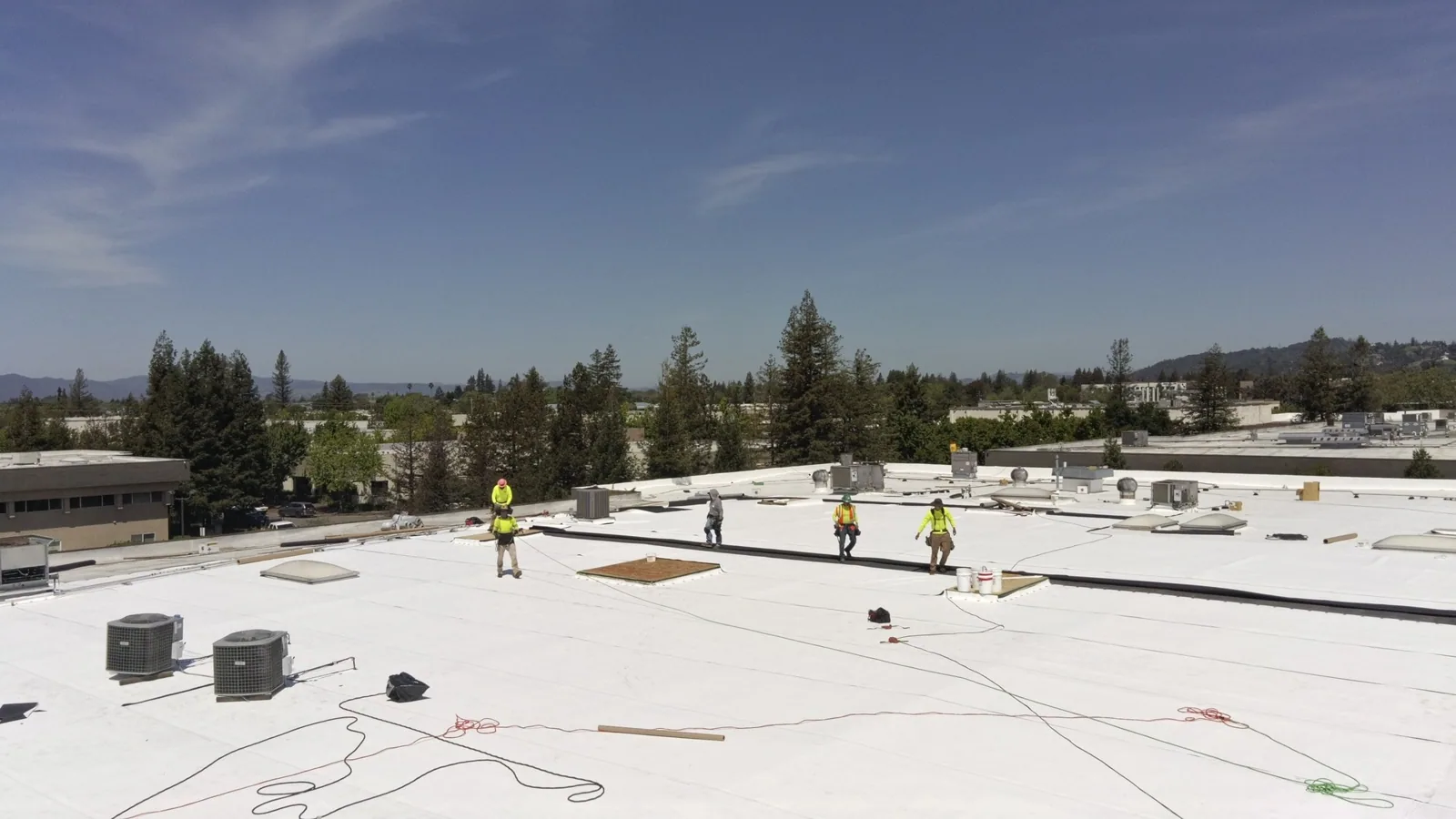
A roof opening over a kitchen, dining room or sales floor can affect food handling and customer movement. We identify the room below, materials to be removed and protection needed. A noisy or dusty task may be scheduled outside busy periods if the operator can provide a window. We coordinate a path for debris and tools, and close the roof to a weather-ready condition at breaks in the work.
Chain facilities may use central maintenance systems, but the local manager usually knows which entrance, service lane or room can be closed. We ask for the approved contact and communicate the work area without adding unsupported claims about store operations. Atwater, between Merced and Livingston on State Route 99, includes food-processing and building-products activity. That regional context reinforces the need to set delivery and work access from the actual property plan.
Closeout information should be useful to both the store and portfolio team. We mark the repair location, list material installed, include photographs and identify any roof area that was not opened. Shopping center roofing can involve shared drainage and access, while restaurant roof repair focuses on exhaust and food-service interfaces. A local request can start at Merced commercial roofing with the site address and reported roof symptom.
Where a chain combines food service with overnight stays or event space, the roof report can share a common property identifier while keeping each roof section distinct. Hospitality group roofing uses similar access records, but the work sequence still follows the building use and the surface condition at the individual location.
Prioritize each property
The decision at one store should be based on that roof’s condition. An isolated flashing failure may need a local repair. Several open seams or wet insulation may call for a larger scope. We show the evidence, distinguish confirmed damage from untested material and identify what follow-up would answer a remaining question. A chain can then sequence work by active leak, access window and planned capital review.
Request an inspection with the store or facility identifier, the affected room, roof plan if available, equipment location and trading-hour constraints. We can document the roof condition, propose a bounded repair and prepare a record that the local manager can share with the chain’s facilities team.
Commercial Roofing Questions
Can a restaurant keep operating during a roof repair?
We coordinate the work zone, interior protection and operating hours with the site contact. A room directly beneath an opening may need a scheduled pause.
Can a chain use the same repair standard at every location?
A standard can organize reports, but the repair method follows each roof system and the observed condition at that property.
How do you handle leaks near kitchen exhaust?
We inspect the curb, flashing, adjacent membrane and water path. Exhaust equipment work remains with its mechanical service provider.
Can a coating replace a failed drain detail?
No. The outlet connection and drainage path need correction. Coating is considered only after the roof surface and details are suitable.
Inspect a chain property roof issue
Request an inspection with the location, affected room and operating constraints. We will identify the failed roof detail and define work for that property.
Related Roofing Work