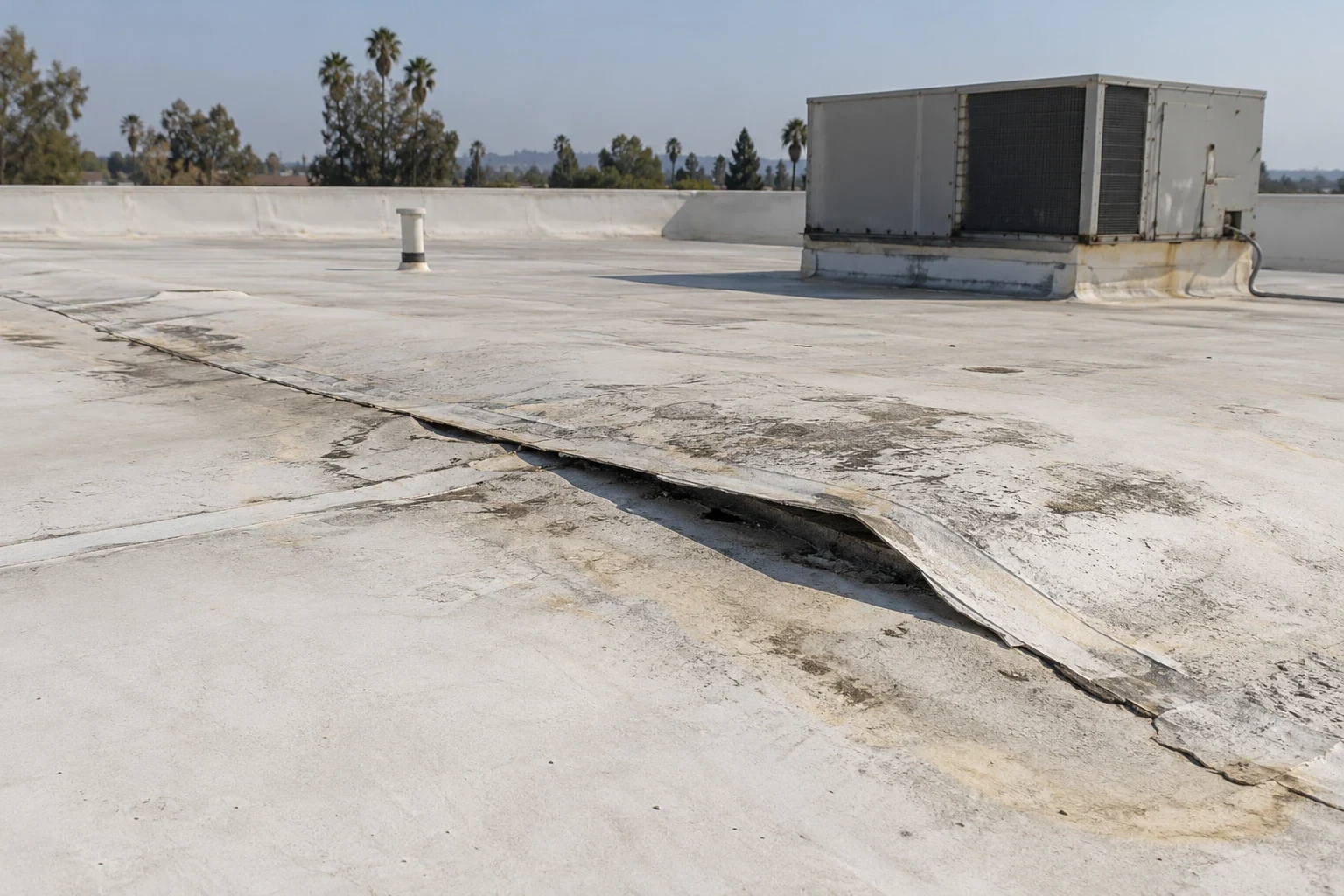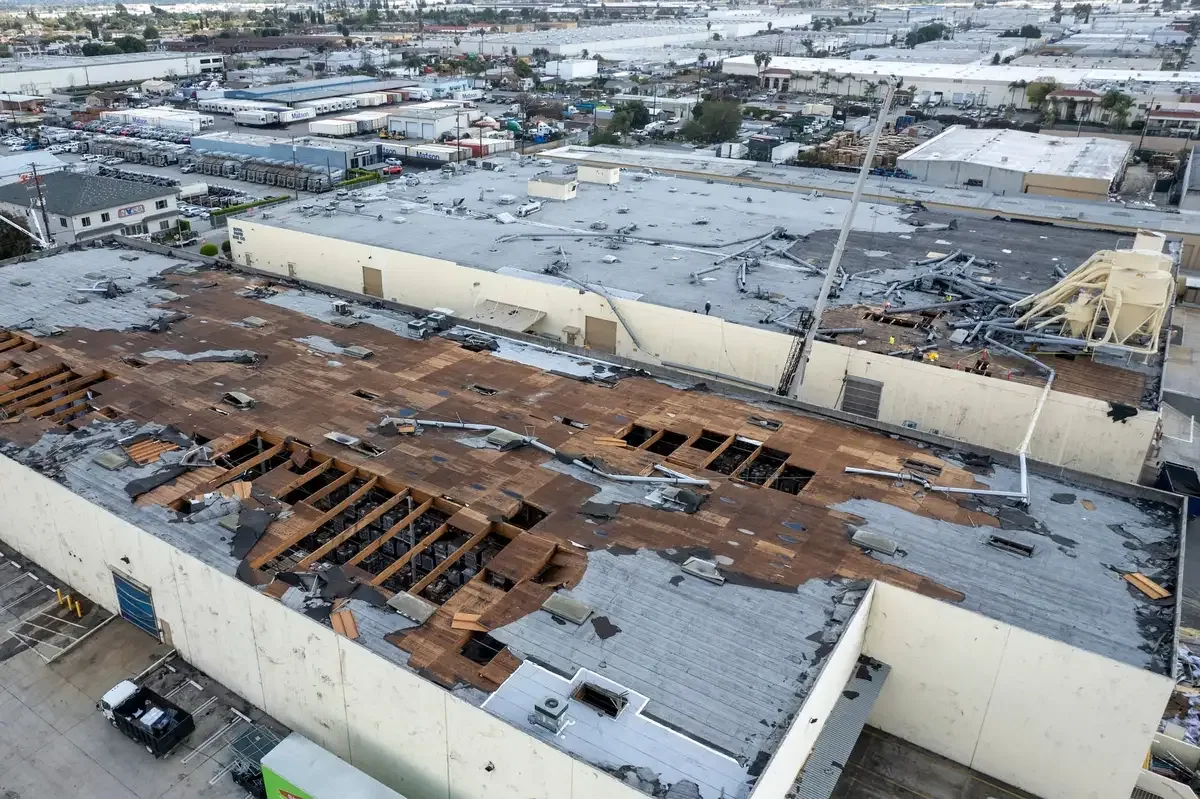
A crease in a membrane after a reported event deserves a measured inspection before anyone calls it the full loss area. For insurance restoration roofing in Merced, we record the visible damage, identify the roof assembly and compare it with nearby material. A property manager needs a field record that shows what changed, what was opened and what repair is proposed. The contractor documents roof conditions; the policy decision remains with the insurer and property owner.
Merced station normals record 11.80 inches of annual precipitation, with most falling in winter and July or August rounding to 0.00 inches. The reported incident date and observed roof condition guide the inspection and any storm-damage scope. We use the reported incident date and observed roof condition to guide the inspection. The written record should separate event-related damage from pre-existing wear when the evidence supports that distinction.
Record the observed condition
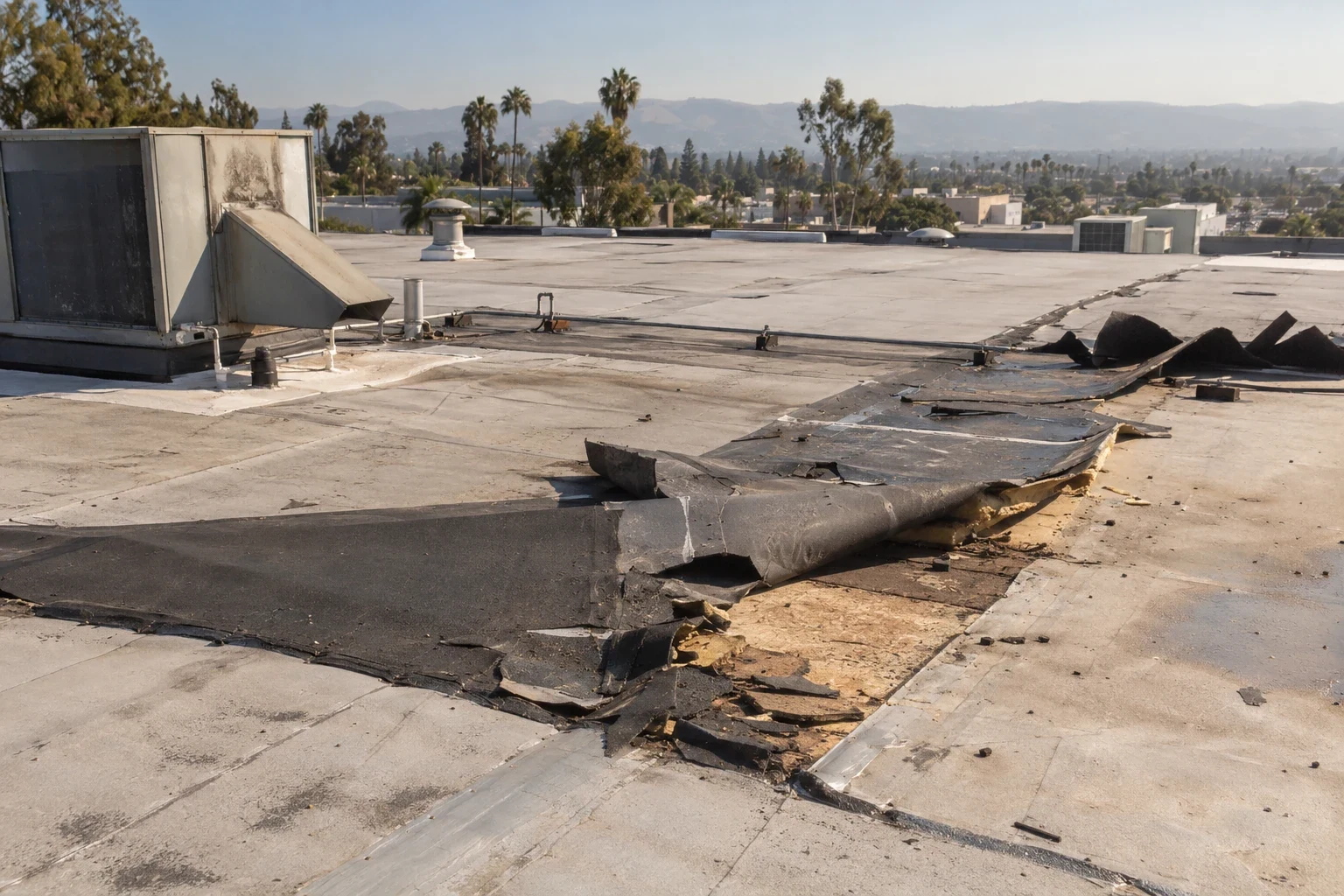
We note the date of inspection, roof section, material, visible opening and surrounding condition. Photographs should include context and close detail so the location can be found later. We inspect seams, perimeter edges, curbs, drains and prior repairs near the reported area. If material is displaced, we document the attachment and any visible water path. A photo of a stain alone cannot establish where water entered the roof.
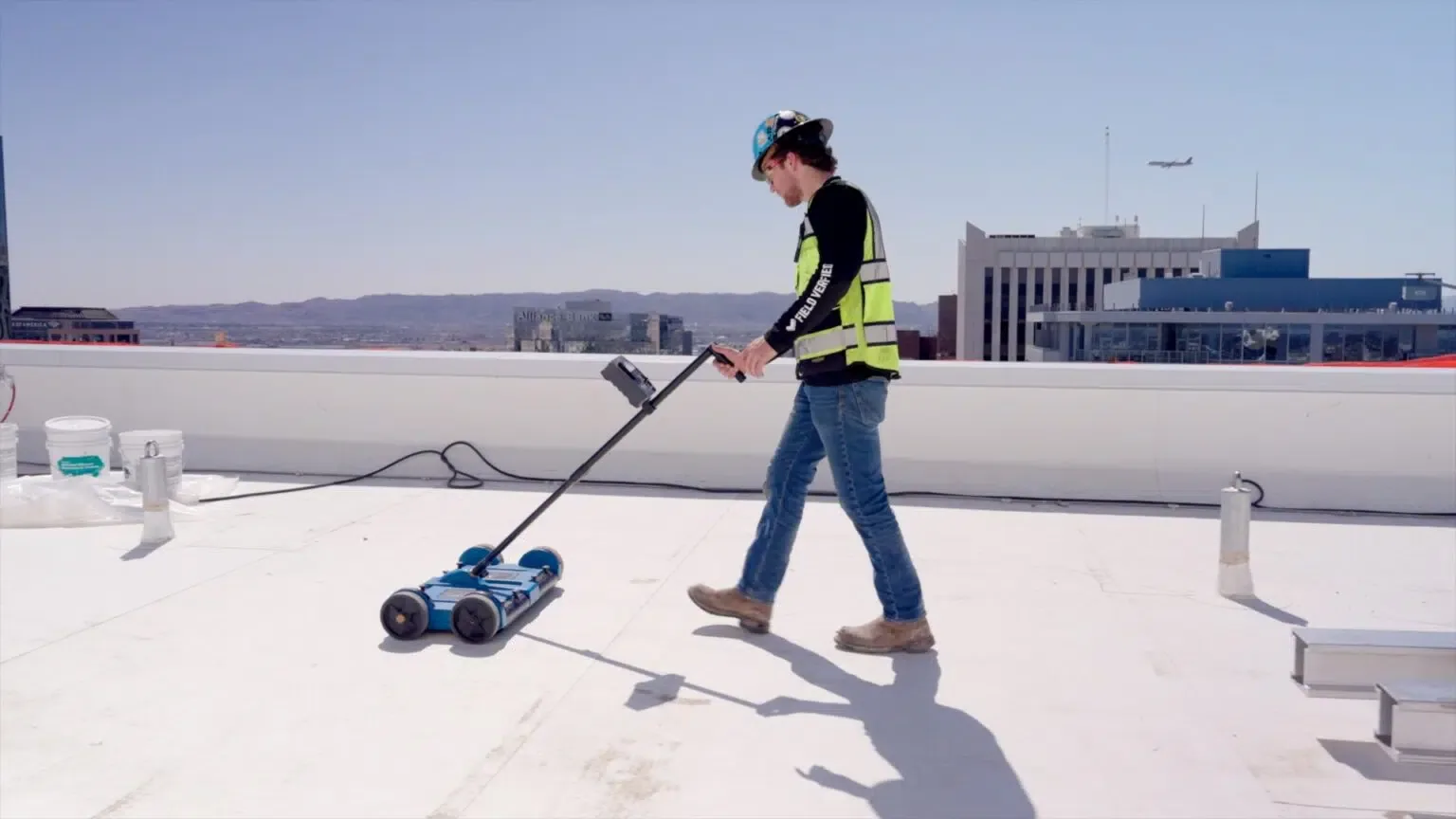
Water can move through insulation or along the deck before appearing inside. We compare the interior report with roof slope, seams and transitions. A test opening may be appropriate if moisture below the surface would change the repair. Its size, location and closure method should be agreed before cutting. Infrared moisture survey can help target investigation when conditions suit the method, but direct confirmation may still be needed for a specific layer.
We label findings as observed, exposed or not inspected. That wording helps a manager understand the limit of the record. If the owner or insurer requests additional documentation, we can organize roofing photos and a scope by location. We do not assign policy coverage, decide causation under the policy or state that a claim will be accepted.
Separate event damage from roof condition
A roof can have storm-related displacement beside an older patch or a maintenance issue. We examine the surrounding area for brittle membrane, corrosion, prior sealant, failed seams and evidence of water below. The repair recommendation distinguishes the new condition that was observed from adjacent wear. If the boundary is uncertain, a test opening or broader inspection can answer a specific question before the scope expands.
Merced’s summer heat creates a different exposure from winter rain. The station’s July normal high is 96.3°F. We inspect whether a split follows a transition, metal edge or surface that has moved. We compare the crease with surrounding membrane and incident documentation to describe the condition observed. The material pattern, attachment and incident documentation inform the technical description. Wind damage repair can address displaced components when inspection confirms that condition.
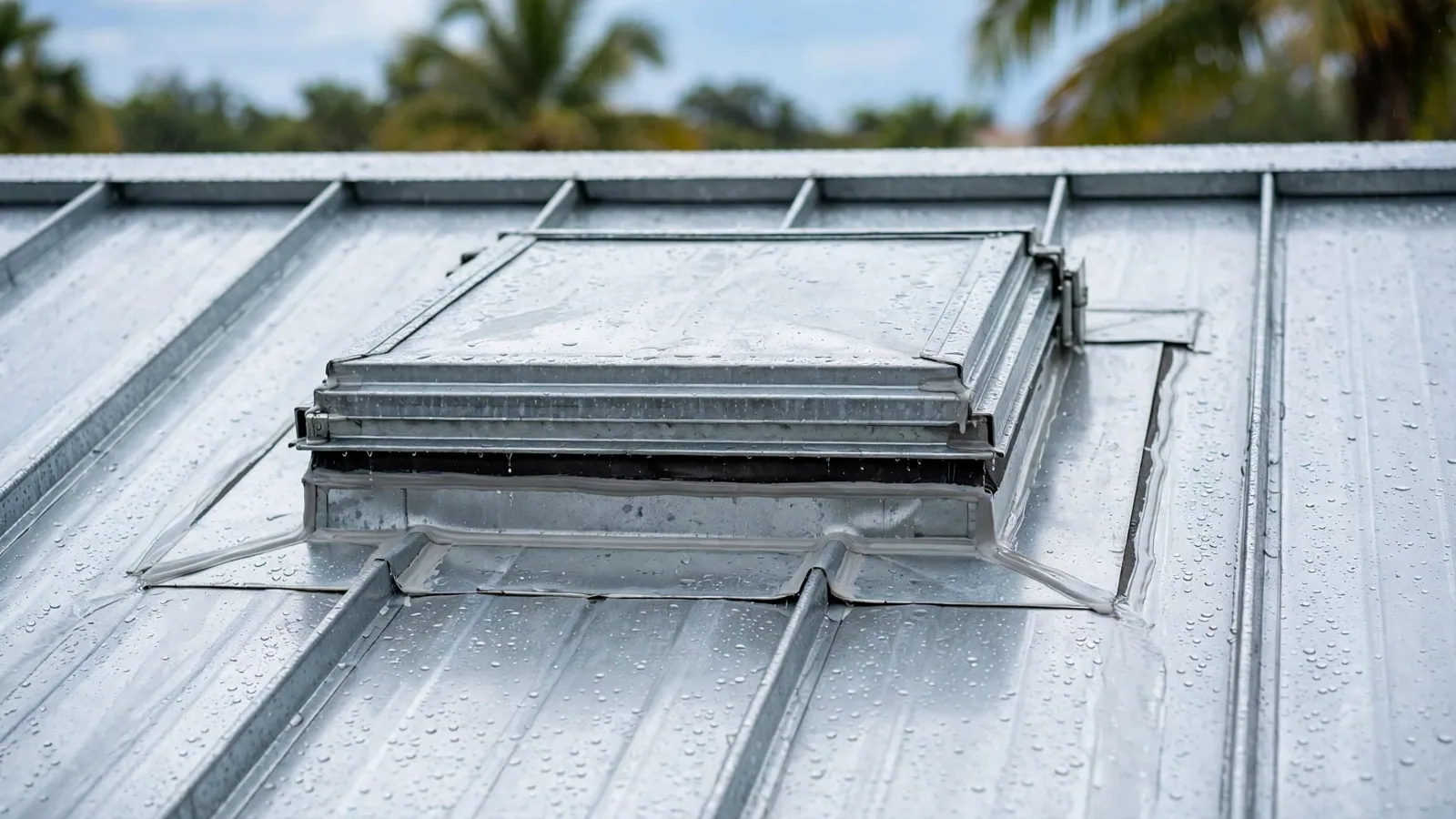
When water entry is reported, we check the roof and drainage path for an open seam, puncture or failed flashing. Seam repair and flashing repair describe different assemblies. The proposal should identify which detail failed and what must be removed. A general statement that “the roof leaked” does not give the owner or adjuster a clear repair scope.
Write a repair scope for review
A useful scope lists location, material removal, substrate inspection, replacement layers, connection method and finish check. If wet insulation is confirmed, the repair should extend to a defined boundary and replace affected material before membrane closure. The report can include photographs from each stage. Where the work remains limited to a patch, the scope should state how the repair connects to sound material and what nearby area was not opened.
The owner may need a temporary measure before permanent work is approved. We describe the location protected, how the measure limits exposure and the follow-up needed. Temporary work is not the same as a complete repair. Emergency roof response can address active exposure while the final scope is reviewed. The owner and insurer decide the next authorization, and the contractor proceeds within the approved roofing work.
Cost and timing depend on access, material matching, amount of wet insulation, protection below and whether the area can be closed at the end of the shift. A hidden condition can change the quantities. We identify that possibility and set a review point before removal extends beyond the observed damage area. This gives the property manager a clear record for evaluating the scope without an unsupported claim about reimbursement.
Keep claim records factual
A repair file can include incident date supplied by the owner, photos, roof plan references, inspection notes and the completed work description. We separate our observations from information supplied by others. If an adjuster or consultant attends the roof, the site contact coordinates access and the inspection boundary. We can answer questions about the roofing materials and work performed without representing the policyholder’s coverage position.
Merced’s industrial parks have Highway 99 and rail access, and Downtown Merced contains government, finance, professional offices and restaurants. Different property uses affect staging and interior coordination, not whether a claim is covered. For a distribution property, protecting stored goods may shape the opening sequence. In an office, access to occupied space may matter more. We confirm the actual building use and work zone with its manager.
Property management teams can use a consistent location and photo format across buildings. Condition reports preserve roof findings, while warranty records should be reviewed separately for applicable terms. None of those records decides coverage. Merced roofing service can begin with the roof area, date of event and any active leak.
When restoration work is part of a larger rebuild, the roofing record should identify the boundary with demolition, mechanical replacement and interior restoration. A dated photograph can show what was present before roofing removal; a second image can record the substrate before it is covered. General contractor coordination can help maintain that sequence, while the property owner retains the final scope and claim decisions.
Repair, monitor or plan replacement
After inspection, the next step may be a localized repair, additional testing, temporary protection or broader replacement planning. We explain why the observed condition supports that option and what remains unknown. If nearby wear is outside the proposed repair boundary, it should be recorded separately rather than folded into event damage by assumption. A measured scope helps the owner decide how to proceed while preserving a useful maintenance record.
Request an inspection with the reported event date, roof plan, interior leak location and available prior repair information. We can photograph the roof detail, document exposed layers and prepare a written roofing scope for owner and insurer review. The final report states what work was completed and which areas were not examined.
Commercial Roofing Questions
Does the roofing contractor decide whether insurance covers the repair?
No. We document roof conditions and describe the roofing scope. The insurer and property owner make coverage decisions under the policy.
Can you distinguish new damage from older wear?
We note visible differences and the limits of inspection. Where the boundary is unclear, additional testing may be needed before assigning a repair extent.
What should a damage record include?
A location, inspection date, roof material, photographs, observed condition, exposed layers and work performed make the record easier to review.
Can emergency work begin before a claim is resolved?
The owner may authorize temporary or permanent roofing work. We state its scope and limitations; coverage review remains separate.
Document a commercial roof damage report
Request an inspection with the reported event date, roof area and interior symptoms. We will record conditions and define the roofing repair scope.
Related Roofing Work